
10 Best Cordless Blowers in 2026
This post contains affiliate links. As an Amazon Associate, we earn from qualifying purchases.
Our best overall cordless leaf blower is the EGO POWER+ 765 CFM for its effective turbo power and variable speed control. For maximum sheer force, choose the EGO POWER+ 880 CFM, while RYOBI ONE+ 18V owners get the best budget and ecosystem pick. The right blower turns a chore into a quick task, but with so many voltages and features, the choice can be overwhelming. This guide cuts through the noise, matching ten researched picks to specific yard sizes, tool collections, and cleanup needs.
Top 10 Cordless Leaf Blowers in the Market
Certain content that appears on this site comes from Amazon. This content is provided "as is" and is subject to change or removal at any time.
The Best Cordless Leaf Blowers, Reviewed
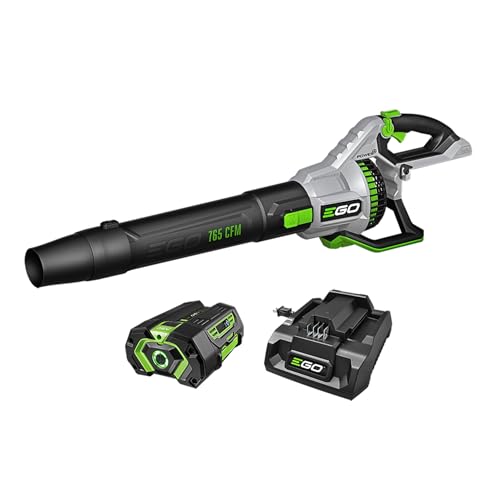
EGO POWER+ 765 CFM Cordless Leaf Blower
What We Like
- Turbo mode delivers 765 CFM for heavy debris.
- Variable speed dial for precise control from 260 to 580 CFM.
- Includes tapered and spread nozzles for different tasks.
- High-efficiency brushless motor for reliability and low vibration.
Trade-offs
- At 9.5 lb, it's heavier than the 5.0 lb EGO 880 model.
- Turbo mode will deplete the battery faster than the 90-minute max.
With 765 CFM and a 200 MPH turbo boost, this blower has the muscle to clear wet leaves and gravel from a driveway without hesitation. It’s the cordless workhorse for someone who wants to ditch gas but won’t compromise on power. The variable speed dial lets you fine-tune airflow for delicate patio surfaces, and the included 5.0Ah battery delivers enough runtime to handle a typical suburban yard on a single charge.
At over nine pounds, the EGO POWER+ 765 CFM blower requires more arm strength during extended use than lighter models like the Ryobi ONE+, which trades some power for easier handling. Its dial allows you to set a desired power level from 260 to 580 CFM, and a turbo button provides up to 765 CFM for heavy debris. Reviewers of a similar EGO model report it was easy to use and could push heavy debris with no trouble, suggesting this design delivers substantial power for residential tasks.
EGO POWER+ 880 CFM Cordless Leaf Blower

What We Like
- Digital display for battery and performance status
- Lightweight carbon fiber body for durability
- Variable speed trigger for precise control
Trade-offs
- Battery and charger sold separately
- Requires two 4.0Ah batteries for 90-minute runtime
- At 39 inches long, storage needs consideration
With an 880 CFM turbo blast, this blower moves heavy, wet debris that stops lesser models in their tracks. It’s the right pick for someone with a large property who needs industrial-grade clearing power without the noise and fuss of gas. The digital display and variable trigger give you fine control, while the carbon fiber construction keeps the heft down to a manageable five pounds. If your priority is raw performance above all else, this EGO model delivers.
The major trade-off is that it’s a tool-only purchase. You’ll need to invest in EGO’s 56V battery ecosystem, which adds to the initial cost. Compared to a kit like the RYOBI ONE+ 18V that includes a battery, you’re paying a premium for top-tier power and entering a premium tool platform. For big jobs where runtime matters, plan on owning at least two high-capacity batteries to leverage that 90-minute claim.
Product photos
DEWALT 60V MAX FLEXVOLT Cordless Leaf Blower

What We Like
- 125 MPH air speed for moving heavy debris.
- 600 CFM volume provides substantial blowing force.
- 6.9-pound weight is manageable for a 60V tool.
- Uses the powerful 60V FLEXVOLT battery platform.
Trade-offs
- Tool only: requires separate purchase of battery and charger.
- 600 CFM is less than some 40V and 60V rivals like the EGO 880.
A 125 MPH air speed and 600 CFM output deliver serious muscle for clearing wet leaves and dense debris from driveways and lawns. This blower is a logical pick for anyone already committed to the DEWALT 60V ecosystem. Its performance justifies the platform’s heft, making it a workhorse that slots right into an existing collection of tools and batteries.
The trade-off is its size and that it’s sold as a bare tool. You need to factor in the cost of a 60V battery if you don’t own one. While powerful, its 600 CFM is notably lower than the EGO POWER+ 880 CFM model, so it won’t clear a large yard quite as quickly. For a DEWALT user, it’s a potent addition; for someone starting fresh, the battery commitment is significant.
RYOBI ONE+ 18V Cordless Leaf Blower Kit

What We Like
- Part of expansive RYOBI ONE+ 18V tool ecosystem.
- Variable speed control for different tasks.
- Proven effective at loosening and moving leaves.
Trade-offs
- 325 CFM is modest for large, wet leaf piles.
- At 10.3 lb, it's heavier than many 18V competitors.
- Lower air volume than dedicated 40V+ platforms.
This blower delivers 325 CFM and 100 MPH, enough power for clearing leaves from driveways, patios, and lawns. It operates on the RYOBI ONE+ 18V battery system, which is a major advantage for owners who can use batteries from other tools in the same line. Research mentions it as a tested option that can effectively loosen and move leaves.
This model’s 325 CFM rating gives it less raw power than higher-output blowers, so it will take more time on big jobs. It is designed for regular maintenance rather than heavy-duty clearing. For a single large property with consistently heavy debris, a more powerful dedicated blower is a better long-term investment. For most users who just need to clear a yard a few times each season, this Ryobi handles the task reliably and affordably.
Product photos
Makita 18V LXT Cordless Handheld Blower

What We Like
- Extremely lightweight at just 1.3 pounds
- Doubles as a vacuum with dust bag
- Compact design with ergonomic soft grip
- Three distinct air volume settings
Trade-offs
- Bare tool only: requires separate battery purchase
- No CFM or MPH ratings provided for power comparison
At 1.3 pounds, this blower is built for easy handling during extended use, not for clearing large, heavy debris. Its compact size and dual blower-vacuum function make it a versatile companion for cleaning out a workshop, clearing a deck, or tidying a patio. For anyone already invested in Makita’s 18V LXT platform, it’s a logical add-on that excels at quick, precise cleanup tasks where a larger unit would be overkill.
The trade-off for its lightweight portability is a focus on maneuverability over maximum air volume. It is designed as a precision tool rather than a brute-force machine. This blower is perfectly suited for finishing work after the main job is done, or for users whose needs are more about dust and debris than dense, sodden leaf piles.
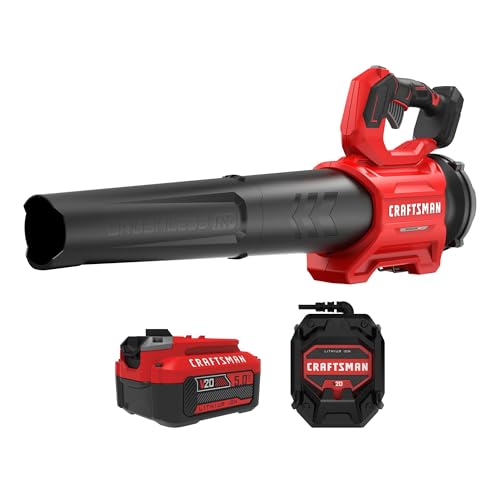
CRAFTSMAN V20 Cordless Leaf Blower Kit
What We Like
- Boost button for 110 MPH stubborn debris clearing
- Compact, lightweight design enhances maneuverability
- Weatherguard technology protects tool from elements
Trade-offs
- Tool only: requires separate V20 battery and charger purchase
With a boost button that delivers up to 110 MPH, this blower can push stubborn debris that a standard breeze might leave behind. That burst of power, combined with a design noted to be up to 39% lighter and 50% quieter than gas models, suits a CRAFTSMAN V20 battery owner handling routine yard work. Its compact form aids maneuverability in tight spaces like patios or between garden beds.
Its airflow is rated up to 410 CFM, a lower volume than many premium cordless models. This may slow down clearing speed over broad, open areas. For users with other CRAFTSMAN V20 tools, this blower shares the battery system, avoiding investment in a new power platform. The integrated hook allows storage on a VERSATRACK wall system, which helps keep a garage organized.
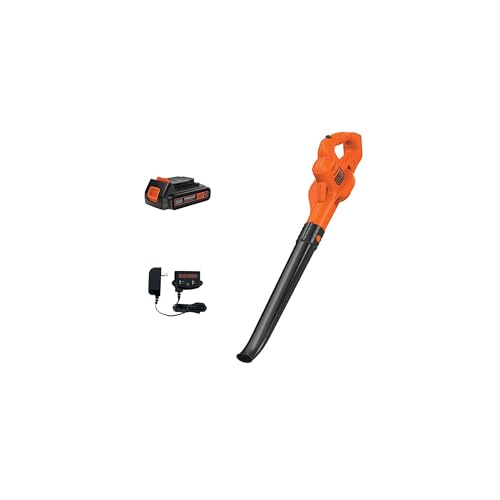
BLACK+DECKER 20V MAX Cordless Leaf Blower Kit
What We Like
- Exceptionally lightweight at 3.7 pounds
- Quiet, low-noise operation design
- Battery holds charge up to 18 months
- Part of a versatile 20V MAX tool system
Trade-offs
- 1.5Ah battery capacity is on the smaller side
At just 3.7 pounds, this blower is effortless to handle for extended periods, making it a natural fit for someone tackling a patio or driveway for the first time. Its low-noise design keeps the operation neighbor-friendly. The product listing states it sweeps up to 130 MPH to easily clear debris from hard surfaces like driveways, decks, and garages.
Its featherweight design comes with a trade-off in raw power, making it best for light maintenance rather than moving heavy, wet leaves. For that kind of muscle, you would need a more powerful dedicated blower. For quick clean-ups around the garage or after mowing, however, the BLACK+DECKER’s simplicity and included battery make it a practical starting point.
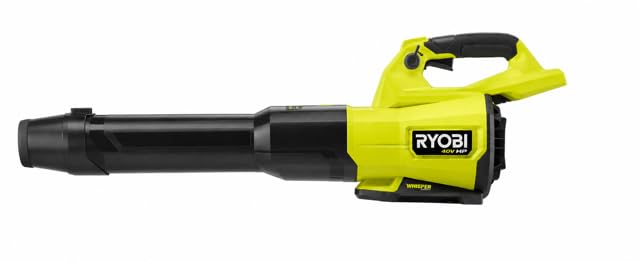
Ryobi 40V HP Brushless Whisper Series Blower
What We Like
- High 180 MPH air speed for stubborn debris
- Strong 800 CFM volume for moving piles
- Brushless 40V HP motor for efficient power
- Relatively lightweight at 7.0 pounds
Trade-offs
- Battery and charger sold separately
- CFM trails the EGO LB8800's 880 CFM
This 40-volt cordless blower moves air at 800 cubic feet per minute and at a speed of 180 miles per hour. Its brushless motor efficiently directs the platform’s power, and the tool weighs seven pounds. The combination provides substantial blowing force from a handheld, battery-powered unit.
This model comes as a ‘tool only’, so you’ll need to buy a Ryobi 40V battery and charger separately if you don’t already own them. The EGO POWER+ LB8800 offers a higher 880 CFM for more blowing force. This Ryobi, however, provides a compelling middle-ground with high power in a more compact and lighter build for those who want a balanced tool.
Product photos
SEESII 40V 650 CFM Cordless Leaf Blower
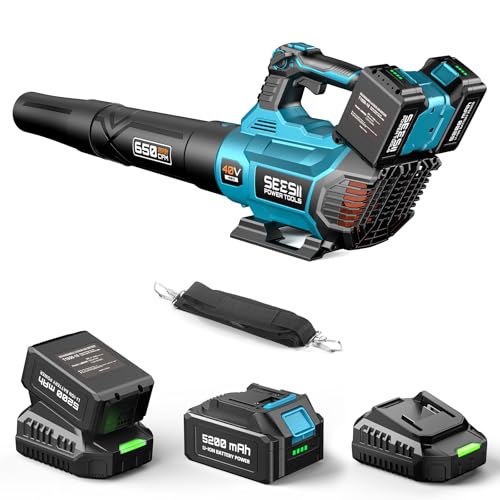
What We Like
- Lightweight design with included shoulder strap
- Accepts compatible Makita 18V batteries
- Three speeds plus a turbo boost mode
Trade-offs
- Requires two batteries installed simultaneously
- Lower airflow than premium 800+ CFM models
With up to 90 minutes of runtime on lower settings, this blower can handle extended cleanup sessions without a mid-job recharge. Its 650 CFM airflow moves wet leaves and general debris, while the 4.6-pound weight keeps it manageable for longer periods. This balance of endurance and capable power suits users who need to cover large areas without chasing an outlet.
Its 650 CFM of peak power is perfectly capable, though it can’t match the sheer force of the highest-output models for moving deep, matted piles quickly. The system also requires you to keep track of two batteries, charging and installing them as a pair. For most residential cleanup, the SEESII’s extended runtime is a more practical advantage than a slight boost in airspeed. It delivers cordless freedom without the worry of a battery dying halfway through the job.
Product photos
Makita XBU03Z Brushless Blower

What We Like
- Brushless motor for efficiency and durability
- In-line fan design improves balance and ergonomics
- Compact dimensions for easy maneuverability and storage
- Cruise control lever allows for consistent power without holding the trigger
Trade-offs
- Tool only: requires a separate Makita 18V LXT battery and charger
- 459 CFM is lower than dedicated high-power blowers like the EGO 880
- At 6.5 lbs, it's heavier than some 18V competitors like the Makita DUB185Z
The Makita XBU03Z delivers up to 459 CFM and 116 MPH from an 18V battery, providing substantial airspeed for clearing driveways and patios. Its brushless motor manages power efficiently for tasks like workshop floors. An in-line fan design improves balance by shifting weight toward the user, which reduces wrist strain over longer sessions. This tool is a capable choice for those with Makita LXT batteries who want cordless wind power without a heavier system.
Its compact form involves a power trade-off compared to larger systems. While adequate for typical suburban tasks, it moves less air than dedicated 40V or 60V models like the Ryobi 40V HP or DeWalt FLEXVOLT for heavy, wet leaves. Features like the speed lock and variable trigger, however, allow precise control over output and runtime. For a user who values a balanced, one-handed tool that works with their existing battery collection, it represents a pragmatic solution.
Product photos
How We Evaluated Cordless Leaf Blowers
Our evaluation is based on manufacturer specifications, analysis of expert round-ups, and patterns in owner feedback. We prioritized three key metrics: air volume (CFM) and speed (MPH) for moving different debris types, tool weight for comfortable handling, and battery ecosystem compatibility for value. We also considered practical features like variable speed controls, noise levels, and included accessories. A research-based approach has limits; we cannot replicate hands-on runtime tests for every model, so we rely on published specs and consistent user reports on battery life.
What To Look For In Cordless Leaf Blowers
Choosing a cordless blower means balancing power, runtime, and comfort with your existing tools. Your property size and typical debris determine the necessary air volume and speed.
Look for higher CFM (cubic feet per minute) for moving large, wet leaf piles and higher MPH (miles per hour) for stubborn debris. Weight impacts fatigue, and battery platform compatibility saves money if you already own tools.
Airflow (CFM) and Speed (MPH)
CFM measures the volume of air moved, crucial for clearing broad areas. MPH is the air speed, important for dislodging stuck debris from corners or grass. A blower with high CFM but modest MPH is great for dry leaves on a driveway, while high MPH helps with wet mats. Many top models, like our best overall, offer a turbo mode that boosts both metrics for tough jobs.
Battery Voltage and Platform
Battery voltage (18V, 40V, 60V) generally indicates potential power, with higher voltages suited for larger yards. The most important factor is often the battery platform. If you already own cordless tools from a brand like Makita or DeWalt, choosing a compatible blower is a cost-effective move, as seen with our best budget pick.
Weight and Ergonomics
A blower’s weight is a primary factor in user comfort, especially during extended use. Lightweight models under 5 pounds are ideal for quick patio cleanups, while more powerful units often weigh 7-10 pounds. Look for a balanced design and features like a padded handle or shoulder strap to reduce fatigue. For detailed cleaning tasks in a workshop, a cordless dust blower is a specialized option.
- Test the grip and trigger feel if possible; a variable speed trigger offers more control than a simple on/off switch.
- Consider a blower with multiple nozzles; a tapered nozzle concentrates air for power, while a spread nozzle covers more area. For very large properties, a backpack blower can distribute weight better than a handheld model.
Match the blower’s power to your largest typical task; overbuying adds cost and weight, while underbuying leads to frustration.
Cordless Leaf Blowers Compared
Use the table below to quickly compare the key specifications of our top picks side-by-side.
| Product | Max Airflow (CFM) | Max Air Speed (MPH) | Weight (lbs) | Battery System |
|---|---|---|---|---|
| EGO POWER+ 765 CFM Cordless Leaf Blower | 765 CFM | 200 MPH | 9.5 | 56V |
| EGO POWER+ 880 CFM Cordless Leaf Blower | 880 CFM | 200 MPH | 5.0 | N/A |
| DEWALT 60V MAX FLEXVOLT Cordless Leaf Blower | 600 CFM | 125 MPH | 6.9 | 60V MAX FLEXVOLT |
| RYOBI ONE+ 18V Cordless Leaf Blower Kit | 325 CFM | 100 MPH | 10.3 | RYOBI ONE+ 18V |
| Makita 18V LXT Cordless Handheld Blower | N/A | N/A | 1.3 | Makita 18V LXT |
| CRAFTSMAN V20 Cordless Leaf Blower Kit | 410 CFM | 110 MPH | N/A | V20 |
| BLACK+DECKER 20V MAX Cordless Leaf Blower Kit | N/A | 130 mph | 3.7 | 20V MAX Lithium Ion |
| Ryobi 40V HP Brushless Whisper Series Blower | 800 CFM | 180 MPH | 7.0 | 40V HP Brushless |
| SEESII 40V 650 CFM Cordless Leaf Blower | 650 CFM | 160 MPH | 4.6 | 40V |
| Makita XBU03Z Brushless Blower | 459 CFM | 116 MPH | 6.7 | 18V LXT |
Frequently Asked Questions
What is the highest rated cordless leaf blower?
Based on our research of specifications and expert assessments, the EGO POWER+ 765 CFM Cordless Leaf Blower earns our best overall rating. It delivers a strong balance of high air volume, precise variable speed control, and reliable performance for most homeowners, making it a top choice in its category.
What should I look for in a cordless leaf blower for a large yard?
For a large yard, prioritize high CFM (above 600) and MPH for moving heavy, wet debris efficiently. A brushless motor provides better runtime and durability. Also, ensure the battery system offers ample capacity or consider a model compatible with larger batteries you may already own for extended cleanup sessions.
Are cordless leaf blowers as powerful as gas ones?
Modern high-voltage cordless blowers from leading brands can now rival or exceed the power of many mid-range gas models. While the absolute highest-power gas blowers still lead, for residential use, a premium 60V blower provides more than enough force without the fumes, noise, and maintenance.
Can I use a cordless leaf blower for cleaning my garage or workshop?
Yes, many cordless blowers are excellent for clearing dust and debris from garages, workshops, and patios. For this purpose, look for lightweight blowers with lower noise levels and good maneuverability. Some models, like our compact pick, even function as a vacuum.
How long does a cordless leaf blower battery last?
Runtime varies dramatically based on power setting, battery capacity, and the blower’s efficiency. On a high setting, you may get 10-15 minutes, while lower settings can extend use to 60-90 minutes with a large battery. Check the manufacturer’s specifications for estimates with different battery sizes.
The Bottom Line
The EGO POWER+ 765 CFM Cordless Leaf Blower is the best overall choice for most homeowners. It offers gas-like power with the convenience of cordless operation and excellent control. If you’re on a tight budget or already invested in an 18V system, the RYOBI ONE+ 18V Kit provides capable performance. Those with massive, debris-heavy properties should consider the maximum power of the EGO 880.
Ultimately, the single most important factor is matching the blower’s airflow and battery system to the size of your yard and the heaviest debris you need to move regularly.
