
10 Best Band Saws in 2026
This post contains affiliate links. As an Amazon Associate, we earn from qualifying purchases.
Our best overall band saw is the JET 18-Inch Woodworking Band Saw for its power and tool-free adjustments. For premium precision, consider the Powermatic ArmorGlide 15-Inch Bandsaw, while hobbyists in small spaces will like the DeWalt 9-Inch Band Saw with its integrated LED light.
Choosing the right band saw means matching its power and footprint to your shop space and the work you do most. A saw that’s too large or complex wastes money and space, while one that’s underpowered can’t handle thick hardwoods or continuous resawing.
We built this list by researching specifications, manufacturer documentation, expert round-ups, and patterns in owner feedback. We’ve identified ten distinct models to help you find the right balance of capacity, power, and value.
Top 10 Band Saws in the Market
Certain content that appears on this site comes from Amazon. This content is provided "as is" and is subject to change or removal at any time.
The Best Band Saws, Reviewed
JET 18-Inch Woodworking Band Saw

What We Like
- Foot brake provides a fast, controlled safety stop
- Large cast-iron table tilts for bevel and resaw work
- Tool-free blade guide and tension adjustments
- Dual 4-inch dust ports for effective chip collection
Trade-offs
- Weighs 383 pounds, requiring a permanent shop footprint
- Blade, miter gauge, and work light are sold separately
- Its size and power exceed the needs of casual hobbyists
A 16-inch resaw capacity paired with a 1.75 HP motor handles substantial stock breakdown in one pass. This core strength, combined with a stable cast-iron table and a safety foot brake, makes it a cornerstone machine for a dedicated home or small-production woodshop. The saw is engineered for hardwood, softwood, and manufactured board.
Its substantial 383-pound weight demands a dedicated shop space. The saw has a 1.75 HP motor, which research mentions is the minimum recommended for substantial resawing, while some other 18-inch models list a 3 HP motor. For projects demanding consistent resawing, its capacity, toolless adjustments, and five-year warranty deliver reliable performance.
Product photos
Powermatic ArmorGlide 15-Inch Bandsaw
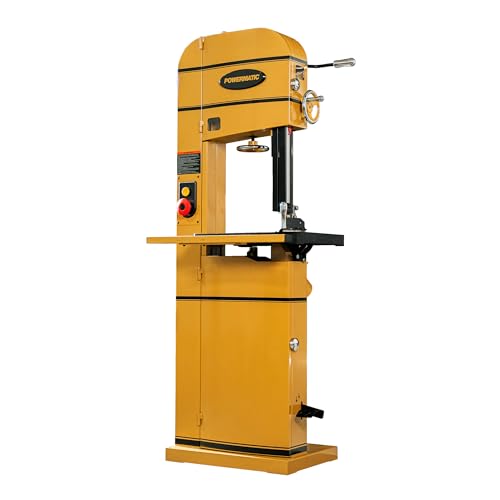
What We Like
- Low-friction, rust-resistant coated work surface
- Heavy-duty cast iron wheels for smooth momentum
- Tool-less high-end blade guides for accuracy
- Electrical interlock on blade tension release
Trade-offs
- Weighs 394 pounds, requiring a permanent shop location
With a 3 HP motor and solid cast iron wheels, this saw builds the momentum needed for serious resawing and dense hardwoods without bogging down. It’s built for the woodworker who demands repeatable, precise cuts and is willing to invest in a machine that minimizes vibration and drift. The tool-less blade guides and Accu-Fence make fine adjustments quick, turning complex curves and veneer slicing into routine shop tasks.
The trade-off for that precision and mass is a substantial footprint and a single miter slot, which might limit setups for those who frequently use complex sleds. Compared to a model like the JET 18-Inch, which offers a foot brake and slightly different table configuration, the Powermatic’s focus is squarely on delivering unwavering cutting performance and durability in a dedicated workshop. It’s a saw you buy once for a lifetime of accurate work.
RIKON Power Tools 10-1414 Band Saw
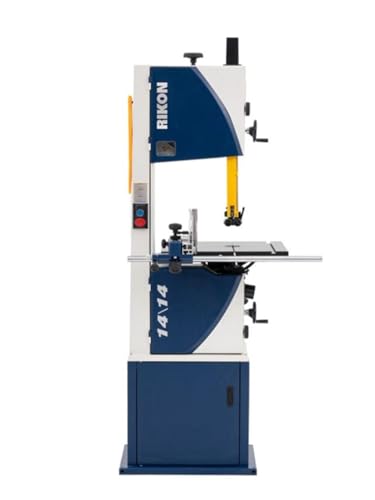
What We Like
- Massive 14-inch resaw capacity for thick stock
- Powerful dual-voltage motor with two-speed operation
- Large, coated cast iron table reduces friction
- Tool-less blade guides and quick-adjust fence
Trade-offs
- Overall length of 54.5 inches demands significant floor space
- Lower horsepower than premium 18-inch models like the Powermatic
A 14-inch resaw capacity lets you tackle serious woodworking projects, from bookmatched panels to heavy turning blanks, without stepping up to a much larger machine. This Rikon delivers that capability with a dual-voltage motor and a large, smooth table, making it a serious contender for the workshop that needs to process wide stock but operates on a mid-range budget. It’s built for the woodworker ready to move beyond the limitations of a smaller bandsaw.
The trade-off is its footprint; at over four and a half feet long, it requires a dedicated spot in the shop. While its 1-3/4 HP motor is capable, it gives up some muscle to the 3 HP units found on models like the Powermatic ArmorGlide for the deepest, toughest cuts. You’re getting a full-size bandsaw’s core functionality in a more affordable package, which is exactly where its value shines.
Product photos
RIKON Power Tools 10-3062S Band Saw
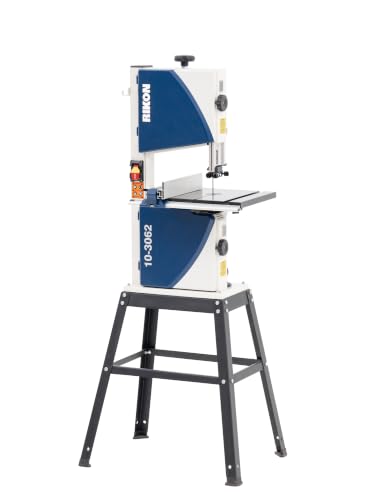
What We Like
- Two-speed motor for different materials
- Tool-less blade guide and tension adjustments
- SP-coated cast-iron table reduces friction
- Includes stand, fence, and miter gauge
Trade-offs
- 5-inch resaw capacity limits thick stock work
- 1/2 HP motor is modest for dense hardwoods
With a 5-inch cutting height, you can handle most furniture components, while its compact footprint fits into a small shop without dominating the floor. The 9-5/8-inch throat is sufficient for complex curved work on typical project pieces. This design delivers professional features like a coated tilting table and two blade speeds in a machine that prioritizes space efficiency.
This model makes a trade-off on power to achieve its compact design. Its 1/2 HP motor drives blades up to a half-inch wide, which is suitable for general cutting tasks, but for resawing you are limited to its 5-inch vertical capacity. If your projects regularly demand breaking down thick hardwoods, you would need to look at a machine like the higher-horsepower JET 18-Inch model. For other tasks, this RIKON consolidates precision into a single, compact station.
Product photos
DeWalt 9-Inch Band Saw
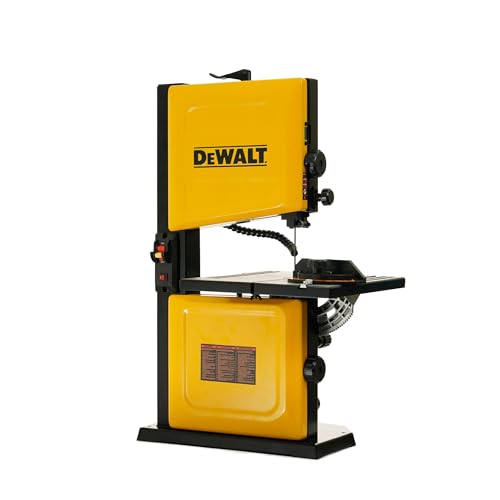
What We Like
- Two-speed operation for material-specific cutting
- Integrated LED illuminates the cutting line
- Compact 9-inch design fits smaller shops
- Includes dual dust port adapters
Trade-offs
- 3.5 AMP motor is for wood and light materials only
- 9-inch size limits large-scale resawing tasks
Its integrated LED worklight is a key feature, illuminating the cutting line for enhanced visibility during detailed or intricate cuts. This DeWalt suits hobbyists and DIYers with a compact 9-inch design that fits comfortably in smaller shop spaces like a garage corner. The two-speed operation allows you to match the blade speed to your material, and the included dual dust port adapters help keep your workspace clean for project work.
That compact size does limit its scale compared to larger tools like the JET 18-Inch model. The 3.5 AMP motor delivers reliable cutting performance for wood and light materials, making it suitable for home workshops. For smaller projects where seeing the cut line is critical, the saw positions its light directly on the work area.
Product photos
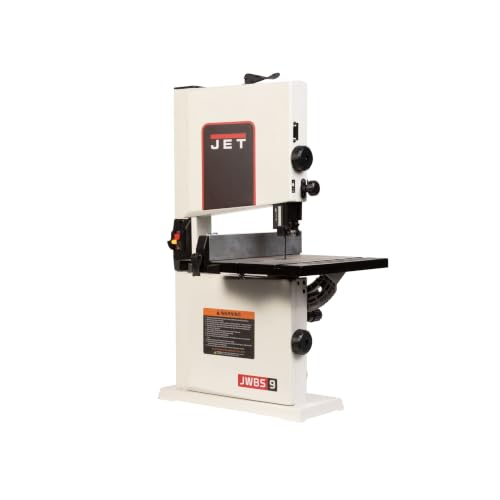
JET 9-Inch Benchtop Band Saw
What We Like
- Five-year warranty on woodworking machinery
- Cast aluminum wheels for smooth blade tracking
- Full 45-degree tilting worktable for bevel cuts
- Compact 19L x 14W inch footprint
Trade-offs
- 3-1/2 inch resaw limits thick stock work
- Designed only for wood and wood composites
- Mounting hardware for bench not included
A five-year warranty on the woodworking machinery offers serious peace of mind for a benchtop saw. This JET model is built for the hobbyist or space-constrained woodworker who needs reliable, accurate cuts in smaller stock. Its cast aluminum wheels and precision blade guides are designed for smooth, accurate blade tracking. With a 3-1/2 inch resaw capacity and a 9-inch throat, it handles curves and general shop cuts in wood and wood composites. It’s a solid choice for someone who wants dependable performance without dedicating floor space.
Owner feedback confirms the trade-offs are in scale and power. While it’s a capable benchtop unit, its capacities are modest, so for substantial resawing or heavy-duty use you’ll quickly reach its limits. Compared to a dedicated resawing machine like the RIKON 10-1414 with its 14-inch capacity, this JET is for lighter duties. It bolts to a bench and connects to a shop vac, making it a tidy, focused workshop addition. For detailed model work or smaller projects, it’s user-friendly and well-supported, but its job is precision on a smaller stage.
Product photos
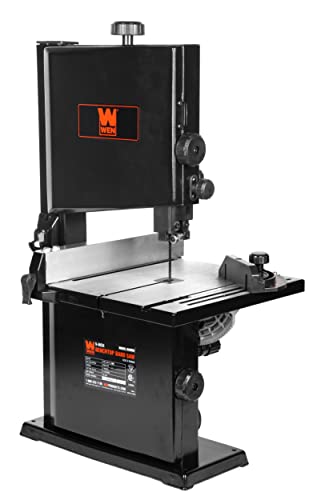
WEN 9-Inch Benchtop Band Saw
What We Like
- Includes essential accessories like fence and gauge
- Compact benchtop footprint saves shop space
- Adjustable blade guard with ball-bearing supports
- Solid 2-year warranty for a budget tool
Trade-offs
- 3-1/2 inch depth limits resawing thick stock
- 2.8-amp motor is less powerful than some 9-inch rivals
A maximum cutting depth of 3-1/2 inches and a 9-inch width handle common shop tasks like shaping curves or sizing small boards, which suits a first-time owner’s typical needs. This WEN model is for the hobbyist who wants to add a band saw to their bench without a major investment. It comes ready to work with a rip fence and miter gauge, and expert round-ups have called it a solid entry point for basic cuts.
You trade raw power and capacity for that low cost. The 2.8-amp motor won’t power through dense hardwoods as quickly as the DeWalt 9-inch model, and the depth stop means you can’t resaw lumber for bookmatching. For heavier workshop use, stepping up to a model like the JET 9-inch benchtop saw brings more power and a longer warranty, but you’ll pay more for those upgrades.
VEVOR 18-Inch Woodworking Bandsaw

What We Like
- High 16-inch resaw capacity for thick stock
- Powerful 3HP motor for dense hardwoods
- Included fence and miter gauge for precision
- 360° LED work light illuminates cut line
Trade-offs
- Table tilts only 15° left versus 45° right
- Large 75.8-inch height needs significant headroom
You can slice through massive slabs or bookmatch thick hardwood with authority thanks to its ability to cut stock up to 16 inches tall. This VEVOR model delivers serious workshop horsepower and a large cast-iron table at a mid-range price point. That makes it a compelling option for woodworkers who need to process large material but have been priced out of premium brands, built for the user who values raw cutting capability and a stable work surface over refined features.
The main trade-offs involve the details and the machine’s sheer footprint. Compared to the more refined JET 18-Inch model, you’re getting more motor power for similar money, but likely sacrificing some fit and finish. For a dedicated shop needing to resaw frequently, however, the core specs are hard to argue with.
Product photos
Laguna 18|bx Bandsaw

What We Like
- 16-inch resaw capacity for wide stock
- Precision 10-point ceramic guide system
- Accepts blades from 1/8 to 1-1/4 inches wide
- Dynamically-balanced cast iron wheels for smooth operation
Trade-offs
- At 410 pounds, it requires a permanent, sturdy shop floor.
- Its 77.8-inch height demands significant vertical clearance.
- The 220V requirement means it needs dedicated shop wiring.
Its ability to cut stock up to 16 inches tall is the standout feature here, letting you slice thick hardwood slabs into veneers or bookmatched panels with authority. This Laguna is built for the woodworker who regularly processes wide, expensive lumber and needs every cut to be precise and waste-free. The 3 HP motor and ceramic guides provide the muscle and control to handle that demanding work session after session.
Laguna bandsaws are usually considered the best quality, though this reputation comes with one of the highest price tags in the category. This professional-grade machine requires significant shop space and a 220V outlet, but its capability justifies that substantial footprint. For shops needing a 16-inch resaw height on a more constrained budget, the JET 18-Inch Woodworking Band Saw provides that same capacity with a lighter build and a 1.75 HP motor.
Product photos
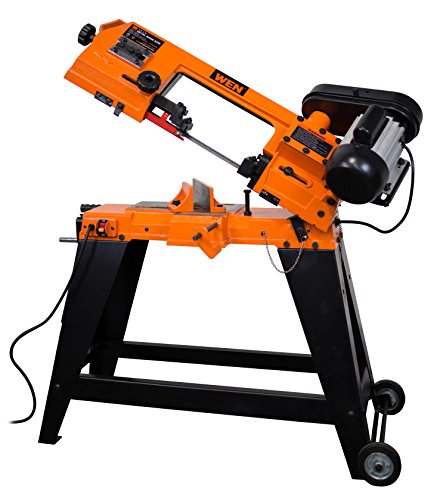
WEN Metal-Cutting Band Saw
What We Like
- Variable blade speeds for different metals
- Works in both vertical and horizontal positions
- Automatic shut-off after a cut completes
- Includes a mobile stand with wheels
Trade-offs
- At 118 pounds, it's a substantial stationary tool to position
- Three-speed motor is simpler than variable-speed controllers
A three-speed blade control from 80 to 200 feet per minute allows matching the speed to different metals, from softer aluminum to tougher steel. This adjustment, paired with a mitering vise that pivots up to 45 degrees, supports angled cuts for fabrication projects. The automatic shut-off feature turns the saw off after a cut is completed, which can be useful during unattended operation in horizontal mode.
The unit’s 118-pound weight, which includes its stand, requires a dedicated workshop space rather than portable use. The stand is equipped with wheels, allowing the saw to be moved to a storage position when not in use. In contrast to the woodworking-focused band saws listed, such as the JET 18-Inch model, this saw offers specific low-speed settings intended for cutting metal.
How We Evaluated Band Saws
Our research focused on specifications from manufacturers and expert woodworking publications, combined with consistent patterns in owner feedback. We prioritized three core criteria: cutting capacity (especially resaw height), motor power, and the design of critical components like blade guides and tables.
A saw’s resaw capacity determines the maximum thickness of lumber you can slice into thinner boards, a key task for furniture making. We also evaluated the ease of making adjustments, as tool-free blade guide and tension systems save significant time during setup. You can explore the specific strengths of different saw sizes in our guide to woodworking bandsaws.
The main limit of this research-based method is that we cannot verify hands-on performance metrics like vibration or long-term durability. We rely on detailed expert testing and aggregated user experiences to gauge real-world reliability.
What To Look For In Band Saws
Your workshop’s space and your primary projects dictate the best band saw for you. Key factors include the motor’s horsepower, the maximum thickness of wood you can resaw, and whether the saw’s frame is designed for stability or portability.
Focus on resaw capacity for slicing thick stock, motor horsepower for cutting dense hardwoods, and the saw’s footprint for your available shop space. Blade guide design and table quality are critical for precision and ease of use.
Resaw Capacity and Throat Depth
Resaw capacity is the maximum height of wood you can cut vertically, which is essential for creating veneers or bookmatched panels. A 14-inch saw might offer a 12-inch resaw, while an 18-inch model can handle 16 inches or more. Throat depth, the distance from the blade to the vertical frame, determines the width of a board you can cut from the edge, a 14-inch throat allows for cutting a 14-inch wide panel.
Motor Power and Frame Construction
Motor horsepower directly relates to a saw’s ability to cut dense hardwoods without stalling. Benchtop models often have motors suitable for softwoods and curves, while serious resawing requires more power. The saw’s frame, whether a lighter C-frame or a heavy steel cabinet, affects vibration and stability; heavier saws provide smoother cuts but demand a permanent shop location. For dedicated metal cutting, you’ll need a saw with variable speed control, which you can learn more about in our resource on metal-cutting band saws.
Blade Guides and Adjustability
Quality blade guides minimize deflection for straighter, more accurate cuts. Look for designs with ball bearings or ceramic blocks that can be adjusted easily, ideally without tools. A rack-and-pinion system for raising the upper guide assembly is a major convenience. The work table should be large, cast iron, and tilt for bevel cuts. Understanding these components is a key part of band saw operation.
- Check if the saw includes essential accessories like a fence and miter gauge, or if they are sold separately.
- Verify the dust collection port size; dual 4-inch ports are more effective than a single small port.
- Consider the blade size range the saw accepts, as wider blades are needed for resawing.
- Ensure the electrical requirements (110V or 220V) match your workshop’s power supply.
- Look for user-friendly features like a quick-release tension lever or an integrated work light.
For most woodworkers, a 14-inch band saw with at least a 1 HP motor and a 12-inch resaw capacity offers the best balance of capability and shop footprint.
Band Saws Compared
The table below compares the key specifications of our top picks to help you quickly identify the right model for your needs.
| Product | Motor Power | Resaw Capacity | Weight |
|---|---|---|---|
| JET 18-Inch Woodworking Band Saw | 1.75 HP | 16 inches | 383.0 pounds |
| Powermatic ArmorGlide 15-Inch Bandsaw | 3 HP | N/A | 394.0 pounds |
| RIKON Power Tools 10-1414 Band Saw | 1-3/4 HP | 14 inches | N/A |
| RIKON Power Tools 10-3062S Band Saw | 1/2 HP | N/A | 77.5 Pounds |
| DeWalt 9-Inch Band Saw | 3.5 AMP | N/A | 40.0 Pounds |
| JET 9-Inch Benchtop Band Saw | N/A | 3-1/2 inches | 40 pounds |
| WEN 9-Inch Benchtop Band Saw | 2.8-amp | 3-1/2 in deep | 40.0 pounds |
| VEVOR 18-Inch Woodworking Bandsaw | 3 HP | 16 inches | 396.8 pounds |
| Laguna 18|bx Bandsaw | 3 HP | 16 inches | 410.0 pounds |
| WEN Metal-Cutting Band Saw | 4.6 amp | N/A | 118.0 pounds |
Frequently Asked Questions
Which band saw is considered the best quality?
Quality is defined by precision, power, and durability. Brands like Laguna and Powermatic are consistently noted for industrial-grade construction, heavy cast-iron components, and advanced ceramic blade guides. The best quality for you depends on your specific tasks, whether that’s intricate scrollwork or heavy-duty resawing.
What is a high-quality bandsaw?
A high-quality bandsaw features a heavy, vibration-dampening frame (often cast iron or welded steel), a powerful motor matched to its size, and precision blade guides that are easy to adjust. It should also have a large, flat work table that tilts smoothly and a reliable blade tracking system. These saws are built for accuracy and long-term use in a workshop.
Are Harbor Freight bandsaws any good?
Harbor Freight bandsaws, like the Central Machinery brand, are budget-friendly and can be suitable for light, occasional use. Based on owner feedback, they may require more frequent adjustments and lack the refined performance of higher-end models. They represent a value entry point but may not hold up to daily, demanding woodworking tasks.
Which bandsaw is better, Laguna or Harvey?
Both Laguna and Harvey produce well-regarded, premium bandsaws. Our research indicates Laguna has a longer-established reputation in the North American market with a wide range of models and strong owner support. Harvey is a newer contender offering similar high-end features. The better choice often comes down to specific model comparisons, available features, and local service support.
What size band saw do most woodworkers need?
Most serious hobbyists and small-shop woodworkers find a 14-inch band saw to be the most versatile size. It offers a good balance of resaw capacity (often 12 inches or more), sufficient power for hardwoods, and a manageable shop footprint. For detailed guidance on this popular category, see our review of best 14-inch bandsaws.
The Bottom Line
For serious woodworkers who need to resaw wide boards and handle demanding dimensioning tasks, the JET 18-Inch Woodworking Band Saw is the best overall choice. It offers the necessary power and large capacity, along with thoughtful features like dual dust ports.
If you’re on a tight budget, the WEN 9-Inch Benchtop Band Saw provides core functionality for curves and light work, while the RIKON 10-1414 offers outstanding resaw capacity at a mid-range price. For those with very limited space, compact benchtop bandsaws like the DeWalt model are worth a close look.
Ultimately, your decision should hinge on resaw capacity. Honestly assess the thickest stock you plan to cut, then choose a saw whose maximum capacity exceeds that by a comfortable margin to ensure it can handle your future projects.
