
10 Best Sanders For Woodworking in 2026
This post contains affiliate links. As an Amazon Associate, we earn from qualifying purchases.
Our best overall sander for woodworking is the DeWALT DWE6423 Random Orbit Sander for its effective dust-sealed switch and reduced vibration. We also recommend the DeWALT DCW210D1 Cordless Orbital Sander for portability and the Metabo HPT SB8V2 Belt Sander for aggressive material removal. Choosing the wrong sander can leave you with a sore arm and a project marred by swirl marks or uneven surfaces.
This guide is based on research into specifications, manufacturer data, and patterns in owner feedback, giving you a clear path to the right tool for your shop.
Top 10 Sanders For Woodworking in the Market
Certain content that appears on this site comes from Amazon. This content is provided "as is" and is subject to change or removal at any time.
The Best Sanders For Woodworking, Reviewed
DeWALT DWE6423 Random Orbit Sander

What We Like
- Effective dust-sealed switch for longer life
- Reduced vibration from counterweight design
- Secure grip from rubber overmold in key areas
- One-handed locking dust bag for easy management
Trade-offs
- Dust port requires an adapter for standard 1-1/4" hoses
- Corded design limits mobility compared to cordless models
- At 3.4 lb, it's not the lightest 5-inch sander available
A 3-amp motor delivering up to 12,000 orbits per minute provides the speed and muscle to tackle everything from aggressive stock removal to final finishing. Combined with a separate counterweight that cuts down on vibration, this sander is built for all-day comfort without sacrificing power. The shorter height gets the pad closer to the work surface, offering better control in tight spots. For the woodworker who needs a reliable, corded workhorse for the shop, this sander’s balanced performance and thoughtful design make it a standout choice.
The trade-off is that you’re tethered to an outlet. If complete mobility is your priority, a tool like the DeWALT DCW210D1 cordless orbital sander would be a better fit, though you’ll manage batteries. The DeWALT DWE6423’s dust collection is excellent with its dedicated vacuum, but note that connecting to most shop vacs requires a separate universal quick connector. This is a tool engineered for sustained, precision work where power and dust management are paramount.
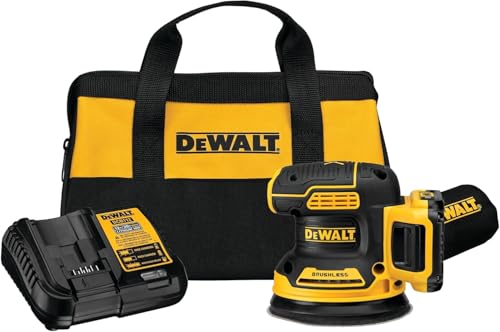
DeWALT DCW210D1 Cordless Orbital Sander
What We Like
- Brushless motor for runtime and efficiency
- Wide variable-speed range for different applications
- Low-profile design for precise sanding near edges
- Dust-sealed switch for longer tool life
Trade-offs
- Battery and charger inclusion is unspecified
A 20V system provides cordless freedom, and a speed dial adjusts from 8,000 to 12,000 orbits per minute. This lets you move from coarse shaping to fine finishing without hunting for an outlet, making it a natural core for a mobile sanding kit. It suits anyone already using the DeWALT battery platform or a woodworker who prefers an unplugged workflow. The low-profile height is a thoughtful touch for getting into corners.
You trade some heft for that cordless convenience. At 4.3 pounds, it feels more substantial in hand than its corded sibling, the DeWALT DWE6423. That extra mass can be an advantage for smoothing large panels but might lead to fatigue on overhead work. Compared to a dedicated dust-collecting sander, you’ll rely more on a shop vac connection or a good mask. The tool focuses its sealing efforts on protecting the internal switch rather than capturing all the debris.
Makita BO4556K Finishing Sander

What We Like
- High 14,000 OPM speed for rapid stock removal
- Rubberized grip reduces hand fatigue during long sessions
- Large lever makes paper changes quick and simple
- Dust port keeps your workspace cleaner
Trade-offs
- 1/4 sheet pad limits sanding area compared to 5-inch orbital models
- Corded design requires an outlet, unlike the DeWalt DCW210D1
This sander’s 14,000 orbits per minute is its defining trait, letting you strip old finish or smooth a surface remarkably fast. That speed, combined with a featherlight 2.5-pound body and a soft rubber grip, makes it an excellent choice for anyone facing big finishing jobs like cabinets or furniture where hand fatigue is a real enemy. The efficient dust collection is a practical bonus, hooking right up to a shop vac to keep your lungs and your project clear.
This Makita sander operates at 14,000 orbits per minute, which means it removes material quickly for a smooth finish. Its design includes a contoured, rubberized palm grip and ball bearing construction, making it comfortable to hold while reducing vibration during extended use. The tool also features a large clamping lever for changing paper and an efficient dust collection system that connects to a vacuum.
Metabo HPT SB8V2 Belt Sander

What We Like
- Powerful 9-amp motor for aggressive stock removal.
- Variable speed dial for control over different materials.
- Left-side dust bag improves corner sanding access.
- Clear front cover provides visibility at the work edge.
Trade-offs
- At 9.5 pounds, it is significantly heavier than orbital sanders.
- Corded design limits mobility compared to battery-powered models.
The 9.0 amp motor provides forcible power for the toughest sanding jobs, like leveling a tabletop. A variable speed dial at the base of the handle allows for control across various applications. Its clear front cover improves visibility when sanding up against a surface, and the flush surface design allows for quick and even sanding.
That capability comes with inherent trade-offs. The sander’s 9.5-pound weight demands more physical effort than lighter tools like the 3.4-pound DeWALT DWE6423 orbital sander. It is a corded tool, which requires planning for power access unlike a cordless model.
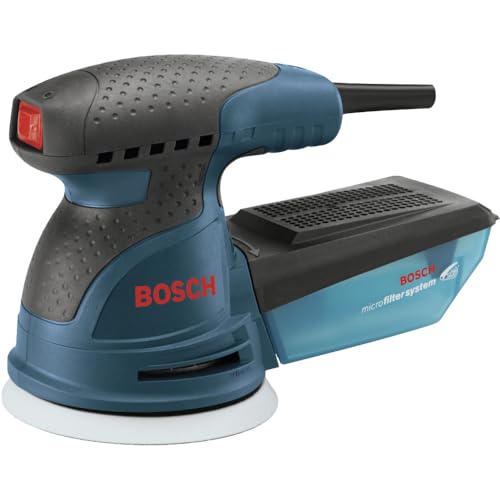
Bosch ROS20VSC Random Orbit Sander
What We Like
- Pad dampening system minimizes swirl marks.
- Firm hook-and-loop disc attachment system.
- Variable speed control for different tasks.
Trade-offs
- Corded design limits mobility versus cordless models.
- Dust canister requires regular emptying on big jobs.
Bosch’s ROS20VSC orbital sander includes a pad dampening system designed to help minimize swirl marks on flat and contoured surfaces. Research mentions note it stands out as a favorite among woodworkers. Its 2.5 amp motor provides variable speed control from 7,500 to 12,000 no-load OPM for different tasks, and the dust collection system traps particles as small as half a micron.
As a corded tool, its operation requires access to an electrical outlet. The DeWALT DCW210D1 from the other-products list is a cordless orbital sander option. The Bosch ROS20VSC includes a vacuum adapter for connecting to a dust extractor.
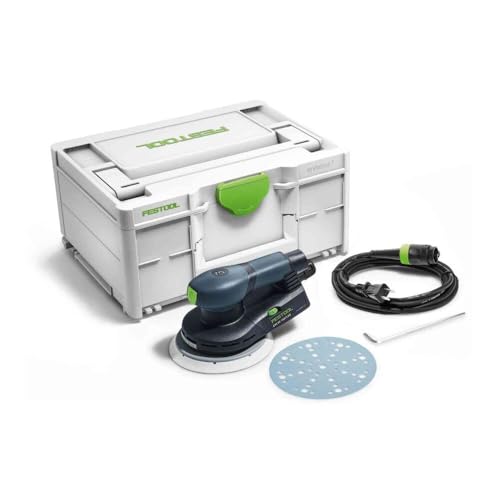
Festool ETS EC150/3 Orbital Sander
What We Like
- Extremely lightweight at only 2.5 pounds
- 3 mm stroke creates excellent surface quality
- Maintains constant speed even under load
- Vibration Control System reduces user fatigue
Trade-offs
- Larger footprint than compact 5-inch palm sanders
- Corded design lacks cordless convenience
At just 2.5 pounds, the Festool ETS EC150/3 is designed for optimal ergonomic work conditions, which helps reduce fatigue during extended use. Its 3 mm sanding stroke creates a very high surface quality for fine finishing work. Stepless speed pre-selection maintains constant speed even under load, contributing to consistent results.
With a 3 mm stroke designed for surface quality, this sander is specialized for fine finishing. For tasks requiring rapid material removal, such as leveling a large surface, a belt sander like the 9.5-pound Metabo HPT SB8V2 would be a more suitable choice. The Festool’s Vibration Control System technology is designed for smoother operation to further help reduce fatigue during detailed work.
Product photos
SKIL 7510-01 Belt Sander

What We Like
- Pressure control warns against excessive force
- Auto-track system keeps the belt centered
- Flush edge design sands right to edges
- Micro-filtration captures fine dust particles
Trade-offs
- 5.5 lb weight demands more arm strength for overhead work
- Fixed corded design lacks portability of cordless models
A 6 Amp motor paired with a 3×18-inch belt gives you enough muscle to strip material quickly without overwhelming a beginner. The pressure control technology is a smart touch, vibrating to tell you when you’re pushing too hard and risking gouges or belt wear. For a woodworker needing to flatten table tops or level glue-ups on a tight budget, this sander delivers core functionality where it counts. It handles the aggressive work a random orbit sander can’t touch.
At 5.5 pounds, this belt sander is a manageable tool for extended overhead or vertical work, reducing user fatigue compared to bulkier models. Its pressure control technology alerts you when excessive force is applied, which helps prevent motor strain and teaches proper technique. A 6.0 Amp motor provides enough power for sanding wood surfaces, making it a straightforward, corded workhorse for fundamental tasks.
Product photos
Makita BO5030K Random Orbit Sander

What We Like
- High 12,000 OPM speed for rapid material removal
- Light 2.9-pound weight reduces user fatigue
- Rubberized grip improves comfort and control
- Pad control system for smooth startup
Trade-offs
- No variable speed control for delicate tasks
- Corded design limits mobility compared to battery models
A 12,000 OPM motor and a 1/8-inch orbit deliver aggressive stock removal, making this sander built for speed. The 2.9-pound weight and rubberized grip let you maintain control during those long sessions without wearing out your arm. It’s a straightforward, single-speed workhorse for the woodworker who needs to flatten a tabletop or strip old finish quickly, prioritizing raw efficiency over finesse.
The trade-off for that speed is a lack of variable speed control. You won’t dial it down for polishing or working with softer woods. It’s also a corded tool, so you’re tethered to an outlet. For jobs demanding more precision, a variable-speed model like the DeWALT DWE6423 offers greater versatility. If your primary goal is to move through grits and get a surface ready for finishing fast, the Makita’s focused design excels.
Product photos
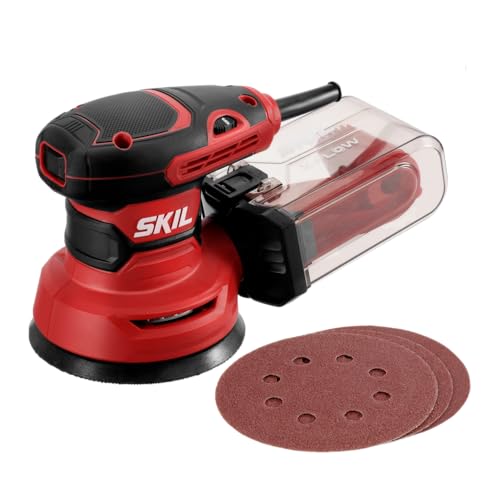
SKIL SR211601 Random Orbit Sander
What We Like
- Cyclonic dust box is easy to empty
- Compact size for working in tight spaces
- Ergonomic soft grip reduces hand fatigue
- Dust-sealed on/off switch for simple operation
Trade-offs
- Corded design limits mobility compared to cordless models
- Dust collection requires manual emptying, not a shop-vac hookup
- At 3.4 lb, it's slightly heavier than the 2.9 lb Makita BO5030K
A cyclonic dust collector with a transparent, easy-to-empty container helps keep the work area clean without needing a vacuum. Its 2.8 amp motor and 13,000 orbits per minute are designed for a variety of sanding applications. The tool’s compact size and 3.4-pound weight, combined with an ergonomic soft rubber grip, aim to reduce hand fatigue during extended use, while variable speed control allows adjustment for different materials.
The dust collector uses a self-contained container, so dust management is handled manually rather than through a direct exhaust port. As a corded tool, operation is limited to areas with electrical outlet access. Among other products, the corded DeWALT DWE6423 is a similar weight but larger in overall dimensions, and the cordless DeWALT DCW210D1 offers portability with a battery but weighs more.
Product photos
WEN 6502T Benchtop Sander

What We Like
- Combines belt and disc sanding in one unit
- Cast iron base minimizes heavy vibrations
- Tilting belt accommodates complex edge work
- Tension lever simplifies belt changes
Trade-offs
- Benchtop design requires permanent or semi-permanent shop space
- 22-inch length demands a substantial bench footprint
This two-in-one machine combines a belt and disc sander, letting you handle shaping and finishing without swapping tools. Its cast iron base provides a solid, vibration-dampening foundation that is critical for precision work on a benchtop. For the woodworker setting up a shop station, the belt tilts from 0 to 90 degrees, adding flexibility for sanding miters and complex edges.
The 4.3 Amp motor provides power for both sanding functions. This design offers space-saving versatility for general shop tasks rather than matching the higher motor amperage of a model like the Metabo HPT SB8V2. It excels as a first stationary sander for a home workshop, where its dual functionality covers a wide range of common needs.
Product photos
How We Evaluated Sanders For Woodworking
Our evaluation focused on manufacturer specifications, expert round-up recommendations, and consistent patterns in owner feedback. We prioritized criteria that directly affect shop results and user comfort: motor power and speed for efficient work, vibration control and ergonomics to reduce fatigue, and dust collection effectiveness for a cleaner, healthier workspace. Since this is a research-based evaluation, we could not measure long-term durability or feel the exact handling differences between models firsthand.
What To Look For In Sanders For Woodworking
The right sander makes the difference between a chore and a pleasure, and between a rough surface and a glass-smooth finish. Understanding the core types and their jobs is the first step to a confident choice.
For most woodworking, a 5-inch random orbital sander is the versatile go-to. Key buying factors are the motor’s power and speed for the task, vibration control to fight user fatigue, and a dust collection system that keeps your workspace and lungs clear.
Sander Type & Intended Use
The fundamental choice is matching the tool to the job. A 5-inch random orbit sander is the versatile cornerstone for general smoothing and finishing, while a belt sander is built for rapid stock removal and flattening. For working in tight corners or on intricate details, you’ll want to look into our guide on the best detail sanders for woodworking.
Finishing sanders excel at fast work on large, flat panels, and a benchtop combo unit provides a stationary solution for a dedicated shop space. Our comprehensive guide to power sander types breaks down each category’s strengths.
Power, Speed & Control
Motor power, measured in amps for corded tools, dictates how aggressively a sander can work without bogging down. Orbital speed, measured in orbits per minute (OPM), affects how quickly material is removed. Variable speed control is a valuable feature, allowing you to slow down for delicate finishes or crank it up for faster shaping. For tasks demanding serious muscle, like leveling a tabletop, our research on the best belt sanders for woodworking highlights models with high-amp motors.
Vibration & Ergonomics
A sander that transfers excessive vibration to your hands will cause fatigue quickly, limiting your work time and control. Look for designs that mention counterbalanced motors, rubber overmolds on the grip, or specific vibration-dampening systems. Weight also plays a major role; a lighter tool is easier to manage for overhead or detailed work. The comfort of the grip shape and the placement of controls contribute significantly to a smooth, manageable sanding experience.
Dust Collection
Effective dust collection is non-negotiable for both shop cleanliness and your health. Systems range from simple, onboard fabric bags to ports that connect directly to a shop vacuum. A well-sealed dust collection path keeps fine particles out of the tool’s motor and switch, extending its life. For tools known for their smooth finish, like the top picks in our best random orbital sanders for woodworking guide, excellent dust collection is often a standard feature.
- Check if the dust port uses a standard size or requires a specific adapter for your vacuum hose.
- Consider how easy it is to empty the dust canister or bag during a long job.
- Look for a dust-sealed switch, which helps prevent internal damage from fine particles.
Pair your sander with the right abrasive; using the correct sandpaper grit for wood in the proper sequence is just as important as the tool itself.
Sanders For Woodworking Compared
The following table provides a direct comparison of key specifications and features across our top picks to help you see the differences at a glance.
| Product | Weight | Speed / OPM | Dust Collection |
|---|---|---|---|
| DeWALT DWE6423 Random Orbit Sander | 3.4 pounds | 8,000 – 12,000 OPM | Fits DeWALT DWV010/DWV012 |
| DeWALT DCW210D1 Cordless Orbital Sander | 4.3 pounds | 8,000-12,000 OPM | Dust-sealed switch |
| Makita BO4556K Finishing Sander | 2.5 pounds | 14,000 OPM | Through-pad system with port |
| Metabo HPT SB8V2 Belt Sander | 9.5 pounds | Variable speed dial | Dust collection bag |
| Bosch ROS20VSC Random Orbit Sander | 3.5 pounds | 7,500-12,000 OPM | Vacuum dust collector |
| Festool ETS EC150/3 Orbital Sander | 2.5 lbs (1.2 kg) | Stepless pre-selection | N/A |
| SKIL 7510-01 Belt Sander | 5.5 Pounds | N/A | Vacuum compatible |
| Makita BO5030K Random Orbit Sander | 2.9 pounds | 12,000 OPM | Through-the-pad system |
| SKIL SR211601 Random Orbit Sander | 3.4 pounds | 13,000 orbits per minute | Cyclonic dust box |
| WEN 6502T Benchtop Sander | N/A | 3600 RPM | N/A |
Frequently Asked Questions
What type of sander is best for woodworking?
For most woodworking tasks, a 5-inch random orbital sander is the best all-around choice. It provides a good balance of speed and a relatively swirl-free finish, making it suitable for everything from initial smoothing to final prep. For specific needs like rapid material removal, a belt sander is better, while detail sanders handle corners and curves.
Which brand of sander is considered the best?
There is no single “best” brand, as different manufacturers excel in different areas. Brands like DeWALT and Makita are consistently praised for durable, value-oriented tools, while Festool is renowned for premium performance, especially in dust collection and low vibration. The best brand for you depends on your budget and specific performance priorities.
Are Festool sanders worth the money?
Festool sanders command a premium price and are generally worth it for professionals or serious hobbyists for whom sanding is a frequent, critical task. You are paying for exceptional dust collection, very low vibration, and a refined user experience that can increase productivity and reduce fatigue over long periods in the shop.
Is an orbital or palm sander better?
This depends on your project. A random orbital sander (a type of palm sander) uses a spinning-and-orbiting motion that typically leaves fewer swirl marks and is better for fine finishing. A standard finishing or “palm” sander uses a simple orbital motion and is often lighter and faster for tasks like paint removal, but may leave a slightly less refined surface on bare wood.
What should I look for in a cordless sander?
For a cordless sander, prioritize a brushless motor for longer battery life and tool longevity, and consider it as part of an existing battery platform you own. Look for a model with a variable speed dial to manage power consumption, and be aware that runtime is limited compared to a corded model, making it better for shorter or mobile jobs.
The Bottom Line
The DeWALT DWE6423 Random Orbit Sander is our best overall pick for its powerful, vibration-dampened performance and practical dust management, ideal for the woodworker who does most sanding at a stationary bench with power access. If you’re on a tight budget but need to flatten lumber, look to the SKIL 7510-01 Belt Sander, and for unmatched portability, the DeWALT DCW210D1 Cordless Orbital Sander is the clear choice. Ultimately, matching the sander type to your most common task, whether it’s fast stock removal, swirl-free finishing, or detailed work, is the single most important decision for a successful purchase.
