
10 Best Cut Off Saws in 2026
This post contains affiliate links. As an Amazon Associate, we earn from qualifying purchases.
The Evolution S14MCS Mitering Chop Saw is the top choice for a shop-based cut off saw, thanks to its burr-free, cold-cutting blade that eliminates grinding prep. For pure speed, the DEWALT DW872 excels with its Best Fast-Cutting Performance award, while the Milwaukee 6176-20 is a leading option for a heavy-duty abrasive machine. Choosing the right saw means matching its cutting method and capacity to your most common materials and work location. This guide compares ten top models by researching specifications, expert analyses, and patterns in owner feedback to highlight their distinct strengths and trade-offs.
Top 10 Cut Off Saws in the Market
Certain content that appears on this site comes from Amazon. This content is provided "as is" and is subject to change or removal at any time.
The Best Cut Off Saws, Reviewed
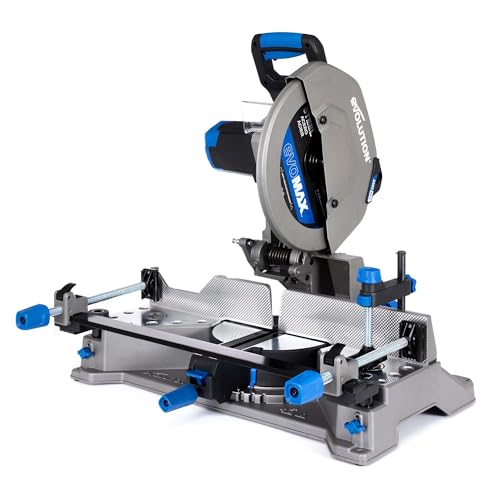
Evolution S14MCS Mitering Chop Saw
What We Like
- EVOMAX motor with soft start prevents breaker trips.
- Burr-free, cold cuts eliminate grinding and welding prep.
- Reinforced base and fence ensure zero flex for accuracy.
- Electronic blade brake stops the blade in seconds.
Trade-offs
- At 72.4 lb, it's significantly heavier than most competitors.
- Requires proper feed technique to avoid blade heat buildup.
- The substantial footprint needs dedicated workshop space.
The Evolution S14MCS makes over 3500 clean cuts in mild steel, which translates directly to less time deburring and more time welding or assembling. Its cold-cutting carbide blade runs four times faster than an abrasive wheel, and the intelligent motor optimizes speed to extend blade life. This is the saw for a professional metal shop or a serious fabricator who values precision and a weld-ready finish straight from the cut. The soft start is a thoughtful touch that keeps you from walking back to the breaker box.
You pay for that performance with mass and bulk. At over 72 pounds, this isn’t a saw you’ll want to haul to a job site regularly; it’s a bench-mounted anchor meant for a stationary setup. Compared to a lighter-duty option like the Porter-Cable PCE700, the Evolution demands more commitment in space and technique. You must let the blade spin up fully and feed with firm pressure, as the manual advises, or you’ll shorten the life of that premium Japanese blade. It’s built for those who will use its capabilities daily.
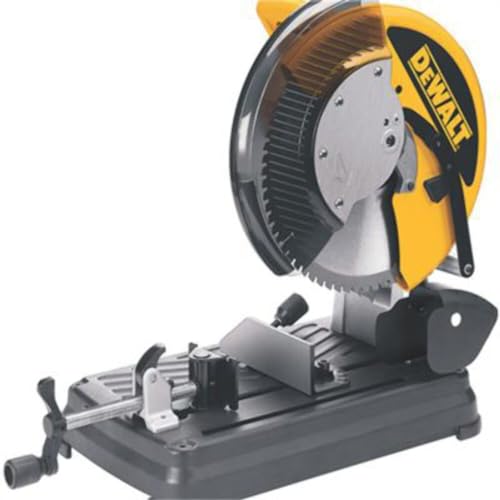
DEWALT DW872 Metal Cutting Saw
What We Like
- Cuts far faster than abrasive chop saws
- Virtually burr-free, cool-to-the-touch finished cuts
- Largest cutting capacity in its class
- Ergonomic horizontal handle reduces user fatigue
Trade-offs
- Weight listed as 0.3 lb is clearly a data error; expect a substantial bench-top tool.
- No mitering capability compared to dedicated metal miter saws.
- Fixed-position design lacks the portability of a cordless cutoff saw.
A 15-amp motor drives a carbide-tipped blade through metal four times faster than a standard chop saw, fundamentally changing the pace of the work. This saw suits metalworkers and fabricators who prioritize speed and finish quality. It delivers clean, cool cuts in materials up to 5-3/16 inches round, eliminating sparks and reducing the need for post-cut grinding. That combination of speed and finish boosts productivity for repetitive tasks like cutting angle iron, tubing, or bar stock.
The trade-off is that this is a dedicated, stationary tool. You won’t be carrying it to a jobsite like the Milwaukee M18 FUEL cordless cutoff saw. Research and owner feedback consistently highlight its transformative cutting performance, but it’s a specialist. For repetitive, precise cuts on a workbench, it’s in a league of its own. If your work demands mobility or complex angled cuts, a mitering model like the Evolution S14MCS would be a more suitable comparison.
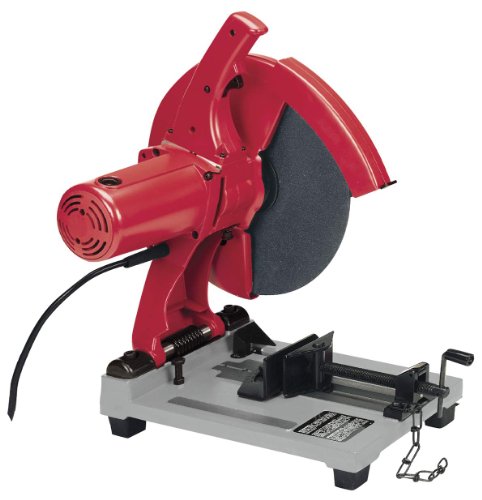
Milwaukee 6176-20 Abrasive Cutoff Machine
What We Like
- High 3.2 HP output for tough cuts
- Cast iron base ensures solid stability
- Spindle lock simplifies wheel changes
Trade-offs
- At 53 lb, it's a chore to move around the jobsite.
- Lacks the burr-free finish of a cold cut saw.
- Abrasive wheels wear faster than carbide blades.
With a 15-amp motor delivering 2400 watts and 3.2 horsepower, this saw provides the power for demanding abrasive cutting. That output is built on a heavy-duty cast iron base, which creates a stable platform for the work. The spindle lock is included for convenient changing of abrasive wheels.
The trade-off for that brute strength is portability. At 53 pounds, you’ll want to set it up in one spot. It also creates the heat and burr typical of abrasive cutting, so if you need clean, ready-to-weld edges, look at a cold-cut model like the Evolution S14MCS. For pure, unflinching abrasive work, however, this Milwaukee has the guts to handle it day after day.
BOSCH GCO15-14 Abrasive Cut-Off Machine

What We Like
- Powerful 15 Amp motor for fast cutting.
- Large 5-inch capacity for bigger workpieces.
- Adjustable fence with three mounting positions.
- Adjustable spark guard directs debris.
Trade-offs
- Miter cuts are limited to the left side only.
- At 31 lb, it is not the lightest bench-top option.
- One-year warranty is shorter than some competitors.
A 4100 RPM no-load speed makes this abrasive saw a true speed demon for slicing through ferrous metal. That high RPM, paired with a stout 15-amp motor, means you’ll power through rebar, angle iron, and conduit with minimal bog-down. It’s a clear choice for the user whose priority is raw cutting speed and who needs the large 5-inch capacity for bulky stock, all in a relatively compact benchtop footprint.
As an abrasive cut-off machine, it includes an adjustable spark guard to help control sparks. The adjustable fence provides miter angle adjustment from 0 to 45 degrees to the left. This setup is for making straight or angled cuts in metal, supported by a one-year limited warranty for repair or replacement.
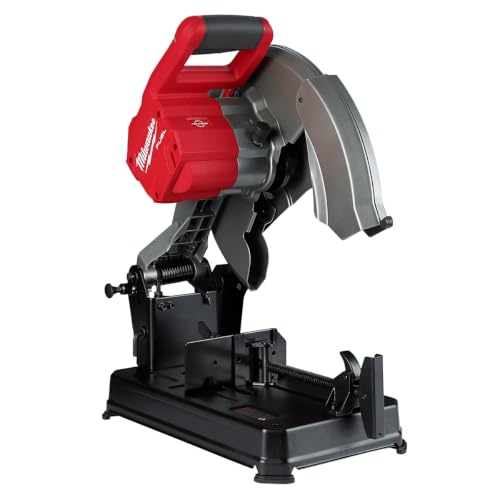
Milwaukee M18 FUEL Cordless Cut-Off Saw
What We Like
- Rapid-stop braking in under 3 seconds
- Tool-free fence and blade change
- Cordless 18V design for jobsite mobility
- Delivers corded-level 15 Amp power
Trade-offs
- Tool-only: requires separate M18 battery and charger
- Heavier than some corded abrasive saws at 41.8 lb
A brake that stops the wheel in under three seconds is the standout feature here, making this cordless cut-off saw a serious contender for anyone prioritizing jobsite safety and quick repetitive cuts. It generates power equivalent to a 15-amp corded tool, which is a major plus for mobility around a worksite or remote location. The tool-free adjustments for the fence and blade are exactly the kind of thoughtful design that keeps a project moving without hunting for a wrench. This is a saw built for the pro or serious user who needs a portable tool with the quick-stop safety typically found on stationary shop equipment.
This is a tool-only package, which means you need to buy Milwaukee’s M18 batteries separately. It weighs 41.8 pounds, making it heavier than many corded saws like the 31-pound Bosch GCO15-14. While portable, it’s not lightweight. For work always near an outlet, a dedicated corded model can be a simpler and lighter choice. However, the Milwaukee’s cordless power and rapid-stop braking are strong advantages for scattered jobsite cuts where safety is key.
Makita LW1401 Cut-Off Saw

What We Like
- Tool-less vice for quick material clamping.
- Two-stage lock-off button for operator safety.
- Adjustable spark guard diverts sparks effectively.
- Powerful 15 AMP motor for demanding cuts.
Trade-offs
- Weighs 37 pounds, requiring a sturdy work surface.
- No cordless option for remote job sites.
A tool-less vice adjustment is the standout feature here, letting you clamp material fast without hunting for a wrench. That focus on speed and convenience makes this 15 AMP saw a logical choice for anyone who needs to make frequent material changes on a project. It’s built for the user who values a streamlined workflow over complex features, delivering solid power in a package designed to minimize downtime.
Weighing 37 pounds, this saw is designed for bench-top stability rather than easy transport. It is heavier than some abrasive cut-off machines like the Bosch GCO15-14 at 31 pounds, making it less ideal for frequent job site moves. For a stationary shop setup where you’re processing metal stock, the Makita’s mass helps keep it steady during operation.
Product photos
VEVOR 14" Dry Cut Chop Saw

What We Like
- Dry-cut ceramic blade eliminates sparks.
- Thick vise reduces wobble for accurate cuts.
- Tool-less 45° angle adjustment.
- Protective spark guard and soft-start for safety.
Trade-offs
- At 51 lb, it's heavier than several abrasive saws.
- Blade not recommended for cutting stainless steel.
- Requires a dedicated, stable surface due to size.
A ceramic alloy blade spinning at 1200 RPM uses dry-cut technology to run cool and virtually eliminate sparks, which leaves a smooth, flat finish on the cut metal. This cold-cutting approach means you can handle the workpiece immediately and work in areas where spark showers from abrasive saws would be a problem. The machine is built for cutting steel, iron, and aluminum, with the product notes explicitly stating the blade is not recommended for stainless steel.
A clean, cool cut comes with a specific blade limitation and a substantial 51-pound footprint. This is a very capable stationary saw, but its weight makes it less ideal for daily transport to a job site. If pure portability with a cord is the priority, a lighter abrasive machine like the Bosch GCO15-14 is easier to move. That convenience, however, means dealing with sparks, noise, and a rougher finish.
Product photos
Evolution R355CPS Multi-Material Chop Saw

What We Like
- Cuts wood, steel, plastic with one blade
- Clean, low-heat cuts on mild steel
- High-torque 15 Amp motor
- Large 95 x 180mm rectangular capacity
Trade-offs
- At 47 lb, it's heavier than many abrasive saws
- Miter capacity limited to 45 degrees
The ability to slice through wood with nails, plastic, and mild steel with a single TCT blade is the core advantage here. That 15-amp motor has the guts to push through all those materials without needing a spark-filled abrasive disc. For a home workshop or a fabricator tackling mixed projects, this one saw can replace two, saving you time and blade changes. It suits the user who needs clean, burr-free cuts in metal but also regularly needs to trim composite decking or framing lumber.
Its primary advantage is multi-material capability, using a single blade to cut wood, plastic, and mild steel, which simplifies projects that mix materials. At 47 pounds, the saw has a stable, substantial feel on a workbench, though its weight is a consideration for frequent relocation. While Evolution has a history of pioneering steel-cutting saws, this model’s versatility positions it for general-purpose use rather than as a dedicated industrial metal cutter.
Product photos
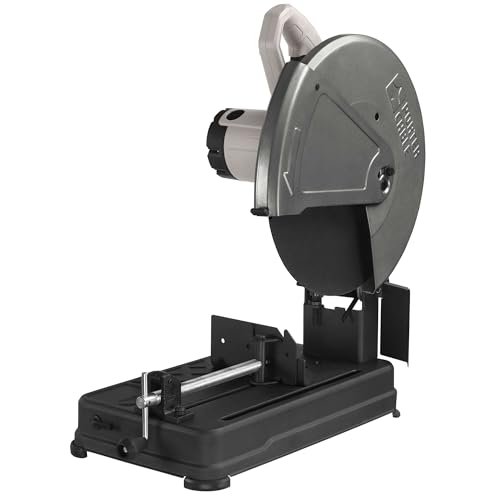
PORTER-CABLE PCE700 Chop Saw
What We Like
- 15-amp motor provides strong cutting power
- Quick-release clamp for fast material handling
- Adjustable fence for 45-degree miter cuts
- Spark deflector maintains clear line of sight
Trade-offs
- At 32 pounds, it is not the lightest for frequent transport
A 15-amp motor spinning at 3,800 RPM gives this chop saw plenty of muscle for cutting through steel and other metals. It’s a straightforward, capable machine for the user who needs reliable cuts without a complex setup. The quick-release clamp and adjustable fence make repetitive work faster, while the spark deflector is a simple but crucial safety touch. This design prioritizes core function over extra features, making it a solid choice for foundational shop work.
With a 15-amp motor spinning at 3,800 RPM, this chop saw provides the force needed for demanding cuts through metal stock. The quick-release material clamp makes swapping workpieces straightforward, saving time during repetitive jobs. A spark deflector is included for safety and to maintain a clear view of the cut line. Its cutting fence adjusts for miters up to 45 degrees, allowing for angled cuts in framing or fabrication.
Product photos
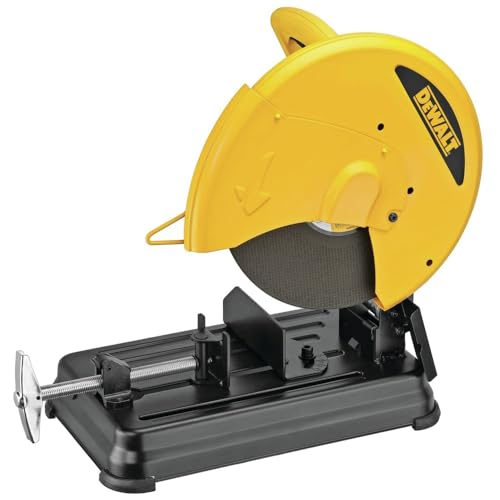
DEWALT D28730 Chop Saw
What We Like
- 2300W motor includes overload protection
- Ergonomic handle reduces user fatigue
- Quick-Lock vise for fast material clamping
- 45-degree fence enables accurate angle cuts
Trade-offs
- Amazon weight listing of 0.5 pounds is an obvious error
- Abrasive cutting method generates more heat and sparks than cold-cut saws
The 2300W motor with overload protection is the core feature here, designed to prevent burnout during tough or prolonged cuts. This makes the D28730 a sensible choice for users who frequently push their tools on demanding jobs, where motor durability is a priority. Its ergonomic handle and quick-lock vise further support productivity by aiming to keep the work comfortable and the material secure.
That focus on motor protection does come with trade-offs. The extremely light 0.5-pound weight, while easy to move, might compromise stability during operation compared to a heavier, more planted machine like the Milwaukee 6176-20. It’s a tool built for the user who values longevity and handling over brute-mass stability, ideal for a workshop where it won’t be subjected to the roughest site conditions.
Product photos
How We Evaluated Cut Off Saws
Our evaluation was based on comparing manufacturer specifications, documented performance in expert tool round-ups, and consistent patterns found in verified owner feedback. We focused on criteria critical to real-world metalworking: cutting speed and finish quality, build stability and accuracy, and practical features like braking systems and ease of adjustments.
For example, the distinction between saws that produce cool, burr-free cuts and those designed for fast, abrasive cutting is important. A tool’s weight and power source also determine if it fits a stationary shop or a mobile jobsite. This guide, based on product specifications and user consensus, prioritizes widely reported information. Factors like vibration or long-term durability are typically assessed through extended professional use.
What To Look For In Cut Off Saws
Cut off saws are defined by their cutting action and blade technology, which dictate the work they can handle. Your choice should be guided by the materials you cut most often, the finish you need, and whether the tool will live in a shop or travel to job sites.
The key is to match the saw’s cutting method, cold cut, abrasive, or multi-material, to your primary material, and to choose a power source and weight that fits your workspace.
Cutting Method & Blade Type
The blade defines the saw’s capability. Cold cut saws, like the Evolution S14MCS, use a toothed carbide blade that shears metal cleanly with minimal heat and no sparks, leaving a burr-free edge that often needs no further grinding. Abrasive saws, such as the Milwaukee 6176-20, use a resin-fiber wheel that grinds through material; they cut fast and are generally more affordable, but produce sparks, heat, and a rougher edge that requires cleanup.
Multi-material blades, such as the one included with the Evolution R355CPS, are designed to cut wood, plastic, and mild steel. This offers versatility for shops that work with mixed materials, though a blade dedicated solely to metal cutting might provide more specialized performance for that specific task.
Capacity & Stability
Capacity refers to the maximum size of material the saw can accommodate, typically measured in inches for round stock or rectangular dimensions. A larger capacity, like the DEWALT DW872 offers, allows you to tackle bigger projects. Stability is equally crucial; a reinforced base and fence, as on our best overall pick, prevent flex during the cut, ensuring accuracy. For stationary shop use, a heavier saw (often over 40 pounds) provides a solid foundation. For any setup, a secure, quick-acting vise is essential for holding material firmly without tedious adjustments.
Power Source & Portability
Corded saws plug into standard outlets and deliver consistent power for intensive shop work, making them the standard for stationary models. Cordless saws, like the Milwaukee M18 FUEL, run on battery platforms and offer complete freedom from outlets, ideal for job sites or outdoor work, but require investment in a compatible battery system.
Portability is a direct function of weight and design; a lighter, more compact abrasive saw is easier to move than a heavy cold cut machine. Consider where you’ll use the tool most: a dedicated workshop can handle a 70-pound saw, while a service truck needs something far more manageable.
.### Practical Checks
- Assess the blade change mechanism: is it tool-free or require a wrench?
- Check the spark guard or debris management system for effective deflection.
- Look for safety features like an electronic blade brake or a two-stage trigger lock.
- Consider the miter capacity if you need to make angled cuts.
- Verify the warranty length, as it can vary significantly between brands.
A good rule of thumb: invest in a cold cut saw if you value finish quality and reduced prep time; choose an abrasive saw for raw cutting speed and a lower upfront cost.
Cut Off Saws Compared
The table below compares key specifications and features across all ten saws at a glance.
| Product | Motor Power | Weight | Blade Size |
|---|---|---|---|
| Evolution S14MCS Mitering Chop Saw | 15A EVOMAX | 72.4 pounds | 14" |
| DEWALT DW872 Metal Cutting Saw | 15 amp | 0.3 Pounds | 14-inch |
| Milwaukee 6176-20 Abrasive Cutoff Machine | 15 amp | 53.0 pounds | 14-Inch |
| BOSCH GCO15-14 Abrasive Cut-Off Machine | 15 Amp | 31.0 pounds | 14 In. |
| Milwaukee M18 FUEL Cordless Cut-Off Saw | Generates 15 Amp corded power | 41.8 pounds | 14 in. |
| Makita LW1401 Cut-Off Saw | 15 AMP | 37.0 Pounds | 14" |
| VEVOR 14" Dry Cut Chop Saw | 2800W | 51.0 Pounds | 14" |
| Evolution R355CPS Multi-Material Chop Saw | 15 Amp | 47.0 pounds | 14" |
| PORTER-CABLE PCE700 Chop Saw | 15 Amp | 32.0 pounds | 14-Inch |
| DEWALT D28730 Chop Saw | 2300W | 0.5 Pounds | 14-Inch |
Frequently Asked Questions
What is the best-rated cut-off saw?
The Evolution S14MCS Mitering Chop Saw is highly regarded for its ability to produce clean, burr-free cuts in metal. It does this without generating sparks or excessive heat, which makes it a top choice for professional fabricators. These users prioritize finish quality and accuracy in a shop environment.
What’s the difference between a chop saw and a cut-off saw?
The terms are often used interchangeably, but “chop saw” typically refers to a stationary saw with a hinged arm that chops straight down, while “cut-off saw” can also describe handheld, angle-grinder-style tools for masonry. For metalworking, both refer to bench-top tools designed to cut stock to length, with the primary distinction being their blade type: cold cut or abrasive.
What type of saw is best for cutting trim?
For cutting trim, you would use a woodworking miter saw, not a metal cut off saw. However, a multi-material chop saw like the Evolution R355CPS is designed to handle both light metal and wood. It can cut wood, plastic, and mild steel cleanly with a single blade.
What are the best metal cut-off saws?
The best metal cut off saw depends on your needs. For clean, cool cuts with minimal post-processing, a cold cut saw like the Evolution S14MCS or the VEVOR 14″ Dry Cut Chop Saw is ideal. For maximum cutting speed on ferrous metal, an abrasive saw like the DEWALT DW872 or BOSCH GCO15-14 performs well. Your choice should be guided by material type, desired finish, and workspace.
Can you cut stainless steel with a dry cut saw?
Some dry cut saws can cut stainless steel, but it is crucial to check the manufacturer’s specifications for the specific blade. For instance, the VEVOR 14″ Dry Cut Chop Saw‘s ceramic blade is not recommended for stainless steel. Using the wrong blade can damage the tool and produce poor results, so always verify blade compatibility with your material.
The Bottom Line
For professional fabricators and metalworkers who need precise, burr-free cuts in a dedicated shop, the Evolution S14MCS Mitering Chop Saw is the best overall choice, delivering clean results that save significant grinding and prep time. If you’re on a tighter budget or primarily need to cut ferrous metal quickly, the PORTER-CABLE PCE700 offers capable abrasive performance, while those needing ultimate jobsite mobility should look at the cordless Milwaukee M18 FUEL. Ultimately, the single most important factor is matching the saw’s cutting method, cold cut for finish, abrasive for speed, to the materials you work with most.
