
10 Best Cordless Buffer Polishers in 2026
This post contains affiliate links. As an Amazon Associate, we earn from qualifying purchases.
Our best overall cordless buffer polisher is the RUPES BigFoot HLR15 iBrid Random Orbital Polisher for its brushless power and consistent finish quality. The FLEX PXE 80 12V Multi-Polisher Set is best for versatile spot work, while the Rotvik Cordless Car Buffer Polisher Kit offers the best value complete package.
Choosing the right cordless polisher means balancing battery platform, pad size, and orbital action for your specific projects. We researched specifications, expert insights, and owner feedback to identify the key differences. This guide helps you match a tool’s strengths to your detailing needs.
Top 10 Cordless Buffer Polishers in the Market
Certain content that appears on this site comes from Amazon. This content is provided "as is" and is subject to change or removal at any time.
The Best Cordless Buffer Polishers, Reviewed
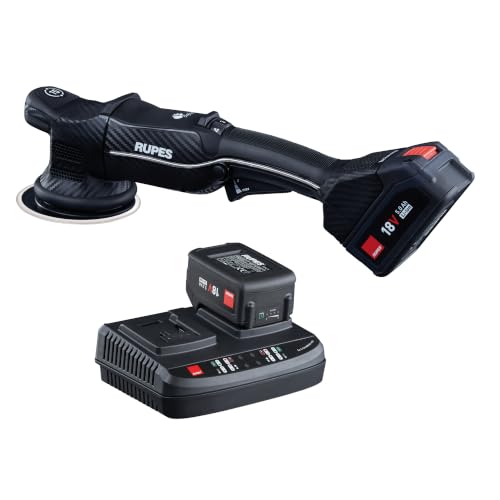
RUPES BigFoot HLR15 iBrid Random Orbital Polisher
What We Like
- Compact, ergonomic design for intricate surfaces
- Brushless motor for consistent power and durability
- Up to 40 minutes of full-power runtime
Trade-offs
- At 12.0 pounds, it is the heaviest polisher in the guide
The RUPES BigFoot HLR15 iBrid pairs a 15mm orbit with an advanced brushless in-runner motor for smooth, efficient performance. Its high-capacity battery delivers up to 40 minutes of full-power runtime under ideal conditions. This combination supports extended polishing sessions with consistent power.
The trade-off for that refined performance is heft. At twelve pounds, it demands more arm stamina over long sessions compared to lighter tools like the six-pound Milwaukee. Its size and sophisticated system are overkill for someone just looking to apply wax or polish a small boat console. For those smaller, more frequent touch-ups, a more compact and maneuverable model would be a better fit for the toolbox.
Milwaukee M18 Fuel 15mm Random Orbital Polisher

What We Like
- Lock-on switch reduces fatigue during long jobs
- Electronic motor feedback maintains speed under load
- Fully integrates with the M18 FUEL cordless ecosystem
- Variable trigger offers precise, on-demand control
Trade-offs
- Battery and charger are sold separately
- At 6.0 pounds, it's heavier than some compact 12V polishers
The Milwaukee M18 Fuel 15mm Random Orbital Polisher is designed for Milwaukee’s M18 FUEL ecosystem. If you already use these cordless tools, this polisher works with the same batteries, offering a brushless motor and cordless operation for detailing or working on multiple cars.
The trade-off is that it’s a system-specific tool. You’re buying into a premium cordless platform, and the bare-tool nature means the initial cost climbs with a battery purchase. For pure polishing performance on a single platform, it’s a standout. However, someone without M18 batteries might find a dedicated kit like the **RUPES BigFoot HLR15 iBrid** to be a more straightforward solution, as its listing includes batteries.
FLEX 24V Brushless Cordless Forced Orbital Polisher

What We Like
- Constant speed technology under load
- Therma-tech heat management for runtime
- Optimized gear head reduces noise
- Two batteries and fast charger included
Trade-offs
- At 6.3 lb, it's heavier than the 6.0 lb Milwaukee bare tool
- Measures 18.0 inches in length, requiring more storage space.
Its gear-driven forced orbital mechanism provides constant speed under pressure, so it maintains rotation when you apply force. This performance comes from a 24V system and includes two 5.0Ah batteries for extended runtime. The design emphasizes power and control for demanding polishing tasks.
Weighing 6.3 pounds, the tool has more mass than some cordless competitors. The optimized gear head is designed to reduce high-frequency noise during operation. Vibration control features are included to help manage user fatigue over long sessions.
Product photos
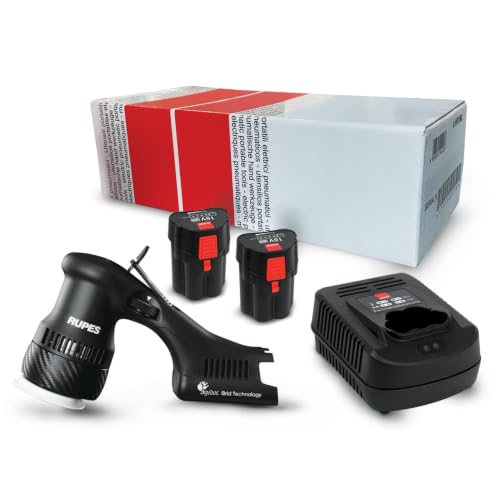
RUPES BigFoot HLR75 Mini iBrid Polisher
What We Like
- Compact 75mm plate for curves and tight spots.
- Throttle lever stops tool if grip is lost.
- Ergonomic design reduces fatigue during long sessions.
- Electronic speed dial for quick on-the-fly adjustments.
Trade-offs
- 35-45 minute runtime limits large, continuous jobs.
A 12mm orbit paired with a 75mm backing plate is built for precision, letting you work into tight contours and spot repairs where larger polishers simply can’t reach. This makes it a specialist’s tool, ideal for a detailer or restorer who needs refined correction on complex bodywork, badges, or pillars. The reimagined ergonomics and automatic safety stop add control for those extended, meticulous sessions.
Designed for precision, its 12mm orbit and 75mm backing plate deliver refined correction on curves and compact surfaces where larger polishers struggle. The trade-off is a 35-45 minute runtime, which is adequate for detail work but necessitates battery swaps for larger panels. This makes the tool a purpose-built extension for a polisher’s arsenal, not a replacement for a full-size machine.
FLEX PXE 80 12V Cordless Multi-Polisher Set

What We Like
- Unique quick-change rotary and orbital system
- Compact and lightweight at just 1.4 pounds
- Vibration-optimized for smooth, controlled operation
- Continuous speed trigger with lock-on function
Trade-offs
- Includes two 2.5Ah batteries, lower capacity than some 5.0Ah kits.
- Weighs 1.4 pounds, less mass for stability on large panels.
A quick-change system that swaps between rotary and random orbital drives makes this the most adaptable compact polisher on the list. That flexibility, combined with a vibration-optimized 12V design weighing just 1.4 pounds, is a dream for detailers and finishers tackling tight spots, A-pillars, or motorcycle tanks. It’s the tool you grab for spot repairs and intricate finishing work where a full-size machine is overkill, all without risking holograms thanks to its free-running orbital action.
Its innovative quick-change system switches between rotary and random orbital drive types without tools, allowing a single device to handle both spot sanding and hologram-free finishing. This design supports 3mm and 12mm stroke lengths for free-running work, making it a flexible complement for vehicle finishers and spot repair. The continuous speed control trigger and four LED-displayed stages provide a gentle start and locked operation.
CRAFTSMAN V20 Cordless Orbital Buffer Polisher

What We Like
- 10-inch orbital pad for wide surface coverage.
- Contoured overmold grip for comfortable handling.
- Variable speed dial for precise control.
- VERSATRACK compatible for organized storage.
Trade-offs
- Bare tool: requires separate V20 battery and charger.
- No battery platform means no runtime specification.
This Craftsman polisher comes with a 10-inch orbital pad, which provides a wide working surface. A variable speed dial allows adjustment of the tool’s operation, and a contoured overmold grip is included for comfort. The tool is compatible with the Versatrack storage system, though that accessory is sold separately.
The trade-off is in the tool’s bulk and power system. At over 11 inches wide, it won’t tuck into tight spaces like the Fanttik P10 Pro. More critically, it’s a bare tool, so you’re committing to the Craftsman V20 battery platform. If you already own those batteries, it’s a logical add-on. If not, compare it to the kit-included Rotvik, which provides everything to start, though with a much smaller pad.
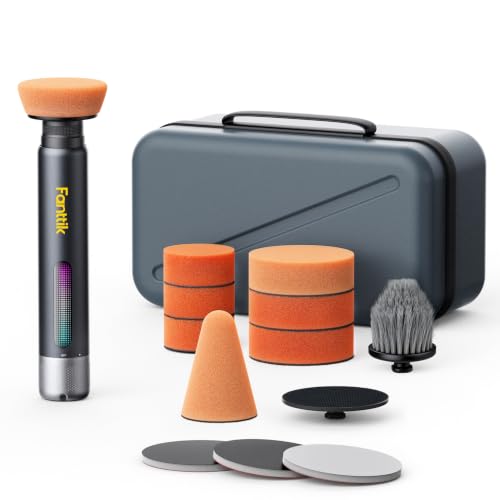
Fanttik P10 Pro Mini Cordless Rotary Polisher
What We Like
- Extremely lightweight for tight spots
- Quiet planetary gear system at 65 dB
- Includes quick-change backing plates and multiple pads
- Clear LED battery and speed indicators
Trade-offs
- Rotary-only action requires careful technique to avoid swirls
- 50-minute runtime limits large-panel work
- Ultra-compact size is not for full-car polishing
At 2.1 pounds, the Fanttik P10 Pro is light enough to maneuver with one hand, making it well-suited for polishing door handles, badges, and side mirrors where a full-size buffer won’t fit. Its quiet, low-speed design and included detail pads are built for applying a controlled, glare-free finish in cramped quarters. This rotary polisher is a choice for detailers needing a dedicated tool for intricate work or for DIYers wanting to tackle fine scratches without a heavy machine.
The rotary action requires a steady hand to avoid holograms on soft paint. Its internal 4000 mAh battery provides up to 50 minutes of runtime, which is ample for detail work but means reaching for the Type-C charger for larger panels. For comprehensive paint correction, a larger dual-action polisher would be needed, but the Fanttik’s compact size carves out a niche for precision tasks.
Product photos
Rotvik Cordless Car Buffer Polisher Kit

What We Like
- Complete cordless kit with two high-capacity batteries
- Eight variable speeds for different detailing tasks
- Includes a comprehensive 18-piece accessory set
- Lightweight ergonomic design for reduced fatigue
Trade-offs
- Orbital motion is less aggressive than forced rotation models
Two 4000mAh 21V batteries come with the Rotvik kit, so you can swap them for longer jobs without stopping to recharge. An 18-piece accessory set is also included, providing pads and backing plates for different surfaces like cars and boats. With eight variable speeds, you can select a lower setting for spreading wax or a higher one for buffing, while its orbital motion aims for an even finish. The lightweight, cordless design helps reduce fatigue when maneuvering around a vehicle.
Its orbital polishing motion is gentler than the forced rotation found on tools like the FLEX 24V, which may limit its use for heavy paint correction. The kit includes batteries and accessories, unlike bare-tool options such as the Milwaukee M18 Fuel polisher that require separate purchases. This makes it a complete package for someone who wants to start detailing immediately.
Product photos
DEVTBLUN Cordless DA Polisher for DeWalt

What We Like
- Leverages existing DeWalt 20V battery ecosystem.
- Brushless motor for longer service life and efficiency.
- Lightweight 3 lb design reduces user fatigue.
Trade-offs
- Tool only: requires separate DeWalt battery and charger.
- Maximum 5500 RPM is lower than some high-end corded competitors.
Compatibility with the DeWalt 20V battery platform is this polisher’s defining feature. For anyone already invested in that system, this tool offers a genuinely cord-free entry into detailing without the cost and clutter of a new battery ecosystem. Its brushless motor promises decent longevity, and the eight-speed adjustment gives you the range to go from gentle wax application to more aggressive defect removal. At just three pounds, it’s a lightweight option that won’t wear out your arms on larger panels, making it a sensible extension of your existing DeWalt toolkit.
This polisher runs on DeWalt 20V batteries, which means cord-free convenience for anyone already invested in that battery platform. Its brushless motor reaches a maximum speed of 5500 RPM, a range suitable for tasks from gentle waxing to removing oxidation. However, that top speed is below more expensive dedicated tools like the FLEX 24V, positioning it better for maintenance and polishing than for intensive paint correction.
Product photos
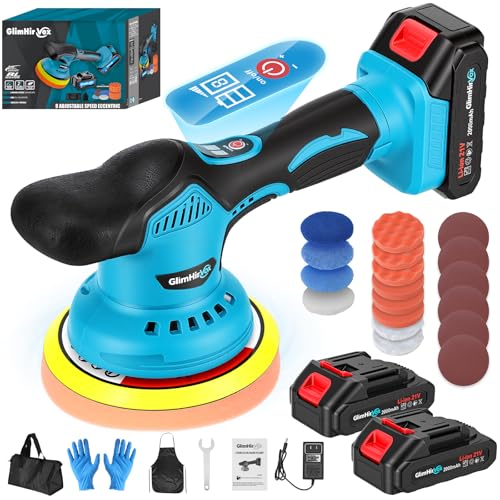
GlimHirVox Brushless DA Polisher Kit
What We Like
- Intelligent 8-speed LED display with real-time RPM readout
- Lightweight 3.3lb body for one-handed vertical panel work
- Comprehensive kit includes batteries, charger, and case
- Brushless motor offers high torque and efficiency
Trade-offs
- 2.0Ah battery capacity may limit runtime on large jobs
- 9mm orbit is smaller than some dedicated paint correction tools
The smart 8-speed LED display is the defining feature here, automatically holding your chosen RPM even under pressure. That kind of consistency is a huge advantage for a newcomer or anyone who values repeatable results without constantly monitoring the tool. Combined with a remarkably light 3.3-pound body, this polisher suits DIYers who want a complete, intelligent system right out of the box. It’s a thoughtful package for someone polishing their own vehicles or boats, where ease of use and a clear interface reduce the intimidation factor of machine polishing.
This cordless polisher includes two batteries and a charger, so buyers can start using it immediately without extra purchases. Its 9mm eccentric orbit and 150mm base plate are designed for even treatment of large areas, positioning it for thorough, controlled work rather than aggressive cutting. The intelligent 8-speed system with an LED display automatically maintains set speeds for consistent performance, even when pressed into curves.
Product photos
How We Evaluated Cordless Buffer Polishers
Our evaluation is based on manufacturer specifications, expert round-up reviews, and patterns in detailed owner feedback. We focused on criteria that directly impact real-world polishing results. These include sustained power under load for effective paint correction and ergonomic design to reduce user fatigue during long sessions. We also considered compatibility with existing battery ecosystems to maximize value, along with pad size and orbital throw for different surface types, from large panels to intricate curves.
This guide identifies reliable tools based on product specifications. The information provided is intended to inform your purchase decision. For instance, understanding the difference between a dual-action and rotary polisher is a fundamental part of selecting the right tool.
What To Look For In Cordless Buffer Polishers
Selecting a cordless polisher involves more than just picking a brand. You need to match the tool’s capabilities to your typical projects, whether that’s a full-size SUV or a classic car with delicate curves. Battery platform, power delivery, and physical design are the deciding factors.
Key factors are your existing battery ecosystem, the tool’s power consistency under load for paint correction, and the right pad size and orbit for your vehicle’s surfaces. Weight and ergonomics also affect control during long detailing sessions.
Battery Platform & Runtime
Your existing cordless tool batteries should guide your choice. A polisher that shares batteries with your drill or impact driver is a budget-friendly and convenient option. For those without an existing platform, a complete kit with batteries and charger is essential. Runtime is critical; look for tools with brushless motors and high-capacity batteries for sustained power. Owner feedback often highlights the need for at least two batteries to cycle through a full-vehicle job without interruption.
Power Delivery & Orbital Action
Consistent power under load separates capable paint correction tools from basic wax applicators. Brushless motors and electronic feedback systems help maintain pad speed as you apply pressure. The orbital action, random orbital, forced rotation, or rotary, determines the tool’s cutting ability and safety for clear coat. Random orbital and cordless DA polishers are safer for beginners, while forced rotation models offer more aggressive correction. The size of the orbital “throw” (e.g., 15mm vs 21mm) also affects how quickly it works over larger flat panels.
Design & Ergonomics
Weight, balance, and grip design directly impact fatigue and control. A lighter tool is easier to manage on vertical panels and tight spaces, but some mass helps keep the pad planted on flat surfaces. Features like a lock-on switch or a variable-speed trigger provide better command during extended use. For work on curves and intricate areas, a compact cordless car polisher with a smaller backing plate offers superior maneuverability.
-##
- Check the tool’s weight with a battery installed, as this affects maneuverability.
- Ensure the grip design feels secure in your hand, especially when working with polishing fluids.
- Look for low-vibration designs mentioned in owner reviews to reduce hand fatigue.
The best polisher feels like an extension of your arm, not a weight you have to fight.
Cordless Buffer Polishers Compared
The comparison table below summarizes the key specifications and strengths of our top picks to help you see the differences at a glance.
| Product | Battery Voltage | Weight | Speed Range/Control |
|---|---|---|---|
| RUPES BigFoot HLR15 iBrid Random Orbital Polisher | 18V | 12.0 pounds | N/A |
| Milwaukee M18 Fuel 15mm Random Orbital Polisher | M18 battery | 6.0 pounds | 2,650-5,100 RPM |
| FLEX 24V Brushless Cordless Forced Orbital Polisher | 24V lithium | 6.3 pounds | 11-speed dial + trigger |
| RUPES BigFoot HLR75 Mini iBrid Polisher | 18V | 8.0 Pounds | N/A |
| FLEX PXE 80 12V Cordless Multi-Polisher Set | 12V | 1.4 Pounds | Continuous speed control trigger |
| CRAFTSMAN V20 Cordless Orbital Buffer Polisher | V20 Battery | 6.2 pounds | Variable Speed |
| Fanttik P10 Pro Mini Cordless Rotary Polisher | 4000 mAh | 2.1 Pounds | N/A |
| Rotvik Cordless Car Buffer Polisher Kit | 21V | N/A | 8 variable speeds |
| DEVTBLUN Cordless DA Polisher for DeWalt | DeWalt 18V/20V battery | N/A | 8 variable (2800-5500 RPM) |
| GlimHirVox Brushless DA Polisher Kit | 21V | 5.7 pounds | 6,000 RPM |
Frequently Asked Questions
Which cordless polisher has the best buffer?
The “best” buffer depends on your primary need. For the highest standard of finish quality and professional-grade performance, the RUPES BigFoot HLR15 iBrid is our top pick. For owners of Milwaukee’s M18 system seeking ecosystem integration, the Milwaukee M18 Fuel 15mm polisher is an excellent choice. Those needing a complete, ready-to-use kit at a value price should consider the Rotvik Cordless Car Buffer Polisher Kit.
What is the best cordless car polishing machine?
The best cordless machine for polishing a car balances power, runtime, and control. Our overall recommendation is the RUPES BigFoot HLR15 iBrid for its brushless motor and consistent results. For paint correction specifically, the FLEX 24V Brushless Cordless Forced Orbital Polisher provides sustained power under load. Learning proper car buffing technique is just as important as the tool you select.
What is the difference between a buffer and a polisher?
The terms are often used interchangeably, but technically a “buffer” traditionally refers to a tool used to apply and spread waxes or sealants, often with a rotary action. A “polisher” typically describes a dual-action or random orbital tool designed for paint correction, removing scratches and swirls. Modern cordless polishers combine these functions, with different orbital actions suited for either gentle finishing or more aggressive cutting.
Which polisher is better, Rupes or Milwaukee?
Rupes and Milwaukee both make excellent tools, but for different users. Rupes models like the HLR15 iBrid are engineered for professional detailers prioritizing ultimate finish quality and ergonomics. Milwaukee’s M18 Fuel polisher is ideal for tradespeople already invested in the M18 battery ecosystem who want a high-performance, cordless tool for multiple vehicles. The choice hinges on your existing tools and whether you value specialized detailing performance or platform versatility.
Are cordless polishers powerful enough for paint correction?
Yes, modern cordless polishers with brushless motors and high-voltage batteries are absolutely powerful enough for most paint correction work. Models like the FLEX 24V forced rotation polisher are designed specifically for this task, offering constant speed under load. For severe correction, they may match or exceed the performance of many corded tools, offering the added benefit of complete mobility without a power cord.
The Bottom Line
For professional detailers and serious enthusiasts who demand the highest standard of cordless finish quality, the RUPES BigFoot HLR15 iBrid Random Orbital Polisher is the clear best overall choice. Its brushless motor and ergonomic design deliver consistent, professional results.
If you’re on a budget and need everything to get started, the Rotvik Cordless Car Buffer Polisher Kit provides good value. Milwaukee M18 or DeWalt 20V platform owners should look to their respective ecosystem tools for straightforward integration. Ultimately, the most important factor is matching the polisher’s power, design, and orbital action to the specific surfaces you’ll be working on most often.
