
10 Best Saw Blades For Plywood in 2026
This post contains affiliate links. As an Amazon Associate, we earn from qualifying purchases.
Our best overall saw blade for plywood is the Freud AvantiPro Fine Finish Saw Blade, which delivers smooth cuts with minimal tear-out thanks to its 60-tooth carbide design. We also highlight the Freud Cabinetmaker’s Crosscut Saw Blade for veneered plywood and the Diablo 6-1/2-Inch Ultra Finish Blade for circular saws.
Cutting plywood cleanly is a common challenge, as the thin veneer layers easily chip and splinter. This guide is based on research into blade specifications, manufacturer data, and patterns in expert and owner feedback to help you select the right blade for your tools and tasks.
Top 10 Saw Blades For Plywood in the Market
Certain content that appears on this site comes from Amazon. This content is provided "as is" and is subject to change or removal at any time.
The Best Saw Blades For Plywood, Reviewed
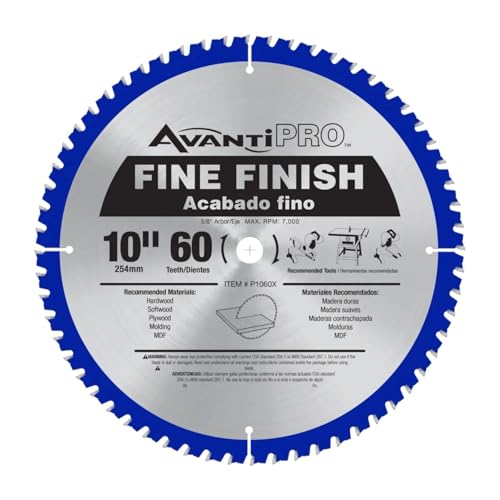
Freud AvantiPro Fine Finish Saw Blade
What We Like
- Thin kerf design reduces friction and material waste.
- Friction-reducing coating for smooth, efficient cuts.
- 60-tooth carbide-tipped blade minimizes plywood tear-out.
- Versatile for hardwood, softwood, plywood, and MDF.
Trade-offs
- At 60 teeth, it's a dedicated finish blade, not for ripping.
- 10-inch diameter limits use to saws of that size.
A 60-tooth carbide blade with a thin kerf and friction-reducing coating is built to slice through plywood with minimal splintering. This combination delivers the clean, fine-finish cuts that matter for visible edges and cabinetry work. It’s the right balance for a contractor or serious DIYer who needs one reliable blade to handle finish cuts on plywood, hardwood, and sheet goods without swapping blades constantly. The design prioritizes a premium cut over raw speed.
Designed for fine finish cuts in materials like hardwood, plywood, and MDF, this 60-tooth blade minimizes splintering and tear-out, which is essential for detailed woodworking where a clean edge is critical. Its thin kerf design reduces friction and drag, allowing for smoother, more efficient cuts that also help minimize material waste. While it is not intended for fast ripping of thick lumber, the blade’s versatility makes it suitable for both table and miter saws, serving DIYers and professionals on a wide range of tasks.
Product photos
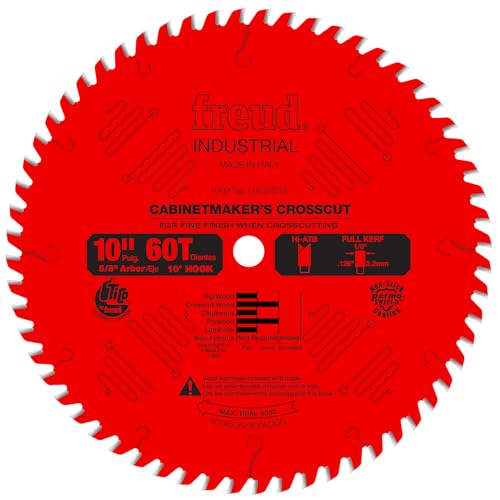
Freud Cabinetmaker's Crosscut Saw Blade
What We Like
- Hi-ATB geometry excels on double-sided veneer plywood.
- Perma-Shield coating reduces friction and resin build-up.
- TiCo carbide blend provides strong edge retention.
- Positive hook angle promotes faster, smoother feed rates.
Trade-offs
- Maximum cut depth is 2-3/4 inches, less than larger diameter blades.
- Designed for crosscuts; not a dedicated ripping blade.
The 38-degree Hi-ATB tooth grind is the key here. This specific geometry is engineered to slice cleanly through the fragile faces of double-sided veneer plywood and melamine without chipping or tearing. It’s a blade built for the cabinet shop or serious woodworker who needs pristine crosscuts on sheet goods. The Perma-Shield coating is a genuine help, fighting the gummy resin that builds up on blades cutting manufactured materials, which means you spend less time cleaning and more time cutting.
This blade excels at crosscutting sheet goods like plywood and melamine, thanks to its Hi-ATB tooth geometry. While it handles hardwoods and softwoods well, its design is specialized for clean cuts in double-sided veneer materials. For a wider variety of cuts, including heavy ripping, a general-purpose combination blade might serve as a better primary saw blade.
Product photos
Diablo 12-Inch Fine Finish Saw Blade

What We Like
- 80-tooth Hi-ATB geometry for smooth, fine finishes.
- Perma-SHIELD coating protects from heat and corrosion.
- Super Thin Kerf design reduces material waste.
- TiCo Hi-Density carbide ensures maximum durability.
Trade-offs
- At 2.5 pounds, it's heavier than many 10-inch blades.
- The 12-inch size requires a compatible saw, limiting versatility.
An 80-tooth alternate top bevel grind is built for one thing: leaving a glassy-smooth surface on crosscuts in solid wood. The high tooth count and specialized geometry mean minimal tear-out, which is exactly what you need for visible edges on furniture or trim. That super thin kerf also reduces friction and waste, letting your saw motor work easier for a cleaner result. This blade suits a woodworker who demands a finished edge straight off the saw, saving time on sanding.
This blade specializes in fine finish crosscuts for hardwoods and softwoods, delivering precise and clean results ideal for detailed woodworking. Its 80-tooth Hi-ATB geometry and super thin kerf design work together to minimize tear-out and reduce material waste during cuts. While the research mention discusses a different blade and names the Diablo 60T Ultra Finish as a winner in a comparison, the D1280X is built specifically for smooth, fine finishes on lumber.
Diablo 6-1/2-Inch Ultra Finish Saw Blade

What We Like
- Delivers chip-free cuts in delicate moldings.
- TiCo carbide ensures longer blade life.
- Thin kerf minimizes material waste.
- Non-stick coating resists heat and gumming.
Trade-offs
- 6-1/2 inch diameter fits only smaller saws.
- Ultra-fine finish focus limits heavy ripping tasks.
Designed for fine, chip-free cuts in wood, this blade delivers an ultra-smooth finish ideal for crosscutting oak, pine, and delicate moldings. Its 6-1/2 inch diameter and 60 teeth make it a natural fit for a circular saw, letting you crosscut plywood and trim on-site with a smooth edge. The Perma-SHIELD coating protects against heat buildup and corrosion, which helps extend blade life during extended cutting sessions. Engineered to meet the demands of cabinetmakers while withstanding professional construction, it provides clean results without hauling a tablesaw to the job.
The blade is built for a 6-1/2 inch circular saw. For its intended portable use, the super thin laser-cut kerf allows for fast cuts with minimal material waste, reducing strain on a saw’s motor. Its TiCo Hi-Density Carbide is tailored for professional-grade performance and longer blade life.
Forrest Duraline Hi-A/T Saw Blade

What We Like
- Eliminates chips on melamine and plywood
- 40° points prevent bottom-layer tear-out
- Replaces a separate scoring blade on a table saw
Trade-offs
- The 0.125-inch kerf requires a well-tuned saw for stability.
- At 3.5 pounds, it's heavier than many 12-inch blades.
- The premium focus makes it overkill for basic construction plywood.
With 100 teeth and a specialized #7 Hi-ATB grind, this blade is engineered to slice through veneered plywood and melamine without a single chip. The 40° tooth points are the secret, shearing the thin bottom layer cleanly so you can skip a dedicated scoring saw. It’s built for the cabinetmaker or serious woodworker who demands finish-ready cuts straight off the table saw and values a blade that lasts. The double-hard C-4 carbide is a major reason for its premium status, offering a lifespan that justifies the investment for a busy shop.
The Forrest Duraline Hi-A/T is designed for a specific task: cutting melamine and plywood perfectly with no tears or chips. Its thin 0.125-inch kerf maximizes cutting efficiency but requires a saw with good bearings and a true arbor to run smoothly. According to expert round-ups, some woodworkers rely on this blade for veneered plywood, pairing it with a more general combination blade for most other shop work. You pay for this focused performance on delicate surfaces.
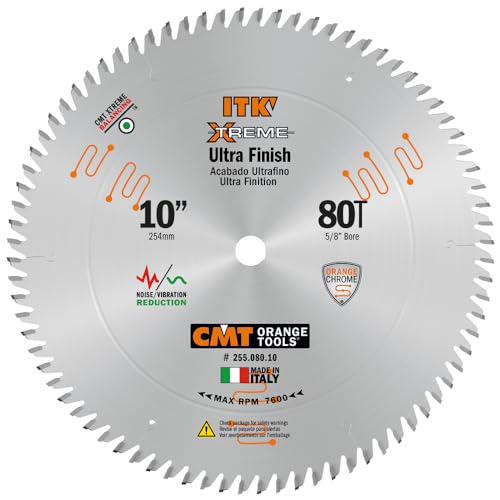
CMT ORANGE TOOLS 254.080.10 Saw Blade
What We Like
- Ultra-thin 0.110-inch kerf reduces waste.
- Fine 0.071-inch plate minimizes tear-out.
- 5-degree hook angle is gentle on plywood.
- Hi-ATB 30° grind provides a clean finish.
Trade-offs
- The thin plate may deflect in dense material.
- Ultra-thin kerf limits depth of cut in hardwoods.
With a kerf of just 0.110 inches, this blade removes minimal material, leaving more usable wood from each expensive sheet of plywood. Its 5-degree hook angle and Hi-ATB 30 tooth grind are configurations associated with controlled feeding and a clean finish. These specifications suggest an application in fine woodworking where cut quality is critical.
The blade’s 0.071-inch plate is thin, a design that works in concert with its fine kerf. Compared to the Forrest Duraline blade, which has a listed weight of 3.5 pounds, this one-pound CMT blade is a lighter tool. This combination of a thin plate and light weight focuses the cut into a narrow line for sheet goods.
Product photos
FOXBC 80-Tooth Ultra Finish Saw Blade

What We Like
- Thin kerf design for smooth, fast cutting
- 80-tooth ATB grind for ultra-finish results
- High-density carbide for wear resistance and long life
- Explicitly rated for clean cuts in plywood
Trade-offs
- No explicit mention of anti-vibration features beyond thin kerf
- Weighs 1.9 pounds, heavier than some comparable 10-inch blades
An 80-tooth ATB grind paired with a thin 0.098-inch kerf is the core recipe for minimizing tear-out in plywood, and this blade delivers that specification at a budget-friendly point. It’s a straightforward choice for the DIYer or occasional woodworker who needs clean crosscuts in sheet goods and moulding without investing in a premium blade. The high-density tungsten carbide teeth promise durability, making it a practical workhorse for a home shop where the saw might not see daily professional use.
The trade-off for the value is in refinement. At 1.9 pounds, it’s a solid blade. You won’t get the laser-cut anti-vibration slots or ultra-thin kerf of a premium option like the Freud Cabinetmaker’s Crosscut, which can further reduce motor strain and yield a marginally cleaner edge. Think of this as your reliable baseline for finish work; it gets the job done cleanly, letting you allocate your budget elsewhere in the project.
Product photos
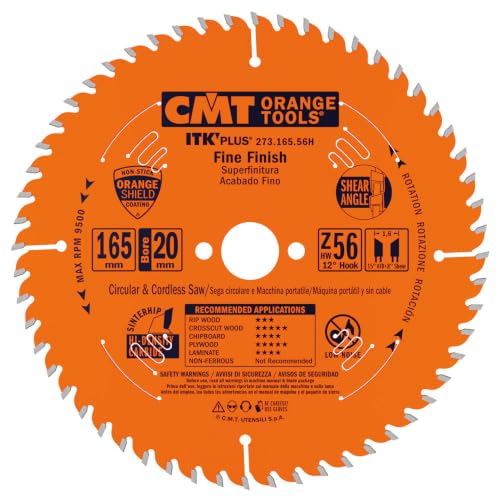
CMT ORANGE TOOLS 273.165.56H Saw Blade
What We Like
- Thin kerf reduces material waste on valuable wood.
- Compact 6-1/2-inch size fits many portable saws.
- Thin kerf reduces material waste.
Trade-offs
- The 6-1/2-inch diameter lacks the cutting depth of a 10-inch blade.
- Thin kerf can be less stable in underpowered saws, risking deflection.
With a 6-1/2-inch diameter, this blade fits miter saws, table saws, and portable or cordless models, making it a natural choice for smaller tools. Its thin-kerf design is noted for reducing material waste, which matters when working with valuable wood. The blade’s stated application is for crosscuts and finish cuts in materials like plywood and laminates.
It’s a specialist. For a workshop table saw dedicated to breaking down sheet goods, you’d want a larger diameter for deeper cuts. But for the user whose primary saw is a portable model, this blade turns it into a precision instrument for cabinetry and finish work.
FOXBC 8-1/4" Fine Finish Blade

What We Like
- Ultra-thin 0.079-inch kerf for efficient cuts
- High-density carbide for wear resistance
- Designed for clean finish cuts in plywood
- 5/8-inch arbor with diamond knockout for compatibility
Trade-offs
- The 8-1/4-inch diameter limits depth of cut on larger saws.
An ultra-thin 0.079-inch kerf means this blade removes less material with each pass, so your saw motor works less and your plywood sheets go further. That efficiency, paired with its 60-tooth ATB grind, makes it a sharp choice for a contractor needing clean, splinter-free cuts in decking, fascia, or stacked plywood on a jobsite table saw. It’s built from tough carbide to handle the abrasion of engineered sheet goods.
The trade-off is the 8-1/4-inch size. It won’t match the maximum cut depth of a 10-inch blade like the Freud AvantiPro. For a dedicated shop saw where maximum capacity is key, that’s a limitation. But for a portable saw where speed and finish on sheet goods are the priorities, this blade’s thin design delivers tangible benefits where it counts.
Product photos
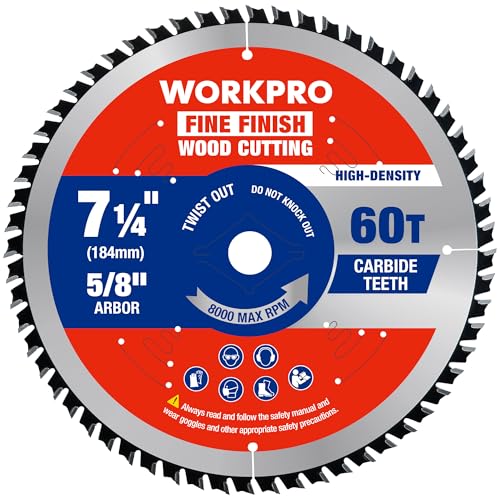
WORKPRO 7-1/4" Fine Finish Blade
What We Like
- Thin kerf design reduces cutting resistance
- ATB tooth geometry minimizes splintering
- Carbide-tipped teeth for long-lasting sharpness
- Wide compatibility with common circular saws
Trade-offs
- At 7-1/4 inches, it's limited to smaller saws and cuts
- A 60-tooth count is a compromise for very fine finishing
Its 7-1/4-inch diameter and thin kerf design make this blade a nimble performer for common circular saws. The 60-tooth ATB geometry and carbide tips deliver clean, smooth cuts in plywood, trim, and softwoods without bogging down the motor. This combination suits the DIYer or carpenter who needs a reliable, all-purpose blade for a portable saw, offering a solid balance of finish quality and cutting speed for a variety of jobs around the shop.
This WORKPRO blade is built for handheld 7-1/4-inch circular saws, a common size for portable tools, so it’s designed to be swapped into the saws many DIYers already own. Its thin kerf design reduces cutting resistance, which makes the saw easier to control during long cuts on sheet goods. With 60 teeth in an alternating top bevel pattern, it aims for smooth, splinter-reduced cuts in plywood, hardwood, and softwood.
Product photos
How We Evaluated Saw Blades For Plywood
Our research focused on specifications, manufacturer documentation, expert round-up articles, and consistent patterns in owner feedback. We prioritized criteria proven to affect plywood cut quality: tooth count and geometry for clean edges, kerf width for material efficiency and saw compatibility, blade diameter for tool matching, and specialized features for sheet goods. This is a research-led evaluation; we did not physically test these blades, so our conclusions are based on published specifications and aggregated user experiences.
What To Look For In Saw Blades For Plywood
Choosing the right blade makes the difference between a ragged edge and a ready-to-finish surface. Here are the key factors to consider.
Look for a blade with a high tooth count and an Alternate Top Bevel (ATB) grind, a thin kerf to reduce waste, and ensure the diameter matches your saw. For veneered plywood, specialized blades with steeper bevel angles and coatings are crucial.
Tooth Count And Geometry
More teeth generally yield a smoother cut. For plywood, a blade with 60 to 80 teeth is a common sweet spot, providing a fine finish without cutting too slowly. The tooth geometry is equally important. An Alternate Top Bevel (ATB) grind, where teeth are angled left and right, shears the wood fibers cleanly. A High-ATB (Hi-ATB) grind uses a steeper angle for an even finer cut on delicate veneers and melamine, making it a top choice for cutting plywood.
Kerf Width
The kerf is the width of the slot the blade cuts. A thin kerf blade removes less material, reducing waste and requiring less power from your saw. This is a major advantage when working with expensive plywood sheets. However, an ultra-thin kerf can be less stable in underpowered saws, potentially leading to deflection. Consider your saw’s power and the blade’s plate thickness when choosing a circular saw blade for plywood.
Blade Diameter And Compatibility
A blade must physically fit your saw. Common diameters for stationary table saws are 10-inch and 12-inch. Portable circular and miter saws often use 6-1/2-inch, 7-1/4-inch, or 8-1/4-inch blades, so always check your saw’s manual. A larger diameter offers a greater maximum cutting depth, which is vital for thick stock. For most plywood work, a 10-inch blade on a table saw or a 7-1/4-inch blade on a circular saw is sufficient. Matching the blade to your specific plywood cutting saw is the first step.
Specialized Features
Coatings like Freud’s Perma-Shield or Diablo’s non-stick layer reduce friction and heat buildup, which helps prevent resin accumulation and extends blade life. For the cleanest cuts in laminated or veneered plywood, look for blades explicitly designed for that purpose, as they often combine a Hi-ATB grind with a very low or negative hook angle. This gentle angle minimizes tear-out on the bottom face of the cut, a critical factor for cabinetmakers. Understanding these features is part of selecting a saw blade for plywood that meets high standards.
.### Practical Checks
- Check the arbor hole size (usually 5/8-inch for table saws, smaller for circular saws).
- Look for expansion slots in the blade plate to manage heat and reduce vibration.
- Confirm the blade’s rated materials; some are optimized specifically for plywood and sheet goods.
- Consider carbide quality; a blend like TiCo (Titanium Carbide) generally offers better edge retention.
- Factor in weight; a heavier blade can be more stable but may not suit all saws.
A good plywood blade balances a high tooth count for a clean edge with a design that works efficiently with your specific saw’s power.
Saw Blades For Plywood Compared
The following table compares key specifications for all ten saw blades to help you see the differences at a glance.
| Product | Diameter | Tooth Count | Kerf Design |
|---|---|---|---|
| Freud AvantiPro Fine Finish Saw Blade | 10 inches | 60 teeth | Thin kerf |
| Freud Cabinetmaker's Crosscut Saw Blade | 10 inches | 60 teeth | N/A |
| Diablo 12-Inch Fine Finish Saw Blade | 12 inches | 80 Hi-ATB teeth | Super Thin Kerf |
| Diablo 6-1/2-Inch Ultra Finish Saw Blade | 6-1/2 inches | 60 Teeth | N/A |
| Forrest Duraline Hi-A/T Saw Blade | 12 inches | 100 teeth | 0.125 inches |
| CMT ORANGE TOOLS 254.080.10 Saw Blade | N/A | N/A | 0.110 inches |
| FOXBC 80-Tooth Ultra Finish Saw Blade | 10 inches | 80 | 0.098 inches |
| CMT ORANGE TOOLS 273.165.56H Saw Blade | 6-1/2 inches | N/A | N/A |
| FOXBC 8-1/4" Fine Finish Blade | 8-1/4 inches | 60 ATB | 0.079 inches |
| WORKPRO 7-1/4" Fine Finish Blade | 7-1/4 inches | 60 teeth | Thin kerf |
Frequently Asked Questions
What kind of saw blade is best for cutting plywood?
A blade with a higher tooth count (typically 60 to 80 teeth) and an Alternate Top Bevel (ATB) tooth geometry is best for clean, chip-free cuts in plywood. These blades shear the wood fibers cleanly. For veneered plywood or melamine, a High-ATB (Hi-ATB) grind provides an even finer finish.
How many teeth blade for cutting plywood?
Aim for a blade with 60 to 80 teeth for cutting plywood. This range provides a good balance between cut speed and finish quality. Blades with fewer teeth will cut faster but are more likely to cause tear-out and splintering on the plywood’s surface.
Is a 140 tooth blade good for plywood?
A 140-tooth blade is generally not ideal for plywood. While it can produce an ultra-smooth cut, the extremely high tooth count cuts very slowly, which can lead to burning and blade binding in the kerf. It is often overkill and better suited for cutting very soft materials like acrylic.
How can I cut plywood without it chipping?
Use a sharp blade with a high tooth count and ATB geometry. Support the plywood sheet firmly on both sides of the cut line. Applying painter’s tape over the cut line can also help stabilize the veneer. For the cleanest results on a table saw, some woodworkers make a very shallow scoring cut first.
Should I use a different blade for my circular saw and table saw?
Yes, you typically should. Circular saw blades are designed for the specific RPM and use case of portable saws, while table saw blades are built for stationary tools. Always use a blade with the correct diameter and arbor size for your specific saw, whether you are cutting plywood with a circular saw or using a table saw.
The Bottom Line
For most woodworkers needing clean, versatile cuts in plywood, the Freud AvantiPro Fine Finish Saw Blade is the best overall choice. If you’re on a budget, the FOXBC 80-Tooth Ultra Finish Saw Blade offers solid performance, while cabinetmakers working with delicate veneers should consider the premium Forrest Duraline Hi-A/T Saw Blade. Ultimately, matching the blade’s tooth count, kerf, and diameter to your specific saw and project is the most important step for a perfect cut.
