
10 Best Small Chop Saws in 2026
This post contains affiliate links. As an Amazon Associate, we earn from qualifying purchases.
For a powerful, stationary metal-cutting saw, our best overall is the VEVOR 7-1/4 Inch Metal Cutting Chop Saw. For a budget-friendly mini option, check out the YIYIBYUS Mini Bench Cut-off Miter Saw. If cordless portability is key, consider the DEMIMA Cordless Cut Off Tool.
Small chop saws solve the problem of making precise cuts in metal, wood, and plastic when space or portability is a premium. These tools trade the massive capacity of their full-size cousins for a smaller footprint and often lighter weight. We built this guide by researching specifications, expert reviews, and owner feedback to help you find the right compact saw for your specific needs.
Top 10 Small Chop Saws in the Market
Certain content that appears on this site comes from Amazon. This content is provided "as is" and is subject to change or removal at any time.
The Best Small Chop Saws, Reviewed
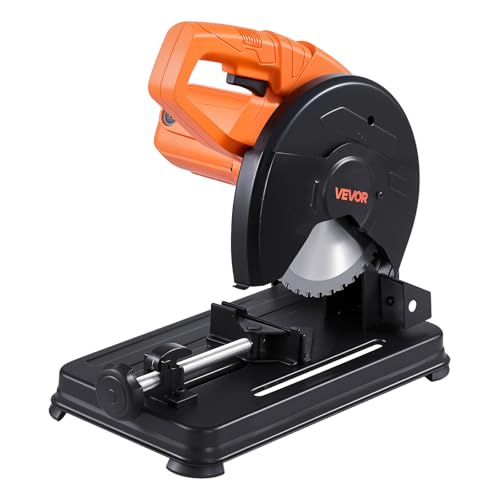
VEVOR 7-1/4 Inch Metal Cutting Chop Saw
What We Like
- 1200W motor for high-intensity metal cutting
- Stainless steel blade for burr-free, durable cuts
- 0-45° angle adjustment for precise miters
- Auto-return guard and quick-lock safety features
Trade-offs
- At 14.4 lb, it's a bench tool, not truly portable
- No cordless option for remote job sites
A 1200-watt motor and a 4000 RPM stainless steel blade give this chop saw the muscle to cleanly slice through square tube and I-beam without bogging down. That combination of power and a cold-cut blade design makes it the most capable general-purpose metal saw in the compact category. It’s built for the shop or garage where you need to process a lot of stock accurately, with the heft and safety features to handle repeated use.
The trade-off for that capability is portability. At over 14 pounds, it’s a benchtop anchor compared to a tool like the DEMIMA cordless cut-off. You gain a wider cut and more power for steel, but you lose the ability to easily carry it to a distant corner of a job site. For steady metal fabrication in a fixed location, its adjustable angle and secure clamp system turn raw stock into finished pieces efficiently.
Product photos
YIYIBYUS Mini Bench Cut-off Miter Saw

What We Like
- Extremely compact and lightweight at 3.3 lbs
- Sharp HSS blade cuts metal, wood, and plastic
- Aluminum alloy and pig iron construction for durability
- Adjustable miter angle for versatile cuts
Trade-offs
- 90W motor is modest for heavy-duty metal cutting
- 1/2-inch cut depth limits material thickness
- Corded 110V design requires a power outlet
At just 3.3 pounds and smaller than a shoebox, this YIYIBYUS saw is built for portability first. Its 90W motor spins a sharp HSS blade at 6000 RPM, which is enough grunt for light metal, plastic, and woodworking tasks in a workshop or on a job site. This makes it a solid fit for hobbyists or DIYers who need a precise, space-saving cutter for small stock and don’t require industrial heft. The adjustable base adds useful flexibility for miter cuts in craft projects.
Its ultra-compact frame does mean a relatively shallow 1/2-inch cutting capacity, so you won’t be slicing through large structural lumber or thick steel bar. For those heavier jobs, a larger benchtop chop saw with a 1200W motor is the logical step up. If your projects involve model building, jewelry, or small trim work, however, this benchtop unit delivers capable cutting in a highly portable package.
Product photos
VEVOR Mini Miter Cut-off Chop Saw

What We Like
- Ultra-compact 3-pound benchtop footprint
- 0-45° miter cutting with clamping fence
- Cuts wood, soft metals, and plastic
- Low-noise 90W motor for indoor use
Trade-offs
- Only 4mm cutting depth for ferrous metal
- Fixed 110V cord limits true portability
At just 5.5 inches long and 3.9 inches wide, this is the smallest saw in the guide, a tool designed for spaces where every inch counts. Its base clamping jig and fixing holes secure it firmly to a desktop, providing a stable platform for cutting small-diameter tubing or delicate craft materials. The 0-45° miter function and clamping fence deliver precise, repeatable angled cuts in copper, aluminum, and thin wood, making it a niche solution for cramped apartment or crowded shop work.
The compact size comes with clear capacity limits. Its 90-watt motor and small blades allow a 1/2-inch cutting depth in non-metals, but only 4 mm in ferrous metal, restricting it to light-gauge metals and small stock. With a rotation speed of 7800 RPM, it cuts quickly through suitable materials, yet its scale is fundamentally different from larger benchtop saws. For projects regularly involving material thicker than your pinky finger, a larger saw is necessary.
Product photos
DEMIMA Cordless Cut Off Tool

What We Like
- Extremely lightweight for one-handed use
- Brushless motor for longer life and efficiency
- Variable speed control for material versatility
- Includes four blades and safety gear
Trade-offs
- Tool only: requires a separate Milwaukee battery
- 3-inch blade limits cut depth on thick stock
- No built-in work surface like a benchtop saw
Weighing just a pound, this tool is about as portable as a cut-off saw gets. That featherlight feel, combined with its compact 3-inch design, lets you maneuver it into tight spots overhead or in corners where a full-size saw would never fit. The brushless motor spins up to 18,000 RPM, so it zips through metal, plastic, and trim quickly. For a Milwaukee battery owner who needs a grab-and-go cutter for quick, precise cuts in confined spaces, this design hits the mark.
Because it weighs one pound and measures only six inches long, this tool fits into a tight tool pouch and can be used overhead or in cramped corners. Its compact, handheld design means every cut is guided freehand without a stable benchtop base. For operations requiring a fixed cutting platform, other products like the VEVOR Mini Miter Cut-off Chop Saw are designed as benchtop units. The DEMIMA tool’s purpose is quick trimming and cutting in place, where its cordless operation and small size provide the main advantage.
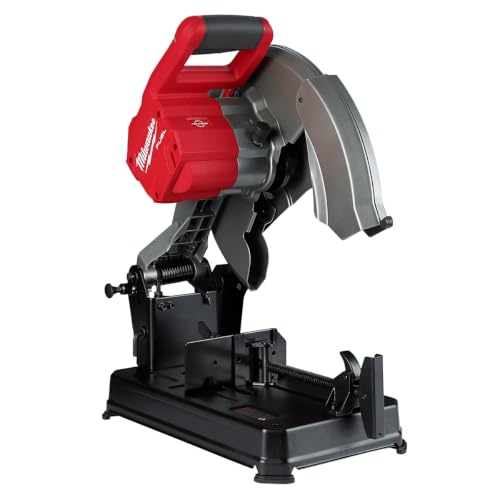
Milwaukee M18 Fuel 14-Inch Cut-Off Saw
What We Like
- Generates 15 Amp corded equivalent power
- Tool-free fence and blade change
- Rapid-stop braking for safety
Trade-offs
- Battery and charger sold separately
- At 41.8 lb, it's a heavy portable tool
- Larger footprint than mini benchtop saws
The Milwaukee M18 Fuel cut-off saw generates 15 amp corded power, so it can operate without a nearby outlet. Its rapid stop braking feature stops accessories in under three seconds for quicker changes between cuts. Tool-free fence and blade adjustments reduce downtime for setup.
That capability comes with a trade-off in size and weight. At 41.8 pounds, it is heavier than the 14.4-pound VEVOR 7-1/4 Inch Metal Cutting Chop Saw, which is better suited for a permanent workshop station. Research mentions the portable Milwaukee has impressive power for a battery-powered saw but does have limitations.
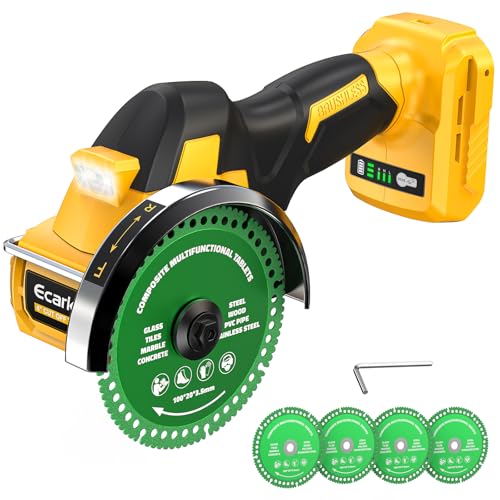
Ecarke Cordless Cut Off Tool
What We Like
- Uses your existing DeWalt 20V batteries
- Tool-free blade changes with spindle lock
- Forward/reverse function for blade control
Trade-offs
- Tool only: requires separate DeWalt battery and charger
- 4-inch blade limits cut depth compared to larger saws
- No built-in miter or angle adjustment mechanism
Its compatibility with DeWalt 20V batteries means you can add a capable, cordless cut-off tool to your kit without investing in a new battery platform. The three-speed brushless motor and included 4-inch blades let it handle everything from metal and tile to plastic, while the forward/reverse switch and 2.9-pound body offer fine control in tight spots. This makes it a logical, space-saving addition for any DeWalt user who frequently needs to make quick, precise cuts on smaller stock without dragging out a corded saw.
This is a handheld tool, not a benchtop chop saw, so it lacks a built-in fence or miter gauge for repeatable angle cuts. You’re trading that stationary precision for ultimate portability and one-handed operation. For trimming pipes, cutting tile, or slicing through small brackets on a ladder, its cordless freedom is hard to beat. For serious metal fabrication requiring deep, angled cuts on heavy stock, you’ll want a dedicated benchtop machine.
Product photos
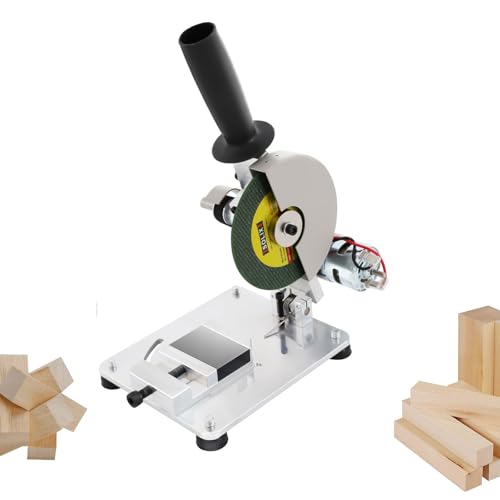
Ageanbri 4-Inch Mini Miter Saw
What We Like
- Includes both abrasive and multifunctional saw blades
- Compact, 4.9-pound design is highly portable
- Pure copper motor provides 9000 RPM for fast cuts
- Anti-slip footpads and handle aid stability and control
Trade-offs
- 4-inch blade limits cutting depth and width capacity
- Lacks the power and size for framing or large pipe work
Weighing just under five pounds and smaller than a shoebox, this saw is built for mobility and small-scale precision. Its 9000 RPM motor and two included blades allow for cutting steel, aluminum, wood, and plastic, offering flexibility for different DIY tasks. The adjustable angle and anti-slip feet let users set it up on a benchtop for controlled, repeatable cuts, suiting hobbyists who need a portable, space-saving station.
Given its ultra-compact size, the cutting capacity is naturally limited. You won’t be slicing through 2x4s or large-diameter steel with a 4-inch blade. For bigger, more demanding metal-cutting jobs, a heavier benchtop saw with a 1200-watt motor is the appropriate step up. This tool excels in its intended niche: it’s a focused workshop accessory for hobbyists, not a primary construction saw.
Product photos
SEANESZTI 4-Inch Metal Chop Saw
What We Like
- Low-noise operation at about 80 dB
- Includes both abrasive and multi-functional blades
- Protective cover and non-slip handle for safety
Trade-offs
- Maximum cut depth of 1.14 inches limits material thickness
- Fixed corded 110V power limits portability
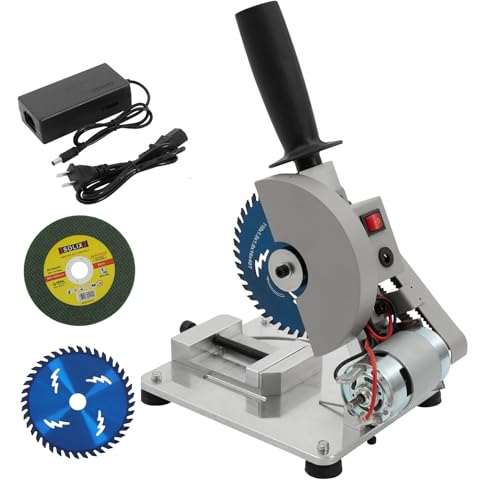
An operating noise level of about 80 dB makes this a notably quiet option for a metal chop saw, which is a serious advantage if you’re working in a shared space or a garage attached to your house. The 96W pure copper motor and 9000 r/min speed deliver capable cuts in steel pipe and aluminum plate. The included pair of blades adds versatility right out of the box, making this a solid fit for a hobbyist or DIYer who needs precise, angled cuts in smaller stock without disturbing the whole neighborhood.
That quieter operation comes with a trade-off in raw cutting capacity. Its 1.14-inch maximum depth simply can’t handle the thicker material that a larger benchtop chop saw chews through. Think of this as a precision bench tool for light gauge metal and tubing, not a brute for heavy structural work. If your projects consistently involve bar stock over an inch thick, you’ll need to step up to a more powerful machine.
Product photos
Cobra-Tek 6-Inch Metal Chop Saw
What We Like
- Versatile 2-inch max cut height
- Precise 0-45° adjustable fence
- Comes with blade wrench and TCT blade
Trade-offs
- 7/8-inch arbor limits blade compatibility
- 6-inch blade is smaller than some 7-1/4 inch models
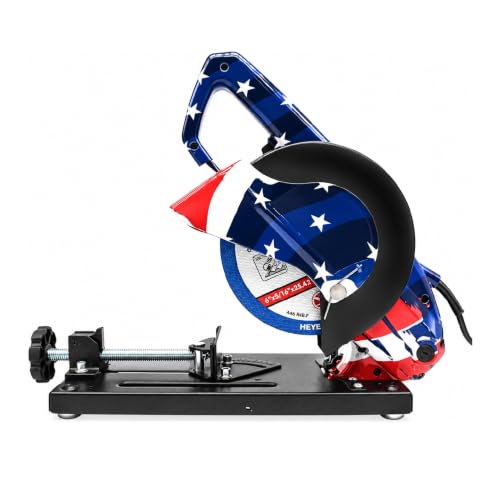
With a maximum cut height of 2 inches, this saw handles thicker metal stock than the mini benchtop models while remaining more compact than large 14-inch cut-off saws. Its 5.5-amp motor achieves up to 8000 rpm, providing the speed for clean cuts in steel rod and pipe. This balance of capacity and power suits a serious DIYer or semi-pro needing a reliable benchtop saw for frequent projects.
The blade size is a consideration. Its 6-inch diameter is a step down from a standard 7-1/4 inch metal cutting saw, which means a slightly reduced cutting depth per pass on wider stock. The 7/8-inch arbor is also a specific size you’ll need to match for replacements. For a dedicated workshop setup where you’ll tackle a mix of angle iron, pipe, and rod, this saw provides a capable and efficient centerpiece. Just know it’s designed to be plugged in, so it stays put on the bench.
Product photos
SI FANG Mini Miter Cut-Off Saw

What We Like
- Extremely compact and lightweight benchtop design
- Adjustable miter gauge for precise angle cuts
- High 6000 RPM speed for clean cuts in soft materials
Trade-offs
- 1/2-inch cutting depth limits material thickness severely
- 110V corded design requires a nearby outlet
- Primarily for soft metals, wood, and plastic, not heavy-duty work
A 1/2-inch cutting depth and a footprint smaller than a shoebox define this tool’s purpose. It’s built for the hobbyist who needs surgical accuracy on miniature projects, think picture frames, model parts, or trimming brass casings. The 6000 RPM motor and included blades for different materials handle wood dowels, carbon arrows, and light metals. This is the saw you reach for when a full-size miter saw is absurd overkill and hand tools lack the repeatable precision.
You trade capacity for that precision, so it won’t handle dimensional lumber or steel pipe. For those occasional larger or tougher cuts, you’ll need a more capable benchtop saw. This model excels in its niche, turning a cramped workbench into a miniature production line for crafts and light DIY where every cut needs to be perfect right off the blade.
Product photos
How We Evaluated Small Chop Saws
Our research focused on manufacturer specifications, expert round-ups, and consistent patterns in owner feedback. We prioritized cutting capacity, motor power, and portability because these factors determine what materials you can cut and where you can use the tool. Cutting capacity, defined by blade size and maximum cut depth, separates a saw for thin hobby stock from one capable of handling small metal tubing.
Motor power, from modest 90W to robust 1200W, dictates whether you’re cutting soft plastic or steel. Portability, influenced by weight and power source, determines if a saw stays on your bench or travels to a job site. As a research-led evaluation, we cannot confirm hands-on performance metrics like long-term durability or exact noise levels in a home workshop.
What To Look For In Small Chop Saws
The term “small” can mean a lightweight benchtop tool or a more powerful unit with a reduced footprint. Your choice hinges on the materials you plan to cut and the space you have available.
Focus on motor power for material type, cutting depth for stock thickness, and weight plus power source for portability. A miter fence is essential for angled cuts.
Cutting Capacity & Power
A saw’s capacity is defined by its blade diameter and maximum cut depth. A 7-1/4-inch blade can handle thicker material than a 4-inch blade, but even a small blade on a sliding saw can achieve a wider crosscut. Motor power is equally critical; cutting ferrous metals like steel requires significantly more wattage than slicing through plastic or softwood.
For example, a 1200-watt motor is intended for high-intensity metal cutting, while a 90-watt motor is suitable for thin stock and light-duty tasks. Understanding this relationship helps match the tool to common projects, such as working with small metal tubing or delicate craft wood.
Portability & Setup
Portability in small chop saws is a balance of weight and power source. A 3-pound benchtop saw is highly portable but requires a 110V outlet, while a 14-pound model is a stationary workshop tool. For true cord-free operation, you’ll need a battery-powered model, though these often sacrifice built-in work surfaces and precise fences.
Consider where you’ll use the saw most. For a fixed workshop, a heavier, corded model with a stable base is ideal. For job site versatility or working in confined spaces, a lightweight, cordless cut-off tool might be the better fit, even if it means cutting small pieces safely with extra care.
Features For Precision & Safety
Precision features separate basic cutters from versatile workshop tools. An adjustable miter fence, often offering 0-45° angles, is essential for making accurate angled cuts. Look for a sturdy clamping mechanism to hold your workpiece securely.
Safety features like an auto-return blade guard and a secure, quick-lock vise are non-negotiable, especially when cutting metal that can bind or kick. For cleaner cuts and easier cleanup, consider models with dust ports compatible with a shop vacuum. While exploring your options, you might also find our guide on chop saw stands helpful for creating a stable, mobile workstation.
- Check the maximum cut depth against the thickness of your most common materials.
- Verify the power source: corded for workshop use, cordless for ultimate portability.
- Ensure the miter fence locks securely at your desired angles.
- Look for a sturdy vise or clamp to prevent workpiece movement.
- Confirm that essential safety features like a blade guard are present and functional.
A saw that can’t securely hold your workpiece or make your most frequent cut angle isn’t the right tool for the job.
Small Chop Saws Compared
The following table compares our top picks side-by-side across key specifications to help you see the differences at a glance.
| Product | Max Speed | Cutting Angle | Weight |
|---|---|---|---|
| VEVOR 7-1/4 Inch Metal Cutting Chop Saw | 4000 RPM | 0-45° adjustable | 14.4 pounds |
| YIYIBYUS Mini Bench Cut-off Miter Saw | 6000 RPM | 0-45° adjustable | 3.3 lbs |
| VEVOR Mini Miter Cut-off Chop Saw | 7800 RPM | 0-45° adjustable | 3.0 pounds |
| DEMIMA Cordless Cut Off Tool | 18,000 RPM | N/A | 1.0 pounds |
| Milwaukee M18 Fuel 14-Inch Cut-Off Saw | N/A | N/A | 41.8 pounds |
| Ecarke Cordless Cut Off Tool | 18,000 RPM | N/A | 2.8 pounds |
| Ageanbri 4-Inch Mini Miter Saw | 9000 RPM | 0-45° adjustable | 4.9 pounds |
| SEANESZTI 4-Inch Metal Chop Saw | 9000 r/min | 0-45° scale | N/A |
| Cobra-Tek 6-Inch Metal Chop Saw | 8000 RPM | 0-45° | N/A |
| SI FANG Mini Miter Cut-Off Saw | 6000 RPM | 0° to 45° | 3.9 Pounds |
Frequently Asked Questions
What is the best small chop saw?
The best small chop saw depends on your primary need. For powerful, precise metal cutting in a workshop, the VEVOR 7-1/4 Inch Metal Cutting Chop Saw is our top choice. For maximum portability on a budget, the YIYIBYUS Mini Bench Cut-off Miter Saw excels. If you need cordless freedom and already own Milwaukee batteries, the DEMIMA Cordless Cut Off Tool is a great option.
What is the best small saw for cutting wood?
For dedicated woodworking, you should look for a saw labeled as a miter saw, which is designed for cleaner, more precise wood cuts. While some small chop saws can cut wood, a dedicated miter saw will offer features like finer blades and better dust collection specifically for wood projects.
What is the best small mitre saw?
A small miter saw is optimized for angled cuts in wood and trim. Our research into compact miter saws shows they prioritize accuracy, dust management, and sliding mechanisms for wider crosscuts on baseboards and crown molding, which differs from the heavier-duty cutting action of a metal-focused chop saw.
Who makes a good chop saw?
Several manufacturers produce reliable small chop saws. Brands like VEVOR, Milwaukee, and DeWalt (through licensed partners like Ecarke) offer models across the power and portability spectrum. The best maker for you depends on whether you need workshop power, extreme compactness, or compatibility with an existing cordless tool battery ecosystem.
What should I look for in a chop saw blade?
The blade is critical for performance and material compatibility. Abrasive wheels are common for cutting metal, while tooth blades are used for wood and plastic. Always check the arbor size (the hole in the center) for compatibility with your saw. For a deeper dive, our resource on chop saw blades covers types, materials, and selection tips.
The Bottom Line
For the workshop-based user needing frequent, precise cuts in metal tubing and bar stock, the VEVOR 7-1/4 Inch Metal Cutting Chop Saw is the best overall choice. Its powerful motor and adjustable miter fence handle heavy-duty tasks with ease. If your budget is tight or your projects are small-scale, the YIYIBYUS Mini Bench Cut-off Miter Saw offers remarkable capability in a tiny, affordable package.
For Milwaukee M18 tool owners who value cordless freedom above all, the DEMIMA Cordless Cut Off Tool provides portable cutting power. Ultimately, honestly matching the saw’s cutting depth and motor power to your primary material is the most important step in choosing the right small chop saw.
