
10 Best Concrete Grinders in 2026
This post contains affiliate links. As an Amazon Associate, we earn from qualifying purchases.
Our top pick for most users is the Metabo HPT GM13Y Concrete Surfacing Grinder for its powerful 15-amp motor and effective dust extraction. For integrated dust control, consider the HayWHNKN Concrete Floor Grinder, while professionals working in corners should look at the VEVOR Electric Walk-Behind Concrete Grinder.
Choosing the wrong machine can waste time and money, especially on projects with tight spaces or large open floors. This guide is based on research into specifications, manufacturer data, and patterns in owner feedback to help you match a grinder’s capabilities to your specific job.
Top 10 Concrete Grinders in the Market
Certain content that appears on this site comes from Amazon. This content is provided "as is" and is subject to change or removal at any time.
The Best Concrete Grinders, Reviewed
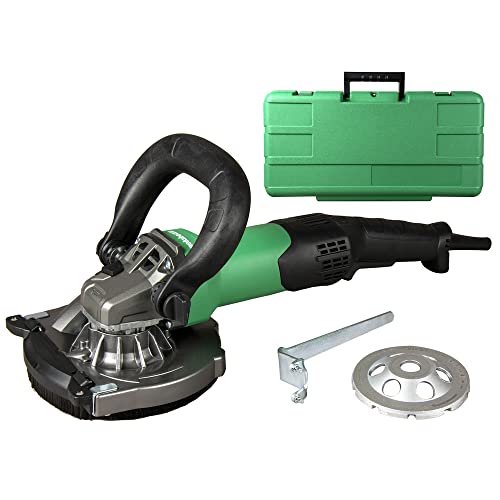
Metabo HPT GM13Y Concrete Surfacing Grinder
What We Like
- Powerful 15-amp motor for tough jobs
- Effective dust extraction hood and flange
- Lightweight, ergonomic design for overhead work
- Variable speed with soft-start technology
Trade-offs
- 5-inch wheel limits surface coverage per pass
- Manual operation requires user guidance for large areas
A 15-amp motor and variable speed up to 8,200 RPM give this grinder the muscle and control to handle everything from aggressive material removal to final smoothing. Its lightweight build and slim grip are engineered for comfort during long sessions, even on ceilings, while the integrated dust hood tackles the mess. This makes it a supremely versatile single tool for contractors and dedicated DIYers who need to surface, clean, and polish concrete on a variety of jobs without switching machines.
The trade-off is scale. As a handheld 5-inch unit, it’s designed for precision work, edges, and mid-sized patches, not for efficiently grinding an entire garage floor. For that kind of large, flat surface, a walk-behind machine like the VEVOR Electric Walk-Behind Concrete Grinder is the proper tool. The Metabo HPT GM13Y excels as the go-to solution for detailed concrete prep and repair where maneuverability and control are paramount.
Product photos
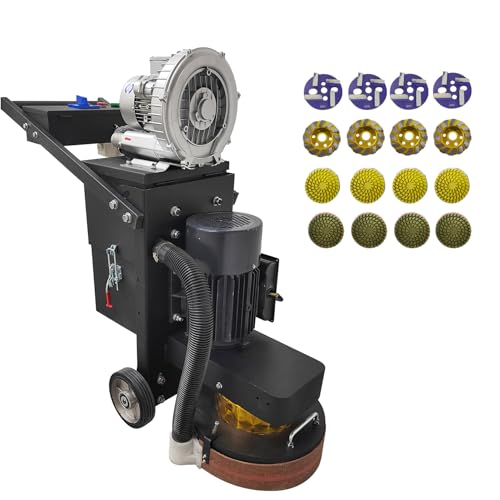
HayWHNKN Concrete Floor Grinder with Vacuum
What We Like
- 4kW pure copper motor for heavy-duty grinding
- Comprehensive kit includes grinding and polishing discs
- Adjustable handle and working depth
Trade-offs
- Requires 220V power, limiting portable job site use
- No weight or dimensions listed for transport planning
A 4kW motor and included 20L vacuum system make this a serious option for indoor work where dust is a primary concern. The 750W fan and filter can filter 90% of dust, which helps contain the cloud during tasks like epoxy refurbishing or surface roughening. It arrives with diamond grinding discs and resin polishing sheets, providing tools for both removal and finishing steps.
This system requires a 220V outlet, which means it won’t work on standard household circuits. You’ll need to plan ahead for power access, making it a better fit for fixed-location projects than for quick jobs at sites without the proper voltage.
Product photos
CS Unitec EBS 180 F Concrete Floor Grinder

What We Like
- Foldable dust guard for grinding directly to edges
- Integrated brush rim for effective dust collection
- Height-adjustable handle improves operator comfort
- Runs on standard 110V power for jobsite compatibility
Trade-offs
- Requires separate dust extraction vacuum for full operation
- Manual operation is labor-intensive for entire floors
A 7-inch grinding disc paired with a foldable front dust guard lets you work tight against walls and into corners, a common headache on perimeter work. This tool is built for the flooring pro who needs to prep edges for coatings or smooth concrete seams where a large walk-behind machine can’t reach. Its 20-amp motor on 110V power means you can plug it in on most jobsites without hunting for specialty outlets. The German engineering shows in details like the brush rim, which creates a solid seal with a vacuum hose to keep your work area clean.
The CS Unitec EBS 180 F is a specialized tool for detailed finish work, connecting handheld precision with professional dust control. It grinds and smooths concrete, screed, and coatings, making it suitable for final prep before applying epoxy. This grinder excels at edge work and cleanup after larger machines, with a foldable dust guard that allows grinding directly to the perimeter. A height-adjustable handle and brush rim for dust extraction support all-day use, keeping it ready in the trailer for those final stages.
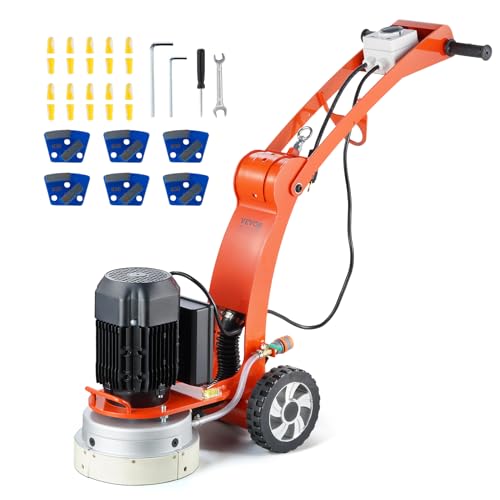
VEVOR Electric Walk-Behind Concrete Grinder
What We Like
- Compact 10-inch disc fits into corners and tight spaces
- Adjustable handle accommodates different user heights
- Powerful 1720 RPM motor for a unit this size
- Includes earplugs and a full accessory set for setup
Trade-offs
- At 122 pounds, it's not a lightweight machine for frequent transport
- Requires a dedicated 16-amp circuit, limiting outlet compatibility
- Smaller disc covers less area than multi-head industrial grinders
Its 250mm grinding disc is the defining feature, making it notably smaller than standard walk-behind models. This compact size allows for precise grinding in indoor and outdoor corners and other tight spaces that larger machines can’t access. The height-adjustable handle, which extends from 34 to 46 inches, accommodates different operators for more comfortable control during detailed work.
The trade-off for that corner access is coverage speed. You’re not going to efficiently grind a wide-open warehouse floor with this single-head unit; that’s a job for something like the Treliamd 4-Head Grinder. Its 122-pound weight also means you’ll feel it when loading and unloading. For its intended purpose of detailed surface preparation and finishing, however, the design hits the mark by solving a specific problem other machines in the category create.
Product photos
Treliamd 4-Head Concrete Floor Grinder

What We Like
- Four-head system offers 300% wider coverage
- LED light illuminates dark work areas
- Edge grinding capability reaches 90° corners
Trade-offs
- Requires a separate shop vacuum for dust collection
A 300% wider coverage from its four grinding heads makes this machine a productivity beast for large, open floors. That wide swath, driven by a 3800W motor with six speed settings, is built for commercial-scale concrete prep and polishing where time is money. The integrated LED light and dust shroud are smart touches for visibility and cleanup, while the extension rod lets you work standing up, a back-saver on marathon jobs. This is the grinder you roll out when you have a warehouse, factory floor, or big garage to transform, not for fiddly patch jobs.
The dust extraction shroud requires a separate shop vacuum, which is an additional piece of equipment to source and manage. While the 90° edge grinding feature helps reach wall edges, the four-head system is designed for wide-area coverage, a characteristic that typically suits open spaces more than confined layouts with many obstacles.
Product photos
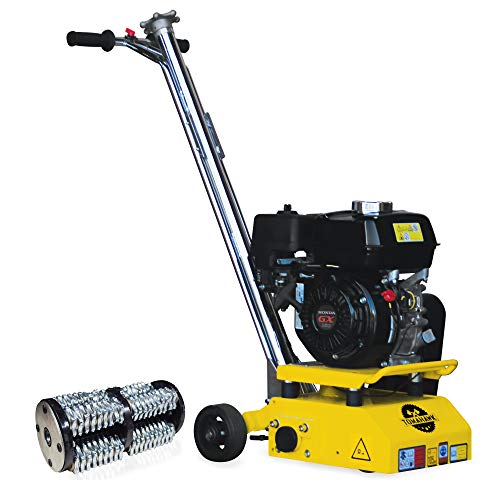
Tomahawk Power Gas Concrete Scarifier
What We Like
- Honda engine provides reliable gas power
- High removal rate for large surface areas
- Vacuum port helps manage airborne dust
- Reduced vibration design for operator comfort
Trade-offs
- At 115 lb, it requires significant effort to transport
- Lacks the plug-and-play simplicity of electric models
A 5.5 HP Honda engine and a removal rate of 350-500 square feet per hour mean this machine is built for serious, uninterrupted surface preparation. It’s the pick for contractors tackling large outdoor slabs, parking lots, or industrial floors where corded power isn’t an option. The vacuum port and reduced vibration are thoughtful touches for a full day’s work, but this is unequivocally a production tool, not a garage hobbyist’s gadget.
A 5.5 HP Honda gas engine provides untethered power for remote jobsites far from electrical outlets. This capability comes with a 115-pound frame, so moving the machine requires significant effort. The competing CS Unitec Trelawny electric scarifier also weighs 149 pounds and requires a 400V three-phase power source, limiting its use to prepared industrial sites.
Product photos
CS Unitec Trelawny Electric Concrete Scarifier
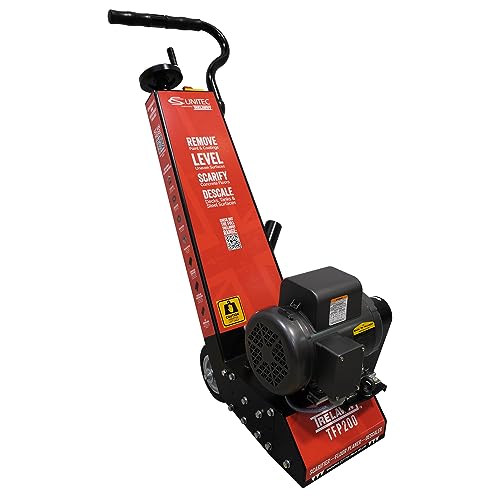
What We Like
- Compact 35×14 inch footprint for maneuverability
- Powerful 16 Amp motor for 1/8 inch cuts
- Integrated 2 inch vacuum port for dust control
- Hold-to-run safety switch for operator control
Trade-offs
- Requires a 400V 3-phase power supply, limiting worksite compatibility
- At 149 lbs, it's substantial for a compact machine
A 35-inch length and 14-inch width let this scarifier operate in corridors, against walls, and around obstacles where bigger machines simply won’t fit. That compact design, paired with a 16 Amp motor capable of a 1/8-inch cut, makes it a serious tool for targeted surface preparation and coating removal in confined areas. It’s built for contractors who need to tackle elevator lobbies, bathrooms, or utility rooms without sacrificing cutting power for size.
This scarifier needs a 400V 3-phase electrical hookup, which means it’s not an option for standard home outlets and typical residential projects. Its compact, 149-pound design lets it work in tight spaces where larger equipment can’t fit. While it can cover about 500 square feet in an hour, its real strength is tackling confined areas rather than vast, open floors.
Product photos
INTSUPERMAI 5-Head Concrete Floor Grinder
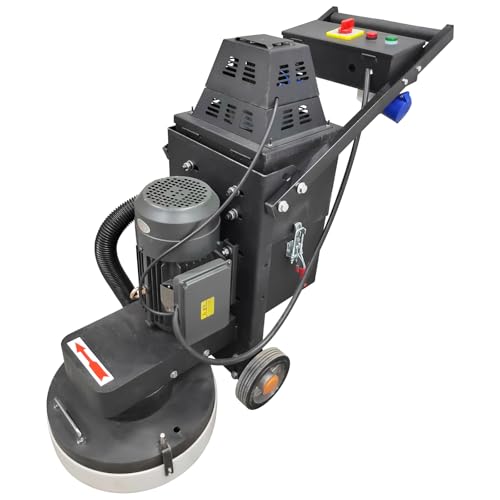
What We Like
- 1.8kW built-in suction fan for strong dust capture
- 20L sealed dust box with replaceable filter
- Five-head base for balanced pressure distribution
- Pure copper motor and aviation-grade connector
Trade-offs
- Requires a 220V power source, limiting outlet options
- Large 35.4-inch frame requires significant storage space
- Industrial weight and size complicate transport for some users
A 1.8kW built-in suction fan paired with a 20L dust box means this grinder contains its own mess, turning a typically filthy job into a far cleaner operation. That integrated dust collection system is the core of its design, making it ideal for indoor renovations or any enclosed space where containing concrete dust is non-negotiable. The 4kW pure copper motor and five-head grinding plate provide the steady, even power needed to tackle large cement or epoxy floor surfaces efficiently.
The trade-off for that self-contained dust control is a machine built for stationary, industrial-scale work. Its substantial 35.4-inch frame and 220V requirement anchor it to larger projects with appropriate power access. For smaller, more mobile tasks, a tool like the Metabo HPT GM13Y offers a much more compact and portable profile, though it lacks any integrated dust handling. The INTSUPERMAI is for when the job site can’t afford to be covered in powder.
Product photos
VEVOR 1400W Walk-Behind Grinder
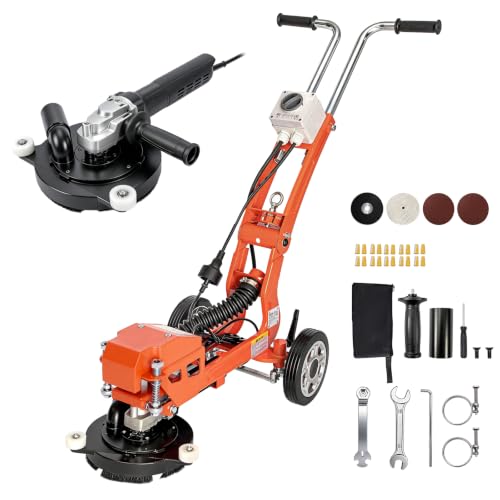
What We Like
- Detachable 2-in-1 design for floor and handheld work
- Removable shroud for flush edge and corner grinding
- Adjustable handle extends up to 7.09 inches for ergonomics
- Includes 50 mm vacuum port for dust control
Trade-offs
- Dry grinding only, cannot be used with water
The 2-in-1 detachable design is the core of this machine’s appeal. You get a full walk-behind grinder for large floor areas and can detach the 1400W angle grinder for vertical surfaces or tight spots. That 3600 RPM motor provides consistent power for dry grinding tasks, and the adjustable handle helps you find a comfortable stance. This makes it a logical choice for contractors or serious DIYers tackling mixed projects who want to avoid buying two separate tools.
This tool is designed for dry use only, which limits it on jobs where water is needed to control dust or heat. Its 180 mm grinding path is also narrower than a dedicated floor machine’s, so covering large areas will require more passes. Think of it as a capable multi-tool rather than a production-level floor grinder.
Product photos
Onfloor 20 Inch Multi-Surface Floor Machine

What We Like
- Quick-change tooling for grinder, sander, polisher
- Heavy-duty steel frame for durability
- Removable handle for easier transport
- 30-foot, water-resistant power cord
Trade-offs
- At 190 pounds, it requires significant manpower to load and unload.
- The 208-240V power requirement limits it to specific workshop wiring.
- Its large size makes it unsuitable for tight corners or small rooms.
A 5 HP motor paired with a 20-inch working width means this machine can cover serious ground on large, open concrete slabs. The quick-change tooling system lets you shift from aggressive grinding to fine polishing in seconds, a huge advantage for contractors managing multiple phases of a floor project on a tight schedule. It’s built for the pro who needs a single, versatile workhorse that can handle everything from surface prep to finishing, all backed by domestic manufacturing standards.
That capability comes with a substantial physical footprint. The 190-pound weight makes this a permanent shop tool or a dedicated job-site machine, not something you casually toss in a van. Compared to a compact unit like the Metabo HPT GM13Y, the Onfloor trades portability and maneuverability for raw power and a much wider path. You buy this to minimize tool changes and maximize floor coverage, accepting that it demands a dedicated operator and a suitable power source to run.
How We Evaluated Concrete Grinders
Our research focused on comparing specifications from manufacturers, analyzing expert round-ups, and identifying common themes in owner feedback. We prioritized power source and voltage requirements, as a 220V machine is useless on a standard 110V jobsite. Grinding width and machine footprint determined efficiency for large floors or access to tight spaces and corners.
Finally, we assessed dust control integration, as managing silica dust is a critical safety and cleanup concern. Since this is a research-based evaluation, we cannot speak to long-term durability or hands-on performance nuances that only emerge with extended use.
What To Look For In Concrete Grinders
Your project’s scale and location dictate the right tool. A machine that’s perfect for a warehouse floor will struggle in a hallway.
The key factors are power source (110V for standard outlets, 220V/gas for heavy-duty work), grinding width and footprint (for efficiency or tight spaces), and integrated dust control (for health and cleanliness).
Power Source and Voltage
Electric grinders are common, but their required voltage is crucial. Standard models offer the most jobsite compatibility for residential and light commercial work. Heavy-duty machines often need higher voltage power or a three-phase supply, which limits them to prepared workshops or industrial sites. Gas-powered options provide cordless freedom for large outdoor projects but add exhaust fumes and maintenance.
Grinding Width and Machine Footprint
Grinding width directly impacts productivity. A multi-head planetary grinder covers a wide swath, making it efficient for open warehouse floors. Conversely, a compact single-disc or handheld grinder is necessary for maneuvering in hallways, up against walls, or into corners. Always check the machine’s physical dimensions and weight against your workspace and transport capabilities; a 300-pound unit is a major logistical challenge.
Dust Control Integration
Concrete grinding produces hazardous silica dust. Some machines have a built-in suction fan and dust box, while others require connecting an external shop vacuum via a port. Effective concrete dust collection is non-negotiable for indoor air quality and post-job cleanup. When operating a concrete grinder, always use the recommended respiratory protection alongside the machine’s dust control system.
- Check if the machine includes a dust shroud or requires a separate purchase.
- Verify the vacuum port size for hose compatibility.
- For heavy production, look for a sealed dust box or HEPA-filter compatibility.
- Consider noise levels and whether included hearing protection is adequate.
Always pair your grinder with a vacuum rated for fine concrete dust to protect your health and keep the workspace clean.
Concrete Grinders Compared
The comparison table below highlights the key specifications and intended use cases for all ten grinders at a glance.
| Product | Motor Power | Disc/Working Width | Dust Collection |
|---|---|---|---|
| Metabo HPT GM13Y Concrete Surfacing Grinder | 15 Amp, 1700 Watt | N/A | Dust extraction hood |
| HayWHNKN Concrete Floor Grinder with Vacuum | 4kW (220V) | N/A | 20L vacuum, 750W fan |
| CS Unitec EBS 180 F Concrete Floor Grinder | 20 Amp, 110V | 7 inch | Dust extraction |
| VEVOR Electric Walk-Behind Concrete Grinder | 1.7 HP | φ10'' / 250 mm | N/A |
| Treliamd 4-Head Concrete Floor Grinder | 3800W pure copper | Four 4-inch | Detachable dust shroud |
| Tomahawk Power Gas Concrete Scarifier | 5.5 HP Honda GX160 | 8” | Vacuum port for dust bags |
| CS Unitec Trelawny Electric Concrete Scarifier | 16 Amp 400V 3-phase | 8 inches | 2" vacuum port |
| INTSUPERMAI 5-Head Concrete Floor Grinder | 4kW | 14.9 inches | 20L Dust Collector, 1.8kW fan |
| VEVOR 1400W Walk-Behind Grinder | 1400W | 7.09 in / 180 mm | 50 mm vacuum port |
| Onfloor 20 Inch Multi-Surface Floor Machine | 5 HP | 20 Inch | 2" Dust/Water port |
Frequently Asked Questions
What is the best grinder for concrete?
The best tool depends on the job. For a versatile, powerful handheld grinder suitable for many tasks, the Metabo HPT GM13Y is an excellent overall choice. For large, open floor areas, a multi-head walk-behind grinder like the Treliamd 4-Head model is far more efficient.
What is the most effective way to grind down concrete?
The most effective method combines the right machine with the correct abrasive tooling. Start with a coarse diamond grinding wheel for aggressive removal, then progress to finer grits for smoothing. Using a machine with effective dust control is essential for safety and visibility.
What are some good heavy-duty concrete grinders?
Heavy-duty grinders are characterized by high-power motors and often require 220V or gas power. Our picks include the HayWHNKN Concrete Floor Grinder with its 4kW motor, the gas-powered Tomahawk Power scarifier for outdoor work, and the industrial-scale Onfloor 20 Inch Multi-Surface Floor Machine.
Is it better to grind concrete wet or dry?
Dry grinding is more common, especially with modern dust extraction systems. Wet grinding controls dust effectively and can extend diamond tool life, but it creates slurry that requires containment and cleanup. Most DIY and contractor jobs use the dry method with a high-quality vacuum.
Can I use an angle grinder on concrete?
Yes, a heavy-duty angle grinder fitted with a diamond cup wheel can handle small concrete tasks like edge work or patch leveling. For larger surface areas, a dedicated walk-behind concrete grinder is vastly more efficient and less labor-intensive.
The Bottom Line
The Metabo HPT GM13Y Concrete Surfacing Grinder is our best overall pick for contractors and serious DIYers needing a powerful, versatile handheld tool with excellent dust control. If your budget is tighter or your project focuses solely on large, open floors, look at our award winners for multi-head coverage or integrated dust collection. Ultimately, matching the machine’s power source, physical size, and dust management to your specific job site is the most important factor for a successful grind.
