
10 Best Sanders For Removing Paint in 2026
This post contains affiliate links. As an Amazon Associate, we earn from qualifying purchases.
Our best overall sander for removing paint is the Bosch GET75-6N Electric Orbital Sander for its powerful variable speed and excellent dust control. The Wagner PaintEater is the best for paint-specific design, while the DEKOPRO 5″ Sander is the best complete starter kit. Stripping old paint is a messy, tiring job that can damage the wood underneath if you use the wrong tool.
This guide helps you match the right sander type and features to your specific project, whether it’s a furniture piece or an entire wall. We evaluated ten top models by comparing specifications, manufacturer data, expert round-ups, and patterns in owner feedback to give you a clear path to the right tool.
Top 10 Sanders For Removing Paint in the Market
Certain content that appears on this site comes from Amazon. This content is provided "as is" and is subject to change or removal at any time.
The Best Sanders For Removing Paint, Reviewed
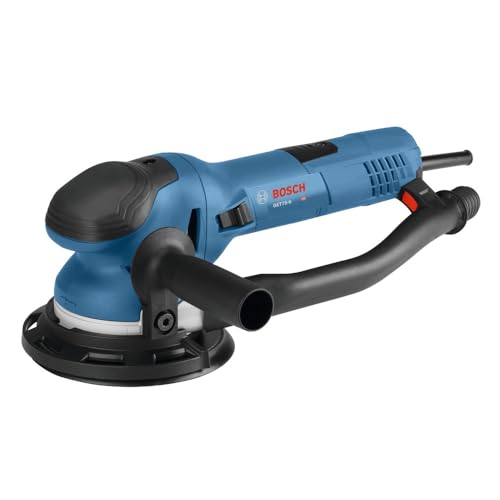
Bosch GET75-6N Electric Orbital Sander
What We Like
- Variable speed offers control for different tasks
- Multi-hole pad system fits many abrasive discs
- Includes vacuum hose adapters for dust control
Trade-offs
- Requires a separate shop vacuum for dust collection
- At 5.7 lb, it's heavier than many palm sanders
It switches from a standard random orbit for final smoothing to a direct-drive rotation that chews through old finishes at three times the rate. This dual personality makes it a versatile choice. You get the finesse of an orbital sander and the aggression of a smaller belt sander in one tool, which is perfect for a DIYer tackling a multi-room repaint or a furniture flip needing serious material removal.
Using the turbo mode requires connecting a shop vacuum for dust collection, as the sander’s passive system needs an external vacuum with compatible Bosch hoses or the included adapter. While the tool offers substantial power for a corded sander, its 5.7-pound weight and 15-inch length make it more suited to stationary workshop tasks than quick, handheld touch-ups. The multi-hole pad system allows it to use a wide variety of 6-inch abrasive discs.
Wagner PaintEater Electric Paint Remover

What We Like
- Palm-grip design for detailed control
- Open-web disc minimizes paint loading
- Flex-Disc system conforms to contours
- Operates effectively flat or on edge
Trade-offs
- Fixed 2,600 RPM speed lacks variable control
- Specific 4-1/2 inch disc limits accessory compatibility
The 3M spun-fiber disc running at 2,600 RPM is the core of this tool, engineered specifically to strip paint without gouging the underlying material. That makes the Wagner PaintEater a specialist, not a generalist. Its palm-grip body and 3.4-pound weight offer excellent maneuverability for detailed work on doors, trim, or furniture where you need to feather edges and preserve the substrate. This is a tool built for a single, frustrating job, and its design reflects that focused intent.
The trade-off for that specialization is raw power and versatility. Its 3.2 Amp motor provides controlled aggression for paint, but it won’t tackle heavy material removal or large, flat surfaces as quickly as a tool like the Bosch GET75-6N orbital sander. Think of it as a surgical scalpel versus a saw. For repaint prep and careful restoration, its purpose-built design is a clear advantage. For a shop needing one sander to handle paint removal and general wood smoothing, a more powerful random orbital model would be a better fit.
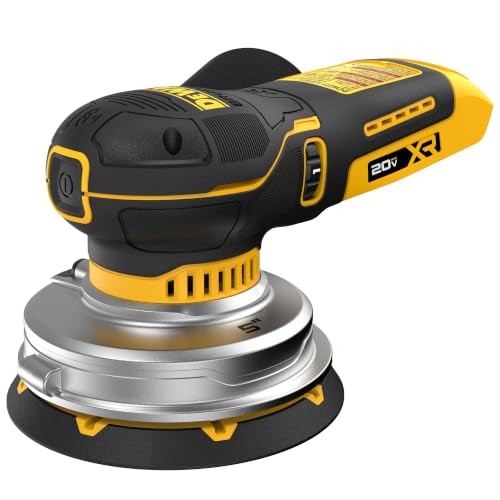
DEWALT 20V MAX XR Random Orbital Sander
What We Like
- Exceptionally low vibration for reduced user fatigue.
- Compact, low-profile design for working in tight spaces.
- Integrated wireless control for compatible dust extractors.
Trade-offs
- Maximum speed of 12,000 OPM is lower than some corded orbital sanders.
- Dust extraction requires a separately sold vacuum for full benefit.
Up to 40% less vibration defines the DEWALT DCW211B, a design focused on reducing user fatigue during extended sanding tasks. Its cordless, low-profile shape allows work in tight spaces where a cord would be cumbersome. While runtime is not unlimited, the ability to sand up to 50 square feet on a single charge covers substantial prep work between battery swaps.
Variable speed control offers five settings from 8,000 to 12,000 orbits per minute, allowing speed to be matched to the application. The maximum speed is lower than a dedicated tool like the Wagner PaintEater Electric Paint Remover. For large, flat areas where maximum material removal is the sole priority, a more powerful corded sander may be faster.
Product photos
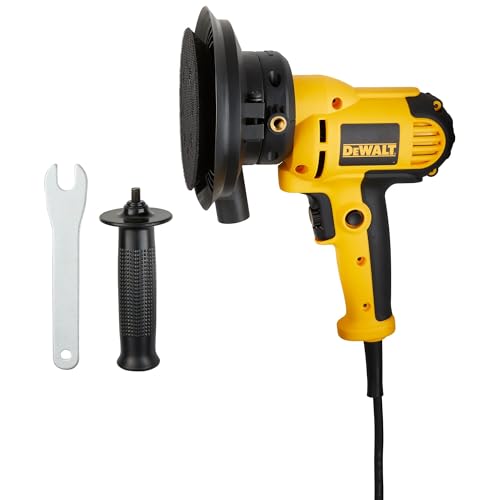
DEWALT Rotary Sander
What We Like
- 6-amp motor provides high torque for aggressive stock removal.
- Variable speed trigger dial offers control from 0 to 3,700 OPM.
- Mid-handle design with soft grip reduces user fatigue.
- Accepts common 5" sandpaper for easy, affordable replenishment.
Trade-offs
- Fixed 5" disc size limits reach in tight corners versus detail sanders.
- Corded design requires outlet access, unlike cordless models.
With a 6 amp motor for high torque sanding, this DEWALT sander speeds up the sanding process on demanding jobs. Its variable speed trigger dial adjusts from 0 to 3,700 OPM, providing versatility across a wide array of sanding applications. A mid-handle design with a soft grip and side handle increases balance and relieves user fatigue during extended use.
The tool’s weight of 4.8 pounds and its 5-inch sanding disc size mean it is less suited for detailed work in tight spaces. For sanding large, flat surfaces, the adjustable dust shroud can be connected to a vacuum for an improved working environment. When compared to other products, the HYCHIKA detail sander is more compact for confined areas.
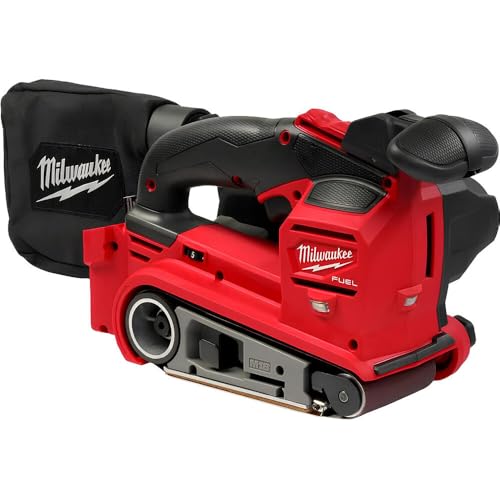
Milwaukee M18 Fuel Belt Sander
What We Like
- Brushless motor matches corded 8A sander power.
- Variable speed dial for precise removal control.
- Quick, tool-free belt changes minimize downtime.
Trade-offs
- Weighs 8.8 lb, a handful for overhead work.
- Compatible only with specific 3×18 sanding belts.
- Cordless design requires a separate M18 battery purchase.
Its brushless motor generates the power of larger 8-amp corded belt sanders, so you can remove material quickly without a cord. A variable speed dial provides a belt speed range from 1350 to 750 surface feet per minute for greater control over the removal rate. The tool-free belt change lever allows for quick swaps to minimize downtime.
The trade-off is bulk and weight; at nearly nine pounds, it’s a workout on vertical surfaces. For dedicated paint removal on flat, expansive areas, its speed is unmatched in the cordless category. For more delicate paint stripping on intricate moldings, however, a smaller orbital sander like the DEWALT 20V MAX XR would be far more maneuverable.
HYCHIKA BETTER TOOLS FOR BETTER LIFE MS200W Sander
What We Like
- Compact size fits easily into tight spaces.
- Includes three sandpaper grits for different stages.
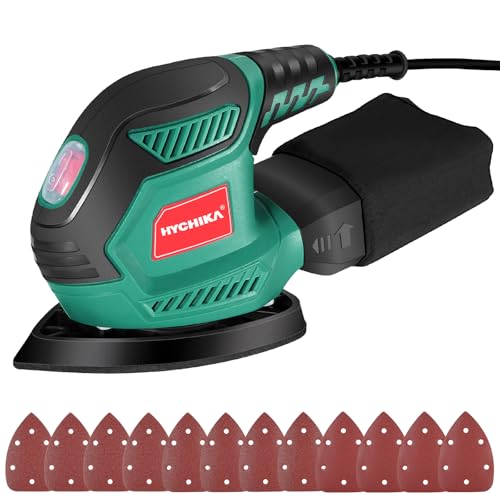
- Six-hole dust collection system with bag.
Trade-offs
- 1.6-amp motor is less powerful than full-sized sanders.
- Corded design limits mobility compared to cordless models.
Weighing 2.2 pounds, the HYCHIKA MS200W fits into tight spaces like corners and detailed trim where larger sanders cannot reach. It operates at up to 14,000 orbits per minute, a speed the manufacturer states is ideal for stripping paint and removing rust. The tool includes 12 hook-and-loop sandpapers in coarse, medium, and fine grits, letting users progress from material removal to final smoothing on projects like window sashes or furniture.
Its compact size does come with a limit on raw power. The 1.6-amp motor isn’t meant for clearing large, flat surfaces quickly, a job better suited for a sander like the Bosch GET75-6N, and the cord tethers you to an outlet. For its intended purpose of detail sanding, however, the efficient dust collection and ergonomic design make it a focused and affordable workshop companion. Just remember its limits: it’s for detail work on wood and metal, not for demolition or masonry.
Product photos
Makita 18V LXT Cordless Orbital Sander

What We Like
- Three electronic speed settings for material control
- Large random orbit action prevents swirl marks
- Cordless design offers full worksite mobility
Trade-offs
- Tool only listing: requires separate battery purchase
The 1/8 inch random orbit is the sweet spot for fast cutting without leaving behind those frustrating swirl marks. It’s built for the finish carpenter or serious DIYer who needs to move freely between tasks without hunting for an outlet, valuing a clean, ready-for-stain surface over brute stripping power. The compact, balanced design makes it easy to manage for extended periods on cabinetry or furniture.
The listing specifies the tool is sold without a battery or charger. Among the listed products, the corded Wagner PaintEater is categorized as a paint remover. Another cordless option is the DEWALT 20V MAX XR sander, which has different dimensions and weight.
Jellas 7Amp Handheld Belt Sander
What We Like
- Variable speed knob with six settings
- Converts into a fixed bench sander
- Includes a dust collection bag
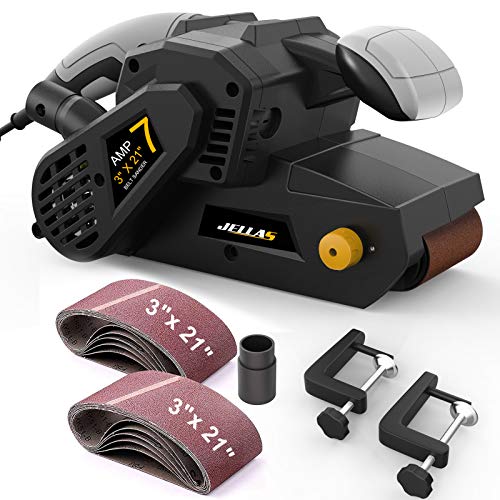
- Comes with a range of sanding belts
Trade-offs
- Requires proper belt alignment to avoid scratching workpieces
- Bulkier than orbital and detail sanders for tight spaces
A 7-amp motor paired with a 3×21-inch belt gives this sander the muscle to strip paint and level wood aggressively. It’s a solid fit for a DIYer setting up a first shop who needs a versatile, hard-working tool without a major investment. The ability to clamp it upside down as a bench sander adds real value for small projects and sharpening tasks, making it more than just a handheld tool.
That power and dual functionality add some heft, requiring more forearm stamina than a lighter orbital sander at nearly 10 pounds. It’s a dedicated workhorse for material removal, not a finesse tool for finishing. For quickly stripping paint from flat surfaces like doors or floors, its wide belt and lower speed settings are effective, but you’ll want a detail sander for corners and edges.
Product photos
DEKOPRO 5" Random Orbital Sander

What We Like
- Includes 16 sandpapers from coarse to fine
- Ergonomic rubber grip and low vibration design
- Detachable dust bag for efficient collection
- Hook-and-loop system for fast paper changes
Trade-offs
- Corded design limits mobility compared to cordless models
- Dust bag may require frequent emptying on large jobs
Coming with 16 sanding discs and a dust collection system, this sander arrives ready for a full day of paint removal. The six speed settings let you dial in the aggression, starting high to strip old layers and finishing low to smooth the surface. It’s a pragmatic choice for a first-timer or a homeowner who needs one box with everything to tackle a dresser or a door. The ergonomic grip and balanced counterweight mean you can work longer before fatigue sets in, which is crucial when sanding is the main event, not just a final touch.
A power cord means managing a cable during use, which can be inconvenient on ladders or large surfaces. For cordless operation, you would need a model like the DEWALT 20V MAX XR. This DEKOPRO sander runs on AC power, offering a straightforward workshop tool with a 2.5A motor capable of reaching up to 14,000 RPM.
Product photos
3M Pistol Grip Disc Sander

What We Like
- Variable speed control via the trigger for precision
- Pistol grip design enhances comfort during use
- Balanced motor reduces operating noise
Trade-offs
- Industrial use only, not intended for consumer projects
- Requires specific 3M Roloc disc system for attachments
Weighing just 1.6 pounds, this sander is built for detail work where arm fatigue is a real enemy. That featherweight build, combined with a molded pistol grip and a trigger with variable speed control, helps increase operator precision. The .45 horsepower motor delivers up to 18,000 RPM, and the tool is compatible with 2- or 3-inch Roloc abrasives. It is specified for industrial or occupational use only.
The tool is designed for use with 50 mm and 75 mm discs. Its compact dimensions of 10.0 inches long and 2.0 inches high contribute to a lightweight form. The balanced motor helps reduce noise during operation.
Product photos
How We Evaluated Sanders For Removing Paint
Our evaluation was research-based, comparing specifications, manufacturer documentation, and insights from expert round-ups on the best tools for stripping paint. We focused on criteria critical for paint removal: motor power for aggressive stripping, dust collection systems to manage hazardous lead paint dust, and ergonomic features like vibration control to reduce user fatigue during long sessions.
We also considered the sander’s compatibility with coarse-grit abrasives and its suitability for different surfaces. These range from large flat walls to intricate furniture details. A key limit of this research-led approach is that we cannot verify individual claims about durability or real-world performance over hundreds of hours of use. Therefore, we prioritized tools with consistent positive feedback across multiple sources.
What To Look For In Sanders For Removing Paint
Choosing the right tool transforms a grueling chore into a manageable project. The key is matching the sander’s action and power to the size of the job and the delicacy of the surface.
For paint removal, prioritize a powerful motor, effective dust collection, and a design that fits your workspace. Start with coarse grits for stripping, then move to finer grits for surface prep. Always wear a respirator, especially with older paint that may contain lead.
Sander Type and Action
The sander’s fundamental motion determines its effectiveness for paint removal. Belt sanders, like the Milwaukee M18 Fuel, offer the fastest material removal on large, flat surfaces but can easily gouge wood if you’re not experienced. Random orbital sanders, such as our best overall Bosch model, are versatile workhorses that remove paint quickly while leaving a smoother finish with less risk of swirl marks.
For detailed work on trim, corners, and intricate furniture, a detail or “mouse” sander like the HYCHIKA MS200W is essential to reach areas larger pads can’t touch. Understanding these types of power sanders is the first step to an efficient project.
Power and Control
Motor power, measured in amps for corded tools, dictates how aggressively a sander can strip layers of paint. A high-torque motor, like the 6-amp unit in the DEWALT Rotary Sander, powers through thick, old paint without bogging down. For cordless models, look for brushless motors and high-performance battery platforms.
Equally important is control; variable speed settings let you slow down for delicate veneers or speed up for broad, flat areas. This control is crucial when removing paint from wood to avoid damaging the substrate. Low-vibration designs, a standout feature of the DEWALT 20V MAX XR, significantly reduce hand fatigue during extended use.
Dust Collection and Ergonomics
Effective dust collection is non-negotiable for paint removal. It keeps your workspace clean, protects your lungs from fine particulate, and prevents paint dust from clogging the sandpaper, which drastically reduces its effectiveness. Look for sanders with dedicated vacuum ports and effective sealing, like the Bosch GET75-6N’s multi-hole pad system.
Ergonomics encompass weight, grip design, and balance. A lighter tool is easier to manage for overhead work or long sessions, but may sacrifice power. A comfortable grip and well-balanced design, like the pistol grip on the 3M sander, improve control and reduce strain, making your paint removal sanders much more pleasant to use.
- Check the tool’s weight and grip comfort by holding it in a store if possible.
- Ensure your shop vacuum hose is compatible with the sander’s dust port.
- For cordless models, factor in the added weight and cost of the battery system.
A good rule of thumb: if you’re sanding overhead or on vertical surfaces, prioritize a lighter tool; if you’re working on large floors or decks, prioritize power and dust extraction.
Sanders For Removing Paint Compared
The comparison table below summarizes the key specifications and features of our top picks side-by-side to help you make a direct comparison.
| Product | Motor / Power Source | Speed | Weight |
|---|---|---|---|
| Bosch GET75-6N Electric Orbital Sander | 7.5 Amp | 290-640 RPM / 3300-7300 OPM | 5.7 pounds |
| Wagner PaintEater Electric Paint Remover | 3.2 Amp | 2,600 RPM | 3.4 Pounds |
| DEWALT 20V MAX XR Random Orbital Sander | 20V MAX XR cordless | 8,000 – 12,000 OPM | 3.8 Pounds |
| DEWALT Rotary Sander | 6 amp | 0 – 3,700 OPM | 4.8 pounds |
| Milwaukee M18 Fuel Belt Sander | POWERSTATE Brushless Motor | 750-1350 SFM | 8.8 Pounds |
| HYCHIKA BETTER TOOLS FOR BETTER LIFE MS200W Sander | 1.6 amps | 14,000 OPM | 2.2 pounds |
| Makita 18V LXT Cordless Orbital Sander | 18V LXT Lithium-Ion cordless | 7,000/9,500/11,000 OPM | N/A |
| Jellas 7Amp Handheld Belt Sander | 7 Amp | 120-400 RPM | 9.7 pounds |
| DEKOPRO 5" Random Orbital Sander | 2.5A | 14,000 RPM | 3.6 pounds |
| 3M Pistol Grip Disc Sander | .45 horsepower | 18,000 RPM | 1.6 pounds |
Frequently Asked Questions
What type of sander is best for removing paint?
A random orbital sander is often the best all-around choice for removing paint. It balances aggressive stock removal with a relatively smooth finish, minimizing swirl marks. For large, flat surfaces like floors or decks, a belt sander is fastest, while a detail sander is essential for corners and intricate trim. The specific best sanders for stripping paint will depend on your project’s scale and details.
What type of sander is best for removing paint from wood?
For removing paint from wooden furniture, a random orbital sander with variable speed offers the best control to avoid damaging the wood grain. Starting with a coarse grit (around 80) strips the bulk of the paint, then you progress to finer grits for a smooth surface ready for new finish. A detail sander is a necessary companion for getting into grooves and corners that the orbital pad can’t reach.
What type of sander should I use to remove paint from walls?
To remove paint from drywall or plaster walls, a random orbital sander with a dust collection hookup is ideal. The orbital action is less likely to dig into the softer wall material compared to a belt sander. Excellent dust control is critical here to avoid spreading fine dust throughout your home and to maintain visibility. A lighter tool is also beneficial for working on vertical surfaces for extended periods.
Are orbital sanders good for removing paint?
Yes, orbital sanders are very good for removing paint, especially random orbital models. They are efficient at stripping layers while leaving a much smoother surface than a belt sander, which is important for the final prep work before repainting or staining. Their versatility makes them suitable for a wide range of sanders for paint stripping projects on furniture, walls, and trim.
What grit sandpaper should I start with to remove paint?
Begin paint removal with a coarse grit sandpaper, typically in the 40 to 80 grit range. This aggressive grit will strip the bulk of the paint layers quickly. Once the majority of the paint is removed, you should progress through medium grits to remove scratches, finishing with a fine grit to create a smooth surface for your new primer or finish. Choosing the right sandpaper grit for paint is a key step in the process.
The Bottom Line
The Bosch GET75-6N Electric Orbital Sander is our best overall pick because it delivers the power needed for serious paint stripping while still providing the finesse for a finish-ready surface, all with top-tier dust control. It’s the right choice for the DIYer tackling a major refinishing project.
If your budget is tight or you’re focused exclusively on careful paint prep, look to the Jellas Belt Sander for raw power or the Wagner PaintEater for its specialized design. No matter which model you choose, pairing your sander with an effective dust collection system is the single most important factor for a cleaner, safer, and more efficient paint removal job.
