
10 Best Reciprocating Saw Blades For Landscaping Professionals.
This post contains affiliate links. As an Amazon Associate, we earn from qualifying purchases.
For professionals tackling daily pruning, demolition, and storm cleanup, the Diablo Demo Demon Carbide Reciprocating Saw Blades stand out as the best overall for their exceptional durability and aggressive cutting in tough wood. The EZARC Arc Edge is our Best For Wet Wood pick, while the Bosch RP95 offers premium performance for dedicated pruning.
Landscaping crews face unique challenges, from the grit that dulls standard blades to the binding that slows cuts in wet, green wood. A blade that can’t handle these conditions wastes time and drains batteries on the job.
Top 10 Reciprocating Saw Blades For Landscaping Professionals in the Market
Certain content that appears on this site comes from Amazon. This content is provided "as is" and is subject to change or removal at any time.
The Best Reciprocating Saw Blades For Landscaping Professionals, Reviewed
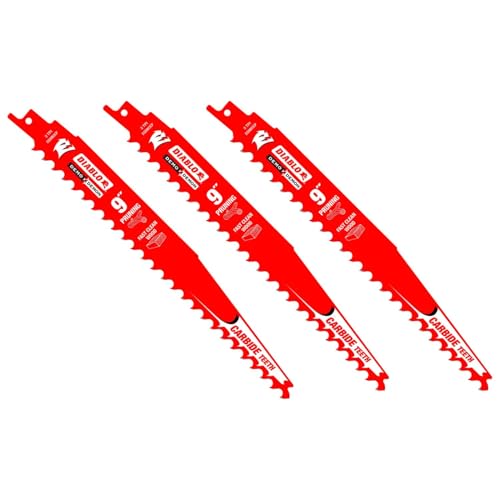
Diablo Demo Demon Carbide Reciprocating Saw Blades
What We Like
- Carbide teeth last 50X longer than bi-metal
- Oversized blade body for strength in tough cuts
- Non-stick coating prevents gumming in green wood
- Aggressive tooth geometry for fast chip removal
Trade-offs
- 3 TPI is too aggressive for clean cuts in thin metal
- Blade length is shorter than some pruning-specific options
The standout feature is a claimed 50X longer cutting life compared to standard bi-metal blades. For professionals making frequent cuts, this durability means fewer blade changes and a lower long-term cost. Its Perma-SHIELD coating reduces friction to help prevent gumming in tough wood, while the oversized blade body is designed for fast chip removal during demanding pruning and clean wood applications.
The trade-off is in specialization. That aggressive 3 TPI geometry and carbide construction are overkill for clean, finish-oriented pruning or slicing through thin conduit. For those cleaner wood-specific tasks, a blade like the Bosch RP95 Pruning offers a finer tooth pattern. But when your primary concern is powering through the worst of a demo or clearing job without swapping blades every hour, the Demo Demon’s brute-force endurance is unmatched.
Product photos
EZARC Arc Edge Reciprocating Saw Blades

What We Like
- Arc edge design reduces friction for smooth cuts
- Fleam-ground teeth promise 3x longer blade life
- Aggressive 6 TPI profile cuts efficiently in wet wood
Trade-offs
- Specific incompatibility with Ryobi reciprocating saws
- Coarse 6 TPI leaves a rougher finish than finer blades
A 15-inch blade with a 300mm cutting capacity lets you power through thick, wet branches and green timber that would bog down a standard pruning blade. The innovative arc edge and triple-ground teeth are the key here, designed to slice with less binding and friction in the soggy, fibrous wood that landscaping pros face daily. This blade is built for the tough, messy jobs where speed and power trump a pristine finish.
The 15-inch length and aggressive 6 TPI tooth profile are built for power, not a polished finish. This blade cuts fast through thick materials, but leaves a rougher surface than finer-toothed options. Its real strength is handling large branches and green wood up to 300mm in diameter, making it suited for heavy clearing jobs rather than delicate pruning.
Bosch RP95 Pruning Reciprocating Saw Blades

What We Like
- Precision ground for a sharp, lasting edge
- High-carbon steel for fast, durable pruning
- Engineered for extreme, high-performance cuts
- Premium Swiss construction for reliability
Trade-offs
- 5 TPI design is for wood only, not metal or masonry
- 9-inch length limits reach on thicker limbs
A 9-inch length and 5 TPI high-carbon steel blade make this set a focused tool for pruning. That tooth count is ideal for aggressive cuts in green wood and branches, letting you clear brush and trim trees quickly. The precision-ground edge starts sharp, and the Swiss-made construction suggests it should hold that edge through a lot of work. This is for the landscaper who needs a dedicated, no-fuss blade for daily pruning tasks and values a consistent, reliable cut over multi-purpose versatility.
Specialization defines this product. The Bosch RP95 blades are engineered for wood pruning, so using them on masonry or embedded metal will damage them. For demolition tasks involving multiple materials, diamond-grit blades from brands like Diablo or Milwaukee are the typical choice. If your reciprocating saw is dedicated to yard work, however, this set provides a focused solution for efficient cutting of branches and brush.
Lenox Demolition Reciprocating Saw Blade
What We Like
- Power Blast Technology reduces blade breaks
- Bi-metal construction for durability
- Taller, thicker profile prevents bending
- Cuts nail-embedded wood and thick metal
Trade-offs
- Pack of 25 is bulkier than smaller pruning sets
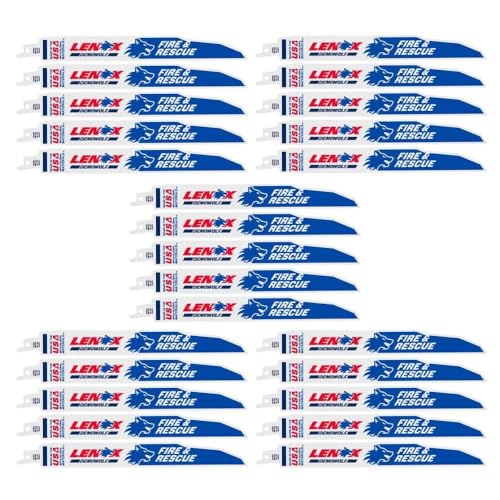
Built for demolition, this 9-inch bi-metal blade uses Power Blast Technology to reduce breaks when cutting through nail-embedded wood and thick metal. Its taller, thicker profile prevents bending for better control in tough materials like those found in fire and rescue jobs. The 10 TPI design is described as aggressive and fast cutting for versatile use across many materials.
These blades are specialized for mixed-material demolition. Their 9-inch length and 10 TPI can’t match the speed and reach of a dedicated pruning blade like the EZARC Arc Edge with its 15-inch length and 6 TPI, which is better for quickly dropping tree limbs. This Lenox pack excels at wrecking jobs where you hit buried nails and heavy-gauge metal. For cutting only clean wood, a pruning-specific blade will serve you better.
Product photos
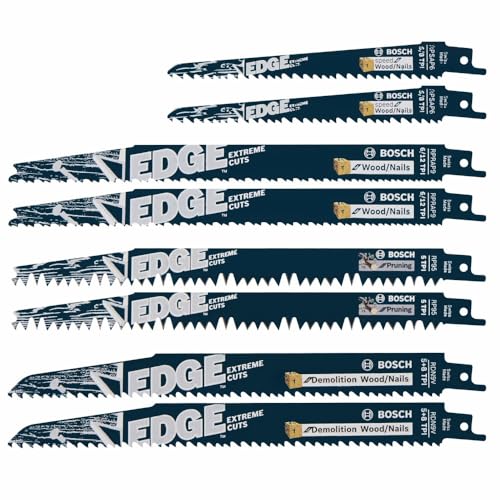
Bosch Edge Pro-Wood Reciprocating Saw Blade Set
What We Like
- Turbo-Teeth last up to 3x longer in demolition
- Includes dedicated pruning blades for clean cuts
- Swiss-made construction for reliable performance
- Versatile eight-blade set covers common tasks
Trade-offs
- No carbide or diamond-grit blades for masonry
A set that lasts up to three times longer in wood with nails means you can tear out an old deck or shed without constantly stopping to swap blades. This Bosch collection suits the landscaper who needs one kit for demolition, pruning, and general cutting, as it thoughtfully pairs aggressive demolition blades with purpose-built pruning blades. The Swiss-made quality suggests these blades should hold their edge through tough jobs, reducing frustration and waste.
This Bosch set is specialized for wood, even wood with nails, but it does not include blades for masonry or fiber cement. For aggressive demolition on mixed materials, a pack like the Diablo Demo Demon Carbide blades would be a more targeted choice. You would lose the pruning versatility this Bosch set provides.
Product photos
Milwaukee The Ax Reciprocating Saw Blades
What We Like
- Extra thick blade body for maximum robustness
- Ideal for wood with nails and bolts
- Unique heat-treating process for incredible durability
- 5 TPI geometry for faster cutting
Trade-offs
- 9-inch length limits reach for deep pruning cuts
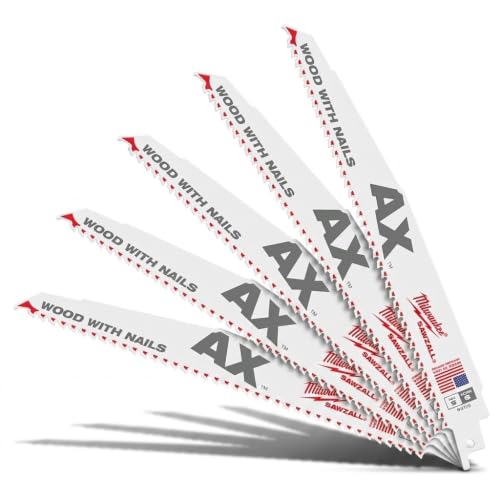
An extra thick .062-inch blade body provides maximum robustness, which means it resists bending or breaking when hitting nails and bolts in wood. This shatter-resistant bi-metal construction, hardened through a unique heat-treating process, delivers incredible durability for heavy demolition work. The 5 TPI geometry is designed to remove more material per stroke, allowing for faster cutting and plunge cuts into restricted areas.
Their 9-inch length and rigid design prioritize strength over reach, so they are less suited for tasks requiring a longer blade to access deeper cuts. While ideal for wood with embedded fasteners, they are not diamond grit blades, a different class that research mentions is useful for materials like fiber cement and masonry. For pure demolition in nailed wood, the blade’s thick build and tooth design make it a focused tool.
SEDY Japanese Teeth Reciprocating Saw Blades
What We Like
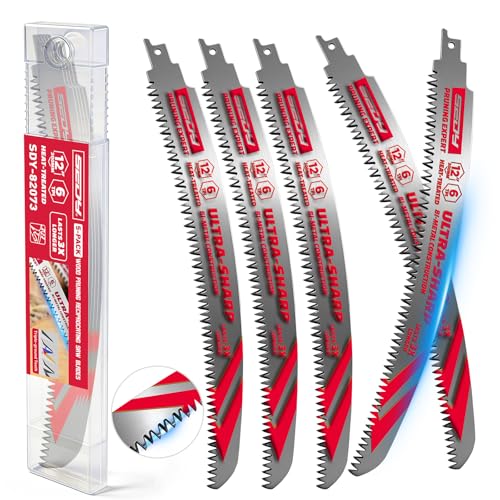
- Aggressive Japanese teeth for fast, clean cuts in wood
- Arc edge reduces friction and binding on round stock
- Heat treatment maintains sharpness for consistent performance
- 5-pack with storage offers good value for frequent use
Trade-offs
- 12-inch length may be unwieldy in tight spaces compared to 9-inch blades
- 6 TPI coarse pattern leaves a rougher finish than finer blades
The aggressive 6 TPI Japanese-style teeth are built for speed, ripping through green wood and branches with minimal effort. This makes the SEDY blade a solid choice for landscapers and arborists facing a high volume of pruning and trimming, where clearing brush quickly is the priority. The curved arc edge is the key design feature, increasing surface contact to help prevent the blade from getting pinched in thicker, live branches, a common frustration that slows down a job.
Where you might feel a trade-off is in versatility. This blade is purpose-built for green wood. For cutting through nail-embedded lumber or tougher demolition materials, a carbide-tipped option like the Diablo Demo Demon would be a more durable choice. Compared to a longer blade like the 15-inch EZARC, the 12-inch SEDY offers a good balance of reach and control for most overhead limb work, but it won’t tackle the very largest diameter trunks.
GRENPRO Reciprocating Saw Blade Set

What We Like
- Includes a specialized 9-inch pruning blade for wet wood
- Bimetal blades last 30% longer cutting metal
- Organized pouch keeps 34 blades protected on-site
- Universal fit works with all major saw brands
Trade-offs
- No carbide-tipped blades for extreme demolition
- Pruning blade is shorter than some dedicated 12-15 inch options
A 34-piece set with a storage pouch and a specialized pruning blade means a landscaper can cut firewood, slice through metal pipes, and trim fresh branches all from one organized kit. This is the core strength of the GRENPRO set. It suits a pro who needs a single, portable solution for the mix of wood, metal, and green waste found on many jobs, providing a blade for common on-the-fly cuts.
This Bosch set is a versatile generalist. Its 9-inch pruning blade works well on fresh branches, but it cannot match the reach of a dedicated long blade like the EZARC 15-inch for pruning high branches from the ground. For intensive clearing work, carrying this kit for most tasks alongside a pack of dedicated long pruning blades would cover more situations.
Product photos
HORUSDY Japanese Teeth Pruning Saw Blades

What We Like
- Triple-ground teeth for three cutting angles
- Arc edge reduces binding on round wood
- Deep gullets clear sawdust efficiently
- Heat-treated CR-V steel for wear resistance
Trade-offs
- 12-inch length limits reach on very high limbs
- Coarse 6 TPI may leave rougher finish on lumber
Triple-ground Japanese teeth create three cutting angles, which efficiently remove material for faster cuts in green wood and branches. This geometry works with a coarse 6 TPI profile and deep gullets to clear sawdust and reduce clogging during extended pruning or firewood cutting. The heat-treated CR-V steel construction provides strength and wear resistance to maintain stable performance through repeated landscaping tasks.
A curved arc edge keeps more teeth engaged with the material, reducing cutting resistance and blade deflection on thick branches and round wood. Compared to a 15-inch model like the EZARC, the 12-inch length offers less reach. Its design and tooth profile are oriented for aggressive cutting in wood, as indicated by its listing for tree trimming and pruning.
Product photos
KEENTECH Arc-Shaped Pruning Saw Blades
What We Like
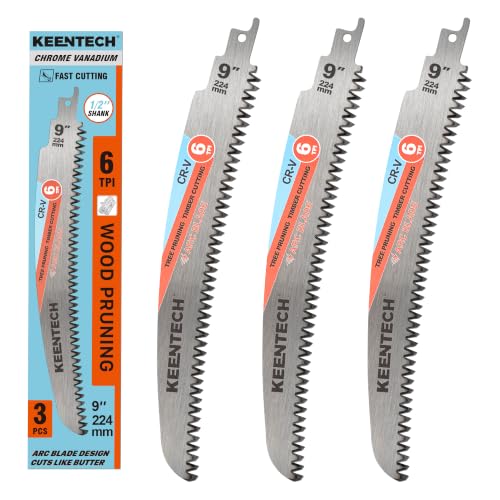
- Arc edge design for up to 3x faster cutting.
- Premium 58Cr-V steel for durability and rust resistance.
- Razor-sharp Japanese teeth on three cutting faces.
- Universal shank fits all major saw brands.
Trade-offs
- 9-inch length limits reach on thicker trunks.
- Maximum 7-inch cut capacity suits branches, not large logs.
- Requires steady speed; sudden force can shorten blade life.
The arc-shaped design is noted for delivering up to 300% faster cuts than standard straight blades, which means fewer strokes for jobs like cutting tree branches or lumber. Its teeth are made from 58Cr-V steel hardened to 55-65 HRC, a specification linked to wear and break resistance for demanding tasks. A Japanese tooth design sharpened on three faces aims to minimize jamming and improve chip removal during use.
The 7-inch maximum cutting capacity defines its practical range for limbs and green lumber, not for felling large trees. Compared to a dedicated demolition blade like the Lenox 9-inch model, this one prioritizes speed in wood rather than brute-force durability in dense materials. Its universal shank fits most major saw brands, making it a focused upgrade for pruning work.
Product photos
How We Evaluated Reciprocating Saw Blades For Landscaping Professionals
Our evaluation started by analyzing manufacturer specifications and documented blade performance from expert round-ups. We focused on criteria critical for professional landscaping work. These include blade material and construction for longevity against dirt and grit, tooth design and TPI for efficient chip removal in green wood, and blade length for the right balance of reach and control in pruning.
We also prioritized features like anti-stick coatings that reduce binding in sappy wood. This guide is based on documented specifications and common patterns in user feedback. This approach identifies which blades are designed for specific tasks like demolition or wet wood, though it cannot verify real-world cutting speed or exact lifespan claims.
What To Look For In Reciprocating Saw Blades For Landscaping Professionals
Choosing the right blade means matching its specifications to the materials you cut most often. A blade that excels at pruning dry wood might fail quickly in gritty, nail-embedded demolition lumber. For a landscaper, the right choice saves time, extends battery life, and reduces the frustration of constant blade changes.
Focus on blade material for longevity, tooth count (TPI) for chip clearance, and length for reach. Carbide-tipped blades last far longer in dirty conditions, while a coarse 3-6 TPI clears wet wood chips efficiently. A 9-inch blade offers control for pruning, but a 12-15 inch blade provides necessary reach for thicker limbs.
Blade Material & Construction
Blade material is the primary factor in how long a blade lasts, especially when cutting through dirt-covered roots or nail-embedded wood. Carbide-tipped blades, like our best overall pick, offer dramatically longer life, often 50 times longer than standard bi-metal, because the carbide teeth resist abrasion.
Bi-metal blades, common in versatile sets, provide a good balance of flexibility and durability for general use. High-carbon steel blades, often used in pruning-specific models, stay sharp for clean cuts in wood but wear quickly if they encounter metal or masonry. An anti-stick or non-stick coating is a valuable feature for landscaping, as it prevents sap and pitch from gumming up the teeth in green wood.
Tooth Design & Teeth Per Inch (TPI)
The tooth pattern determines how a blade performs in different materials. A low Teeth Per Inch (TPI) count, like 3 or 5, provides an aggressive, fast cut ideal for green wood and pruning, as the large gullets clear sawdust and prevent binding. Many of the best reciprocating saw blades for wood use this design.
A variable TPI pattern can improve performance in mixed materials like nail-embedded lumber. Specialized designs, like the arc edge found on several of our picks, reduce friction when cutting round stock like branches. For a clean guide on pruning trees with a reciprocating saw, understanding TPI is crucial. Japanese-style triple-ground teeth offer multiple cutting angles for faster penetration.
Blade Length & Job Fit
Blade length directly impacts your efficiency and the types of cuts you can make. A shorter blade (6-9 inches) offers superior control for precision pruning in tight spaces or near structures. A longer blade (12-15 inches) allows you to cut through thicker diameter limbs in a single pass and provides better reach for overhead work, reducing ladder repositioning.
However, longer blades can be more unwieldy in dense brush. Your choice should match your most common tasks; many crews carry both lengths. For specialized work like cutting tree roots, a longer, coarse-tooth blade is often necessary to power through soil and wood.
- Check your saw’s maximum blade length specification to ensure compatibility.
- For general pruning, a 9-inch blade is a versatile starting point.
- Consider a multi-pack or kit if you frequently switch between different cutting tasks on a jobsite.
Match the blade length to your task: use shorter blades for control in tight spots and longer blades for reach on thick limbs.
Reciprocating Saw Blades For Landscaping Professionals Compared
The table below provides a quick side-by-side comparison of key features for all 10 blades to help you see the differences at a glance.
| Product | Blade Length | Teeth Per Inch (TPI) | Pack Quantity |
|---|---|---|---|
| Diablo Demo Demon Carbide Reciprocating Saw Blades | 9 inches | 3 | 3 blades |
| EZARC Arc Edge Reciprocating Saw Blades | 15 inches | 6 | 3-Pack |
| Bosch RP95 Pruning Reciprocating Saw Blades | 9 inches | 5 TPI | 5 pieces |
| Lenox Demolition Reciprocating Saw Blade | 9 inches | 10 TPI | 25 blades |
| Bosch Edge Pro-Wood Reciprocating Saw Blade Set | N/A | N/A | 8 pieces |
| Milwaukee The Ax Reciprocating Saw Blades | 9 inches | 5 | 5-Pack |
| SEDY Japanese Teeth Reciprocating Saw Blades | 12 inches | 6 TPI | 5 Pack |
| GRENPRO Reciprocating Saw Blade Set | 9-inch | 5T | 34-piece set |
| HORUSDY Japanese Teeth Pruning Saw Blades | 12 inches | 6 | 5 Pack |
| KEENTECH Arc-Shaped Pruning Saw Blades | 9 inches | 6 TPI | 3 pcs |
Frequently Asked Questions
Which brand offers the best quality reciprocating saw blades?
Quality depends heavily on the specific task. For extreme durability in dirty demolition and pruning, Diablo’s carbide-tipped blades are highly regarded. For specialized pruning, Bosch offers precision-ground blades, while brands like EZARC and SEDY provide excellent value with arc-edge designs for fast cutting in wood. The best reciprocating saw blades for you depend on whether you prioritize longevity, cutting speed, or a balanced set for varied tasks.
What is the best blade for cutting wet wood?
The best blade for wet wood needs a coarse tooth pattern (like 6 TPI) to clear soggy chips and a design that reduces friction. Our Best For Wet Wood pick is the EZARC Arc Edge Reciprocating Saw Blades, which use an arc edge and fleam-ground teeth specifically to cut smoothly and last longer in wet conditions. Using a standard fine-tooth blade in wet wood will lead to rapid binding and dulling.
What TPI is best for pruning trees?
For pruning live trees and cutting green wood, a low TPI between 3 and 6 is ideal. This coarse pattern allows for fast, aggressive cuts and prevents the blade from clogging with wet sawdust and sap. Our Bosch RP95 Pruning Blades use a 5 TPI design for this purpose. A higher TPI blade is meant for cleaner cuts in dry lumber or metal and will struggle in landscaping applications.
Can I use the same blade for pruning and demolition?
You can, but you’ll compromise performance and blade life. A dedicated pruning blade is optimized for speed in clean wood but can be destroyed quickly by hidden nails. A demolition blade, like the Lenox Demolition Reciprocating Saw Blade, is built thicker to withstand nails and metal but may cut slower in pure pruning tasks. For mixed work, a versatile set like the Bosch Edge Pro-Wood Set or a carbide general-purpose blade is a smarter choice.
How do I choose between a 9-inch and a 12-inch blade?
Choose a 9-inch blade for maximum control and maneuverability when pruning in tight spaces, cutting shrubbery, or working on smaller branches. Opt for a 12-inch or longer blade when you need to cut through thicker-diameter limbs (over 7 inches), need extra reach for overhead branches without overextending, or are tackling tasks like cutting roots in dirt. Many professionals keep both lengths on their truck.
The Bottom Line
For the landscaping professional who faces a mix of tough pruning and dirty demolition daily, the Diablo Demo Demon Carbide Reciprocating Saw Blades are the best overall investment due to their unmatched durability. If your work primarily involves cutting wet wood and green timber, the EZARC Arc Edge blades will serve you better. For those focused purely on clean, fast pruning, the Bosch RP95 is the specialist’s choice.
Budget-conscious crews or those needing a single kit for diverse materials should look at the GRENPRO Reciprocating Saw Blade Set for its organized value. Ultimately, matching the blade’s material, tooth design, and length to your most frequent task is the single most important factor for productivity and cost-effectiveness on the job.
