
10 Best Sanders For Finishing Furniture in 2026
This post contains affiliate links. As an Amazon Associate, we earn from qualifying purchases.
For finishing furniture, the Festool RTS 400 REQ-Plus Finish Orbital Sander is our best overall pick due to its precise MMC electronics that deliver a swirl-free finish on horizontal surfaces. The Mirka DEROS II earns our lightweight award for all-day comfort, while the Bosch ROS20VSC stands out for superior dust collection.
The right sander transforms a tedious chore into a controlled, efficient process, directly impacting the quality of your final stain or paint. We researched specifications, manufacturer data, and expert insights to compile this list of ten tools, helping you match a sander’s strengths to your specific furniture project.
Top 10 Sanders For Finishing Furniture in the Market
Certain content that appears on this site comes from Amazon. This content is provided "as is" and is subject to change or removal at any time.
The Best Sanders For Finishing Furniture, Reviewed
Festool RTS 400 REQ-Plus Finish Orbital Sander

What We Like
- 250-watt motor with MMC electronics
- Interlocking dust port for improved retention
Trade-offs
- Weighs 8.2 lb, heavier than most palm sanders
- Large footprint at 15.6 inches long
The 250-watt motor, a 25% increase, provides the smooth, consistent power needed to avoid pigtails and swirl marks on fine wood. Combined with its effective dust extraction, this sander is built for the meticulous craftsman who demands a flawless, ready-to-finish surface without compromise. It’s the tool you reach for when the final prep on a tabletop or cabinet door can’t afford a single mistake.
That capability comes with a trade-off in size and weight. At over eight pounds, it’s substantially heavier than compact options like the Bosch ROS20VSC, making it less suited for vertical surfaces or prolonged overhead work. For dedicated horizontal workstations, however, its heft contributes to stability, and the dust extraction keeps your workspace and lungs clean. It represents a premium, workshop-centric approach to finishing.
Mirka DEROS II 550X 5 Inch Orbital Sander
What We Like
- Extremely lightweight at just 2.2 pounds.
- Low vibration operation for reduced fatigue.
- Brushless motor provides consistent power.
- Integrated dust extraction keeps the workspace clean.
Trade-offs
- Tool only: requires separate battery and charger purchase.
- Bluetooth features may be superfluous for simple shop tasks.
- Higher initial investment for the premium Mirka ecosystem.
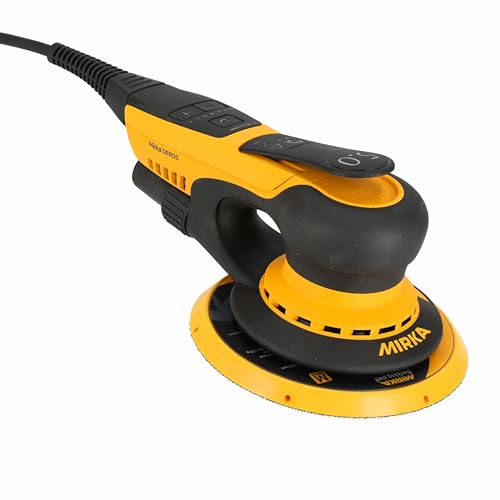
Weighing 2.2 pounds, the Mirka DEROS II 550X reduces arm fatigue, supporting longer sanding sessions. Its low vibration operation and ergonomic build allow for improved control across various applications. An integrated dust extraction system collects particles during operation, which supports improved visibility and easier cleanup. The brushless motor is designed to deliver consistent power for woodworking, automotive, and surface preparation projects.
The listing specifies this is a ‘tool only’ model, so a battery and charger are sold separately. This adds to the initial setup compared to a corded sander. At 2.2 pounds, it is lighter than the 3.4-pound DeWalt DWE6421 5 Inch Orbital Sander. The Mirka’s lightweight design and low vibration operation are intended to enhance user comfort during extended use.
Product photos
Bosch ROS20VSC Variable Speed Orbital Sander
What We Like
- Microfilter system captures 1/2-micron particles.
- Twist-off dust canister shows fill level.
- Variable speed from 7,500 to 12,000 OPM.
- Pad dampening system minimizes swirl marks.
Trade-offs
- 3.5 lb weight is modest but not the lightest in class.
- Lacks the ultra-compact profile of some detail sanders.
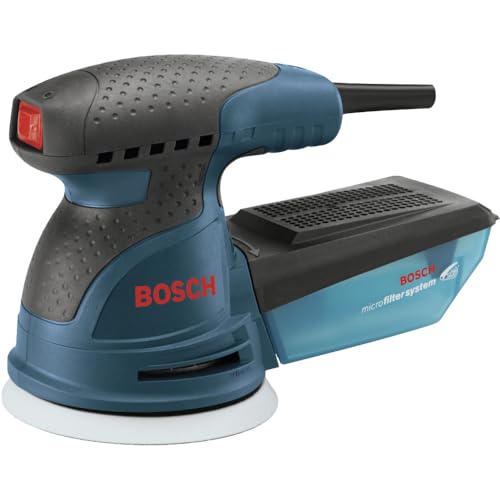
A vacuum dust collector and a filter system that traps particles as small as a half-micron is the standout feature here, effectively pulling the fine dust out of your workspace and your lungs. For finishing furniture, where a clean environment is critical to seeing your work and achieving a flawless surface, this sander is a pragmatic choice. Its variable speed control and dampening pad also contribute directly to that goal, letting you dial in the aggression and reduce swirl marks on contoured surfaces.
The Bosch ROS20VSC weighs 3.5 pounds, which makes it manageable for extended handheld use on large surfaces like floors or tabletops. Its dust canister detaches easily and shows the dust level, allowing for clean disposal. For tasks demanding minimal tool weight, such as overhead sanding, the Mirka DEROS II 550X is listed at 2.2 pounds.
DeWalt DWE6421 5 Inch Orbital Sander
What We Like
- High-power 3.0-amp motor for aggressive stock removal
- Shorter height improves control in tight spaces
- Separate counterweight design reduces vibration
- Rubber over-mold in critical areas for grip
Trade-offs
- Weighs 3.4 lb, heavier than the 2.2 lb Mirka DEROS II
- At 10.3" long, it is less compact than some dedicated detail sanders
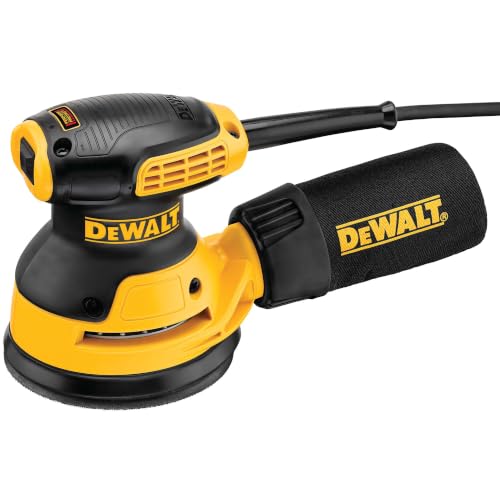
A 3.0-amp motor spinning at 12,000 orbits per minute gives this sander the muscle to flatten a tabletop or strip an old finish without bogging down. That power, combined with a separate counterweight to tame vibration, makes it a reliable workhorse for the woodworker who needs to move material quickly before moving to finer grits. It’s built for comfort over long sessions, with a rubber over-mold and a low profile that lets you get close to your workpiece.
That power and durability come with some bulk. It is not the lightest or most compact sander in the guide. If your project involves intricate scrollwork or hours of overhead sanding, a featherweight option like the Mirka DEROS II will be easier on your arms. The fixed speed is efficient for the rough work it is built for, but for full control across the entire finishing process from coarse to polish, you would want a variable-speed model.
Mirka DEOS II 343X Compact Sheet Sander

What We Like
- Extremely compact, low-profile design for tight spaces
- Lightweight build reduces fatigue during detail work
- Brushless motor provides consistent, smooth power
- Adjustable speed with clear LED indicator control
Trade-offs
- Small 3×4 inch pad covers less area than a 5-inch sander
- Requires Mirka dust extraction system for optimal dust-free use
At just 2.1 pounds and with a low-profile body, the Mirka DEOS II 343X is designed for sanding in tight spaces and hard-to-reach areas. Its compact form fits into corners and around moldings where bulkier sanders cannot reach. A brushless motor provides consistent power, while the adjustable speed control lets you fine-tune aggression from smooth finishing to more detailed work.
The trade-off for that precision is sanding pace. That 3×4 inch pad is significantly smaller than the 5-inch pads on models like the Bosch ROS20VSC, so flattening a large tabletop becomes a much longer task. It’s a specialist. For broad, flat surfaces, you’ll want a standard orbital sander. But for the finicky work that separates a good finish from a great one, this tool has a clear place on the bench.
Product photos
HOZO NeoSander Reciprocating Detail Sander
What We Like
- Palm-sized, 0.2-pound design for tight spaces
- 85% vibration reduction for precise control
- Eight specialized heads for complex profiles
- IP54 rating supports wet sanding
Trade-offs
- Maximum 1.8mm stroke limits heavy stock removal
- 45-minute runtime requires planning for large projects
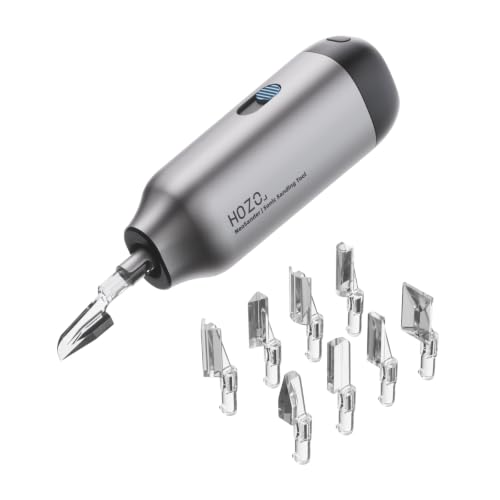
As the world’s first detail sander with a true reciprocating linear motor, the HOZO NeoSander is built for a specific kind of precision work. Its 13,000 strokes per minute and stepless stroke adjustment from 0.6 to 1.8 millimeters provide full control over sanding intensity, letting you switch from fast shaping to delicate finishing. Combined with eight quick-release heads for different contours, this allows for the finesse needed to smooth 3D-printed layers or polish intricate carvings where a full-size sander is too bulky.
That focus on precision defines its role. The compact, palm-sized form factor and small stroke are optimized for detail work, not for removing significant material from large, flat surfaces. This tool exists for the refining that comes after initial sanding, perfect for edges, inside corners, and achieving a flawless finish on small, complex components where your fingertips are the final gauge.
Product photos
Festool ETS 125 REQ-Plus Random Orbital Sander

What We Like
- Ergonomic, comfortable shape for any hand
- Balanced VS design for smooth, low-vibration operation
- Highly efficient Jetstream dust removal
- Compact and lightweight for overhead work
Trade-offs
- Weighs 8.2 pounds
- Larger than compact detail sanders
The Festool ETS 125 REQ-Plus’s Jetstream dust extraction is its defining feature. It pulls dust away so effectively that your workspace stays clean and your sandpaper lasts longer, directly contributing to a flawless final surface. This sander is built for the finisher who values a pristine environment and a tool that minimizes cleanup time. The step-less speed control and balanced vibration-stop design give you the finesse to tackle everything from raw stock to final polish without fatigue.
This sander weighs 8.2 pounds, which provides stability for control on flat surfaces but requires more user effort for extended handheld work. That weight comes from a built-in motor and construction designed for durability. While its ergonomic form is noted to fit comfortably for vertical use, the overall mass is a factor for overhead applications. Its primary advantage is the highly efficient dust removal system, which maintains cleaner air and contributes to a better finish.
Makita BO4556K 1/4 Sheet Finishing Sander

What We Like
- 14,000 OPM for exceptionally fast stock removal
- Light 2.5 lb weight reduces arm fatigue
- Effective dust collection keeps the workspace clean
Trade-offs
- Uses 1/4 sheets, requiring more frequent paper changes than larger sanders
- At 16.7 inches long, it's less compact than detail sanders like the HOZO NeoSander
Fourteen thousand orbits per minute moves through finish layers and leveling tasks with authority. This speed, combined with a light 2.5-pound build, makes the BO4556K a natural fit for anyone needing to strip old varnish or flatten large surfaces without spending all day at it. The efficient dust collection and comfortable, low-vibration grip mean you can maintain that pace comfortably, keeping the work area clear and your hands from going numb.
This sander operates at 14,000 orbits per minute, which allows it to work quickly on surfaces. Its compact size and 2.5-pound weight make it easy to maneuver and control with one hand. The tool uses standard quarter-sheet sandpaper, which is widely available but has less surface area than the larger discs used by many orbital sanders.
Onemana 2-in-1 Detail & Palm Sander

What We Like
- Interchangeable pads handle corners and large flats
- Brushless motor offers long life and low vibration
- Six speed settings with constant-speed memory
- Symmetrical body is comfortable for left or right hands
Trade-offs
- No cordless option for complete portability
Switching between a triangular pad for corners and a square pad for flat areas means this single tool handles tasks that normally require two separate sanders. That 2-in-1 design, combined with a 350W brushless motor and six speed settings from 4000 to 10000 OPM, provides clear flexibility for projects ranging from paint removal to fine finishing. Its symmetrical body fits comfortably in either hand for detailed work.
You do trade some compactness for that versatility, as its symmetrical grip design adds height compared to a dedicated palm sander like the Bosch ROS20VSC. For a dedicated, shop-bound furniture finisher who values a clean workspace and needs one sander to do it all, this Onemana covers the most ground for the money.
Product photos
Bosch GEX18V-5N Cordless Orbital Sander

What We Like
- Lightweight 2.4-pound body reduces arm fatigue.
- Compact size fits easily in one hand for control.
- Brushless motor promises longer tool life.
- Cordless 18V design offers full workspace mobility.
Trade-offs
- Tool-only listing requires separate battery purchase.
- 5-inch pad covers less area than larger sanders.
At only 2.4 pounds, the Bosch GEX18V-5N is one of the lightest sanders available, which reduces user fatigue during extended sanding sessions. Its compact shape, at 8.8 inches long, allows for easy handling in confined spaces where a larger tool would be cumbersome. The brushless motor technology is designed to support a longer tool life and deliver power efficiently for smooth finishing on materials like wood during remodeling or repair tasks.
This is a bare tool that works with Bosch 18V lithium-ion batteries and 5-inch hook-and-loop sanding discs, which are sold separately. With a 5-inch sanding pad, it covers less area per pass than a full-size orbital sander. The cordless, lightweight design provides an advantage for maneuvering into corners or working on vertical surfaces without managing a power cord.
Product photos
How We Evaluated Sanders For Finishing Furniture
Our evaluation is based on thorough research of technical specifications, manufacturer documentation, and patterns in expert round-ups and owner feedback. We prioritized criteria critical for furniture finishing: motor power and control for a smooth, consistent finish; ergonomics and vibration levels for comfort during long sessions; and dust collection efficiency to maintain a clean workspace. We also considered pad size and tool profile for accessing corners and details.
This research-based approach allows us to compare performance claims and design features, but it cannot replicate the subjective feel of a tool in your hand or its long-term durability under shop conditions. We focused on identifying tools whose reported strengths align with specific finishing tasks, from initial shaping to final prep.
What To Look For In Sanders For Finishing Furniture
Choosing the right sander hinges on understanding the stages of your project and the surfaces you need to address. A tool perfect for flattening a tabletop may struggle inside a cabinet’s corners.
Look for a motor with variable speed control for adjusting aggressiveness, a dust port that connects to your shop vacuum, and an ergonomic, low-vibration design. Your primary sander’s pad size should match your common workpieces, but a secondary detail sander is essential for refinishing.
Motor Power & Control
Motor specifications determine a sander’s capability. Amperage or wattage indicates raw power for material removal, but electronic controls are key for finishing. Features like constant-speed under load (MMC) or variable speed dials let you slow the orbital action for delicate veneer or final passes. A brushless motor often provides smoother, more consistent power with less maintenance over time compared to a brushed motor.
Ergonomics & Vibration
Finishing furniture involves prolonged contact, making comfort a priority. Weight, grip shape, and vibration damping directly affect user fatigue. Lightweight tools, often around 2 to -3 pounds, are easier to manage overhead or on vertical sides. Look for designs with separate counterweights or balanced motors that report low vibration; this reduces arm strain and improves control for a more uniform finish.
Dust Collection & Pad Profile
Effective dust collection is non-negotiable for a healthy shop and a clean surface for applying finish. Systems that capture fine, sub-micron particles prevent contamination. The sander’s pad shape dictates its application: a standard 5-inch round orbital sander is efficient for large flats, while a rectangular or triangular pad on a compact sander reaches into corners. For complex profiles, specialized sanders offer swappable heads or work with contoured foam pads.
- Connect the dust port to a vacuum during research to assess real-world performance claims.
- Consider cordless freedom versus the consistent power of a corded model for your workspace.
- Match the tool’s stated orbital strokes per minute (OPM) to your need for speed versus finish finesse.
Your main sander should excel at your most common task, but a complete finishing setup often includes two tools: one for flats and one for details.
Sanders For Finishing Furniture Compared
The table below compares key specifications to help you see the differences at a glance.
| Product | Weight | Motor Power/Type | Pad Size/Type |
|---|---|---|---|
| Festool RTS 400 REQ-Plus Finish Orbital Sander | 8.2 Pounds | 250 watts | N/A |
| Mirka DEROS II 550X 5 Inch Orbital Sander | 2.2 pounds | Brushless | 5 Inch |
| Bosch ROS20VSC Variable Speed Orbital Sander | 3.5 Pounds | 2.5 AMP | Hook and Loop |
| DeWalt DWE6421 5 Inch Orbital Sander | 3.4 pounds | 3.0 amp | 5 inches |
| Mirka DEOS II 343X Compact Sheet Sander | 2.1 pounds | Brushless | 3 x 4 inch |
| HOZO NeoSander Reciprocating Detail Sander | 0.2 pounds | N/A | 8 quick-release shapes |
| Festool ETS 125 REQ-Plus Random Orbital Sander | 8.2 pounds | N/A | N/A |
| Makita BO4556K 1/4 Sheet Finishing Sander | 2.5 pounds | N/A | 1/4 Sheet |
| Onemana 2-in-1 Detail & Palm Sander | N/A | 350W brushless motor | 2-in-1 triangular & square |
| Bosch GEX18V-5N Cordless Orbital Sander | 2.4 pounds | Brushless | 5-inch hook-and-loop |
Frequently Asked Questions
What type of sander is best for finishing furniture?
For most furniture work, a random orbital sander is the best primary tool. Its spinning and orbiting action minimizes swirl marks, providing a smooth foundation for stain or paint. For final finishing on flat surfaces, a dedicated finish sander like the Festool RTS 400 offers exceptional control. You’ll also need a compact detail or sheet sander for corners and intricate areas.
What is the best sander for finishing wood?
The best sander for finishing wood prioritizes a smooth, scratch-free surface. Our top pick, the Festool RTS 400, uses advanced electronics to maintain a consistent orbit under pressure. For a premium, low-vibration experience, the Mirka DEROS II is excellent. Always follow a proper sandpaper grit sequence when working through your finishing stages.
What is the difference between a finishing sander and an orbital sander?
A “finishing sander” often refers to a simple sheet sander that moves in a small, straight-line orbit, which can leave scratches. A “random orbital sander” has a pad that both spins and orbits randomly, which typically produces a much smoother, swirl-free surface ideal for finishing. Some models, like the Festool RTS, are specifically engineered as finish orbital sanders for the highest quality surface prep.
What is a good small sander for furniture refinishing?
A good small sander for refinishing focuses on tight spaces. The Mirka DEOS II 343X Compact Sheet Sander has a low-profile, rectangular pad for corners. The HOZO NeoSander is a palm-sized reciprocating tool with specialized heads for profiles and curves. These complement a larger orbital sander in a complete workflow for woodworking projects.
Can one sander handle all furniture sanding tasks?
While versatile 2-in-1 tools like the Onemana exist, most woodworkers use two sanders. A 5-inch orbital sander efficiently handles large, flat areas, while a dedicated detail sander is necessary for corners, edges, and intricate carvings. Investing in a pair of tools designed for specific purposes typically yields better results and greater efficiency than relying on a single compromise tool.
The Bottom Line
For the serious woodworker focused on achieving a flawless finish on tabletops and other horizontal surfaces, the Festool RTS 400 REQ-Plus is the best overall investment. Its precise motor control and efficient dust extraction are built for shop-based quality work.
If your priority is budget-friendly versatility for both flats and details, consider the Onemana 2-in-1. For those needing extreme comfort for all-day fine sanding, the award-winning Mirka DEROS II is the clear choice. Ultimately, the most important factor is matching the tool’s specific strengths, be it power, precision, or dust control, to the demands of your furniture project.
