
10 Best Electric Concrete Mixers in 2026
This post contains affiliate links. As an Amazon Associate, we earn from qualifying purchases.
Our best overall electric concrete mixer is the Lavoker 5.7 Cu Ft model for its large drum capacity and powerful motor, ideal for substantial pours. We also highlight the Bosch GBM9-16 as the Best Handheld Mixer and the Muhub 3.0 Cu Ft as the Best Budget Pick. Choosing the wrong mixer can leave you with inconsistent batches or an aching back from manual mixing. This guide, based on specifications and owner feedback, helps you find the right tool for your project’s scale and demands.
Top 10 Electric Concrete Mixers in the Market
Certain content that appears on this site comes from Amazon. This content is provided "as is" and is subject to change or removal at any time.
The Best Electric Concrete Mixers, Reviewed
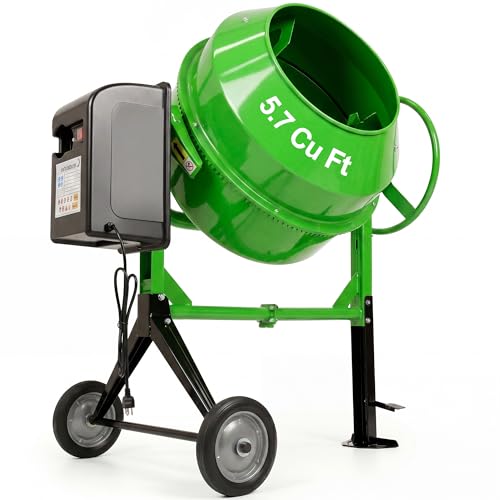
Lavoker 5.7 Cu Ft Electric Cement Mixer
What We Like
- Large 160L drum handles substantial batches
- Powerful 650W copper motor for consistent mixing
- 360-degree tilt with safety lock for easy pouring
- Portable design with wheels for one-person movement
Trade-offs
- At 47.2 inches long, it requires significant storage space
- The 650W motor is less powerful than the Dkenicor 5.3 Cu Ft model's 750W
With a 5.7 cubic foot drum, the Lavoker mixer handles large batches for small to medium projects, reducing the need for repeated cycles. Its 650W motor provides the power for consistent mixing of materials like stucco and mortar. This combination suits contractors or serious DIYers working on tasks such as patios or walkways, where efficiency matters. A heavy-duty steel frame with a powder-coated finish offers rust resistance for long-term use on a job site.
The trade-off for that sturdy build and big drum is a substantial footprint; you’ll need a decent-sized truck bed or dedicated workshop corner for storage. While the 650W motor is plenty for most mixes, if you’re regularly working with especially dense material, the higher-powered Dkenicor model might have an edge. For general construction and agricultural mixing, however, the Lavoker’s combination of capacity, durable construction, and thoughtful portability features makes it a reliable workhorse that balances power and practicality.
Product photos
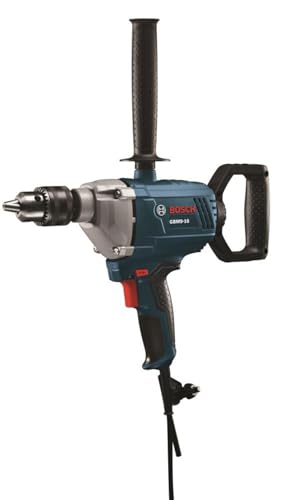
Bosch GBM9-16 Electric Mixer
What We Like
- Powerful 9-amp motor for high torque
- Variable-speed motor for control
- Rotating D-handle for ergonomic positioning
- Long 8-foot cord for jobsite reach
Trade-offs
- Handheld design unsuitable for large batches
- No integrated stand or wheels for support
- Requires separate mixing paddle accessory
With a 9.0 amp motor generating high torque, this Bosch mixer handles dense materials like cement plaster and epoxy resin. Its 6.6-pound weight and rotatable D-handle allow for a secure grip that can be adjusted mid-task, a clear advantage over a fixed handle. The variable-speed motor provides control for both high-torque mixing and high-speed drilling, while the 8-foot cord offers substantial reach on a jobsite.
The clear trade-off is capacity. This is a mixer for containers, not a standalone machine. You’ll be hunting for a sturdy bucket or tub to act as your mixing bowl. For batches larger than what fits in one, you’ll be doing multiple loads. For any project demanding more than a few cubic feet of material at a time, like setting fence posts or pouring a small pad, a dedicated drum mixer is the necessary step up. The Bosch excels at its specific task but doesn’t pretend to be something it’s not.
BILT HARD 4 Cu Ft Electric Cement Mixer

What We Like
- Large 4 cu ft drum handles significant batches
- Sturdy metal and powder-coated steel construction
- Portable with two 9-inch wheels and a lockable handle
- Powerful 550W motor mixes stucco, mortar, and concrete
Trade-offs
- At 90.4 lb, it's heavy for frequent relocation over rough ground
- Requires a 120V power outlet for operation.
A 4 cubic foot drum capacity is the headline here, letting you mix enough concrete for substantial DIY projects like patios or foundations in fewer batches. This BILT HARD model is built for the serious home pro or farmer who needs to tackle bigger jobs without commercial-scale equipment. Its all-metal construction and triangular bracket provide a stable, durable platform that can handle rough materials season after season. The 550-watt motor turns the drum at a steady 26.7 RPM, which is sufficient for thorough mixing of standard concrete and mortar.
With a maximum capacity of 4 cubic feet, this mixer can handle sizable batches of concrete, mortar, or stucco in one go. That volume does require space, as the unit stands over four feet tall and weighs 90.4 pounds. While its 9-inch wheels aid movement on flat surfaces, the overall size and heft mean it’s best suited for a semi-permanent location rather than frequent transport.
Product photos
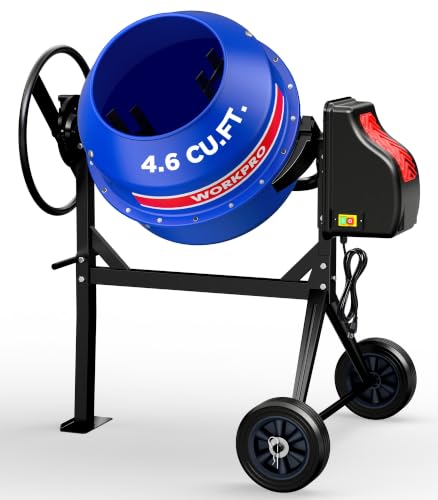
WORKPRO 4.6 Cu Ft Electric Cement Mixer
What We Like
- High 3300 RPM motor speed for fast mixing
- Heavy-duty steel frame for jobsite durability
- 360-degree drum rotation for even blending
- 8-inch wheels for relatively easy site mobility
Trade-offs
- At 94.8 lb, it's a substantial lift for one person
- The 4.6 cu.ft. capacity is less than some 5+ cu.ft. models
- Requires a dedicated 600W power source on-site
A 3300 RPM motor speed is the standout feature here. This translates directly into a fast, thorough mix that reduces waiting time on the job. That high spin rate is paired with a 4.6 cubic foot drum. This makes the WORKPRO mixer a solid fit for contractors or serious DIYers who need to batch concrete or mortar efficiently for medium-scale projects like patios or foundations. The reinforced steel frame and powder-coated finish promise it can handle the abuse that comes with that kind of work.
While the 8-inch wheels help, moving it over rough ground solo will be a chore. For bigger pours where capacity is king, you’d look at something like the Dkenicor with its 5.3 cubic foot drum. But if your priority is getting a consistent mix quickly from bag to form, this mixer’s high-RPM performance is its compelling reason to exist.
Product photos
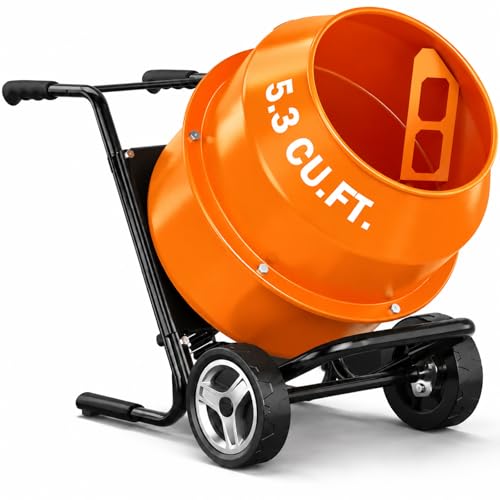
Dkenicor 5.3 Cu Ft Electric Cement Mixer
What We Like
- Large 5.3 cu ft capacity for big batches
- Sturdy steel drum and corrosion-resistant frame
- Portable wheelbarrow design for easy moving
- Powerful 750W motor for heavy-duty mixing
Trade-offs
- Its 50-inch length requires significant storage space
- The steel construction adds weight for transport
A large drum is the headline here, letting you mix enough material for substantial slabs or foundations in a single batch. This Dkenicor is built for the user who needs to minimize refill cycles on a big project. The 750W copper motor and thick steel drum are designed to handle that volume consistently. This makes it a logical fit for serious farm work or a busy construction site where time is concrete. Its wheelbarrow-style mobility means you can roll a full load to where it’s needed, though you’ll feel the heft of that steel construction on uneven ground.
Its drum moves large batches, reducing refills and saving time on big projects. The mixer’s wheelbarrow-style design and wheels are intended for easy mobility between job sites. At 35 inches high, it is shorter than some other models, which may affect storage choices.
Product photos
FTOPBTB 3 Cu Ft Wheelbarrow Concrete Mixer

What We Like
- 550W motor handles concrete, mortar, and lighter materials like feed
- Powder-coated steel frame resists rust and corrosion
- Safety-locked steel handle for secure transport and positioning
Trade-offs
- Smaller 3 cu ft capacity limits batch size for larger projects
- 550W motor is less powerful than mixers with 750W or 1HP options
With a 3 cubic foot drum and a 50-pound frame, this wheelbarrow-style mixer offers a balance of capacity and portability. The 550-watt motor can handle materials like concrete, stucco, and mortar, while the powder-coated steel frame resists rust from splashes and weather. Its six-inch wheels and steel handle with a safety lock aid in moving mixed batches across a yard.
The trade-off for that easy handling is raw volume and power. You won’t knock out a full foundation in a morning with this machine. When your project scales up to something like a large patio or driveway, the smaller drum and motor will mean more batches and more time. For those bigger jobs, a larger-capacity, heavier-duty drum mixer would be a more efficient choice. It would sacrifice the one-person portability this FTOPBTB model delivers so well.
Product photos
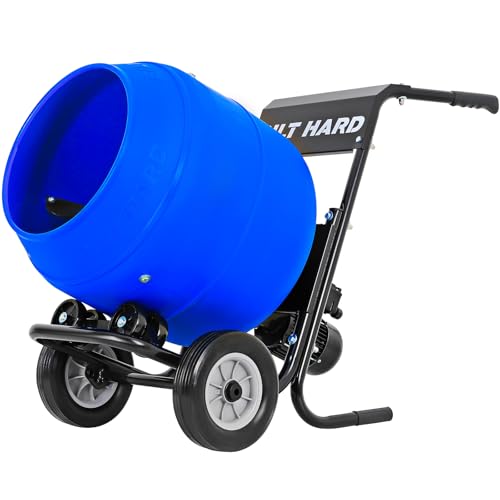
BILT HARD Poly Drum Electric Cement Mixer
What We Like
- Poly drum resists dents, cracks, and rust
- Easy-to-clean plastic drum simplifies cleanup
- Large flat-free tires aid transport over rough ground
- Straightforward assembly with included hardware and manual
Trade-offs
- 2.3 cu ft mixing capacity is smaller than some 4-5 cu ft rivals
- 500W motor is less powerful than 600W+ models for heavy batches
A poly drum that resists rust and cleans easily defines this mixer, which simplifies maintenance for corrosive materials like stucco or after frequent use. Its 4-cubic-foot capacity handles mixing tasks efficiently, and the 15-inch diameter makes adding dry mix straightforward. The drum’s construction also avoids dents and cracks for long-term durability in various conditions.
You trade some muscle for that maintenance ease, as the 500W motor and 2.3-cubic-foot mixing capacity handle smaller loads. For bigger pours, you’d look at a model with a larger drum and more powerful motor. But if your projects are moderate and you’re tired of scrubbing a rusty drum, this BILT HARD’s polymer tub is a sensible, long-lasting solution.
Product photos
MAXXT 13A Single Paddle Mortar Mixer

What We Like
- Soft start prevents splashing
- Lock-on button for continuous mixing
- Two-gear speed range for precise control
Trade-offs
- Handheld design requires manual effort for large batches
- Mixes only what fits in a separate container
- No integrated drum or stand for material containment
A 13-amp motor and die-cast gearbox point toward a mixer built for demanding material mixing. The soft-start function prevents initial splashing, while two gear ranges with variable speeds provide control for different consistencies from mortar to lighter compounds. Weighing nine pounds, it remains manageable for extended handheld use, and the included 24-inch spiral paddle is built to move material in a standard bucket.
The trade-off is obvious when you look at a machine like the Lavoker 5.7 Cu Ft Electric Cement Mixer. The MAXXT mixer doesn’t have its own drum; you supply the container and the muscle to maneuver it. That makes it perfect for smaller batches, precise mixes, or tight spaces where a wheeled mixer won’t fit. For pouring a foundation or mixing yards of material, you’d be better served by a dedicated drum mixer. But for the pro who needs to whip up consistent mud for tile, brick, or repair work, this handheld delivers the grunt and durability where it counts.
Product photos
CALCHELE 2100W Handheld Mud Mixer

What We Like
- High-power 2100W motor for thick mixes
- 6-speed control reduces splashing and improves control
- Two-handle design with anti-slip grooves for steadier grip
- Vented cooling with overheat protection for demanding batches
Trade-offs
- Handheld design limits batch size to small volumes
- No stand or wheels for stationary mixing tasks
A 2100-watt copper motor moves this handheld mixer beyond the capacity of a standard drill, which helps with mixing thick mortar and small cement batches without burning out. It suits a DIYer or tradesperson who needs mixing power for manageable quantities from a five-gallon bucket. A six-speed dial and two-handed steering wheel handle allow for control from thin paint to thicker mud, and a vented cooling system with overheat protection adds confidence with dense materials. The description positions it as an alternative to burning out a drill or fighting with a shovel for DIY jobs like patio repairs, tile work, and fence posts.
The design still requires mixing by hand, so user fatigue can set in for larger volumes compared to a self-tumbling drum mixer. This unit excels at providing power and control in a portable format for bucket-based work, demanding the physical effort of guiding the paddle. Its described use for small-batch mixing in standard buckets suggests it is not intended for projects requiring large, continuous volumes of material.
Product photos
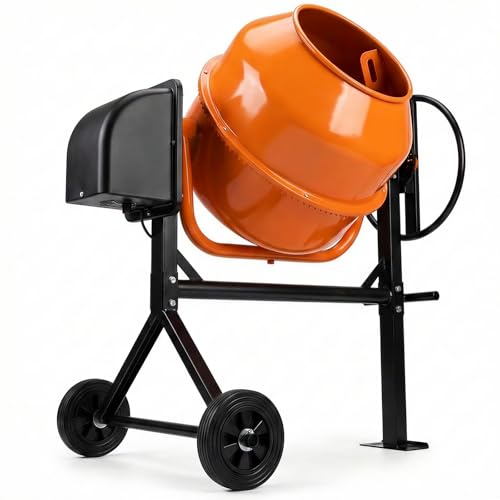
Muhub 3.0 Cu Ft Electric Cement Mixer
What We Like
- Powder-coated steel frame resists rust
- Direct-drive motor for medium-scale projects
- Adjustable tilt and safety-locked foot pedals
- True 360° mixing with ±90° angle adjustment
Trade-offs
- 3.0 Cu Ft capacity is smaller than many drum mixers
With a 3.0 cubic foot drum and a direct-drive 120V motor, this mixer handles medium-scale projects like a patio foundation or regular feed mixing for a homeowner or farmer. Its powder-coated steel frame fights rust for job-site durability, while the industrial copper-wound motor is designed for consistent performance. Adjustable tilt and safety-lock pedals provide control and stability during operation, making it a versatile tool for both construction and agricultural tasks.
That 3.0 cubic foot capacity dictates the project scale. For a large slab, it requires more batches than a 4 cubic foot model like the BILT HARD, which adds time. The sturdy construction and user-friendly features, however, deliver reliable mixing for most DIY and farm applications without needing a larger machine.
Product photos
How We Evaluated Electric Concrete Mixers
We compared models by reviewing manufacturer specifications for motor power, drum capacity, and construction materials. We also studied patterns in owner feedback regarding reliability and real-world performance, and consulted expert round-ups to identify consistently recommended features. Key criteria included batch capacity for project scale, motor wattage for mixing thick materials, and portability features like wheels and handles for moving heavy loads. Our research-based approach has limits: we can’t verify long-term durability or how a specific model performs with every unique material blend.
What To Look For In Electric Concrete Mixers
Selecting the right mixer balances the volume you need with the power to handle it and the means to move it around your site. The right tool transforms a labor-intensive chore into a manageable, efficient task.
Focus on motor wattage (550W-750W+ for drum mixers), drum material (steel for durability, poly for rust-resistance), and physical portability like large wheels and a locking handle for site mobility.
Capacity and Project Scale
Drum capacity, measured in cubic feet, dictates your batch size. A 3 to 4 cubic foot mixer suits most home projects like walkways or patios. For foundations or agricultural work, a 5+ cubic foot capacity is necessary to mix enough material efficiently. Handheld mixers are for small batches in a bucket, not for pouring slabs.
Motor Power and Performance
Motor wattage determines a mixer’s ability to handle dense, aggregate-heavy concrete. Look for at least 550W for a drum mixer; 650W to 750W provides more consistent torque for tougher mixes. High-RPM motors blend materials faster, while variable-speed controls on handheld models help prevent splashing. Consider this factor when choosing a power source for your job site.
Build and Portability
A sturdy steel frame withstands jobsite use, while a poly drum resists corrosion and simplifies cleanup. Portability is crucial: large, pneumatic wheels roll over rough ground, and a lockable handle provides control when tilting a full drum. Always check the assembled dimensions against your storage space.
- Verify the drum tilt mechanism has a secure safety lock.
- Ensure the power cord is long enough for your workspace.
- Look for models with straightforward assembly.
A mixer you can’t easily move or store will slow down any project.
Electric Concrete Mixers Compared
The table below compares key specifications to help you quickly evaluate these ten electric concrete mixers.
| Product | Motor Power | Drum/Capacity | Wheel Size |
|---|---|---|---|
| Lavoker 5.7 Cu Ft Electric Cement Mixer | 650W (0.9HP) | 160L (5.7 Cu Ft) | 9-inch |
| Bosch GBM9-16 Electric Mixer | 9.0 amp | N/A | N/A |
| BILT HARD 4 Cu Ft Electric Cement Mixer | 550W 120V 5A | 4 cu ft (113L) | 9-inch |
| WORKPRO 4.6 Cu Ft Electric Cement Mixer | 600W (0.8 HP) | 4.6 cu.ft. | 8" |
| Dkenicor 5.3 Cu Ft Electric Cement Mixer | 750W (1HP) | 5.3 cubic feet | N/A |
| FTOPBTB 3 Cu Ft Wheelbarrow Concrete Mixer | 550W (1/3 HP) | 3 cubic feet | 6-inch |
| BILT HARD Poly Drum Electric Cement Mixer | 500W 120V 4.3A | 4.0 cubic feet | 10-inch |
| MAXXT 13A Single Paddle Mortar Mixer | 13A durable motor | N/A | N/A |
| CALCHELE 2100W Handheld Mud Mixer | 2100W copper motor | N/A | N/A |
| Muhub 3.0 Cu Ft Electric Cement Mixer | 120V/60Hz direct-drive | 3.0 Cu Ft | Two solid wheels |
Frequently Asked Questions
What is the best electric concrete mixer?
The best model depends on your project size. For large, continuous batches, a high-capacity drum mixer like our top pick, the Lavoker 5.7 Cu Ft, is ideal. For small repairs or mixing materials in a bucket, a powerful handheld unit is often sufficient.
Which brand of electric mixer is considered the best?
No single brand dominates across all categories. Our research shows different brands excel in specific areas, such as high-capacity drums, rust-resistant construction, or high-torque handheld motors. The best choice is the model whose features align with your most common tasks.
Are electric cement mixers any good?
Yes, electric mixers are excellent for most residential and many professional applications. They provide consistent mixing, require less maintenance than gas models, and operate quietly without fumes. They are a core part of any concrete project toolkit. Their main limitation is needing a power source, unlike portable gas units.
Can I use a drill to mix concrete?
For very small batches, a heavy-duty drill with a mixing paddle can work. However, for anything more than a bag or two, a dedicated mixer is far superior. Using a standard drill for concrete risks burning out the motor. We have a dedicated resource on drills for mixing concrete in small-scale applications.
What’s the difference between a drum mixer and a handheld mixer?
Drum mixers have an integrated container to mix multiple cubic feet of material and pour directly from the drum. Handheld mixers are powerful motors with a paddle attachment used to mix material within a separate bucket or tub, limiting batch size but offering great control for compounds like thinset or epoxy.
The Bottom Line
The Lavoker 5.7 Cu Ft Electric Cement Mixer is the best overall for contractors and serious DIYers who need to tackle high-volume pours efficiently. For budget-conscious homeowners, the Muhub 3.0 Cu Ft offers great value, while those dealing with corrosive materials should consider the rust-resistant BILT HARD Poly Drum.
Ultimately, honestly matching the mixer’s capacity and power to your largest common project is the single most important step. Getting this right saves time, effort, and material on every job.
