
10 Best Concrete Saw Blades in 2026
This post contains affiliate links. As an Amazon Associate, we earn from qualifying purchases.
Our best overall concrete saw blade is the Makita E-02515 Segmented Diamond Blade for its excellent balance of long life and fast, smooth cutting in general masonry. We also found top choices for longevity, value, and specialized tasks like asphalt or tile work. Choosing the wrong blade wastes money and burns out a tool.
The right diamond blade cuts cleanly, lasts longer, and makes your saw work better. Our research compared specs, manufacturer data, and owner feedback to bring you ten picks for every job, from large demolition to detailed tile work.
Top 10 Concrete Saw Blades in the Market
Certain content that appears on this site comes from Amazon. This content is provided "as is" and is subject to change or removal at any time.
The Best Concrete Saw Blades, Reviewed
Makita E-02515 Segmented Diamond Blade

What We Like
- Taller 13mm segments for longer blade life
- Optimum bond matrix for faster, smoother cutting
- Up to 4x longer life than competitive blades
- Tensioned core reduces vibration during use
Trade-offs
- At 9 inches, it cannot cut as deep as a 12-inch or 14-inch blade.
- Its general-purpose design is not specialized for a single material like asphalt.
Makita claims this 9-inch diamond blade can last up to four times longer than competitive blades, which means fewer purchases over time for contractors cutting concrete, brick, and pavers. Its taller 13mm segments are designed for longer life and faster cutting. A carefully tensioned core also aims to reduce vibration for a smoother user experience.
The 9-inch diameter provides a different maximum cutting depth than the 12-inch Diablo or 14-inch Makita blades listed. Its 1.6-pound weight makes it lighter than many larger-diameter alternatives. The blade is intended for cutting concrete, block, brick, pavers, and roof tiles.
Product photos
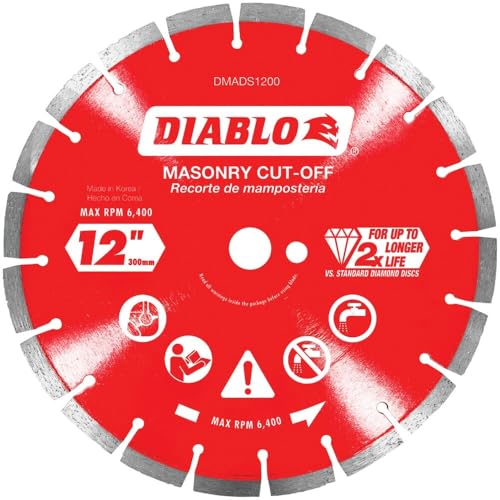
Diablo Diamond Segmented Masonry Blade
What We Like
- Up to 2X longer life from taller diamond segments
- Hardened disc body for vibration and impact resistance
- Works for both dry and wet cutting applications
- Includes a 20mm bushing for added versatility
Trade-offs
- At 2.8 lb, it's a heavier blade for a 12-inch diameter
- Maximum 6,400 RPM limits use on some high-speed saws
With a lifespan rated up to twice as long as typical blades, this product reduces blade changes and downtime for tasks like cutting concrete pavers. Its taller segments and strong bond to the disc body support that longevity. A hardened body absorbs vibration for smoother cuts in tough materials, and compatibility with both wet and dry cutting adds versatility on the jobsite.
The segmented rim helps the blade cool quickly during dry cuts, a feature owners find helpful when running a circular saw through patio slabs. This design trades some cutting finish for durability and heat management. Compared to other 12-inch options like the DEWALT DW4747 XP, the Diablo blade is heavier at 2.8 pounds, which may affect handling in some tools.
Product photos
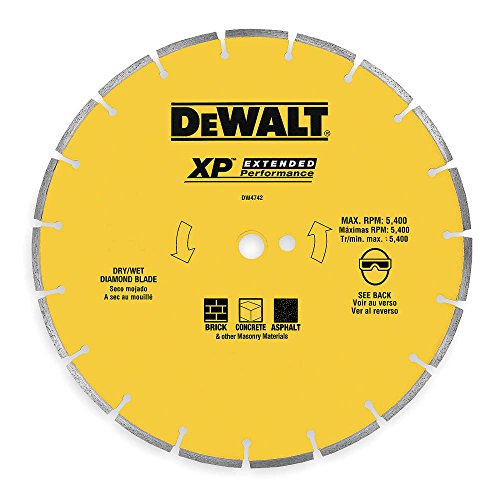
DEWALT DW4747 XP Dry Cutting Diamond Blade
What We Like
- Extended performance diamond matrix for long life
- Laser-welded, heat-treated steel body for durability
- Large diamond segments with cobalt for versatility
- Continuous rim provides smooth cuts with less chipping
Trade-offs
- Designed for dry cutting only, limiting wet application use
- 12-inch size requires a compatible, larger saw
A diamond matrix that delivers 350 times the life of conventional abrasives means you can tackle multiple projects, from brick to asphalt, without constantly swapping blades. This is the blade for the contractor or serious DIYer who needs predictable performance and stability, especially on plunge cuts, and wants to avoid the downtime of frequent replacements. It feels solid when you push the saw, giving you confidence through medium concrete jobs.
This dry-cutting diamond blade is dedicated to asphalt, brick, and concrete, which means you cannot use it with water for dust suppression. Its extended performance diamond matrix is designed to last 350 times longer than conventional abrasive blades, a clear advantage when blade wear is the primary concern. The continuous rim provides smoother cuts with less chipping, and reviewers note it feels predictable on plunge cuts and stays stable even under harder use.
Product photos
Makita E-01719 General Purpose Diamond Blade

What We Like
- Taller 12mm segments for extended blade life
- Laser-welded construction for a strong joint
- Segment slots promote faster, cooler cutting
- Built for the power of gas cutters
Trade-offs
- At 4.6 pounds, it requires a powerful saw to handle the mass.
- Weighs 4.6 pounds, requiring a powerful saw to handle the mass.
With a 14-inch diameter, this blade can make deep cuts through cured concrete, block, and brick in one pass. Its laser-welded joints and 12mm segments are designed for long life and faster cutting, even under the extreme power of gas cutters. That makes it a fit for demanding jobs where blade durability directly impacts productivity.
That capability requires a saw built to handle it. The blade weighs 4.6 pounds, so it needs a powerful, professional-grade cutter to run effectively. For tasks on standard circular saws, a lighter blade from the 12-inch or smaller class may be more suitable.
Product photos
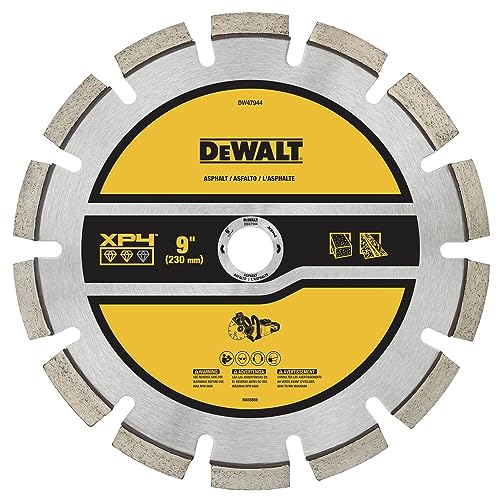
DEWALT DW47944 Asphalt & Concrete Blade
What We Like
- Laser-welded segments for undercut protection
- Deep U-shaped gullets clear debris quickly
- High-alloy steel core ensures straight cuts
Trade-offs
- 9-inch diameter limits cut depth versus 12-inch blades
- Designed for asphalt and green concrete, not heavy cured concrete
Built for demanding asphalt and green concrete work, this 9-inch DeWalt blade uses laser-welded drop segments and a tungsten carbide reinforced matrix to boost durability under abrasive conditions. Its high-alloy steel core helps maintain straight lines, while deep U-shaped gullets are designed to clear debris quickly for faster cutting. According to expert round-ups, the blade performs well on small to medium concrete jobs and offers predictable, stable performance on plunge cuts.
Specialization is a key consideration, as this blade is engineered for asphalt and green concrete rather than heavy, fully cured material. For deeper cuts, a larger-diameter blade like the 12-inch Diablo Diamond Segmented Masonry Blade would provide greater capacity. While experts note it feels stable even when pushed, its focused design means it is not a general-purpose tool for all masonry tasks.
Product photos
VEVOR 3-Pack Diamond Concrete Blade Set

What We Like
- Three-blade pack extends service life
- Wet and dry cutting versatility
- Universal 1-inch arbor fits many tools
- High-hardness diamond segments for durability
Trade-offs
- 11.2 lb total weight is substantial for a 3-pack
- 14-inch size requires a powerful saw to drive
Getting three blades in one pack is the standout feature here, directly addressing the high wear rate of cutting abrasive materials like concrete and masonry. It’s a practical choice for anyone facing a big project or a series of jobs, as it drastically reduces downtime for blade changes. The combination of a 65Mn steel core and diamond segments points to a build made for repeated use, not a single weekend. This set suits the budget-conscious user who needs reliable performance across multiple cuts without the constant need to reorder.
The trade-off is heft and required power. At 14 inches, these blades demand a capable angle grinder or circular saw to reach their 4800 RPM potential, and the whole pack has some weight to it. Compared to a single, purpose-built blade like the DEWALT DW4747 XP designed for dry cutting, the VEVOR set offers broader versatility with its wet/dry capability. It may not match the specialized cutting speed of a premium single blade on its specific material, so it’s about coverage and value over peak, singular performance.
Product photos
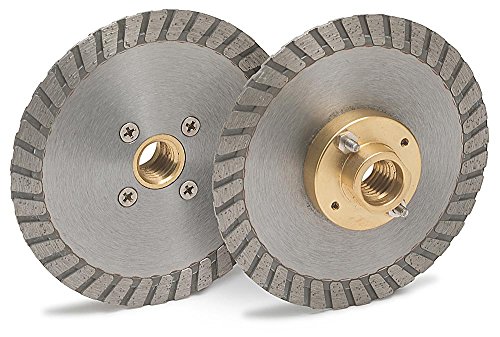
MK Diamond MK-925FC Flush Cutting Blade
What We Like
- Works on tile, stone, and concrete
- Flush cutting blade design
Trade-offs
- 5-inch size limits cutting depth for thick material
- 5-inch diameter limits cutting depth
This blade suits a contractor or dedicated DIYer making precise plunge cuts or trims in backsplashes, floor tiles, or stone veneers without damaging surrounding work.
The trade-off for that precision is capacity; you won’t be slicing through deep foundation walls with a 5-inch blade. For general demolition or cutting thick concrete block, a larger segmented blade like the Diablo Diamond Segmented Masonry Blade will clear debris faster and handle greater depth. The MK-925FC excels at its specific task but isn’t the tool for bulk material removal.
FEWELL 9-Inch Diamond Concrete Blade

What We Like
- Unique segment design for better air cooling.
- Engineered for 3x longer life than abrasive blades.
- Delivers a cleaner cut than standard segmented blades.
- Compatible with most table saws and angle grinders.
Trade-offs
- 9-inch size limits depth of cut versus larger blades.
A blade engineered for 3x longer life than standard abrasive options makes this a pragmatic choice for the contractor or serious DIYer facing a high volume of cuts. The unique segment design isn’t just for show; it actively cools the blade and deflects chips, which reduces stress on both the tool and the operator during extended dry-cutting sessions. This focus on durability and low cost per cut squarely targets users who measure value by how many yards of concrete a blade can tackle before it’s done. It’s a workhorse built to wear out slowly, saving you trips to the supply house.
Its segmented teeth leave a rougher edge than blades made for fine masonry, so it’s less ideal for precision tile or stone work where a clean face is critical. The trade-off for that aggressive cutting and long life is in the finish. You’re choosing stamina over a polished result.
Product photos
RHAPSODY 10-Inch Ultrafast Diamond Blade

What We Like
- Advanced segmented design for ultrafast cutting speed
- Works for both dry and wet cutting applications
- Dual arbor sizes fit most standard angle grinders and saws
- General purpose design for concrete, masonry, brick, and stone
Trade-offs
- Smaller 10-inch diameter limits maximum cut depth versus 12-inch or 14-inch blades
- General purpose nature means it isn't specialized for a single material like asphalt
The Rhapsody 10-inch diamond blade prioritizes cutting speed for concrete, masonry, brick, block, pavers, and stone, which can reduce project time. Its engineered compatibility with both dry and wet cutting provides flexibility for different job site conditions without needing a constant water source. This general-purpose design suits a wide range of masonry and concrete projects for professionals and DIYers.
That versatility does come with a trade-off. The aggressive, segmented cutting action prioritizes speed over a polished finish, so you’ll want a smoother blade for fine tile work. For deeper cuts on large slabs, the 10-inch diameter can’t match the capacity of a blade like the Diablo 12-inch Segmented Masonry Blade. But for the majority of general cutting tasks, this Rhapsody blade gets the job done swiftly and adapts to your method.
Product photos
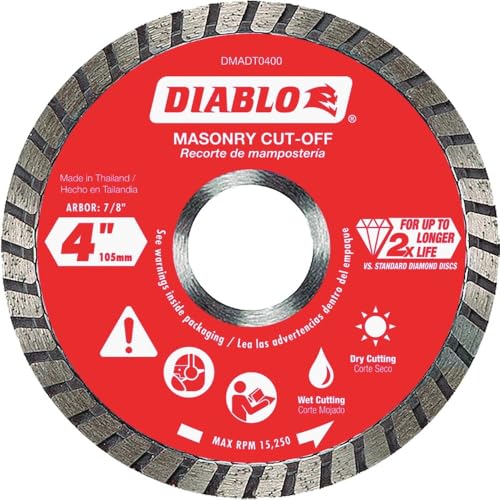
Diablo 4-1/2-Inch Turbo Masonry Disc
What We Like
- Ultra-thin 0.08-inch kerf for fast, precise cuts
- Hardened body absorbs vibration for impact resistance
- Compatible with common arbors for dry or wet use
Trade-offs
- 4-1/2-inch diameter limits depth of cut per pass
- Lightweight 0.1-pound disc is for smaller handheld tools
- Not suited for large-scale, continuous demolition work
The 0.08-inch kerf is the star here, letting a standard 4-1/2-inch grinder slice through brick and concrete pavers with remarkable speed and minimal material waste. This blade is built for detail-oriented work like clean, controlled cuts on patios, walkways, or block walls. The continuous turbo rim and hardened body translate to a blade that stays cooler and resists chipping when you’re freehanding a line, and owner feedback confirms it holds its edge far longer than budget discs.
You trade cutting depth for that precision, however. This isn’t the blade for sinking a cut through a thick foundation wall. For that kind of heavy work, you’d step up to a larger segmented blade like the Diablo Diamond Segmented Masonry Blade. But for the jobs where control and a clean line matter more than raw depth, this Diablo disc delivers exceptional cutting life and accuracy from a compact grinder.
Product photos
How We Evaluated Concrete Saw Blades
We evaluated these blades by analyzing manufacturer specifications, documented construction features, and patterns in expert round-ups and owner feedback. Our assessment prioritized blade life, cutting speed, and material compatibility, as a durable blade that matches your saw and material is the key to cost-effective work. We also considered design factors like segment height, bond matrix, and core construction that influence performance. Since this is a research-based evaluation, we cannot provide hands-on data on precise cut counts or long-term wear under specific job site conditions.
What To Look For In Concrete Saw Blades
Selecting the right blade depends on your saw’s power, the material you’re cutting, and your need for speed versus a smooth finish. Understanding the basic types of diamond blades is the first step to a smart purchase.
Key factors are blade diameter for cut depth, segment design for speed and finish, and whether it’s for wet or dry use. Always match the blade’s maximum RPM to your saw.
Diameter and Arbor Size
The blade’s diameter determines your maximum cut depth, typically about one-third to one-half of the blade’s size. A 14-inch blade suits a powerful gas saw for deep cuts, while a 4-1/2-inch disc is ideal for a handheld grinder on pavers. Equally critical is the arbor size; ensure it matches your saw’s spindle, often 5/8-inch for angle grinders or 1-inch for larger walk-behind saws, using bushings to adapt if necessary.
Segment Design and Bond
The rim’s design dictates the cut’s character. Segmented rims with gaps between teeth cut fast, stay cool, and are great for general demolition but leave a rougher edge. Continuous rims provide smoother, chip-free cuts for tile or finished edges but generate more heat. The bond, or matrix, holding the diamonds wears at a rate designed for specific material hardness; a soft bond is for hard concrete, while a hard bond is for softer materials like asphalt.
Wet vs. Dry Cutting & Blade Life
Wet-cutting blades use water to cool the diamond segments and suppress dust, dramatically extending blade life and providing a cleaner cut. Dry-cutting blades are designed with special segment shapes to dissipate heat through airflow, offering crucial flexibility when water isn’t practical. For the deepest cuts on large projects, you’ll need to pair your blade with one of the best 14-inch diamond blades and a capable saw. Blade longevity is influenced by segment height and diamond quality; taller segments and a premium diamond matrix, like cobalt-enhanced bonds, simply last longer.
- Check your saw’s specifications to confirm it supports wet cutting before buying a blade that requires it.
- For repeated cuts in reinforced concrete, look for blades advertised for rebar or heavy aggregate.
- Ensure your saw’s guard can accommodate the blade’s full diameter.
Let the blade do the work; forcing it creates heat and wears diamonds out prematurely.
Concrete Saw Blades Compared
The table below highlights key differences to help you compare our picks at a glance.
| Product | Diameter | Arbor Size/Compatibility | Segment Design |
|---|---|---|---|
| Makita E-02515 Segmented Diamond Blade | 9 inches | N/A | Segmented |
| Diablo Diamond Segmented Masonry Blade | 12 inches | 1" and 20mm | Segmented |
| DEWALT DW4747 XP Dry Cutting Diamond Blade | 12 inches | 1 inch | Segmented |
| Makita E-01719 General Purpose Diamond Blade | 14 inches | N/A | Segmented |
| DEWALT DW47944 Asphalt & Concrete Blade | 9 inches | N/A | N/A |
| VEVOR 3-Pack Diamond Concrete Blade Set | 14 inches | 1 inch | Segmented |
| MK Diamond MK-925FC Flush Cutting Blade | 5 inches | N/A | N/A |
| FEWELL 9-Inch Diamond Concrete Blade | 9 inches | 7/8 inch | Unique segmented |
| RHAPSODY 10-Inch Ultrafast Diamond Blade | 10 inches | 7/8-inch and 5/8-inch | Segmented |
| Diablo 4-1/2-Inch Turbo Masonry Disc | 4-1/2 inches | 7/8", 20mm, 5/8" with bushings | Turbo rim |
Frequently Asked Questions
What is the best saw blade for cutting concrete?
For most users cutting a mix of concrete, brick, and block, a segmented diamond blade offers the best balance of speed and life. Our top pick, the Makita E-02515, uses taller segments and an optimized bond for this general-purpose work.
What type of blade is best for cutting concrete posts?
Cutting thick, structural posts requires a blade with a large diameter for sufficient depth and a segmented or turbo design for fast material removal. A 12-inch or 14-inch blade, like our Best Large Diameter pick, matched with a powerful saw is ideal.
How long will a diamond blade last cutting concrete?
Blade life varies widely based on material hardness, operator technique, and blade quality. A premium diamond blade can last many times longer than an abrasive blade. Features like taller segments and laser-welded construction, as seen in our Best For Longevity pick, are designed for extended service.
Can I use a concrete blade on an angle grinder?
Yes, many smaller-diameter diamond blades (4-1/2-inch to 9-inch) are designed for angle grinders. Ensure the arbor size matches your tool and the blade’s maximum RPM rating exceeds your grinder’s speed. Our Best Thin Kerf Precision pick is a great example for detail work.
What’s the difference between an asphalt and a concrete blade?
Asphalt is a softer, more abrasive material. Blades designed for it, like our Best For Asphalt & Concrete pick, use a harder bond matrix to prevent the diamonds from being ripped out too quickly. Using a concrete blade on asphalt will cause it to wear out rapidly.
The Bottom Line
The Makita E-02515 Segmented Diamond Blade is our best overall for its proven longevity and smooth, fast performance across common masonry materials like concrete and brick. For budget-conscious users tackling big projects, the VEVOR 3-Pack offers serious value, while professionals needing a blade specifically for asphalt should look to the DEWALT DW47944.
Ultimately, the most important factor is matching the blade’s design and diameter to your specific saw and the material you cut most often. The right blade turns a difficult job into a clean, efficient cut.
