
10 Best Midi Wood Lathes in 2026
This post contains affiliate links. As an Amazon Associate, we earn from qualifying purchases.
Our best overall midi wood lathe is the JET JWL-1440VS for its sliding headstock, excellent vibration control, and flexible capacity. For a space-saving professional machine, the Record Power Coronet Herald wins, and beginners get a full kit with the VEVOR 14″ x 40″ Benchtop Wood Lathe.
Choosing a midi lathe means balancing power, footprint, and your project goals. These machines offer more swing and torque than mini lathes while staying smaller than industrial floor models. Our research focused on specifications, expert testing insights, and owner feedback patterns to find the ten most capable models for different needs and shops.
Top 10 Midi Wood Lathes in the Market
Certain content that appears on this site comes from Amazon. This content is provided "as is" and is subject to change or removal at any time.
The Best Midi Wood Lathes, Reviewed
JET JWL-1440VS Woodworking Lathe

What We Like
- Sliding headstock locks in 7 positions for flexibility
- Variable speed with easy-to-read digital RPM display
- Heavy 220-pound construction for solid vibration-free operation
- Optional bed extension increases capacity to 60 inches
Trade-offs
- At 220 pounds, it's a permanent shop fixture requiring a sturdy stand
- Large 56-inch footprint demands significant benchtop or floor space
With 40 inches between centers, this lathe can handle long spindles like table legs in one go, a capacity furniture makers often need. Its sliding headstock locks at seven positions up to 270 degrees, allowing you to turn bowls or other off-center pieces without repositioning the workpiece. Variable speed from 400 to 3,000 RPM lets you start large stock slowly and ramp up for finer finishing cuts on smaller projects.
The trade-off for that capacity and stability is a substantial footprint and weight. You won’t be moving this lathe around your garage on a whim. It’s a dedicated piece of shop furniture. The JWL-1440VS strikes a pragmatic balance, delivering professional-grade features in a midi-sized package that doesn’t require three-phase power.
Record Power Coronet Herald Wood Lathe
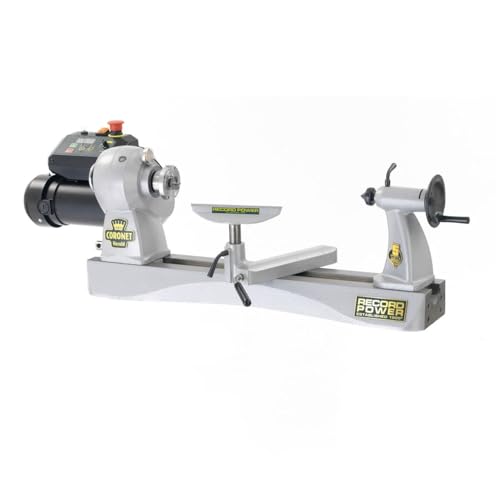
What We Like
- Swivel headstock for large 21" bowl potential.
- Wide variable speed range with three pulley ratios.
- Powerful 1 HP motor handles unbalanced workpieces.
- Convenient self-ejecting tailstock and built-in indexing.
Trade-offs
- Tubular leg stand is a separate purchase.
- Compact benchtop design limits bed length for spindles.
A fully rotating headstock is the secret to this lathe’s versatility. It lets you swing a 21-inch bowl off the end of the bed when you add the optional outrigger, which is rare capacity for a benchtop machine. Combine it with a full 1 HP motor and a speed range that crawls down to 95 RPM for roughing out unbalanced blanks, and you have a compact tool that genuinely behaves like a floor-standing model. This makes it the logical upgrade for a turner who has outgrown an entry-level lathe but doesn’t have the space or budget for a massive machine, as it packs professional-grade potential into a footprint that fits on a sturdy bench.
One consideration is that you are buying the core unit. The recommended stand costs extra, which affects your total workshop investment. Compared to a simpler, fixed-headstock benchtop like the VEVOR 14″ x 40″, the Coronet Herald offers far greater flexibility for bowl turning and user comfort. The VEVOR, however, provides a longer bed as a single package for spindle work. Your choice hinges on whether your priority is maximizing bowl capacity in a small space or having a dedicated, longer lathe for turnings like table legs.
VEVOR 14" x 40" Benchtop Wood Lathe
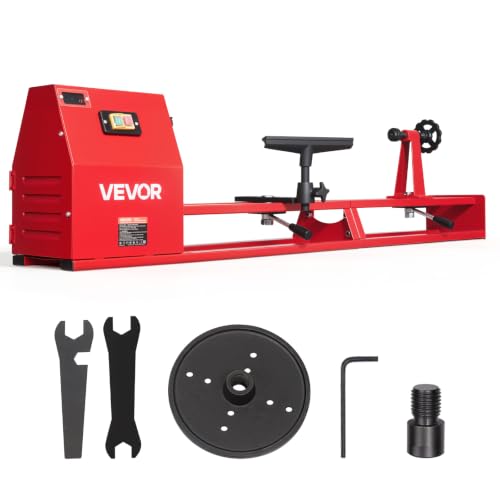
What We Like
- Includes essential tools for immediate start
- Motor has thermal overload protection
- Durable metal frame reduces vibration
- Handles both soft and hard woods
Trade-offs
- Only four fixed speeds limit fine-tuning
A 40-inch bed and a full set of included accessories mean you can start turning spindles and table legs the same day you unpack it. That’s the core appeal of this package for a beginner who wants to avoid sourcing parts separately. The 1/2 HP motor and four fixed speeds provide a straightforward, no-fuss introduction to core turning operations on a range of wood types. Built-in thermal protection also offers a safety net during the learning curve.
This lathe arrives as a complete kit, which means beginners can start turning immediately without hunting for extra parts. That ready-to-use convenience comes with some compromises in operation, however. Its four fixed speeds require stopping to change the belt, a process less convenient than adjusting a variable-speed dial mid-cut. While the durable metal frame is designed to reduce vibration, its lighter 49.6-pound build may not dampen shakes as effectively as a heavier, more solid machine during demanding work.
Product photos
Powermatic 2014B Benchtop Lathe
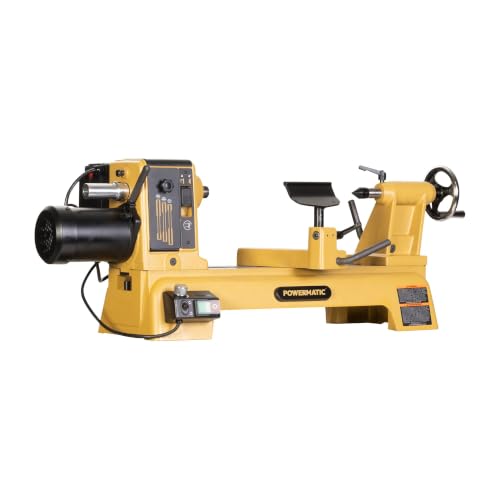
What We Like
- Heavy cast iron bed reduces vibration significantly.
- Wide variable speed range for delicate to roughing work.
- Inverter-driven motor runs on standard 115V power.
- Substantial 187 lb weight contributes to stability.
Trade-offs
- At 187 lb, it's a major commitment to move or mount.
- 20-inch between-centers limits spindle length for some projects.
- Benchtop design requires a very sturdy, dedicated bench.
A 187-pound cast iron bed is the key to what makes this lathe stand out. That mass, combined with a smooth inverter-driven motor, soaks up vibration like few other benchtop models can. It lets you start turning an unbalanced bowl blank with far less chatter, giving you cleaner control over your cuts from the start. This makes it a prime pick for turners who prioritize a silky-smooth finish and work often with irregular stock, even in a smaller shop with standard wall power.
That rock-solid feel comes at the cost of portability, as you won’t be lifting this onto a bench solo. Its 20-inch between-centers capacity is also more limited for longer spindles compared to a model like the JET JWL-1440VS. For a dedicated bench space where vibration control is paramount over maximum length or easy mobility, the Powermatic 2014B delivers a uniquely stable turning experience.
JET JWL-1640EVS Woodworking Lathe
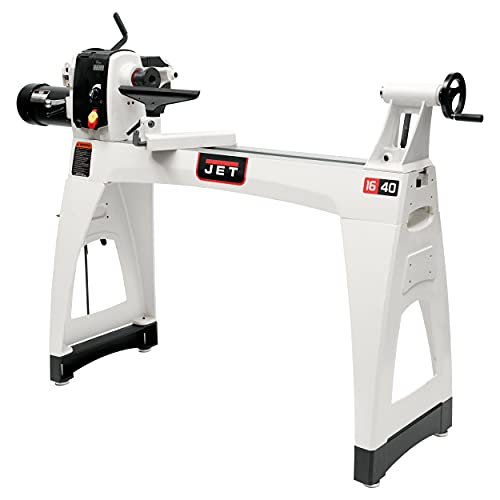
What We Like
- Electronic variable speed from 40 to 3200 RPM
- Extended spindle with dual headstock bearings
- Positive locking banjo and improved tailstock quill
- 36 integrated indexing positions for flexibility
Trade-offs
- At 377 pounds, it requires a permanent, sturdy shop foundation
- Its 57-inch length demands significant floor space
- The 1-1/2 HP motor requires a dedicated 115V circuit
A 16-inch swing and 40 inches between centers lets you handle substantial bowl blanks and turn full-length table legs without compromise. This capacity, combined with the smooth, infinitely variable speed control, makes it a serious machine for furniture makers and production turners. They can move between delicate spindle work and large faceplate turning in one session. The heavy cast-iron construction and 5-year warranty signal an investment meant for daily shop use.
You pay for that capacity with a substantial footprint and weight of 377 pounds. This isn’t a lathe you’ll tuck under a bench; it’s a shop centerpiece. For turners with less space or who primarily work on smaller projects, a more compact benchtop model like the Record Power Coronet Herald might be a smarter fit for a tighter workshop.
WEN 34035 Variable Speed Wood Lathe

What We Like
- Wide variable speed range from 250 to 3550 RPM
- Generous 14-inch swing capacity for bowls
- Standard MT2 tapers and common spindle thread
- Includes onboard accessory holder for tools
Trade-offs
- Shorter 20-inch bed limits spindle length vs 40-inch models
- Benchtop design requires a sturdy, dedicated work surface
A 14-inch swing and a genuinely wide 250 to 3550 RPM speed range make this lathe a remarkably flexible starter machine. You can turn a decent-sized bowl one minute and spin a small spindle at high speed the next, all without changing belts. The common MT2 tapers and 1″-8 spindle thread mean you aren’t locked into proprietary accessories. For a woodworker taking their first steps into turning or someone with limited shop space, this package delivers core functionality without complexity.
This compact, affordable package makes concessions in scale and raw power. Its 20-inch between-centers capacity is half that of a larger benchtop model, so chair legs or long table spindles are off the table. The 6 Amp motor will handle most tasks but may bog down on aggressive cuts in dense hardwoods. It’s a classic case of getting exactly what you pay for: solid fundamentals for smaller projects, leaving the heavy-duty work to heavier, more expensive machines.
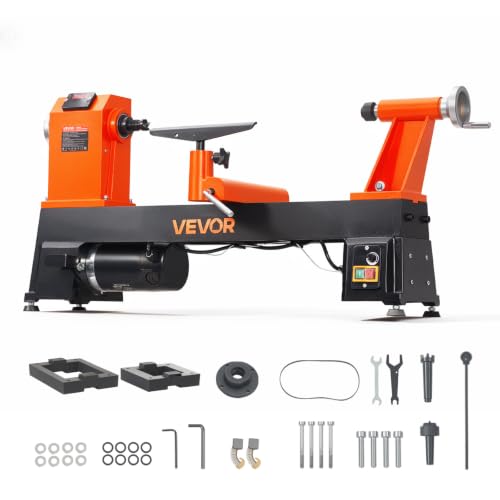
VEVOR 14" x 20" Variable Speed Wood Lathe
What We Like
- Includes riser block for 16-inch swing capacity
- 1 HP motor with wide 150-3500 RPM range
- Cast iron frame for reduced vibration
- Overcurrent protection on circuit board
Trade-offs
- 20-inch between-centers capacity limits long spindle work
- 108.7-pound weight may challenge frequent relocation
- Benchtop design offers less mass than full-floor models
A riser block expands the maximum swing over the bed from 14 inches to 16 inches, which is a clear advantage for turning wider bowls or platters. This happens while the lathe maintains a benchtop form, so it suits a workshop where floor space is limited. The 1 HP motor and variable speed control from 150 to 3500 RPM provide the power needed for initial shaping and the range for detailed finishing work.
The distance between centers is 20 inches, a shorter working length than the 40 inches offered by many full-size benchtop lathes. This dimension defines the maximum length of a single piece you can turn on this machine. Its cast iron frame weighs 108.7 pounds, providing vibration-dampening mass that requires a solid, permanent bench for support.
Product photos
CXRCY 12" x 18" Variable Speed Wood Lathe
What We Like
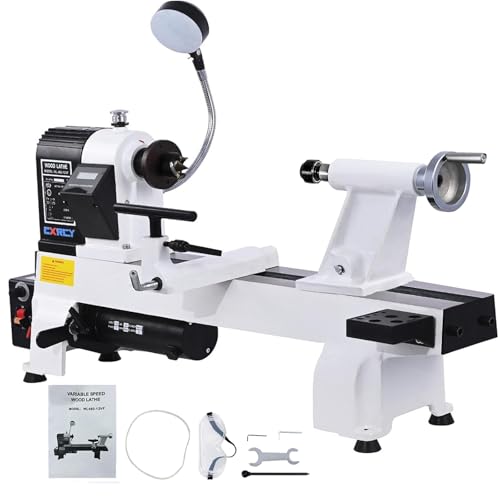
- Infinitely variable speed control across three ranges
- Clear digital display for real-time RPM
- Easy belt adjustment without disassembly
- Includes LED work light and safety goggle
Trade-offs
- 3/4 HP motor is less powerful than many 1+ HP midi lathes
- 18-inch turning length limits project size compared to 40-inch models
The CXRCY lathe’s standout feature is its high-definition digital display, giving you a clear, immediate read on spindle speed without guesswork. That, combined with its straightforward belt access cover, makes speed management genuinely convenient for a turner focused on process rather than fiddling with settings. This package, which also includes a useful magnetic LED light, suits a woodworker who values a clean, modern interface and needs a capable machine for bowls up to 12 inches and spindles under a foot and a half long.
You trade some mass and power for that digital convenience and a more compact footprint. At 88 pounds, it’s substantially lighter than a lathe like the 220-pound JET JWL-1440VS. This means you’ll want a very solid bench to dampen vibration on heavier cuts. The 3/4 HP motor handles typical midi tasks, but it sits at the lower end of the power range for this class. It’s therefore better for refined finishing cuts than aggressively hogging out dense, out-of-balance blanks.
Product photos
QD-KYOHO 12" Variable Speed Wood Lathe

What We Like
- Digital speed display for precise RPM control
- Heavy cast iron construction reduces vibration
- Expandable bed for outboard turning up to 15 inches
- Comes with 5-year technical support guarantee
Trade-offs
- 3/4 HP motor offers less torque than 1+ HP models for heavy stock
- Weighs 106 pounds, requiring a sturdy bench for setup.
A digital readout and three-speed ranges giving you 250 to 3200 RPM put exact control at your fingertips, making this lathe a solid choice for turners who prioritize repeatable speed settings for consistent results. The cast iron build provides a stable, vibration-dampening platform for detailed pen work or small bowls. It suits a hobbyist ready to move beyond basic models, offering the precision needed for intricate projects without overwhelming complexity.
Its 3/4 HP motor provides less power than 1+ HP models like the JET JWL-1640EVS, a relevant difference for heavy material removal. The lathe’s solid cast iron construction reduces vibration during operation, which aids precision on smaller projects like pens or bowls. A digital readout shows the variable speed, adjustable from 250 to 3200 RPM across three ranges for different task requirements.
Product photos
hightall 12" x 20" Benchtop Wood Lathe
What We Like
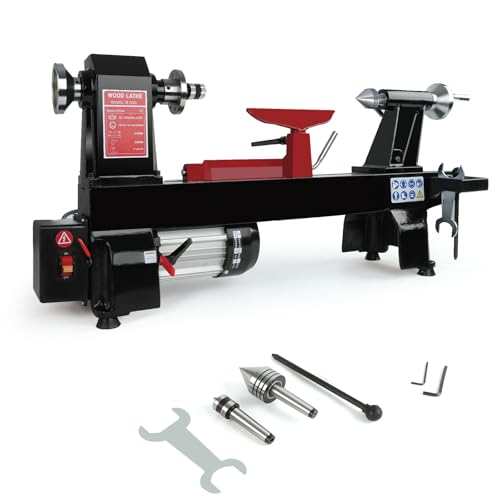
- Five distinct, fixed speed settings for varied tasks
- Sturdy cast iron bed minimizes operational vibration
- Upgraded stainless steel centers and faceplate resist corrosion
- Five-year warranty on core components
Trade-offs
- Manual speed change requires stopping the lathe
- Maximum 12-inch swing limits bowl turning capacity
- Requires user-supplied M8 bolts for bench mounting
The five distinct speed settings are the heart of this lathe. Having clear, fixed gears from 680 to 2770 RPM lets you match the tool to the task. You get slower speeds for roughing out unbalanced stock and higher ones for fine finishing, all without the complexity or potential points of failure of a variable-speed drive. It’s a straightforward, reliable approach that suits a woodworker who prefers mechanical simplicity and knows the common speed ranges for their projects. The 3/4 HP motor, paired with a rigid cast iron bed, provides enough grunt and stability for pens, spindles, and small bowls within that 12-inch swing.
With five fixed speeds between 680 and 2770 RPM, you must stop the lathe to change between them, a manual process that prioritizes reliability over convenience. This design suits projects that run at a consistent pace rather than those needing constant speed adjustments. The stainless steel live centers and faceplate resist corrosion for long-term use, backed by a five-year warranty on core components, which points to a durable benchtop tool built for steady work.
Product photos
How We Evaluated Midi Wood Lathes
Our evaluation synthesized manufacturer specifications, professional testing from woodworking publications, and consistent patterns in owner reviews. We prioritized criteria that define a capable and user-friendly midi lathe: motor power and torque for handling out-of-balance blanks, the rigidity and mass of the bed to dampen vibration, and the flexibility of speed control for different materials and cuts. This research-based approach highlights how each machine is built to perform, but it cannot replicate the hands-on feel of using a wood lathe or the long-term durability insights that come from years of shop use.
What To Look For In Midi Wood Lathes
A midi lathe should be a stable, versatile platform that grows with your skills. Consider your primary project types, available space, and power requirements before committing to a machine.
Focus on swing capacity for bowl diameter, bed length for spindles, and motor torque for roughing. A heavy, rigid bed minimizes vibration, while variable speed control is essential for safety and finish quality.
Swing and Capacity
Swing determines the maximum diameter you can turn over the bed. Most midi lathes offer a 12- to 16-inch swing, which covers a wide range of bowls and platters. The distance between centers, often 20 to 40 inches, dictates maximum spindle length. Many models offer optional bed extensions, a crucial feature for furniture makers. When reading reviews of top wood lathe models, pay close attention to real-world experiences turning blanks at the machine’s maximum swing, as available torque and stability can vary.
Power and Speed Control
Motor power, typically from 3/4 HP to 1.5 HP in this class, provides the torque needed to maintain speed under load. A lathe that bogs down easily will produce a poor surface finish and frustrate the turner. Variable speed control, either electronic or via a Reeves drive, allows you to match the RPM to the workpiece size and operation. Digital readouts are helpful for precision, but the smoothness of the speed adjustment and a wide low-end range (under 300 RPM) are more important for safely roughing out unbalanced blanks.
Construction and Stability
The mass and rigidity of the lathe bed are the primary defenses against vibration, which ruins finish quality and can be dangerous. Heavy cast iron or steel beds absorb energy better than lighter aluminum or tubular designs. A lathe must be securely mounted to a very heavy stand or strong workbench. The quality of components like the tailstock lock, banjo, and tool rest also contributes to stable, enjoyable turning. For those considering a smaller footprint, understanding the trade-offs in our lathe size and capability guide is invaluable.
- Check for a 1-inch diameter tool post for greater rigidity over smaller posts.
- Ensure the spindle thread (commonly 1″x8 TPI) and Morse taper (usually MT2) are industry-standard for accessory compatibility.
- Look for integrated features like indexing pins or onboard storage for chucks and centers.
A lathe that feels solid and overbuilt for its stated capacity will almost always provide a better turning experience than one that feels light at its limits.
Midi Wood Lathes Compared
The following table compares the key specifications of our top picks to help you see the differences at a glance.
| Product | Swing over bed | Distance between centers | Motor power | Speed range |
|---|---|---|---|---|
| JET JWL-1440VS Woodworking Lathe | 14 inches | 40 inches | 1 HP | 400-3,000 RPM |
| Record Power Coronet Herald Wood Lathe | N/A | N/A | 1 HP | 95-3890 RPM |
| VEVOR 14" x 40" Benchtop Wood Lathe | 14 in | 40 in | 1/2 HP | 930/1500/2050/2500 RPM |
| Powermatic 2014B Benchtop Lathe | 14 inches | 20 inches | 1 HP | 15 to 3,600 RPM |
| JET JWL-1640EVS Woodworking Lathe | 16 inches | 40 inches | 1-1/2 HP | 40-3200 RPM |
| WEN 34035 Variable Speed Wood Lathe | 14 inches | 20 inches | N/A | 250-3550 RPM |
| VEVOR 14" x 20" Variable Speed Wood Lathe | 14 in | 20 in | 1 HP | 150-3500 RPM |
| CXRCY 12" x 18" Variable Speed Wood Lathe | 12 inches | 18 inches | 3/4 HP | 650-3800 RPM |
| QD-KYOHO 12" Variable Speed Wood Lathe | 12 inches | N/A | 3/4 HP | 250-3200 RPM |
| hightall 12" x 20" Benchtop Wood Lathe | 12 inches | 20 inches | 3/4HP | 680-2770 RPM |
Frequently Asked Questions
What is the best MIDI lathe for woodworking?
The best midi lathe depends on your specific needs. For overall versatility, a model with a sliding or swiveling headstock, variable speed, and a heavy bed offers the most flexibility for both spindle and bowl work. Our research into best midi lathes points to stability and torque as the most critical factors for satisfying results across different project types.
Who makes the best wood lathes?
Several manufacturers are highly regarded for their midi lathe offerings, including JET, Record Power, and Powermatic. These brands consistently earn praise in expert testing for build quality, thoughtful design, and reliable performance. The “best” is subjective to your budget and shop requirements, so comparing features within your price range is key.
What is the best mini wood lathe?
Mini lathes are a step down in size and power from midi lathes, ideal for very small projects like pens, bottle stoppers, and tiny bowls. They are defined by a smaller swing, often 10 inches or less, and are more portable. If your work is exclusively small-scale, a dedicated mini wood lathe can be a great space-saving choice.
What should I look for in a first wood lathe?
For a first lathe, look for a machine that is easy to set up and use safely. A complete kit that includes basic tools for woodturning can remove initial guesswork. Prioritize a lathe with good instructional resources, a reputation for reliability, and enough capacity to handle the projects that inspired you to start turning.
Can I turn bowls on a midi lathe?
Yes, absolutely. A midi lathe with a 12-inch or greater swing is specifically designed to handle bowl turning. Success depends on having adequate motor torque to spin an out-of-balance blank and a speed control that can go slow enough for safe roughing. Many models also offer swiveling headstocks or outrigger attachments to increase bowl capacity beyond the bed’s swing.
The Bottom Line
The JET JWL-1440VS is our best overall pick for its exceptional combination of capacity, solid construction, and flexible sliding headstock. This makes it ideal for the serious hobbyist ready for a permanent shop fixture. If you’re setting up a first shop on a tight budget, the VEVOR 14″ x 40″ Benchtop Wood Lathe provides a complete starting package. Meanwhile, the Powermatic 2014B is the clear choice for turners who prioritize vibration-free operation above all else. Regardless of your pick, ensure the lathe’s mass and motor torque are sufficient for your intended projects, as this is the foundation of safe, enjoyable, and high-quality woodturning.
