
Benchtop Milling Machine Pros and Cons: The Rigidity Gap
This post contains affiliate links. As an Amazon Associate, we earn from qualifying purchases.
A benchtop milling machine is a compact, precision tool that trades industrial-scale rigidity and work envelope for affordability and space savings, making it suitable for small-scale projects in aluminum, brass, and plastics, but imposing strict limits on steel work and heavy stock removal.
That rigidity gap isn’t academic. It’s the line between a clean cut and a chattering disaster that ruins your tool, your workpiece, and your afternoon. Understanding the benchtop milling machine pros and cons is key to navigating this.
What follows is a breakdown of that core trade-off, the specific numbers that define your work envelope, the materials you can realistically cut, and the hidden costs, in tooling, skill, and shop space, that turn a cheap machine into an expensive lesson, all central to the benchtop milling machine pros and cons. By the end, you’ll know whether a benchtop mill fits your projects or if you’re better off with a different tool entirely.
Key Takeaways
- The primary con is inherent lack of rigidity, which limits material removal rates, finish quality, and the ability to machine harder steels without chatter.
- Work envelope is defined by travel, not table size, a Sherline 5400 offers just 5 inches of Y-axis travel, enough for small parts but not panels.
- For successful steel work, stick to machinable grades like 12L14 and avoid stainless steel; these machines excel in aluminum, brass, and plastics.
- These are precision instruments, not power tools; they demand foundational metalworking knowledge, patience, and a commitment to setup and measurement.
The Core Trade-Off: Compact Size vs. Industrial Rigidity
Every advantage of a benchtop mill creates a corresponding limitation, which is the essence of the benchtop milling machine pros and cons. The compact size that lets it fit in a garage workshop means it lacks the cast-iron mass of an industrial machine. That missing mass translates directly into a lack of rigidity.
A milling machine forms a structural loop from cutter through spindle, head, column, base, table, workholding and part. Deflection or looseness anywhere in that loop can contribute to chatter, poor finish and dimensional variation.
, Jumbo Industrial Guide on Choosing a Benchtop Milling Machine
You’ll feel this the first time you take too heavy a cut in aluminum. Instead of a steady shhh of slicing metal, you get a loud, chattering BRRRAP that leaves a torn, ugly surface. The machine isn’t broken; it’s telling you it’s at its limit. The Sherline manual is blunt: “This is a small, light-duty mill and should not be used to remove large amounts of stock that could be easily removed with a hacksaw.”
Pro: Space and Cost Efficiency. You can have a capable milling center on a sturdy workbench for a fraction of the cost and floor space of an industrial machine. A Sherline 5400 mill ships at 36 lb (16.3 kg).
Con: The Chatter Ceiling. This rigidity ceiling dictates everything: your feed rates, your depth of cut, your choice of material, and ultimately, your throughput. It’s why these are perfect for finishing a precise slot or drilling a perfect hole pattern in a small bracket, but agonizingly slow for squaring a large block of steel.
Where This Goes Sideways: Confusing Travel with Capacity
A common mistake is looking at the physical table and assuming you can machine parts that size. You can’t. Your real working area is defined by axis travel, how far the cutter can actually move.
| Sherline Model | Base Size | X-Axis Travel | Y-Axis Travel | Realistic Part Size (Y) |
|---|---|---|---|---|
| 5000 (5100) | 10-inch | 8.65 in (220 mm) | 3.00 in (76 mm) | Very small (3 in) |
| 5400 (5410) | 12-inch | 8.65 in (220 mm) | 5.00 in (127 mm) | Small (5 in) |
| 2000 (2010) | 14-inch | 8.65 in (220 mm) | 7.00 in (178 mm) | Medium (7 in) |
| 5800 (5810) | 18-inch | 13.65 in (347 mm) | 11.00 in (279 mm) | Large (11 in) |
Source: Sherline Compare Mills Spec Sheet
If your part is wider than the Y-axis travel, you must stop, unclamp, reposition, and re-indicate it for the next operation. That kills accuracy and time. The travel numbers are non-negotiable specs from the manufacturer; they are your first filter when choosing a machine.
Material Realities: What Can You Actually Mill?
The brochures might say “mills steel,” and technically, they can. But the practical reality is a narrow window of acceptable work. These machines reward good material choices and punish bad ones brutally.
Pro: Excellent for Non-Ferrous Metals and Plastics. This is their sweet spot. Aluminum, brass, and cast iron are relatively soft and generate manageable cutting forces. With sharp tooling and conservative feeds, you can achieve mirror-like finishes. The electronically controlled spindle speed range of 70 to 2800 RPM on Sherline mills covers the needs for small-diameter cutters in aluminum.
Con: Steel is a Compromise. The Sherline manual advises: “Work with aluminum, brass, plastic or cast iron whenever possible.” It specifically calls out stainless steel as a material to avoid “because of machining difficulty and poor milling cutter life.” If you must cut steel, their recommendation is grade 12L14 “lead-loy” steel, a free-machining grade designed for low-power equipment.
Common mistake: Assuming any mill can handle any metal. Picking up a random chunk of mystery steel from the scrapyard is a fast track to broken end mills, a ruined workpiece, and a frustrated afternoon.
The limitation is twofold: rigidity and horsepower. A benchtop mill lacks the stiffness to prevent deflection during the higher forces of steel cutting, and its motor lacks the torque to maintain speed under that load. You’ll be taking passes measured in thousandths of an inch, not sixteenths.
The Tooling Non-Negotiable
The Sherline manual states plainly: “A mill vise is a must. A drill press vise is not designed for the forces involved in milling.”
Your first purchase after the machine should be a milling vise, like those from Precision Matthews or Grizzly. Then you need a way to hold cutters: collets (R8 or Morse #1 taper, depending on your spindle) or end mill holders. The included drill chuck is only for drilling.
Power, Noise, and Your Workshop
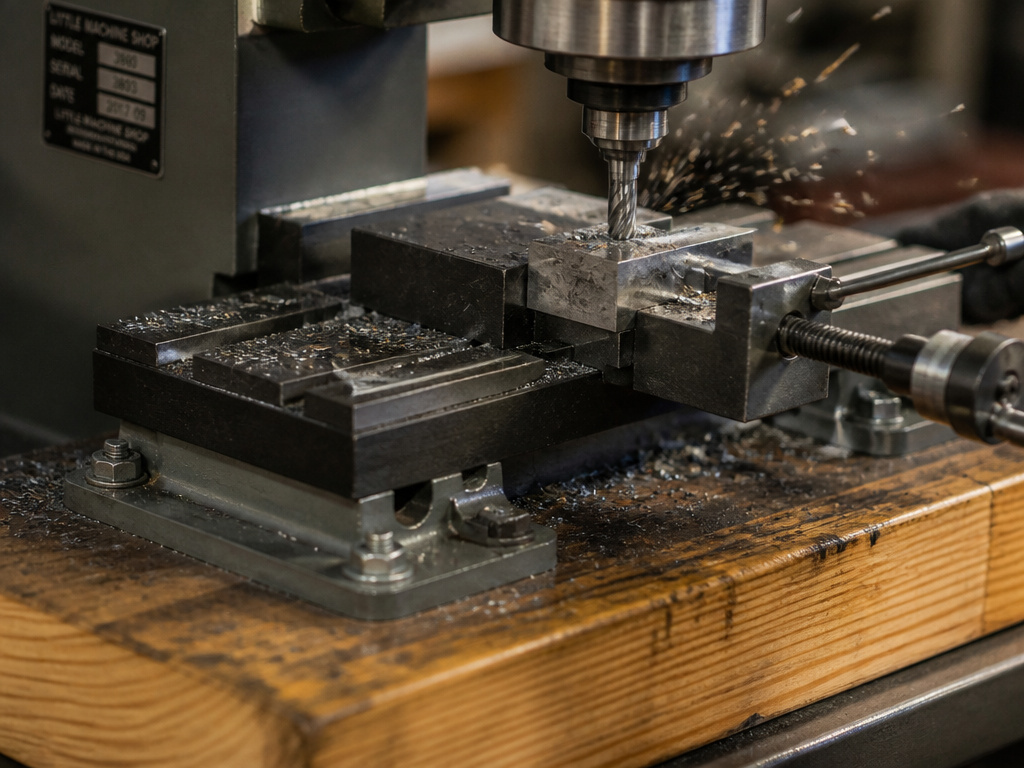
A benchtop mill doesn’t require 3-phase power or a dedicated 220V circuit. Most, like the Sherline series, run on standard 100-240 VAC. This is a massive pro for home shops.
Con: Noise and Vibration. These are not quiet tools. The spindle motor, the whine of the cutter, and the chatter we talked about all contribute. Furthermore, the machine transmits vibration into your bench. The Sieg SX2.3 manual instructs: “The machine should be mounted on a strong, heavy workbench, of sufficient height so that you do not need to bend your back to perform normal operations.” This isn’t optional. A wobbly stand amplifies chatter and ruins precision.
You’ll also need to manage chips and cutting fluid. The work area around the mill will get dirty with fine metal shavings. It’s a contained mess, but it’s a mess nonetheless.
The Skill and Time Investment
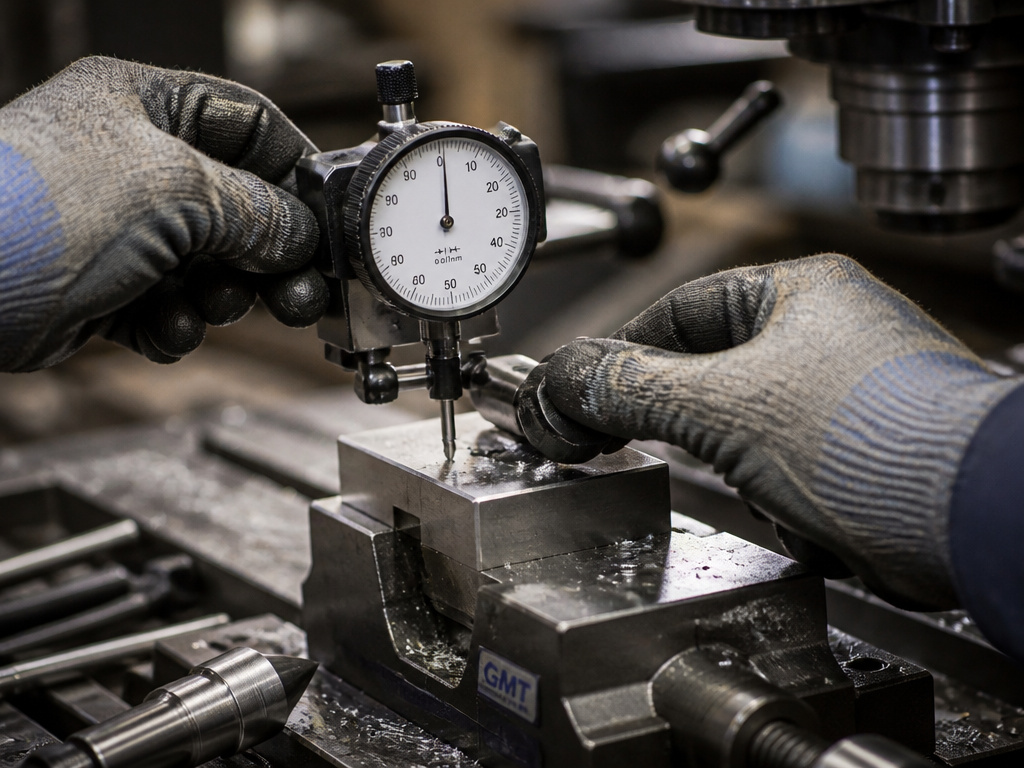
This is the hidden con that catalog listings never mention. A benchtop mill is a precision instrument. Unlike a drill press where you just pull a lever, milling requires you to become the control system.
Pro: Unmatched Precision for Small Work. When you need a slot width held to ±0.001″, or a hole pattern positioned within a few thousandths, a mill is the only tool for the job. It teaches you fundamental machining principles: workholding, indicating, measurement, and feeds/speeds.
Con: Steep Learning Curve and Slow Pace. You will spend more time setting up than cutting. Indicating a vise square to the table, finding the edge of a part, picking up a center, calculating speeds and feeds, each step is a skill. Your first projects will be slow and likely flawed. The manual for the MicroLux R8 mill notes it’s designed for workpieces “up to 300mm x 200mm x 200mm (about 12” x 11” x 8”).” Even within that size, a complex part can take hours.
I used to think every machining task needed a dedicated, industrial-sized tool. Watching a seasoned machinist produce a flawless, complex part on a small Sherline mill changed that. The limitation wasn’t the machine’s size, but my own patience and understanding of the process. Efficiency comes from skill, not just horsepower.
This reality makes a benchtop mill a poor choice for production work or rapid prototyping. It’s a tool for careful, one-off parts, model making, or toolmaking.
Cost Analysis: The Purchase Price is Just the Start
The price tag on a Sherline 5400 or a Sieg SX2.3 is the entry fee. The real cost of a functioning milling workstation is at least double that.
| Cost Category | Essential Items | Why You Can’t Skip It |
|---|---|---|
| Workholding | Mill Vise, Clamp Set, Parallels | Holds part securely for accuracy/safety. |
| Tool Holding | Collet Set (R8 or #1 Morse), End Mill Holders | Securely grips cutting tools. Drill chuck is for drilling only. |
| Cutting Tools | End Mills, Center Drills, Fly Cutter | The consumables that actually remove material. |
| Measurement | Dial Indicator, Magnetic Base, Calipers | Verifies setup and part dimensions. Without this, you’re guessing. |
| Accessories | Rotary Table (optional), Coolant System | Expands capability or improves results. |
This is a minimum viable toolkit. A digital readout (DRO) is a popular upgrade, but I side with the old-school view: learning on manual dials builds a better foundational understanding of the machine.
The Pro here is that you can start basic and add tooling over time. The Con is the sticker shock when you realize a vise and a set of collets can cost as much as a budget mill itself. Buying a bare-bones machine without budgeting for tooling is the most common mistake new buyers make.
Benchtop Mill vs. The Alternatives
Is a mill the right tool, or are you forcing a solution? Let’s compare.
Versus a Drill Press: This is the most common cross-shop. A drill press only moves in one axis (Z) and is designed for downward force. It cannot side-cut. You can use a milling vise and an end mill in a heavy-duty drill press for very light work in soft materials, but it’s a compromise that risks the machine and the operator. For any real milling, slots, pockets, facing, you need the controlled X and Y movement of a mill.
Versus a CNC Router: A router is for wood and plastics. It’s high-speed, low-torque, and not rigid enough for metal. If your work is exclusively non-metallic, a CNC router might be faster and cheaper. For metal, a mill is mandatory.
Versus a Lathe: A mill is for creating prismatic (boxy) parts with holes, slots, and flat surfaces. They are complementary.
Pro of a Dedicated Mill: It’s the right tool for the job. For precision prismatic metal parts, nothing else comes close.
Con: It’s a single-purpose tool. It won’t turn a shaft or route a sign. Your workshop needs and budget will dictate if you need this specialization.
CNC Retrofit Potential: A Tempting Pro
Many buy a benchtop mill with dreams of converting it to CNC. It’s a powerful pro in theory: buy a manual machine now, automate it later.
The reality is more nuanced. Conversion is a major project requiring mechanical skill (mounting stepper motors, ball screws), electrical knowledge (wiring, power supplies), and software familiarity (control software, CAD/CAM). The Sieg X2/SX2.3 models have a huge community and pre-made kits, which helps.
Con: The converted machine will only be as good as its base. The rigidity and accuracy limits of the manual mill become the limits of your CNC. A purpose-built CNC machine, like many from Precision Matthews, is often a better value if automation is your primary goal from day one.
Long-Term Ownership: Maintenance and Longevity
Pro: Simplicity. These machines have fewer parts than their industrial cousins. There are no complex gearboxes or hydraulic systems. Maintenance typically involves keeping ways lubricated, checking belt tension, and ensuring gibs are properly adjusted.
Con: Wear and Tear. They are light-duty. Pushing them hard accelerates wear on leadscrews, nuts, and bearings. Spindle runout is critical; Sherline specifies .0005 inches or less for Morse taper runout for all Sherline mills. Checking and maintaining this precision is part of ownership. They won’t last decades under daily professional use, but for a hobbyist, they can be a lifetime tool if treated with care.
A critical safety note from the Naval Postgraduate School technical manual and every other source: Always wear safety glasses. A mill throws sharp, hot chips in every direction.
Frequently Asked Questions
What are the biggest downsides of a benchtop milling machine?
The two biggest are limited rigidity, which restricts material removal rates and can cause chatter, and a small work envelope, defined by short axis travels (often just 5-7 inches in the Y-direction). These factors make them slow for large parts or hard materials.
Is a benchtop mill good for a beginner?
Yes and no. It’s an excellent teacher of fundamental machining principles, but the learning curve is steep. Expect to spend significant time learning setup, measurement, and feeds/speeds before producing good parts. Starting with known, soft materials like aluminum is crucial.
Can a benchtop mill machine steel?
It can, but within strict limits. You must use easily machined grades like 12L14, take very light cuts (low depth and feed), and have extremely sharp tooling. It is not suitable for removing large volumes of steel or for hard alloys like stainless. It’s a finishing tool for steel, not a roughing tool.
Should I buy a used industrial mill instead?
If you have the space, power (often 3-phase), and floor strength, a used Bridgeport or similar knee mill is vastly more capable and rigid for similar money. The trade-off is immense size and weight. For most home shops, the space and power constraints make a benchtop mill the only viable option.
What should I look for in my first benchtop mill?
Focus on rigidity (mass and design), work envelope (axis travels, not table size), and spindle tooling (common taper like R8 or #1 Morse). Research the available aftermarket for parts and support. Brands like Sherline and Sieg have strong communities. Read our guide on the best benchtop mills for specific model comparisons.
Before You Go
The decision hinges on a single question: are you willing to trade power and speed for precision and space? A benchtop mill won’t let you hog out metal quickly. It demands patience, careful setup, and a light touch.
But within its defined box, small, non-ferrous parts requiring tight tolerances, it is profoundly capable. It’s the difference between making a bracket and crafting one. If your projects live in that box, and you have the budget for the necessary tooling, it’s an incredibly rewarding tool. If you need to mill steel all day or produce large panels, you’re looking at the wrong category of machine.
If it fits with room to spare, you’re on the right track. If it’s a squeeze, you’ll be fighting the machine every time. That simple fit-check is the most honest pros and cons list you can make.
