
9 Best 1/4 Sheet Sanders in 2026
This post contains affiliate links. As an Amazon Associate, we earn from qualifying purchases.
Our best overall 1/4 sheet sander is the Makita BO4556K for its rubberized palm grip and thick foam pad that excels at finish work. The DEWALT DWE6411 is our top value corded pick, and the RYOBI ONE+ 18V Cordless Sander is the best budget cordless system. Choosing the right sander depends on your need for cordless freedom, dust control, or precise detail work. We researched nine top models, comparing specs and owner feedback patterns to find the best fit for different users and projects.
Top 9 1/4 Sheet Sanders in the Market
Certain content that appears on this site comes from Amazon. This content is provided "as is" and is subject to change or removal at any time.
The Best 1/4 Sheet Sanders, Reviewed
Makita BO4556K 1/4 Sheet Finishing Sander

What We Like
- Rubberized palm grip reduces hand fatigue
- Thick foam pad conforms to curved surfaces
- Efficient dust collection keeps work area cleaner
- Quick-clamp lever simplifies paper changes
Trade-offs
- At 16.7 inches long, it's less compact than cordless models like the Makita DBO480Z
- Requires a vacuum for optimal dust extraction
Fourteen thousand orbits per minute delivers the smooth, fast finish this class is built for. The real magic, though, is in the thick neoprene pad. It lets the sandpaper flex over moldings and shaped edges without digging in, a detail that matters for fine woodworking. Combined with a vibration-damping ball bearing construction and a contoured grip, this sander is built for comfort during long sessions of detail work. It’s a wired workhorse that prioritizes finish quality and user comfort above all else.
The Makita BO4556K weighs 2.5 pounds, a lighter build than most plug-in sanders, which helps reduce arm fatigue during extended sessions. Its efficient through-the-pad dust collection system connects to a Makita vacuum for a cleaner work area, a key feature for workshop use. While cordless models like the DEWALT DCW200B provide outlet freedom, this sander delivers consistent 14,000 OPM power directly from a wall socket.
DEWALT DWE6411 1/4 Sheet Sander

What We Like
- Rubber overmold for comfortable, secure grip
- Separate counterweight design reduces vibration
- Locking dust port secures vacuum hose
- Reduced height gets you closer to the work
Trade-offs
- 3.7 lb weight is heavier than several cordless options
- Corded operation limits mobility vs. battery models
A 2.3 AMP motor delivers 14,000 orbits per minute, providing steady power for extended sanding without bogging down. The separate counterweight design reduces vibration, and a rubber overmold texture offers smooth, comfortable control during use. Its reduced overall height positions the user closer to their work for better control.
The trade-off for that consistent power is heft and a tether; at 3.7 pounds, it’s notably heavier than tools like the DEWALT DCW200B cordless sander. You’re trading ultimate portability for unplugged-and-go convenience. However, the locking dust port and improved paper clamps are classic DEWALT touches that solve real workshop frustrations, no more hose popping off or sandpaper slipping mid-stroke. It’s a straightforward, durable tool built for getting the job done efficiently, not for stowing in a bag for remote touch-ups.
RYOBI ONE+ 18V Cordless 1/4 Sheet Sander

What We Like
- Part of the extensive RYOBI ONE+ 18V system.
- Cordless design provides excellent portability.
- Compact 3.2-pound weight reduces user fatigue.
- Standard 1/4 sheet paper is widely available.
Trade-offs
- Tool only: requires separate battery and charger purchase.
- At 3.2 lb, it's heavier than the 2.1 lb DEWALT DCW200B.
- Lacks variable speed control found in some competitors.
An 18V cordless design means you can move freely around a project without hunting for an outlet, a major advantage for quick touch-ups or working in an unfinished space. This sander is a pragmatic choice for anyone already invested in, or looking to start with, the RYOBI ONE+ ecosystem. Its familiar 1/4 sheet format and straightforward operation make it a logical, no-fuss addition for the DIYer who values system compatibility over specialized sanding features.
This cordless sander weighs 3.2 pounds, making it heavier than some modern brushless cordless models. That extra mass can become noticeable during prolonged use, especially on vertical or overhead surfaces. As a tool-only product, it requires a separate RYOBI ONE+ 18V battery and charger to operate.
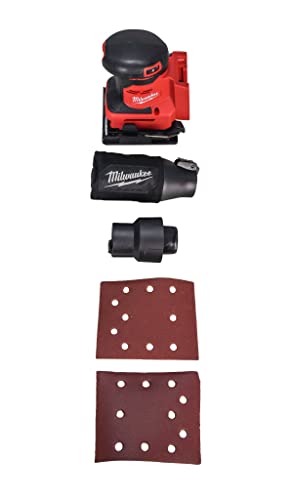
Milwaukee M18 1/4 Sheet Sander
What We Like
- Strong dust collection for a cleaner workspace
- Variable speed dial for material control
- Low vibration reduces user fatigue
- Quick sandpaper changes with two-step clamp
Trade-offs
- Tool-only model requires Milwaukee M18 battery and charger
Up to 95% dust collection means you spend more time sanding and far less time cleaning up afterward. This Milwaukee sander is a natural fit for indoor renovation work or any project where containing mess is a priority. The variable speed dial and low vibration design let you dial in the cut for different materials without your hands going numb, making it a practical choice for extended sessions. It collects dust so effectively that you might skip hooking up a vacuum for smaller jobs.
You do pay for that clean operation with a bit of heft. At 3.8 pounds with a battery, it’s noticeably more substantial in the hand than a model like the DEWALT DCW200B. That weight can translate to stability on the workpiece, but it’s a trade-off for overhead work or all-day use. If you’re already invested in the M18 platform and value a clean shop, this sander’s performance justifies its place in your kit.
SKIL 7292-02 1/4 Sheet Palm Sander

What We Like
- Pressure Control warns against excessive hand pressure.
- Clear-view dust canister shows when to empty.
- Good micro-filtration captures fine dust particles.
- Built-in vacuum adapter for maximum dust collection.
Trade-offs
- No variable speed control listed in specifications.
- Dust-sealed switch adds durability but not performance.
Pressure Control Technology warns the user when excessive pressure is applied, helping to maintain a consistent finish. The sander includes a clear-view dust canister and built-in vacuum adapter for dust collection, which keeps the work area cleaner. Research comparisons noted that in specific testing, the Skil model seemed to be the most aggressive at removing stock among a final group of four sanders.
You get a lot of sander for the money here, but you give up some finesse. It lacks the variable speed control found on more advanced models, which can be crucial for delicate finishes. Its size and weight also mean it’s not as nimble as some compact cordless options for tight corners. Where it shines is in straightforward stock removal on larger areas, offering a straightforward, effective tool that helps correct a fundamental sanding mistake.
Product photos
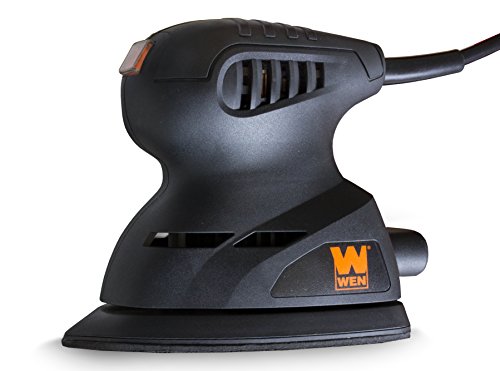
WEN 6301 Electric Detailing Palm Sander
What We Like
- Extremely lightweight two-pound design.
- Angled pad tip for precision sanding.
- Velcro base for quick paper changes.
- Includes a dust collection port.
Trade-offs
- One-amp motor is less powerful than many competitors.
Weighing just two pounds, this sander is effortless to maneuver overhead or in tight corners all day. Its 3.75 by 5.5-inch pad has an angled tip for getting into detailed trim and edges. That combination of featherweight handling and precision geometry suits it for finish work, cabinet refinishing, or any project where control trumps raw sanding speed. The one-amp motor spins the pad at 13,500 orbits per minute, which is plenty for fine finishes.
The compact design carries performance trade-offs. With a one-amp motor and a 3.75 by 5.5-inch pad, this sander is a dedicated detailer, not a brute. For a cordless option in a similar compact class, the DEWALT DCW200B weighs 2.1 pounds but offers untethered freedom. Choose this WEN when your priority is minimizing fatigue during intricate sanding tasks where its light touch and pointed nose are assets.
Product photos
Makita DBO480Z Cordless Finishing Sander

What We Like
- Dual hook-and-loop and clamp paper system
- Compatible with existing Makita corded model pads
- Direct vacuum cleaner connection
- Two-speed electronic push-button control
Trade-offs
- Tool only: requires separate Makita 18V battery and charger
- At 3.1 lb, it is heavier than the 2.5 lb Makita BO4556K
Its dual fastening system accepts both hook-and-loop and clamped abrasive paper, so you can use whichever sanding sheets are on hand. The sander’s pad and base are also compatible with those from current corded Makita models. This design allows users of those tools to share accessories between corded and cordless versions.
You must supply your own battery for this cordless sander, which adds to the initial outlay if you’re new to the Makita brand. While its compact form is great for maneuverability, the 3.1-pound weight is noticeable compared to lighter corded options. This sander makes the most sense as an expansion of a Makita 18V collection, where its unique paper flexibility and direct dust extraction truly shine on finishing work.
Product photos
BLACK+DECKER BDEQS300 Orbit Sander

What We Like
- Flush sanding on three sides for tight spaces.
- Lock-on switch enables convenient one-handed operation.
- Tri-layer dust collection bag keeps surfaces clear.
- Simple paper clamps for quick sandpaper changes.
Trade-offs
- Corded design limits mobility compared to battery models.
- At 3.0 lb, it's heavier than the 2.1 lb DEWALT DCW200B.
The 270-degree flush sanding clearance is the standout feature here, letting you sand right into corners and flush against vertical surfaces without the housing getting in the way. This makes the BDEQS300 a natural choice for detailed finish work on cabinetry, furniture edges, and trim where other sanders simply can’t reach. Its 2.0 Amp motor and 16,000 orbits per minute provide plenty of power for smooth material removal, and the lock-on paddle switch is a thoughtful touch for extended sessions.
You do trade mobility for that unlimited runtime, as the cord tethers you to an outlet. It’s also a bit heftier than some modern cordless options, which could lead to fatigue on overhead work. For general-purpose sanding where flush access isn’t critical, the lighter DEWALT DCW200B might be easier to maneuver, but for tackling detailed trim and tight spots, this BLACK+DECKER’s design is purpose-built.
Product photos
Bosch GSS12V-40N Cordless Sander

What We Like
- SheetLock system makes paper changes effortless
- Compact, balanced grip for control in tight spaces
- Brushless motor provides corded-like power and runtime
- Soft-start technology eases into the workpiece
Trade-offs
- Tool only: requires separate purchase of 12V battery and charger
Cordless freedom meets corded-like power in this compact orbital sander, thanks to its brushless 12V Max motor. The 7.7-inch-long, balanced body keeps your hand close to the workpiece for control in hard-to-reach areas. Reviewers highlight the nearly effortless SheetLock paper clamping system as a standout feature for frequent paper changes.
You need to invest in Bosch’s 12V battery platform to use this compact, brushless sander. It’s also not the lightest option on the bench. For all-day sanding on larger, flat surfaces, a dedicated corded model will be less taxing on your wrist and wallet. But if your projects demand finesse over broad, raw power, and you value a tool that disappears in your hand, this Bosch makes a compelling case.
Product photos
How We Evaluated 1/4 Sheet Sanders
Our evaluation is research-based, comparing specifications from manufacturer documentation and expert round-ups. We analyzed patterns in owner feedback to identify common praises and complaints for each model. Key criteria included ergonomics and vibration control for comfort during extended use, the efficiency and convenience of the dust collection system, and the ease and reliability of the paper fastening mechanism. This approach highlights the differences in design and user experience, but it cannot replicate the feel of a tool in your hand over hours of use.
What To Look For In 1/4 Sheet Sanders
A 1/4 sheet sander, often called a palm or finishing sander, is a versatile tool for smoothing wood before finishing. Its square pad moves in a small orbital pattern, making it ideal for fine work on furniture, trim, and cabinets. Understanding the key differences between models will help you avoid hand fatigue and get better results.
Look for a comfortable grip, effective dust collection, and an easy paper-change system. Weight and power source (corded vs. Cordless) are also critical for your mobility and project needs.
Ergonomics and Vibration
Comfort is paramount for a tool designed for detailed finish work. A rubberized or overmolded grip provides a secure hold and dampens some vibration. Some models, like our best overall Makita, use a separate counterweight design specifically to reduce the shaking transferred to your hand. Lower vibration means less fatigue and numbness during long sessions. Weight also plays a role; a lighter tool, like the two-pound WEN 6301, is easier to maneuver for overhead or intricate work.
Dust Collection
A good dust collection system keeps your workspace cleaner and your lungs safer. Most sanders have a port for connecting a shop vacuum, while some include a bag or canister. Look for a secure, locking dust port to prevent the hose from popping off. The effectiveness varies, with models like the Milwaukee M18, noted for strong performance as our Best For Dust Collection winner. For indoor projects, efficient dust management is a top priority.
Paper Fastening and Power
The system for holding sandpaper should be quick and reliable. Most use a wire clamp lever, but ease of use differs. The Bosch GSS12V-40N‘s SheetLock system is praised for being nearly effortless, while some clamp levers can be stiff. Motor power, measured in amps for corded models, affects performance; a one-amp motor is suitable for light finishing, while more powerful motors can handle slightly more aggressive material removal. For cordless models, consider the battery platform you already own, as buying into a new system adds significant cost.
- Check if the sander is compatible with your existing cordless tool battery system.
- Ensure the paper clamps are easy to operate without tools.
- Verify the dust port fits your shop vacuum hose.
- Consider a model with a flush sanding edge if you often work in corners.
- Look for variable speed control if you sand different materials.
A comfortable, low-vibration sander with good dust collection will make your finishing projects more enjoyable and professional.
1/4 Sheet Sanders Compared
The table below compares key specifications across all nine models to help you see the differences at a glance.
| Product | Weight | Dust Collection | Orbital Speed (OPM) |
|---|---|---|---|
| Makita BO4556K 1/4 Sheet Finishing Sander | 2.5 pounds | Through-the-pad with port | 14,000 OPM |
| DEWALT DWE6411 1/4 Sheet Sander | 3.7 pounds | Locking dust-port system | 14,000 OPM |
| RYOBI ONE+ 18V Cordless 1/4 Sheet Sander | 3.2 pounds | N/A | N/A |
| Milwaukee M18 1/4 Sheet Sander | 3.8 pounds | Up to 95% | 13K to 11K OPM |
| SKIL 7292-02 1/4 Sheet Palm Sander | 2.6 pounds | Micro-filtration, vacuum adapter | N/A |
| WEN 6301 Electric Detailing Palm Sander | 2 pounds | Dust Port: Yes | 13,500 OPM |
| Makita DBO480Z Cordless Finishing Sander | 3.1 pounds | Through-pad system | 2-speed electronic |
| BLACK+DECKER BDEQS300 Orbit Sander | 3.0 Pounds | Dust collection bag | 16,000 orbits per minute |
| Bosch GSS12V-40N Cordless Sander | 4.2 pounds | Bag or vacuum hose | N/A |
Frequently Asked Questions
What is the best 1/4 sheet palm sander?
Our best overall 1/4 sheet palm sander is the Makita BO4556K. It stands out for its rubberized grip that reduces hand fatigue and its thick foam pad, which conforms well to curved surfaces for fine finish work on furniture and trim. It also features efficient dust collection and a quick-clamp lever for paper changes.
What company makes the best sanders?
Several reputable companies produce excellent 1/4 sheet sanders, including Makita, DEWALT, Milwaukee, Bosch, and RYOBI. The “best” brand depends on your specific needs, such as existing battery platform, desired features like dust control, and budget. Our list includes top models from these and other manufacturers to suit different users.
What is a 1/4 sheet sander good for?
A 1/4 sheet sander is excellent for fine finish sanding on woodworking projects. It’s ideal for smoothing furniture, cabinets, trim, and other detailed work before applying stain or paint. Its orbital motion and small pad size provide control for achieving a smooth surface without leaving deep swirl marks. It is not designed for rapid stock removal on large, flat areas.
Which half sheet sander is the best?
This guide focuses specifically on 1/4 sheet sanders, which are smaller, palm-sized tools. Half sheet sanders are larger, two-handed tools designed for sanding big, flat surfaces like tabletops or doors. For recommendations on those larger models, you would need to consult a guide dedicated to sheet sanders.
What’s the difference between a palm sander and a random orbital sander?
A palm sander, or 1/4 sheet sander, uses a square pad that moves in a small, repeating orbital pattern and holds a quarter sheet of standard sandpaper. A random orbital sander has a round pad that spins and orbits simultaneously, using special hook-and-loop sanding discs. Random orbitals are generally more aggressive for stock removal but can leave a slightly different finish. For a deeper dive into the differences and uses, see our guide on random orbital vs palm sander.
The Bottom Line
For most detail-oriented woodworkers tackling furniture and trim, the Makita BO4556K is the best overall 1/4 sheet sander. Its comfortable grip and effective vibration damping make prolonged finish work less taxing. The conforming pad also helps it follow contours. If you need cordless convenience on a budget and already own RYOBI ONE+ batteries, the RYOBI ONE+ 18V Cordless Sander is a solid choice. Those prioritizing dust control in an indoor shop should look at the Milwaukee M18.
Ultimately, choosing a sander that feels comfortable in your hand and manages dust well will make your projects more successful.
