
5 Best Air Compressors For Airbrushing Miniatures in 2026
This post contains affiliate links. As an Amazon Associate, we earn from qualifying purchases.
The Master Airbrush TC-77 Airbrush Compressor is the best overall for its compact, ready-to-use design and steady airflow. For a whisper-quiet tank, the Timbertech Upgraded model excels, while the PointZero Airbrush Compressor offers a budget-friendly tankless start. Miniature painting demands smooth, pulse-free air at low pressures, not the raw power of a shop compressor. We researched specifications, manufacturer details, and patterns in user feedback to compare five models that fit on a hobby desk.
Top 5 Air Compressors For Airbrushing Miniatures in the Market
Certain content that appears on this site comes from Amazon. This content is provided "as is" and is subject to change or removal at any time.
The Best Air Compressors For Airbrushing Miniatures, Reviewed
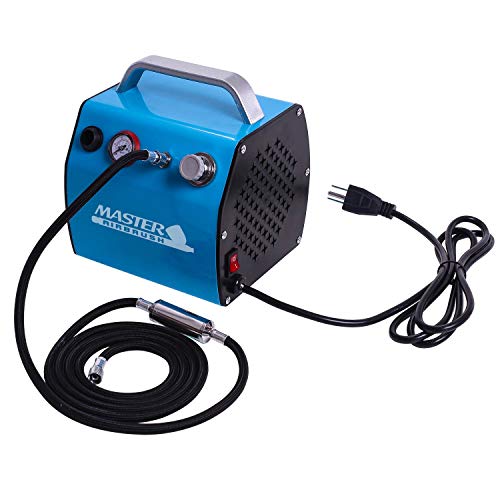
Master Airbrush TC-77 Airbrush Compressor
What We Like
- Compact 4-pound weight with built-in handle
- Small tank reduces pulsation for smooth application
- Regulator with gauge and inline moisture filter
- Includes hose and built-in airbrush holder
Trade-offs
- Small tank provides less buffer than 3L tank models
A small air tank provides the constant pressure required for fine, unbroken lines, eliminating the pulsation common with tankless designs. Master Airbrush packs this essential feature into a 4-pound unit with a built-in handle, so it’s genuinely portable. The included regulator with gauge and mini moisture filter offers a ready-to-run foundation for a clean, controlled air supply.
You are trading some reserve capacity for that portability. Its tank is smaller than the 3-liter tanks on models like the Timbertech AS186, so it will cycle on more frequently during long painting sessions. Compared to a feature-rich workhorse like the Iwata Power Jet Pro, it lacks automatic shut-off. But for most hobbyists painting a squad or a single model at a time, this compressor delivers the core performance needed in a footprint that easily tucks away.
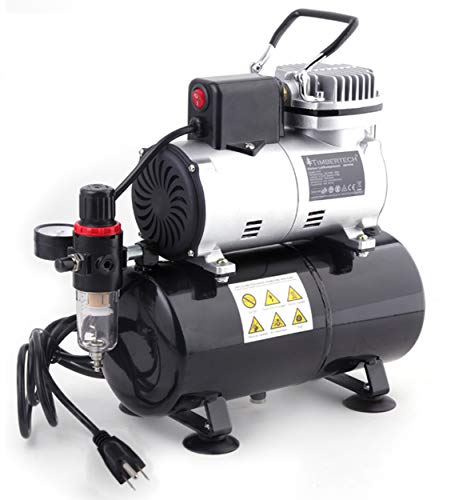
Timbertech Upgraded Airbrush Compressor ABPST08
What We Like
- Integrated cooling fan for temperature control
- 3L tank ensures pulse-free, constant airflow
- Complete with regulator, gauge, and moisture trap
- Oil-less piston design is maintenance-free
Trade-offs
- Manufacturer states it is only fit for airbrushing, not for spray guns
- Larger footprint requires more dedicated bench space
A 47db operating volume means you can run this compressor in a home office or apartment without disturbing everyone in the next room. That quiet operation, combined with a 3-liter storage tank, is the core of its appeal for miniature painters. The tank smooths out the airflow from the single-piston pump, eliminating the pulsing that can ruin fine detail work, and it gives the motor periodic breaks to cool down. This setup is ideal for the painter who spends hours at the bench and needs consistent, quiet performance without the compressor cycling on and off constantly.
A 3-liter air receiver tank ensures a pulse-free, consistent air flow, which is ideal for detailed work like model painting where any fluctuation can ruin a finish. This benefit does come with a larger physical footprint compared to tankless models, requiring a dedicated spot on the workbench. At 11.5 pounds, it’s heavier than some smaller compressors like the 8-pound Paasche D500SR, but the built-in carry handle makes it portable within a workspace.
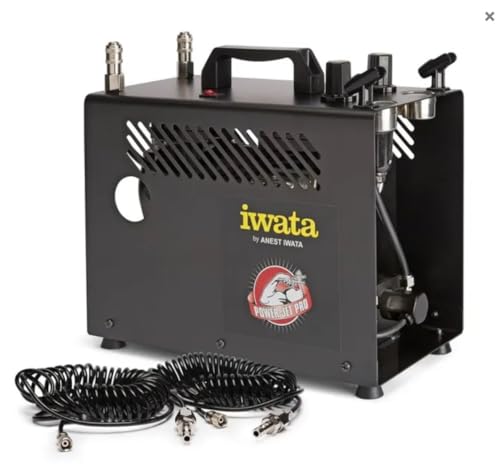
Iwata Power Jet Pro Compressor
What We Like
- Dual independent regulators and gauges
- Includes hoses and multi-brand adapters
- Quiet operation with automatic shut-off
- Dual moisture filters for clean, dry air
Trade-offs
- At 22 lb, it's heavy for portable use.
- Larger footprint than tankless compressors.
The ability to run two airbrushes at independently set pressures is the defining feature here. This makes it a natural fit for a shared studio, a teaching setup, or a solo artist who frequently switches between detail and base-coating brushes without stopping to adjust a single regulator. The 2-liter tank is key, providing that consistent, pulse-free airflow that professional results demand, while the dual moisture traps ensure your miniature’s fine details aren’t ruined by water spatter. It’s built for serious, uninterrupted work sessions.
The Iwata Power Jet Pro stands out by letting two artists work independently or a single user run different tools at customized pressures. This 22-pound compressor is built as a bench-top station, not a portable one, and it includes integrated holders for two airbrushes during color changes. For the specific need of dual-airbrush operation, this Iwata is in a class of its own. A dedicated single-outlet model like the Paasche D500SR, however, offers similar core performance in a more compact package for a solo hobbyist.
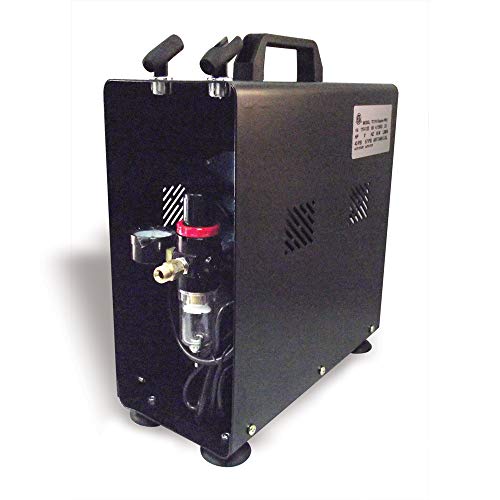
Badger Air-Brush Co. TC910 Air Compressors
What We Like
- Built-in airbrush holder for convenient storage
- Includes a moisture filter to protect airbrush work
- Automatic shut-off and thermal overload protection
- Quiet, lightweight diaphragm compressor design
Trade-offs
- At 16.5 inches long, its footprint is larger than tankless models like the Paasche D500SR
- A 1-pound weight may require securing on a workbench during hose use
- Maximum 57 PSI pressure is fixed, lacking the higher range of some competitors
A one-gallon air tank provides a consistent buffer of air, so your pressure won’t dip with every trigger pull during detailed miniature work. This compressor suits a painter who values steady airflow and wants essential features like a moisture trap and regulator integrated from the start. The built-in airbrush holder is a thoughtful touch that keeps your workspace organized and your tool within easy reach, turning a functional piece of equipment into a dedicated painting station.
The trade-off for that tank and integrated features is a larger physical size. It demands more real estate on your bench compared to compact, tankless units. For a modeler with limited space who still wants tanked performance, the Timbertech AS186 offers a similar 3-liter capacity in a slightly more condensed package. The Badger’s design, however, bundles practicality into a single, maintenance-free unit that gets you painting with minimal fuss.
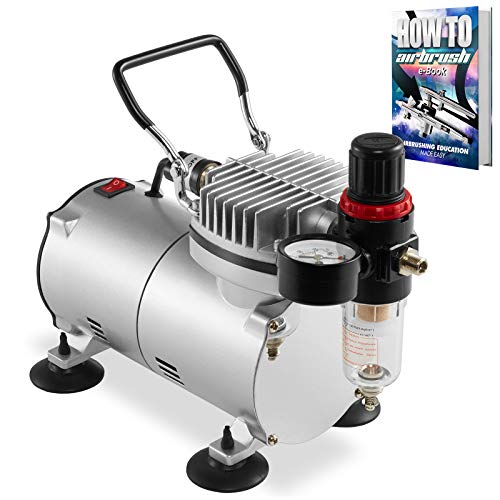
PointZero Airbrush Compressor
What We Like
- Quiet 55 dB operation for focused work
- Power-saving auto on/off cycle
- Oil-less design for safe multi-use
- Includes regulator, gauge, and water trap
Trade-offs
- Tankless design means air pulses with brush use
- 58 psi maximum pressure limits some techniques
- No integrated storage tank for air reserve
A 55 dB noise level means you can run this compressor in a home workspace without needing ear protection or disturbing others, a key advantage for detail work. Its automatic cycle between 40 and 58 psi provides enough consistent pressure for base coating and layering on miniatures while reducing motor wear. This combination of quiet operation and a self-regulating, oil-less pump makes it a straightforward and affordable entry point for hobbyists setting up their first airbrush station.
The trade-off for its simplicity is the tankless design. You’ll feel a slight pulse in the airflow as the motor kicks on and off, which can be noticeable during long, continuous passes. For more consistent airflow essential for fine detail work like zenithal priming or freehand patterns, a compressor with a storage tank, like the Timbertech AS186, is a better choice. The PointZero gives you the core controls you need to start learning, saving complexity and cost for later.
Product photos
How We Evaluated Air Compressors For Airbrushing Miniatures
Our evaluation is based on manufacturer specifications, expert round-ups of the best airbrush compressors for miniatures, and consistent themes in owner feedback. We prioritized stable airflow, noise level, physical footprint, and included features like regulators and moisture traps, all critical for detailed miniature work where pulsation and moisture ruin finishes.
What To Look For In Air Compressors For Airbrushing Miniatures
Choosing the right compressor means balancing steady airflow, noise, and bench space. A good guide to airbrush compressors will stress these core needs for miniature work.
Look for a compressor that delivers clean, pulse-free air between 15-30 PSI. A built-in moisture trap is essential. Tanked models offer smoother airflow, while tankless units are more compact and affordable.
Airflow Consistency
A steady, pulse-free air supply is the top priority for smooth base coats and fine detail. Compressors with an air storage tank, like a 3-liter model, act as a buffer to eliminate the pulsation caused by a piston’s direct strokes. This is why many airbrush compressors include a small tank. For tankless designs, look for features like an automatic on/off cycle to help regulate pressure, though some pulsing is inherent.
Noise And Workspace
Miniature painting is a focused hobby, often done in shared living spaces. A quiet air compressor with sub-60 dB operation is a considerate choice. Noise correlates with compressor type; diaphragm and oil-less piston designs are generally quieter than traditional oil-lubricated motors. Consider your physical workspace, too. A compact, 4-pound unit with a built-in handle is highly portable, while a larger 3L tank model requires more dedicated bench real estate.
Key Features
Essential features protect your work and simplify your process. An adjustable pressure regulator with a gauge lets you dial in the 15-30 PSI range ideal for miniature paints. An inline moisture trap or filter is non-negotiable to prevent water from condensing in your air line and spattering onto your model. Convenience features like a built-in airbrush holder or automatic shut-off add significant daily value.
- Check for a maximum PSI of at least 40 to ensure enough overhead for various techniques.
- Verify the compressor includes a standard hose fitting compatible with your airbrush.
- Look for thermal overload protection to prevent motor damage during long sessions.
- Consider the unit’s weight and whether it needs to be secured to prevent movement. Assess if a complete airbrush kit with compressor might be a better starting point.
A moisture trap is the single most important feature to protect your painted miniatures from water damage.
Air Compressors For Airbrushing Miniatures Compared
The following table summarizes the key specifications and trade-offs of our top picks at a glance.
| Product | Tank Capacity | Airflow | Weight |
|---|---|---|---|
| Master Airbrush TC-77 Airbrush Compressor | Small air tank | 18 Ltrs/Min | 4.0 pounds |
| Timbertech Upgraded Airbrush Compressor ABPST08 | 3L | 20-23L/Min | 11.5 pounds |
| Iwata Power Jet Pro Compressor | 2 liters | N/A | 22.0 pounds |
| Badger Air-Brush Co. TC910 Air Compressors | 1 gallon (3 liter) | N/A | 1.0 pounds |
| PointZero Airbrush Compressor | N/A | 1.0 CFM | N/A |
Frequently Asked Questions
What is the best airbrush compressor for miniature painting?
For most hobbyists, a compact tanked compressor like the Master Airbrush TC-77 offers the best balance. It provides smooth, pulse-free airflow crucial for detail work in a small, complete package. Those with a dedicated bench who prioritize silence should consider a quiet tank model like the Timbertech Upgraded.
What is the best airbrush pressure for airbrushing miniatures?
Optimal pressure depends on your paint consistency, but a range of 15 to 30 PSI covers most miniature painting tasks. Thinner airbrush-specific paints can work at the lower end, while priming or thicker paints may require 25-30 PSI. An adjustable regulator is key for finding the sweet spot.
What size air compressor is best for airbrushing?
For solo miniature painting, a small tank between 1 to 3 liters is ideal. It provides enough buffer for smooth airflow without the excessive size, weight, and long refill cycles of a larger shop compressor. Tankless models are even smaller but trade off some consistency.
What type of compressor is best for airbrushes?
A dedicated, oil-less airbrush compressor is best. These are designed for the low pressure and clean, dry air required. They are much quieter than general-purpose compressors. Within that category, choose between a tanked model for the smoothest airflow or a tankless model for maximum portability and a lower cost.
Why is a moisture trap important for airbrushing?
Compressing air causes water vapor to condense inside the tank and hose. Without a moisture trap, this water can be pushed into your airbrush, causing spattering, blotches, or a “spider-web” effect on your miniature. A built-in trap is a fundamental feature for protecting your work.
The Bottom Line
The Master Airbrush TC-77 Airbrush Compressor is our best overall pick for its complete, compact station that delivers the steady pressure miniature painters need. Budget-conscious beginners should look at the PointZero Airbrush Compressor, while those running two brushes or in a shared studio will benefit from the Iwata Power Jet Pro‘s dual regulators. Regardless of your choice, prioritize a compressor with a reliable moisture trap, it’s the simplest way to protect your hard work from a frustrating, watery finish.
