
10 Best Air Compressors For Impact Tools in 2026
This post contains affiliate links. As an Amazon Associate, we earn from qualifying purchases.
For powering impact wrenches, the Campbell Hausfeld 60-Gallon Two-Stage Air Compressor is our best overall for its durable pump and high-pressure air delivery. The Ingersoll Rand 2340N5-V is best for high-performance stationary shops, while the DEWALT 27-Gallon model offers a quieter portable option. Choosing the wrong compressor leaves your wrench sputtering on tough lug nuts. You need enough sustained air pressure and volume to handle the tool’s demands. We researched specs, expert guidance, and owner reports to build this list of ten reliable options for different needs and workspaces.
Top 10 Air Compressors For Impact Tools in the Market

Certain content that appears on this site comes from Amazon. This content is provided "as is" and is subject to change or removal at any time.
The Best Air Compressors For Impact Tools, Reviewed
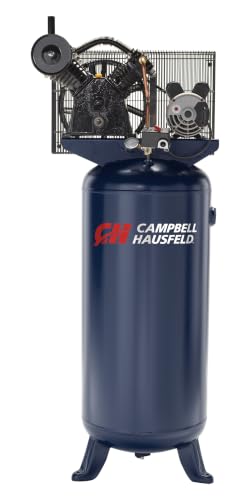
Campbell Hausfeld 60-Gallon Two-Stage Air Compressor
What We Like
- Two-stage cast-iron pump for durability
- High 175 PSI maximum pressure
- Large 60-gallon vertical tank
- Delivers 7.6 SCFM at 90 PSI
Trade-offs
- Requires a dedicated 230V electrical circuit
- At 255 lb, it is a permanent stationary tool
- 77-inch height demands significant vertical clearance
The 7.6 SCFM at 90 PSI is the key figure here. It means this compressor can reliably run demanding impact wrenches and sanders without constant cycling, keeping your work flowing smoothly. Its two-stage cast-iron pump is built for the long haul, making it the right fit for a busy home workshop or a small professional garage where tools are used daily. You get the steady, high-volume air that serious pneumatic tools crave.
The trade-off is commitment. At 255 pounds and 77 inches tall, this is a permanent shop fixture. You’ll also need an electrician to wire the dedicated 230-volt circuit it requires. For a user who needs serious air but more mobility, the DEWALT 27-Gallon Portable Air Compressor offers a wheeled, self-contained solution, though with a smaller tank and lower air volume.
Ingersoll Rand 2340N5-V Two-Stage Air Compressor
What We Like
- Durable cast iron construction for long life
- 14.3 CFM provides ample air for demanding tools
- 80-gallon tank sustains heavy, continuous use
- 100% continuous duty rating for non-stop operation
Trade-offs
- Weighs 435 pounds, requiring permanent installation
- Stationary design offers no portability
Ingersoll Rand’s two-stage pump delivers 14.3 cubic feet of air per minute at 90 PSI, which means it can run multiple high-demand tools like impact wrenches or a large sandblaster without a drop in pressure. The 80-gallon ASME tank provides a massive reservoir of air, making it suitable for a busy professional shop where tools are running constantly. Its durable cast iron construction is designed for extended pump life, speaking to a build meant for the long haul.
At 435 pounds, the Ingersoll Rand 2340N5-V is a permanent shop fixture rather than a portable unit. It suits users who need industrial-grade air volume and have the dedicated floor space for it. Compared to the more portable DEWALT 27-Gallon model, this compressor’s performance justifies the room it occupies.
DEWALT 27-Gallon Portable Air Compressor

What We Like
- Low 78 dBA operation for a quiet workspace.
- Oil-free pump for minimal routine maintenance.
- 5.1 SCFM at 90 PSI runs most impact wrenches.
- Low voltage motor start for reliable power-up.
Trade-offs
- At 136 pounds, it's a two-person lift for transport.
- Vertical 54.5-inch height requires significant headroom.
- 5.1 SCFM may require pauses with high-demand tools.
At 78 dBA, this compressor is quiet enough for indoor use without disturbing others. Its 27-gallon tank and 5.1 SCFM at 90 PSI deliver a strong, steady airflow for extended tool use, while the oil-free pump eliminates the need for routine maintenance.
The trade-off for that quiet, capable air is a substantial physical footprint. You need the floor space for its vertical design and a plan for moving its 136-pound bulk. For a shop where it will live in one corner, that’s fine. But if you need to haul your air to different job sites, a more compact unit like the Makita MAC2400 offers a smaller footprint, though it won’t hold as much air.
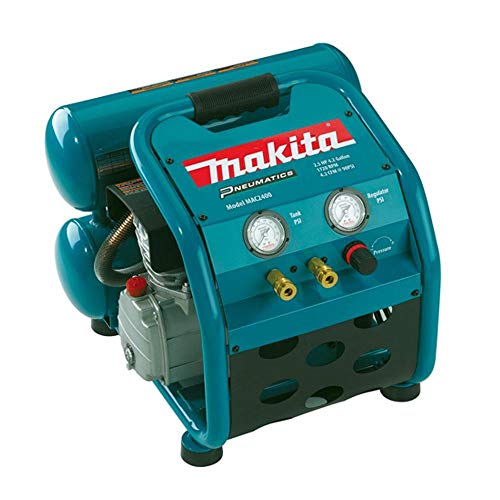
Makita MAC2400 Big Bore Air Compressor
What We Like
- Big Bore cast iron pump for faster recovery
- Roll-cage protects against jobsite damage
- Low AMP draw reduces breaker trips
- Oil lubrication minimizes wear and heat
Trade-offs
- Oil-lubricated pump requires periodic maintenance
- Weighs more than smaller portable compressors
A 4.2 CFM airflow at 90 PSI, delivered by its Big Bore pump, allows this compressor to handle demanding tools like an impact wrench with a strong recovery rate. Its roll-cage and cast iron construction provide complete protection for extreme jobsite environments, making it suitable for transport in a work truck. The low AMP draw reduces incidences of tripped breakers at start-up.
The emphasis on a durable, oil-lubricated cast iron pump and protective roll-cage prioritizes longevity over maximum air storage. A larger portable unit like the DEWALT 27-Gallon offers greater air capacity. This Makita model is engineered for demanding sites where its faster recovery time supports serious tool use in bursts.
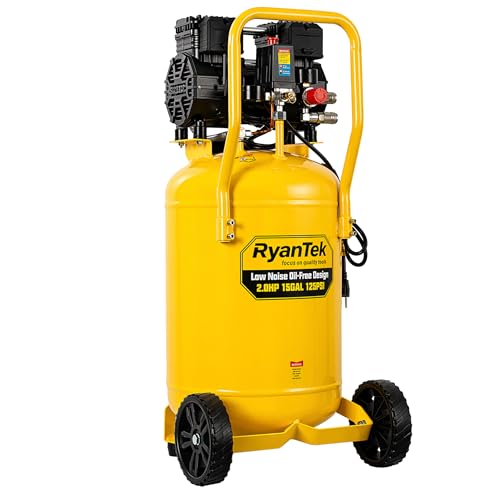
RyanTek 15-Gallon Quiet Air Compressor
What We Like
- Exceptionally quiet 66 dBa operation for indoor use
- Vertical tank design with wheels for easy mobility
- Oil-free pump delivers clean air for painting
- Dual outlets and upward-facing gauge for convenient setup
Trade-offs
- Weighs 68.3 pounds
- Maximum pressure is 125 PSI
Operating at 66 dBa, this compressor runs quietly enough for indoor or sensitive tasks without disturbing a household. Its vertical 15-gallon tank has a compact footprint with integrated wheels and a handle, which allows for easy moving around a workspace. The 4.5 CFM at 90 PSI airflow supports continuous use with nail guns, spray painting, and inflation applications.
The 4.5 CFM airflow is suited for applications like nail guns, inflation, and spray painting. For tools requiring higher continuous airflow, a larger unit like the 60-gallon Campbell Hausfeld would be necessary. The 2HP motor and 15-gallon tank are designed to reduce motor cycling for common pneumatic tools.
Metabo HPT 6-Gallon Pancake Air Compressor

What We Like
- 200 PSI offers high pressure for demanding tools.
- 4 CFM at 90 PSI can run multiple nailers.
- 41-pound weight is highly portable for a 6-gallon unit.
- Pancake design provides a stable, low-profile footprint.
Trade-offs
- 6-gallon tank refills often under heavy, continuous use.
- 4 CFM is insufficient for high-demand impact wrenches or sanders.
Weighing only 42 pounds, this compressor is 22% lighter than traditional twin-stack models, making it easy to transport from a truck to a rooftop or into a tight crawlspace. Its 200 PSI tank offers 25% more pressure than a basic pancake compressor, providing consistent performance for heavy-duty tasks. The unit can simultaneously run two framing nailers or three finish nailers, allowing a carpenter or remodeler to keep multiple crews productive without wrestling a heavier compressor up a flight of stairs.
Its continuous air supply is limited by the 4 CFM delivery and small tank. You will wait for recovery if you try to run a high-torque impact wrench or a die grinder. For those tools, a model with a larger reserve like the DEWALT 27-Gallon Portable Air Compressor is a better fit. This Metabo HPT unit excels at running nail guns across a job site, not at sustained high-demand tasks.
Product photos
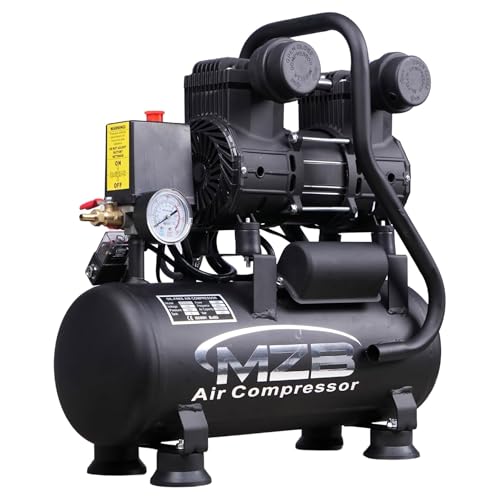
MZB AIR COMPRESSOR MZB-850H-9-NEW Air Compressors
What We Like
- Extremely fast 28-32 second tank fill time
- Quiet 70 dB operation with dual silencers
- Oil-free motor avoids contamination for clean air
Trade-offs
- Small 2.4-gallon tank limits sustained tool use
- 5.65 CFM may struggle with high-demand impact wrenches
Filling its tank in under half a minute gets you back to work quickly after using air, a major advantage for tasks with frequent stops and starts. That fast recovery pairs with an exceptionally quiet 70-decibel operation, which means you can use it in shared spaces without disruptive noise. The oil-free motor design avoids the mess and maintenance of checking or changing lubricant, keeping your work area and projects clean.
The 2.4-gallon steel air storage tank provides a reservoir for short bursts of air, but its capacity is smaller than many portable compressors like the 27-gallon DEWALT or the 15-gallon RyanTek. This makes the unit best suited for intermittent use with tools that don’t demand a continuous high volume of air. Its compact size and weight support this role, as it’s designed to be easily carried to different job sites.
Product photos
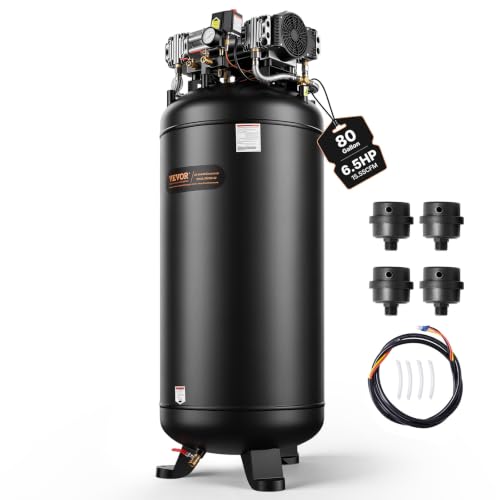
VEVOR 80-Gallon Stationary Air Compressor
What We Like
- Massive 80-gallon tank for extended runtime
- High 15.5 SCFM output runs demanding tools
- Oil-free pump reduces maintenance needs
- Sturdy cold-rolled steel tank construction
Trade-offs
- Requires dedicated 220V single-phase power hookup
- 86 dB operation is louder than many quiet models
With an air delivery of 15.5 SCFM at 90 PSI, this compressor can supply the volume needed for demanding tools like sandblasters. Its 80-gallon capacity provides a large reservoir of air for extended tasks. The oil-free pump design simplifies maintenance for users who want to avoid checking and changing lubricant, making it suited for a serious workshop.
Its large size and electrical requirements are significant, needing a dedicated 220-volt circuit and a permanent shop floor location. Compared to a more compact two-stage unit like the Campbell Hausfeld 60-Gallon, the VEVOR offers more air reserve and a simpler oil-free design, but it operates at a lower maximum pressure. Your choice depends on prioritizing high air volume and low maintenance over ultimate pressure and portability.
Product photos
Ingersoll Rand P1.5IU-A9 20-Gallon Air Compressor

What We Like
- Heavy-duty handle and semi-pneumatic tires for portability
- Low 80 dBA noise level for quieter operation
- Long 2000-hour lubricant change interval
- Durable cast iron cylinder and frame construction
Trade-offs
- At 200 pounds, it requires a strong person to maneuver on its wheels
- Its 45-inch length demands significant floor space
With a 20-gallon tank and 100% continuous duty cycle, this compressor is designed for tough applications where consistent air delivery is required. The Ingersoll Rand P1.5IU-A9 is built for users who need steady air in a fixed workshop location but still want the option to move it, thanks to its semi-pneumatic tires and heavy-duty handle. Its synthetic lubricant and durable cast iron cylinder signal a focus on longevity, making it a solid pick for serious DIYers or light professional shop work.
The trade-off for that sturdiness is heft. While it rolls on semi-pneumatic tires, its 200-pound weight makes it more suitable for shop mobility than jobsite transport. For work requiring frequent relocation, a lighter unit like the 136-pound DEWALT 27-Gallon would be easier to move. However, if your primary workspace is a garage or shop, this compressor’s design provides reliable operation in that environment.
Product photos
Makita MAC700 Big Bore Air Compressor

What We Like
- Cast iron pump with big bore design for durability
- Oil lubrication for cooler running and reduced wear
- Low amp draw reduces breaker trip risk
- Lower noise from large, slower RPM pump
Trade-offs
- At 61 pounds, it's heavier than many portable compressors.
- Oil-lubricated design requires periodic maintenance.
At its core is a cast iron, oil-lubricated pump designed to run cooler and minimize wear, a setup focused on durability for demanding shop tasks. The big bore cylinder and piston deliver greater displacement at a lower 1,720 RPM, which contributes to the unit’s substantially lower noise levels during operation. Weighing 61 pounds with dimensions placing it between smaller pancake and large stationary models, it offers a portable but substantial air source for users prioritizing long-term reliability over minimal weight.
That durability comes with a 61-pound weight, making it a two-person lift rather than a truly lightweight portable. The oil-lubricated system requires periodic maintenance, unlike oil-free alternatives such as the RyanTek. The low amp draw is engineered to reduce incidences of tripped breakers, a consideration for workshop electrical circuits.
Product photos
How We Evaluated Air Compressors For Impact Tools
This guide is based on manufacturer specifications, expert analysis, and patterns in owner feedback. Technical data such as SCFM output, maximum PSI, and tank capacity were compared against the known requirements for running impact wrenches and other air tools. Durability indicators like pump construction and duty cycle were prioritized.
Key criteria were airflow (CFM/SCFM at 90 PSI), tank size for sustained use, noise level for workshop comfort, and practical portability. We also weighed electrical requirements, as many high-output models need 230V service. A research-led approach has limits: we can’t verify long-term reliability or real-world noise in every environment, but we focused on consistent, reportable performance factors.
What To Look For In Air Compressors For Impact Tools
Air impact wrenches need a steady supply of high-pressure air. A compressor that’s too small will stall on tough bolts, while an oversized one may be impractical. Focus on the tool’s air appetite first.
Match your compressor’s CFM output to your impact wrench’s requirement, with extra capacity for sustained use. Consider tank size for runtime, noise for your workspace, and voltage/power needs.
Airflow (CFM/SCFM)
This is the most critical specification. Your compressor must deliver more Cubic Feet per Minute (CFM or SCFM) at 90 PSI than your impact wrench consumes. A typical half-inch impact wrench needs around four to five CFM, but high-torque models demand more. For reliable, continuous use without pausing for the tank to refill, experts recommend choosing a compressor with an output significantly higher than your tool’s requirement. This is the core of determining the right size air compressor you need.
Tank Size & Pressure
Tank capacity, measured in gallons, determines how long you can run the tool before the compressor motor activates to refill it. A larger tank provides longer runtime for high-torque applications, reducing cycle fatigue on the motor. Maximum pressure (PSI) is also vital; most impact wrenches operate best at 90 PSI. A compressor with a higher maximum PSI gives you more adjustment headroom and can help maintain pressure as the tank empties.
Practical Considerations
Noise level, measured in decibels (dBA), matters for home garages or shared spaces. Quieter compressors are much less disruptive. Portability, including weight, wheels, and handles, is key if you move the unit. Finally, check the power source: smaller compressors plug into standard household outlets, while larger, more powerful models often require a dedicated 230-volt circuit.
- Check the tool’s manual or spec sheet for its required CFM at 90 PSI.
- Ensure your workshop’s electrical system can support the compressor’s voltage and amperage draw.
- Listen to online sound tests to gauge real-world noise if dB ratings are provided.
For a 1/2-inch impact wrench, start by looking for a compressor that delivers at least 5-6 SCFM at 90 PSI.
Air Compressors For Impact Tools Compared
The table below compares key specifications across our picks to help you see the differences in air delivery, tank capacity, and noise at a glance.
| Product | Tank Capacity | Air Delivery @ 90 PSI | Motor Power |
|---|---|---|---|
| Campbell Hausfeld 60-Gallon Two-Stage Air Compressor | 60 gallons | 7.6 SCFM | 3.7 running HP |
| Ingersoll Rand 2340N5-V Two-Stage Air Compressor | 80-gallon | 14.3 CFM @ 90 PSI | 5 HP |
| DEWALT 27-Gallon Portable Air Compressor | 27 gallons | 5.1 SCFM @ 90 PSI | 1.7 HP |
| Makita MAC2400 Big Bore Air Compressor | N/A | 4.2 CFM at 90 PSI | 2.5 HP |
| RyanTek 15-Gallon Quiet Air Compressor | 15 gallons | 4.5 CFM at 90 PSI | 2HP |
| Metabo HPT 6-Gallon Pancake Air Compressor | 6 gallons | 4 CFM at 90 PSI | N/A |
| MZB AIR COMPRESSOR MZB-850H-9-NEW Air Compressors | 2.4 gallons | 5.65 CFM @ 115 PSI | 1.2HP |
| VEVOR 80-Gallon Stationary Air Compressor | 80 gallons | 15.5 SCFM @ 90 PSI | 6.5 HP |
| Ingersoll Rand P1.5IU-A9 20-Gallon Air Compressor | 20 gallons | N/A | 2 HP |
| Makita MAC700 Big Bore Air Compressor | N/A | N/A | 2.0 HP |
Frequently Asked Questions
What is the best air compressor for using an impact wrench?
The best compressor depends on your use. For a serious home garage running a 1/2-inch wrench frequently, a two-stage unit like our best overall, the Campbell Hausfeld 60-Gallon, provides high pressure and ample air. For contractors needing portability, the Makita MAC2400 pancake offers durability, while the Metabo HPT 6-Gallon is a lightweight option for lighter duty.
What size air compressor do you need for an impact?
You need a compressor whose CFM output at 90 PSI meets or exceeds your impact wrench’s requirement. For a common 1/2-inch wrench needing ~5 CFM, a compressor delivering at least 5-6 SCFM is a good start. A larger tank (20+ gallons) supports sustained use, whereas a small tank may require frequent pauses.
How much PSI is needed to run an impact wrench?
Most pneumatic impact wrenches are designed to operate optimally at 90 PSI. While they can often function at lower pressures, torque output drops significantly. A compressor with a maximum pressure of at least 125 PSI ensures you can maintain that 90 PSI at the tool effectively, even as the tank pressure dips during use.
Is a 6 gallon air compressor enough for an impact gun?
It can be, but with limitations. A 6-gallon compressor like the Metabo HPT model can run a 1/2-inch impact wrench for short bursts, like removing lug nuts. However, the small tank will refill often during continuous use, such as disassembling an engine. It’s best for intermittent tasks, not prolonged, high-demand work.
Should I choose a cordless or pneumatic impact wrench?
This debate, the cordless vs pneumatic choice, hinges on your needs. Pneumatic wrenches, powered by a capable compressor, typically offer higher sustained torque and longer tool life. Cordless models provide ultimate portability and convenience where air isn’t available, but require battery management. For a fixed workshop, pneumatic often wins.
The Bottom Line
For the serious home mechanic or small shop, the Campbell Hausfeld 60-Gallon Two-Stage Air Compressor is the best overall choice, delivering the high-pressure, high-volume air needed to run impact tools without hesitation. If your budget or space is tighter, consider the durable Makita MAC2400 for job-site portability or the quiet RyanTek 15-Gallon for a home workshop.
Before buying any compressor, check the CFM requirements of your specific impact wrench. Matching the tool’s air hunger to the compressor’s output is the single most important step to avoid frustration and get the job done right.
