
10 Best Automotive Buffers in 2026
This post contains affiliate links. As an Amazon Associate, we earn from qualifying purchases.
Our best overall automotive buffer is the Griot’s Garage G9 Random Orbital Polisher for its powerful 1000W motor and smooth, fan-cooled operation. We also recommend the complete Chemical Guys TORQX kit for great value and the low-vibration Rupes LHR 15ES for professional comfort. Choosing the right tool depends on your car’s condition, your available power sources, and the specific areas you need to polish. This guide is based on research into manufacturer specifications, expert recommendations, and owner feedback patterns to help you find a reliable buffer that fits your project.
Top 10 Automotive Buffers in the Market
Certain content that appears on this site comes from Amazon. This content is provided "as is" and is subject to change or removal at any time.
The Best Automotive Buffers, Reviewed
Griot's Garage G9 Random Orbital Polisher

What We Like
- Powerful 1000W motor for effective paint correction.
- Ergonomic design with double-shot rubber grip.
- Smooth fan-cooled counterbalance prevents bogging.
- Convertible to a 5-inch pad system.
Trade-offs
- Not suited for tight spaces without a smaller polisher.
A 1000-watt motor paired with a 9mm orbit throw gives you the muscle to tackle serious swirls and oxidation without sacrificing the smooth, controlled finish of a dual-action polisher. This makes it the right tool for someone who wants professional-grade correction capability in a package that’s still manageable for a dedicated DIYer. The well-balanced, 5.2-pound design and contoured grip mean you can work a full hood or door panel without your arms giving out halfway through.
The trade-off for that reliable power is being tethered to an outlet, so it’s not the tool for a quick spot correction in a dark garage. For a completely cord-free workflow, you’d look at a dedicated cordless model like the Niusken kit, but you’d be giving up the consistent torque this G9 delivers under pressure. It strikes a pragmatic balance between raw capability and user comfort that’s hard to beat for general paint correction.
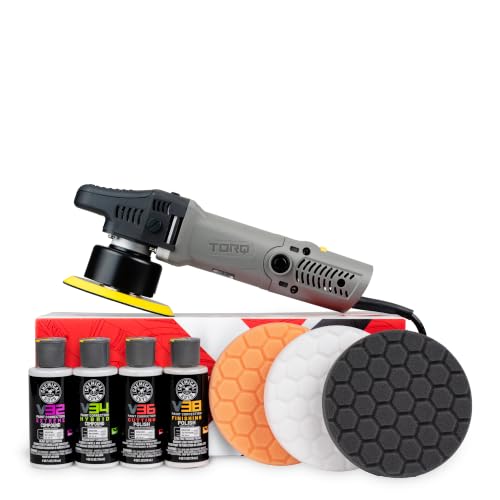
Chemical Guys TORQX Random Orbital Polisher Kit
What We Like
- Complete 9-piece kit includes all essential pads and polishes
- Ergonomic design and balanced weight for comfortable extended use
- Effective for removing light scratches, swirls, and oxidation
Trade-offs
- At 8.6 pounds, it's heavier than some dedicated polishers like the Griot's G9
- The 8mm throw is less aggressive than long-throw models for heavy correction
- Kit format includes specific Chemical Guys pads and polishes
This makes the TORQX a solid choice for the DIYer who wants to step up from hand polishing without a steep learning curve.
At 8.6 pounds, the polisher carries noticeable weight during extended use, a trade-off for its complete kit format. While the included pads and polishes are ready to use, the unit itself is heavier than some dedicated polishers like the 5.2-pound Griot’s G9. For someone detailing their own vehicles periodically, the TORQX delivers a professional-grade finish with the convenience of an all-in-one solution.
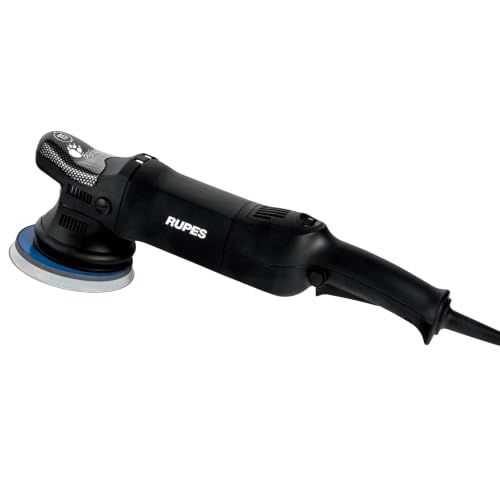
Rupes LHR 15ES Big Foot Polisher
What We Like
- Variable speed dial is handy and easy to use.
- Silent operation with remarkably low vibration.
- Soft start prevents accidental product dispersion.
- Anti-spinning feature avoids high-speed scratches.
Trade-offs
- At 21.0 inches long, it is a large tool for tight spaces.
- Corded design limits mobility compared to cordless options.
A 500-watt motor with electronic feedback control maintains constant speed in all applications, which provides consistent power for paint correction. This is paired with a design noted for silent operation and minimum vibration, a combination that reviewers report is suited for professionals spending hours on the task. The soft start guarantees an acceleration ramp to prevent accidental dispersion of product during initial use.
The tool measures 21.0 inches in length, a size that can be less suited for small panels compared to more compact models like the Griot’s Garage G8. For large, flat surfaces, the anti-spinning feature prevents high-speed rotations to avoid scratches. The variable speed dial allows the operator to control the speed even while the tool is operating.
SPTA Cordless Mini Polisher

What We Like
- Cordless, 12V design for complete portability.
- Compact 2.4-inch body fits into extremely tight spots.
- Includes extensive kit of pads and accessories.
Trade-offs
- Smaller backing plates limit work speed on large panels.
- Primarily designed for detail work, not whole-car correction.
Its cordless 12V design and compact size allow this polisher to reach areas where larger, corded machines cannot. This makes it suitable for polishing around emblems, along body lines, and in other tight spaces without needing an extension cord. The included kit contains multiple small backing plates and many polishing pads in 25mm, 50mm, and 76mm sizes, providing the accessories needed for confined-area work.
The machine’s maximum pad size is 76mm, which covers less surface area than the standard 6-inch pads used on larger polishers. This means working on large panels like hoods or roofs would take more time compared to using a full-size tool. According to comparisons with other products, models like the Griot’s Garage G9 Random Orbital Polisher are designed for those bigger surfaces.
Product photos
Porter-Cable 7424XP Polisher

What We Like
- Swirl-free random orbital polishing action.
- Wide 2,500-6,800 OPM variable speed dial.
- Includes proprietary counterweight for smooth operation.
- Moderate 5.8-pound weight aids control.
Trade-offs
- AC-only power requires a nearby outlet.
- Heavier than the 5.2-pound Griot's Garage G9.
- Proprietary counterweight limits pad compatibility.
A true random orbit ensures swirl-free sanding and polishing, which is the core reason a detailer chooses a dual-action machine. Its variable speed dial provides control from 2,500 OPM for spreading wax up to 6,800 OPM for working with cutting compounds. The included 5-inch counterbalance is engineered specifically for 6-inch pads, keeping the machine stable during operation.
Operation requires an outlet as the motor is AC-only, limiting mobility around a vehicle without extension cords. At 5.8 pounds, its weight is manageable but greater than some cordless models like the 5.2-pound Griot’s Garage G9. This design prioritizes consistent power from a wall outlet over cordless convenience for quick spot repairs.
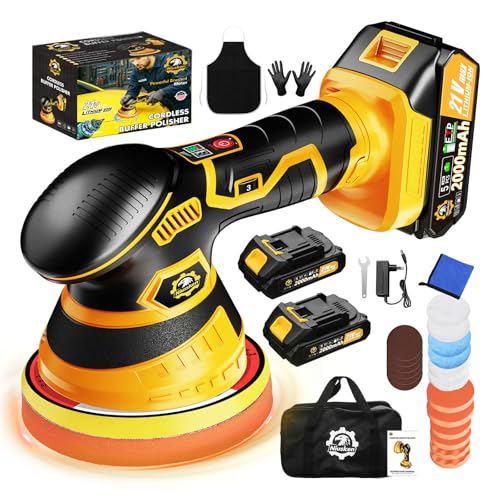
Niusken Cordless Car Buffer Polisher Kit
What We Like
- Cordless design with two batteries for extended runtime.
- Exceptionally lightweight at 3.3 lbs for easy maneuvering.
- Six speed levels with clear LED display for control.
- Comprehensive accessory kit for multi-surface use.
Trade-offs
- Overheat protection may trigger after 20 minutes of high-speed use.
- 21V battery system is proprietary, not compatible with DeWalt.
Two included 21V batteries and a cordless design free you from outlet hunting, a major advantage for quick jobs in the driveway or around a boat. Combined with a weight of just 3.3 pounds, this setup is genuinely beginner-friendly, reducing arm fatigue during a first detail. The extensive kit of pads and bonnets means you can tackle polishing, waxing, and even light sanding right out of the box. For the DIYer wanting to avoid cord management on a budget, this package delivers notable convenience.
The cordless design and 3.3-pound weight mean you can move around a vehicle freely without managing a power cord, a clear advantage over heavier corded polishers. Its pure copper brushed motor and random orbital mechanism are intended to produce smooth, swirl-free finishes, which suits beginners learning proper technique. Two included 21V batteries allow extended operation, though the system uses a proprietary design that does not work with common DeWalt batteries.
Product photos
Griot's Garage G8 Mini Orbital Polisher

What We Like
- Small frame for tight contours
- 700-watt motor prevents bogging down
- Ergonomic grip with rest pads
- Includes both 2-inch and 3-inch plates
Trade-offs
- Requires a 14mm wrench for brush maintenance
- Designed only for small-area work
The 8mm orbit and compact body are built for agility, letting you maneuver around mirrors, door handles, and complex body curves without sacrificing the 700-watts needed to correct paint. This polisher suits anyone whose work involves more intricate surfaces than broad panels, where a larger tool would be clumsy. Its dual backing plates and six speed settings give you the control to match the pad size and abrasive to the job at hand.
The trade-off is clear: you gain precision but lose the coverage of a larger machine. For a full hood or roof, you’d spend considerably more time than with a tool like the Griot’s Garage G9. The G8 is a specialist. It excels in the spots where bigger polishers simply can’t fit, making it the logical second polisher for a detailed finish or the primary tool for someone focused on motorcycles, tight restorations, or spot repairs.
FLEX PXE 80 Cordless Multi-Polisher

What We Like
- Quick-change system for rotary and orbital modes
- Extremely lightweight at just 1.4 pounds
- Vibration optimization for smoother operation
- Ergonomic design with multiple grip options
Trade-offs
- Compact size limits pad size for large panels
The ability to switch between rotary and random orbital action with a quick-change system makes this a true workshop multi-tool. At 1.4 pounds, it’s exceptionally light, reducing fatigue during long sessions on tight spots or curved panels. This makes it a perfect fit for detailers and finishers who need one tool for everything from spot sanding to final polishing without creating holograms. The continuous speed trigger and constant speed control offer the finesse required for high-end paint correction.
The FLEX PXE 80’s cordless, compact design makes it highly maneuverable for tight spaces and spot repairs, a clear advantage over bulkier corded tools. Its quick-change system allows a single tool to switch between rotary and random orbital motions, providing flexibility for different finishing tasks. This multi-polisher is positioned as an ideal complement for vehicle finishers and the spot repair area.
Product photos
WORKPRO Dual Action Random Orbital Polisher

What We Like
- High-wattage motor for demanding polishing
- Wide 1400-5000 RPM variable speed range
- Includes auxiliary handle for control
- Comprehensive kit with multiple pads
Trade-offs
- At 7.4 lb, it's heavier than the Porter-Cable 7424XP
- Corded design limits mobility versus cordless models
Its 1080-watt motor provides substantial power for demanding tasks like compounding, reducing the chance of stalling under pressure. This makes the polisher suitable for users who need consistent performance for frequent correction work on vehicles or other surfaces. The included kit contains multiple pads and tools, allowing immediate use on a variety of materials from metal to wood.
At 7.4 pounds, this polisher is heavier than some models like the 5.8-pound Porter-Cable 7424XP, which can increase arm fatigue during extended sessions or overhead work. Its corded design requires access to a power outlet, limiting mobility compared to cordless options. The weight and power cord make it better suited for stationary projects in a garage rather than highly mobile operations.
Product photos
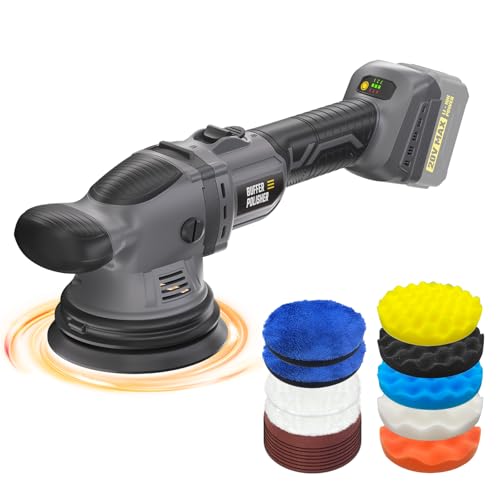
VERVEWAVE Cordless Buffer for DeWalt
What We Like
- Compatible with existing DeWalt 20V battery ecosystem
- Brushless motor for more power and longer life
- Lock switch prevents accidental startup
- Eccentric orbital design for uniform, safe polishing
Trade-offs
- Tool only: requires separate DeWalt battery and charger
- No corded power option limits runtime flexibility
Its direct compatibility with the DeWalt 20V battery platform is the main event here. If your workshop is already running on that system, this buffer lets you leverage those batteries for a cordless polishing job, eliminating the cord and offering genuine portability. The brushless motor paired with a DeWalt pack should deliver solid, consistent power for waxing and correcting moderate defects, making it a logical add-on for a DeWalt user looking to expand their tool kit.
The trade-off is that you’re buying into a closed system. Without a battery, it’s a paperweight, so its value hinges entirely on your existing DeWalt investment. For a dedicated, all-day detailing session, its runtime is tethered to your battery inventory, unlike a corded workhorse like the Porter-Cable 7424XP. It fits neatly between a full-sized corded polisher and a ultra-compact like the SPTA Mini, offering more heft and pad size than the mini but requiring that battery commitment.
Product photos
How We Evaluated Automotive Buffers
This guide compares specifications from manufacturers and documented performance from expert round-ups. It prioritizes motor power for effective paint correction, ergonomic design details like grip type and weight for user comfort, and a tool’s versatility across different pad sizes. Specific features like vibration control and cordless convenience are also considered based on patterns in owner feedback. This approach identifies the key specifications and reported performance that distinguish capable buffers from average ones.
What To Look For In Automotive Buffers
Selecting the right buffer involves balancing power, control, and the specific tasks you need to accomplish. A tool that excels at large, flat panels may struggle with tight contours, and a powerful corded model offers different benefits than a lightweight cordless one.
Key factors are motor power (measured in watts) for cutting ability, the orbital throw (in millimeters) for correction speed, and whether a corded or cordless design suits your workspace. Weight and grip design directly impact fatigue, and pad compatibility determines your finishing options.
Power Source & Motor
Corded buffers provide consistent, unlimited power, which is critical for extended paint correction sessions on large vehicles. They often feature high-wattage motors, like the 1000W unit in our best overall pick, for demanding work. Cordless models offer complete portability, ideal for mobile detailers or working far from an outlet, but require managing battery life. The best cordless buffers balance runtime with sufficient power to prevent the pad from bogging down on the paint.
Design & Ergonomics
A buffer’s physical design dictates both comfort and capability. Weight is a primary factor; a lighter tool like a 3.3-pound cordless model reduces arm fatigue, while a heavier one can feel more stable. The grip shape and inclusion of a secondary handle, like on the WORKPRO, improves control.
For working on large panels, a longer body provides leverage, but a compact design like the Griot’s G8 is essential for mirrors and pillars. Smooth operation is also key, which is why we highlight models with features like a fan-cooled counterbalance or remarkably low vibration.
Pad System & Versatility
The backing plate size and attachment system determine which pads you can use and, therefore, the jobs you can tackle. A standard 5-inch or 6-inch plate is versatile for most bodywork, while a 2-inch or 3-inch plate is needed for detail areas. Look for a common hook-and-loop (Velcro) system for the widest pad compatibility. Some polishers, like the FLEX PXE 80, offer a quick-change system for switching between orbital and rotary modes, adding professional flexibility for spot repair.
- Check the throw measurement: a longer throw (like 15mm) corrects paint faster than a shorter one.
- Ensure the tool’s included backing plate matches the pad sizes you plan to use most often.
- Verify that replacement pads for your chosen system are readily available.
- Consider kits that include a range of pads and polishes to start a project immediately.
Match the tool’s size and power to your most common task; a dedicated mini polisher is a better investment than an overpowered large tool if you mainly work on tight spots.
Automotive Buffers Compared
For a quick view of how these top buffers compare on key specifications, see the table below.
| Product | Motor Power | Speed Settings | Weight |
|---|---|---|---|
| Griot's Garage G9 Random Orbital Polisher | 1000 watts | 6 (2000-6400 OPM) | 5.2 pounds |
| Chemical Guys TORQX Random Orbital Polisher Kit | 800W | N/A | 8.6 pounds |
| Rupes LHR 15ES Big Foot Polisher | 500 watt | Variable dial | 0.0 Pounds |
| SPTA Cordless Mini Polisher | N/A | 2000-4500 OPM | 4.3 Pounds |
| Porter-Cable 7424XP Polisher | 4.5 Amp | 2500-6800 OPM | 5.8 pounds |
| Niusken Cordless Car Buffer Polisher Kit | N/A | 2800-5800 RPM | 3.3 lbs |
| Griot's Garage G8 Mini Orbital Polisher | 700-watt | 6 variable | N/A |
| FLEX PXE 80 Cordless Multi-Polisher | N/A | four speed stages | 1.4 pounds |
| WORKPRO Dual Action Random Orbital Polisher | 9 Amp, 1080W | 5000 RPM | 7.4 pounds |
| VERVEWAVE Cordless Buffer for DeWalt | N/A | 1800-5500 RPM | 5.3 pounds |
Frequently Asked Questions
Who makes the best car buffers?
Brands like Griot’s Garage, Rupes, and FLEX are consistently highlighted for building high-performance, durable buffers favored by professionals. For DIYers, Porter-Cable and Chemical Guys offer reliable and user-friendly models that deliver excellent results. The “best” brand ultimately depends on your specific needs, budget, and whether you prioritize raw power, cordless freedom, or minimal vibration.
What is the best buffer to use on a car?
For most car owners, a dual-action random orbital polisher is the best and safest choice. This style rotates and oscillates simultaneously, which greatly reduces the risk of burning through the paint compared to a pure rotary buffer. Our top picks, like the Griot’s G9 and Porter-Cable 7424XP, use this safe, swirl-free action while providing enough power for effective correction.
What is the difference between a car buffer and a polisher?
The terms are often used interchangeably, but there is a technical distinction. A “buffer” traditionally refers to a tool used to apply and spread wax or glaze to enhance shine. A “polisher” is typically a more powerful tool designed for paint correction, removing scratches, swirls, and oxidation. Modern dual-action random orbital tools effectively combine both functions, allowing you to polish and then apply a finishing wax or sealant.
What is the best automotive buffing compound?
The best compound depends on the severity of the defects you’re correcting. For heavy scratches and oxidation, a more abrasive cutting compound is needed. For light swirl marks, a fine polishing compound is sufficient. It’s often best to start with the least aggressive compound and pad combination and step up only if needed. Many kits, like the one from Chemical Guys, include matched compounds and pads designed to work safely together.
Should a beginner use a rotary or dual-action polisher?
Beginners should always start with a dual-action (DA) polisher. Its random orbital motion is inherently safer, making it very difficult to damage your car’s clear coat. A rotary polisher spins on a single axis and requires significant skill to avoid creating holograms or burning the paint. You can learn the difference between DA and rotary polishers as you gain experience, but a DA tool is the recommended starting point.
The Bottom Line
Our best overall pick is the Griot’s Garage G9 Random Orbital Polisher for its powerful, smooth operation and ergonomic design. It works well for both DIYers and professionals doing paint correction. If you’re on a budget or want a complete starter kit, the Chemical Guys TORQX provides tremendous value. The Rupes LHR 15ES is worth the premium for professionals who demand the lowest vibration during long sessions.
Before you choose, honestly assess your workspace. If you have easy access to power outlets, a corded model offers uncompromising performance. If you need to work anywhere or hate managing a cord, a capable cordless polisher is a worthwhile investment. The right tool makes achieving a showroom shine not just possible, but enjoyable.
