
10 Best Band Saw Blades For Cutting Steel in 2026
This post contains affiliate links. As an Amazon Associate, we earn from qualifying purchases.
Our best overall band saw blade for cutting steel is the Lenox Diemaster 2 Vari-Raker for its versatile Vari-tooth design that handles both general-purpose and contoured work. For portable saw users, the DEWALT 3-Pack offers excellent durability, while the Milwaukee Extreme Thick Metal Blade is the top choice for cutting tough stainless steel.
Picking the wrong blade can lead to stripped teeth, poor cuts, and wasted money. You need a blade matched to your saw type, the metals you cut, and your typical workpiece thickness.
Top 10 Band Saw Blades For Cutting Steel in the Market
Certain content that appears on this site comes from Amazon. This content is provided "as is" and is subject to change or removal at any time.
The Best Band Saw Blades For Cutting Steel, Reviewed
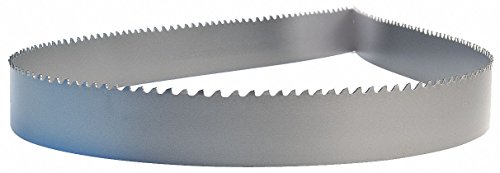
Lenox Diemaster 2 Vari-Raker Band Saw Blade
What We Like
- Vari-tooth design for fast, smooth cuts.
- Bimetal construction cuts steel and nonferrous metals.
- Vari-raker set excels at general-purpose and contoured work.
- Engineered for vertical, hand-fed applications.
Trade-offs
- At 10-14 TPI, it's not the finest tooth count for very thin sheet metal.
- Its 64-inch length fits specific machines, not all portable saws.
Lenox Diemaster 2’s 10-14 TPI vari-tooth design delivers faster cutting rates than a regular tooth pattern, which means it powers through solid shapes, rectangular tubes, and sheets efficiently. Its bimetal construction allows it to cut wood, aluminum, nonferrous metals, carbon steel, alloy steel, tool steel, structural steel, and stainless steel, making it a single blade for diverse materials. Engineered for vertical hand-fed applications, this blade is particularly good for contoured cuts, suiting users who need one reliable option for general-purpose and shape-cutting tasks.
As a general-purpose blade with a vari-raker set, the Diemaster 2 is designed for a wide range of materials and applications rather than a single specialty. Among other products, the Lenox Classic Tuff Tooth is thicker at 0.035 inches, and the Bosch BS6412-24M has a higher 24 TPI count. The Diemaster 2’s combination of tooth pattern and bimetal build aims for a versatile middle ground in mixed-material workshop use.
Product photos
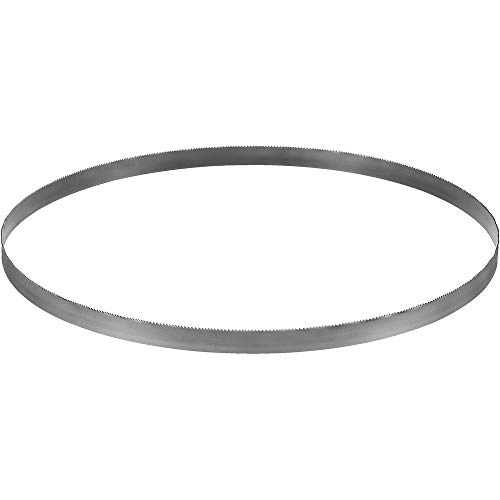
DEWALT Portable Band Saw Blade 3-Pack
What We Like
- Matrix II steel edge for heat resistance
- Alloy steel backer resists fatigue
- High cobalt content adds durability
- Pack of three for extended use
Trade-offs
- 32-7/8-inch length fits only portable saws
- 18 TPI is coarse for thin-wall tubing
The 32-7/8-inch length is the key spec here, locking this blade into the portable band saw category. For anyone regularly cutting steel on a jobsite or moving between projects, this three-pack is a logical choice. The 8% cobalt content and Rc 65-67 tooth hardness are built to withstand the abrasive nature of steel, meaning you’ll get more cuts before the blade dulls. It’s designed for the user who needs durability in a mobile format, not for a stationary shop saw.
With 18 teeth per inch, this blade offers a specific cutting action. The alloy steel backer is included for fatigue resistance, which helps the blade withstand the repeated flexing in a portable tool. For different applications, other products like the Lenox Diemaster 2 or FOXBC blade are available in different lengths and tooth counts.
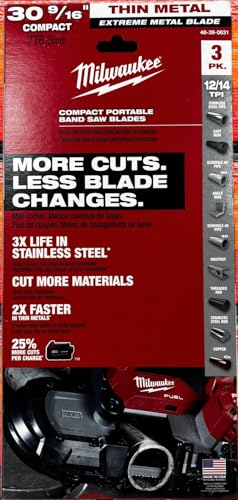
Milwaukee Compact Extreme Thick Metal Blade
What We Like
- Triple the blade life in stainless steel.
- Optimized tooth design for clean cuts.
- Two times faster cutting in thin metals.
- Three-pack reduces downtime for blade changes.
Trade-offs
- 30-9/16-inch length fits only compact portables.
- 12/14 TPI is coarse for thin-wall tubing.
- Not a general-purpose blade for mild steel.
The Milwaukee blade pack claims 3X life in stainless steel and other extreme metals, which means fewer blade changes during long jobs on tough materials. Its optimized tooth design is noted for clean cuts, a practical benefit when finish quality matters. This three-pack suits a shop that frequently handles the demanding cuts mentioned in its performance claims.
The trade-off is its specialization. That 12/14 TPI configuration is aggressive, making it less ideal for delicate work on thin sheet metal. For that, a finer blade like the DEWALT 18 TPI would produce a smoother edge with less risk of snagging. Furthermore, its 30-9/16-inch length locks it into Milwaukee’s own compact portable band saw models, so it’s not a universal fit for larger stationary saws. For a dedicated extreme-metal blade on a compact saw, it’s a premium performer, but you’ll want a different blade for your everyday mild steel stock.
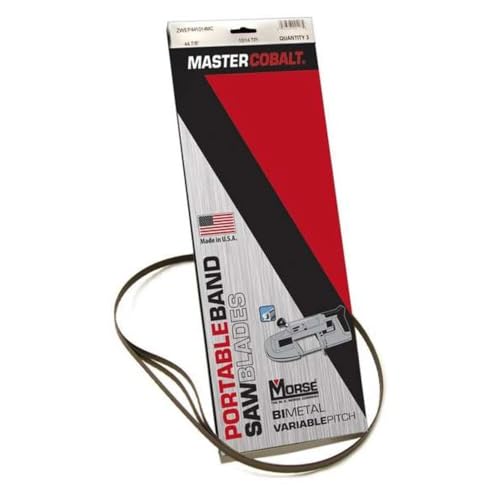
MK Morse Master Cobalt Bi-Metal Blade
What We Like
- Shock-resistant cutting edge for tough metals
- Variable tooth pitch broadens application range
- Reduced vibration for smoother cut finish
- Made in the USA
Trade-offs
- At 44 7/8 inches, length excludes many stationary saws.
The MK Morse Master Cobalt blade features a shock-resistant cutting edge designed for cutting any machinable metal, which helps it withstand demanding portable saw use. Its variable 14/18 TPI pitch is engineered for a broader range of applications compared to a single-pitch blade. Available in a variety of band lengths, it supports most portable band saws, including compact models.
With a length of 44 7/8 inches, this blade is intended for portable band saws, so it will not fit a full-size stationary machine like the 64-inch Lenox Diemaster 2. The design includes a reduced vibration feature for improved cut finish and cutting fatigue. Its thickness is 0.020 inches.
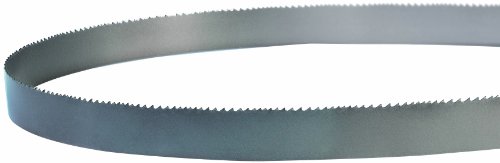
Lenox Classic Tuff Tooth Band Saw Blade
What We Like
- Tuff Tooth design reduces tooth strippage
- M-42 high-speed steel edge for heat and wear resistance
- Wavy set helps prevent stripping on thin workpieces
- Bimetal construction cuts a wide range of metals
Trade-offs
- 0.035-inch thickness requires a compatible, rigid band saw.
- 93-inch length is specific to certain stationary saws.
Its wavy tooth set at 18 TPI is specifically designed to prevent tooth strippage when cutting thin workpieces, addressing a common frustration with more aggressive blades. This Lenox Classic blade is good for cuts in cylindrical solids, rectangular tubes, and structural shapes across various metals. The M-42 high-speed steel tooth edge provides heat and wear resistance, a feature research mentions for multi-purpose production cutting.
The 0.035-inch thick body requires a well-tuned bandsaw for optimal performance. Compared to a shorter, narrower blade with a different tooth set, this model’s design prioritizes preventing strippage in thin materials. It trades a more aggressive cut for finesse on specific profiles.
Product photos
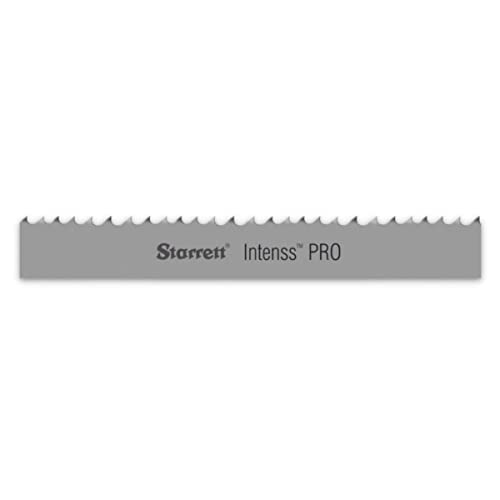
Starrett Intenss PRO Bi-Metal Band Saw Blade
What We Like
- Variable pitch geometry for low noise and smooth cuts
- Positive rake angle for easy penetration and fast cutting
- Wide range of widths and pitches for diverse materials
- Designed for intensive production use and long life
Trade-offs
- At 3/4" wide, it requires a compatible, larger band saw.
- The .035" thickness demands adequate machine tension.
- Specific 7' 9" length limits it to saws that accept it.
The Starrett Intenss PRO is built for intensive production cutting, engineered to handle steels up to HRc 45, tool and stainless steels, and various alloys. Its bi-metal construction and variable pitch tooth geometry provide excellent cutting efficiency for faster, straighter cuts with low noise. This design suits operators who need predictable performance for demanding shop-floor materials.
That focus on production-grade machinery is the trade-off. Its 7′ 9″ length and 3/4″ width won’t fit every saw, particularly smaller benchtop or portable models. For those jobs, a more versatile option in shorter lengths and narrower widths might be the smarter shop staple. The Intenss PRO excels when your saw can handle it and your work demands its relentless pace.
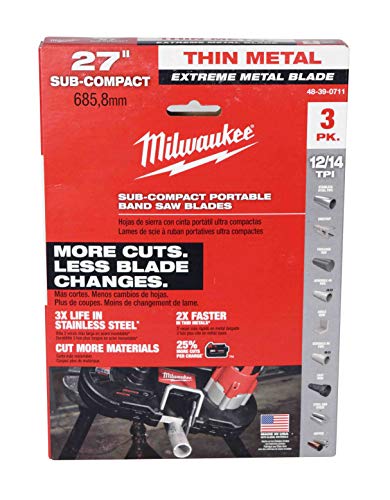
Milwaukee Extreme Thin Metal Band Saw Blade
What We Like
- Longer blade life in extreme metals
- Optimized tooth design for clean cuts
- Reduces frequency of blade changes
- Versatile across various metal thicknesses
Trade-offs
- No TPI specification provided for fine-tuning cuts
The claim of three times the life in stainless steel and other extreme metals is the headline here. This directly translates to less downtime for blade changes and lower long-term cost when you’re buried in a project with hard materials. The blade is engineered for the metalworker who regularly faces thin, challenging stock and needs a blade that won’t dull after a few cuts. Its optimized tooth design and focus on being the fastest cutter in this niche mean you get through tough jobs with clean results and minimal fuss.
This blade aims to be a single solution for all thicknesses of thin, hard metals, which can simplify tool crib inventory. Its design is optimized for materials like stainless steel, where it claims a significantly extended lifespan compared to standard blades. That focus means it’s intended to deliver clean cuts and fast cutting speeds specifically in these demanding applications, reducing the frequency of blade changes.
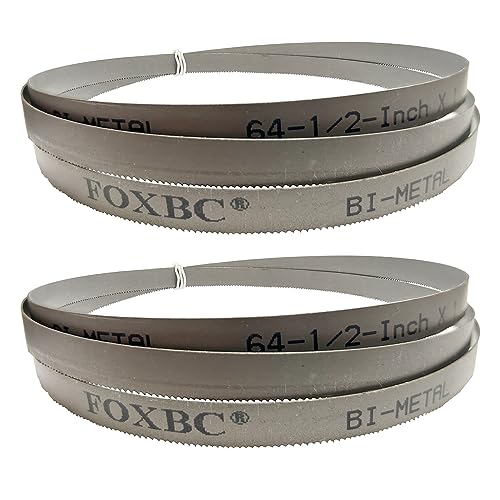
FOXBC Bi-Metal Bandsaw Blade 2-Pack
What We Like
- Two blades in the pack for replacement readiness.
- 8% cobalt M42 steel provides enhanced durability.
- Compatible with many popular 4×6 horizontal/vertical saw models.
- Unique welding technique for a strong, smooth joint.
Trade-offs
- 24 TPI is a fine cut, better for thin-wall tubing than large solids.
- Two-pack format offers less tooth count variety than some multi-packs.
This FOXBC blade pack comes with two identical bandsaw blades, providing a direct replacement or immediate spare for compatible machines. Its 24-tooth-per-inch pitch is intended for cutting thinner materials like pipe and sheet metal with reduced grabbing. The bi-metal M42 steel construction includes 8% cobalt, which is designed for added durability when cutting tougher steels and alloys.
Its specialization comes with a trade-off. That fine 24 TPI tooth count will struggle with efficiency on thick bar stock, where a coarser blade would clear chips faster. It’s a capable generalist for a mix of metals and even some plastics, but for dedicated, high-volume cutting of large steel sections, you’ll feel its limitations. For keeping a common 4×6 bandsaw running, however, the value is hard to argue with.
Product photos
Imachinist Bi-Metal Bandsaw Blade

What We Like
- Bi-metal M42 construction for hard materials.
- 14/18 TPI variable profile for cutting stainless.
- Spring steel backer for extended blade life.
- High-quality welded joint for durability.
Trade-offs
- Not recommended for any non-ferrous metals.
- Specific 64-1/2" length fits only compatible saws.
This bi-metal bandsaw blade is specified for cutting stainless steel, as well as other steel under 30 HRC and all ferrous metals. Its 14/18 TPI variable tooth profile is designed for that material, balancing tooth engagement and chip clearance. The blade is not recommended for non-ferrous metals, so it suits users who need to cut stainless or similar hard steels.
This blade has a single-minded focus. The manufacturer explicitly states it’s not for non-ferrous metals like aluminum or brass, so it’s not a universal blade. For a more versatile option that still handles a range of steels, a blade with a 10-14 TPI range is a strong contender. But when your project list is dominated by stainless, this Imachinist blade’s specialized tooth design is the feature you buy it for.
Product photos
Bosch BS6412-24M Band Saw Blade
What We Like
- Premium steel resists heat buildup
- Optimized tooth geometry for clean cuts
- 64-1/2" length fits most common stationary saws
Trade-offs
- Single blade packaging lacks multi-pack value
- Premium steel construction, not bi-metal for extreme durability
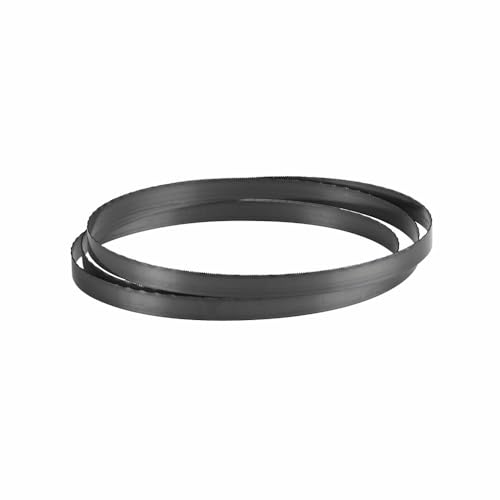
The Bosch BS6412-24M is designed for metal applications, with its 24 TPI count and optimized tooth geometry aimed at delivering the best performance. Its length fits most common band saw sizes, making it a straightforward replacement for many stationary saws. Premium materials resist heat buildup, which is intended to promote a longer blade life during sustained use on a fixed machine.
Compared to other blades, the 24 TPI specification is finer than the 10-14 TPI on the Lenox Diemaster 2 or the 12/14 TPI on the Milwaukee Compact Extreme. This Bosch blade is made from premium grade steel for metal cutting. Its design is focused on that specific application for stationary saws.
Product photos
How We Evaluated Band Saw Blades For Cutting Steel
We based our evaluation on manufacturer specifications, expert round-ups, and patterns in owner feedback. We prioritized blade construction, like bi-metal vs. Carbon steel, for its direct impact on heat resistance and durability in metal. Tooth design and pitch were critical for matching the blade to material thickness and cut quality, while the correct blade length and width were non-negotiable for fitting a specific saw.
Finally, we considered value and packaging, such as multi-packs for portable saws. A research-led evaluation like this provides a strong foundation, but it cannot replicate the hands-on feel of a blade’s performance in your own shop on your specific projects.
What To Look For In Band Saw Blades For Cutting Steel
Choosing the right blade transforms a frustrating job into smooth, clean cuts. The key is matching the blade’s construction, tooth geometry, and size to your saw and your work.
Focus on bi-metal construction for general steel cutting, a tooth pitch that fits your material thickness, and a blade length and width that are compatible with your specific band saw model.
Blade Construction
For cutting steel, bi-metal blades are the standard for a reason. They combine a flexible, fatigue-resistant alloy steel back with a hard, high-speed steel or cobalt tooth edge that resists heat and wear. This construction allows them to cut a wide range of ferrous metals effectively. Carbon steel blades are more affordable but lack the heat resistance for prolonged steel cutting, making them better suited for wood or non-ferrous metals on lower-speed saws.
Tooth Geometry and Pitch
The teeth do the cutting, so their design is crucial. Variable-pitch or Vari-tooth designs, like on our best overall pick, reduce vibration and handle a broader range of material thicknesses smoothly. The teeth per inch (TPI) must match your workpiece: a coarse pitch (like 3-6 TPI) is for thick solid stock, while a fine pitch (18-24 TPI) is needed for thin-wall tubing and sheet metal. Using the wrong TPI can cause snagging, stripping teeth, or a rough finish.
Compatibility and Size
A perfect blade is useless if it doesn’t fit your saw. The two critical dimensions are length and width. Length must match your saw’s wheel size exactly; a 64 1/2-inch blade is common for stationary saws, while portable saws use shorter lengths like 32-7/8 inches. Width affects the minimum turning radius for contour cuts and the blade’s stability. A wider blade (like 3/4 inch) is for straight cuts on a larger saw, while a narrower blade can navigate curves. Always consult your saw’s manual.
- Measure your old blade’s length, width, and thickness before ordering a replacement.
- Confirm the blade’s TPI range aligns with your most common material thicknesses.
- For shops cutting a mix of metals, a variable-pitch, bi-metal blade offers the most versatility.
The most important factor is ensuring the blade physically fits your saw and its tooth pitch is appropriate for your material.
Band Saw Blades For Cutting Steel Compared
For a quick view of how these top blades stack up, the table below compares their key specifications and best uses.
| Product | Length | TPI | Construction/Material |
|---|---|---|---|
| Lenox Diemaster 2 Vari-Raker Band Saw Blade | 64 inches | 10-14 | Bimetal |
| DEWALT Portable Band Saw Blade 3-Pack | 32-7/8-Inch | 18 TPI | Alloy Steel Backer |
| Milwaukee Compact Extreme Thick Metal Blade | 30-9/16 inches | 12/14 TPI | N/A |
| MK Morse Master Cobalt Bi-Metal Blade | 44 7/8 inches | 14/18 TPI | Bi-Metal |
| Lenox Classic Tuff Tooth Band Saw Blade | 93 inches | 18 TPI | Bimetal |
| Starrett Intenss PRO Bi-Metal Band Saw Blade | 7' 9" | N/A | Bi-Metal |
| Milwaukee Extreme Thin Metal Band Saw Blade | N/A | N/A | N/A |
| FOXBC Bi-Metal Bandsaw Blade 2-Pack | 64.5 inches | 24 TPI | Bi-Metal M42 HSS |
| Imachinist Bi-Metal Bandsaw Blade | 64-1/2" | 14/18 TPI | Bi-metal M42 |
| Bosch BS6412-24M Band Saw Blade | 64-1/2 inches | 24 | Premium grade steel |
Frequently Asked Questions
What type of bandsaw blade is best for cutting steel?
For most steel-cutting applications, a bi-metal blade is the best choice. It features a high-speed steel tooth edge welded to a flexible alloy steel back, offering an excellent balance of cutting performance, heat resistance, and durability. For specialized tasks like cutting extremely hard stainless steel or for high-production environments, blades with cobalt-enhanced teeth or carbide tips are available.
What is the best saw blade for cutting steel?
The best blade depends on your specific saw and project. For a versatile blade that performs well on a vertical bandsaw for both straight and contoured cuts in various steels, the Lenox Diemaster 2 Vari-Raker is an outstanding all-around option. For a portable band saw, a pack of durable blades like the DEWALT 3-Pack is often the most practical choice.
Who makes the best quality bandsaw blades?
Several manufacturers are consistently recognized for high-quality metal-cutting blades. Brands like Lenox, Starrett, and MK Morse produce well-regarded blades known for precise engineering and durable construction. Our list includes blades from these and other reputable makers, each excelling in a specific application, from budget-friendly general use to extreme metal cutting.
How many teeth per inch for cutting metal?
A good rule of thumb is to have at least three teeth in contact with the workpiece. For thin materials like sheet metal or thin-wall tubing, you need a fine blade with 18-24 TPI. For general-purpose cutting of solid bar stock and structural shapes, a variable pitch blade in the 10-14 TPI range is very effective. For very thick solid sections, a coarser pitch (3-6 TPI) is used.
Can I use the same band saw blade for steel and aluminum?
While a bi-metal blade can cut both, it’s not always ideal. Cutting aluminum can cause material to load (clog) the teeth, which then leads to poor performance when you switch back to steel. For occasional use, it’s possible, but for best results and blade life, dedicate one blade to ferrous metals like steel and another to non-ferrous metals like aluminum.
The Bottom Line
For the shop owner or serious DIYer needing one reliable, versatile blade for cutting steel on a vertical bandsaw, the Lenox Diemaster 2 Vari-Raker is the best overall choice. If you’re on a budget or run a compatible 4×6 horizontal/vertical saw, the FOXBC Bi-Metal 2-Pack offers great value. Those regularly battling stainless steel should look directly at the Milwaukee Compact Extreme Thick Metal Blade. No matter which blade you pick, confirming the exact length, width, and tooth pitch for your saw and your work is the single most important step to a successful cut.
