
10 Best Battery Circular Saws in 2026
This post contains affiliate links. As an Amazon Associate, we earn from qualifying purchases.
The DEWALT 20V MAX XR Brushless Circular Saw is our best overall pick for its powerful brushless motor and excellent runtime, a top choice for heavy-duty projects. For maximum cutting power, consider the DEWALT FLEXVOLT 60V MAX, while the Makita Sub-Compact Brushless is ideal for lightweight maneuverability. Choosing the right battery-powered saw depends on balancing power, weight, and your existing battery investment.
Top 10 Battery Circular Saws in the Market
Certain content that appears on this site comes from Amazon. This content is provided "as is" and is subject to change or removal at any time.
The Best Battery Circular Saws, Reviewed
DEWALT 20V MAX XR Brushless Circular Saw

What We Like
- Powerful brushless motor for tough cuts
- Electric brake for precise blade stopping
- Magnesium construction for toughness
Trade-offs
- Tool only: requires separate battery and charger purchase
- Weighs 9.9 lb, on the heavy side for a 20V saw
With up to 368 cuts per charge and 1,700 MWO of power, this cordless saw can tackle a full day of framing without constant battery swaps. It cuts up to 2-9/16 inches deep at 90 degrees, allowing it to slice through standard lumber in one pass. DeWalt’s model has been on the market for six years, which research indicates is more than enough time to prove itself in the field. Its magnesium base and upper guard are built to withstand accidental drops, while an overmolded grip and oversized adjustment levers offer comfort and easy operation even with gloves on.
You do have to manage its heft and the friction from the shoe coating, which doesn’t glide as smoothly as some competitors like the Milwaukee M18 FUEL. Muscle memory helps, but it’s a tangible trade-off for the durability. For those already invested in DeWalt’s 20V MAX system and who prioritize proven power and runtime over the absolute lightest or slickest tool, this saw delivers where it counts. If you need even more cutting muscle, DeWalt’s own FLEXVOLT 60V model is the next step up.
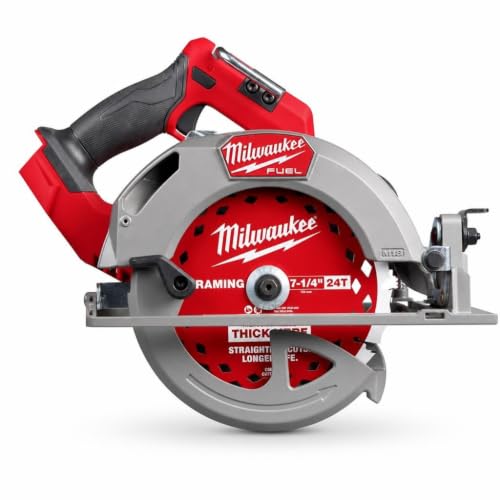
Milwaukee M18 FUEL 7-1/4 Inch Circular Saw
What We Like
- High-speed brushless motor for power under load.
- Integrated LED work light and electric blade brake.
- 6,000 RPM brushless motor for speed under load.
Trade-offs
- Tool-only listing requires separate battery purchase.
- Weighs 11 pounds, heavier than many 7-1/4 inch competitors.
With a 2-5/8 inch cut capacity, this saw powers through dimensional lumber and sheet goods in one pass, essential for professional framing and sheathing. It is designed for carpenters who need cordless freedom without sacrificing rip speed for all-day work. The 6,000 RPM motor from its POWERSTATE brushless design provides high speed under load to maintain productivity.
The trade-off for that performance is heft; at 11 pounds, it demands more arm strength than lighter options like the Makita Sub-Compact. It’s also a bare tool, so you’ll need to factor in the cost of a Milwaukee M18 battery and charger if you’re not already invested in that platform. For the professional carpenter deep in the Milwaukee ecosystem, however, this saw’s blend of cutting muscle and job-site durability makes it a long-term investment.
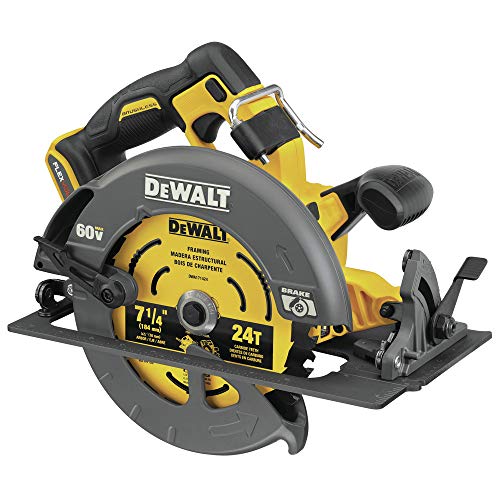
DEWALT FLEXVOLT 60V MAX Circular Saw
What We Like
- Electric brake stops blade quickly
- Integrated LED for cut line visibility
- Rafter hook for convenient storage
- Magnesium construction for durability
Trade-offs
- Tool only listing requires separate battery purchase
- Heavier than many 7-1/4-inch competitors at 8.2 lb
- Shoe coating creates more friction during cuts
With a 60V brushless motor delivering up to 47% more power than its predecessor, this saw chews through dense lumber without bogging down. It’s built for the pro who needs cordless freedom but refuses to compromise on cutting performance, especially for framing or decking. The magnesium build and comfortable overmolded grip handle job-site abuse, while the deep 2-9/16-inch cutting capacity means you can slice through a 2×12 in a single pass. This is the saw you grab when the corded alternative is across the yard.
The saw’s coating creates more shoe friction than some competitors, which reviewers report learning to manage over time. At 8.2 pounds, it is heavier than several other cordless circular saws, including the 5.3-pound CRAFTSMAN and the 4.0-pound Makita sub-compact model. For professionals invested in the DeWalt system who prioritize power, this is the brand’s flagship sidewinder, but research suggests future 20V Max models with new battery technology may narrow the performance difference.
Makita 36V X2 LXT Circular Saw Kit

What We Like
- X2 LXT battery system for cordless power and speed
- Brushless motor for cooler, more efficient operation
- Automatic speed change for optimized cutting performance
- Extremely high cut count per battery charge
Trade-offs
- Weighs 21.2 lb, significantly heavier than most 18V saws
- Large footprint (22.2" long) demands more storage space
This Makita kit runs on two batteries, letting you make up to 320 crosscuts through a 2×10 SPF lumber on a single charge. That translates to a full day of framing or decking without stopping to swap batteries, making it a prime choice for pros on large-scale projects where extension cords are a nuisance and productivity is key. Research mentions that Makita’s corded circular saws are seen on many construction sites and are known to work even when scarred and battered.
This capability comes with a tangible trade-off: at 21.2 pounds, it’s a notably heavier saw to maneuver than a standard 18V model. You’re trading some heft and bulk for that untethered endurance. For big cuts in dimensional lumber over long sessions, the weight is a fair compromise. For quick trim work or overhead use, a lighter saw will be less fatiguing.
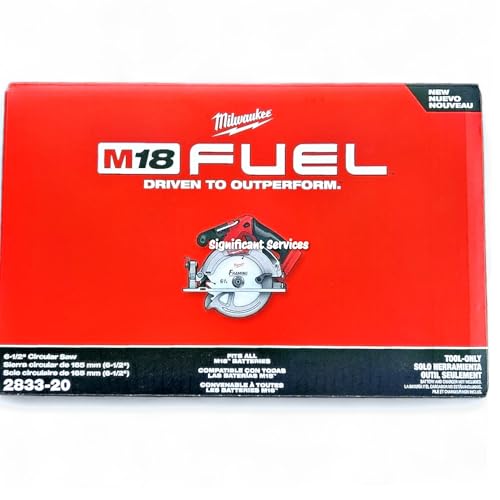
Milwaukee M18 Fuel 6-1/2 Inch Circular Saw
What We Like
- Rear-handle design provides excellent leverage
- Dust port positioned for clear cutting line
Trade-offs
- Weighs 8.4 pounds, heavier than some 6-1/2 inch rivals
Ranked as the best cordless circular saw overall in expert comparisons, the Milwaukee M18 Fuel delivers professional-grade performance. Its rear-handle design provides the leverage needed to push through sheet after sheet of 3/4-inch plywood without bogging down, a clear advantage for tasks like subflooring and sheathing. Reviewers report it tracks cleanly and cuts fast, making it a tool built for the speed and balance demands of a job site.
The trade-off is commitment to a battery system. You’re buying into the Milwaukee M18 platform, which is a significant advantage if you’re already invested. For someone seeking the absolute lightest option, the Makita Sub-Compact at 4.0 pounds is easier to maneuver for overhead cuts. But if your priority is a saw that feels solid, cuts fast, and can handle the rigors of a job site, this Milwaukee’s performance justifies its place in your tool bag.
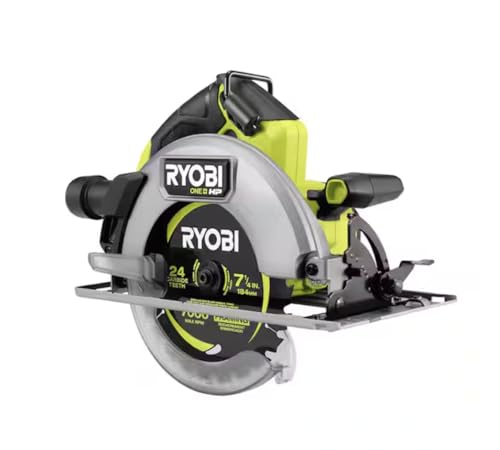
RYOBI ONE+ HP Brushless Circular Saw
What We Like
- Multiple bevel detents for precise angles
- Integrated LED worklight and dust port
- Built-in rafter hook for storage
Trade-offs
- Tool only: requires separate battery purchase
- Weighs 9.6 lb, heavier than some compact models
- Maximum depth is less than some 7-1/4" rivals
The 2-9/16 inch depth lets you cleanly slice through a standard 2×12, and the array of bevel detents up to 56 degrees makes quick work of compound cuts for planter boxes or shed rafters. This saw suits the DIYer invested in the Ryobi ONE+ ecosystem who needs reliable cordless power for weekend builds, not daily framing.
Research indicates this saw is not intended for contractor tasks like framing a deck. It is described as an ideal tool for backyard projects such as building planter boxes or an enclosure for trash cans. Compared to the DeWalt 20V MAX XR, its 45-degree cutting depth of 1-13/16 inches is shallower. Features like the built-in LED worklight, a vacuum dust port adapter, and a rafter hook add convenience for the DIY user invested in the Ryobi ecosystem.
Product photos
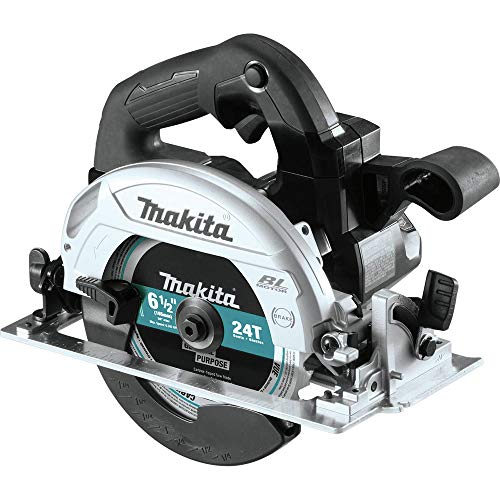
Makita Sub-Compact Brushless Circular Saw
What We Like
- Brushless motor runs cooler for longer life
- Compact, ergonomic blade-right design at 10-5/8" long
- Large 50-degree bevel capacity for angled cuts
- Includes dust extracting attachment and blade
Trade-offs
- Tool only: requires separate purchase of Makita 18V LXT battery and charger
- 2-1/4 inch cut depth is less than full-size 7-1/4 inch saws
Its compact, 10-5/8-inch long body and blade-right design make it easy to handle in tight spaces and on overhead cuts. This is the saw you grab for a long day of trim work, decking, or any project where a full-sized saw would wear you out. It’s a natural fit for finish carpenters, remodelers, and DIYers who prioritize control and reduced fatigue.
Makita’s sub-compact design focuses on agility over brute force. General research on cordless saws indicates that using a higher amp-hour battery, rather than the mentioned 2.0Ah pack, can increase runtime and efficiency during high-demand tasks. This makes it a precise tool for trim and decking, not a saw built for constant heavy framing.
Product photos
WORX 40V Brushless Circular Saw

What We Like
- Powerful 6,000 RPM brushless motor for smooth cuts
- Electric brake with energy recovery for safety and runtime
- LED light for clear cut-line visibility
Trade-offs
- Tool only: requires two separate 20V batteries and a charger
- At 10.5 lb, it's heavier than some 18V compact models
Its ability to run on a pair of 20V batteries to create a 40V system is the most decisive feature. This gives you the power of a full-size 7-1/4-inch blade for framing and sheet goods, while leveraging a 20V battery ecosystem you might already own. The brushless motor spins at a steady 6,000 RPM, and the 56° bevel is great for complex trim work. It’s a smart fit for the dedicated DIYer or prosumer who wants cordless cutting muscle without committing to a whole new high-voltage battery platform.
Running this WORX saw requires two batteries, and our research confirms that using higher amp-hour packs is key for serious runtime. Without them, you’ll be swapping cells often on a big project. It’s a heavier saw, so for all-day overhead work, a lighter option would be easier. But for versatility and power from a 20V system, this design is hard to beat for general construction and workshop use.
Product photos
CRAFTSMAN V20 Cordless Circular Saw
What We Like
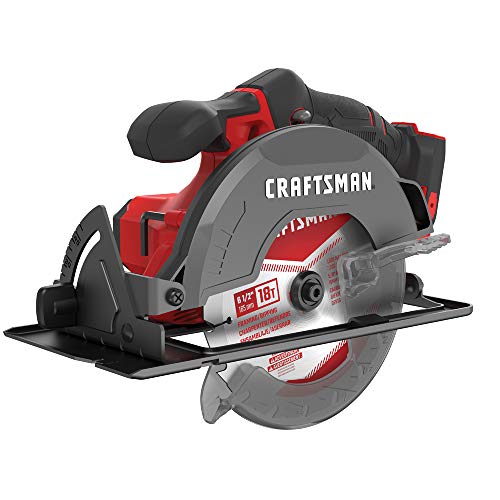
- Compact and lightweight at 5.3 pounds
- Tool-free bevel pivots to 50 degrees
- Part of the extensive V20 cordless system
- Metal shoe for added durability
Trade-offs
- Bare tool: requires separate V20 battery purchase
- 6-1/2 inch blade limits depth versus 7-1/4 inch saws
A 5.3-pound weight and compact design mean you can work overhead or on a ladder all morning without the wrist fatigue a heavier saw brings. It’s a straightforward tool for the weekend warrior who needs reliable cordless cuts for decks, sheds, and general carpentry without the premium brand price tag.
Its raw cutting muscle has limits. While it zips through pine and plywood, it’s not in the same power class as a beast like the DEWALT FLEXVOLT 60V for dense, wet lumber or all-day framing. The 6-1/2 inch blade also means you’re giving up some cutting depth compared to full-size 7-1/4 inch models. For heavy, daily professional use, you’ll want more power. But for its intended DIY and light pro duties, this Craftsman delivers solid value and notable user comfort.
Product photos
Bosch CCS180B 18V Circular Saw
What We Like
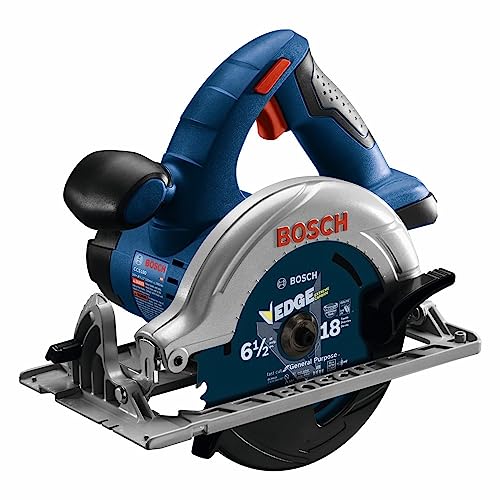
- Clear view of cut line for right-handed users
- Lightweight and balanced for easy maneuverability
- Dust blower keeps cut line visible
- Heavy-duty aluminum foot and guard for durability
Trade-offs
- Tool only: requires separate Bosch 18V battery and charger
- 6-1/2 inch blade limits depth versus 7-1/4 inch models
- Lower power tier compared to 60V or dual-battery saws
Right-handed users get a perfect view of the cut line thanks to the blade-left design, making it easier to follow marks for accurate cuts. The tool weighs 6.6 pounds without a battery, and its angled handle is shaped for ease in pushing the saw forward, which contributes to a feeling of control during operation. A heavy-duty aluminum foot and upper guard are included for enhanced tool durability on a job site.
You do trade some raw cutting muscle for that agility and visibility. While it cleanly handles a standard 2×4 at 90 degrees, its 6-1/2-inch blade puts it a step behind deeper-cutting saws like the DEWALT FLEXVOLT 60V for maximum depth capacity. It’s squarely in the capable mid-range for cordless power, ideal for the user who already owns Bosch 18V batteries and prioritizes control and a clean line over brute force for the toughest framing timbers.
Product photos
How We Evaluated Battery Circular Saws
This guide is based on manufacturer specifications, expert comparisons, and patterns in owner feedback. It prioritizes cutting power and motor efficiency, weight and ergonomics for maneuverability, and battery platform compatibility. This approach focuses on the features and performance data that matter most when selecting a cordless circular saw. Real-world feel and long-term durability can vary with individual use.
What To Look For In Battery Circular Saws
Your ideal saw balances power for your projects with comfort for how you work. Battery platform, weight, and blade size are the most critical starting points.
Focus on motor power (brushless is best), weight for overhead work, and your existing battery system. A 7-1/4″ blade offers maximum depth for framing, while a 6-1/2″ saw is often lighter and more nimble for finish tasks.
Motor Type & Power
Brushless motors are the standard for premium saws, offering more power, longer runtime, and greater durability than brushed motors. Manufacturers express power through voltage (18V/20V, 36V, 60V) and motor speed (RPM). Higher-voltage systems like 60V or dual-battery 36V designs deliver the most torque for demanding cuts in hardwoods or pressure-treated lumber. For most battery-powered saws, a brushless 18V/20V motor provides ample power for sheet goods and dimensional lumber.
Weight & Ergonomics
A saw’s weight directly impacts user fatigue, especially during overhead cuts or long sessions. Magnesium construction offers a strong, lightweight frame. Consider the handle design: a rear-handle provides leverage for heavy framing, while a top-handle is more compact. The shoe’s glide quality also affects effort; a smooth, low-friction base makes long rip cuts easier. For detailed work, a lightweight tool like a compact circular saw can be very useful.
Battery Platform & Runtime
Your existing cordless tool batteries should heavily influence your choice to avoid buying into multiple expensive systems. Amp-hour (Ah) rating determines runtime; a higher Ah battery lasts longer but adds weight. Some kits include high-capacity batteries, while “tool-only” listings require a separate purchase. For the longest runtime without a cord, look for systems like Makita’s 36V X2 that use two batteries. Understanding the trade-offs between cordless and corded models helps set realistic runtime expectations.
- Check if the saw is sold as a “tool-only” or includes a battery and charger.
- Verify the blade size (6-1/2″ or 7-1/4″) and its maximum cut depth for your common materials.
- Look for useful features like an electric brake for safety, an LED work light, or a dust port.
The most important factor is matching the saw’s power and size to your most frequent tasks, not just chasing the highest specifications.
Battery Circular Saws Compared
Use the table below to quickly compare key specifications and features across our top picks.
| Product | Blade Size | Max Cut Depth (90°) | Weight |
|---|---|---|---|
| DEWALT 20V MAX XR Brushless Circular Saw | 7-1/4 in. | 2-9/16 in. | 9.9 Pounds |
| Milwaukee M18 FUEL 7-1/4 Inch Circular Saw | 7-1/4 inch | 2-5/8 inches | 11.0 pounds |
| DEWALT FLEXVOLT 60V MAX Circular Saw | 7-1/4-inch | 2-9/16-inch | 8.2 pounds |
| Makita 36V X2 LXT Circular Saw Kit | 7-1/4 inches | N/A | 21.2 Pounds |
| Milwaukee M18 Fuel 6-1/2 Inch Circular Saw | 6-1/2 inch | N/A | 8.4 pounds |
| RYOBI ONE+ HP Brushless Circular Saw | 7-1/4 in. | 2-9/16 inches | 9.6 pounds |
| Makita Sub-Compact Brushless Circular Saw | 6-1/2 inches | 2-1/4 inches | 4.0 pounds |
| WORX 40V Brushless Circular Saw | 7-1/4 in. | 2-9/16 in. | 10.5 Pounds |
| CRAFTSMAN V20 Cordless Circular Saw | 6-1/2 inch | N/A | 5.3 Pounds |
| Bosch CCS180B 18V Circular Saw | 6-1/2 Inch | 2 inches | 6.6 lbs |
Frequently Asked Questions
Who makes the best battery operated circular saw?
Top brands like DEWALT, Milwaukee, and Makita consistently produce high-performance models favored by professionals. The “best” saw depends on your needs: DEWALT and Milwaukee often lead in raw power, while Makita excels in ergonomics and efficiency. Your choice should align with your existing battery system and the type of cutting you do most.
What is the best cordless circular saw for the money?
Value means getting the performance you need without overpaying. The RYOBI ONE+ HP Brushless Circular Saw offers strong performance for DIYers invested in that affordable platform. For professionals, a tool-only purchase of a top-tier model like the DEWALT 20V MAX XR represents excellent value if you already own compatible batteries.
Is a DeWalt or Milwaukee circular saw better?
Both are excellent; the choice often comes down to user preference and battery ecosystem. DEWALT’s FLEXVOLT system offers exceptional power in a familiar form, while Milwaukee’s M18 FUEL saws are renowned for their balanced performance and innovation. We recommend comparing specific models like our top picks for pros and evaluating which DeWalt or Milwaukee options fit your workflow.
Are battery-powered circular saws any good?
Modern battery-powered saws are very capable, often matching or exceeding the power of standard 15-amp corded models. Advances in brushless motor and lithium-ion battery technology provide ample runtime and torque for framing, sheathing, and most DIY tasks. They offer unmatched portability and convenience, making them a great choice for jobsites without reliable power.
What size circular saw blade is most common?
The 7-1/4 inch diameter is the standard for full-size circular saws, offering a maximum cut depth of about 2-1/2 inches. The 6-1/2 inch size is common for more compact, lightweight saws designed for maneuverability and overhead work. Always consult your saw’s manual for the correct blade size and arbor specification.
The Bottom Line
For professionals and serious DIYers who need reliable power and excellent runtime, the DEWALT 20V MAX XR Brushless Circular Saw is the best overall choice. Budget-focused users should look at the RYOBI ONE+ HP Brushless, while those needing a supremely lightweight tool for finish work will prefer the Makita Sub-Compact Brushless saw. Ultimately, choosing a saw that fits your dominant battery platform is the single most practical and cost-effective decision you can make.
