
10 Best Belt Grinders in 2026
This post contains affiliate links. As an Amazon Associate, we earn from qualifying purchases.
Our top choice for most knife makers and metal fabricators is the OBM Dominator 2×72 Belt Grinder for its powerful 2HP motor, fully welded steel frame, and complete system that reduces initial setup. For a budget option with strong performance, consider the VEVOR 2×72 Variable Speed Belt Grinder, and for precise sharpening, the KFMK 1×30 Variable Speed Belt Sander excels.
Choosing the wrong belt size or motor can waste both time and money on a tool that can’t handle the work. We built this guide by analyzing specifications, manufacturer data, and patterns in feedback from professional and hobbyist users to help you find a grinder that matches your shop’s demands.
Top 10 Belt Grinders in the Market
Certain content that appears on this site comes from Amazon. This content is provided "as is" and is subject to change or removal at any time.
The Best Belt Grinders, Reviewed
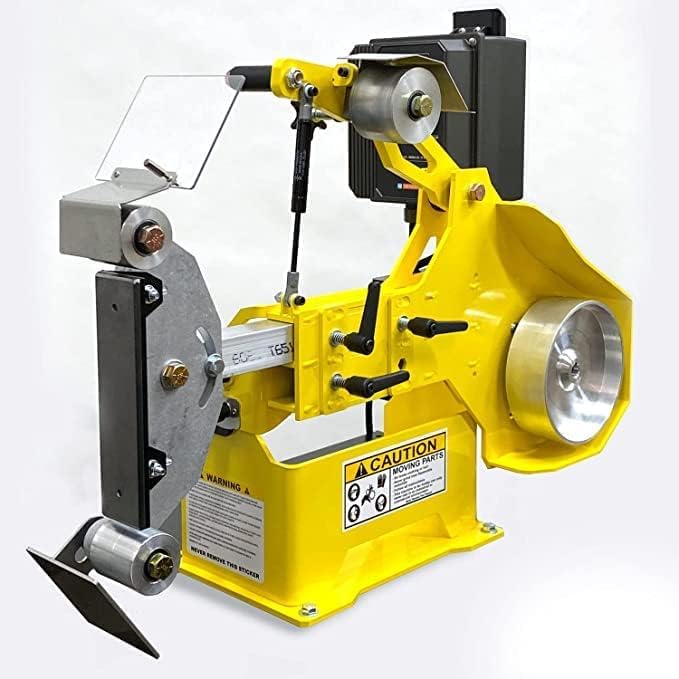
OBM Dominator 2×72 Belt Grinder
What We Like
- Fully welded steel frame ensures alignment
- 2HP motor with VFD provides controlled speed
- Accepts standard 1.5" tooling arms for flexibility
- Complete package reduces initial setup complexity
Trade-offs
- 45 lb weight demands a permanent, sturdy bench
- No tooling arms or accessories beyond platen included
A 2HP motor paired with a variable frequency drive gives you the precise control needed for everything from fine knife bevels to aggressive stock removal. This Dominator chassis is a fully welded steel platform built to stay aligned through long sessions, and it comes as a complete package with motor, VFD, and stand. That makes it the most substantial and ready-to-run foundation in this guide, ideal for a serious metalworking shop that demands reliability and power from day one.
The OBM Dominator’s fully welded steel frame provides consistent alignment during long grinding sessions, so it stays steady on the bench. At 45 pounds, it’s built as a permanent station rather than a portable tool. This integrated, bolt-free design aims to reduce vibration for smoother operation over time.
VEVOR 2×72 Variable Speed Belt Grinder

What We Like
- Powerful 1500W motor for heavy grinding
- VFD allows stepless variable speed control
- Includes three versatile grinding modes
- Heavy steel frame provides stable operation
Trade-offs
- At 110.7 lb, it's a permanent bench fixture
- Includes only three sanding belts to start
- Large 33.5-inch footprint needs significant shop space
With a 1500-watt motor and full variable speed control, this grinder puts serious metalworking power within reach on a budget. It handles the demanding material removal of knife making without bogging down, and the VFD lets you dial in the perfect speed for everything from rough shaping to fine finishing. This is a solid pick for a hobbyist or small shop looking to step up from a basic sander. The included three grinding moulds and flat platen tool rest mean it arrives ready for a variety of tasks.
You trade some refinement for that raw capability. The substantial steel frame ensures stability during operation, but it also means this isn’t a tool you’ll be moving around the shop easily. For the maker who needs a reliable, powerful 2×72 workhorse and is willing to bolt it down permanently, this VEVOR delivers core functionality that gets the job done.
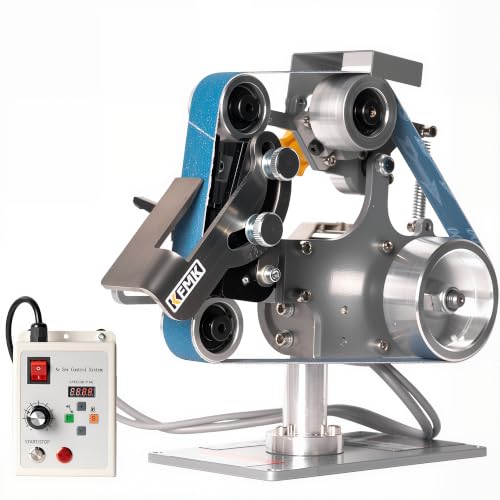
KFMK 1×30 Variable Speed Belt Sander
What We Like
- Forward and reverse belt rotation for control.
- Includes dedicated KSAG-5 angle guide for bevels.
- Variable speed VFD for precise task matching.
- Heavy-duty all-steel construction reduces vibration.
Trade-offs
- 1×30 belt size limits surface area for large work.
- Smaller format than 2×72 models for major stock removal.
Forward and reverse belt direction allows instant switching to match different grinding operations, which improves visibility and reduces burr formation for better control when sharpening blades. The included KSAG-5 angle guide provides precise and repeatable bevel grinding, helping maintain consistent angles for cleaner edges. Variable speed control via a professional VFD enables smooth adjustment for tasks from stock removal to polishing, letting users dial in the perfect belt speed. Its heavy-duty, all-steel construction offers maximum rigidity for stable belt tracking and reduced vibration during demanding workshop use. This multi-function system supports interchangeable attachments and horizontal or vertical operation for flat grinding, hollow grinding, contour shaping, and tool making.
The 1×30 belt size is compact compared to larger models like the 2×72 OBM Dominator or VEVOR 2×72 Variable Speed Belt Grinder. It is designed for operations like sharpening blades, grinding bevels, and finishing edges. For tasks involving shaping large blades or heavy fabrication, the smaller platen and belt area have less capacity than the wider belts on those other machines.
Product photos
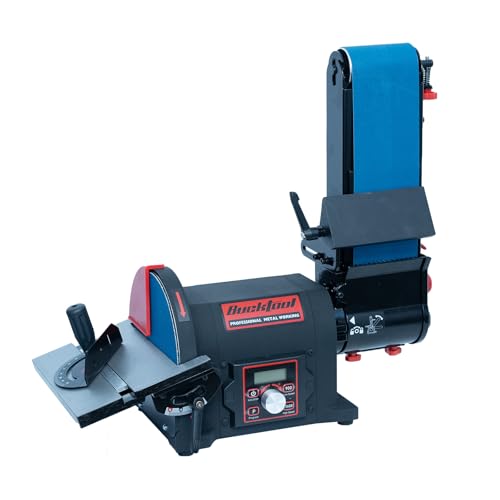
Bucktool 4×36 Belt Disc Sander
What We Like
- VFD motor maintains torque at low speed
- Horizontal and vertical belt operation
- Includes miter gauge and sharpening attachment
- Memory function retains speed setting
Trade-offs
- Cannot be used with GFCI-protected outlets
A 1 HP variable-speed motor driving both a 4×36 belt and an 8-inch disc gives you serious versatility in a single benchtop footprint. This is the machine for the workshop that needs to handle everything from shaping a knife bevel to smoothing a wooden edge, all without swapping tools. The adjustable tables and built-in sharpening jig add precision, while the speed memory means you can jump back into a project at your exact setting. It suits the maker who values a consolidated setup over a dedicated, high-volume grinder.
This sander’s 4-inch belt width is generous for a combo machine, providing a broad area for sanding flat surfaces like cabinet doors or knife blades. However, its 36-inch belt length is shorter than the 72-inch belts on dedicated metalworking grinders like the OBM Dominator or VEVOR model, which means you’ll reposition the workpiece more often on long items. The motor also cannot be used with GFCI-protected outlets, so your shop’s electrical setup must accommodate a standard circuit.
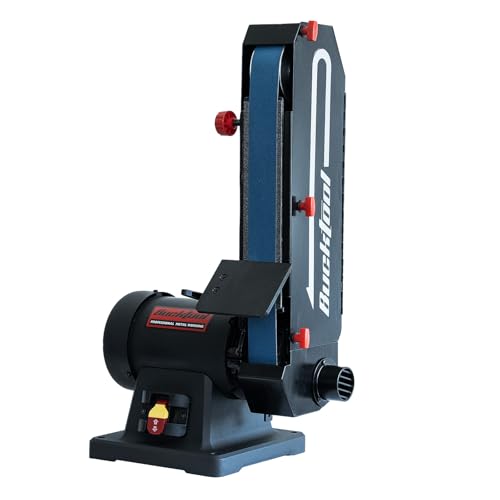
Bucktool 2×48 Belt Sander
What We Like
- Strong 1 HP motor for heavy material removal
- Dual-table design switches between flat and curved sanding
- Quick-release handle for tool-free belt changes
- Solid cast-iron platen reduces friction and heat
Trade-offs
- Fixed 4500 FPM speed lacks variable control
- 2×48 belt size offers less surface area than a 2×72
A 1 HP induction motor driving a 2×48 belt at 4500 FPM delivers the consistent, powerful grind that knife makers need for profiling blades and removing stock. The dual-wheel design, with its serrated rubber contact wheel, provides excellent grip and vibration reduction for shaping bevels and handles, while the large cast-iron table gives you a stable platform for precise flat grinding. This sander is built for the dedicated hobbyist or small shop that values a solid, single-speed workhorse focused on metal and knife work.
The trade-off is in its fixed speed and belt length. You can’t slow it down for delicate finishing or heat-sensitive steels, and the 48-inch belt offers less surface area than the 72-inch belts on models like the OBM Dominator or VEVOR 2×72. For a maker who values a straightforward, powerful grind for knives and doesn’t need the flexibility of variable speed, the Bucktool is a focused and capable machine. If your projects demand fine control over a wider range of materials, you’ll feel the limitation.
KFMK 2×42 Belt and Disc Sander Combo

What We Like
- Direct-drive 1/2 HP motor for metalworking tasks.
- Belt sander pivots between vertical and horizontal use.
- Includes both belt and disc sanding tables.
- Comes with tool rest, miter gauge, and wrenches.
Trade-offs
- Fixed-speed motor lacks variable speed control.
- At 34.3 lb, it's a dedicated bench tool, not portable.
A 2″x42″ belt paired with a 6″ disc gives you two fundamental shop tools in one footprint, a classic combo for a reason. The ability to swing the belt into a vertical or horizontal position makes it adaptable for everything from flattening a knife blank to shaping a wooden handle. This consolidation suits the generalist who needs to handle metal, wood, and sharpening tasks without dedicating bench space to separate units. It’s a straightforward, capable workhorse for a crowded shop.
Versatility comes at the expense of specialization. You’re getting a broad range of functions, not peak performance in any single category. For the woodworker or metal hobbyist tackling mixed projects, however, having both a belt and a disc ready to go from one motor is a massive convenience that justifies the compromise.
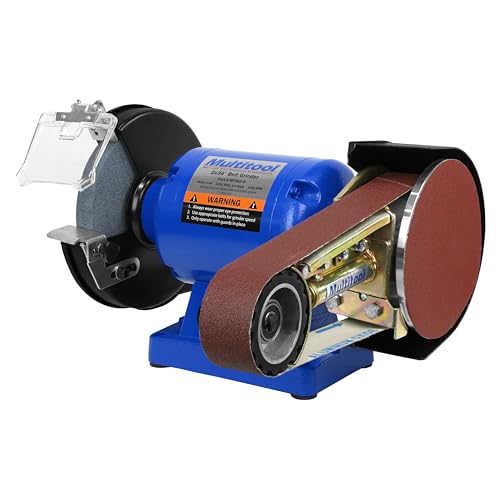
MULTITOOL GRINDERS MT362-8 Belt Grinder
What We Like
- 1 hp motor avoids bogging down
- High belt speed reduces heat buildup
- Wide grit range from 24 to 1200
Trade-offs
- 2×36 belt limits platen size versus 2×72 models
- Fixed speed limits fine polishing control
This grinder’s 1 hp motor and 4,970 SFPM belt speed deliver serious material removal without hesitation, making it a solid workhorse for shaping metal or hogging off wood. The automatic tensioning and tracking adjustments mean you spend less time fiddling and more time grinding.
Consider the fixed speed and the 2×36 belt size. That high speed is fantastic for aggressive work, but it’s not adjustable for fine polishing or heat-sensitive materials. Compared to a variable-speed model like the VEVOR 2×72, you lose that finesse. The belt’s 2-inch width limits platen size versus wider 2×72 models, which can restrict contact area for large projects.
Product photos
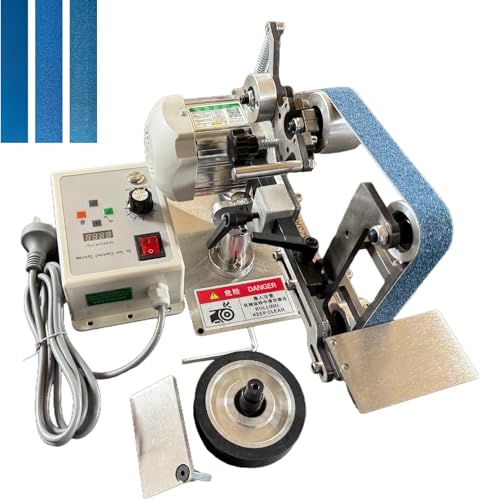
Jinlida 1×30 Variable Speed Belt Grinder
What We Like
- Compact 7.9 lb weight for easy placement.
- 750W motor with VFD for variable speed control.
- Vertical/horizontal use for multi-angle work.
- Includes three grit belts for coarse to fine work.
Trade-offs
- 1-inch belt width limits material removal rate.
- Smaller 30-inch belt requires more frequent changes than 2×72 models.
The Jinlida 1×30 belt grinder weighs 7.9 pounds and measures less than 15 inches long, so it can be placed on any workbench without consuming much space. A 750W motor and variable frequency drive allow quick shifts from high-speed rough grinding to low-speed fine polishing on a single machine. This setup handles materials like metal, plastic, wood, and glass for grinding, polishing, and deburring operations. Its design supports both vertical and horizontal use, letting you switch modes to polish workpieces from different angles as needed.
That compact size uses a 1×30 inch sanding belt, which is narrower and shorter than the belts on models like a 2×72 grinder. For extensive metal removal on large surfaces, a machine with a wider belt and more power, such as the 1500W VEVOR 2×72, would be more suitable. However, the Jinlida’s variable speed and dual grinding modes provide a versatile, space-efficient solution for smaller-scale metalworking and material processing tasks.
Product photos
VEVOR 8" Bench Grinder & Belt Sander

What We Like
- Combines an 8-inch grinder and 2×28-inch belt sander in one unit.
- Belt arm pivots for horizontal or vertical sanding tasks.
- Includes a transparent eye shield and built-in LED work light.
- Heavy steel construction with non-slip feet for stability.
Trade-offs
- The 2×28-inch belt is smaller than a standard 2×72 grinder belt.
A 350W motor driving both an 8-inch grinding wheel and a 2×28-inch sanding belt gives you two essential shop tools on a single, stable base. This setup works well for the DIYer or hobbyist who needs to handle occasional metal grinding, tool sharpening, and wood sanding without dedicating permanent space to two separate units. The pivoting belt arm and included work light are thoughtful touches that add real utility for finishing tasks and general fabrication. It’s a practical consolidation of functions for a crowded workshop.
Its design prioritizes versatility over specialization. For knife makers or anyone doing frequent, heavy stock removal, that larger machine is the clear step up. But for general shop work where you need to grind a weld one minute and sand a board the next, this combo covers the bases efficiently.
Product photos
Goudergo 550W Portable Belt Sander

What We Like
- Compact 16.8 lb design saves workshop space
- Brushless motor runs quieter and with less friction
- Protective baffle shields user from sparks and belt breaks
Trade-offs
- Fixed 5000 RPM speed lacks variable control for fine tasks
- 15-inch length restricts workpiece size compared to full-size grinders
A 550W brushless motor spinning at 5000 RPM gives this grinder enough muscle for light metal shaping and polishing, but its real advantage is the sub-100 dB noise level. That makes it one of the least disruptive options for a home shop or apartment workspace.
The trade-off for that quiet, compact package is a lack of control and scale. You’re stuck at one high speed, which isn’t ideal for delicate work on softer materials where variable speed prevents burning. Its small size also means it can’t tackle the large, sweeping grinds that a machine like the VEVOR 2×72 Belt Grinder is built for. Think of it as a precise, dedicated finishing station rather than a primary heavy-duty grinder. For a hobbyist in a noise-sensitive environment or someone adding a secondary sharpening station to their bench, it fills a specific niche very well.
Product photos
How We Evaluated Belt Grinders
Our research focused on manufacturer specifications, technical documentation, and patterns in feedback from experienced users in knife making and metalworking forums. We prioritized three key criteria: motor power and control for handling different materials, belt size and machine footprint for intended workshop tasks, and build quality for stable, long-term use. Because this is a research-led evaluation, we cannot verify long-term durability claims or compare the precise surface finish quality across all models.
What To Look For In Belt Grinders
The right belt grinder balances power, control, and physical size with your specific projects and shop space.
Focus on motor power (HP or watts), belt size (length x width), and whether you need variable speed. A sturdy, heavy frame reduces vibration for better control and finish.
Motor Power & Speed Control
Motor power, measured in horsepower (HP) or watts, determines how well the grinder maintains speed under load. A 2HP motor is common for serious metal removal, while a 1/2 HP motor may suffice for woodworking or light sharpening. Variable speed control, especially via a Variable Frequency Drive (VFD), is critical for matching the belt speed to the task, from aggressive grinding with coarse belts to fine polishing with finer grits. Fixed-speed models are more affordable but limit versatility.
Belt Size & Machine Footprint
Belt size dictates both work surface area and the types of projects you can tackle efficiently. The professional standard is a 2×72-inch belt, offering a long life and large contact area for profiling knives. Smaller 1×30 or 2×42-inch belts are more affordable and compact but require more frequent changes and offer less platen support. Always check the machine’s total footprint and weight; a heavier grinder needs a permanent, sturdy bench, while a lighter unit can be stored away.
Build Quality & Stability
A grinder’s frame material and construction directly impact its performance and lifespan. Fully welded steel or cast iron frames resist flexing under load, which is essential for maintaining precise belt tracking and alignment. Look for models that accept standard 1.5-inch tooling arms for future accessory upgrades. Vibration dampening through mass or design leads to a smoother finish and less user fatigue.
- Check the platen material; a solid cast-iron or steel platen dissipates heat better than thinner alternatives.
- Ensure the belt tracking mechanism is easy to adjust and lock down.
- Verify the work rest or tool arm compatibility if you plan to add attachments later.
A grinder that feels solid and heavy during operation will generally produce more consistent results and last longer.
Belt Grinders Compared
The following table compares key specifications across our picks to help you see the differences at a glance.
| Product | Motor Power | Belt Size | Belt Speed |
|---|---|---|---|
| OBM Dominator 2×72 Belt Grinder | 2HP electric | 2" x 72" | Variable |
| VEVOR 2×72 Variable Speed Belt Grinder | 1500W pure copper | 2 x 72 inches | 32 m/min max |
| KFMK 1×30 Variable Speed Belt Sander | N/A | 1×30 inch | Variable Speed |
| Bucktool 4×36 Belt Disc Sander | 1 HP VFD variable speed | 4×36 inch | 575-2300 SFPM |
| Bucktool 2×48 Belt Sander | 1 HP induction | 2×48 inches | 4500 FPM |
| KFMK 2×42 Belt and Disc Sander Combo | 1/2 HP | 2"x42" | N/A |
| MULTITOOL GRINDERS MT362-8 Belt Grinder | 1 hp, 120V | 2" x 36" | 4,970 SFPM |
| Jinlida 1×30 Variable Speed Belt Grinder | 750W pure copper | 30 x 1 inch | N/A |
| VEVOR 8" Bench Grinder & Belt Sander | 350W | 2-inch x 28-inch | 1500 RPM |
| Goudergo 550W Portable Belt Sander | 550W DC brushless | N/A | 5000rpm |
Frequently Asked Questions
Which belt grinder is the best?
The best grinder depends on your primary task and budget. For most professional knife makers and metal fabricators, a 2×72-inch model with a variable speed motor, like our best overall OBM Dominator, offers the power, control, and accessory ecosystem needed for daily, demanding work.
What belt grinders do they use on Forged in Fire?
Contestants on Forged in Fire typically use professional-grade 2×72 belt grinders from established brands. These are the industry standard for blade profiling and finishing, largely due to their power and speed control. They also support a wide availability of belts and attachments.
Which is the best grinder in the world?
There is no single “best” grinder, as the ideal machine varies by user. In professional circles, heavy-duty, modular 2×72 grinders from specialized manufacturers are highly regarded for their durability, precision, and ability to handle high-volume metal removal over many years.
What are people saying about the VEVOR belt grinder?
Owner feedback highlights that VEVOR’s 2×72 model offers significant power and variable speed control at a budget-friendly price point, making it a compelling option for hobbyists stepping up to a full-size grinder. Users note its substantial weight requires a dedicated bench space.
Should I start with a 1×30 or a 2×72 belt grinder?
Starting with a 1×30 grinder is a low-cost way to learn basic techniques, but it severely limits speed and metal removal for knife making. Many experienced makers advise saving directly for a quality 2×72 model to avoid the cycle of upgrading through progressively more capable but ultimately insufficient tools.
The Bottom Line
For the serious knife maker or metal fabricator ready for a professional-grade tool, the OBM Dominator 2×72 Belt Grinder is the best overall choice, offering a complete, powerful system built for stability. If your budget is tight but you need full power, the VEVOR 2×72 provides exceptional value, while sharpening specialists should look at the KFMK 1×30 for its precision angle guide. Ultimately, matching the grinder’s motor power and belt size to your most common tasks is the single most important factor in choosing a machine you won’t outgrow.
