
10 Best Concrete Mixers For Home Use in 2026
This post contains affiliate links. As an Amazon Associate, we earn from qualifying purchases.
For a reliable workhorse that handles medium-to-large projects, the BILT HARD Electric Cement Mixer is our best overall. For easy cleanup, the BILT HARD Poly Drum is a standout, and the WORKPRO Electric is ideal for maximum batch capacity. Choosing the wrong mixer can leave you underpowered for a patio pour or struggling to clean a drum after a small repair.
We researched specifications, manufacturer data, and owner feedback to compare ten models. Our guide highlights the key differences in capacity, power, and design to match you with the right tool.
Top 10 Concrete Mixers For Home Use in the Market
Certain content that appears on this site comes from Amazon. This content is provided "as is" and is subject to change or removal at any time.
The Best Concrete Mixers For Home Use, Reviewed
BILT HARD Electric Cement Mixer

What We Like
- Powerful 550W motor for consistent mixing
- Large 4 cu ft capacity handles substantial batches
- Sturdy steel and metal cast construction with powder coat
- Portable design with locking handle and two wheels
Trade-offs
- At 90.4 lb, it is heavy for frequent relocation
- Large footprint requires considerable storage space
- Assembly is required before first use
A 4-cubic-foot drum and a 550W motor handle stucco, mortar, or concrete, providing enough volume for efficient mixing work. The construction uses metal cast and steel components with a triangular bracket for stability, which keeps the machine steady when the drum is turning under load. This capacity and durable build suit projects that require mixing larger volumes of material.
The trade-off for that solid build and generous capacity is portability. While the two 9-inch wheels help, moving the 90.4-pound machine around a worksite takes some effort, so plan its placement carefully. It sits between smaller wheelbarrow-style units and larger commercial machines in scale, offering a tool size that fits a dedicated DIYer’s needs.
Product photos
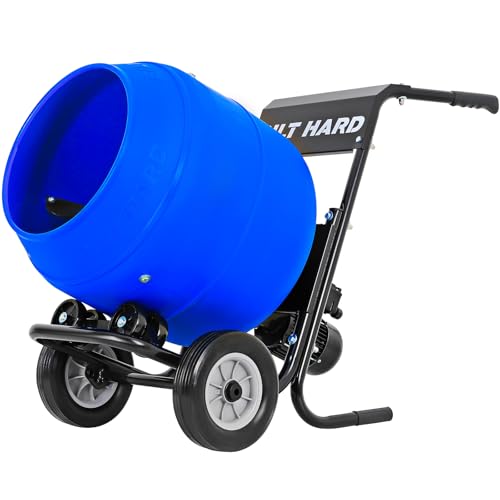
BILT HARD Poly Drum Cement Mixer
What We Like
- Poly drum resists dents, cracks, and rust
- Drum is notably easy to clean after use
- Large, flat-free tires enable easy transport
- Includes all hardware with straightforward manual
Trade-offs
- 2.3 cu ft mixing capacity is less than some 4 cu ft competitors
A 4.0-cubic-foot poly drum that resists rust and cleans easily is the main event here. For a homeowner tackling a patio or walkway, that easy-clean feature translates to less time scrubbing and more time building. The 2.3-cubic-foot mixing capacity handles standard bag mixes efficiently, and the 10-inch flat-free tires roll it right to the job site. This mixer is built for the DIYer who values a quick cleanup as much as a reliable mix.
The trade-off is in raw mixing volume. While the drum is large, its effective batch size is more conservative than the WORKPRO Electric Cement Mixer’s listed 4.6-cubic-foot capacity. That makes it perfect for manageable, sequential projects rather than pouring an entire foundation in one go. The poly construction resists dents, cracks, and rust, a sensible choice for intermittent use where the mixer might sit between projects.
Product photos
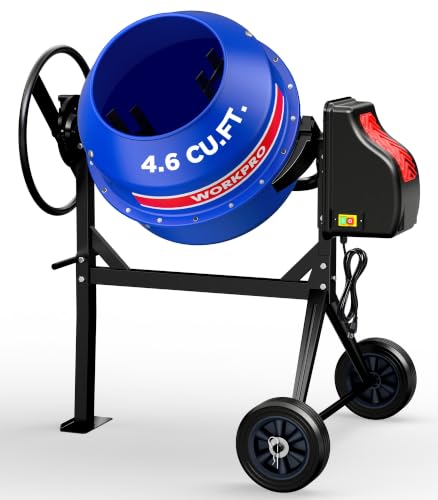
WORKPRO Electric Cement Mixer
What We Like
- Powerful 600W motor for consistent mixing.
- Heavy-duty steel frame ensures long-term stability.
- 360-degree rotating drum simplifies loading and unloading.
Trade-offs
- Its 48.8-inch height requires substantial vertical clearance.
- Large footprint needs more storage space than a wheelbarrow mixer.
With a 4.6 cubic foot capacity, the WORKPRO mixer handles concrete, mortar, and grout, making it suitable for construction, farm, and DIY projects. Its 600W motor provides a smooth 36-42 RPM drum rotation for consistent mixing. A heavy-duty steel frame with a corrosion-resistant finish offers stability and long-lasting reliability in tough conditions.
This mixer weighs 94.8 pounds and stands 48.8 inches tall, so it requires planning for transport and storage. Two 8-inch wheels allow for movement around a worksite, but its size is substantial compared to more compact mixers like the 50-pound FTOPBTB Portable Wheelbarrow Mixer.
Product photos
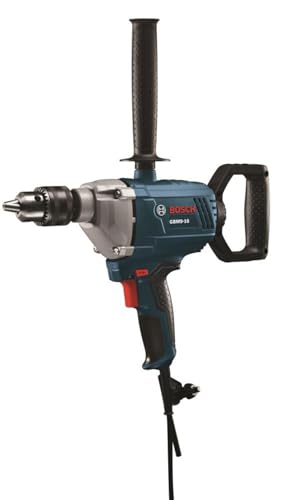
Bosch GBM9-16 Mixer
What We Like
- 9.0-amp motor delivers high torque for dense materials
- Variable-speed motor for controlled mixing and fast drilling
- 360-degree rotatable D-handle improves grip in any position
- Long 8-foot cord provides good jobsite reach
Trade-offs
- Handheld design is unsuitable for mixing large concrete batches
- Keyed chuck requires a wrench, unlike keyless convenience
A 9.0-amp motor generates outstanding torque for mixing materials like cement plaster and epoxy resin, so it can power through thick compounds. Variable-speed control provides high-torque power and high-speed drilling, allowing users to start mixes slowly. The rotatable 360-degree D-handle lets the user hold the drill-mixer in the best position for the task.
Its handheld drill-mixer format means the user supplies the container and manages the load’s weight. For mixing multiple bags of concrete, a dedicated drum mixer like the YARDMAX YM0115 offers a 4.0 cubic foot capacity. The Bosch GBM9-16 supports a wide variety of drilling and mixing accessories with its heavy-duty keyed chuck.
CALCHELE Handheld Concrete Mixer

What We Like
- High-torque 2100W motor handles thick mixes
- Six speed settings for material-specific control
- Two-handle design provides steadier operation than a drill
- Long shaft reduces bending over a standard bucket
Trade-offs
- Limited to small-batch mixing in a 5-gallon bucket
- Lacks the capacity for large projects like a full patio
- Requires a nearby 110V outlet, no cordless option
A 2100-watt copper motor means this handheld mixer won’t bog down in thick mortar or self-leveling cement where a standard drill would struggle. It’s built for the DIYer who regularly tackles tile work, drywall mud, or fence post repairs and needs a dedicated, powerful tool for consistent small-batch mixing. The six-speed dial and two-handed steering wheel grip give you the control to start slow and power through as the material combines, which is exactly where drills fall short.
This mixer is designed for small-batch work in a standard 5-gallon bucket, a clear trade-off in capacity compared to drum mixers. For projects requiring a full bag of mix or a small slab, a portable drum mixer like the BILT HARD Electric Cement Mixer is a logical step up. The CALCHELE model specializes in the heavy, viscous materials common in tile work and detailed repairs, saving your arms and a standard drill from a punishing job.
Product photos
FTOPBTB Portable Wheelbarrow Mixer

What We Like
- Light 50-pound weight for easy relocation
- Powder-coated steel frame resists rust
- Locking handle and wheels aid portability
- Multifunctional drum mixes feed and seeds
Trade-offs
- 3-cubic-foot capacity is smaller than many 4+ cubic-foot models
- 550W motor is less powerful than some 600W+ options
- Fixed drum design lacks a tilt or pour function
Weighing 50 pounds, the FTOPBTB mixer is built for easy transport around a jobsite. Its 6-inch wheels and a steel handle with a safety lock allow it to function as a portable wheelbarrow-style unit. This design suits homeowners with scattered tasks like setting fence posts or mixing mortar for a patio, where the 3-cubic-foot drum capacity and 550W motor are sized for manageable batches.
Compared to models like the 4-cubic-foot BILT HARD Electric, this mixer’s drum holds less material, which means more batches for larger projects. Its 1/3 HP motor provides strong power for mixing a variety of materials, according to the manufacturer. For jobs requiring significant volume in a single batch, a larger, more stationary mixer may be preferable.
Product photos
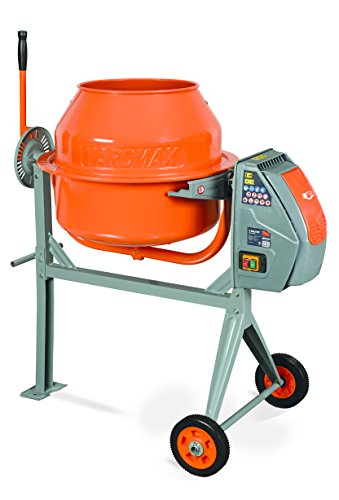
YARDMAX YM0115 Concrete Mixer
What We Like
- IP45 wash down certified motor for easy cleaning.
- Factory-assembled motor drive box simplifies installation.
- Low-profile height simplifies pouring and maneuvering.
- Steel handle with safety lock for secure adjustments.
Trade-offs
- At 102.9 lb, it is heavier than the 90.4 lb BILT HARD Electric model.
- Assembly is required, though it's noted as quick for one person.
The IP45 wash down certification on the motor and gearbox is the standout feature here, meaning you can hose it down without worrying about water damage. For a homeowner tackling messy projects like concrete patios or footings, that translates to a cleanup process that’s measured in minutes, not a frustrating hour of chipping and scrubbing. This mixer suits the DIYer who values a tidy workspace and wants a tool that won’t punish them when the job is done. Its low-profile, 18.5-inch height is a thoughtful design that makes pouring into forms or a wheelbarrow a less back-straining affair.
The trade-off for that durable, easy-clean steel drum is weight. You’ll appreciate that heft for stability when mixing a full load, but it’s not as casually portable as a lighter option like the FTOPBTB Portable Wheelbarrow Mixer. Compared to the poly-drum mixers on the market, the YARDMAX’s steel construction is about longevity and cleanability, not necessarily about being the easiest to drag across an uneven yard. It’s built for the job site, even if that site is your own driveway.
SPECRAFT Portable Concrete Mixer
What We Like
- Large 4.9 cu.ft. drum handles heavy batches.
- Wheelbarrow frame and wheels enable easy site transport.
- Reinforced steel construction promises long-term outdoor durability.
- Simple 110V setup requires no special wiring.
Trade-offs
- At 103.8 lb, it's one of the heaviest portable models.
- Its 120-inch length demands significant storage space.
- The 375W motor is less powerful than some 550W+ competitors.
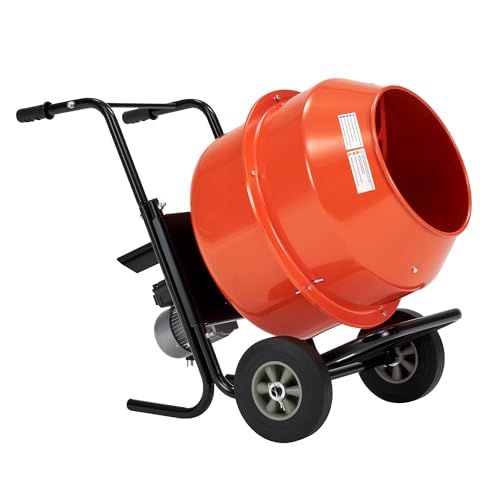
The SPECRAFT’s defining feature is its 4.9 cubic foot steel drum, which gives you the batch capacity to mix enough concrete for substantial slabs or footings in one go. This, combined with its wheelbarrow-style frame, makes it a logical choice for someone who needs to mix large volumes but also move the loaded mixer across uneven ground, like a sprawling backyard project site. It’s built like a workhorse with its reinforced steel frame, designed for the user who prioritizes mixing volume and transport stability over compact storage.
A 375-watt motor provides consistent mixing torque at 29.5 RPM, which delivers steady performance for concrete, mortar, and stucco. It offers less raw power than the 550W motor found on the BILT HARD Electric model. The portable wheelbarrow-style frame with wheels and an ergonomic handle is designed for transport to a site, but its overall size and 103.8-pound weight mean it requires significant storage space.
Product photos
POXURIO Portable Concrete Mixer
What We Like
- Full 360-degree drum rotation for thorough mixing
- Large 4.3 cubic foot capacity for bigger batches
- Sturdy steel frame with a corrosion-resistant finish
- Portable design with two large wheels for easy moving
Trade-offs
- 450W motor is less powerful than some 550W+ competitors
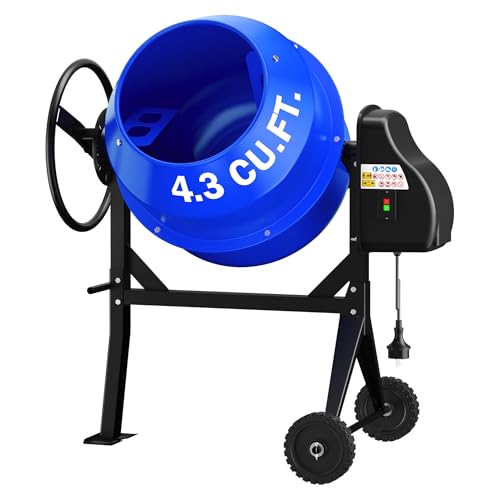
The POXURIO mixer’s standout feature is its 360-degree rotating drum, a design that ensures you can mix materials from every angle without a dead spot. This makes it a solid choice for the DIYer tackling projects like setting fence posts or laying a small patio slab, where a perfectly uniform mix matters. The 4.3 cubic foot capacity handles a useful amount of material per load, and the powder-coated steel frame suggests it’s built to handle the occasional project rather than gather rust in the corner. It’s a machine for someone who values a consistent mix and durable construction in a portable package.
You are trading some raw power for that mixing versatility, however. Its 450W motor is less potent than options like the 600W WORKPRO, which could struggle more with very dense or large batches. The trade-off is clear: you get exceptional mixing uniformity and a tough build, but you might need to work in slightly smaller batches or mix for a bit longer with heavier materials. For most home jobs, the POXURIO’s design delivers a reliable, lump-free mix that can be easily rolled to where you need it.
Product photos
Dragro Handheld Concrete Mixer

What We Like
- Locking switch enables hands-free continuous operation
- Powerful 2100W motor handles thick materials efficiently
- Ergonomic steering wheel handle reduces vibration fatigue
- Includes two mixing heads and essential maintenance parts
Trade-offs
- Requires manual material handling and container, unlike self-contained drum mixers
- Handheld operation is tiring for large-volume projects
The 2100W motor and six-speed control give this handheld mixer the guts to chew through stiff mortar or thick paint without bogging down. Its standout feature is the locking switch, a simple but brilliant design that lets you engage the tool and walk away to manage your material or adjust the mix. That makes it a perfect fit for a DIYer tackling a series of smaller, precise jobs like mixing thinset for a tile backsplash, blending a bag of self-leveling compound, or stirring paint. You get industrial-grade mixing power in a format that stores on a shelf, not in a corner of the garage.
This is a handheld tool, not a wheeled drum machine like the BILT HARD Electric model. You supply your own mixing tub and must support the mixer’s weight over the material during operation. It fits tasks between a drill-mounted paddle and a full-size mixer, where its portability is an advantage over larger, stationary units.
Product photos
How We Evaluated Concrete Mixers
Our research focused on manufacturer specifications and patterns in owner feedback from major retailers and professional forums. We prioritized mixing capacity, motor power, and physical design because these factors directly determine what projects you can tackle and how easily you can move and store the machine. For example, a 4-cubic-foot drum is necessary for a full patio slab, while a 550-watt motor ensures thick mortar mixes consistently. We also considered portability features like wheel size and handle design, which affect usability across a yard.
This evaluation is based on documented specifications and aggregated user feedback. We cross-referenced manufacturer documentation and expert sources to verify features such as drum material and safety certifications. This provides a strong overview of performance potential, though individual experiences with assembly or long-term durability may vary.
What To Look For In Concrete Mixers
The right mixer balances your project’s batch size with your available storage and strength. A machine that’s too small wastes time, while one that’s too large is a burden to move and store.
Key factors are capacity, measured in cubic feet of dry material; motor power in watts or amps; and portability features like wheels and weight. Drum material and cleanup ease are also critical for long-term maintenance.
Mixing Capacity
Capacity, listed in cubic feet, is the volume of dry material the drum can hold. For a small walkway or fence posts, a 2-3 cubic foot mixer is sufficient. For larger projects like a patio slab or foundation, you need a 4 cubic foot capacity or more to mix enough material per batch. Our research shows the largest models, like the SPECRAFT Portable, approach 5 cubic feet, which is ideal for serious DIYers but requires significant storage space.
Motor Power
Motor power determines how well the mixer can handle dense materials like concrete or mortar. Electric drum mixers typically range from 375W to 600W; higher wattage provides more consistent mixing, especially in cold weather or with full loads. For handheld mixers, look for high-torque motors with a high wattage rating to power through thick thinset or plaster without stalling. Variable speed control, as seen on the Bosch GBM9-16, offers greater precision for different materials.
Portability & Design
Consider how you’ll move the mixer around your property and where you’ll store it. Wheelbarrow-style mixers with large, flat-free tires, like the FTOPBTB Portable, excel on rough ground but have a long footprint. Standard two-wheel models with a locking handle are easier to maneuver on flat surfaces. Weight is a major factor; models can vary significantly in weight. A lighter mixer is easier to relocate but may sacrifice drum size or motor power.
- Check the assembled dimensions against your shed or garage space.
- Ensure the wheels are suitable for your terrain (pneumatic vs. Solid).
- Look for a handle that locks in position for stable transport.
- Consider if a tilt-and-pour drum function is necessary for your workflow.
Match the mixer’s footprint and weight to your most frequent project site and storage area.
Concrete Mixers For Home Use Compared
The comparison table below summarizes the key specifications of our top picks to help you see the differences at a glance.
| Product | Motor Power | Drum Capacity | Weight |
|---|---|---|---|
| BILT HARD Electric Cement Mixer | 550W 120V | 4 cu ft | 90.4 lb |
| BILT HARD Poly Drum Cement Mixer | 500W 120V 4.3A | 4.0 cubic feet | N/A |
| WORKPRO Electric Cement Mixer | 600W (0.8 HP) | 4.6 cu.ft. | 94.8 Pounds |
| Bosch GBM9-16 Mixer | 9.0 amp | N/A | 6.6 Pounds |
| CALCHELE Handheld Concrete Mixer | 2100W copper motor | N/A | N/A |
| FTOPBTB Portable Wheelbarrow Mixer | 550W 1/3 HP | 3 Cubic Ft | 50.0 Pounds |
| YARDMAX YM0115 Concrete Mixer | N/A | 4.0 Cu. Ft. | 102.9 Pounds |
| SPECRAFT Portable Concrete Mixer | 375W high-torque | 4.9 cu.ft. | 103.8 Pounds |
| POXURIO Portable Concrete Mixer | 450W | 4.3 cubic feet | N/A |
| Dragro Handheld Concrete Mixer | 2100W copper motor | N/A | N/A |
Frequently Asked Questions
What is the best cement mixer for home use?
The best mixer depends on your typical project size. For most homeowners tackling a range of jobs, a mid-sized electric drum mixer like our best overall, the BILT HARD Electric, offers a great balance of power and capacity. If you only do small repairs, a lightweight wheelbarrow or a powerful handheld mixer may be more practical.
What is the best thing to mix concrete in?
For batches larger than a 5-gallon bucket, a dedicated drum mixer provides the most consistent and efficient results. The rotating drum ensures thorough blending of cement, sand, and aggregate. For very small batches of mortar or repair mix, a heavy-duty handheld mixer used in a bucket is a viable and space-saving alternative.
How long will concrete last in a mixer?
Mixed concrete begins to set quickly, so you should pour it shortly after adding water. Keeping it in a rotating mixer drum can slightly extend this window by preventing premature drying. However, you should not leave mixed concrete in any container for extended periods, as it will begin to harden and become unusable.
What is the best concrete mixer combo?
Many DIYers find a two-tool approach most effective: a large-capacity drum mixer for major pours and a high-power handheld mixer for small batches and finishing materials like thinset or plaster. This combo, such as pairing the WORKPRO Electric with the CALCHELE Handheld, covers the full spectrum of home concrete work without one machine trying to do everything.
What should I consider for mixer storage?
Consider both the footprint and the height of the mixer. Some models are quite tall and may not fit in a standard shed with shelving. Wheelbarrow designs are very long when stored. Look for a model whose dimensions fit your available space, and consider if it can be easily tipped upright or partially disassembled to save room.
The Bottom Line
For most homeowners, the BILT HARD Electric Cement Mixer is the best overall choice, offering reliable power and ample capacity for common projects like patios and footings. If you’re on a tighter budget or primarily do small jobs, consider the award-winning Best Lightweight, the FTOPBTB Portable Wheelbarrow Mixer. For those with large, periodic pours, the Best Large Capacity WORKPRO Electric is worth the investment.
Ultimately, honestly assessing the scale of your planned projects and your available storage space is the single most important step in choosing a concrete mixer you’ll be happy with for years.
