
10 Best Detail Sanders For Tight Spaces And Corners in 2026
This post contains affiliate links. As an Amazon Associate, we earn from qualifying purchases.
For sanding in cramped corners, our best overall pick is the Skil Multi-Function Corded Detail Sander for its four-in-one versatility. The Black+Decker Corded Detail Sander wins for compact design, while the HOZO NeoSander offers exceptional low-vibration precision for miniature work. Getting into tight spaces requires a tool shaped for the job, not just a smaller version of a full-size sander.
We researched specifications, manufacturer data, and patterns in owner feedback to identify the key features that matter most for this specific task. This guide ranks ten models to match different needs, from cordless convenience to complete starter kits.
Top 10 Detail Sanders for Tight Spaces and Corners in the Market
Certain content that appears on this site comes from Amazon. This content is provided "as is" and is subject to change or removal at any time.
The Best Detail Sanders for Tight Spaces and Corners, Reviewed
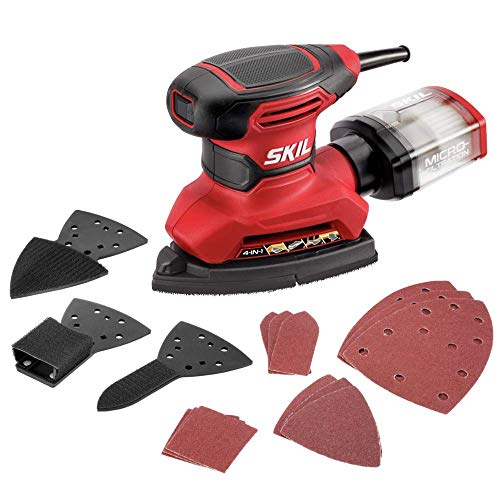
Skil Multi-Function Corded Detail Sander
What We Like
- Four-in-one versatility with three included detail attachments
- Hook-and-loop system for quick sandpaper changes
- Low vibration design reduces hand fatigue
- Dust-sealed on/off switch for hassle-free operation
Trade-offs
- 13,500 OPM is slower than some corded rivals like the Black+Decker
- Larger footprint than pen-style options like the HOZO NeoSander
Swapping three specialized attachments without tools lets you move instantly from broad surfaces to tight corners and contoured rails. This 4-in-1 versatility, driven by a 1.2 amp motor, comes with helpful accessories for fine finishing. The ergonomic grip and counterweight balance reduce hand fatigue from vibration, so you can work longer on a big project.
You do trade some outright speed for that versatility, at 13,500 OPM, it’s not the fastest sander here. For rapid stock removal on large, flat areas, a dedicated palm sander might be quicker. But for getting into corners and along edges, the included finger pad and mouse pads are genuinely effective. Compared to a compact pen sander like the HOZO NeoSander, the Skil is bulkier, but it offers more sanding modes and better dust control right out of the box. It’s a pragmatic, well-rounded tool that covers most detail sanding needs capably.
Product photos
Black+Decker Corded Detail Sander

What We Like
- Compact design for cramped corners and tight spaces
- Finger attachment for hard-to-reach spots
- Dust canister collects an estimated 80% of sanding dust
- Corded design for unlimited runtime and continuous power
Trade-offs
- Corded design limits mobility away from an outlet
- Larger footprint than pen-style sanders like the HOZO NeoSander
This sander’s motor provides 16,000 orbits per minute, giving it consistent power for material removal without bogging down, and the cord means you never have to wait for a battery. Its compact body and included finger attachment are the main event, letting you sand right into corners and narrow moldings where bulkier tools simply can’t fit. For the DIYer facing a weekend of trim work or furniture refinishing, this Black+Decker model delivers focused performance where it counts.
The corded design provides unlimited runtime, which means you can tackle large projects without worrying about battery life. Research indicates the built-in dust collector captures approximately 80 percent of sanding dust, helping to keep your workspace cleaner. While the compact shape and included finger attachment are designed for navigating tight corners, a dedicated pen-style sander is even smaller for miniature tasks. For most detail sanding jobs that require sustained power and access to awkward angles, this model’s combination of features offers a balanced solution.
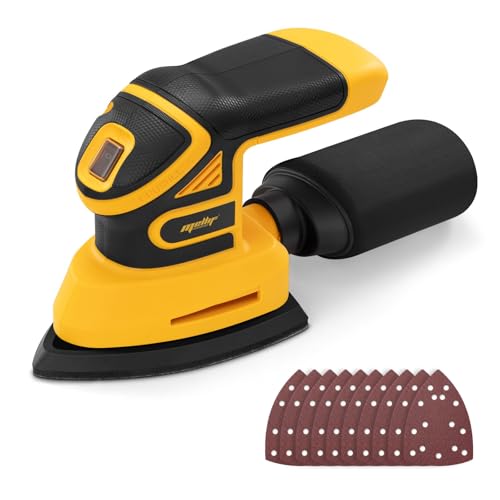
Mellif Brushless Cordless Detail Sander
What We Like
- Brushless motor for longer life and efficiency
- Lightweight, cordless design for maneuverability
- Built-in dust collection with easy-remove box
- Includes smart battery protection system
Trade-offs
- Tool only: requires a separate DeWalt battery and charger
- Not a dedicated pen sander for ultra-tight spots
Compatibility with the DeWalt 20V MAX battery system is the defining feature here, letting you tap into an existing cordless ecosystem without buying new batteries. This makes the Mellif a logical choice for anyone already committed to that platform who needs a detail sander for corners and edges. Its brushless motor and feather-light build of 1.76 pounds mean you can work overhead or in cramped quarters without the drag of a cord, and the dust box helps keep the mess contained.
It’s a capable tool for general detail work, but if your project involves sanding inside a dollhouse or intricate 3D prints, a dedicated pen sander is built for that extreme precision. For the DeWalt user, however, this sander slots in as a convenient and capable workshop companion.
Product photos
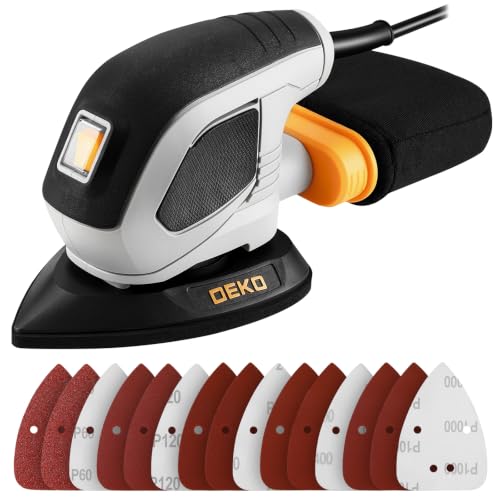
DEKOPRO Corded Electric Detail Sander
What We Like
- Comprehensive kit with 15 sandpapers in five grits
- Dual dust collection system with bag and vacuum hose
- Compact triangular base for corners and tight spaces
- Rubber-coated grip and low-vibration design for comfort
Trade-offs
- Corded design limits mobility compared to battery models
A 13,000 RPM motor and a complete kit of 15 sandpapers mean you can start sanding immediately, moving from coarse stripping to fine finishing without a trip to the store. This DEKOPRO model is a solid fit for the homeowner or DIYer tackling furniture refinishing or small wood projects. The dual dust collection system offers flexibility, letting you use the attached bag for quick cleanups or hook up a shop vacuum for a nearly dust-free environment. Its classic mouse shape and rubber grip make it easy to control in tight quarters, which is exactly where you need it.
Its 100-watt motor delivers up to 13,000 RPM for sanding and paint stripping, which is sufficient for detail work in corners but not for quickly refinishing large surfaces. Compared to other corded models, this sander’s strength lies in its included accessories rather than maximum power output. This makes it a practical choice for varied, smaller-scale woodworking and DIY projects where having multiple sandpaper grits and dust collection options ready is a priority.
Product photos
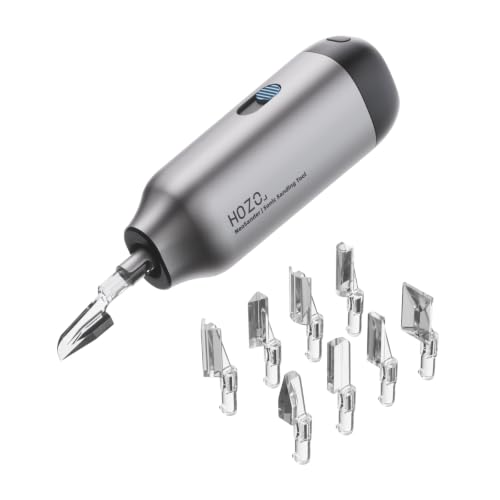
HOZO NeoSander Reciprocating Pen Sander
What We Like
- Patented counterweight reduces vibration by up to 85%
- Palm-sized, 4.1-inch body for extreme precision
- IP54 rating supports wet sanding and dust resistance
- Includes eight specialized heads for corners and edges
Trade-offs
- 45-minute runtime may require breaks for large projects
- Small stroke length is for fine finishing, not aggressive material removal
The 85% reduction in hand vibration from its internal counterweight system is the standout feature here, making long sessions of delicate sanding far less fatiguing. This tool is built for the model maker or fine crafter who needs surgical control in tight spaces. Its featherlight 89-gram body and eight specialized sanding heads, including pointed and angled tips, let you work into crevices and corners that a standard detail sander simply can’t touch. The stepless stroke adjustment gives you direct command over the aggressiveness of your finish, from shaping to final polish.
The trade-off for that precision is that its 0.6-1.8mm stroke is designed for finesse, not for stripping paint or flattening seams. You’ll use this after a larger tool has done the rough work. For continuous, heavy-duty sanding on a bigger project, the corded power of something like the Skil Multi-Function Detail Sander would be a better fit, as the HOZO’s 45-minute battery, while respectable, will need recharging breaks. This is a specialist, not a generalist.
Product photos
Black+Decker Mouse Electric Detail Sander

What We Like
- Compact design for cramped corners and tight spaces
- Includes a detail finger for hard-to-reach spots
- Dust-sealed switch improves internal durability
- Comfort grip reduces fatigue during use
Trade-offs
- Corded design limits mobility compared to cordless models
- At 10.1 inches long, it's bulkier than pen-style sanders like the HOZO NeoSander
Powered by a 1.2-amp motor, this sander delivers 14,000 orbits per minute to remove material quickly in confined spaces. Its compact, mouse-shaped design allows access to cramped corners and tight spots, making it suitable for tasks like window sashes or cabinet frames. A high-performance dust collection canister, which reviewers report captures about 80 percent of sanding dust, helps keep the worksurface clean, and the included detail finger attachment reaches hard-to-reach spots.
The trade-off is in its corded nature and size. You get unlimited runtime, which is great for big jobs, but you’re tethered to an outlet. While compact for a mouse sander, it can’t match the ultra-slim profile of a dedicated pen sander for the tightest spots. If your project involves mostly flush surfaces with occasional detail work, a multi-function model like the Skil might offer more versatility. But for dedicated detail sanding on a budget, this Black+Decker delivers reliable, basic performance from the moment you open the package.
Product photos
Onemana 2-in-1 Brushless Detail Sander

What We Like
- Interchangeable pads for corners and flat areas
- Brushless motor for lower noise and vibration
- Six speed levels with constant-speed memory
- Symmetrical body fits comfortably in either hand
Trade-offs
- Requires a separate vacuum for full dust collection benefit
The ability to switch between a triangular pad for corners and a square pad for flat surfaces means you can handle an entire furniture refinishing project with one tool. That 2-in-1 design is the core appeal for anyone tired of juggling multiple sanders. The 350W brushless motor provides smooth, durable power across its six speed settings, which is plenty for everything from stripping paint to final touch-ups. This sander suits the DIYer or woodworker who needs versatility more than ultimate compactness, offering a capable all-in-one solution for detailed renovations.
The Onemana’s 2-in-1 interchangeable design handles both tight corners and broad surfaces, making it a single tool for most sanding tasks. Its symmetrical body fits comfortably in either hand, and the extended grip allows for two-handed control on large areas. While versatile, its 14.2-inch length with cord and hose requires managing two tethers during use.
Product photos
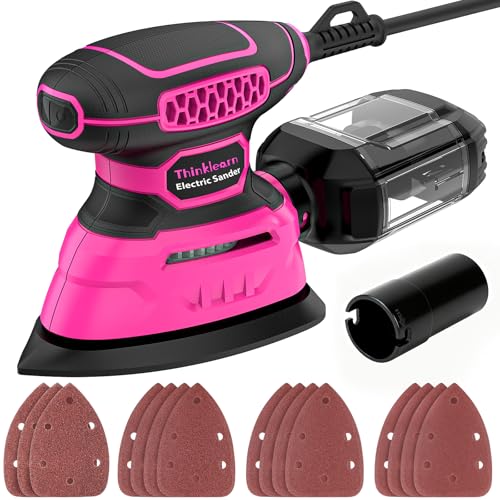
ThinkLearn Corded Detail Sander
What We Like
- Compact 2-pound body fits tight corners.
- Includes dust box and vacuum adapter.
- Comes with 15 sanding sheets in four grits.
- Soft rubber grip for comfortable handling.
Trade-offs
- Corded design limits mobility compared to cordless tools.
- No variable speed control listed.
- Requires regular cleaning of dust box and filter.
A 2-pound weight and triangular shape mean this sander can easily be maneuvered into corners and held comfortably in one hand for detailed work. Its 13,000 OPM motor and included assortment of sandpapers make it a ready-to-go kit for someone tackling small furniture, cabinet, or craft projects. This is a straightforward, plug-and-play tool for a beginner who wants to get started without a complex setup or a hefty investment.
This 1.2-amp corded sander delivers 13,000 orbits per minute, giving it plenty of power for sanding wood, metal, and furniture on small projects. Its 5.9-foot cord is described as providing longer running time compared to shorter cables, but it does require proximity to an electrical outlet. The tool focuses on its core sanding function rather than offering multiple attachments like some other models in its category.
Product photos
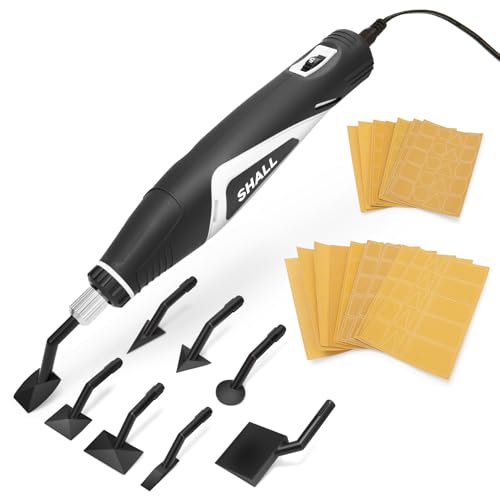
SHALL Mini Pen Sander
What We Like
- Extremely lightweight and slender pen design
- Comprehensive kit with 8 different head shapes
- Four-speed adjustment for material control
- Tool-free head installation for quick changes
Trade-offs
- Corded design limits mobility compared to battery models
- Maximum 10000 SPM is slower than some competing detail sanders
Weighing just 0.3 pounds, this sander is built for detail work where fatigue and precision matter. Its slender pen shape and eight different sanding head profiles let you tackle corners and intricate contours that bulkier tools simply can’t reach. The included assortment of 18 sanding sheets across six grits means you’re ready for everything from rough shaping to fine finishing immediately. This makes it a natural fit for meticulous tasks like smoothing 3D-printed parts, refinishing furniture details, or crafting small wooden projects where control is paramount.
This sander’s greatest strength is its slender pen-like design, which makes it easy to hold for detailed work in tight corners without hand fatigue. Its speed adjusts from 5,000 to 10,000 strokes per minute, a range suited for finishing rather than heavy material removal. The tool comes with a long six-foot power cord, providing ample reach for various working angles around a workspace.
Product photos
Craftsman Corded Mouse Detail Sander

What We Like
- Dust-sealed switch for longevity in dusty jobs
- Compact mouse shape fits into tight spaces
- Includes detail attachment for hard-to-reach spots
- Rubber grip enhances control during use
Trade-offs
- Corded design limits mobility away from outlets
- At 11.2 inches long, it's bulkier than pen-style sanders like the HOZO NeoSander
A dust-sealed switch helps protect the tool’s internal components from fine dust, a feature that can contribute to its longevity in dusty environments. With an operating speed of 14,000 orbits per minute, this sander delivers consistent motion for a variety of finishing tasks. Its rubber grip is designed to increase control and comfort during use, and the included detail attachment is intended to help reach into corners and other tight spaces.
The tool’s form factor measures 5.9 inches long and weighs 2.8 pounds, resulting in a compact but substantial feel in the hand. For comparison, the HOZO NeoSander is listed at 4.1 inches long and 0.2 pounds, suggesting a different class of tool focused on miniaturization. This Craftsman model includes two attachments and a dust bag, offering a balance of accessory support and the professional-grade durability implied by its sealed switch.
How We Evaluated Detail Sanders for Tight Spaces and Corners
Our evaluation is research-based. It draws from manufacturer specifications, expert tool round-ups, and consistent patterns in owner feedback. We prioritized criteria critical for confined work, starting with the tool’s physical footprint and its ability to reach into corners. We also looked at how well its dust collection keeps the workspace visible, along with design features that reduce user fatigue during detailed projects.
We also considered power source, accessory kits, and value. A limitation of this approach is that we cannot verify claimed performance metrics like vibration reduction percentages or dust collection efficiency through hands-on measurement; we rely on the aggregate experience reported by users and experts.
What To Look For In Detail Sanders for Tight Spaces and Corners
Choosing the right detail sander means matching the tool’s form and function to the specific nooks and crannies you need to smooth. A pen-style sander excels in a dollhouse, while a triangular “mouse” sander is better for refinishing a window frame.
Focus on the tool’s shape and size first, its ability to physically reach the spot is paramount. Then, consider dust collection to maintain a clear view, power source for mobility or unlimited runtime, and included accessories for immediate use.
Size and Shape
The defining feature is a compact, often triangular or pointed sanding pad designed for corners. True compactness is measured by the tool’s overall length and the profile of its sanding head. For extreme precision, pen-style sanders like the HOZO NeoSander offer a slender, four-inch body that fits where bulkier tools cannot.
Conversely, a standard mouse sander, while compact relative to a palm sander, still has a larger footprint that may not suit ultra-fine model work. The shape directly determines which sanders you should consider for your specific project, especially when working in small spaces.
Dust Collection
Sanding in tight spaces generates dust that can obscure your sight lines, making effective collection crucial. Systems range from simple dust boxes, like the one on the DEKOPRO Corded Electric Detail Sander, to ports that connect to a shop vacuum for near-total dust extraction. Look for a design that seals well and is easy to empty; a clogged system is worse than none at all. For refinishing furniture in a living space, sanders with vacuum attachments are a significant quality-of-life upgrade, keeping the area cleaner and your lungs safer.
Power and Runtime
Corded models provide continuous, consistent power without battery anxiety, ideal for longer sessions sanding trim or furniture details. Cordless sanders offer superior maneuverability and are perfect for quick touch-ups or working far from an outlet. If you choose cordless, check the runtime; some compact models may only last 45 minutes per charge, which is fine for hobby work but frustrating for large projects. Your decision here impacts both the tool’s upfront cost and its long-term convenience, a key factor in any guide to choosing the best detail sander.
Accessories and Versatility
Many kits come with a variety of sanding pads (like finger attachments for grooves) and an assortment of sandpaper grits. A comprehensive kit, such as the one with the SHALL Mini Pen Sander, means you can start working immediately on different materials and contours. For general woodworking projects, a multi-attachment detail sander like our top pick can handle edges, corners, and contoured surfaces, reducing the need for multiple specialized tools.
- Check if sandpaper uses a hook-and-loop system for quick changes or requires adhesive backing.
- Verify that any included dust collection bag or canister is easily removable for cleaning.
- Look for ergonomic features like rubberized grips or low-vibration designs if you’ll be sanding for extended periods.
The ideal tool balances a shape that fits your work with features that make the detailed job less tedious.
Detail Sanders for Tight Spaces and Corners Compared
The following table compares the key specifications and features of all ten detail sanders to help you see the differences at a glance.
| Product | Speed | Weight | Dust Control |
|---|---|---|---|
| Skil Multi-Function Corded Detail Sander | 13,500 orbits per minute | 2.6 pounds | Micro-filter box & 1-1/4" vacuum port |
| Black+Decker Corded Detail Sander | 16,000 orbits per minute | N/A | Integrated canister |
| Mellif Brushless Cordless Detail Sander | 12,000 OPM | 1.76 lbs | Dust box |
| DEKOPRO Corded Electric Detail Sander | 13,000 RPM | N/A | Bag and extraction hose |
| HOZO NeoSander Reciprocating Pen Sander | 13,000 SPM | 0.2 pounds | N/A |
| Black+Decker Mouse Electric Detail Sander | 14,000 orbits per minute | N/A | High-performance canister |
| Onemana 2-in-1 Brushless Detail Sander | 4000-10000 OPM | N/A | Dust Collection |
| ThinkLearn Corded Detail Sander | 13,000 OPM | 2 pounds | Dust collector box |
| SHALL Mini Pen Sander | 5000 to 10000 SPM | 0.3 pounds | N/A |
| Craftsman Corded Mouse Detail Sander | 14,000 opm | 2.8 pounds | Dust bag |
Frequently Asked Questions
What is the best detail sander for tight spaces?
The best tool depends on the space. For general DIY and furniture work, a compact triangular “mouse” sander like the Black+Decker Corded Detail Sander is excellent. For ultra-fine work on models or intricate crafts, a pen-style sander like the HOZO NeoSander provides unmatched precision in miniature spaces.
What is the best sander for sanding awkward places?
A detail sander with specialized attachments is ideal for awkward places. Look for models that include a narrow “finger” attachment for sanding between spindles or in grooves. The Skil Multi-Function Corded Detail Sander is a strong choice here, as its kit includes multiple pads designed for edges, corners, and contoured surfaces.
What sander works best for corners?
A sander with a triangular sanding pad is specifically designed for corners. This shape allows the point to fit squarely into 90-degree angles. Many models, including the Craftsman Corded Mouse Detail Sander, use this classic triangular “delta” pad, making them perfect for sanding inside corners on trim, cabinets, and furniture.
How to sand in really tight corners?
For corners too tight for a standard triangular pad, you need a pointed accessory. Use a detail sander equipped with a conical or pointed sanding head, like those included with the SHALL Mini Pen Sander kit. These tiny heads can reach into sharp inside corners, detailed moldings, and other confined areas that larger pads cannot touch.
Can I use a detail sander on flat surfaces?
Yes, but it is inefficient for large areas. Detail sanders are designed for small, intricate work. For flattening larger surfaces, a random orbital sander is far more effective. Some 2-in-1 models, like the Onemana 2-in-1 Brushless Detail Sander, offer interchangeable pads for both corners and smaller flat areas, providing more versatility.
The Bottom Line
For most DIYers tackling corners, edges, and detailed woodworking, the Skil Multi-Function Corded Detail Sander is the best overall choice. Its included attachments make it a versatile single-tool solution for a variety of sanding tasks beyond just tight spots. Budget-conscious beginners should look at the ThinkLearn Corded Detail Sander for a complete starter kit, while model makers and those needing vibration-free precision will find the HOZO NeoSander Reciprocating Pen Sander indispensable.
Ultimately, the most important factor is choosing a sander whose shape and size can physically reach the spaces you need to smooth.
