
10 Best Die Grinders in 2026
This post contains affiliate links. As an Amazon Associate, we earn from qualifying purchases.
Our best overall die grinder is the Ingersoll Rand 3107G Straight Air Die Grinder for its professional-grade reliability and safety features. The Ingersoll Rand 302B is our top right-angle model for tight spaces, and the Milwaukee M12 Fuel offers excellent cordless freedom. Choosing the wrong die grinder can leave you underpowered or struggling to reach critical angles.
You need a tool that matches your power source and the specific contours of your work. We researched professional specifications, manufacturer data, and patterns in user feedback to compile this list of ten standout models. This guide will help you find the right grinder for metal fabrication, automotive work, or detailed finishing.
Top 10 Die Grinders in the Market
Certain content that appears on this site comes from Amazon. This content is provided "as is" and is subject to change or removal at any time.
The Best Die Grinders, Reviewed
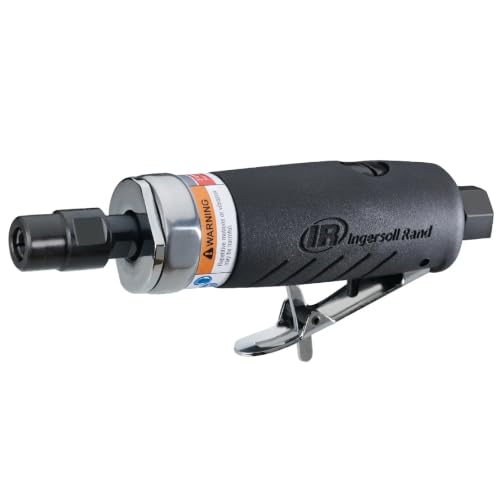
Ingersoll Rand 3107G Straight Air Die Grinder
What We Like
- Self-locking throttle for improved safety
- Includes three versatile metalworking attachments
- Precision ball-bearing construction for reliability
Trade-offs
- Requires a capable air compressor to operate
- Straight design can't reach some angles like a right-angle model
Ingersoll Rand’s G-series engineering, proven over decades, is built into this straight die grinder designed for production grinding. Its 0.33 hp motor delivers a consistent 27,000 rpm for tasks like metalworking and auto-body repair. The 1.4-pound tool has a straight configuration for access in tight spots, and the self-locking throttle improves safety by preventing accidental starts. It comes with a tapered punch, panel cutter, and flat chisel for cutting metal, scraping surfaces, or exhaust work.
This tool requires a shop air compressor, as one is not included, so it is not suited for jobs away from an air supply. Compared to other models like the Makita GD0800C, it does not offer variable speed control. For work in extremely confined corners, a right-angle grinder like the Ingersoll Rand 302B may provide better access. However, for straight grinding and cutting where air is available, its steady performance and included attachments provide a complete setup.
Ingersoll Rand 302B Right Angle Air Die Grinder

What We Like
- Right-angle head for access in confined spaces.
- Lightweight design reduces user fatigue.
- Self-locking throttle for safety and control.
- Rear exhaust keeps the workspace cleaner.
Trade-offs
- Requires a separate air compressor to operate.
- Right-angle configuration limits reach in some deep cavities.
With a 0.33 hp motor delivering 20,000 rpm in a right-angle configuration, this grinder is designed for grinding, cutting, and polishing in tight or hard-to-reach spaces. Its compact size fits into confined areas for automotive, fabrication, and industrial applications. The 1.3-pound weight reduces fatigue during extended use, and the composite housing with ball-bearing construction is engineered for long-term reliability.
Its right-angle shape makes it easy to maneuver in confined areas, while a straight grinder such as the Ingersoll Rand 3107G has a longer body for different types of reach. This tool requires an air compressor, which means you must manage a hose. It delivers steady output without power dropoff for precision tasks in auto shops and metalworking, and its rear exhaust helps keep the workspace clean.
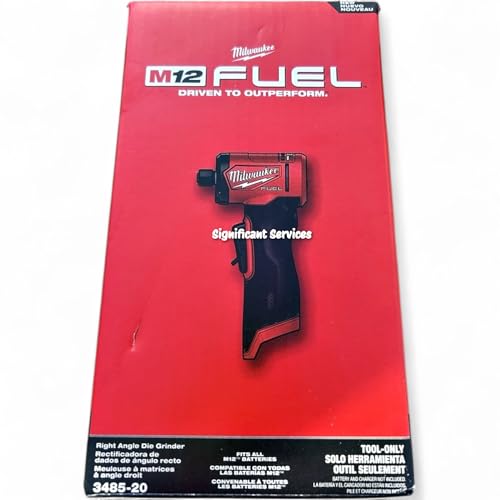
Milwaukee M12 Fuel Right Angle Die Grinder
What We Like
- Compact barrel grip for tight spaces
- Spindle lock for one-wrench changes
- Shadowless LED work light
- Brushless motor for efficiency
Trade-offs
- Requires M12 battery and charger
- Longer than pneumatic right-angle models
- 1.6 lb weight is more than some air tools
A barrel grip and a compact 9.4-inch length let you maneuver this grinder into corners and crevices where a straight tool simply won’t fit. That right-angle head, combined with its cordless M12 Fuel design, makes it the clear choice for a mechanic or fabricator who needs to clean welds or prep surfaces away from a shop air line. The spindle lock is a thoughtful touch, saving time and frustration during frequent bit swaps.
You trade some of the raw speed and featherweight feel of a pneumatic tool like the Ingersoll Rand 302B for the convenience of no hose. At 1.6 pounds, it has more heft than air grinders, which can matter during hours of overhead work. This is a tool built for portability and access, not for the absolute lightest touch or highest free speed. For a dedicated bench station, a plugged-in or air-powered model might be a better fit.
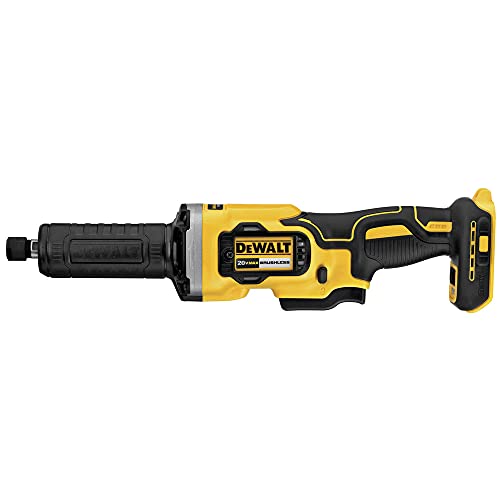
DEWALT DCG426B 20V Max Cordless Die Grinder
What We Like
- Brushless motor for efficient runtime
- Variable speed up to 25,000 RPM
- LED light for dark work areas
- Dual-position rocker switch for grip options
Trade-offs
- Tool only: requires separate battery and charger purchase
- Larger footprint than pneumatic models like the Chicago Pneumatic CP860
A variable speed trigger that hits 25,000 RPM gives you precise control for everything from aggressive material removal to fine finishing work, all without being tethered to an air hose. That cordless freedom, backed by a brushless motor for better battery life, makes this DeWalt a prime choice for mobile mechanics or anyone working far from a compressor. The built-in LED is a simple but critical feature that illuminates the exact spot you’re grinding, which is exactly the kind of thoughtful design that saves time and improves results on detailed projects.
This cordless die grinder trades the hose of a pneumatic tool for the freedom of a 20V battery, so you can take professional-grade power anywhere. That cordless convenience comes with more bulk than a compact air tool; at 17 inches long, it is larger in the hand than models like the straight Ingersoll Rand 3107G. For a stationary shop with an air supply, a pneumatic model will be lighter, but this DeWalt delivers its variable-speed performance where outlets and compressors aren’t available.
Makita GD0601 AC/DC Die Grinder

What We Like
- AC/DC switch for versatile power sources
- Directional vents keep debris away from face
- Round collet nut prevents workpiece scratches
- Barrel grip is small for comfortable handling
Trade-offs
- At 3.7 lb, it's heavier than pneumatic models
- 14.1-inch length is less nimble in tight spaces
- No variable speed control for finer tasks
With a 3.5 AMP motor delivering 25,000 RPM, the Makita GD0601 provides the speed needed to handle metal and weld beads without losing momentum. Its AC/DC switch offers flexibility for different power sources, while a noise level of 73dB(A) helps reduce user fatigue during long sessions. The directional air-flow vents are designed to channel exhaust away from your face, which keeps the work area clearer.
You get that power and dual-power flexibility, but the tool has some bulk. At over three and a half pounds and more than a foot long, it feels substantial in the hand. For detailed work in cramped engine bays or intricate fabrication, a compact air tool will be far more maneuverable. The Makita trades that finesse for relentless, plug-anywhere rotational force, making it a shop anchor rather than a detail finisher.
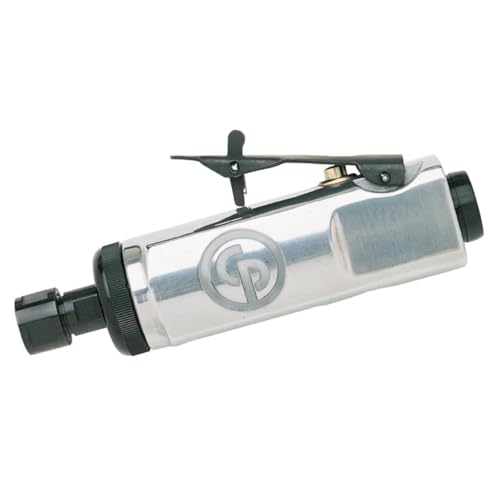
Chicago Pneumatic CP860 Straight Air Die Grinder
What We Like
- Compact, lightweight design for tight spaces
- Square handle and rear exhaust for control
- Lock-off throttle prevents accidental starts
Trade-offs
- Requires a dedicated 90 PSI air supply
- Straight design can be cumbersome for some angled work
- No variable speed control mentioned
A 0.54 horsepower motor delivers a maximum speed of 24,000 RPM in a tool weighing 1.26 pounds, built for heavy-duty grinding and polishing. The Chicago Pneumatic CP860 is designed for general maintenance in limited spaces, like porting engines or cleaning welds. Its square handle provides a positive grip, and the rear exhaust directs air away from the work area for control during extended use.
The trade-off is its dependence on a quality air compressor set to 90 PSI, which limits portability compared to a cordless option like the DeWalt DCG426B. Its straight configuration also means it won’t reach into certain corners as easily as a right-angle model. But for the gritty, high-RPM grinding and polishing tasks it’s made for, this tool’s power-to-size ratio and durability, based on manufacturer specs and expert analysis of similar models, make it a standout in its category.
Product photos
NEIKO 10649A Micro Air Die Grinder
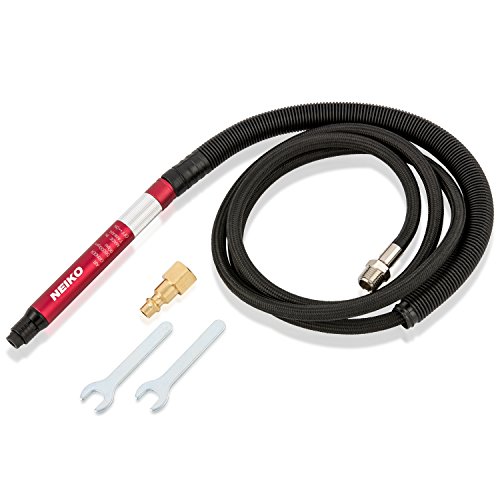
What We Like
- Extremely lightweight at just 0.2 pounds
- Includes 5ft hose, wrenches, and nipple
- Variable speed with self-closing throttle lever
Trade-offs
- Requires a 90 PSI air compressor to operate
- Maximum collet size is only 1/8\"
A free speed of 54,000 RPM in a tool weighing just over three ounces makes the NEIKO 10649A a precision instrument for detail work. That combination of high speed and negligible heft is perfect for the hobbyist or mechanic who needs to clean up brake components, polish small parts, or deburr intricate pieces without hand fatigue. It’s a focused tool for fine finishing, not bulk grinding.
The trade-off for that featherweight control is an absolute dependence on shop air. You’ll need a capable compressor plumbed to your bench, which limits portability compared to a cordless option like the Milwaukee M12. And while it glides through polishing, its 1/8\” collet and micro size mean it’s simply not built for the heavier cuts you’d tackle with a 1/4\” straight grinder like the Chicago Pneumatic CP860.
Product photos
Chicago Pneumatic CP9104Q Pencil Die Grinder

What We Like
- Extremely lightweight, compact pencil design
- Very high 60,000 RPM speed for detail work
- Built-in air regulator for controlled speed adjustment
- Versatile for metal, plastic, and wood tasks
Trade-offs
- 0.05 HP is low for heavy material removal
- Requires a dedicated 1/8-inch collet tooling set
With a free speed of 60,000 RPM and a weight under half a pound, this pencil die grinder is built for high-speed detail work. That extreme spindle rotation is designed for precision tasks like deburring metals or polishing stainless steel where a steady hand is crucial. Its compact, 5.24-inch length and lightweight design promote comfortable handling during extended sessions on intricate projects. A built-in air regulator provides controlled speed adjustments for working on different materials like wood or plastic.
You gain excellent precision, but its 0.05 HP motor isn’t meant for hogging off material. For that kind of work, you’d want a more substantial tool. Think of this as a surgical instrument. It excels at the finishing touches where a heavier, more powerful grinder would be clumsy and overkill, keeping fatigue low during long, detailed sessions.
Product photos
Makita GD0800C Variable Speed Die Grinder

What We Like
- SJS clutch protects motor from sudden stops
- Constant speed control maintains RPM under load
- Directional vents keep debris away from face
Trade-offs
- At 3.5 lb, it's heavier than most air die grinders
- Requires a corded power source, limiting mobility
A variable speed control dial enables the user to match the speed to the application, which means you can start slow for precise deburring and crank it up for aggressive material removal. This makes the Makita GD0800C a logical choice for anyone working with diverse metals or composites, where a single fixed speed just won’t do. The constant speed control automatically applies additional power to maintain speed under load, so your finish stays consistent when you hit a tough spot. It’s built for the shop user who needs one grinder to handle delicate work and heavy grinding.
This tool offers incredible flexibility and corded consistency, but it is a substantial handful. At 3.5 pounds and with a significant length, it’s noticeably heavier and larger than many pneumatic options. You lose the featherweight feel of an air tool. For prolonged overhead work or in tight engine bays, that weight becomes a real factor. This is a bench-anchor workhorse, not a detail finisher you’ll use all day in confined spaces.
Product photos
JET JAT-410 Pneumatic Micro Die Grinder

What We Like
- Ultra-high 70,000 RPM speed for fine detail work
- Feather-light steel housing under half a pound
- Kevlar vanes reduce maintenance and extend life
- Overhose directs exhaust and noise away from user
Trade-offs
- Pneumatic operation requires a capable air compressor
- 1/8-inch collet limits accessory size versus 1/4-inch models
- 81 dB noise level still requires hearing protection
With a variable-speed throttle reaching up to 70,000 RPM, this pneumatic grinder offers a high free speed for fine finishing work. Its steel housing weighs under half a pound, which contributes to easy handling in confined spaces. The design includes Kevlar rotor vanes to help extend tool life and an overhose that pushes exhaust away from the workspace while reducing noise to 81 dB.
Being a pneumatic tool, it needs a compressed air supply, unlike cordless models such as the Milwaukee M12 Fuel. The 1/8-inch collet limits it to smaller accessories compared to tools with a 1/4-inch collet. This makes it a specialized tool for high-speed, detailed applications.
Product photos
How We Evaluated Die Grinders
Our evaluation focused on specifications from manufacturers and patterns in professional and owner feedback. We studied features like motor type, horsepower, spindle speed, and physical design to understand each tool’s intended application. Key criteria included power source viability (air compressor requirements or battery platform), ergonomics for prolonged use, and the versatility offered by features like variable speed or right-angle heads.
For a deeper look at high-speed rotary work, you can read our guide on how to use an air die grinder. Since this is a research-based guide, we cannot account for the long-term durability that comes from years of hands-on shop use, which is an important consideration for daily professionals.
What To Look For In Die Grinders
Your primary decision is choosing a tool that fits your workspace and the tasks you perform most often. The right die grinder balances power, control, and accessibility.
Select a die grinder based on your power source first: pneumatic for maximum power in a shop, cordless for mobility, or corded for consistent high-RPM performance. Then, consider the head style, straight for reach, right-angle for tight spaces, and whether you need variable speed control for different materials and finishes.
Power Source
This is the most fundamental choice. Pneumatic die grinders, like our top picks from Ingersoll Rand and Chicago Pneumatic, deliver high power and low weight but require a capable air compressor supplying adequate CFM at 90 PSI. Cordless models, such as those from Milwaukee and DEWALT, offer excellent mobility and are ideal for jobs away from a compressor, but you must invest in the corresponding battery platform.
Corded electric tools, like the Makita GD0601, provide consistent, high-RPM power without runtime concerns but limit your range of movement with a power cord.
Design and Ergonomics
The physical form of the die grinder dictates where you can use it. A straight or inline design is excellent for reaching into deep cavities and offers straightforward control, similar to a large pencil. A right-angle head, like on the Ingersoll Rand 302B, provides crucial access to tight corners and confined spaces.
Weight and grip size are critical for fatigue; professional pneumatic models often weigh under one pound, while heavier corded or cordless tools can exceed three pounds. Features like a rear exhaust or directional vents, found on several models here, help keep debris away from your workpiece and your face.
Performance Features
Look for features that enhance control and versatility for your specific tasks. Variable speed control, available on models like the DEWALT DCG426B and Makita GD0800C, allows you to match the RPM to the job, from aggressive stock removal to delicate finishing. A self-locking or lock-off throttle prevents accidental starts, a key safety feature on many pneumatic tools.
For detailed work, ultra-high-speed pencil grinders like the JET JAT-410 offer precision at 70,000 RPM, but they use smaller 1/8-inch collets. For heavy material removal, you’ll want a tool that accepts standard 1/4-inch die grinder bits.
- Check the collet size (common sizes are 1/4″ and 1/8″) to ensure compatibility with your existing accessories.
- Verify the air consumption (CFM) of a pneumatic model against your compressor’s output.
- For cordless tools, consider the cost and availability of the required battery system.
- Assess the need for integrated work lights or spindle locks for easier bit changes.
Ultimately, the best die grinder is the one that reliably reaches the work you do most often with the power source you have available.
Die Grinders Compared
The table below summarizes the key specifications for our top picks to help you compare them at a glance.
| Product | Collet Size | Free Speed (RPM) | Weight |
|---|---|---|---|
| Ingersoll Rand 3107G Straight Air Die Grinder | 1/4 inch | 27,000 rpm | 1.4 pounds |
| Ingersoll Rand 302B Right Angle Air Die Grinder | 1/4 inch | 25,000 RPM | 1.3 pounds |
| Milwaukee M12 Fuel Right Angle Die Grinder | 1/4 inch | N/A | 1.6 pounds |
| DEWALT DCG426B 20V Max Cordless Die Grinder | N/A | 25,000 RPM | N/A |
| Makita GD0601 AC/DC Die Grinder | 1/4 inch | 25,000 RPM | 3.7 Pounds |
| Chicago Pneumatic CP860 Straight Air Die Grinder | 1/4 inch (6 mm) | 24,000 RPM | 1.26 pounds |
| NEIKO 10649A Micro Air Die Grinder | 1/8" (3mm) | 54,000 RPM | 0.2 pounds |
| Chicago Pneumatic CP9104Q Pencil Die Grinder | 1/8 inch (3 mm) | 60,000 RPM | 0.44 lb |
| Makita GD0800C Variable Speed Die Grinder | 1/4 inch | N/A | 3.5 pounds |
| JET JAT-410 Pneumatic Micro Die Grinder | 1/8 inch | 70,000 RPM | N/A |
Frequently Asked Questions
Who makes the best die grinder?
Several brands excel in different areas. Ingersoll Rand and Chicago Pneumatic are highly regarded for durable, professional-grade pneumatic tools. For cordless options, Milwaukee and DEWALT offer powerful brushless models integrated into their extensive battery platforms. The “best” brand depends entirely on whether you prioritize air power, battery convenience, or shop-based corded performance.
What is the difference between a die grinder and an angle grinder?
Die grinders are smaller, high-speed rotary tools used for precision work like deburring, polishing, and detail grinding with small bits and burs. They typically use collets for accessories. Larger, more powerful tools designed for cutting, grinding, and sanding with larger abrasive wheels are called angle grinders. They are better suited for heavy stock removal and cutting metal.
Is a die grinder worth it?
For anyone working with metal, automotive parts, or detailed fabrication, a die grinder is an invaluable tool. It performs tasks that are tedious or impossible with larger tools, such as cleaning up welds in corners, porting surfaces, or performing intricate finishing work. If you regularly do this kind of detail-oriented grinding, it is absolutely worth the investment.
Can you use a die grinder for woodworking?
Yes, a die grinder can be used for woodworking tasks like carving, shaping, and sanding in hard-to-reach areas. However, its very high RPM can burn wood if you’re not careful. For most wood shaping, dedicated cordless angle grinders or slower-speed rotary tools are often better suited and safer for the material.
What should I look for in a die grinder for metal?
For metalwork, prioritize power and durability. Pneumatic models are often preferred in shops for their high power-to-weight ratio. Look for a tool that can handle the CFM of your compressor and accepts 1/4-inch collets for a wider range of grinder accessories. Features like variable speed control are useful for matching the tool’s pace to different metals and finishing stages.
The Bottom Line
For most professionals with a reliable air compressor, the Ingersoll Rand 3107G Straight Air Die Grinder is the best overall choice. It offers proven durability, safety, and performance for shop-based metalworking. If you need cordless flexibility for tight spaces, the Milwaukee M12 Fuel Right Angle Die Grinder is the model to get. Budget-conscious users with an air supply should look at the NEIKO 10649A Micro Air Die Grinder. No matter your pick, ensure your power source can consistently deliver the performance your work demands.
