
10 Best Drills For Mixing Concrete in 2026
This post contains affiliate links. As an Amazon Associate, we earn from qualifying purchases.
The best drill for mixing concrete overall is the DEWALT FLEXVOLT 60V Cordless Concrete Mixing Drill, which delivers the cordless power needed to tackle multiple batches on a single charge. For top corded performance, we chose the DEWALT 9-Amp Spade Handle Mud Mixer, while the MAXXT 9A Spade Handle Mixing Drill offers excellent budget value.
Choosing the right tool is about matching its power source, torque, and ergonomics to your project’s scale and your access to electricity or batteries. This guide is based on a detailed review of manufacturer specifications and patterns in user feedback to help you select the perfect mixer for your next pour.
Top 10 Drills For Mixing Concrete in the Market
Certain content that appears on this site comes from Amazon. This content is provided "as is" and is subject to change or removal at any time.
The Best Drills For Mixing Concrete, Reviewed
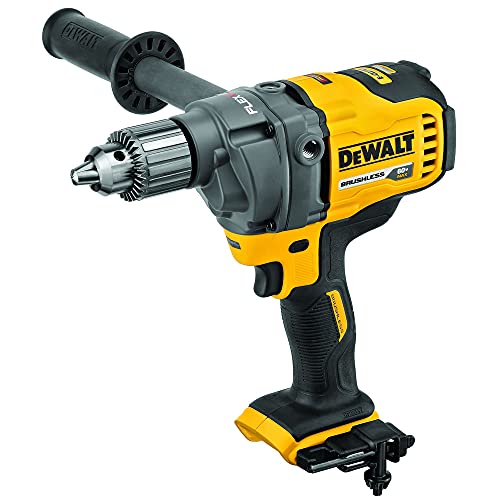
DEWALT FLEXVOLT 60V Cordless Concrete Mixing Drill
What We Like
- Cordless mixing for up to 9 buckets of concrete per charge.
- E-clutch system improves user control during operation.
- Three-position side handle allows for optimum grip.
Trade-offs
- Tool-only listing requires separate purchase of battery and charger.
- At 8 pounds, it is heavier than some corded spade-handle models like the DEWALT DW130V.
A single charge can mix up to nine buckets of concrete, allowing you to work through a patio project without an extension cord. Its 60V cordless design provides mobility around a job site. The integrated e-clutch system helps improve user control for thick batches, and a three-position side handle allows for an optimum grip while mixing.
The tool arrives without a battery or charger, which requires a separate purchase. At eight pounds, it is heavier than some corded models like the 3.8-pound DEWALT 9-Amp Spade Handle Mud Mixer.
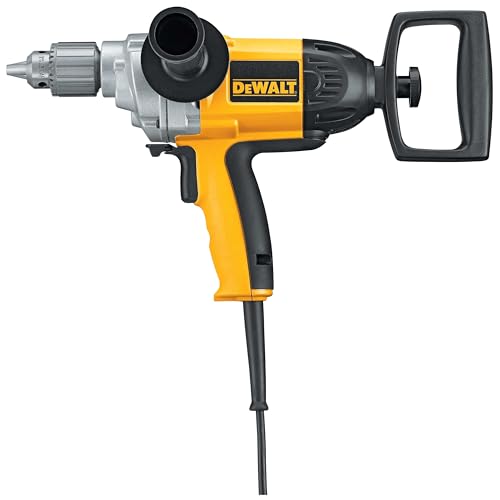
DEWALT 9-Amp Spade Handle Mud Mixer
What We Like
- Variable speed reversing switch prevents air bubbles
- Soft grip handle improves comfort and control
- 550 RPM provides high torque for mixing
Trade-offs
- Corded design limits mobility on large sites
- Lower power than 13A or 20A mixers for heavy batches
- Spade handle may be less stable than D-handle for some
A 9-amp motor paired with a weight of just 3.8 pounds creates a tool that feels agile in your hands, even after mixing multiple buckets. That low weight, combined with the variable speed trigger and soft grip, means you can focus on the consistency of your mud instead of fighting the tool. This makes it a natural fit for contractors and serious DIYers who need corded reliability for all-day mixing of thinset, mortar, or small concrete batches without the arm strain.
The trade-off for that lightweight agility is raw power; it’s not built for the constant, max-load mixing of a 13-amp unit like the MAXXT. You’re also tethered by the cord. For a user who values portability and cordless convenience for smaller jobs, the DEWALT FLEXVOLT 60V cordless model would be the logical step up, despite its higher weight and need for a battery system.
MAXXT 13A Single Paddle Concrete Mixer

What We Like
- Soft start prevents splashing on startup
- Two gear ranges with variable speed control
- Lock-on button enables continuous mixing
- Comes with a large 24-inch mixing paddle
Trade-offs
- 9-pound weight is heavier than many spade-handle drills
- Corded design limits mobility compared to battery models
With a 13-amp motor, this mixer delivers consistent power for demanding materials like mortar and concrete, reducing the chance of motor strain. The soft-start feature initiates a slow spin to prevent material splashing, while two gear ranges provide flexible speed control for different mixes. Its 5/8-inch keyed chuck and included large spiral paddle confirm a design dedicated to mixing tasks.
The trade-off is in its specialized, single-paddle form factor. It’s a purpose-built mixer, so you won’t be using it to drill holes or drive screws. At 9 pounds, it’s also substantially heavier than a compact spade-handle model like the DEWALT 9-Amp Mud Mixer, which can be a factor during long sessions. This tool sacrifices versatility and some maneuverability to deliver focused mixing performance for its size.
Product photos
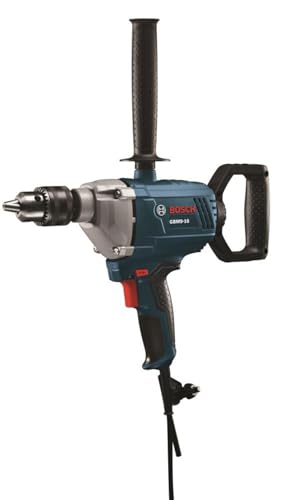
BOSCH 9-Amp D-Handle Mixer Drill
What We Like
- 360-degree rotatable D-handle for versatile grip positions
- Long 8-foot rubber cord increases jobsite reach
- Heavy-duty keyed chuck secures large mixing accessories
- Variable-speed motor provides control for different materials
Trade-offs
- Corded design limits mobility compared to battery-powered models
- At 6.6 lb, it's heavier than some spade-handle mixers like the 3.8 lb DEWALT DW130V
A 9-amp motor delivers the consistent torque needed to power through thick mortar and epoxy without bogging down. That reliable power, combined with a D-handle that rotates a full 360 degrees, makes this mixer a natural fit for extended sessions. You can lock the handle into the position that best fights torque reaction for your height and stance, which drastically reduces fatigue when you’re working a full bucket. It’s built for the contractor or serious DIYer who needs a corded workhorse for mixing heavy materials all day.
You do have to manage a cord with this tool. The eight-foot rubber cord is durable and offers good reach, but you’re still tethered to an outlet. For complete freedom to move around a large site, a cordless option like the DEWALT FLEXVOLT 60V would be the logical step up. The Bosch sits firmly in the capable, mid-range corded category, offering a smart ergonomic design that makes a tangible difference in user control over long mixing tasks.
IMAYCC 3200W 20A Concrete Mixer Drill

What We Like
- Extremely powerful 3200W motor for large batches
- Converts to a drill for boring wood, metal, walls
- Variable speed trigger for precision control
- Complete portable kit with storage bag
Trade-offs
- High 20A draw requires a dedicated, heavy-duty circuit
- Corded design limits mobility on large job sites
- Substantial power is overkill for small, light mixing tasks
A 3200-watt motor drawing 20 amps delivers the raw power to tackle heavy mortar or large volumes of concrete without bogging down. This makes the IMAYCC a logical choice for contractors or serious DIYers who regularly mix full batches and need a tool that won’t hesitate. The dual-function design, letting it switch from a mixing paddle to a standard drill, adds genuine versatility for job site tasks beyond just blending materials.
The 3200W motor draws 20 amps, so it requires a dedicated circuit and limits use to sites with heavy-duty outlets. For smaller mixes or locations without such wiring, this level of power may be excessive. If complete site mobility is the priority, a cordless tool like the DEWALT FLEXVOLT offers a trade-off, exchanging some peak power for unrestricted movement.
Product photos
SILVEL 2300W Portable Mortar Mixer

What We Like
- High-power 2300W copper motor for efficient mixing
- Six speed gears for different material requirements
- Built-in ventilation and overheating protection
Trade-offs
- Corded 110V operation limits mobility on large sites
A 2300-watt motor and six adjustable speeds give this mixer serious grunt for tackling thick batches of mortar or slurry. Its efficient ventilation system is a thoughtful design touch for preventing burnout during extended use.
Being tethered to a 110V outlet means this tool is not suitable for remote pours or large sites without generators. For pure mixing muscle in a corded format, it stands up to dedicated units like the MAXXT 13A. If your project demands cordless freedom to move between batches, a tool like the DEWALT FLEXVOLT 60V is the necessary, albeit more expensive, route.
Product photos
Makita 18V LXT Compact Combo Kit

What We Like
- Compact drill design reduces operator fatigue.
- Two-speed drill offers versatility for different materials.
- High-torque impact driver for demanding fastening.
- Rubberized soft grips increase comfort during use.
Trade-offs
A 480 in. lb. max torque from the drill means you can handle light mixing duties, like thinset or small batches of mortar. It’s not built for the sustained load of a full wheelbarrow of concrete. This kit suits the DIYer or remodeler who needs a capable drill-driver and impact driver for general construction and occasionally needs to mix a bag or two of material. You get two compact, ergonomic tools that are easy to manage all day, making it a smart foundational set for a cordless toolkit.
The real trade-off is specialization. For mixing concrete as a primary task, the torque and runtime are simply outclassed by dedicated mixers such as the DEWALT 9-Amp Spade Handle Mud Mixer. That tool’s design channels all its power directly into the paddle. Think of this Makita kit as your everyday workhorse that can pitch in on light mixing, not your dedicated concrete crew. It’s a value because it covers so many other jobs around the site first.
Makita XPH16Z Brushless Hammer Drill

What We Like
- Brushless motor delivers 70% more torque
- Up to 50% longer run time per charge
- Compact 6.9-inch length for tight spaces
- Two-speed gearing covers drilling and hammering
Trade-offs
- Tool only: requires separate 18V LXT battery purchase
- Max torque of 970 in.lbs. is less than dedicated mixers
With 970 in.lbs. of max torque from its brushless motor, the Makita XPH16Z delivers enough power for small concrete patches or mortar mixes, especially if you’re already invested in the 18V LXT platform. Its compact size and two-speed transmission make it a versatile driver-drill for everyday tasks, and the efficient motor extends battery life significantly. This tool suits a DIYer or tradesperson who needs a capable hammer drill for general construction and occasional, light mixing duty, not a primary mixer.
The real limitation is its design as a compact hammer drill, not a dedicated mixer. For sustained mixing of larger batches, its torque output and handle configuration can’t match a purpose-built tool such as the DEWALT 9-Amp Spade Handle Mud Mixer. Think of this Makita as a superb drill that can handle mixing in a pinch, not a mixer that also drills. If your project list is mostly drilling with the occasional bag of mix, it’s a smart, efficient choice. If mixing concrete is the main event, you’ll want a tool built for that strain.
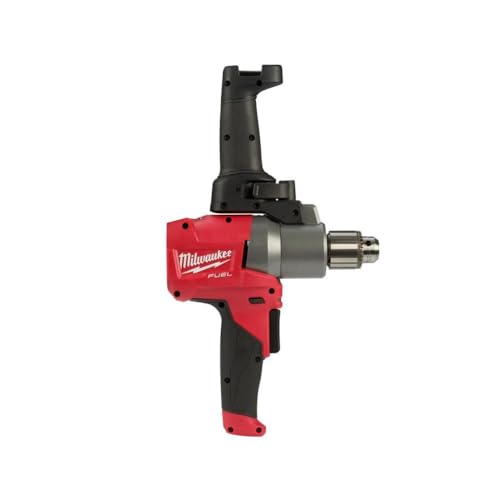
Milwaukee 2810-20 Drill
What We Like
- Cordless 18V design for full jobsite mobility
- Relatively light weight at 7.1 pounds
- Bare-tool option for existing battery users
Trade-offs
- Tool only: requires separate Milwaukee 18V battery and charger
- Shorter 16.6-inch length offers less reach into deep drums
- Less mass than heavier mixers for stabilizing thick batches
An 18V cordless design means you can mix a batch of mud anywhere on site without hunting for an outlet. At 7.1 pounds, it’s lighter than many corded mixers, reducing arm fatigue during extended use. The tool’s compact size, at just over 16 inches long, allows for easier storage in a tool bag compared to larger spade-handle units.
This is a bare tool, so you must supply your own battery and charger. Its shorter length and lighter overall mass also mean it won’t anchor itself in a heavy mix as effectively as a dedicated spade-handle model such as the DEWALT 9-Amp Mud Mixer. For larger volume pours or consistently thick mixes, the physical heft of a corded tool provides a clear advantage in stability and raw power delivery.
Product photos
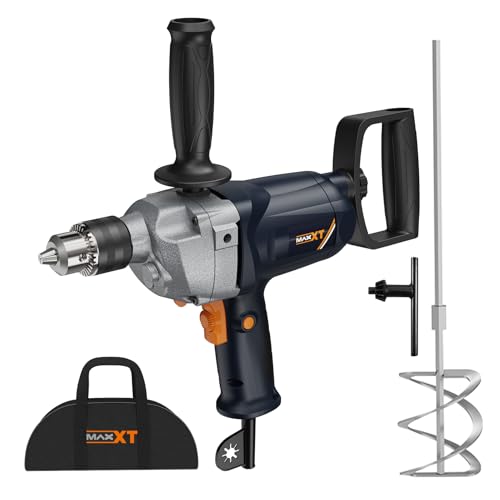
MAXXT 9A Spade Handle Mixing Drill
What We Like
- Powerful 9A motor for demanding mixing
- Versatile 1/2-inch chuck accepts many accessories
- Comes with multiple mixing paddles and a bag
- Adjustable speed provides control for different materials
Trade-offs
- Corded design limits mobility on large sites
A 9-amp copper motor delivers the torque needed for thick concrete and mortar, making it a solid workhorse for weekend projects. The included accessories, like the two mixing paddles, mean you can start mixing right out of the box. This is a straightforward, capable tool for a homeowner tackling a patio, a shed base, or interior plaster work where raw mixing power matters more than cordless convenience. It gets the job done without fuss.
Its 9-amp motor provides reliable power for demanding materials like concrete and mortar, making it a capable choice for serious mixing tasks. The drill’s adjustable speed ranges from 0 to 600 RPM, giving you control for different consistencies from thick cement to paint. While corded operation ensures consistent power, it does limit mobility compared to battery-powered models like the DEWALT FLEXVOLT. For larger, continuous projects, the more powerful MAXXT 13A Single Paddle Concrete Mixer is an alternative, but this model balances capability and value for occasional or mid-size jobs.
Product photos
How We Evaluated Drills For Mixing Concrete
Our selection process began with a thorough analysis of manufacturer specifications and documented features, from motor amperage and wattage to chuck types and included accessories. We prioritized raw mixing power, user-centric design elements like ergonomic handles and variable speed control, and the practicality of each tool’s power source for typical concrete mixing scenarios.
A detailed review of owner feedback helped confirm real-world performance on materials like concrete, mortar, and drywall mud. Since this is a research-based evaluation, we cannot verify maximum run-time claims or long-term durability, but we focused on the concrete technical factors that matter most for mixing success.
What To Look For In Drills For Mixing Concrete
The right tool balances raw power with the physical control needed to handle thick, heavy materials. Your choice hinges on the job’s scale, your need for mobility, and your comfort during extended use.
Look for a high-torque motor (measured in amps or watts) and a low-speed, high-torque gear setting. A secure side or D-handle and a strong chuck are non-negotiable for safety and effective power transfer.
Power Source
The choice between corded and cordless models is fundamental. Corded mixers, like our top pick for a corded model, offer unlimited run time and often higher peak power, making them ideal for all-day use near an outlet. Cordless models provide complete jobsite freedom but require investment in a battery platform and have finite run times per charge.
For large, stationary jobs, a powerful corded tool is often the most practical choice. If you’re working across a spread-out site or lack convenient power, the convenience of a capable cordless mixer is worth the premium.
Motor Power & Torque
Mixing concrete demands high rotational force, or torque, not just high speed. Motor strength is indicated by amperage in corded tools (e.g., 9A, 13A) or wattage, with higher numbers generally delivering more power for thicker batches and larger volumes. The powerful MAXXT 13A mixer excels here. Many drills feature a low-speed, high-torque setting specifically for mixing; this is far more important than top RPM for preventing motor strain and achieving a smooth, consistent mix. Torque prevents the paddle from stalling in thick material.
Ergonomic Design & Control
Mixing is a physically demanding task, so handle design directly impacts fatigue and safety. A D-handle or a three-position side handle offers superior leverage and control compared to a simple pistol grip, allowing you to manage the tool’s kickback. Look for variable speed triggers or dials for gentle starts to avoid splashing and for adjusting to different material consistencies. A lock-on button can be a major comfort feature for longer mixing sessions, though it requires extra caution.
- Check that the handle provides a secure, non-slip grip, even when wet.
- Ensure the overall weight and balance feel manageable for your strength.
- Verify the power cord or battery pack doesn’t create an awkward, unbalanced feel.
A dedicated mixing drill will always handle concrete better than a standard drill pressed into service.
Drills For Mixing Concrete Compared
To help you compare these tools at a glance, the table below outlines the key specifications and features of our top picks.
| Product | Motor Power | Weight | Speed Range |
|---|---|---|---|
| DEWALT FLEXVOLT 60V Cordless Concrete Mixing Drill | N/A | 8.0 pounds | N/A |
| DEWALT 9-Amp Spade Handle Mud Mixer | 9 Amp | 3.8 pounds | 0 – 550 RPM |
| MAXXT 13A Single Paddle Concrete Mixer | 13A durable motor | 9.0 pounds | 180-750 rpm |
| BOSCH 9-Amp D-Handle Mixer Drill | 9.0 amp | 6.6 pounds | N/A |
| IMAYCC 3200W 20A Concrete Mixer Drill | 3200W 20A | N/A | 1600 RPM |
| SILVEL 2300W Portable Mortar Mixer | 2300W / 110V motor | N/A | 6 adjustable gears |
| Makita 18V LXT Compact Combo Kit | N/A | N/A | 0-600 and 0-1,900 RPM |
| Makita XPH16Z Brushless Hammer Drill | N/A | N/A | 0-550 & 0-1,800 RPM |
| Milwaukee 2810-20 Drill | N/A | 7.1 pounds | N/A |
| MAXXT 9A Spade Handle Mixing Drill | 9A copper motor | 6.6 pounds | 0 to 600 RPM |
Frequently Asked Questions
What drill is best for mixing concrete?
For most users needing cordless convenience and substantial power, the DEWALT FLEXVOLT 60V is the best overall choice. It’s built specifically for mixing and can handle several buckets per charge. For users who prioritize maximum power and have access to a dedicated outlet, a high-amperage corded model like the IMAYCC 3200W offers uncompromising performance for large batches.
What drill attachment is best for mixing concrete?
A dedicated mixing paddle is essential. Look for a helical or spiral design, often made of stiff wire or solid steel, that is at least 18 inches long for effective batch mixing. The attachment must be securely fastened using a heavy-duty keyed chuck or a strong quick-change system to prevent dangerous loosening under the high torque loads of mixing concrete.
What is the 123 rule for mixing concrete?
The “1-2-3” rule is a classic, simplified volumetric ratio for a basic concrete mix: one part Portland cement, two parts sand, and three parts gravel or aggregate. This provides a good starting point for general-purpose concrete, but for structural strength or specific applications, you should follow the precise mix design recommended by the cement manufacturer or a structural engineer.
What is the trick to drilling concrete?
The trick is using the correct tool, a hammer drill or rotary hammer, and a masonry bit designed for concrete. Apply firm, steady pressure and let the tool’s hammering action do the work; avoid forcing it. Keep the bit cool by periodically pulling it out to clear dust from the hole, and use a slow rotational speed with high impact force for the best results.
Can I use a regular drill to mix concrete?
You can use a high-torque regular drill for very small, occasional batches, like patching a hole, but it is not recommended. Standard drills lack the necessary low-speed torque, strong chuck, and ergonomic handles for safe, efficient mixing. For any project involving more than a few gallons or for frequent use, a drill specifically designed for mixing, like those in this guide, is a much safer and more effective investment.
The Bottom Line
For professionals and dedicated DIYers who value jobsite mobility without sacrificing power, the DEWALT FLEXVOLT 60V Cordless Concrete Mixing Drill is the best overall tool. It can handle multiple buckets of material on a single charge. Budget-conscious users should look at the MAXXT 9A Spade Handle Mixing Drill, while those needing maximum electrical power for large, stationary jobs will prefer the IMAYCC 3200W high-wattage model. Ultimately, matching the tool’s power source and ergonomics to your specific project’s demands is the most critical step to a successful and safe concrete mixing experience.
