
10 Best Dust Extractors in 2026
This post contains affiliate links. As an Amazon Associate, we earn from qualifying purchases.
Our best overall dust extractor is the Fein Turbo II HEPA Wet/Dry Dust Extractor for its powerful 151 CFM suction and quiet 66 dB operation, ideal for stationary tool setups. The Festool CLEANTEC CT 26 EI wins for Bluetooth control, and the DEWALT DWV010 is best for automatic filter cleaning.
A good dust extractor keeps your workspace clean and your lungs safe by capturing fine particles at the source. This research-based guide compares ten models across key criteria like filtration, suction power, and usability to match you with the right tool for your shop or jobsite.
Top 10 Dust Extractors in the Market
Certain content that appears on this site comes from Amazon. This content is provided "as is" and is subject to change or removal at any time.
The Best Dust Extractors, Reviewed
Fein Turbo II HEPA Wet/Dry Dust Extractor
What We Like
- Strong 151 CFM suction for heavy-duty debris
- Quiet 66 dB operation for indoor use
- Long 13-foot hose and 19-foot cord
- Integrated autostart outlet for power tools
Trade-offs
- 25-pound weight is substantial for frequent carrying
- 8.5-gallon capacity requires more frequent emptying than larger models
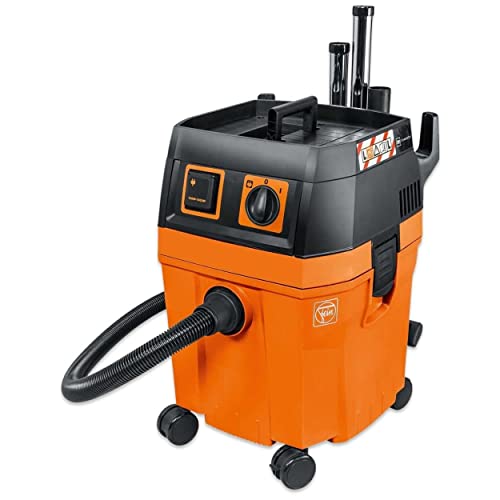
With 151 CFM of suction, the Fein Turbo II HEPA Wet/Dry Dust Extractor can handle heavy debris and fine dust efficiently. Its motor operates at 66 dB(A), a noise level low enough for use in occupied spaces without shouting. The integrated autostart outlet synchronizes the vacuum with a connected power tool, automating the workflow, and an anti-static system helps prevent electrostatic buildup during use.
Weighing 25 pounds, this extractor has a substantial feel when relocating it. Its 8.5-gallon capacity and included 13-foot hose allow it to service a large area before needing to be emptied or moved, functioning well as a semi-stationary hub for extended tasks.
Festool CLEANTEC CT 26 EI HEPA Dust Extractor
What We Like
- Five suction levels for precise control
- Starts automatically with connected corded tools
- Integrated T-LOC system for tool organization
Trade-offs
- Weighs 37.9 pounds, making it less portable for frequent moves
- Higher weight than the 25-pound Fein Turbo II
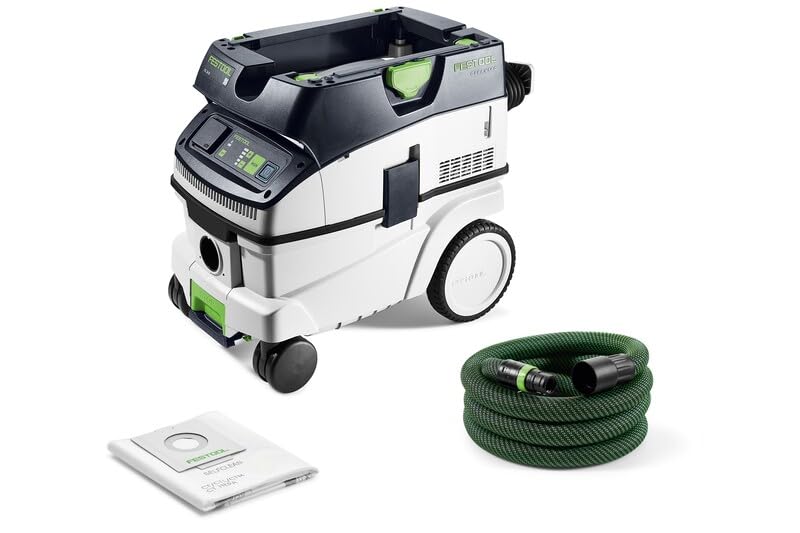
This is a major efficiency boost for anyone running a production workflow with battery-powered sanders or saws. The five levels of suction power let you dial in the perfect pull for everything from fine sanding dust to heavy debris, while the automatic start with corded tools keeps the focus on your work. It’s built for the tradesperson or serious hobbyist whose shop or jobsite runs on a system, where saving steps and managing dust at the source is non-negotiable.
Weighing 37.9 pounds, this extractor is built for stable placement on a shop floor or a rolling cart rather than frequent carrying. Its T-LOC function makes it easy to attach Systainers directly to the top for organized tool storage and transport. Compared to a cordless model like the 20-pound DEWALT FLEXVOLT, this unit requires a power outlet but offers automated features for a stationary setup.
DEWALT DWV010 HEPA Dust Extractor
What We Like
- Automatic cleaning enables continuous operation
- Power tool actuation for automatic start/stop
- Heavy-duty wheels and casters for jobsite mobility
- Meets EPA RRP rule with proper HEPA filter
Trade-offs
- Weighs 22 lb, heavier than some cordless extractors
- 1.25-inch hose diameter may limit debris flow
- Requires specific filter to meet HEPA RRP standard
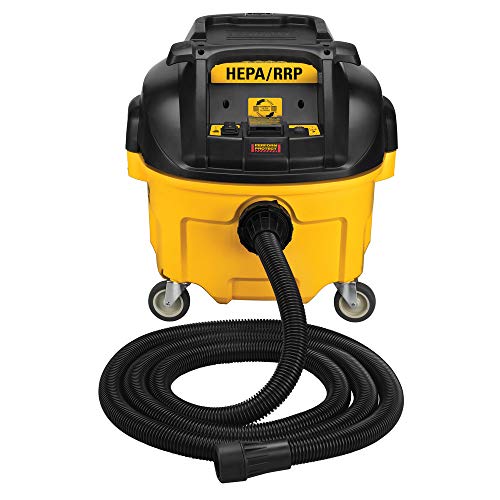
The automatic filter cleaning that pulses every 30 seconds is the main event here. It means you can hook this up to a sander or saw and work for hours without stopping to shake out a clogged filter, a genuine productivity boost for drywall or floor sanding. The 15-amp motor pulling 150 CFM provides solid suction, and the power tool actuation adds hands-free convenience. This model suits a contractor or serious DIYer who needs to manage fine dust over long sessions without interruption.
The trade-off is in its size and heft. At 22 pounds on a 20-inch frame, it’s a substantial unit to haul around compared to a compact option like the Makita XCV11Z. The 1.25-inch hose is perfectly adequate for most power tools but can be a limitation if you need to vacuum up larger debris. For dedicated, high-volume fine dust collection, especially where lead-safe practices are required, its automatic system is hard to beat. Just know it’s a tool for the job, not a quick clean-up vac.
Bosch VAC090AH HEPA Dust Extractor
What We Like
- Automatic filter cleaning maintains suction.
- HEPA filter aids in OSHA silica compliance.
- Power Broker dial matches suction to the tool.
- Tool-activated start/stop adds convenience.
Trade-offs
- Its 20.5-inch length requires more floor space than compact units.
- Lacks the wet/dry versatility of some competitors.
Automatic filter cleaning every 15 seconds is the core feature, designed to help maintain maximum suction power by preventing clogs. This function, paired with a HEPA filter that captures 99.97% of particles at 0.3 microns, creates a system that helps users move toward OSHA Silica Table 1 dust compliance. The included fleece filter bag provides optimal containment of dry dust and debris.
You pay for that focus with a tool that’s bulkier and heavier than a basic shop vac. Its 9-gallon capacity and 150 CFM are solid, but if ultimate portability is the goal, a cordless model like the DEWALT FLEXVOLT extractor is easier to haul upstairs. For pure shop use where noise and massive debris volume are bigger concerns, a dedicated collector like the WEN unit moves far more air. This Bosch excels specifically at connected, compliant dust extraction.
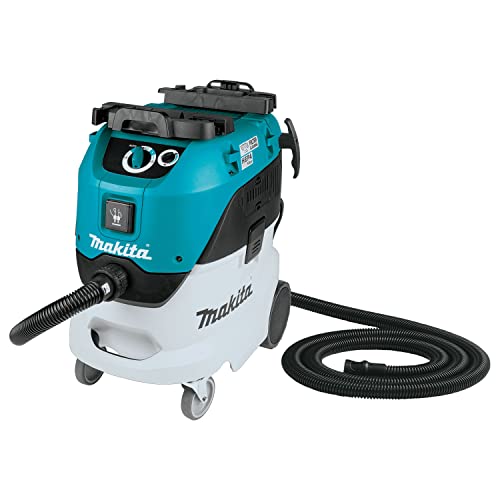
Makita VC4210L HEPA Dust Extractor
What We Like
- Automatic filter cleaning system extends filter life.
- Tool-activated outlet with 10-second delay clears hose debris.
- Powerful 12 AMP motor for strong suction.
Trade-offs
- At 35.3 lb, it's heavier than the 25 lb Fein Turbo II.
- Large 31.5-inch width requires significant floor space.
An 11-gallon capacity and 148 CFM of suction make this a serious workhorse for managing both wet spills and fine dry debris on a jobsite. The automatic filter cleaning system is a major practical advantage, maintaining suction power during long sanding or demo sessions without manual intervention. Its reliable, high-volume dust and liquid collection with true HEPA containment is ideal for contractors or woodworkers, keeping the air clean during sensitive renovations or detailed finish work.
The trade-off for its capability is a substantial physical footprint and weight. It’s over 10 pounds heavier and significantly wider than the more compact Fein Turbo II, so it’s less ideal for frequent transport between tight spaces. For a dedicated shop or a van-based setup where its power and large capacity can be fully utilized, the Makita VC4210L is a premium, set-it-and-forget-it solution. If portability is the higher priority, a model like the DEWALT DWV010 offers a lighter, more mobile alternative.
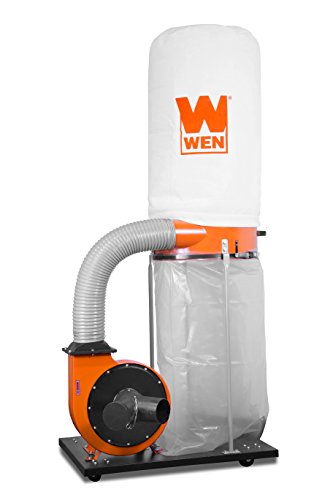
WEN DC1300 Woodworking Dust Collector
What We Like
- High 1,300 CFM airflow for large chip collection
- Dual 4-inch inlets for connecting two tools
- Large 50-gallon vertical collection bag
- Mobile base provides easy shop movement
Trade-offs
- Large bag and base require significant floor space
- Five-micron filtration bag
Moving 1,300 cubic feet of air per minute, this collector is built to handle the heavy chip and sawdust volume from a stationary planer or table saw. It’s a fit for a dedicated workshop where you need to manage waste from large machinery, and the ability to hook up two tools at once through the dual inlets adds practical flexibility. The 50-gallon bag means fewer stops to empty it during big projects, and the included mobile base lets you roll it into position as needed.
With a maximum airflow of 1,300 cubic feet per minute, the WEN DC1300 moves enough air to serve multiple tools at once. It can connect two machines simultaneously using its dual four-inch inlets, which helps manage dust from a tablesaw and a planer in a small shop. The system uses a five-micron collection bag, a specification that indicates its filtration level.
Product photos
DEWALT FLEXVOLT 60V Cordless Dust Extractor

What We Like
- Wireless tool control for automatic start/stop
- Automatic filter cleaning maintains suction
- HEPA filter meets EPA RRP rule
- Compact, stackable T-Stak design
Trade-offs
- 125 CFM is lower than some corded extractors
Wireless tool control is the standout feature here, letting you start and stop the extractor directly from a compatible tool or the included remote. That means no more fumbling for a switch when your hands are full, which is a genuine productivity boost on a busy job site. This cordless design, paired with its OSHA-compliant 125 CFM suction for tuckpointing, makes it a natural fit for tradespeople doing renovation work where outlets are scarce and clean-up speed is critical. The HEPA filter and automatic cleaning keep it compliant for lead-safe work, so it’s built for professional standards, not just general cleanup.
You’re investing in the DEWALT 60V battery ecosystem for cordless convenience. The unit itself is compact and relatively light at 20 pounds, but remember it’s a tool-only package. Compared to a workhorse like the Fein Turbo II, which offers more suction and a larger built-in tank, the DEWALT is about unmatched mobility and integrated tool control. It’s for the pro who needs to move fast and clean, not the shop-based woodworker who needs high-volume dust collection from a stationary machine.
Product photos
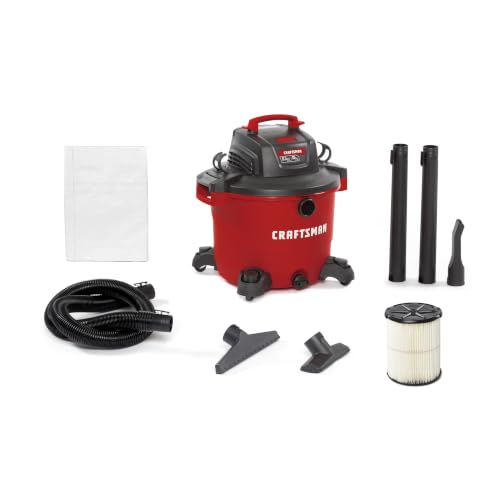
CRAFTSMAN CMXEVBE17595 Wet/Dry Shop Vacuum
What We Like
- Rear blower port for clearing debris
- Oversized drain simplifies liquid emptying
- Dual-flex hose resists kinking for maneuverability
- Includes a wide array of nozzles and wands
Trade-offs
- Large 16-gallon tank is less portable for overhead work
A 16-gallon tank and a 6.5 HP motor deliver the brute force needed for big cleanup jobs in a garage or on a jobsite. This unit stands out with its dedicated rear blower port, a feature that transforms it from a simple vacuum into a tool for clearing leaves and grass clippings. It’s built for the user who needs a single, heavy-duty machine to handle both wet and dry messes. The included utility, car, and wet nozzles mean it’s ready to tackle almost any surface right out of the box.
This traditional, high-volume workhorse trades some features for its power and capacity. You won’t get anti-static hoses or ultra-quiet operation here. Choose it when your primary need is moving a lot of material, either in or out, and you value the versatility of a blower function over the finesse of a workshop-specific dust collection system.
Product photos
Makita XCV11Z Cordless HEPA Dust Extractor

What We Like
- Brushless motor for cooler, more efficient operation
- HEPA filter captures fine particulates effectively
- Filter cleaning system maintains suction and filter life
Trade-offs
- 2-gallon capacity suits smaller, frequent cleanups
- 57 CFM is lower than corded shop vacuum suction
Weighing just over 10 pounds and roughly the size of a toolbox, this Makita extractor is built for mobility. Its cordless, brushless design delivers enough suction for sawdust and drywall debris at a job site without an outlet, and the HEPA filter makes it suitable for final clean-ups where air quality matters. This is the grab-and-go solution for finish carpenters or remodelers moving between rooms, or for anyone whose primary need is portability over massive debris capacity.
The extractor’s 2-gallon capacity is smaller than many corded models like the 8-gallon Fein Turbo II. Its 57 CFM of suction is also lower than the 151 CFM offered by that same model. For stationary tasks requiring high-volume collection, a larger corded dust extractor is typically more suitable.
Product photos
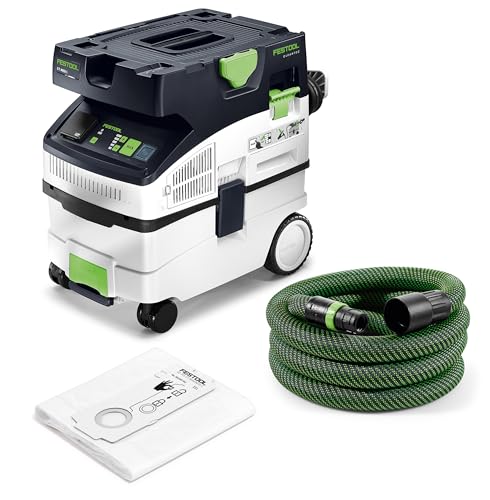
Festool CT MIDI I HEPA Dust Extractor
What We Like
- Manual filter cleaning maintains optimum suction
- Tool-free, quick filter changes
- Compact and easy to move
- Remote start/stop via Bluetooth
Trade-offs
- Manual filter cleaning requires user action
- No capacity or suction metrics provided
Festool’s CT MIDI I includes a manual filter cleaning feature, which allows you to maintain suction power without needing tools for the task. This approach suits users who prefer direct, predictable maintenance over automated systems. The unit is also easy to move due to its compact size and low weight, and operation is simplified with touch controls and Bluetooth remote start.
The trade-off is clear: you’re the one shaking that filter. But for maintaining peak filtration performance through direct action, the CT MIDI I’s manual process is straightforward and effective. It’s a premium, no-nonsense extractor built for those who don’t mind a little routine upkeep to keep their air clean and their tools running smoothly.
Product photos
How We Evaluated Dust Extractors
Our evaluation is research-based, not hands-on. We examined manufacturer specifications and technical documentation to verify core performance metrics like airflow, filter ratings, and physical dimensions. We also studied professional round-ups from woodworking and trade publications to understand real-world performance patterns and common owner feedback.
The most important criteria were filtration level, suction power, and usability features. HEPA-rated filtration is non-negotiable for health and compliance, so we prioritized models that meet this standard. Strong, consistent suction measured in CFM ensures effective debris pickup, while features like automatic tool start, filter cleaning systems, and portability directly impact daily use.
A key limit of this guide is that it cannot verify long-term durability or measure exact noise levels in a controlled environment. The information relies on reported specifications and documented owner experiences.
What To Look For In Dust Extractors
Choosing the right dust extractor means matching its capabilities to your specific debris and workflow. The key is to prioritize filtration for health, suction for effectiveness, and features that fit your space and tools.
Focus on HEPA-rated filtration for fine dust, sufficient CFM suction for your tools, and features like automatic start or filter cleaning that match your workflow. Consider capacity and physical size for your shop layout.
Filtration Is Paramount
A true dust extractor must capture fine, airborne particles. Look for a HEPA (High-Efficiency Particulate Air) filter, which is rated to remove at least 99.97% of particles as small as 0.3 microns. This is essential for health protection and meeting jobsite regulations like OSHA’s silica rules. Many models also use a disposable prefilter bag inside the tank; fleece bags trap more fine dust than paper, protecting the more expensive HEPA filter and extending its life. For serious dust control methods, starting with proper equipment is the first step.
Suction Power And Airflow
Suction power, measured in cubic feet per minute (CFM), determines how effectively the extractor pulls debris from your tool. Higher CFM is better for high-dust-volume tools like planers and miter saws. For example, a unit with over 150 CFM handles heavy sawdust well, while a compact cordless model around 57 CFM is suited for sanding or cleanup.
Remember, CFM ratings are for an empty unit; airflow will drop as the filter loads or the tank fills, which is why automatic filter cleaning systems are a valuable feature on many dust collectors.
Key Usability Features
Consider how the extractor integrates into your work. An automatic tool-start outlet turns the vac on and off with your connected tool, a major convenience. Variable suction control lets you match power to the task, preserving battery life on cordless models or reducing noise. Physical design matters too; large-capacity tanks reduce emptying frequency but add weight and floor space, while compact, wheeled units offer better jobsite mobility. Understanding the difference between shop vac and dust extractor often comes down to these specialized usability features designed for tool integration.
- Check the hose diameter and length for compatibility with your primary tools.
- Verify the unit’s noise rating if you work in shared or noise-sensitive spaces.
- Look for a blower port if you also need to clear leaves or debris from a workspace. Consider a model with a dust separator or compatibility with an add-on cyclone to keep bulk debris out of the main tank.
For most woodshops, a HEPA-rated extractor with automatic start and sufficient airflow offers the best balance of protection and power.
Dust Extractors Compared
Use the table below to quickly compare the key specifications and features of our top picks side-by-side.
| Product | Suction Power (CFM) | Tank Capacity | Weight (lbs) |
|---|---|---|---|
| Fein Turbo II HEPA Wet/Dry Dust Extractor | 151 CFM | 8.5 gallons | 25.0 pounds |
| Festool CLEANTEC CT 26 EI HEPA Dust Extractor | N/A | N/A | 37.9 Pounds |
| DEWALT DWV010 HEPA Dust Extractor | 150 CFM | 8-gallon | 22.0 pounds |
| Bosch VAC090AH HEPA Dust Extractor | 150 CFM | 9 Gallon | 28.0 pounds |
| Makita VC4210L HEPA Dust Extractor | 148 CFM | 11 Gallon | 35.3 pounds |
| WEN DC1300 Woodworking Dust Collector | 1,300 CFM | 50-gallon bag | N/A |
| DEWALT FLEXVOLT 60V Cordless Dust Extractor | 125 CFM | N/A | 20.0 pounds |
| CRAFTSMAN CMXEVBE17595 Wet/Dry Shop Vacuum | N/A | 16 gallons | 26.0 pounds |
| Makita XCV11Z Cordless HEPA Dust Extractor | 57 CFM | 2 Gallon | 10.5 pounds |
| Festool CT MIDI I HEPA Dust Extractor | N/A | N/A | N/A |
Frequently Asked Questions
What is the most powerful dust extractor?
Power can refer to suction or capacity. For high-volume airflow, the WEN DC1300 Woodworking Dust Collector offers 1,300 CFM, making it suited for large stationary tools. For strong suction in a portable extractor format, models like the Fein Turbo II HEPA Wet/Dry Dust Extractor with 151 CFM are excellent choices for connected tool use.
What is the best dust extractor for home use?
For a home workshop, prioritize a balance of power, filtration, and manageable size. The Fein Turbo II is a strong candidate for its quiet operation and effective suction. The compact Festool CT MIDI I is also excellent for smaller spaces, while the Makita XCV11Z Cordless HEPA Dust Extractor offers cordless convenience for quick cleanups if you already own compatible batteries.
What is the best portable dust extractor?
Portability combines light weight, compact design, and easy mobility. The Makita XCV11Z Cordless HEPA Dust Extractor is extremely lightweight and cordless. For corded models with wheels, the Festool CT MIDI I is compact and easy to move, and the DEWALT DWV010 HEPA Dust Extractor includes heavy-duty casters for jobsite mobility.
What is the best device for removing dust?
For capturing fine dust directly at the tool source, a HEPA-rated dust extractor is the best device. For general workshop air filtration or collecting large volumes of chips from multiple machines, a dedicated dust collection system is more appropriate. For liquid spills or coarse debris, a standard shop vacuum may suffice.
Do I need a special vacuum for wood dust?
Yes, for fine wood dust, a standard shop vacuum is inadequate. You need a dust extractor with a HEPA filter to capture hazardous micron-sized particles. Standard vacs often lack proper seals and fine filters, allowing dust to recirculate. Investing in a proper vacuum designed for fine particulates protects your health and keeps your shop cleaner.
The Bottom Line
Our best overall pick is the Fein Turbo II HEPA Wet/Dry Dust Extractor. It offers powerful suction, quiet operation, and a well-rounded feature set. This makes it an ideal choice for most woodworkers and contractors with stationary tool setups.
Budget-conscious buyers or those with specific needs should look to our award winners. The DEWALT FLEXVOLT 60V offers complete cordless freedom. The WEN DC1300 handles high-volume chip collection, while the CRAFTSMAN CMXEVBE17595 is a versatile wet/dry vacuum with a blower function.
Ultimately, the most important factor is HEPA-rated filtration to protect your lungs. Choose a model that meets this standard and pairs its suction power and features with the way you actually work.
