
10 Best Hand-held Saws For Professionals in 2026
This post contains affiliate links. As an Amazon Associate, we earn from qualifying purchases.
For professionals needing a portable, high-performance cutting tool, the Silky Professional BIGBOY Folding Saw is our best overall choice, thanks to its long, aggressive blade and durable build. We also highlight the SUIZAN Ryoba for fine woodworking and the compact Silky PocketBoy for ultimate portability. Choosing the right hand-held saw means matching its teeth, blade length, and ergonomics to your specific trade and tasks. This research-based guide compares 10 top professional saws, using specifications and owner feedback patterns to help you invest wisely.
Top 10 Hand-Held Saws for Professionals in the Market
Certain content that appears on this site comes from Amazon. This content is provided "as is" and is subject to change or removal at any time.
The Best Hand-Held Saws for Professionals, Reviewed
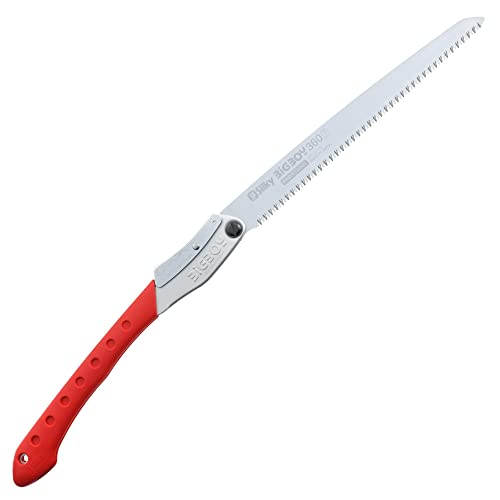
Silky Professional BIGBOY Folding Saw
What We Like
- Hard chrome-plated blade resists rust and resin
- Non-slip, two-handed rubberized cushioned handle
- Long 14.2-inch blade for greater reach
- Folds to a compact 16 inches for transport
Trade-offs
- At 1.1 lb, it's heavier than compact folders like the Silky Pocketboy
- 16-inch folded length is less pocket-friendly than smaller models
With a 14.2-inch blade and large teeth, this saw powers through green wood and pruning tasks that would stall a smaller tool. Its balanced, rust-resistant blade and two-handed rubber grip provide control for aggressive cuts, even in wet conditions. This folding design offers serious cutting power that still packs down to a 16-inch length for transport.
The trade-off is portability. While it folds neatly, its heft and length make it a tool for a gear bag rather than a pocket. For a more compact carry, research mentions the Silky Pocketboy as the best choice in that category. When you need to bring down a sizable branch or process camp wood, the BIGBOY’s reach and tooth design get the job done efficiently.
SUIZAN Ryoba Double Edge Japanese Pullsaw

What We Like
- Dual 9 and 15 TPI edges handle both rip and cross cuts
- Made in Japan with high-quality Japanese steel
- Ultra-lightweight design reduces user fatigue
Trade-offs
- Assembly required before first use
- Pull-stroke cutting technique requires practice for Western saw users
With a kerf of just 0.03 inches and a blade only 0.02 inches thick, this saw removes minimal material for a clean edge directly from the cut. That design is central to its value for detailed work requiring precision. It uses a Japanese pull stroke, which the manufacturer states requires less power than a push saw and offers control. The double-edge blade provides versatility with 9 and 15 teeth per inch for both rip and cross cuts in a single tool.
The design prioritizes precision, with a thin blade meant for controlled cutting. This saw is not intended for rough construction lumber or forcing through difficult material. At 0.4 pounds, it is lighter than many Western-style saws like the 1.5-pound Stanley FatMax Gen2, which changes its handling. For appropriate tasks, it can produce results that differ from thicker, push-style saws.
Product photos
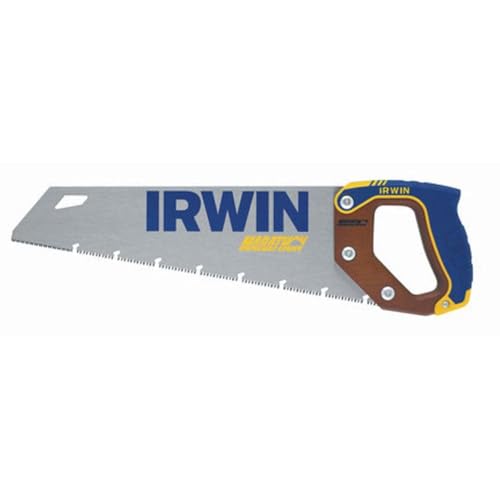
IRWIN ProTouch Hand Saw
What We Like
- Pro-Touch handle ensures comfort and durability
- M2 Tri-Ground teeth for fast, efficient cuts
- Thick-body blade provides rigidity and control
- Deep gullets quickly remove chips from the kerf
Trade-offs
- 15-inch blade is shorter than some competitors, limiting cut length
- Lacks the raw cutting speed of dedicated pull saw designs
The IRWIN ProTouch’s 15-inch blade and uniquely shaped Pro-Touch handle are designed for comfort during long sessions, which helps reduce hand fatigue. Its thick-body blade adds rigidity for control, and the tapered-pitch nose provides improved clearance and stability. This carpenter saw uses M2 tooth technology and Tri-Ground teeth for fast, efficient cuts, while deep gullets remove chips quickly to keep the cut moving.
Our research shows the trade-off for that comfort is outright speed and finish quality compared to specialized Japanese pullsaws. Think of it as a workhorse, not a scalpel. It excels at repetitive cuts in dimensional lumber where a secure, comfortable grip matters more than a glass-smooth finish on every piece.
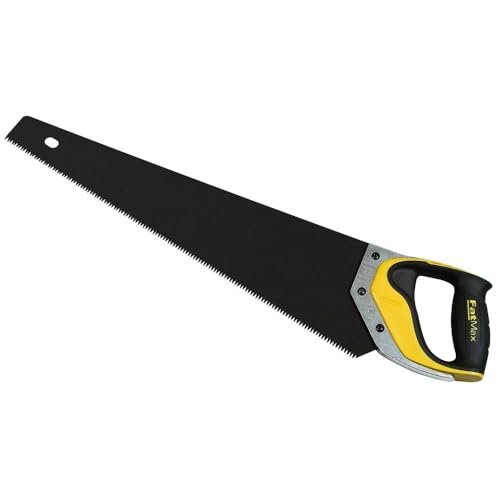
Stanley FatMax Gen2 Hand Saw
What We Like
- Aggressive teeth for fast material removal
- Three cutting edges for accurate cuts
- 500mm blade length handles larger stock
Trade-offs
- At 1.5 pounds, it's heavier than many pull saws
- Fixed 500mm blade is less portable than folding models
With a 500mm blade and aggressive teeth, this hand saw is designed for speed, letting you make quick cuts in materials where a fine finish isn’t the priority. The three cutting edges contribute to accuracy, which helps the blade track straight even during forceful use.
You gain speed and length but lose portability. The fixed blade and weight of 1.5 pounds make it a tool for the truck or jobsite box, not a back pocket. A lighter tool like the SUIZAN Ryoba would be better for fine joinery or detailed trim work. When you need to make a big cut fast and move on, however, this is the saw you grab.
Silky PocketBoy Folding Saw

What We Like
- Compact, lightweight design fits in pocket or pack
- Hard chrome-plated blade resists rust and wear
- Two locking positions offer versatile cutting angles
- Includes a hard plastic belt case for protection
Trade-offs
- 5.1-inch blade limits cut capacity to 2.6 inches
- Non-set teeth may produce a wider kerf (1.3mm)
- Compact size is less suited for heavy pruning tasks
With a 5.1-inch blade and a weight of just 0.4 pounds, this saw disappears into a pocket or glove box until needed, then makes quick work of smaller branches and cuts. Research mentions identify it as the best choice for a compact saw. The medium tooth configuration balances speed and finish, while the two locking positions allow for flush cuts against a trunk or standard cuts with better leverage.
Its pocket-friendly size limits its cutting capacity. You won’t be felling anything substantial with a maximum cut of just 2.6 inches. Compared to a larger saw like the Silky Professional BIGBOY with its 360mm blade, the PocketBoy is suited for different tasks. If your work routinely involves wood thicker than your wrist, you’ll need a tool with a larger cut capacity.
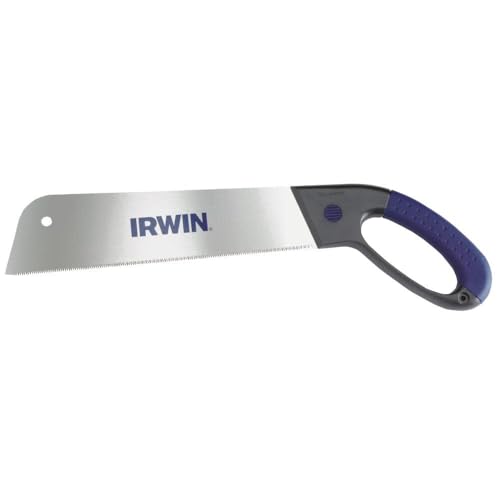
IRWIN General Carpentry Pull Saw
What We Like
- Extremely lightweight at 0.2 lb
- Comfortable ProTouch polymer grip
- Flexible blade for flush cuts
- Fast cutting in expert tests
Trade-offs
- Shorter 12-inch blade limits cut length
- Lacks the raw speed of longer pull saws
Research consistently places this saw as a reliable second-place finisher, meaning buyers get proven performance just shy of the top tester. Its 12-inch blade is flexible, letting you slide right up against a surface for a clean flush cut. At just 0.2 pounds, the IRWIN General Carpentry Pull Saw disappears in your hand, making overhead work on soffits or exterior trim far less fatiguing. While it doesn’t have the raw speed of the top-rated saw in its test group, it delivers accurate, quality cuts with a handle that professionals appreciate for all-day comfort.
A featherweight feel comes with a shorter blade. Each of its 14-point teeth pulls through a shorter stroke than a 15-inch saw, so ripping a long board will take more pulls. It’s not built for aggressive green wood cutting like a specialized saw such as the Silky BIGBOY. For general carpentry where precision and easy handling trump raw speed, however, this Irwin is a trustworthy tool that gets the job done without fuss.
Fiskars PowerTooth D-Handle Saw
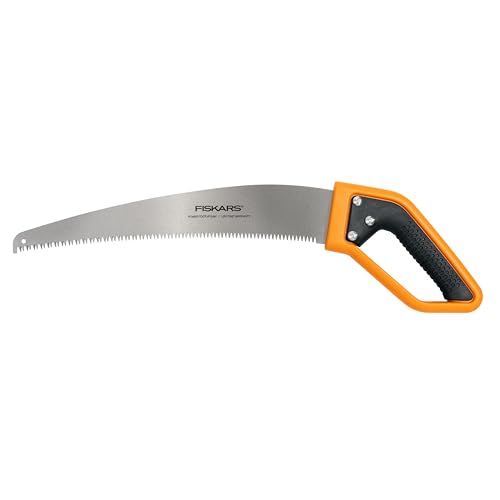
What We Like
- Razor-sharp triple-ground teeth for fast cutting
- Fully hardened steel blade ensures long-lasting sharpness
- D-handle design provides excellent grip and control
- SoftGrip touchpoints enhance ergonomic comfort
Trade-offs
- Non-folding design lacks the portability of a folding saw
A 15-inch blade of fully hardened steel is built to tackle thick branches and keep cutting session after session. The PowerTooth design with its triple-ground teeth isn’t just sharp; it’s engineered to clear material quickly, reducing the effort needed for each stroke. This saw suits a professional or serious gardener who needs a dedicated, hard-use pruning tool that can be grabbed from the shed and relied upon to stay sharp. The D-handle and SoftGrip touchpoints translate that aggressive blade into a tool you can control precisely, even when pushing through tough, green wood.
Its fixed, non-folding design inherently lacks the portability of a folding saw, so it cannot be closed for safe, compact storage like the Silky PocketBoy. For maximum power and durability in a fixed-blade saw, this Fiskars is a standout, featuring a fully hardened steel blade that stays sharp with heavy-duty use. When jobs require moving between trees, the Silky Professional BIGBOY Folding Saw offers a different balance of cutting power and packability.
Product photos
Bahco Prizecut Toolbox Handsaw

What We Like
- Universal toothing cuts both rip and cross-grain
- Hard-point teeth for longer wear life
- Extremely light at just half a pound
- Includes reusable plastic tooth protector
Trade-offs
- Fixed 15-inch blade lacks portability of folding saws
- Generalist tooth pattern is not specialized for fine joinery
With an 11-teeth-per-inch universal toothing, this saw handles both rip and cross cuts in all wood types, eliminating the need for multiple blades. Its hard-point teeth and rust protection lacquer extend the blade’s life, a practical feature when cutting material that may contain hidden debris. The half-pound weight and one-component solid handle make it easy to control for extended use, and the reusable plastic tooth protector helps keep it ready in a toolbox.
This saw’s versatility means it isn’t specialized. It handles general carpentry reliably, but its fixed blade isn’t as compact as the Silky PocketBoy for a tool belt. Its tooth pattern also can’t match the precision of a dedicated joinery saw like the SUIZAN Ryoba for fine work. Think of it as a solid workhorse, a saw you won’t baby that handles the vast majority of rough and intermediate cuts on a job site.
Product photos
Stanley FatMax Floorboard Saw

What We Like
- Teeth on curved blade end for starting cuts in floorboards.
- Induction hardened teeth last twice as long as previous model.
- Bi-material handle provides secure and comfortable grip.
Trade-offs
- At 12 inches, the blade is shorter than many general-purpose saws.
- 13 TPI is a fine cut, slower for aggressive demolition of thick material.
- Specialized floorboard design offers less versatility for other cuts.
The curved end of the blade with integrated teeth is the killer feature here. It lets you punch through a floorboard to start a plunge cut without needing a pilot hole, a huge time-saver on a demo site. It’s the tool you grab when you need to remove a single damaged board or notch around a joist without wrecking the surrounding structure. The induction hardened teeth are a smart upgrade, promising to resist the abrasion of nails and grit you inevitably hit in old flooring.
The trade-off is specialization. That 12-inch, fine-toothed blade won’t zip through a stack of 2x4s like the longer, coarser IRWIN ProTouch. It’s a scalpel, not a machete. For its intended task of flooring work and precise demolition, the design is focused and effective. The ultralight 0.6-pound weight reduces fatigue when you’re crouched on the floor, and the screwed and welded handle ensures it won’t come apart in your hand during a tough pull. Keep it in your bag for flooring jobs, but reach for a different saw for framing or pruning.
Product photos
Bahco Bow Saw with Hack Blade
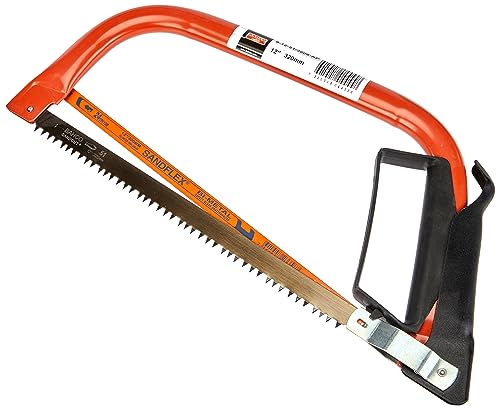
What We Like
- Compact 16-inch length for easy toolbox storage
- Lightweight steel frame for easy handling
- Dual-purpose blade set for wood and metal
- High-impact orange paint resists rust
Trade-offs
- 12-inch blade limits cut depth on larger pipes or boards
This toolbox-sized mini-bow saw is built for plumbers and electricians, with a compact 16-inch length and 1.1-pound weight that makes it easy to stow away. It comes with both a 12-inch wood blade and a bi-metal hacksaw blade, directly addressing the mixed-material reality those trades face daily. The frame uses lightweight, high-quality steel tubing for durability, and high-impact orange enamel paint provides protection from rust and corrosion on damp job sites.
The bow saw design means the frame itself can be a liability in extremely tight spots where a different saw profile might fit. Compared to the similarly sized Stanley FatMax Floorboard Saw, the Bahco offers a two-blade system instead of a dedicated floorboard design. This is a focused tool that excels at being ready for two common on-site materials, but it is not designed for demolition or precision joinery.
Product photos
How We Evaluated Hand-Held Saws
Our selection is based on a review of manufacturer specifications, expert round-ups, and patterns in professional user feedback. We prioritized criteria critical for daily professional use: cutting performance for specific materials, ergonomics and comfort for extended use, durability and blade longevity, and portability for job-site mobility. This research-led approach identifies tools with proven reputations, but it cannot replicate the long-term wear testing of years of daily use on a specific worksite.
What To Look For In Hand-Held Saws
The right professional saw balances cutting power, control, and convenience for your trade. Your primary tasks dictate the ideal blade type, length, and handle design.
For most pros, the core choice is between a fast-cutting western push saw, a precise Japanese pull saw, or a specialized tool like a folding pruning saw or bow saw. Blade length determines your maximum cut depth, while handle ergonomics impact fatigue over a long day.
Cutting Action & Tooth Design
The fundamental choice is between Western push saws and Japanese pull saws. Push saws, like the Stanley FatMax Gen2, use set teeth that cut on the push stroke and are excellent for aggressive, fast material removal. Pull saws, like the SUIZAN Ryoba, cut on the pull stroke with thinner, unset teeth, resulting in a narrower kerf and a cleaner finish with less effort. Some saws, like the Bahco Prizecut, feature universal toothing designed to handle both rip and cross cuts adequately.
Blade Length & Portability
Blade length directly limits your maximum cut depth and influences portability. A fourteen- to fifteen-inch blade is common for general carpentry, offering a good balance of cutting capacity and control. For maximum portability in a tool bag or pocket, compact folding saws like the Silky PocketBoy with a five-inch blade are ideal, though they sacrifice cut capacity. Fixed-blade saws over fifteen inches, while powerful, are less convenient to transport and store.
Ergonomics & Grip
Comfort is paramount for productivity and accuracy during repetitive cuts. Look for features like the IRWIN ProTouch’s cushioned, contoured handle or the Fiskars PowerTooth’s D-handle with soft grip points. A secure, non-slip grip reduces hand strain and improves control, especially when the blade is wet or resinous. Weight also plays a role. A lightweight saw like the IRWIN General Carpentry Pull Saw is easier to maneuver for detailed work, while a heavier tool can provide more cutting momentum for tough materials.
- Assess the handle shape to ensure it fits your hand comfortably in both power and precision grips.
- Check for rubberized or textured surfaces where your hand makes contact.
- Consider the overall tool balance; it should feel natural and not overly blade-heavy.
Match the saw’s specialization to your most frequent task to get the best performance and value.
Hand-Held Saws for Professionals Compared
The table below provides a quick overview of our top picks, highlighting their key strengths and primary professional use cases.
| Product | Blade Length | Teeth Per Inch (TPI) | Weight |
|---|---|---|---|
| Silky Professional BIGBOY Folding Saw | 14.2 inches (360mm) | 5.9 (Large teeth) | 1.1 pounds |
| SUIZAN Ryoba Double Edge Japanese Pullsaw | 9.5 inches (240mm) | 9 & 15 (dual sides) | 0.4 pounds |
| IRWIN ProTouch Hand Saw | 15 inches | N/A | 1.0 pounds |
| Stanley FatMax Gen2 Hand Saw | 500 mm | Aggressive teeth | 1.5 pounds |
| Silky PocketBoy Folding Saw | 5.1 inches (130mm) | 8.5 (Medium teeth) | 0.4 Pounds |
| IRWIN General Carpentry Pull Saw | 12 inches | 14 points | 0.2 pounds |
| Fiskars PowerTooth D-Handle Saw | N/A | Triple-ground PowerTooth | N/A |
| Bahco Prizecut Toolbox Handsaw | 15 inches | 11 TPI | 0.5 pounds |
| Stanley FatMax Floorboard Saw | 12 inches | 13 TPI | 0.6 pounds |
| Bahco Bow Saw with Hack Blade | 12 inches | N/A | 1.1 pounds |
Frequently Asked Questions
What is the best hand held saw?
The best overall hand-held saw for most professionals is the Silky Professional BIGBOY Folding Saw. Its 14-inch hard chrome-plated blade offers an aggressive cut for demanding outdoor work, and it folds to a compact 16 inches for easy transport, making it a versatile choice for landscaping, arboriculture, and construction.
What are the top-quality hand saws?
Top-quality hand saws excel in blade steel, tooth design, and ergonomic construction. Brands like Silky, SUIZAN, and Bahco are consistently noted for their durable, sharp blades and comfortable grips. Our picks, such as the SUIZAN Ryoba for fine woodworking and the Bahco Prizecut for all-purpose use, represent this high standard in their respective specialties.
Are Japanese hand saws better?
Japanese pull saws are often better for fine woodworking and joinery where a clean, precise cut is critical. Their thin blades and pull-stroke action produce a narrower kerf with less tear-out than many Western push saws. However, for fast, aggressive cutting in construction or demolition, a traditional Western saw with set teeth may be the more effective tool.
What brand makes the best saws?
There is no single “best” brand, as different manufacturers excel in different saw types. Silky is renowned for its folding pruning and landscaping saws, SUIZAN for fine Japanese pull saws, and brands like Stanley and IRWIN produce excellent general-purpose carpentry and construction saws. The best brand for you depends entirely on your specific professional application.
What should I look for in a professional hand saw?
Prioritize the blade type and length for your primary tasks, followed by ergonomic comfort for all-day use. A durable, rust-resistant blade coating like hard chrome plating is valuable for outdoor work. For tradespeople working in tight spaces, portability features like a folding design or a compact bow saw frame are crucial considerations.
The Bottom Line
For the professional who needs one versatile, heavy-duty saw for demanding outdoor cutting, the Silky Professional BIGBOY Folding Saw is our top recommendation. Budget-conscious users or those needing a specialized tool should consider our award winners, like the SUIZAN Ryoba for joinery or the Bahco bow saw for plumbing and electrical work. Ultimately, the most important factor is choosing a saw whose blade and design are purpose-built for the specific material and cuts you make every day.
