
10 Best Metal Chop Saws in 2026
This post contains affiliate links. As an Amazon Associate, we earn from qualifying purchases.
The Evolution S14MCS Mitering Metal Chop Saw is our best overall pick for its combination of a powerful motor, burr-free carbide cutting, and precise mitering capability. For the fastest straight cuts, consider the DeWalt DW872, while the Makita LW1401 excels at accurate angle cuts. These ten picks cover various needs from stationary shop work to cordless mobility.
Choosing a metal chop saw means balancing power, cut quality, and the specific demands of your workspace. The right tool will handle your material thickness, deliver a finish that minimizes cleanup, and fit physically where you need to work.
Our recommendations are based on thorough research into manufacturer specifications, industry expert round-ups, and patterns in owner feedback. This guide will help you identify the key features that matter for your projects.
Top 10 Metal Chop Saws in the Market
Certain content that appears on this site comes from Amazon. This content is provided "as is" and is subject to change or removal at any time.
The Best Metal Chop Saws, Reviewed
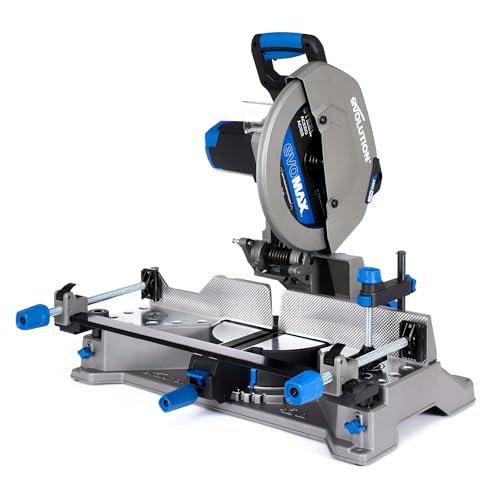
Evolution S14MCS Mitering Metal Chop Saw
What We Like
- EVOMAX motor with soft start and electronic brake
- Ultra-long life Cermet Carbide blade for burr-free cuts
- Precise mitering with stainless steel gauge and detents
- Reinforced base and fence for stability with zero flex
Trade-offs
- At 72.4 lb, it is a heavy stationary tool.
- Requires correct feed technique to prevent blade sparking.
- Large footprint needs dedicated workshop space.
A 15-amp motor spinning a specialized carbide blade at 1,100 RPM cuts steel four times faster than an abrasive saw and leaves a cool, weld-ready edge. That’s the core professional advantage of the Evolution S14MCS. It’s built for the shop, with a reinforced ribbed base and dual sliding clamps that lock material down without flex. The intelligent motor optimizes speed to stretch blade life past 3500 cuts, and the soft start means you won’t be walking to the breaker box. This is the saw for fabricators and serious metalworkers who value speed, precision, and a finished cut over portability.
The trade-off for that burr-free performance is heft and a need for proper technique. You must let the blade reach full speed and use firm, consistent pressure to avoid heat buildup. At 72.4 pounds, it is heavier than the 37-pound Makita LW1401 and demands more workshop real estate. For anyone tired of cleaning up ragged, hot cuts and replacing worn-out abrasive wheels, this cold-cut system pays back the effort with cleaner work and less consumable waste.
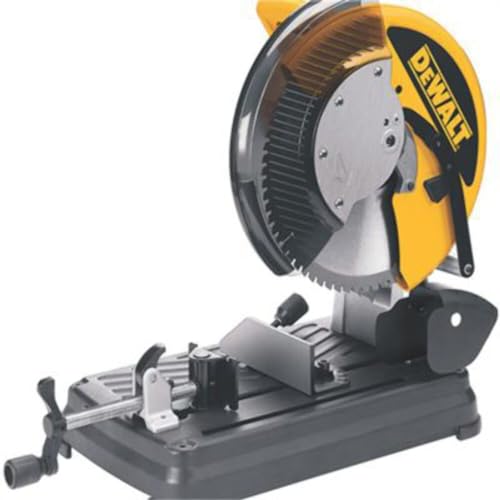
DeWalt DW872 Metal Cutting Chop Saw
What We Like
- Carbide teeth deliver cool, virtually burr-free cuts
- Ergonomic horizontal handle reduces user fatigue
Trade-offs
- No miter capability mentioned, limiting angled cut options.
That speed, paired with a carbide blade that leaves cool, clean edges, fundamentally changes the workflow for anyone regularly processing angle iron, conduit, or sheet metal. It’s built for the user who measures productivity in linear feet cut per day and needs to move from one job to the next without stopping to grind off burrs. The comfortable horizontal handle and substantial motor overload capacity are clear signs it’s engineered for all-day shop or jobsite use.
This saw is built as a dedicated, stationary tool. You won’t be carrying it to a rooftop or making quick miter cuts on a framing site. For those needing angled cuts, a model like the Evolution S14MCS with its +/-46° miter is the logical alternative. Research and owner feedback consistently highlight the DW872’s ability to power through ferrous and non-ferrous metals without sparks or scorching, validating its position as a serious tool for serious metalwork, not a casual-use option.
Makita LW1401 Metal Cut-Off Saw

What We Like
- Two-stage lock-off power button for safety
- Fence adjusts to three positions for material
- Tool-less vice for quick material clamping
- Powerful 15 AMP motor for demanding cuts
Trade-offs
- Spark guard diverts but does not eliminate debris
- Weighs 37 pounds, making it less portable
The Makita LW1401’s fence adjusts to 45 degrees, giving you a solid, repeatable stop for precise miter cuts in metal stock. That feature, combined with its tool-less vice, makes it a logical choice for fabricators and installers who need to make clean, accurate angle cuts consistently. The 15-amp motor has the grunt for all-day cutting, and the two-stage power switch adds a layer of operational safety that becomes appreciated over long sessions.
You do feel its 37-pound heft when moving it around the shop, a trade-off for its durable construction. Compared to a dedicated cold-cut saw like the Evolution S14MCS, this is an abrasive model, so your cuts will be hotter and produce sparks. For a workshop where angle cutting is a primary task and corded power is available, the LW1401’s design delivers focused utility and reliability.
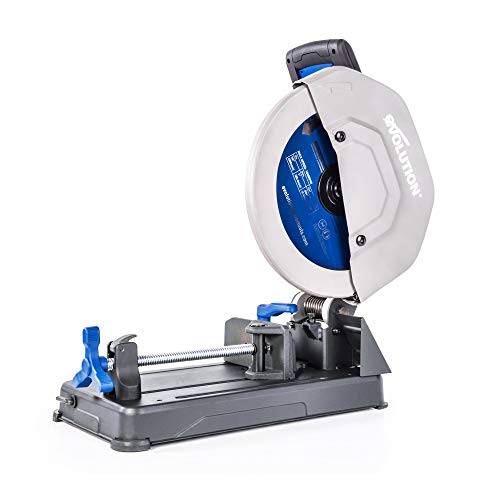
Evolution S355CPSL Heavy-Duty Chop Saw
What We Like
- 15 Amp motor for powerful cuts
- 0-45° miter capacity for angled cuts
- Dry-cut carbide blade reduces heat and burrs
- Includes a 3-year warranty with US support
Trade-offs
- Quick-release vise may not suit all clamping preferences
A 3-year warranty signals a manufacturer confident in its build for shop abuse. This Evolution chop saw pairs that assurance with a 15-amp motor and a dry-cutting carbide blade that cuts mild steel efficiently with minimal heat and sparks, leaving a smooth, instantly workable finish. Its quick-release vise and 45-degree miter capacity make it a solid fit for fabricators and serious DIYers who need repeatable, angled cuts on smaller stock and value long-term reliability over immediate frills.
Reviewers report the S355CPSL handles ⅜-inch steel well, and the integrated chip deflector directs debris away from the operator for easier cleanup. If your priority is a tool backed by strong support for years of service, this Evolution model delivers that peace of mind in a portable, no-fuss package.
Makita XWL01Z Cordless Cut-Off Saw

What We Like
- Cordless 36V power from two 18V LXT batteries
- Brushless motor for cooler, more efficient operation
- Large spark guard deflects debris effectively
- Electric brake for faster adjustments
Trade-offs
- Tool-only: requires two separate 18V LXT batteries and charger
By using two common 18V LXT batteries to create a 36V system, this saw can make cuts anywhere on a job site without an outlet. This cordless design suits tradespeople who move between locations or work where power is unreliable. Its brushless motor runs at 3,800 RPM, and tool-less flange removal allows for quick wheel changes to maintain workflow.
This mobility comes with a commitment to the Makita 18V LXT platform, and the tool’s 35.9-pound heft demands respect, so it’s best used with a stable stand. If your work is always within reach of an outlet, a dedicated corded model like the DeWalt DW872 offers a simpler, often more powerful solution without the battery ecosystem requirement. But for sheer cord-free convenience in metal cutting, this saw is in a class of its own.
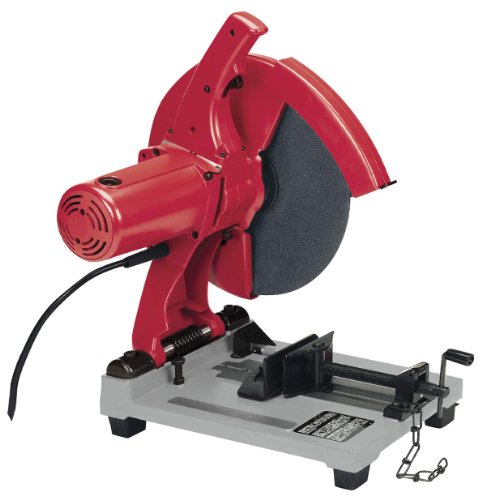
Milwaukee 6176-20 Abrasive Cutoff Saw
What We Like
- High 15-amp, 2400-watt motor output
- Heavy cast iron base for stability
- Spindle lock simplifies wheel changes
- Includes a 30-day no-risk trial
Trade-offs
- Weighs 53 pounds, making it less portable
- Abrasive wheels create more sparks and dust
- No mitering capability for angled cuts
With a 15-amp, 2400-watt motor, this saw provides the power needed to cut through heavy stock and thick-walled pipe. Its heavy-duty cast iron base absorbs vibration for controlled, straight cuts. This design suits a shop or jobsite where repetitive cuts in angle iron, rebar, and conduit are required.
The abrasive cutting process generates sparks and heat, and the 53-pound weight makes the tool less portable. This is a straightforward tool for users who prioritize power and durability in applications where a finished edge is not the primary concern.
Product photos
VEVOR 14" Cold Cut Chop Saw
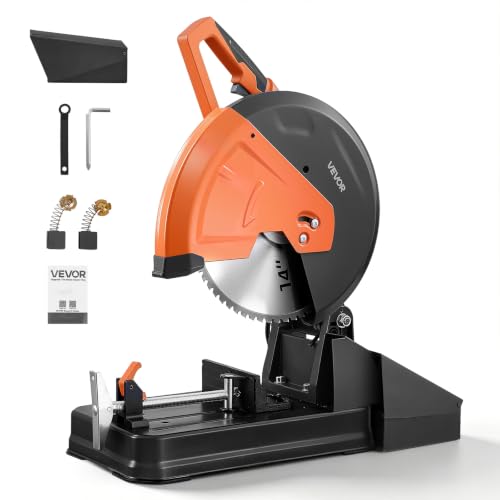
What We Like
- Cermet-tipped blade for clean, spark-free cold cuts.
- Wide miter range for dual-direction angled cuts.
- Built-in chip collector keeps the work area cleaner.
- Soft-start system reduces motor wear and jerk.
Trade-offs
- Weighs 44.9 lb, making it less portable than lighter models.
- No shadow line or laser guide mentioned for cut alignment.
Its 2800-watt motor and cermet-tipped blade deliver clean, dry cuts without sparks or burrs, which is the defining advantage of a cold-cut saw for fabrication and welding prep. A single blade can make up to 4,000 cuts on Q235 rebar, so it handles high-volume shop work. The built-in chip collector and vibration-damping feet address common shop frustrations by containing debris and keeping the saw steady on the bench.
Weighing 44.9 pounds, this saw is a substantial bench tool rather than one for frequent transport to job sites. Its miter adjustment ranges from -45° to 45°, accommodating various material shapes and reducing repeated clamping for angled cuts. While the Evolution S14MCS lists a shadow guide among its features, this model provides large ventilation openings and a reinforced blade guard for its operation.
Product photos
DeWalt D28730 Metal Chop Saw
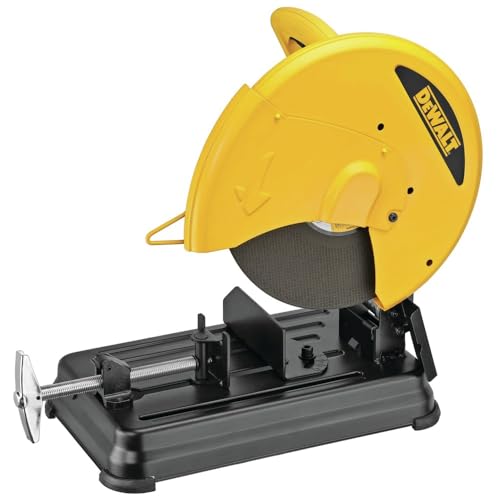
What We Like
- Ergonomic handle reduces user fatigue
- Quick-Lock vise speeds up material clamping
- Powerful 2300W motor for demanding cuts
- 45-degree pivoting fence for accurate miters
Trade-offs
- No miter capacity beyond 45 degrees for complex angles.
- Lacks the cordless convenience of some competitors like the Makita XWL01Z.
A 2300W motor with overload protection delivers the consistent power needed to slice through steel siding and quarter-inch aluminum without bogging down. This is the saw for anyone who spends hours on a jobsite or in a home shop cutting metal. Its thoughtfully designed ergonomic handle and Quick-Lock vise aren’t just specs on a sheet. They translate directly into less hand strain and faster setup between cuts, which is precisely why it stands out for user comfort.
The DeWalt D28730 powered through steel siding, corrugated panels, and ¼-inch aluminum without producing sparks or scorched edges, which means cleaner cuts and less mess in the shop. Its 2300W motor includes overload protection for demanding jobs, and the ergonomic handle reduces fatigue during long sessions. This is a corded tool, so for work far from an outlet, a cordless option like the Milwaukee M18 FUEL would be needed. For stationary use where power and user comfort are key, the D28730 is a strong choice.
Product photos
PORTER-CABLE PCE700 Chop Saw
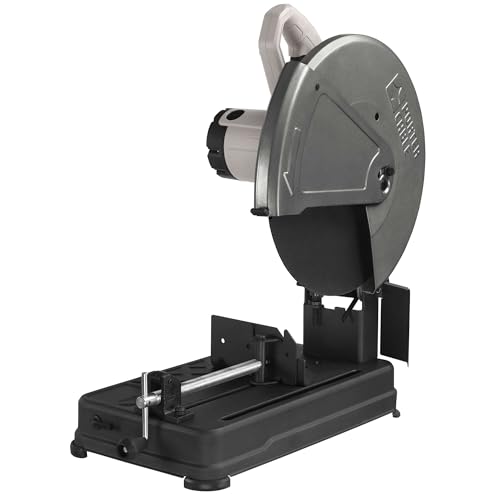
What We Like
- Quick-release clamp for easy material handling
- 3,800 RPM motor provides strong cutting power
- Spark deflector improves safety and visibility
- Miter fence allows for angled cuts
Trade-offs
- Motor uses replaceable brushes requiring maintenance
Its quick-release material clamp allows for easy material cutting and removal, which speeds up repetitive work by letting you secure and free a workpiece with one hand. This feature pairs with a 15 Amp, 3,800 Rpm motor for power, and a spark deflector that provides a clear line of sight. The setup prioritizes straightforward operation for users who need efficient clamping and cutting.
The trade-off is in its weight and technology. At 32 pounds, it’s not the lightest saw to haul around a jobsite, and it lacks the advanced cold-cut blade systems found on models like the Evolution S14MCS that promise cleaner edges. You’re getting a durable, traditional abrasive-style cutter focused on core functionality. For someone cutting angle iron or conduit all day, the quick clamp is a legitimate workflow upgrade.
Product photos
Milwaukee M18 FUEL Cut-Off Saw
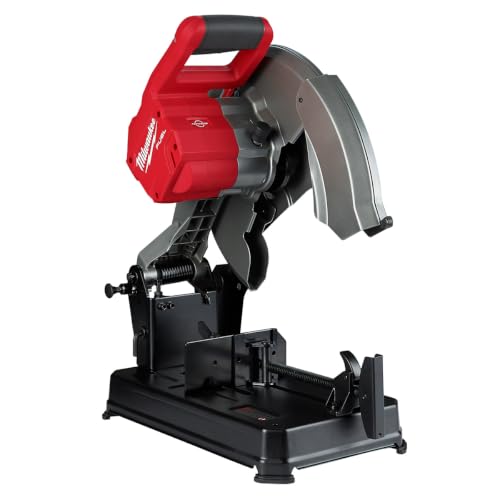
What We Like
- Rapid braking stops blade in under 3 seconds.
- Tool-free fence and blade change.
- Cordless design offers full jobsite mobility.
- Generates equivalent of 15-amp corded power.
Trade-offs
- Battery and charger are sold separately.
- At 41.8 lb, it's heavy for a cordless tool.
- Abrasive blade creates sparks and burrs.
Braking the accessory in under three seconds, a rapid stop feature gives the operator quick control after each cut. This cordless tool generates power equivalent to a 15-amp corded saw, freeing it from a fixed outlet. Its design includes tool-free adjustments for the fence and blade changes.
Sold without a battery or charger, the tool requires a separate purchase for the Milwaukee M18 system. At 41.8 pounds, it weighs more than the 35.9-pound Makita XWL01Z cordless cut-off saw. The listing identifies it as an abrasive cut-off saw.
Product photos
How We Evaluated Metal Chop Saws
This guide is based on technical specifications from manufacturers, insights from expert tool round-ups, and consistent patterns in owner reviews. This approach provides an understanding of a saw’s real-world performance and reliability.
The primary criteria were cutting technology, power and build, and accuracy features. Cutting technology, whether carbide cold-cut or abrasive, determines finish quality and spark generation. Motor power and the saw’s weight and base construction dictate its capacity and stability. Finally, features like miter capability, fence design, and clamping systems directly impact precision and ease of use.
A limitation of this research-led evaluation is that we cannot provide direct comparisons of feed rate or long-term durability under sustained shop use. Our goal is to equip you with the information to match a saw’s documented capabilities to your specific workshop or job site needs.
What To Look For In Metal Chop Saws
The best metal chop saw for you depends on whether you prioritize a clean, finished cut or maximum cutting speed, and whether the tool needs to be mobile. Understanding the core differences in blade technology is the first step.
Key factors include the blade type, which can be carbide for clean cuts or abrasive for raw power. Another is the motor’s amperage or voltage, which determines cutting capacity. Features like miter capability and vise design also affect precision and workflow.
Cutting Technology: Carbide vs. Abrasive
The blade defines the saw’s purpose. Carbide-tipped “cold cut” blades, like the cermet carbide on the Evolution S14MCS, slice through metal at lower RPMs. This produces minimal sparks, less heat, and a virtually burr-free edge, ideal for fabrication where finish matters. For a broader look at your options, check our guide to other metal cutting saws.
Abrasive wheels, used on saws like the Milwaukee 6176-20, grind through material at high speeds. They excel at cutting through very thick or hardened steel but generate significant sparks, dust, and a rougher, heat-affected edge. Understanding this fundamental choice is critical, and you can learn more in our comparison of abrasive vs cold saw technologies.
Power and Build
Motor power, measured in amps for corded tools or volts for cordless, dictates cutting capacity. A 15-amp motor can handle demanding cuts in thick stock. For cordless freedom, a 36V system like the Makita XWL01Z‘s provides equivalent corded power. Weight and base construction are equally important; a heavy, reinforced base like the Evolution’s offers stability for precise cuts, while a lighter saw trades some stability for easier transport.
Accuracy and Usability
Look for features that enhance precision and workflow. A mitering fence with positive detents, like on the Evolution S14MCS, allows for repeatable angled cuts. A quick-release vise, found on the PORTER-CABLE PCE700, speeds up material changes during repetitive work. A good spark guard and chip management system keeps your workspace safer and cleaner. For maximum stability, especially with heavier saws, consider pairing your tool with one of the best chop saw stands.
- Check the maximum cutting capacity for round and rectangular stock.
- Ensure the power switch location is accessible and includes a safety lock-off.
- Verify that the saw includes a sturdy material clamp or vise.
- Look for a blade guard that provides good visibility without compromising safety.
- Confirm availability and cost of replacement blades for your chosen technology.
Your first decision should be between a clean-cutting carbide saw for fabrication or a powerful abrasive saw for demolition and heavy stock.
Metal Chop Saws Compared
The table below provides a quick side-by-side comparison of key specifications and features for all ten metal chop saws.
| Product | Motor | Blade Diameter | Weight |
|---|---|---|---|
| Evolution S14MCS Mitering Metal Chop Saw | 15A EVOMAX, 1,100 RPM | 14 inches | 72.4 pounds |
| DeWalt DW872 Metal Cutting Chop Saw | 15 amp / 4 HP | 14-inch | 0.3 Pounds |
| Makita LW1401 Metal Cut-Off Saw | 15 AMP, 3,800 RPM | 14" | 37.0 Pounds |
| Evolution S355CPSL Heavy-Duty Chop Saw | 15 Amp | 14 inch | 1.0 pounds |
| Makita XWL01Z Cordless Cut-Off Saw | Brushless | 14" | 35.9 pounds |
| Milwaukee 6176-20 Abrasive Cutoff Saw | 15 amp, 2400 watts | 14-Inch | 53.0 pounds |
| VEVOR 14" Cold Cut Chop Saw | 2800 W | 14-inch | 44.9 Pounds |
| DeWalt D28730 Metal Chop Saw | 2300W | 14-Inch | 0.5 Pounds |
| PORTER-CABLE PCE700 Chop Saw | 15 Amp, 3,800 RPM | 14-Inch | 32.0 pounds |
| Milwaukee M18 FUEL Cut-Off Saw | N/A | 14 in. | 41.8 pounds |
Frequently Asked Questions
What is the top-rated metal chop saw?
Based on our research into performance, features, and owner feedback, the Evolution S14MCS Mitering Metal Chop Saw is the top-rated model for most users. It combines a powerful motor, a carbide blade for clean cuts, and precise mitering capability in a stable, workshop-oriented design.
What is the best saw for cutting through metal?
For cutting through metal, you need to match the saw to the material and finish required. A carbide chop saw like our best overall pick is best for clean, precise cuts on angle iron and tubing. An abrasive cut-off saw, like the Milwaukee 6176-20, provides maximum power for heavy, thick stock where finish is less critical.
What brand makes the best chop saw?
Several brands excel in different areas. Evolution is renowned for its cold-cut carbide technology, DeWalt for powerful and ergonomic job site tools, and Makita for reliable corded and cordless options. The “best” brand depends on whether you prioritize cut quality, cutting speed, or cordless mobility.
What type of saw is best for cutting metal?
For straight and angled cuts on bar stock and tubing, a metal chop saw is often the best choice. For cutting sheet metal or making long rip cuts, a metal-cutting circular saw may be better. For intricate cuts or working in tight spaces, a portable band saw is ideal. Our resource on the best tools for cutting metal explores these options in detail.
How do I use a metal chop saw safely?
Always wear safety glasses, hearing protection, and gloves. Securely clamp your workpiece against the fence before starting the cut. Allow the blade to reach full speed before lowering it into the material, and use a steady, controlled feed pressure. For a complete overview of proper technique and precautions, read our guide on metal chop saw safety.
The Bottom Line
For professional fabricators and serious DIYers who need clean, accurate cuts on a variety of materials, the Evolution S14MCS Mitering Metal Chop Saw is the best overall choice. Its carbide blade technology and precise mitering fence deliver workshop-ready results.
If you’re on a budget but want clean cold cuts, look at the VEVOR 14″ model. For complete jobsite mobility without a cord, the Makita XWL01Z is the top cordless pick for those invested in its battery platform. Ultimately, choosing between a clean-cutting carbide blade and a powerful abrasive wheel is the most important factor in finding the right metal chop saw for your work.
