
10 Best Palm Sanders in 2026
This post contains affiliate links. As an Amazon Associate, we earn from qualifying purchases.
Our best overall palm sander is the Makita BO5030K Random Orbit Sander for its smooth, quiet operation and reliable performance. We also highlight the DEWALT DWE6423 for vibration control and the SKIL SR211601 as a top value pick. Choosing the right sander can mean the difference between a comfortable job and a tiring one plagued by swirl marks. This research-based guide compares ten top models on comfort, dust collection, and speed control to help you invest wisely.
Top 10 Palm Sanders in the Market
Certain content that appears on this site comes from Amazon. This content is provided "as is" and is subject to change or removal at any time.
The Best Palm Sanders, Reviewed
Makita BO5030K Random Orbit Sander

What We Like
- Rubberized grip for comfort and control
- Quiet 86 dB operation per owner feedback
- Pad control system for smooth start-up
- Comes with a durable hard case
Trade-offs
- No variable speed control for delicate work
- Dust bag is difficult to clean per owners
- Small dust port requires an adapter for vacuum
With a smooth 12,000 OPM orbit and a lightweight 2.9-pound body, the Makita BO5030K handles long sanding sessions with less fatigue. Its rubberized grip and controlled start-up pad make it a pleasure to use, and the included hard case is a real-world bonus for protecting your investment. This sander is a standout for anyone who values smooth, consistent performance and solid construction for general woodworking tasks. Owner reports confirm it runs quieter than many, which is a genuine quality-of-life feature in the shop.
The trade-off is the lack of variable speed, which can make final finishing passes on delicate veneers or curves more challenging. If you need that finer control for detailed work, you’ll want to look at the Makita BO5041, which is the variable-speed version of this tool. The dust collection system is functional but relies on a bag that owners find messy; plan to buy an adapter to connect it directly to your shop vacuum for a cleaner workspace.
DEWALT DWE6423 Random Orbit Sander

What We Like
- Separate counterweight design reduces vibration.
- Dust-sealed switch for longer component life.
- Rubber overmold improves grip in critical areas.
- One-handed locking dust bag for easier management.
Trade-offs
- At 3.4 lb, it's heavier than the 2.9 lb Makita BO5030K.
- Dust port requires an adapter for standard 1-1/4" hoses.
The separate counterweight design is the standout feature, making extended sanding sessions noticeably less fatiguing on your hands and arms. That, combined with the rubber overmold on the grip areas, makes this sander a logical choice for anyone facing large surface prep or finishing work where comfort is a priority. The 3-amp motor provides a solid speed range for material removal, while the shorter body helps you get into corners more effectively.
A separate counterweight design reduces vibration, which improves comfort during extended use. At 3.4 pounds, it weighs the same as the SKIL model but is heavier than several others, like the 2.9-pound Makita BO5030K. The dust port fits directly to specific DEWALT dust collectors, and connecting to other shop vacuums requires the DWV9000 Universal Quick Connector.
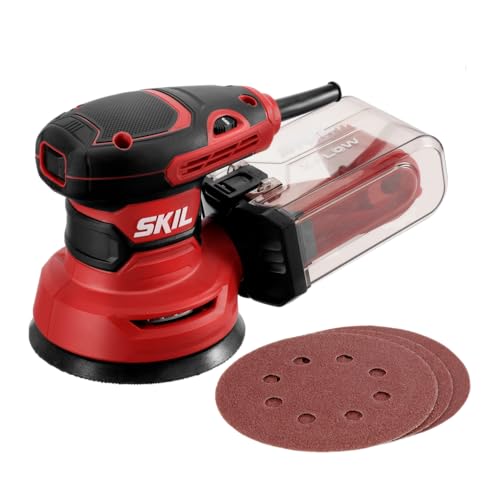
SKIL SR211601 Random Orbital Sander
What We Like
- Compact size fits into tight spaces
- Cyclonic dust box is easy to empty
- Variable speed suits different materials
- Ergonomic grip reduces hand fatigue
Trade-offs
- Heavier than the 3.1-pound Makita BO5041
- Corded design limits mobility
- Dust box requires manual emptying
With 13,000 orbits per minute from a 2.8 amp motor, this sander delivers enough power for most DIY tasks without bogging down. It’s a smart choice for the budget-conscious user who needs reliable performance for furniture refinishing or prep work. The variable speed and low-vibration design mean you can switch from aggressive stock removal to a fine finish without switching tools or enduring excessive fatigue.
The trade-off for that capable motor is a bit of heft; at 3.4 pounds, it’s noticeably heavier than some competitors like the Makita BO5041. You’ll feel that difference on vertical surfaces or during marathon sessions. Still, the integrated cyclonic dust box works well for keeping your workspace clean, a feature often missing on other affordable sanders. It’s a tool that gets the job done efficiently, prioritizing core function over premium frills.
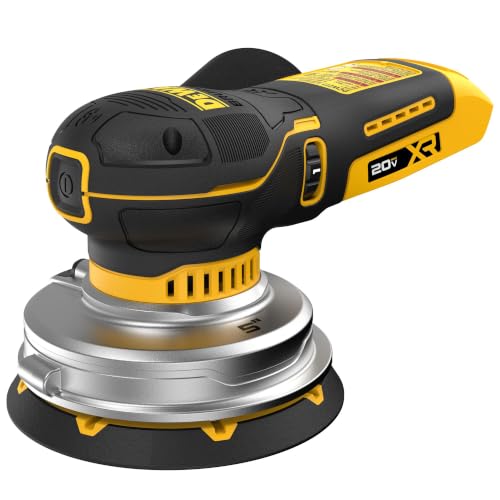
DEWALT DCW211B Cordless Random Orbital Sander
What We Like
- Excellent run time of up to 50 sq-ft. per charge
- Industry-leading low vibration for reduced fatigue
- Low-profile design for working in tight spaces
- Easy paper exchange system praised by owners
Trade-offs
- At 3.8 lb, it's slightly heavier than several corded models
- Dust extraction requires a compatible, separately sold vacuum
Sand up to 50 square feet on a single charge, which means you can tackle a full day of finish work or a large furniture project without hunting for an outlet. This DeWalt is the cordless sander for the pro or serious DIYer who needs to move freely around a job site or workshop. Its low vibration design lets you work longer without the numb hands, and the variable speed dial gives you the control for everything from drywall to fine wood finishes. Owners report it runs as smoothly as a corded tool, with the added benefit of the best paper-change mechanism they’ve used.
Cordless freedom comes with some added heft, as this sander weighs 3.8 pounds and feels more substantial than a 3.1-pound model like the Makita BO5041. You also need to own the battery platform, since it’s sold as a bare tool. A corded model is often simpler for a dedicated shop where an outlet is always nearby. However, the proven performance and good run time make this a reliable choice for work away from the bench.
Product photos
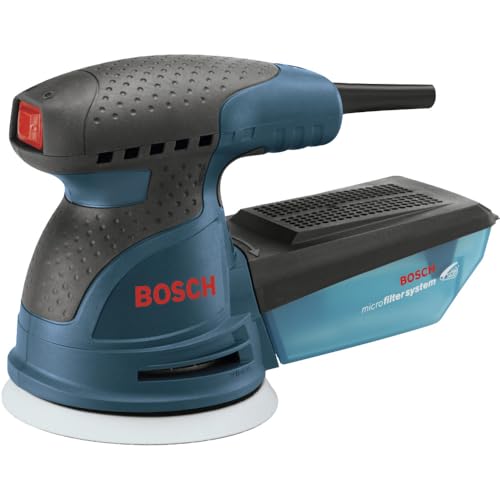
Bosch ROS20VSC Random Orbit Sander
What We Like
- Exceptionally effective dust collection with a microfiltration system.
- Includes a vacuum adapter for shop vac hookup.
- Quiet and smooth operation reduces user fatigue.
Trade-offs
- At 3.5 lb, it's slightly heavier than some 5-inch palm sanders.
- Lacks the compact footprint of models like the Metabo HPT SV13YST.
Reviewers highlight its dust collection as a standout feature, which uses a hard plastic canister with a paper filter to trap particles as small as half a micron. This system keeps the air and work surface clean, a genuine benefit for indoor work or fine finishes. The sander also runs quieter and smoother than most, making a real difference in comfort during extended projects. It’s the ideal pick for the detail-oriented woodworker or finish carpenter who prioritizes a clean shop and a polished result.
Superior dust control does add some bulk, so this sander isn’t the most compact in its class. Its 3.5-pound weight is manageable, but the overall footprint is larger than a model like the Metabo HPT SV13YST. For quick or highly contoured work where maximum maneuverability is key, a smaller sander might be easier to handle. When dust management is the primary concern, the Bosch’s design and included adapter make it a leader among corded sanders.
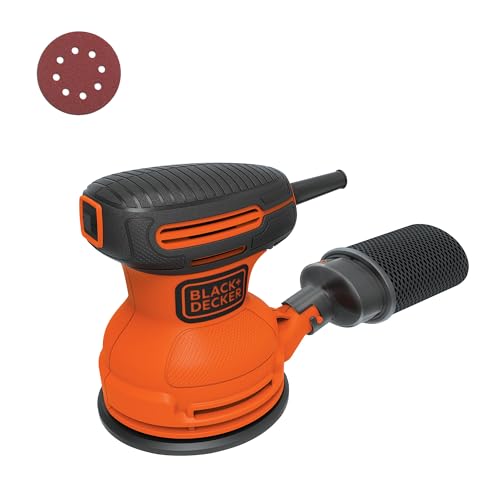
BLACK+DECKER BDERO100 Orbital Sander
What We Like
- Compact 5×7-inch footprint for tight spaces.
- Lightweight 3.2-pound design reduces fatigue.
- Built-in dust bag keeps workspace clean.
- Comfort grip handle for better control.
Trade-offs
- Fixed 12000 OPM speed lacks versatility for different materials.
- Dust bag requires frequent emptying versus a vacuum port.
At just 7 inches long and 3.2 pounds, this sander fits easily into corners and overhead spaces where bulkier models simply won’t go. The 2.0-amp motor spinning at 12000 orbits per minute provides ample power for general finishing work, making it a strong choice for the DIYer tackling detailed projects or small furniture repairs in a cramped garage. Its compact nature is its defining feature, prioritizing maneuverability over brute force.
Its small size means it operates at a single speed, so you can’t slow it down for delicate surfaces. You lose some finesse compared to a variable-speed model like the Bosch ROS20VSC. The shorter body also provides less stability than a longer sander when working on large, flat surfaces. This is a tool built for agility rather than for marathon sessions on big, open projects.
Makita BO5041 Random Orbit Sander

What We Like
- Variable speed dial for precise control
- Ergonomic rubberized grip for comfort
- Lock-on button for continuous operation
- Relatively light and compact build
Trade-offs
- Weighs 3.1 pounds, heavier than the 2.9-pound BO5030K
A variable speed dial that adjusts from 4,000 to 12,000 orbits per minute gives you the exact control needed for delicate finish work or more aggressive stock removal. This Makita sander suits the detail-oriented woodworker who tackles a mix of projects, from refinishing furniture to smoothing trim. Its 3.0 AMP motor provides plenty of power for smooth operation, and the adjustable front handle is a genuine help when sanding into corners or other tight spaces.
Its variable speed dial ranges from 4,000 to 12,000 orbits per minute, letting you slow down for delicate finishes or speed up for material removal. A 3.0 AMP motor provides consistent power for smooth sanding. The ergonomic grip and adjustable front handle improve control in corners and during extended use.
Product photos
Metabo HPT SV13YST Random Orbit Sander

What We Like
- Soft comfort grip reduces vibration.
- Dust-sealed rocker switch for durability.
- Includes dust hose connector for cleaner work.
Trade-offs
- At 8.0 inches long, it is shorter than the 10.2-inch DEWALT DWE6423, offering less sanding pad leverage.
- 3.1-pound weight is slightly heavier than the 2.9-pound Makita BO5030K.
A width of just 4 inches makes this sander exceptionally easy to maneuver in confined areas and comfortable to hold for extended periods, which is why it stands out for detail work and overhead tasks. The 2.8 Amp motor provides solid power for a finishing sander, and the dust-sealed switch is a smart design choice for longevity in a dusty environment. It’s a clear choice for anyone who needs a sander that won’t fight them for space in a cabinet box or on a contoured surface.
That compact form can involve a trade-off in grip. At 8.0 inches long, it provides less tool body to hold than some models, like the 10.8-inch Makita BO5041. For applying even pressure, a user may rely more on the palm pad itself rather than a longer handle.
Product photos
WEN 6301 Electric Detailing Palm Sander
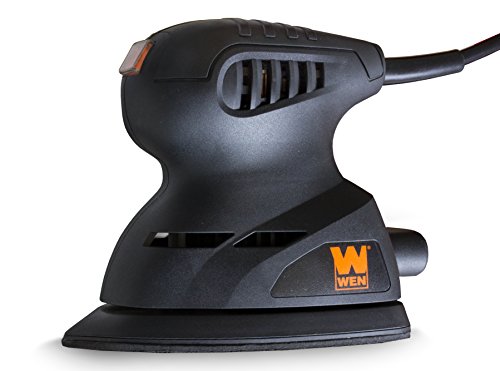
What We Like
- Exceptionally lightweight at just two pounds.
- Angled pad tip for precision in tight spaces.
- Velcro base for quick sandpaper changes.
- Compact, hand-fitting 3.8 x 5.2-inch body.
Trade-offs
- Small pad covers less area per pass.
- Fixed 13,500 OPM speed lacks versatility.
At just two pounds, the WEN 6301 prioritizes control for detailed work over long periods. With a footprint of 3.8 by 5.2 inches and an angled pad tip, it fits into corners and along edges that larger sanders cannot reach. This design suits it for final passes on furniture trim, intricate woodworking, or smoothing small repairs while minimizing risk to the surrounding area.
The trade-off is in speed and finish quality. Its fixed 13,500 orbits per minute and standard orbital motion are effective for material removal but lack the variable speed control for different materials and can leave visible swirl patterns on bare wood. For general sanding on large, flat surfaces, a tool like the Makita BO5030K with its random orbit action will provide a smoother, scratch-free result much faster. The WEN excels where finesse, not footprint, is the priority.
Product photos
Astro Pneumatic Tool 325 Palm Sander

What We Like
- Compact 7-inch length for easy maneuverability
- 3/32-inch orbit stroke for a swirl-free finish
- Ergonomic design suited for long-term operation
Trade-offs
- Lacks a dedicated dust collection system
- 6-inch pad requires less common sandpaper size versus 5-inch models
Weighing just 1.9 pounds, the Astro 325 is built to disappear in your hand during long sanding sessions. That ultra-lightweight design, paired with its compact 7-inch length, makes it a standout for detailed work, overhead surfaces, or anyone who struggles with arm fatigue. The 3/32-inch orbital stroke is designed specifically for a fine, final finish without leaving swirl marks. It’s a straightforward tool for the user who prioritizes comfort and control above all else in a finishing sander.
The sander lacks an integrated dust collection system, unlike models such as the SKIL SR211601 which includes a cyclonic dust box. Its 6-inch sanding pad uses a less common paper size compared to the standard 5-inch format found on many other orbital sanders.
Product photos
How We Evaluated Palm Sanders
Our evaluation is based on a thorough review of manufacturer specifications, expert round-ups, and patterns in owner feedback. We prioritized criteria that impact real-world use: vibration control for long-session comfort, effective dust management for a clean workspace, and control options like variable speed for different materials. While we cannot replicate the feel of a tool in hand, this research-led approach identifies models consistently praised for their key performance and ergonomic features.
What To Look For In Palm Sanders
Your choice depends on the scale of your projects and your tolerance for dust and fatigue. The right tool balances power with comfort.
Key considerations are the sander’s weight and vibration, its dust collection system, and whether you need a corded or cordless model. For fine work, variable speed control is essential.
Vibration and Weight
Vibration is the primary cause of hand fatigue during extended use. Models with counterweight designs or rubberized grips, like the DEWALT DWE6423, are engineered to dampen these vibrations effectively. Weight also matters for comfort. A heavier tool like the 3.8-pound DEWALT DCW211B can feel more stable, but a lighter model is better for overhead work or detail tasks where control is paramount.
Dust Collection
Good dust collection keeps your workspace clean and your lungs safe, and it directly impacts finish quality by preventing swirl marks. Systems range from simple, built-in fabric bags to advanced microfiltration canisters and direct vacuum ports. The Bosch ROS20VSC is noted for exceptional dust collection and earns our Best For Dust Collection award. Many other models, including our top pick, require an adapter to connect to a standard shop vac hose.
Corded vs. Cordless & Speed Control
Corded sanders offer unlimited run time and consistent power, ideal for shop work. Cordless models, like the DEWALT DCW211B, provide mobility but add the cost of batteries and chargers. For control, a variable speed dial allows you to match the orbital speed to the material, from delicate veneers to aggressive stock removal. This is a key difference between models like the fixed-speed Makita BO5030K and the variable-speed Makita BO5041.
- Check the orbit stroke: a smaller stroke (like 3/32-inch) typically produces a finer, swirl-free finish.
- Consider the paper size: 5-inch discs are standard, but 6-inch pads like on the Astro Pneumatic Tool 325 cover more area.
- Test the paper change system; a hook-and-loop (Velcro) base is fastest.
- Evaluate the grip shape to ensure it fits your hand comfortably for your typical sanding orientation.
- Look for a dust-sealed switch to prolong the tool’s life in dusty environments.
For general woodworking, a 5-inch random orbital sander with a dust port offers the best balance of speed and finish quality.
Palm Sanders Compared
The following table compares key specifications for all ten palm sanders to help you see the differences at a glance.
| Product | Motor | Orbital Speed (OPM) | Weight | Dust Collection |
|---|---|---|---|---|
| Makita BO5030K Random Orbit Sander | 3.0 AMP | 12,000 OPM | 2.9 pounds | dust collection system |
| DEWALT DWE6423 Random Orbit Sander | 3-Amp | 8,000 – 12,000 OPM | 3.4 pounds | Dust port |
| SKIL SR211601 Random Orbital Sander | 2.8 amp | 13,000 orbits per minute | 3.4 pounds | Cyclonic dust box |
| DEWALT DCW211B Cordless Random Orbital Sander | Cordless (20V MAX XR) | 8,000 – 12,000 OPM | 3.8 pounds | Up to 95% effective |
| Bosch ROS20VSC Random Orbit Sander | 2.5 AMP | 7,500-12,000 OPM | 3.5 pounds | vacuum dust collector |
| BLACK+DECKER BDERO100 Orbital Sander | 2.0 Amp corded | 12000 OPM | 3.2 Pounds | dust collection bag |
| Makita BO5041 Random Orbit Sander | 3.0 AMP | 4,000-12,000 OPM | 3.1 pounds | N/A |
| Metabo HPT SV13YST Random Orbit Sander | 230W 2.8 Amp | Variable speed dial | 3.1 pounds | dust collection hose connector |
| WEN 6301 Electric Detailing Palm Sander | 1-amp | 13,500 OPM | 2 pounds | Dust port |
| Astro Pneumatic Tool 325 Palm Sander | N/A | Built-in regulator | 1.9 Pounds | N/A |
Frequently Asked Questions
Which palm sander is the best quality?
Quality is defined by durability, smooth operation, and effective features. Based on our research, the Makita BO5030K is a high-quality choice praised for its reliable motor, rubberized grip for control, and quiet operation, making it a dependable tool for general woodworking.
What is the best hand sander to buy?
The best sander to buy depends on your primary need. For an all-around reliable performer, choose the Makita BO5030K. If reducing hand fatigue is critical, the DEWALT DWE6423 excels at vibration control. For those on a budget who still need variable speed, the SKIL SR211601 offers great value.
What is the best brand for sanders?
Several brands consistently produce top-rated palm sanders. Makita, DEWALT, and Bosch are frequently highlighted for their build quality, ergonomics, and performance in expert comparisons and owner reviews, each offering models for different priorities and price points.
What are the different types of palm sanders?
The two main handheld types are traditional sheet sanders (for finish work) and random orbital sanders (for faster stock removal and a swirl-free finish). This guide focuses on random orbital models, which are the most versatile for most DIY and woodworking tasks. For a deeper dive into tool varieties, our guide to power sander types can help.
Should I get a corded or cordless palm sander?
Choose a corded sander for unlimited run time in a workshop setting. A cordless sander is best for job site mobility or areas without easy outlet access, though you’ll need to manage battery life. The DEWALT DCW211B, for example, offers impressive cordless run time but at a higher weight and cost.
The Bottom Line
The Makita BO5030K Random Orbit Sander is our best overall pick, ideal for the woodworker seeking a smooth-running, quiet, and reliable tool for general stock removal and finishing. Budget-conscious DIYers should look to the SKIL SR211601 Value Pick, while those tackling large projects will appreciate the reduced vibration of the DEWALT DWE6423.
Ultimately, matching the sander’s weight, vibration control, and dust collection to your project scale and workspace is the most important step to a better finish and less fatigue.
