
10 Best Polishers For Paint Correction in 2026
This post contains affiliate links. As an Amazon Associate, we earn from qualifying purchases.
For a versatile, corded workhorse perfect for consistent paint correction, our top pick is the Griot’s Garage G9 Random Orbital Polisher. For beginners, the PORTER-CABLE 7424XP offers a safe entry point, while the RUPES BigFoot LHR21 Mark V excels at reducing vibration for all-day comfort. Choosing the right tool can dramatically improve your results and reduce fatigue during the long process of paint correction. This guide was built by researching specifications, manufacturer data, and expert round-ups to identify the best polishers for different needs.
Top 10 Polishers For Paint Correction in the Market
Certain content that appears on this site comes from Amazon. This content is provided "as is" and is subject to change or removal at any time.
The Best Polishers For Paint Correction, Reviewed
Griot's Garage G9 Random Orbital Polisher

What We Like
- Powerful 1000-watt motor for effective correction
- Ergonomic double-shot rubber grip and contoured shroud
- Fan-cooled counterbalance for smooth operation
- Convertible to a 5-inch pad system
Trade-offs
- 9mm orbit is less aggressive than long-throw models like the RUPES LHR21
- Weighs 5.2 pounds, heavier than some cordless models like the 4.5-pound CRAFTSMAN
A 1000-watt motor and 9mm orbit strike a practical balance, delivering enough torque to tackle moderate defects without being intimidating for a first-time user. Its well-balanced, 5.2-pound design and contoured grip make it comfortable for full-car work, while the six speed settings offer clear control for compounding or finishing. This polisher suits the detailer who wants a single, reliable corded tool for consistent weekend projects.
The trade-off is in specialization. Its 9mm throw is a versatile middle ground. It won’t remove severe defects as quickly as a long-throw polisher like the RUPES BigFoot, nor is it as nimble in tight spaces as a dedicated mini polisher. For someone focused solely on heavy correction or intricate work, a more specialized tool might be preferable. For everyone else, the G9’s blend of power, comfort, and convertible design makes it a remarkably capable all-rounder.
PORTER-CABLE 7424XP Polisher

What We Like
- Random orbit action prevents swirl marks
- Variable speed dial for controlled operation
- Moderate weight reduces user fatigue
- Includes counter balance for smooth performance
Trade-offs
- AC-only operation requires a nearby outlet
A 4.5 Amp motor and random orbit design make the PORTER-CABLE 7424XP a forgiving choice for newcomers. The electronic variable-speed dial offers control from 2,500 to 6,800 opm for different polishing stages. Research mentions a full paint correction on a midsize car can take an experienced user around six hours, which defines its steady pace.
That measured pace is the central trade-off for its accessible operation. Completing all panels on a swirled-out car like a 2014 Camaro is estimated to take about six hours with this polisher under typical skilled use. This machine prioritizes a controlled, swirl-free action over raw speed, establishing a clear expectation for project timelines.
RUPES BigFoot LHR21 Mark V Polisher

What We Like
- POLYSYNTHEC gears drastically cut vibration and noise.
- Compact, ergonomic design improves control on complex curves.
- Anti-spin ring reduces pad stress for smoother operation.
- Enhanced ventilation maintains performance during long sessions.
Trade-offs
- Weighs 7.8 pounds, a significant load for overhead panels.
- Its 21.5-inch length can feel bulky in very tight spaces.
Advanced POLYSYNTHEC composite gears make this polisher exceptionally smooth, transforming long correction sessions from a chore into controlled, precise work. That reduced vibration is the core reason it stands out for professionals or serious enthusiasts who tackle multi-stage corrections. The compact build and balanced PrecisionPro pads give you the confidence to work right up to edges without fear of grabbing. This is a tool built for marathon detailing days where user fatigue directly impacts the quality of the finish.
Weighing 7.8 pounds, the RUPES LHR21 Mark V is heavier than many competitors, which can affect maneuverability during long sessions. Its advanced composite gears are designed to reduce vibration and noise, aiming for smoother operation and user comfort. This is a corded, tool-only polisher, so no battery or charger is included.
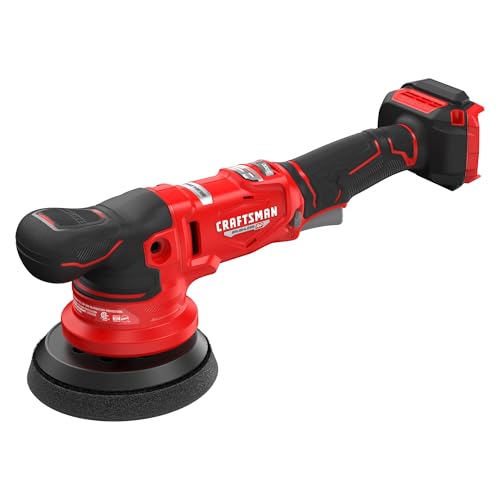
CRAFTSMAN V20 Cordless DA Polisher
What We Like
- Exceptionally light at 4.5 pounds for reduced fatigue.
- Brushless motor provides efficient, long-lasting performance.
- In-line battery design minimizes risk of surface contact.
- Lock-on switch allows for continuous operation.
Trade-offs
- Tool only: requires a separate V20 battery and charger.
- 6,000 OPM maximum is lower than some high-end corded competitors.
At 4.5 pounds, this cordless polisher is easy to maneuver overhead and on vertical panels without fatiguing your arms. Its brushless motor and lack of a power cord provide freedom from outlets, though the required V20 battery is sold separately. The tool comes with a cutting, correcting, and finishing pad to handle a full polishing cycle.
The top speed is up to 6,000 no-load orbits per minute, with a dial and trigger for nine variable settings and constant speed under load for consistent application. Its in-line battery position is designed to help minimize contact with the work surface. For aggressive material removal, its cordless operation differs from the 1000-watt, corded Griot’s G9 polisher.
Product photos
Griot's Garage G8 Mini Orbital Polisher

What We Like
- Small frame for tight contours and small areas
- Ergonomic grip with double-shot rubber dampening
- Fan-cooled counterbalance for smooth operation
- Includes both 2-inch and 3-inch backing plates
Trade-offs
- Primarily designed for detail work, not large panels
Engineered for agility and precision in small areas, the Griot’s Garage G8 Mini Orbital Polisher includes 2-inch and 3-inch backing plates for hyper-focused paint correction. Its contoured shroud grip and small frame design provide stability for navigating tight contours. The 8mm orbit and constant speed control prevent bogging down under pressure, which helps maintain smooth operation on complex curves.
The included backing plates and design make it ideal for small areas and tight contours, a role distinct from larger polishers. Its 700-watt motor and 8mm orbit are built for detailed correction tasks like removing scratches and swirls. The double-shot rubber dampening and balanced frame aim for comfort during extended use on intricate sections.
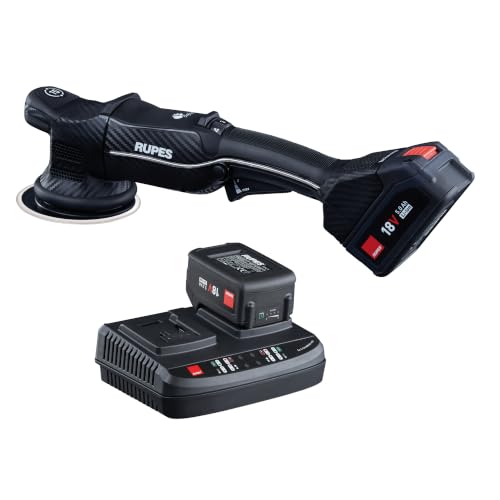
RUPES BigFoot iBrid Cordless Polisher
What We Like
- Brushless motor for consistent, durable power
- 40-minute runtime from a single 5Ah battery
- Compact, lightweight design improves maneuverability
- Enhanced polishing system with LED indicator
Trade-offs
- Its 17.5-inch length is less streamlined than dedicated compact polishers.
- Weighs 12 pounds, which is substantial for a polisher
Up to 40 minutes of full-power cordless runtime liberates you from the outlet, making it a serious tool for complete vehicle corrections without a tether. This RUPES iBrid suits the detailer who demands pro-grade cordless convenience and is willing to invest in a system where the brushless motor and intelligent charging prioritize consistent performance and reduced downtime. You’re paying for the engineering that makes cordless feel as dependable as corded.
Cordless operation and a high-capacity battery add significant weight, making this polisher heavier than many corded models. Its 12-pound total can be felt during extended overhead or vertical work compared to tools like the 5.2-pound Griot’s G9. The compact, ergonomic shape improves handling for detail areas, but the overall mass reflects its built-in power source and motor system.
Chemical Guys TORQ 10FX Polisher

What We Like
- Digital display for precise, repeatable speed control
- 700W motor handles heavy compounds without bogging down
- 8mm orbit balances efficient correction with safe operation
- Ergonomic grips and balance reduce fatigue on long details
Trade-offs
- At 7.6 lb, it's heavier than the Griot's G9 (5.2 lb)
- Tool-only offering requires separate purchase of pads and polishes
A 700W motor gives this polisher the torque to drive heavy cutting compounds without bogging down on vertical panels, while its digital display provides exact speed control for repeatable results across different vehicles. The 8mm orbit offers a middle ground, delivering efficient correction with safer operation compared to more aggressive long-throw options. Chemical Guys pairs it with their own pads and polishes for a complete paint correction workflow.
You do pay for that power and digital precision with some heft and bulk. For a professional or dedicated hobbyist setting up a dedicated correction station, that’s a fair trade for the raw power and control. For someone who values a lightweight, nimble tool for quick one-step corrections, a more compact model might be a better fit.
Product photos
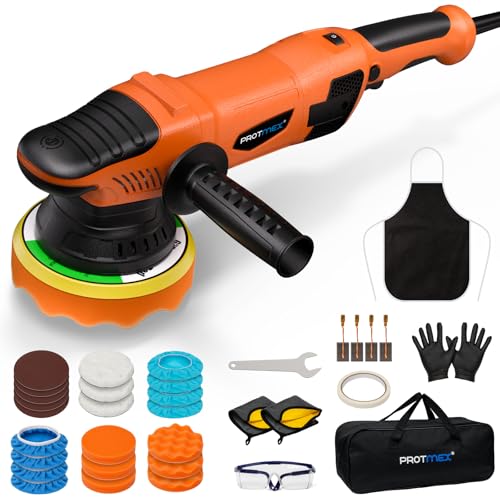
Protmex 1200W Rotary Buffer
What We Like
- High-torque 1200W motor resists stalling
- Six-speed dial for cutting, polishing, and waxing
- Comprehensive kit includes pads, bonnets, and sandpaper
- Lock-on switch enables continuous operation
Trade-offs
- Rotary design has a steeper learning curve than a DA
- Primarily a corded tool, limiting mobility
Its 1200-watt motor and constant power system provide strong torque that resists stalling under pressure, letting you work through heavy compounding or large areas like a boat hull without the tool slowing down. This rotary buffer operates at speeds from 2500 to 6000 RPM, making it suited for users who need fast paint correction and are comfortable with a professional-grade tool. The included kit has accessories for sanding, polishing, and buffing, covering nearly every step for a complete detailing job.
Control is the key consideration. As a rotary polisher, it requires a practiced hand to avoid burning through clear coat, a risk that doesn’t exist with a dual-action machine. A dual-action polisher is the safer choice for a novice. The Protmex shines where raw cutting power is the priority over foolproof safety. It’s a dedicated, corded workhorse for demanding correction jobs, not a casual weekend waxing tool.
Product photos
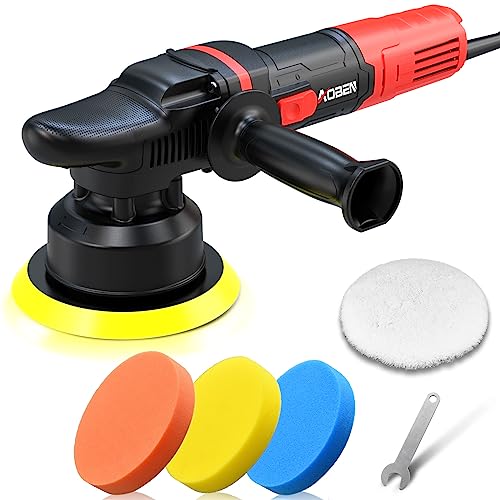
AOBEN Dual Action Car Polisher
What We Like
- Includes four buffing pads for different tasks
- Detachable side handle for ergonomic use
- Six variable speeds for material versatility
- Plastic head shell provides heat insulation
Trade-offs
- Motor can stall at lower speeds under pressure
- Kit lacks a dedicated sanding interface accessory
A 700-watt motor paired with a six-speed range from 1000 to 4500 rpm gives this polisher enough grunt to tackle oxidation removal yet offers the finesse for final wax application. The kit is a complete starter package, bundling a 6-inch backing plate with three foam pads and a synthetic wool pad. For the detailer just entering paint correction or the seasoned DIYer who needs a capable backup machine, this AOBEN delivers core functionality without a significant investment. Its dual-action design is inherently safer for beginners than a rotary buffer, helping to prevent burn-through on delicate clear coats.
Weighing 5.29 pounds, the AOBEN polisher is slightly lighter than some popular full-sized models, which can help reduce arm fatigue during longer sessions. Its 700-watt motor provides six speeds, but the manufacturer notes it can stop on the lower settings if you apply too much pressure. You need to use a lighter touch or select a higher speed for more demanding work. This makes it a straightforward tool for general polishing and waxing, where controlled, gentle pressure is part of the process.
Product photos
SPTA Cordless Mini Car Polisher
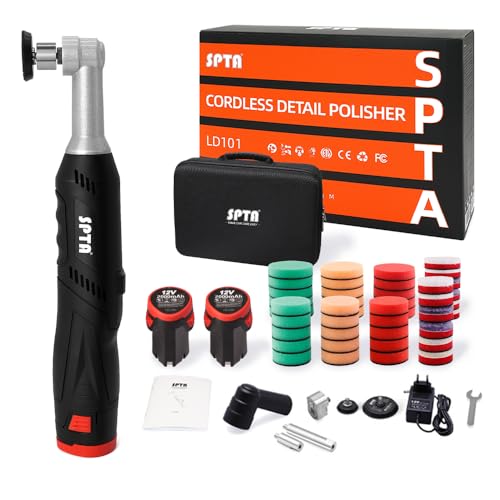
What We Like
- Weighs over 50% less than a standard polisher.
- Cordless design allows for one hour of mobile use.
- 1-inch backing plate fits tight areas and body lines.
- Free-spinning dual-action rotation prevents holograms.
Trade-offs
- Battery and charger inclusion is unspecified.
- 4.3 lb weight is heavier than some dedicated mini polishers.
A 1-inch backing plate and a cordless, 4.3-pound body make this polisher a specialist for cramped spaces. It’s built for the finicky work standard machines can’t touch, polishing around emblems, along sharp body lines, and inside door jambs. The free-spinning dual-action rotation keeps the finish hologram-free, while the ability to switch to a pure rotary mode gives you more bite for heavier correction or using a carpet drill attachment. If your detailing routine is constantly interrupted by running an extension cord to reach the final ten percent of the car, this tool solves that problem.
Its scope is limited by design. That 80W battery and compact size aren’t meant for correcting an entire hood or roof; you’d burn through charge quickly and the small pad lacks the efficiency for big areas. For comprehensive paint correction, you’d still need a full-sized, corded polisher. Think of the SPTA as the perfect supplement to your main tool, finally letting you finish the job properly without dragging a cord across the garage.
Product photos
How We Evaluated Polishers For Paint Correction
Our research focused on comparing specifications like motor power, orbit stroke, and weight across dozens of models. We analyzed manufacturer documentation for features like gear types and cooling systems, and studied expert round-ups to understand performance patterns in professional and enthusiast detailing. Key criteria included correction power for removing defects, ergonomics for long sessions, and versatility for different panel sizes and tasks. Since this is a research-based evaluation, we cannot confirm firsthand experiences like stall resistance under pressure or the precise feel of vibration dampening.
What To Look For In Polishers For Paint Correction
Choosing the right polisher balances power, control, and comfort for your specific projects. Your selection will impact both the quality of your finish and how you feel after a full day of detailing.
The core decision is between a dual-action (DA) polisher, which is safer for beginners, and a rotary polisher, which offers maximum cutting power for experienced users. Key factors include motor power, orbit size, weight, and whether a corded or cordless system fits your workflow.
Correction Power & Control
Motor wattage and orbit size directly influence a polisher’s ability to remove scratches and swirls. A higher-wattage motor, like the unit in the Protmex Rotary Buffer, provides more torque to handle heavy compounds without stalling. The orbit stroke, the distance the backing plate travels, affects aggressiveness; a long-throw polisher cuts faster than a model with a shorter stroke, but requires more skill to control. For most enthusiasts, a mid-range orbit offers a good balance of safe, effective correction.
Ergonomics & Vibration
A full paint correction can take many hours, making tool comfort critical. Weight is a primary factor; the CRAFTSMAN V20 Cordless polisher weighs just 4.5 pounds, while some professional models weigh more. Vibration dampening, achieved through advanced counterbalance systems or specialized gears like those in the RUPES LHR21, reduces hand fatigue and improves control on curved panels. Also consider grip design and whether a side handle is included for better maneuverability on large, flat surfaces.
Versatility & Workflow
Your polisher should match the scale and scope of your typical projects. For complete vehicle corrections, a standard 5-inch or 6-inch backing plate is most efficient. For tight spots like A-pillars and mirrors, a dedicated mini polisher like the Griot’s Garage G8 is invaluable. Cordless models, such as the RUPES BigFoot iBrid, offer unmatched mobility but require battery management, while corded tools provide unlimited runtime. Your choice between a DA polisher and a rotary polisher will define your learning curve and the finishes you can achieve.
- Check the backing plate size compatibility with your preferred pads.
- Verify if the tool is sold as a kit with pads or as a tool-only unit.
- Consider the power cord length or battery platform if you already own other tools.
For most DIYers starting out, a mid-range dual-action polisher is the safest and most effective choice.
Polishers For Paint Correction Compared
Our comparison table below highlights the key specifications and trade-offs of our top picks to help you weigh your options quickly.
| Product | Motor Power | Orbit Throw/Type | Weight |
|---|---|---|---|
| Griot's Garage G9 Random Orbital Polisher | 1000 watts | 9mm | 5.2 pounds |
| PORTER-CABLE 7424XP Polisher | 4.5 Amp | Random orbit | 5.8 Pounds |
| RUPES BigFoot LHR21 Mark V Polisher | N/A | N/A | 7.8 pounds |
| CRAFTSMAN V20 Cordless DA Polisher | N/A | 15mm | 4.5 pounds |
| Griot's Garage G8 Mini Orbital Polisher | 700-watt | 8mm | N/A |
| RUPES BigFoot iBrid Cordless Polisher | N/A | N/A | 12.0 pounds |
| Chemical Guys TORQ 10FX Polisher | 700W | 8mm throw | 7.6 pounds |
| Protmex 1200W Rotary Buffer | 1200W | 9mm random orbit | N/A |
| AOBEN Dual Action Car Polisher | 700W | Dual action random orbital | 6.8 pounds |
| SPTA Cordless Mini Car Polisher | N/A | Dual-action/Rotary | 4.3 pounds |
Frequently Asked Questions
What is the best polisher for paint correction?
The best overall polisher for most users is the Griot’s Garage G9. It offers a powerful 1000-watt motor, a versatile 9mm orbit that balances cutting power with safety, and features like a fan-cooled counterbalance for smooth operation, making it a reliable corded workhorse for enthusiasts and prosumers.
What is better, polisher or buffer?
The terms are often used interchangeably, but in detailing, a ‘buffer’ traditionally refers to a rotary tool. A ‘polisher’ often means a dual-action (DA) tool, which is better for beginners and most enthusiasts. Its random orbit action greatly reduces the risk of burning the paint. A rotary buffer offers maximum cutting power for severe defects but has a steeper learning curve.
Which polisher is better, Rupes or Milwaukee?
This depends on your needs within their respective product lines. RUPES is renowned for its smooth, low-vibration gear-driven polishers like the LHR21, ideal for professional detailers. Other brands focus on cordless platforms, offering powerful, untethered tools. For pure paint correction comfort and performance, many experts prefer RUPES; for ultimate cordless convenience within a broader tool ecosystem, other brands are a strong contender.
What should a beginner look for in a polisher?
A beginner should prioritize a dual-action polisher with a variable speed dial, like the PORTER-CABLE 7424XP. This design is forgiving and helps prevent swirl marks. Look for moderate weight to reduce fatigue and a tool that includes a backing plate and counterbalance for smoother operation as you learn the techniques of paint correction.
Is a cordless polisher worth it for detailing?
A cordless polisher is worth it for the increased mobility and convenience, eliminating cord management. Models like the CRAFTSMAN V20 are exceptionally lightweight, reducing fatigue. However, they require investment in a battery platform and may have lower maximum operating speeds compared to high-end corded models, so they are best for users who value a tangle-free workspace.
The Bottom Line
For a do-it-all polisher that delivers reliable, powerful correction for most enthusiasts, the Griot’s Garage G9 Random Orbital Polisher is our best overall choice. If you’re new to detailing, start with the forgiving PORTER-CABLE 7424XP, and if you need maximum mobility, consider the lightweight CRAFTSMAN V20 Cordless DA Polisher. Ultimately, matching the tool’s power, ergonomics, and backing plate size to your specific projects and skill level is the most important factor for successful paint correction.
