
10 Best Router Bits For Cutting Plywood in 2026
This post contains affiliate links. As an Amazon Associate, we earn from qualifying purchases.
The Freud 4 Piece Undersized Plywood Bit Set is our best overall choice for cutting plywood because it delivers precise dados for common plywood thicknesses. We also like the Bosch Carbide-Tipped Plywood Mortising Router Bit for 3/4″ plywood and the SpeTool Downcut Spiral Router Bit for a clean top surface. Modern plywood rarely matches its nominal thickness, so a perfect joint requires an undersized bit. This research-based guide uses specifications and owner feedback to identify the right bits for dados, grooves, and edge work in plywood.
Top 10 Router Bits For Cutting Plywood in the Market
Certain content that appears on this site comes from Amazon. This content is provided "as is" and is subject to change or removal at any time.
The Best Router Bits For Cutting Plywood, Reviewed
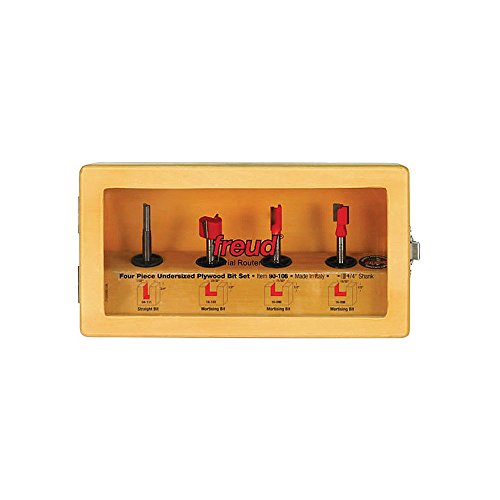
Freud 4 Piece Undersized Plywood Bit Set
What We Like
- Four bits cover common undersized plywood thicknesses
- Perma-SHIELD coating reduces heat and pitch buildup
- Includes a protective wooden case for storage and transport
- Works with handheld and table-mounted routers
Trade-offs
- Shank is 1/4", not the more rigid 1/2" used on some table routers
- Set is for grooves and dados only, not for edge profiling
- Wooden case adds size compared to basic plastic holders
The four included bits match the true, slightly undersized thickness of modern plywood sheets. This precise sizing means you can rout dadoes and grooves for panels that actually fit tight without slop or force, which is the foundation of professional-looking cabinetry and furniture. For anyone working with sheet goods, this set solves the single most frustrating fit problem right out of the box. It’s a premium choice for woodworkers who value accuracy over a sprawling collection of single-purpose tools.
Designed for routing grooves in undersized plywood, this Freud set includes four bits matching true thicknesses from 1/4″ to 3/4″, which ensures tight-fitting joints for cabinetry and furniture. Its 1/4″ shank is compatible with both hand-held and table-mounted routers. The bits come in a wooden shadowbox case for safe storage and transport.
Product photos
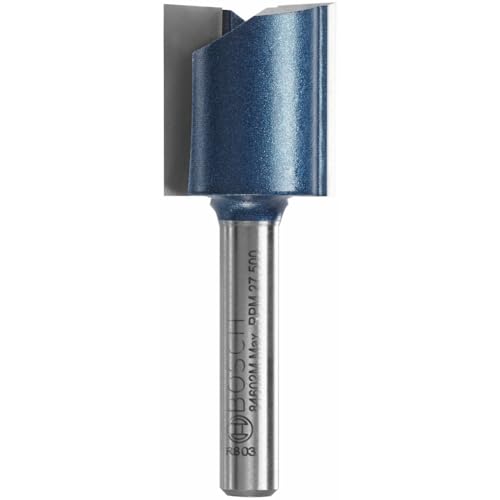
Bosch Carbide-Tipped Plywood Mortising Router Bit
What We Like
- Undersized cut diameter matches actual plywood thickness
- Micrograin carbide tip for smooth finish and wear resistance
- Exclusive heat treatment for hardness and heat resistance
- Reinforced, hardened shank for ultimate durability
Trade-offs
- Specifically sized for 3/4" plywood, not a versatile set
- Single-bit purchase, unlike multi-bit sets like the Freud 4-piece
A 23/32-inch cutting diameter is the key here, designed to match the true thickness of standard 3/4-inch plywood. That means your dados and mortises will be snug right out of the gate, eliminating sloppy joints and saving you time on shimming or adjusting. This bit is for the woodworker who regularly builds cabinets or furniture from sheet goods and needs dead-on accuracy for strong, clean joinery. The micrograin carbide and Bosch’s heat-treating process are built for the long haul, promising to stay sharp through many linear feet of abrasive plywood glue lines.
This router bit is designed specifically for creating tight-fitting mortise joints in standard 3/4-inch plywood. Its undersized cutting diameter matches the actual thickness of that material, which means joints fit together without slop. While specialized for that single thickness, it lacks the versatility for other common plywood sizes. For projects using varying panel thicknesses, a set like the Freud 4 Piece Undersized Plywood Bit Set covers a wider range.
Product photos
SpeTool Downcut Spiral Router Bit

What We Like
- Downcut design leaves a clean top surface
- Extended-life coating for increased durability
- Compatible with plywood and laminates
- Works with handheld and CNC routers
Trade-offs
- 1-inch cut length limits depth for thicker material
- Primarily for grooves and dados, not panel trimming
A 1/4-inch downcut spiral is the secret weapon for clean plywood dados and mortises. The downcut action pushes chips down into the cut, leaving the top face of your plywood tear-out free. That’s critical when you’re routing a slot for a shelf in a cabinet side. The special coating on the carbide also promises a longer-lasting edge, which means you can tackle more linear feet of MDF or oak ply before needing a replacement. This bit is built for the detail work where a pristine surface matters most.
Its 1-inch cutting length handles standard 3/4-inch material, but limits its use for deeper two-layer dados. For tasks requiring a specific 23/32-inch dimension, the Bosch Carbide-Tipped Plywood Mortising Router Bit is listed as an alternative. This SpeTool bit serves as a versatile choice for general grooves and slots in various woods, providing clean top edges without needing a separate finishing pass.
Product photos
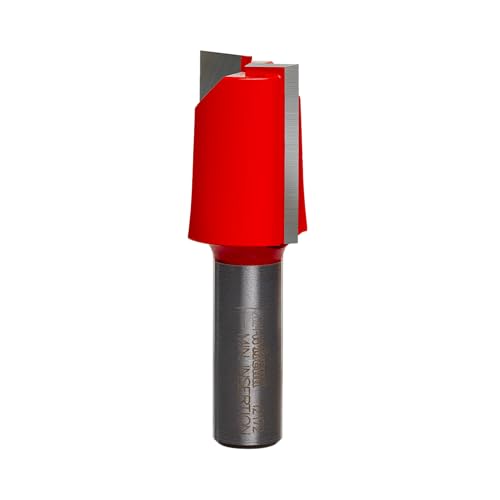
Freud Double Flute Straight Bit
What We Like
- Relieved tip geometry for clean plunge cuts
- Precision angles deliver ultra-smooth finishes
- Compatible with CNC, handheld, and table routers
Trade-offs
- 1-1/4 inch cutting length limits deep grooves
The relieved tip geometry on this bit is the key feature for anyone who needs to start a cut in the middle of a plywood sheet. It plunges in cleanly, reducing strain on your router and giving you a precise starting point for dados or mortises. The Freud TiCo carbide holds an edge through abrasive plywood glue layers, and the shear angles produce a finish that often needs little sanding. It’s a premium, single-purpose bit built for the workshop that demands reliability for repeated plunge work.
Its general-purpose design is the trade-off. For dedicated plywood joinery, such as routing grooves for undersized panels, a specialized four-bit set from Freud is more efficient. This Freud straight bit excels at the initial plunge and subsequent straight-line routing, but its 1-1/4 inch cutting length won’t handle thicker stock. Think of it as your go-to for starting clean cavities, not as a complete solution for all plywood dado tasks.
EANOSIC Downcut Spiral Flush Trim Bit

What We Like
- Nano coating for high hardness and heat resistance
- Top bearing ensures smooth flush trimming
- Solid carbide construction for longevity
Trade-offs
- Requires a router with a 1/4 inch collet
- 1-inch cut length may not suit thicker workpieces
- No alternative shank size is specified
The EANOSIC bit is made of solid virgin carbide with a blue nano coating, which the manufacturer says provides up to 2.5X longer life than uncoated bits. This coating is intended to retain sharpness and lubricity under heat, a key factor for longevity in demanding woodworking. Its downcut spiral design is suited for use on plywood, oak, MDF, and hardwoods.
With a 1-inch cut length, this bit can handle many standard plywood and hardwood tasks. It is a specialized downcut spiral flush trim bit with a top bearing, designed for producing a flush edge rather than for general-purpose routing. According to the manufacturer, it fits CNC routers and any plunge routers with a 1/4-inch collet.
Product photos
Whiteside Router Bits 470 Router Bit

What We Like
- Bits match nominal plywood thicknesses
- Steel shank reduces vibration
- Carbide edges for extended life
- Covers 1/4", 1/2", and 3/4" plywood
Trade-offs
- Requires a 1/2-inch collet router
Three bits in the set are sized for 1/4-inch, 1/2-inch, and 3/4-inch plywood, letting you cut dados for standard cabinet and shelving projects directly. This specificity eliminates test cuts and shims for those common materials. Carbide cutting edges on a steel shank provide extended life and reduced vibration, which supports repeated, accurate cuts in demanding use.
Its application is quite specific. For a more versatile, case-included set that handles undersized plywood, Freud’s four-bit set is a direct alternative. The Whiteside set excels where precision for North American standard sheet goods is non-negotiable, but it doesn’t try to be a universal solution.
Product photos
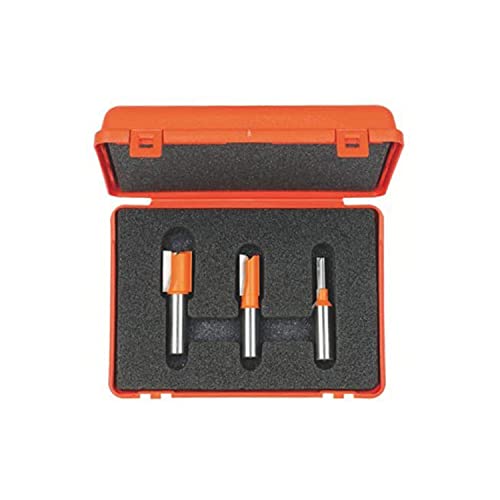
CMT ORANGE TOOLS 811.001.11 Router Bit
What We Like
- Three specifically sized bits for plywood joints
- Non-stick coating reduces pitch buildup
- Industrial carbide edges for lasting sharpness
- Compact carrying case for organized storage
Trade-offs
- 1/4-inch shank limits heavy-duty feed rates
- Only three diameters, not a full range
This three-bit set delivers exactly what you need for crisp dadoes and grooves in plywood. The 15/64, 31/64, and 23/32-inch diameters are the precise sizes for creating perfectly matching joints, a detail that saves you from sloppy, loose-fitting shelves or cabinet parts. The industrial carbide edges stay sharp, and the orange coating helps keep the bits clean. It’s a focused, no-fuss set for the woodworker who values accuracy in joinery over having a drawer full of rarely used sizes.
This three-piece set is specifically designed for making perfectly matching joints on plywood. Its 1/4-inch shank fits most common routers, and the bits are made from super-strength superior steel with a Non-Stick Orange Shield Coating. According to a test by Wood Magazine, CMT bits were rated the best overall in comparison to other brands.
Product photos
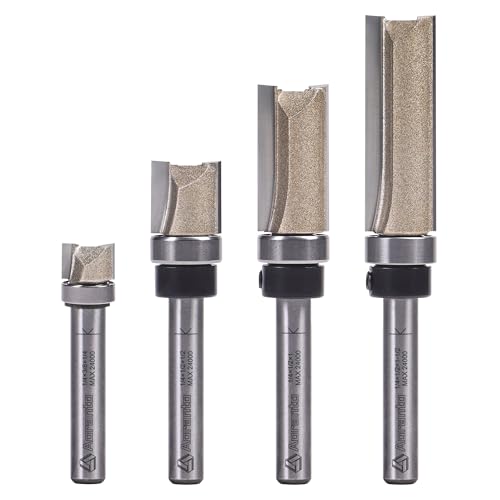
Aoranto 4-Piece Flush Trim Bit Set
What We Like
- Four distinct cutting lengths in one set.
- Solid carbide construction for long-lasting edge.
- Top bearing design for template and pattern routing.
Trade-offs
- 1/4-inch shank only, not compatible with 1/2-inch collets.
- Maximum cut length of 1-1/2 inches limits thicker work.
Aoranto bundles four flush trim bits with cutting lengths from a quarter-inch up to an inch and a half, giving you a core set for template work across common material thicknesses. Their solid carbide is made from ultra-fine grain material with a high hardness rating, which the manufacturer states ensures a long-lasting cutting edge. This set establishes a ready toolkit for the repeated pattern routing of parts from laminate, melamine board, MDF, or wood.
These bits are specialized for flush trimming, excellent for profiling and duplication work. They won’t help you cut grooves or dados in plywood panels. For that specific task, you’d need a dedicated four-bit set from Freud. The Aoranto set excels at making multiple, identical parts from a master pattern, a common need in cabinet and furniture work where plywood is the primary material.
Product photos
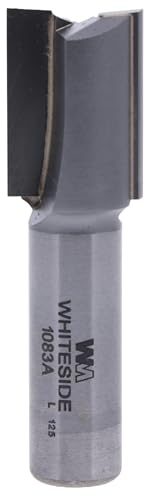
Whiteside Router Bits 1083A Router Bit
What We Like
- Diameter matches undersized plywood for accurate dados.
- Two-flute design delivers smooth, flat-bottom cuts.
- Solid 1/2-inch steel shank reduces vibration.
- Carbide-tipped edges provide extended cutting life.
Trade-offs
- Requires a router with a 1/2-inch collet.
Its 23/32-inch cutting diameter matches undersized plywood, so dados fit accurately without slop. The two-flute, carbide-tipped design delivers smooth, flat-bottom cuts. A rigid 1/2-inch steel shank reduces vibration for clean results.
This is a single-purpose bit for one specific groove width. Buyers needing multiple dado sizes might consider Freud’s four-bit set. The Whiteside 1083A focuses solely on the 23/32-inch dimension.
Yonico 31/64" Undersized Dado Bit

What We Like
- Diameter precisely sized for 1/2" plywood
- Premium carbide blades for long-lasting edge
- Silver brazing for durable blade bonding
- Compatible with all common router setups
Trade-offs
- 31/64" diameter is a single-purpose size
This bit’s 31/64-inch cutting diameter creates dado grooves sized for the actual thickness of nominal 1/2-inch plywood, which prevents sloppy joints in cabinetry or bookshelves. Premium C3 micro-grain carbide and silver induction brazing are used for a sharper, longer-lasting edge. The 1/4-inch shank and compact profile fit common handheld routers as well as table-mounted or CNC setups.
This bit does one job exceptionally well, but just that one job. If your work involves plywood of various thicknesses, Freud’s four-bit set offers more flexibility. Furthermore, the 1/4-inch shank is perfectly adequate for plywood dados. For deep, heavy cuts in solid lumber, a 1/2-inch shank bit provides more rigidity and reduces vibration.
How We Evaluated Router Bits For Cutting Plywood
This guide focuses on specifications and documented advice for cutting plywood. Key considerations include a bit’s diameter matching actual plywood thickness for tight joints, the cut style for minimizing tear-out on veneers, and the shank size for stability. Specialized coatings for heat and pitch resistance are also important when routing plywood’s abrasive glue lines. These recommendations are based on product specifications and common user considerations.
What To Look For In Router Bits For Cutting Plywood
Choosing the right bit prevents tear-out and ensures joints fit snugly. Key factors include the exact cut diameter, the bit’s profile for chip control, and the construction quality to withstand plywood’s tough glue lines.
Focus on bits sized for plywood’s actual, not nominal, thickness. A downcut or compression spiral profile protects the top veneer, and carbide edges or specialized coatings extend the bit’s life against abrasive resins.
Match The Bit To Plywood’s True Thickness
Nominal plywood sizes like 3/4″ are often undersized. For a tight dado, you need a bit that matches the real panel thickness, such as 23/32″. Our top picks include bits specifically advertised as “undersized” for this reason. Using a standard 3/4″ bit in actual 23/32″ plywood will leave a sloppy, weak joint. This principle is central to selecting router bits for woodworking.
Choose The Right Cutting Action
The bit’s profile dictates how it cuts and controls chips. A straight bit is fine for many grooves, but a downcut spiral bit pushes chips downward, leaving a cleaner surface on the plywood’s top veneer, a common concern when working on visible projects. Compression bits, which combine downcut and upcut geometry, are ideal for laminated plywood as they cleanly cut both top and bottom surfaces.
Prioritize Durability And Stability
Plywood’s layered construction and hardened glues are abrasive. Carbide-tipped or solid carbide edges last much longer than high-speed steel. A 1/2-inch shank provides greater rigidity and reduces vibration compared to a 1/4-inch shank, especially in table routers. Some bits also feature non-stick coatings to reduce heat and pitch buildup. Understanding these material choices is part of a smart router bit selection.
- Confirm your router’s collet size (1/4″ or 1/2″) before buying a bit.
- Check the cutting length to ensure it’s sufficient for your intended groove depth.
- Look for bits designed for both handheld and table-mounted router use if your shop employs both.
- Consider sets if you frequently work with multiple plywood thicknesses.
- Verify the bit’s intended use (e.g., dados vs. Edge profiling) matches your project needs.
A sharp, correctly sized carbide bit is a wiser investment than struggling with a dull or ill-fitting tool.
Router Bits For Cutting Plywood Compared
The table below compares key specs like shank size, cut type, and best use to help you see the differences at a glance.
| Product | Shank Size | Cutting Diameter | Coating/Material |
|---|---|---|---|
| Freud 4 Piece Undersized Plywood Bit Set | 1/4" | 1/4", 3/8", 1/2", 3/4" | Perma-SHIELD non-stick |
| Bosch Carbide-Tipped Plywood Mortising Router Bit | N/A | 23/32 in. | Micrograin carbide |
| SpeTool Downcut Spiral Router Bit | 1/4 inch | 1/4 inch | Extra Long Life Coating |
| Freud Double Flute Straight Bit | 1/2 inch | 1 inch | TiCo Hi-Density Carbide |
| EANOSIC Downcut Spiral Flush Trim Bit | 1/4 inch | N/A | Blue nano nACo coated |
| Whiteside Router Bits 470 Router Bit | 1/2-inch collet | 7/32", 31/64", 23/32" | Solid & carbide-tipped |
| CMT ORANGE TOOLS 811.001.11 Router Bit | 1/4 inch | 15/64, 31/64, 23/32 inches | Non-Stick Orange Shield |
| Aoranto 4-Piece Flush Trim Bit Set | 1/4 inch | 1/4", 1/2", 1", 1-1/2" | Solid Carbide |
| Whiteside Router Bits 1083A Router Bit | 1/2 inch | 23/32 inch | Carbide-tipped |
| Yonico 31/64" Undersized Dado Bit | 1/4" | 31/64" | C3 micro-grain tungsten carbide |
Frequently Asked Questions
What is the best router bit for cutting plywood?
For most woodworkers cutting dados and grooves, the best router bit is one sized for plywood’s actual thickness, like our best overall Freud 4 Piece Undersized Plywood Bit Set. The ideal type, straight, downcut spiral, or compression, depends on whether you need a clean top surface or are cutting through laminated materials.
Can I cut plywood with a router bit?
Yes, router bits are excellent for cutting joinery like dados, grooves, and rabbets in plywood, as well as trimming edges. Success requires using a bit designed for the material, such as a carbide-tipped bit or a downcut spiral bit, to prevent tear-out on the delicate face veneers.
What router bit is best for cutting perfect circles in plywood?
A plunge router with a circle-cutting jig typically uses a straight bit or a spiral bit. For plywood, a downcut spiral bit will give you the cleanest top-edge finish on the circle, minimizing splintering of the top veneer as you cut.
What is the best tool for cutting plywood?
For breaking down full sheets, a circular saw with a guide is most practical. For precise joinery, edge profiling, and trimming, a router with the appropriate bit is the best tool. For cutting out shapes or intricate parts, a jigsaw or band saw may also be used.
What’s the difference between an upcut and a downcut spiral bit?
An upcut spiral bit pulls chips upward, which is efficient for deep grooves but can tear out the top surface of plywood. A downcut spiral bit pushes chips downward, leaving a very clean cut on the top surface but requiring more effort to clear chips from the groove. Knowing these router bit types helps you choose.
The Bottom Line
This Freud set is the best overall choice for woodworkers and cabinetmakers who need precise, tight-fitting dados in common plywood thicknesses. If you work exclusively with 3/4″ plywood, the Bosch bit is a perfect specialist pick. Budget-conscious shoppers should consider the value of router bit sets like the CMT 3-Piece Groove Set. Ultimately, matching the bit’s exact diameter to your plywood’s true thickness is the single most important factor for a professional, strong joint.
