
10 Best Saws To Cut Plywood in 2026
This post contains affiliate links. As an Amazon Associate, we earn from qualifying purchases.
For crosscuts and rips on plywood sheets, a good circular saw is the most versatile choice. Our top pick is the GALAX PRO 11A Circular Saw for its powerful motor and built-in ruler for straight lines. For budget power, see the Metabo HPT kit; for clear left-blade visibility, the Bosch CSW41 worm drive is ideal.
Cutting plywood cleanly demands a sharp blade with many teeth and a stable base. A poor cut leads to chipped veneer and wasted material. This guide is based on researching specifications, manufacturer data, expert recommendations, and patterns in user feedback.
We’ll help you match a saw’s power, features, and design to your specific cutting tasks.
Top 10 Saws To Cut Plywood in the Market
Certain content that appears on this site comes from Amazon. This content is provided "as is" and is subject to change or removal at any time.
The Best Saws To Cut Plywood, Reviewed
GALAX PRO 11A Circular Saw

What We Like
- Powerful 11A motor handles plywood with ease
- Integrated scale ruler aids in precise straight cuts
- Dual safety switch prevents accidental starts
Trade-offs
- Plastic protective board may feel less durable than metal
- Maximum cut depth is shallower than some 7-1/4-inch models
- No integrated dust blower like the Metabo HPT saw
A 1400W motor spinning at 6000 RPM gives this saw the guts to slice through plywood without bogging down, making it a reliable workhorse for a shop. The adjustable depth and bevel, combined with the included rip guide, cover everything from crosscuts to angled dados. It’s a corded saw that delivers core performance where it counts, suited for the DIYer or contractor who needs consistent power without fuss.
The trade-off is in the build; the plastic guard and baseplate are functional but don’t have the heft of a magnesium-bodied saw like the Makita 5007Mg. For cutting thick stacks of plywood, the maximum depth of just over two inches is a limitation. However, for the vast majority of sheet goods work, this saw’s combination of power, safety features, and included accessories makes it a standout value in its class.
Metabo HPT 7-1/4-Inch Circular Saw Kit

What We Like
- Powerful 15-amp motor for burn-free cuts
- Integrated dust blower for clear sight lines
- Lightweight design reduces user fatigue
- Includes blade, bag, and wrench
Trade-offs
- Corded design limits mobility versus battery-powered saws
A 15-amp motor spinning at 6000 RPM means this saw won’t bog down in a sheet of plywood, letting you make long, clean cuts without hesitation. It’s a straightforward tool for the cost-conscious builder who needs reliable corded power day in and day out. The included 24-tooth blade is ready for ripping plywood and OSB right out of the bag, and the single-handed bevel adjustment is a thoughtful touch for quick angle changes.
Named Best Corded Budget Circular Saw for Pros in 2020, this tool delivers reliable performance for its price. Its 15-amp motor spins at 6000 RPM, providing consistent power for burn-free cuts through framing lumber and sheet goods. While the corded design requires an outlet, it eliminates battery runtime concerns during long tasks.
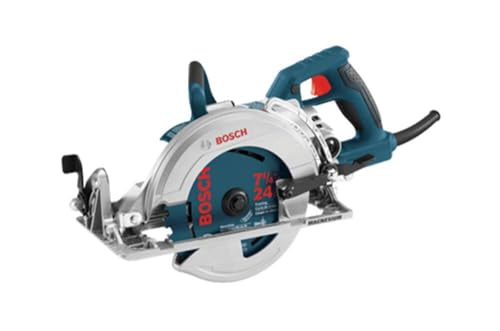
Bosch CSW41 Worm Drive Circular Saw
What We Like
- Left-side blade for clear cut line visibility
- 15-amp motor and worm drive provide high torque
- On-board wrench and tool hook for convenient adjustments
Trade-offs
- Corded operation limits range compared to battery models
- Larger footprint than compact saws like the SEESII
Its left-side blade design is the key feature, placing the motor housing out of your line of sight for clear tracking of the cut line. This worm drive configuration is noted for increased accuracy, which helps when making long, precise cuts in sheet materials. The 15-amp motor, matched with worm drive gearing, provides torque for a variety of applications.
The tool’s weight is a consideration, with the Amazon listing stating 15.0 pounds while a feature bullet cites 13.2 pounds. Compared to a cordless model like the 9.9-pound DEWALT DCS590B, this corded saw requires access to an outlet. For users making repetitive cuts where power is available, the trade-off for visibility and torque may be acceptable.
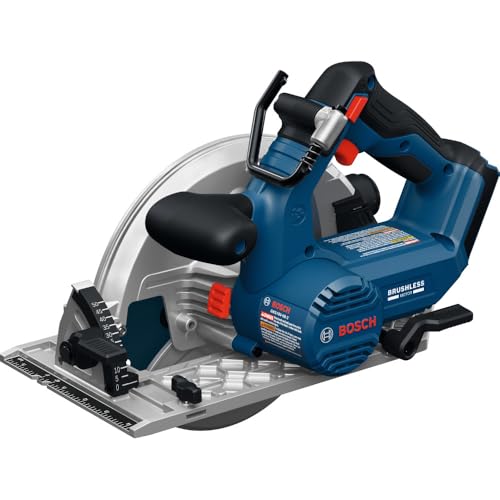
Bosch GKS18V-68-2N Cordless Circular Saw
What We Like
- Lightweight design reduces strain during long tasks
- KickBack Control enhances user safety during bind-up
- Brushless motor delivers corded-level cutting power
- Pivoting dust port keeps cutline and workspace clean
Trade-offs
- Tool only: requires separate purchase of battery and charger
- At 5,500 RPM, it is slower than the 6,000 RPM Metabo HPT corded saw
- Larger and heavier than the 4.7 lb SEESII mini saw
Weighing just 7.7 pounds, this saw is built for jobs where you’re holding it overhead or making dozens of cuts in a row. That light heft, combined with a brushless motor spinning at 5,500 RPM, means you get cordless freedom without sacrificing the power needed for clean plywood cuts. It’s a clear fit for framers and remodelers who value a tool that won’t wear out their arm by lunchtime. The integrated KickBack Control and pivoting dust port are thoughtful additions that prioritize safety and visibility on a busy site.
This saw weighs 7.7 pounds without a battery, a design choice that directly reduces arm and shoulder strain during overhead work or long cutting sessions. The listing is for the tool only, so a battery and charger must be purchased separately. Its AMPShare battery system is described as multi-brand compatible across a growing list of cordless products, which could simplify power management if you use other compatible tools. For pure motor speed on a corded saw, the Metabo HPT in the comparison list operates at 6,000 RPM.
DEWALT DCS590B Cordless Circular Saw

What We Like
- Brushless motor for up to 368 cuts per charge
- Powerful 1,700 MWO output for tough materials
- Electric brake for precise, safe stops
- Versatile 2-9/16 in. depth of cut at 90°
Trade-offs
- Battery and charger sold separately
- At 9.9 lb, it's heavier than some 18V cordless competitors
- Bevel capacity reduces to 2 in. at 45°
Up to 368 cuts per charge under ideal conditions means fewer interruptions for battery swaps, which can extend work sessions. Its brushless motor is rated for up to 1,700 MWO and 5,500 RPM no-load speed. This cordless design offers mobility for users who need to move freely around a site or project without a nearby outlet.
You do pay for that stamina with a bit of heft, at 9.9 pounds, it’s not the lightest in the category. The tool-only nature also means you’ll need to factor in the cost of a compatible DEWALT 20V battery if you aren’t already invested in the platform. For pure, lightweight portability on a jobsite, the smaller Milwaukee M18 6-1/2″ saw is easier to maneuver, but you’ll be reaching for extra batteries more often. The DCS590B trades a little hand fatigue for a lot less charger time.
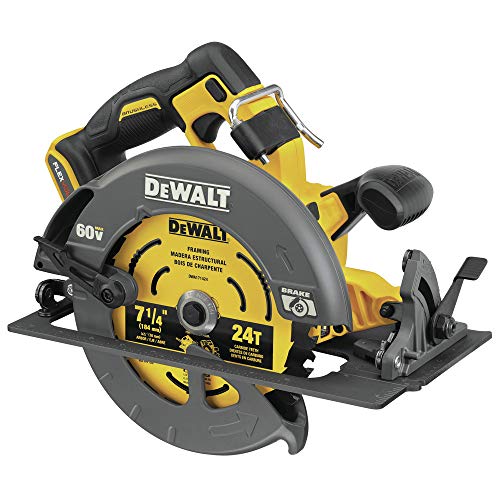
DEWALT DCS578B FLEXVOLT Circular Saw
What We Like
- Delivers up to 47% more power than predecessor
- Integrated LED light for cut line visibility
- Electric brake for immediate blade stop
- Rafter hook for convenient storage
Trade-offs
- Tool only: requires separate battery and charger purchase
- At 15.3 inches long, it's less compact than some cordless rivals
The core appeal is raw cutting muscle, with DeWalt claiming up to 47% more power than its previous model. That translates to confident, unbogged-down rips through thick plywood stacks or dense sheet goods. It’s a saw for the user who needs cordless freedom but refuses to compromise on performance, backed by a substantial 2-9/16-inch depth of cut. The integrated LED and electric brake are thoughtful additions for accuracy and safety in a high-power tool.
You pay for that performance with added bulk and a significant upfront commitment. At over 15 inches long, it isn’t as nimble as smaller cordless options like the Milwaukee M18. More critically, it’s a bare tool, so you must already own or separately buy into DeWalt’s FLEXVOLT battery platform. Compared to a corded workhorse like the Metabo HPT, you’re trading unlimited runtime for unmatched cordless power.
Product photos
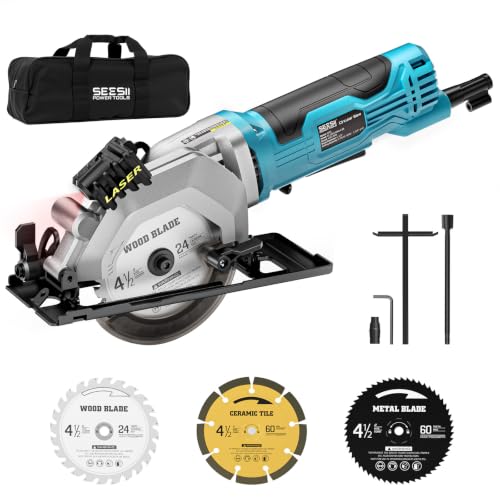
SEESII Mini Circular Saw with Laser
What We Like
- Includes three blades for multi-material cutting
- Laser guide and rail for precise cuts
- Lightweight, compact one-handed design
- Dust port fits most shop vacuums
Trade-offs
- Corded design requires access to an outlet
- Smaller blade and motor than full-size 7-1/4-inch saws
This saw comes with three 4½-inch blades for wood, soft metal, tile, and plastic, which provides multi-material versatility for DIY projects. Its laser guide and dust port help keep cuts straight and the workspace cleaner. At 4.7 pounds, it weighs about half as much as a conventional 7-1/4″ saw, making it easier for one-handed operation.
The maximum cutting depth at 90 degrees is 1-11/16 inches, and the bevel capacity adjusts from 0 to 45 degrees. For comparison, full-size saws like the Metabo HPT model are designed for deeper cuts with higher-amperage motors. This SEESII model is suited for applications where material variety and compact size are priorities over maximum cut depth.
Product photos
Milwaukee M18 6-1/2" Circular Saw
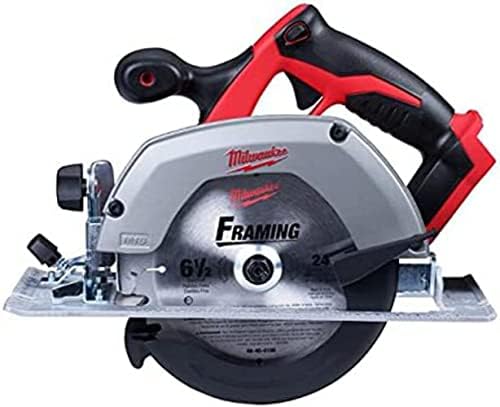
What We Like
- Soft-grip handle for comfortable control.
- Aircraft aluminum shoe enables precise rip cuts.
- Compact 12.2-inch length aids maneuverability.
- Magnesium guards provide durable blade protection.
Trade-offs
- Tool only: requires separate M18 battery and charger.
- Smaller 6-1/2-inch blade limits cut depth versus 7-1/4-inch models.
Its 3,500 RPM motor delivers the power to cut tough materials like LVL headers, while the magnesium guards and aircraft aluminum shoe provide durability and precision. This cordless tool is listed as ideal for plumbing, electrical, framing, finishing, and carpentry tasks. The soft-grip handle and 7.3-pound weight contribute to user comfort and control during extended use.
The trade-off for its compact, cord-free design is that you’re committing to the M18 battery platform. This saw is sold as a bare tool, so factor in the cost of a battery and charger if you don’t already own them. For cutting thick plywood in a stationary shop, the more powerful, corded Metabo HPT 7-1/4-Inch Circular Saw will offer deeper cutting capacity and consistent runtime without battery swaps.
Makita XSR01PT Rear Handle Circular Saw

What We Like
- X2 battery system for extended runtime
- Automatic Speed Change for optimal cutting
- Brushless motor for longer tool life
Trade-offs
- Weighs 23.1 pounds, a handful for overhead work
- Length of 23.6 inches reduces storage portability
That kind of stamina, combined with a 5,100 RPM brushless motor that adjusts speed under load, makes this a natural fit for contractors or serious DIYers who face stacks of plywood and framing lumber. It’s built for relentless, precise cutting where downtime costs more than the tool.
You pay for that endurance with heft and bulk. For high-volume sheet goods in a shop, it’s a beast. For lighter duty or one-handed use, the corded Makita 5007Mg is far more nimble.
Product photos
Makita 5007Mg Magnesium Circular Saw

What We Like
- Magnesium build for a lightweight, tough frame.
- Dual LED lights illuminate the cut line.
- Powerful 15-amp motor delivers 5,800 RPM.
- Wide 0-56 degree bevel range with positive stops.
Trade-offs
- Corded design limits mobility on a jobsite.
- Overall size (L 20.9 in) is larger than compact saws.
At 10.6 pounds, this magnesium-body saw finds a sweet spot between heft and manageability, making it easier to control for long rips without feeling flimsy. The 15-amp motor has plenty of grunt for clean plywood cuts, and the two LED lights are a simple, brilliant touch for keeping your line visible in dim workshop corners. It’s a solid choice for anyone who needs reliable corded power but wants to avoid the fatigue of a heavier worm-drive saw.
While corded operation means you’re tied to an outlet or an extension cord, it provides consistent power without battery swaps, a clear advantage for stationary setups or long jobs in a workshop. This design trades the portability of a cordless tool for the reliability of a direct power connection. For tasks like breaking down sheet goods on sawhorses, where mobility is less critical than uninterrupted cutting, the cord is a minor limitation.
Product photos
How We Evaluated Saws To Cut Plywood
This guide compares specifications such as motor power, maximum cut depth, weight, and key features like integrated guides or dust management, using manufacturer data. It also considers insights from expert round-ups and compiled patterns from owner feedback regarding real-world use with materials like plywood and sheet goods.
The most important criteria were power to handle plywood’s density and glue, features that aid accuracy for straight cuts, and design ergonomics for managing large sheets. The main limitation of this research-based approach is that we cannot verify precise cutting smoothness or long-term durability, which can vary with blade choice and user technique.
What To Look For In Saws To Cut Plywood
Choosing the right saw helps prevent splintering and ensures your plywood projects look professional. The core considerations are power for smooth cuts, features that enhance accuracy, and a design that suits how you work with large sheets.
For plywood, prioritize a sharp blade with a high tooth count. You also want a saw with a stable base or guide system for straight cuts. Finally, choose a power source that matches your need for mobility versus uninterrupted runtime, whether corded or cordless.
Cutting Power & Depth
Plywood, especially thicker 3/4-inch sheets, requires a motor with enough torque to maintain a consistent speed through the cut. A struggling motor can burn the wood or cause binding. For corded saws, look for a 15-amp motor; for cordless, a brushless motor in an 18V or 20V platform provides corded-like performance.
Cutting depth is equally critical. A standard 7-1/4-inch blade should cut through a 2×4 at 45 degrees. For plywood, ensure it can cleanly sever the full sheet thickness at 90 degrees, which is typically around 2-1/2 inches. Some compact saws use smaller 6-1/2-inch blades, which limit their capacity for thicker materials.
Accuracy Features
Straight, clean cuts are non-negotiable for plywood work. Key features include a built-in scale ruler on the footplate, a laser guide, or compatibility with an aftermarket track. A left-side blade, as found on worm-drive saws, offers an unobstructed view of your cut line for right-handed users.
An integrated dust blower or pivoting dust port keeps your line of sight clear, which is crucial when working alone. For ultimate precision, many woodworkers use a separate guide rail or a dedicated track saw, but a well-designed circular saw with a good fence can achieve excellent results.
Ergonomics & Suitability
Consider how you’ll handle 4×8 sheets. A lighter saw reduces fatigue during long ripping sessions, but shouldn’t sacrifice power. A cordless saw offers unmatched mobility if you’re cutting in place on a floor or distant from outlets, but requires battery investment. For stationary workshop use, a powerful, lightweight corded saw is often the best value. The shoe, or base plate, should be large and flat for stability, and a comfortable grip is essential for control.
- Set the blade depth to just protrude below the plywood (about 1/4 inch) for a cleaner cut and reduced kickback risk.
- Always place the “good” face of the plywood down, as a circular saw cuts upward and can chip the top surface.
- Use a sacrificial layer like rigid foam underneath the sheet to fully support it and protect your work surface.
Investing in a quality circular saw blade with a high tooth count is essential for achieving smooth, chip-free edges on plywood.
Saws To Cut Plywood Compared
The following table compares our picks across key specifications to help you see the differences at a glance.
| Product | Motor Power / Type | Max Cut Depth (90°) | Weight |
|---|---|---|---|
| GALAX PRO 11A Circular Saw | 11A / 1400W copper wire | 2-7/16 inches | N/A |
| Metabo HPT 7-1/4-Inch Circular Saw Kit | 15 Amp | 2-7/16 inches | 9.5 pounds |
| Bosch CSW41 Worm Drive Circular Saw | 15-amp | N/A | 15.0 pounds |
| Bosch GKS18V-68-2N Cordless Circular Saw | 18V Brushless | 2-9/16 in. | 7.7 pounds |
| DEWALT DCS590B Cordless Circular Saw | Brushless | 2-9/16 in. | 9.9 Pounds |
| DEWALT DCS578B FLEXVOLT Circular Saw | 60V MAX FLEXVOLT | 2-9/16-inch | 8.2 pounds |
| SEESII Mini Circular Saw with Laser | 4.8A | 1-11/16" | 4.7 pounds |
| Milwaukee M18 6-1/2" Circular Saw | M18 Cordless | N/A | 7.3 pounds |
| Makita XSR01PT Rear Handle Circular Saw | Two 18V LXT batteries | N/A | 23.1 pounds |
| Makita 5007Mg Magnesium Circular Saw | 15.0 AMP | 2-1/2 inches | 10.6 Pounds |
Frequently Asked Questions
What saw is best to cut plywood?
For most DIYers and professionals, a 7-1/4-inch circular saw offers the best balance of power, cutting depth, and versatility. Our top pick, the GALAX PRO 11A, provides strong performance for general use. For specialized needs, a track saw provides unparalleled straight-line accuracy, while a good hand saw can work for quick, rough cuts.
What is the best tool for cutting plywood?
A circular saw is the most common and effective power tool for cutting full plywood sheets. For breaking down large panels, it’s more manageable than a table saw for many. The key to success is pairing it with a sharp, high-tooth-count blade designed for plywood and using a straight-edge guide for accuracy.
What is the best way to cut a 4×8 sheet of plywood?
Support the full sheet on a stable surface, like a piece of rigid foam or between sawhorses. Mark your cut line clearly. Use a circular saw with a straight-edge guide clamped to the sheet to ensure a perfectly straight cut. Set the blade depth to just cut through the material, and always cut with the panel’s good face facing down.
How can I cut plywood without it chipping?
Use a sharp blade with at least 60 teeth designed for fine cuts in plywood. Apply masking tape over the cut line on the top surface of the plywood to help hold the veneer fibers. Most importantly, orient the sheet so the circular saw blade cuts into the “bad” face, as it exits and potentially chips the top side.
Is a cordless circular saw powerful enough for plywood?
Modern cordless circular saws with brushless motors and 18V or 20V batteries are absolutely powerful enough for cutting plywood, even in thicker sheets. They excel in jobsite mobility. For continuous, high-volume cutting, a high-capacity battery system or a corded saw may be preferable to avoid downtime.
The Bottom Line
The GALAX PRO 11A Circular Saw is our best overall for its combination of power and a helpful integrated guide, making it a reliable choice for most plywood projects. If your budget is tight, the Metabo HPT kit delivers excellent corded power, while the Bosch worm drive is the go-to for professionals who value cut-line visibility above all else.
Remember that the saw is only half the equation. Investing in a quality circular saw blade for plywood with a high tooth count is essential for achieving smooth, chip-free edges. Your technique, including proper sheet support and using a guide, will ultimately determine the quality of your cuts.
