
10 Best Shop Table Saws in 2026
This post contains affiliate links. As an Amazon Associate, we earn from qualifying purchases.
Our top choice for a dedicated shop table saw is the SawStop Professional Cabinet Saw PCS175 for its unique safety brake and excellent precision. The DEWALT DWE7491RS is our favorite portable contractor saw, while the SKIL TS6307-00 offers outstanding value for a jobsite model. Selecting the right saw means matching its features to your shop space and your most frequent cuts. We compiled this list by researching technical specifications, manufacturer documentation, professional woodworking recommendations, and patterns in long-term owner feedback, so you can invest with confidence.
Top 10 Shop Table Saws in the Market
Certain content that appears on this site comes from Amazon. This content is provided "as is" and is subject to change or removal at any time.
The Best Shop Table Saws, Reviewed
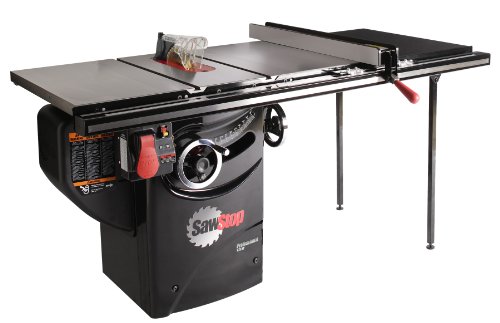
SawStop Professional Cabinet Saw PCS175
What We Like
- Patented skin-contact safety brake system
- Heavy-gauge steel fence for reliable square cuts
- Advanced dust collection shrouding below the table
Trade-offs
- Overarm dust collection guard sold separately
A flesh-detecting brake that stops the blade in under 5 milliseconds transforms a table saw from a dangerous necessity into a fundamentally safer tool, making it the obvious choice for any serious workshop. This is a professional cabinet saw built for a lifetime of precision, with a rock-solid 36-inch fence and a trunnion assembly engineered for zero deflection. It’s the long-term investment for woodworkers who prioritize safety and accuracy above all else.
Its patented safety system stops a spinning blade on contact with skin in less than 5 milliseconds, potentially reducing a severe injury to a minor scratch. This feature is the main draw, but the saw also delivers exceptional cut accuracy. The cast iron top is flat and stable, and reviewers report the fence movement is smooth and repeatable, making it a long-term investment for professional performance. While the core dust collection is effective, achieving the noted 99% collection rate requires the optional blade guard and overarm kit.
DEWALT DWE7491RS Table Saw

What We Like
- Rack & pinion fence for fast, accurate adjustments
- Large 32-1/2 inch rip capacity for shelving and trim
- Onboard storage for all accessories and guards
- Rolling stand for easy transport and setup
Trade-offs
- At 110 pounds, it's heavier than compact jobsite saws like the SKIL TS6307-00.
- Tool-only design requires a separate vacuum for dust collection.
With a 32-1/2 inch rip capacity, this table saw can cut wide shelving and sheet goods in a single pass. The DEWALT DWE7491RS suits contractors who frequently move between job sites. Reviewers report the rack-and-pinion fence stays accurate even on uneven ground, and the 15-amp motor holds speed well when ripping hardwoods. It provides repeatable accuracy and a large cutting capacity outside a fixed workshop.
Portability involves a trade-off. At 110 pounds on its rolling stand, this is a substantial load compared to a more compact saw like the 54-pound DEWALT DWE7485. You gain stability and a massive rip capacity, but lose one-handed portability. For a stationary contractor saw with more mass, the 206-pound Delta Contractor Table Saw is a logical step up, though it lacks an integrated rolling stand.
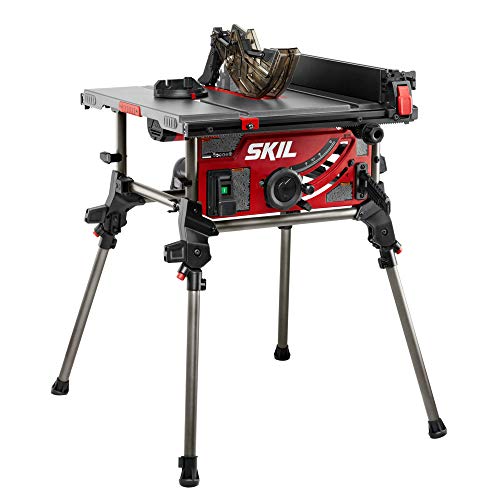
SKIL TS6307-00 Jobsite Table Saw
What We Like
- Rack and pinion fence for parallel cuts
- Integrated folding stand for portability
- Micro-adjustment for precise blade alignment
- Dust port elbow for easier cleanup
Trade-offs
- 51.1 lb weight is substantial for frequent solo carrying
A 15-amp motor paired with a rack-and-pinion fence system delivers reliable power and consistent accuracy for a jobsite saw, making it a solid foundation for framing, decking, and general construction tasks. The integrated folding stand means you can set up or pack it away in seconds, a crucial feature for contractors moving between sites. This combination of core performance and thoughtful convenience at an accessible price point is exactly what makes it a standout in its class.
This 15-amp table saw includes a folding stand, making it a portable option for job sites. Its rack-and-pinion fence system is designed to stay parallel to the blade for accurate cuts. A quick-release lever adjusts the bevel between 0 and 45 degrees.
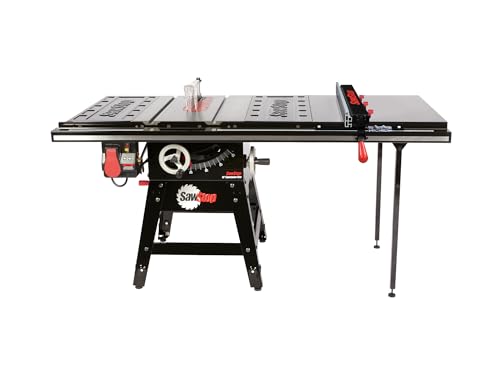
SawStop Contractor Saw
What We Like
- Includes the SawStop skin-contact safety system
- 36-inch T-Glide fence provides accuracy and versatility
- Large extension table offers substantial work surface
- Designed as a reliable choice for experts
Trade-offs
- At 69.1 inches long, it requires a dedicated workshop footprint
The defining feature is the SawStop safety system, which actively prevents serious injury by stopping the blade on contact with skin. This makes it an outstanding choice for a busy contractor or dedicated hobbyist who prioritizes a secure workshop environment above all else. It combines this protection with a serious 36-inch professional fence and a large table, delivering the precision and capacity needed for fine cabinetry and consistent ripping of sheet goods.
Its design prioritizes a permanent workshop installation over job site mobility. At 69.1 inches long, it requires a dedicated footprint, unlike the foldable DEWALT DWE7491RS which is built for transport. The saw integrates the SawStop safety system, which is designed to stop the blade upon contact with skin.
Product photos
Bosch PROFACTOR Cordless Table Saw

What We Like
- True cordless portability with no power cord
- Rack-and-pinion fence for precise, easy adjustments
- Integrated on-tool storage for key accessories
- Brushless motor delivers corded-like 5,500 rpm power
Trade-offs
- 8-1/4 inch blade limits depth of cut versus 10-inch saws
- Compact 24-inch length reduces workpiece support surface
- Battery runtime is finite, unlike a corded outlet
Cordless operation allows for setup anywhere on the jobsite without needing an outlet or extension cord. This design is ideal for mobility around the jobsite. A 5,500 rpm brushless motor and 25-inch rip capacity enable cutting of sheet goods and 2x materials. On-tool storage holds the rip fence, miter gauge, smart guard system, and push stick to keep accessories together.
The trade-off is in pure cutting capacity. That 8-1/4 inch blade can’t match the depth of cut from a 10-inch cabinet saw like the SawStop PCS175, which is a stationary workshop anchor. For a contractor comparing portable options, the similar-sized DEWALT DWE7485 offers a corded alternative that never runs out of juice, but you give up the ultimate freedom of movement. This Bosch makes its case for those who value that mobility above all else.
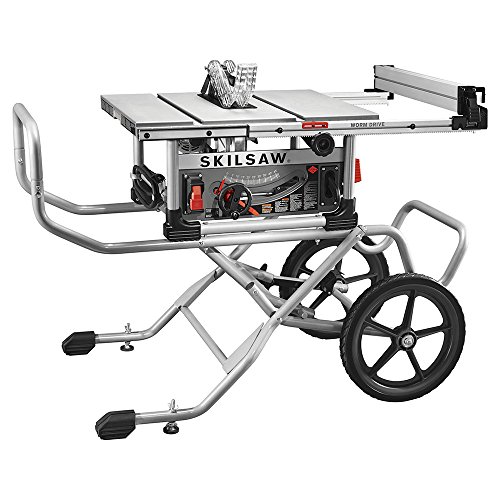
SKILSAW Worm Drive Table Saw
What We Like
- Legendary worm drive gearing for deep cuts
- Large 30-1/2 inch rip capacity
- Precision rack and pinion fence for accuracy
- Rugged rolling stand with large wheels
Trade-offs
- The 52.6 inch length demands significant truck or trailer space
- Dust collection is a single port elbow, not a full system
A 3-5/8 inch depth of cut means you can rip through thick dimensional lumber like a 4×4 in a single pass, which is the core of its heavy-duty promise. This SKILSAW is built for the contractor who needs to frame or deck all day, where that extra muscle and the smooth, accurate rack and pinion fence turn big stock into precise components quickly. The integrated stand with its 16-inch wheels is essential, transforming a heavy tool into a mobile jobsite workhorse.
The trade-off for that capability is sheer bulk. It’s not a saw you toss in a van; it’s a dedicated setup that requires floor space. For pure portability, the DEWALT DWE7491RS is over 15 pounds lighter and far more compact when folded. But if your work regularly involves deep cuts in long material, this worm drive’s gearing and support extensions let one person handle what would normally require a helper.
Delta Contractor Table Saw
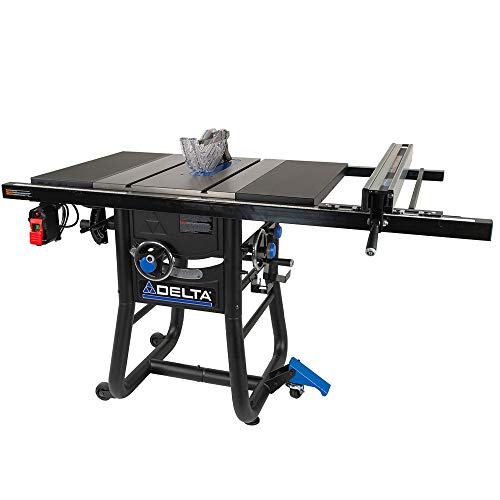
What We Like
- Legendary Biesemeyer-style fence for precision
- Heavy cast iron top reduces vibration
- Powerful motor handles hardwoods with ease
- Large 30-inch rip capacity for big stock
Trade-offs
- Weighs 195 lbs, making it difficult to move
- Large 62.44-inch footprint requires significant shop space
A 30-inch rip capacity lets you cut large stock, while the cast iron table top and three steel extension wings provide a stable, smooth surface. This saw is built for the serious woodworker who needs accuracy and durability in a stationary shop setup. Its adjustable belt drive system and Biesemeyer-style fence allow for precision cuts every time, including small pieces of stock.
This stability comes at the cost of portability; at 195 pounds, this is a saw you set up and leave in place. It demands a dedicated corner of your garage or workshop. The DEWALT DWE7491RS weighs 110 pounds and has a foldable rolling stand, while the Delta Contractor Table Saw does not include a stand.
DEWALT DWE7485 Compact Jobsite Saw

What We Like
- Compact 22.8-inch footprint for easy transport
- Metal roll cage base provides jobsite durability
- On-board storage for guard, fence, and accessories
- Power-loss reset prevents accidental restarts
Trade-offs
- 54-pound weight is heavier than some compact rivals
- 8-1/4-inch blade limits depth of cut versus 10-inch saws
A 24.5-inch rip capacity allows this DEWALT saw to rip standard 4×8 plywood or OSB sheets, a key feature for a portable tool handling large materials. Its rack and pinion telescoping fence provides fast, smooth adjustments for accurate cuts across that span. The Site-Pro modular guarding system also enables tool-free adjustments, simplifying setup changes directly on the jobsite.
This capacity and durability come with some heft; at 54 pounds, it’s not the lightest compact saw on the market, like the SKIL TS6307-00. Its smaller blade also can’t match the maximum cut depth of a full-sized stationary saw. If your work demands accurate, repeatable rips on a jobsite and you value a fence system that won’t slip, this design delivers solid fundamentals in a tough, transportable frame.
Product photos
RYOBI ONE+ HP Cordless Table Saw

What We Like
- Steel frame provides a stable cutting platform.
- 30-pound weight makes it highly portable.
- Quick blade height adjustment for precise depth control.
- Integrated storage keeps accessories organized.
Trade-offs
- 8-1/4 inch blade limits depth of cut compared to 10-inch saws.
- Compact 20-inch length offers a smaller work surface.
A smaller blade running on an 18V cordless platform defines this table saw’s purpose. It’s built for mobility and convenience on quick jobsites or in a home shop where dragging a cord is a hassle. The 30-pound steel frame offers a solid feel for its size, so you can make accurate crosscuts and rips without being anchored to an outlet. This is the saw you grab for trim work, building a deck, or any project where you’re constantly moving around.
Cordless operation defines this table saw, trading the unlimited runtime of a corded tool for complete jobsite mobility. Its smaller blade diameter means it won’t match the deep cutting capacity of a large stationary saw. This makes it a focused tool for light-duty, highly mobile cutting tasks where access to power is limited.
Product photos
SKIL TS6308-00 Compact Jobsite Saw

What We Like
- Compact 40-pound portable design
- Rack and pinion fence for accuracy
- 24.5-inch rip capacity for sheet goods
- Safety switch for immediate shutdown
Trade-offs
- Stand is a separate purchase
- 8-1/4-inch blade uses less common stock
A 40-pound weight and 26-inch length make this saw genuinely portable. You can lift it into a truck bed or tuck it into a corner without a second thought. The rack and pinion fence system is the standout feature here, ensuring the fence stays parallel to the blade for reliable, repeatable cuts. That combination of easy transport and a solid fence makes it a smart pick for contractors moving between sites or DIYers with tight garage space who still need to break down plywood with its 24.5-inch rip capacity.
This compact size limits its cut depth. For heavy framing work, you’d need to step up to a 10-inch saw like the SKIL TS6307-00. For trim, cabinetry, and general jobsite breakdown, however, this Skil delivers the core functions of a table saw in a package that’s easy to live with.
Product photos
How We Evaluated Shop Table Saws
Our evaluation started with the specifications that define performance: motor horsepower, rip capacity, and cutting depth. We studied the technical differences between cabinet table saws for stationary shops and contractor saws designed for transport. Owner feedback across dozens of sources revealed consistent praise or complaints about a fence’s reliability, a saw’s dust collection, and how well safety features worked in practice.
We also considered the best table saws from expert recommendations and respected round-ups for their long-term testing insights. This research-led approach provides a comprehensive picture, but it cannot replicate the hands-on feel of adjusting a fence or rolling a saw over uneven ground yourself.
What To Look For In Shop Table Saws
The core job of a table saw is to make straight, accurate cuts, so stability and a good fence are non-negotiable. Your ideal saw balances the power and size you need with the portability your workflow demands.
Focus on motor power for the woods you cut, rip capacity for your project size, and the fence’s ease of adjustment and lock-down. Portability features like weight and integrated stands matter most if you move the saw regularly.
Fence Quality
The rip fence is arguably the most critical accessory, as it guides every rip cut. Look for a rack-and-pinion or T-square system that locks securely at both the front and rear for minimal deflection under pressure. Premium stationary saws often feature heavy-gauge steel or legendary Biesemeyer-style fences, while contractor models use lighter but highly accurate fence systems. A reliable scale and hairline cursor are essential for repeatable cuts without constant re-measuring.
Power & Stability
Motor power determines a saw’s ability to rip thick, dense hardwoods without bogging down. Professional-grade cabinet saws often have motors with three horsepower, while contractors and jobsite models typically have motors with one and three-quarters horsepower or fifteen amps. Stability comes from the saw’s mass and construction; a heavy cast iron top and solid cabinet dramatically reduce vibration for smoother cuts. For those who need serious power in a mobile package, professional-grade table saws with worm-drive gearing or brushless motors deliver deep cutting torque.
Portability & Footprint
Workspace dictates your saw’s physical limits. A full cabinet saw can be over five feet long and weigh hundreds of pounds, requiring a permanent installation. Contractor saws offer a compromise with rolling stands, and jobsite saws prioritize compactness and folding legs. Consider how you’ll move it: an integrated stand with large wheels is far better for a driveway shop than a 195-pound saw you must lift. The key is matching the saw’s footprint to your available space, whether that’s a one-car garage or a dedicated shop.
- Measure your available floor space, including room for infeed and outfeed.
- Check the saw’s assembled length and weight against your transport vehicle.
- Ensure the stand or base can handle the terrain you’ll roll it over.
Your shop’s available space and whether you need to move the saw are the primary drivers of your choice between a stationary or portable design.
Shop Table Saws Compared
The following table lets you quickly compare the key specifications and features of all ten picks side-by-side.
| Product | Motor Power | Blade Size | Rip Capacity | Weight |
|---|---|---|---|---|
| SawStop Professional Cabinet Saw PCS175 | 1.75-HP | 10-Inch | 36-Inch | 471.4 Pounds |
| DEWALT DWE7491RS Table Saw | 15 amp | 10 Inch | 32-1/2 inches | 110.0 pounds |
| SKIL TS6307-00 Jobsite Table Saw | 15 Amp | 10 Inch | N/A | 51.1 pounds |
| SawStop Contractor Saw | 1.75 HP | N/A | 36" | N/A |
| Bosch PROFACTOR Cordless Table Saw | N/A | 8-1/4 inches | 25 inches | N/A |
| SKILSAW Worm Drive Table Saw | N/A | 10 Inch | 30-1/2 inches | 94.3 pounds |
| Delta Contractor Table Saw | 15 Amp | 10 in. | 30 inches | 195 lbs |
| DEWALT DWE7485 Compact Jobsite Saw | 15 Amp | 8-1/4 in. | 24.5 in. | 54.0 Pounds |
| RYOBI ONE+ HP Cordless Table Saw | 18V Cordless | 8-1/4 in. | N/A | 30.0 Pounds |
| SKIL TS6308-00 Compact Jobsite Saw | 15 Amp | 8-1/4 inches | 24.5 inches | 40.0 Pounds |
Frequently Asked Questions
What is the safest table saw for a home workshop?
The safest table saws incorporate active safety technology, like SawStop’s patented skin-contact brake system, which stops the blade within milliseconds. These saws offer professional-level protection for all users, from hobbyists to experts, and can be found in both cabinet and contractor-style designs.
Do I need a 10-inch blade on my table saw?
A 10-inch blade is the standard for most stationary shop and contractor saws, offering the greatest depth of cut and the widest availability of blade types. Smaller 8-1/4-inch blades are common on compact jobsite saws and are sufficient for cutting dimensional lumber and sheet goods up to their maximum depth, but limit dado capacity and thicker stock.
Can I use a dado blade on any table saw?
Not all table saws are designed to accept a dado stack. You need to check the saw’s arbor length specification, which should be long enough to accommodate the dado set’s width, and the motor should have sufficient power. Many jobsite saws are not rated for dado use, while most contractor and all cabinet saws are compatible.
How much rip capacity do I need for plywood?
A standard sheet of plywood is wide, so to rip it down the middle you need a rip capacity of at least twenty-four inches from the blade to the fence. A rip capacity in the range of twenty-four to thirty-two inches is suitable for most sheet goods and shelving projects, while larger capacities, often found on hybrid table saws, are for specialty work.
What is the difference between a cabinet saw and a contractor saw?
Cabinet saws are heavy, stationary shop tools with an enclosed base housing a powerful motor, offering superior vibration dampening and durability. Contractor saws are lighter, often on a rolling stand, with an open base and a motor hung out the back, prioritizing portability and space savings. Understanding the differences between cabinet and contractor saws is key to matching the tool to your workshop’s permanence and workflow.
The Bottom Line
For a permanent shop where safety, precision, and power are paramount, the SawStop Professional Cabinet Saw PCS175 is the definitive choice. If your budget is tighter or you need to move your saw to a jobsite, focus on the value-packed SKIL TS6307-00 or the highly portable DEWALT DWE7491RS. Your choice should depend on your required rip capacity and stand features. Ultimately, the single most important factor is choosing a saw whose physical size and weight fit your actual workspace and whose fence inspires confidence for every cut.
