
10 Best Slab Flattening Router Bits in 2026
This post contains affiliate links. As an Amazon Associate, we earn from qualifying purchases.
For surfacing large panels and slabs, our best overall pick is the Amana Tool RC-2267 CNC Spoilboard Surfacing Router Bit for its durable carbide inserts and high-feed performance. For the widest cut, consider the Akylin CNC Slab Flattening Router Bit, and for a superior finish, the Whiteside Router Bits 6220 stands out.
Flattening a slab requires a bit that can handle variable grain, resist wear, and move material efficiently without bogging down your router. This guide distills research on specs, manufacturer data, and owner feedback patterns to help you match a bit to your router’s power, your typical project size, and your desired finish quality.
Top 10 Slab Flattening Router Bits in the Market
Certain content that appears on this site comes from Amazon. This content is provided "as is" and is subject to change or removal at any time.
The Best Slab Flattening Router Bits, Reviewed
Amana Tool RC-2267 CNC Spoilboard Surfacing Router Bit

What We Like
- Solid carbide inserts for durability
- High feed rate from three-wing design
- Works on wood, epoxy, plastics, and MDF
Trade-offs
- At 1-3/4 inches, its cutting width is narrower than some 2-inch+ competitors.
- Designed for CNC/timber machines, less suited for handheld router sleds.
You can rotate them when one side dulls, which dramatically extends the bit’s life and maintains a clean cut across demanding materials like epoxy-filled slabs. That industrial construction, paired with its three-wing design for a smooth finish, makes this a go-to for anyone regularly flattening large panels or maintaining a CNC spoilboard where longevity and finish quality trump all.
Its 1-3/4 inch cutting diameter requires more passes to cover a wide area than a 3-inch bit like the Akylin, which is a consideration for flattening large slabs. The tool’s design prioritizes longevity and a higher feed rate over the maximum cutting width, fitting sustained shop use on compatible materials like MDF, plywood, and plastic.
Product photos
Akylin CNC Slab Flattening Router Bit
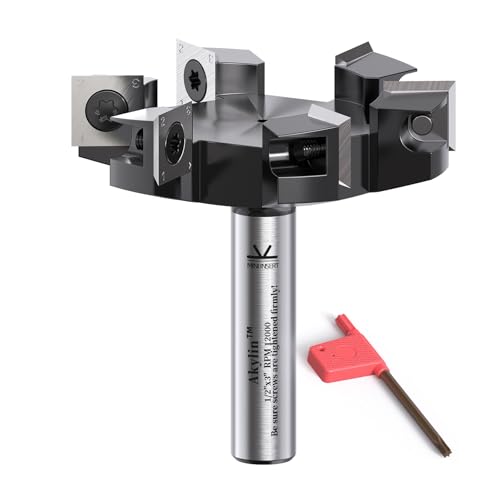
What We Like
- Large 3-inch diameter for fast material removal.
- Eight inserts provide a smoother finish than two-knife bits.
- Replaceable carbide inserts extend the tool's life.
- High-hardness virgin carbide for excellent wear resistance.
Trade-offs
- The 3-inch cutting diameter requires a powerful router and stable setup.
- Its size and capacity are overkill for small workshop projects.
A 3-inch cutting diameter removes material faster with each pass, which is a major advantage for flattening large slabs or full-size spoilboards on a CNC or router sled. Its body is made from 42CrMo4 steel, a material characterized by high strength and good toughness to handle the stress of this work. Six indexable carbide inserts can be rotated to any of their four fresh edges or replaced entirely when dull, extending the tool’s service life without buying a new bit.
That capacity requires a powerful router and a very rigid sled or machine frame to operate smoothly and safely. For surfacing smaller projects, many other listed bits have cutting diameters under 2.5 inches, which would place less demand on the equipment. This Akylin bit is a specialist tool best suited for big, repetitive planing tasks where its width justifies the need for a sturdy setup.
Product photos
Whiteside Router Bits 6220 Slab Flattening Router Bit
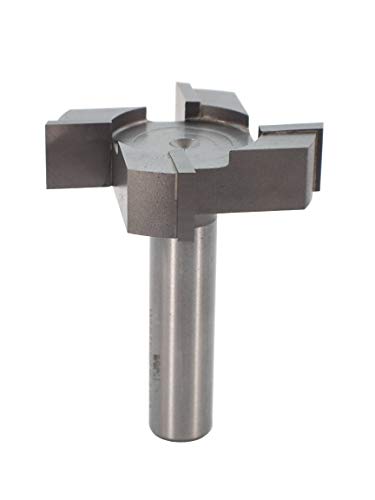
What We Like
- Four-flute design for an ultra-smooth finish
- Carbide-tipped for long tool life
- 2-inch diameter reduces required passes
- Works on wood, plastics, and epoxy
Trade-offs
- 1/2-inch cutting length limits depth per pass
- Only compatible with 1/2-inch router collets
Four flutes define this surfacing bit, producing a finish smooth enough to reduce sanding time. That makes it a good fit for woodworkers who need a high-quality top surface on items like live-edge slabs or furniture. Its carbide-tipped design is described as an economical option for long life, positioning it as a durable shop tool.
The 2-inch cutting diameter allows for fewer passes than smaller bits, speeding up surfacing work. For maximum speed on large areas, the Akylin bit has a larger 3-inch diameter. The four-flute design is intended for a smooth finish, which may differ from the result of bits with fewer wings.
Product photos
SpeTool 4-Wing Coated Carbide Insert Router Bit
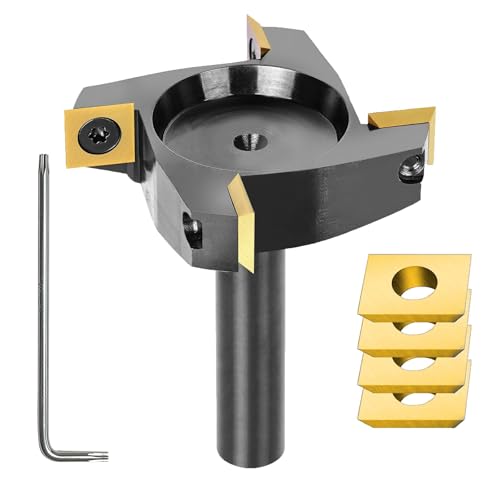
What We Like
- ATS coating extends tool life significantly
- Four-sided inserts quadruple usable edges
- 2-1/2" diameter enables fast, efficient surfacing
- Replacement inserts keep long-term cost low
Trade-offs
- Heavier 2-1/2" cut demands a powerful router
- Primarily designed for CNC or sled use
The 2-1/2″ cutting diameter is the key here. It lets you flatten a slab surface faster by covering more ground with each pass, which saves time on large projects like table tops. Combined with the ATS coating’s heat and wear resistance, this bit is built for repeated, heavy-duty surfacing work on hardwoods, plywood, and MDF. It’s a solid pick for the workshop that regularly processes slabs and values a balance of upfront durability and long-term economy through replaceable inserts.
That larger diameter and four-wing design do require a stout router and a rigid setup, like a CNC or a well-built flattening sled. This is necessary to handle the cutting forces without chatter. If your projects are smaller or your router has less horsepower, a bit with a smaller diameter might be a more manageable choice that still delivers a clean finish, like the Amana Tool RC-2267 at 1-3/4″.
Product photos
SICWOOD Slab Flattening Router Bit
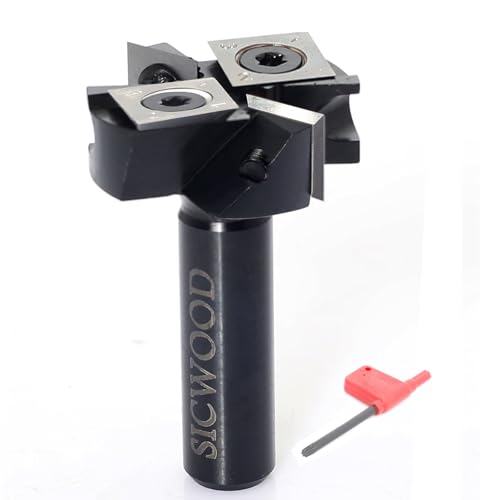
What We Like
- Compact 1-1/2 inch cutting diameter.
- Replaceable C2 carbide inserts for longevity.
- Two bottom scorers for a smooth finish.
- Works on CNC, handheld, and table routers.
Trade-offs
- Smaller cut width requires more passes for large slabs.
- Not suitable for metal or non-wood materials.
- Requires careful feed rate calculation per material type.
The 1-1/2 inch cutting diameter is the key detail here. It makes this bit a nimble choice for smaller routers and more confined setups where a larger surfacing bit would feel cumbersome. That compact design, paired with the 2+2 insert layout, delivers a clean, repeatable cut across everything from solid wood to plywood. It’s a solid fit for a workshop that values a versatile, space-conscious tool for flattening modest-sized slabs or maintaining spoilboards without needing the biggest motor on the block.
You trade some speed for that smaller footprint. Flattening a large tabletop will take more passes compared to a 2-inch or 3-inch bit like the Akylin model. The provided chip load data is crucial; you must match your feed rate to the material to avoid burning the inserts or stressing your router. For focused work on medium-sized projects, this bit’s replaceable cutter design and smooth finish make it a durable, cost-effective choice in the long run.
Product photos
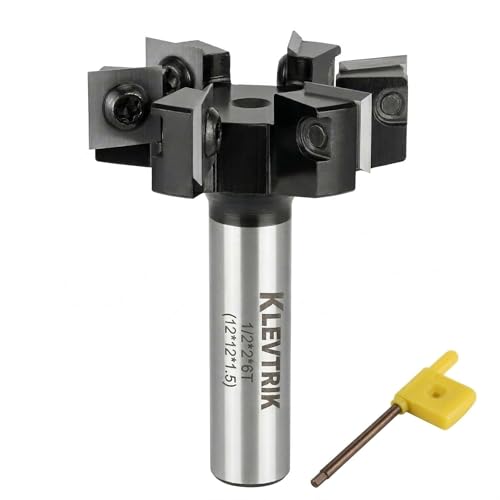
Klevtrik Slab Flattening Router Bit
What We Like
- Aerodynamic body design for fast chip evacuation.
- Six-wing design for superior balance and finish.
- Replaceable four-edge carbide inserts reduce long-term cost.
- Anti-kickback engineering minimizes dangerous vibration.
Trade-offs
- Requires a router with at least 2 horsepower to operate safely.
- Starting speed must be kept below 10,000 RPM, limiting some router settings.
A six-wing design offers superior balance and a smoother finish than four-wing cutters, which is a practical advantage when surfacing large panels where final smoothness is critical. Its aerodynamic body helps evacuate chips quickly to reduce burn marks, a direct benefit for maintaining a clean workpiece. The replaceable carbide inserts have four cutting edges each, and the model is described as more cost-effective than solid brazed ones because only the inserts need replacement.
With its 2-inch width, this cutter covers less area per pass than a 3-inch model like the Akylin, so completing a large slab will require more time. It also needs a router with at least 2 horsepower, which rules out compact or lower-powered units. For a user with a capable, 2HP-plus router setup who prioritizes finish quality and long-term value from replaceable inserts, these specifications align with that need.
Product photos
BINSTAK CNC Spoilboard Surfacing Router Bit

What We Like
- Carbide-tipped cutters for durability
- Teflon coating reduces resin buildup
- Versatile for slab flattening and spoilboard surfacing
- Anti-kickback design for safer operation
Trade-offs
- 1/2-inch cutting length limits depth per pass on thick slabs
- Only suitable for wood and composites, not metal
A 2-inch cutting diameter paired with a 1/2-inch shank provides a solid, vibration-resistant foundation for surfacing work on a CNC or table-mounted router. This design suits the woodworker who needs reliable performance for flattening slabs or maintaining a spoilboard without a premium investment. The Teflon coating is a practical touch that makes cleanup easier after milling resinous woods or MDF, extending the tool’s life between sharpenings.
Covering a spoilboard with this bit requires more passes than with a wider cutter, as its 2-inch cutting diameter is narrower than the 3-inch option from Akylin. Its three-wing design and carbide-tipped construction are built for the demands of industrial woodworking, allowing it to maintain steady feed rates on materials like solid wood, MDF, and plywood. The Teflon coating helps reduce resin buildup, which aids in keeping the bit clean during extended use.
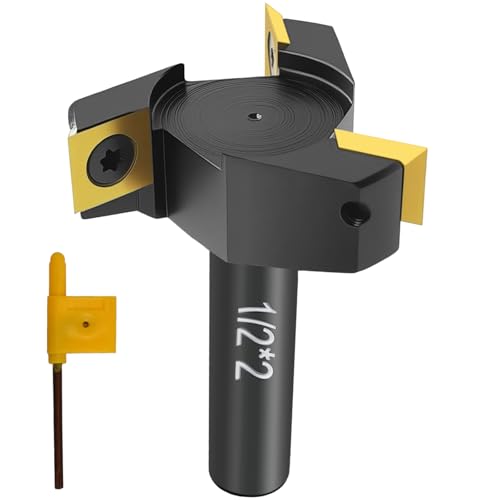
NNBWKIXI Slab Flattening Router Bit
What We Like
- ATS coating improves heat and wear resistance
- Three-wing design enhances cutting stability
- Works on a wide range of materials
Trade-offs
- 2-inch cutting width requires more passes on large slabs
- Only one insert size referenced for replacements
The combination of ATS-coated carbide inserts and a replaceable three-wing design defines this bit’s value. That coating fights heat buildup during long surfacing runs, which is crucial for maintaining a sharp edge. The inserts themselves can be rotated to a fresh corner or swapped out entirely, turning a single purchase into multiple cutting lives. This makes it a solid pick for a workshop that flattens slabs or resurfaces spoilboards regularly but wants to keep consumable costs in check over the long term.
You trade some raw speed for that economy. At 2 inches wide, it covers less ground per pass than the 3-inch option from Akylin, for example, so flattening a large tabletop will take more time. That’s the practical compromise. For extensive CNC work where maximizing feed rate is the priority, a larger-diameter bit might be a better primary tool. This NNBWKIXI bit, however, stands as a reliable and cost-effective workhorse for general shop flattening duties.
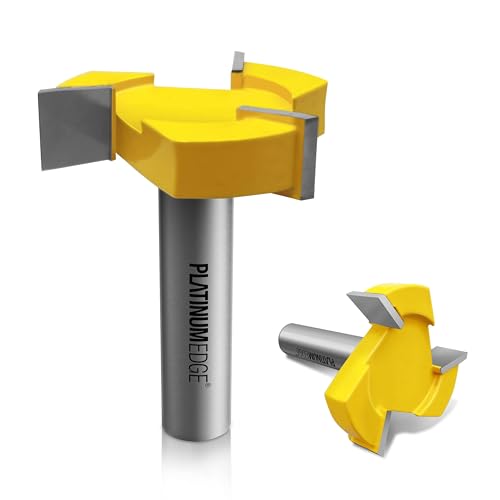
PLATINUMEDGE Spoilboard Surfacing Router Bit
What We Like
- Heat-resistant coating reduces resin build-up
- Anti-kickback design on hardened steel body
- Sharp carbide tips for industrial-grade durability
- Versatile for slab flattening, trimming, and grooving
Trade-offs
- A 2-inch cutting width requires more passes than a 3-inch bit
- Half-inch cutting depth limits material removal per pass
- Not suitable for cutting metal or non-wood materials
The heat-resistant Teflon coating is the standout feature here, specifically engineered to reduce resin gunk from softwoods and composites. That means less downtime for cleaning and more consistent performance during long surfacing sessions on a CNC or router sled. This cutter is aimed at the shop that regularly flattens slabs or resurfaces spoilboards and wants a tool that can handle the heat and pitch of demanding work without frequent interruptions. Its 2-inch diameter and three-wing design provide a clean finish across woods, MDF, and plywood, making it a reliable, focused tool for production-level flattening.
Its 2-inch width covers less surface area per pass than wider bits, such as the 3-inch Akylin model, so surfacing a large area will take more time. The cutting length is half an inch, which dictates the maximum depth for each individual pass. For a single, very large slab project, a bit with a larger diameter might be faster overall.
Product photos
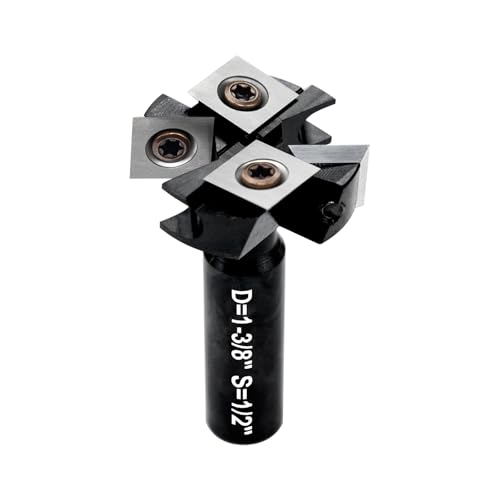
DEEFIINE Slab Flattening Router Bit
What We Like
- Comes with four spare carbide inserts for quick changes.
- 2+2 insert design provides balanced, smooth cutting.
- Anti-kickback design enhances control during operation.
- Works on a wide range of materials from hardwood to laminate.
Trade-offs
- A 1-3/8 inch cutting diameter is narrower than some competing bits.
- The compact 3-inch height may limit depth in certain sled setups.
- Only four total cutting blades, fewer than some multi-wing designs.
The DEEFIINE bit includes four extra carbide inserts, so you can replace a worn edge immediately and avoid stopping a project to order parts. This accessory set supports an uninterrupted workflow, which is critical during large surfacing tasks where pauses are costly. Its 2+2 insert design balances the tool during operation for reduced vibration, and the anti-kickback feature contributes to a smoother finish directly from the cut.
The trade-off is its cutting width. At 1-3/8 inches, it removes material in a narrower swath compared to options like the Amana Tool RC-2267. For flattening a massive slab, this means more passes and a longer job. However, that smaller diameter can be an asset on a handheld router or a less powerful machine, where it demands less torque and is easier to control. It’s a focused tool that excels at delivering a flat, tear-free surface efficiently, just over a slightly smaller area per pass.
Product photos
How We Evaluated Slab Flattening Router Bits
Our research focused on manufacturer specifications, technical documentation, and patterns in expert round-ups and owner feedback. We prioritized three key criteria: cutting diameter and efficiency for project scale, insert design and durability for long-term value, and compatibility with your router’s power and setup. This research-based evaluation can identify well-built tools with features proven for this demanding task. However, it cannot replicate the hands-on feel of feed rate or the specific sound a bit makes in a particular slab of wood.
What To Look For In Slab Flattening Router Bits
Choosing the right bit balances your need for speed, finish quality, and long-term cost. The wrong choice can lead to a bogged-down router, a rough surface requiring hours of sanding, or a bit that wears out too quickly.
Key factors are cutting width for efficiency, insert type for durability and finish, and your router’s power and collet size. Match the bit’s demands to your setup to ensure smooth, controlled operation.
Cutting Diameter & Efficiency
The cutting diameter, often between 1.5 and 3 inches, determines how much material you remove per pass. A larger diameter covers more area faster but demands significantly more power from your router and a very stable sled or CNC setup. For large slabs or frequent spoilboard resurfacing, a 2.5-inch or 3-inch bit like the Akylin can be a major time-saver. For more modest projects or use with a standard handheld router, a compact 1.5-inch to 2-inch bit, such as the SICWOOD model, offers better control and compatibility.
Insert Design & Durability
Bits use either brazed carbide tips or replaceable carbide inserts. Brazed-tip bits are a simpler, often more budget-friendly design. Replaceable inserts, featured on picks like the SpeTool, offer clear long-term value. When one cutting edge dulls, you rotate or replace the inexpensive insert instead of the entire bit. The number of cutting wings or flutes also matters. Two-wing designs can cut aggressively but may leave a slightly rougher finish. Three- or four-wing designs, like the Whiteside 6220, provide a smoother surface by distributing the cutting load.
Router Power & Setup Compatibility
Your router’s horsepower and collet size are non-negotiable limits. A 3-inch bit typically requires at least a 2.5HP router mounted in a sturdy sled or CNC. Using an undersized router risks stalling, burning the wood, or creating dangerous kickback.
Always check the shank size; 1/2-inch is standard for these heavy-duty bits, and trying to use one in a 1/4-inch collet with an adapter is unsafe. The process of flattening a slab with a router also requires a properly built and aligned jig. For most woodworkers, using a router sled is the practical method, and choosing a sled designed for stability is as important as the bit itself.
- Verify your router’s horsepower rating meets or exceeds the bit manufacturer’s recommendation.
- Ensure your router’s collet matches the bit’s shank diameter, never use an adapter for a slab-flattening bit.
- Consider how the bit’s cutting length (often 1/2 inch to 1 inch) limits your maximum depth of cut per pass on thick slabs.
A general rule: if your project fits on a benchtop, a 2-inch or smaller bit is likely sufficient; for full-sized slabs, plan for a high-power router and a bit over 2 inches.
Slab Flattening Router Bits Compared
The following table compares the key specifications of our top picks to help you see the differences at a glance.
| Product | Shank Diameter | Cutting Diameter | Insert/Wing Count | Insert Material/Type |
|---|---|---|---|---|
| Amana Tool RC-2267 CNC Spoilboard Surfacing Router Bit | 1/2 inch | 1-3/4 inches | 3 wings | Solid carbide inserts |
| Akylin CNC Slab Flattening Router Bit | 1/2 inch | 3 inches | 6 wings | K10/YG6X virgin carbide |
| Whiteside Router Bits 6220 Slab Flattening Router Bit | 1/2 inch | 2 inches | 4 wings | Carbide-tipped |
| SpeTool 4-Wing Coated Carbide Insert Router Bit | 1/2" | 2-1/2" | 4 Wings | 4-sided carbide |
| SICWOOD Slab Flattening Router Bit | 1/2 inch | 1-1/2 inch | 2+2 knife | C2 carbide inserts |
| Klevtrik Slab Flattening Router Bit | 1/2 inch | 2 inches | 6-wing | YG8 carbide inserts |
| BINSTAK CNC Spoilboard Surfacing Router Bit | 1/2 inch | 2 inch | 3-wing | carbide-tipped |
| NNBWKIXI Slab Flattening Router Bit | 1/2 inch | 2 inches | 3 wings | solid carbide inserts |
| PLATINUMEDGE Spoilboard Surfacing Router Bit | 1/2 inch | 2 inches | 3 | Carbide |
| DEEFIINE Slab Flattening Router Bit | 1/2 inch | 1-3/8 inches | 2+2 inserts | Carbide Inserts |
Frequently Asked Questions
What router bit is best for flattening wood slabs?
For most professional workshops and serious hobbyists, a bit with replaceable carbide inserts offers the best balance of durability and long-term cost, making our best overall pick, the Amana Tool RC-2267, a strong contender. The “best” bit ultimately depends on your router’s power, your typical slab size, and whether you prioritize a super-smooth finish or maximum removal speed.
What router bit is best for planing slabs?
Slab flattening bits are essentially planing bits. A multi-wing design, like the four-flute Whiteside 6220 or the six-wing Klevtrik, will generally produce a smoother planed surface directly from the router, reducing subsequent sanding. For rapid material removal on very large slabs, a wide-diameter bit like the 3-inch Akylin is designed for efficient planing.
Can I flatten a slab with a router?
Yes, flattening a slab with a router is a standard woodworking technique. It requires building or buying a stable sled or jig to guide the router in a perfectly level plane across the slab’s surface. The key is using a dedicated slab-flattening bit, which is wider and designed for this surfacing task, paired with a router powerful enough to handle the load.
Who makes the highest quality router bits?
Brands like Amana Tool and Whiteside are consistently noted in expert round-ups and owner feedback for their precision engineering, material quality, and reliable performance in professional settings. However, several manufacturers, including SpeTool and others on our list, produce high-quality bits with innovative features like specialized coatings or aerodynamic designs that offer excellent value.
How do I choose a router bit for slab flattening?
Start by assessing your router’s horsepower and collet size to establish your limits. Then, consider your common project size: larger slabs benefit from a wider cutting diameter. Finally, think about long-term value; if you’ll use it frequently, a bit with replaceable inserts may save money over time. Our router bits guide covers these fundamentals in more depth.
The Bottom Line
The Amana Tool RC-2267 CNC Spoilboard Surfacing Router Bit is our best overall choice for the workshop professional or serious hobbyist who values durable carbide inserts and efficient performance on a CNC or timber machine. For those on a tighter budget, the BINSTAK bit offers capable performance, while woodworkers needing the absolute smoothest finish should look to the award-winning Whiteside 6220.
No matter which bit you choose, the single most important factor is ensuring your router has enough power to drive it safely and effectively. An underpowered router paired with an oversized bit is a recipe for poor results and potential danger, so honestly match the tool to your setup.
