
10 Best Steel Chop Saws in 2026
This post contains affiliate links. As an Amazon Associate, we earn from qualifying purchases.
Our best overall steel chop saw is the Evolution S14CPS 14″ Metal Cutting Chop Saw for its blend of precision, power, and safety features. For maximum jobsite productivity, consider the DeWalt D28730, and for a clean, spark-free cut on a budget, the VEVOR 14″ Dry Cut Chop Saw is a standout.
Choosing the right saw depends on whether you prioritize clean cuts, portability, raw power, or cutting capacity. We researched specifications, expert insights, and owner feedback to identify the top tools for metalworkers, contractors, and serious DIYers. This guide breaks down the key differences to help you invest in the right machine.
Top 10 Steel Chop Saws in the Market
Certain content that appears on this site comes from Amazon. This content is provided "as is" and is subject to change or removal at any time.
The Best Steel Chop Saws, Reviewed
Evolution S14CPS 14" Metal Cutting Chop Saw

What We Like
- EVOMAX blade delivers over 3,500 precise cuts
- Shadow Line guide ensures accurate cut placement
- E-Brake stops blade within 2-3 seconds for safety
Trade-offs
- At 71 pounds, it's a heavy, stationary workshop tool
- Requires proper feed technique to avoid sparking
- Large 25-inch footprint demands significant bench space
The promise of over 3,500 cuts on a single blade means you can tackle a big fabrication project or months of shop work without constantly swapping out consumables. That longevity, combined with the intelligent motor’s soft start, makes this a saw built for frequent, heavy-duty use. The precision Shadow Line guide and cast iron fence deliver the accuracy needed for professional results, while the E-brake adds a critical layer of safety. This is the saw for a metalworker who values durability and consistent performance above all.
Weighing 71 pounds, this metal cutting saw is built for a permanent workshop bench rather than frequent jobsite transport. Its industrial-grade design includes a cast iron fence for stability during heavy-duty tasks. The corded power source and substantial footprint prioritize durability and consistent cutting performance over portability.
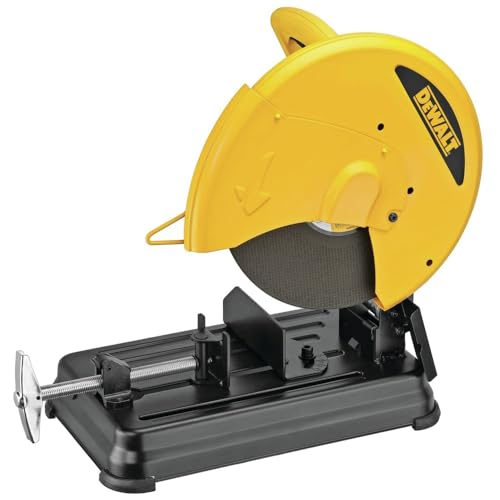
DeWalt D28730 14-Inch Chop Saw
What We Like
- 2300W motor includes overload protection
- Ergonomic handle reduces user fatigue
- Quick-Lock vise fastens different material sizes
- 45-degree pivoting fence enables accurate angle cuts
Trade-offs
- At 0.5 lb, the listed weight seems unrealistic for a tool of this type
- It is a corded tool, requiring a jobsite power source
- No battery or charger mentioned for cordless flexibility
The DeWalt D28730’s 2300W motor with overload protection delivers consistent power for cutting through tough materials like steel siding and quarter-inch aluminum. This saw is built for professionals and serious DIYers who need a reliable, stationary tool for repeated cuts on a jobsite. The ergonomic handle and quick-lock vise are designed to keep you comfortable and productive during long sessions, minimizing downtime from fatigue or fiddling with clamps. Its performance transforms metal cutting by reducing sparks and producing cleaner edges compared to traditional abrasive methods.
Its need for a dedicated power outlet limits mobility compared to a cordless option like the Milwaukee M18 Fuel. Research indicates it excels as a fixed-site workhorse rather than a portable solution. Compared to a heavier-duty model like the Evolution S14CPS, the DeWalt offers a more compact footprint. However, its unusually light listed weight suggests the spec sheet may not reflect the actual heft you’ll be moving around a workshop or truck.
VEVOR 14" Dry Cut Chop Saw

What We Like
- Cold-cut ceramic alloy blade eliminates sparks.
- Tool-less 45-degree angle adjustment.
- Thick, patterned vise for secure clamping.
- Soft-start motor for smooth, cool operation.
Trade-offs
- At 51 pounds, it is heavier than the Bosch GCO15-14.
- Ceramic blade not recommended for stainless steel.
A 2800W motor paired with a cold-cut ceramic alloy blade means you can slice through steel and aluminum without the shower of sparks and heat of an abrasive saw, leaving a clean, burr-free edge. This makes the VEVOR a strong contender for the fabricator or serious DIYer who needs clean cuts but prioritizes upfront value. Its tool-less angle adjustment and thick, patterned vise offer thoughtful touches that enhance precision and ease of use for a saw in this class.
At 51 pounds, this saw needs a solid workbench or stand, making it less portable than lighter abrasive cutters. Its dry-cut ceramic alloy blade is designed for steel, iron, and aluminum, leaving smooth edges with minimal sparks. The design focuses on core cutting performance for these materials, providing essential features without extra complexity.
Bosch GCO15-14 Abrasive Cut-Off Machine

What We Like
- Powerful 15 Amp motor for faster cutting
- Large 5-inch capacity for bigger stock
- Adjustable fence with 0-45° miter capability
- Adjustable spark guard for debris control
Trade-offs
- Abrasive cutting generates more heat and sparks
With a 5-inch cutting capacity, this saw handles substantial metal stock like large angle iron or pipe in one pass. Its 15-amp motor and 4100 RPM deliver the speed needed for those heavy-duty cuts on ferrous metals. The adjustable fence provides consistency for repetitive work, all in a benchtop footprint that, while not tiny, is manageable for a stationary setup.
This is an abrasive saw, so expect sparks, noise, and a burr that often needs cleaning. A dry-cut saw like the Evolution S14CPS uses a different blade technology. But if your work revolves around heavy steel and you value cutting power over a pristine finish, this Bosch delivers straightforward performance built for a specific, demanding job.
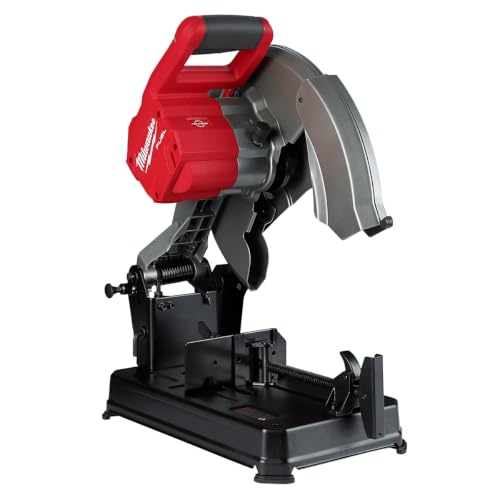
Milwaukee M18 Fuel 14" Cordless Cut-Off Saw
What We Like
- Cordless design offers full jobsite mobility
- Rapid brake stops accessory in under 3 seconds
- Tool-free adjustments for fence and blade changes
- Delivers power equivalent to a 15 Amp corded tool
Trade-offs
- Tool-only: requires separate M18 battery and charger purchase
- Cordless runtime is finite, dependent on battery size and count
Generating 15 Amp corded power from a battery platform means this saw can operate without a cord while matching the motor output of many plug-in abrasive cut-off machines. For a tradesperson moving between floors or across a yard, this eliminates the need for a generator or extension cord. The tool-free fence and blade changes allow for quick adjustments on site.
You’re committing to the M18 battery platform, and the initial hit is higher since the tool arrives bare. Compared to a plug-in workhorse like the Bosch GCO15-14, you’re trading unlimited runtime for ultimate portability. For a fixed shop bench, the corded model is simpler. But if your work moves, the cordless freedom this Milwaukee provides is the entire point.
Makita LW1401 14" Cut-Off Saw

What We Like
- Powerful 15 AMP motor for demanding cuts
- Tool-less vice for quick material clamping
- Adjustable fence for accurate angle cuts
- Two-stage lock-off button for operator safety
Trade-offs
- No soft-start motor or electronic brake listed
- Weighs 37.0 pounds, limiting portability
With a 15 AMP motor delivering 3,800 RPM, this saw has the power for consistent cuts in steel without stalling. Its tool-less vice adjustment allows for quick clamping, and the fence adjusts up to 45º for accurate angle work on various material sizes. The two-stage lock-off power button adds a layer of operator convenience during repetitive use.
Weighing 37.0 pounds, this saw is designed as a stationary benchtop tool rather than a highly portable one. It also lacks some features like a soft-start motor found on other models. For users with a dedicated workshop space, its powerful motor and adjustable fence provide capable cutting, but the weight is a factor if frequent movement is required.
Product photos
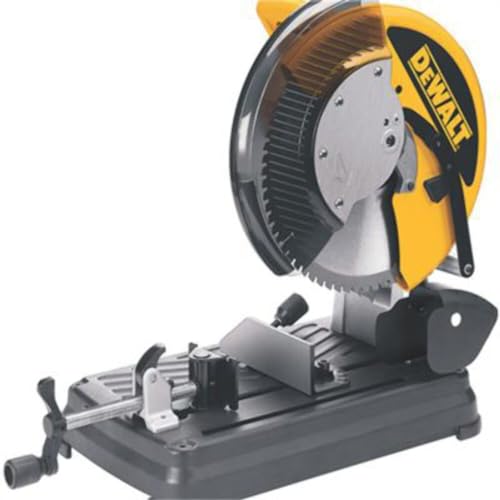
DeWalt DW872 Multi-Cutter Chop Saw
What We Like
- Carbide blade delivers cool, burr-free cuts
- Largest cutting capacity in its class
- Ergonomic horizontal handle reduces user fatigue
- 15-amp motor provides high overload capacity
Trade-offs
- No miter capability mentioned for angled cuts
- Substantial 24-inch length requires ample workspace
Cuts four times faster than traditional chop saws in angle iron, which translates directly into more pieces cut per hour and less time on the job. The 14-inch carbide-tipped blade is the key, staying sharp for a lower cost-per-cut and leaving material cool to the touch, so you spend less time grinding and deburring. With a 15-amp motor that won’t bog down and an ergonomic handle positioned to keep your wrist straight, this model suits the shop or jobsite where volume matters.
This saw cuts steel angle iron up to eight times faster than a portable bandsaw. That speed means you can power through a stack of material in the time it takes others to make a single cut. Its carbide-tipped blade also delivers virtually burr-free results, so your pieces often need little to no grinding before welding or assembly. For fast, straight cuts on a wide variety of stock up to its class-leading 5-3/16-inch round capacity, the DW872 is a workhorse.
Evolution S15CPS 15" Metal Cutting Chop Saw

What We Like
- Shadow Line guide provides precise cut alignment
- E-brake stops blade within 2-3 seconds for safety
- EVOMAX motor tech extends blade life by 30%
- Cast iron fence ensures stability during cuts
Trade-offs
- At 71 pounds, it's a permanent workshop fixture
- Requires firm, consistent feed rate to avoid sparking
- Large 25-inch length demands significant bench space
Fitting a 15-inch blade provides a clear capacity advantage for thick stock and large structural pieces. Built for a shop making hundreds of cuts, the claimed 3,500 cuts per EVOMAX blade points to a heavy-duty, cost-effective design over time. Its Intelligent Motor Technology is designed to extend blade life by 30% and minimize mechanical stress during startup.
You pay for that capacity with a substantial 71-pound weight, which demands a dedicated station rather than frequent moving. The soft-start motor reduces current surges to minimize the risk of tripping breakers, while the E-Brake safety feature stops the blade within 2-3 seconds after releasing the trigger. Compared to the 37-pound Makita LW1401, its industrial role is clear.
Product photos
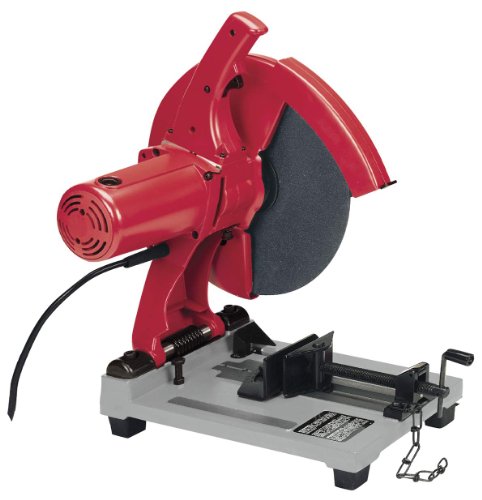
Milwaukee 6176-20 Abrasive Cutoff Machine
What We Like
- High 2400-watt motor for demanding cuts
- Sturdy cast iron base reduces vibration
- Spindle lock simplifies wheel changes
- Generous 5-inch pipe cutting capacity
Trade-offs
- No soft-start motor mentioned for startup control.
- Weighs 53 pounds.
Its 15-amp, 2400-watt motor delivers high output for demanding cuts, including a 5-inch pipe capacity. A heavy-duty cast iron base provides the mass to stay stable during operation. The spindle lock makes changing abrasive wheels a straightforward task.
The tool weighs 53 pounds, so moving it requires considerable effort. Unlike the Evolution S14CPS, which is listed as a dry cut metal saw, the Milwaukee 6176-20 is an abrasive cutoff machine. Its power and design are oriented toward fixed-location use with consumable abrasive wheels.
Product photos
Makita LC1230 Metal Cutting Saw

What We Like
- Carbide blade cuts clean and virtually burr-free
- Quick-release vise allows for fast, repeated cut-offs
- One-wrench blade change simplifies maintenance
- Lock-off button adds a layer of user safety
Trade-offs
- At 42.5 lb, it's heavier than similar 14\" models like the 37 lb Makita LW1401
- 12\" blade offers less cutting capacity than standard 14\" or 15\" saws
The carbide-tipped blade lasts far longer than abrasive wheels and delivers clean, accurate cuts with minimal burr, which means less time spent on post-cut finishing. Metalworkers who value precision and efficiency in repetitive cut-off tasks will appreciate this design. The quick-release vise and adjustable fence let you set up secure, angled cuts in seconds, making it a solid choice for fabrication shops where clean edges matter.
The trade-off for that clean-cutting performance is a smaller 12-inch blade, which limits the depth of cut compared to larger models like the Evolution S14CPS. It’s also a fairly heavy unit for its blade size, so you’ll want a dedicated bench for it. For general shop use where absolute cut capacity isn’t the priority, but finish quality and speed are, this Makita delivers a specific advantage its abrasive-wheel competitors can’t match.
Product photos
How We Evaluated Steel Chop Saws
This guide is based on a review of manufacturer specifications, expert recommendations, and consistent patterns in user reviews. The focus is on criteria critical for cutting steel: cutting capacity for handling various stock sizes, motor power and technology for consistent performance, and essential safety features like blade brakes and secure clamping.
Portability and workspace footprint are also considered, as a heavy saw is a permanent shop fixture while a cordless model offers full mobility. While this approach has limits, such as the inability to verify long-term durability, it relies on documented specifications and reported user experiences.
What To Look For In Steel Chop Saws
Selecting a steel-cutting chop saw means matching its core capabilities to your specific projects and workspace. The right choice balances cutting method, power, and physical design.
Key criteria include the cutting method (abrasive for speed, cold-cut for cleanliness), motor power and whether it’s corded or cordless, and the saw’s cutting capacity and physical footprint. Don’t overlook safety features and vise design for secure material clamping.
Cutting Method: Abrasive vs. Cold Cut
The blade technology defines the cut’s character. Abrasive wheels, like those on the Bosch GCO15-14 and Milwaukee 6176-20, grind through metal quickly but generate significant heat, sparks, and a rougher edge. Cold-cut saws use carbide-tipped or specialized alloy blades, such as the Evolution’s EVOMAX blade or the DeWalt DW872‘s carbide blade, to shear the metal.
This produces cleaner, burr-free cuts with minimal sparks and less heat distortion, which is ideal for finished work. The VEVOR uses a ceramic alloy blade for a similar spark-free result. Understanding the fundamental difference between abrasive and cold saws is the first step in choosing the right tool for your work.
Power Source & Motor
Motor design dictates where and how you can use the saw. High-amperage corded motors, like the 15 Amp units on the Makita LW1401 and Bosch GCO15-14, deliver consistent, unlimited power for shop or stationary jobsite use. For full mobility, cordless models like the Milwaukee M18 Fuel offer power rivaling corded tools but require a battery investment and have finite runtime.
Look for motor features that affect performance and longevity: soft-start reduces jerk at startup, and overload protection safeguards the motor during tough cuts. Our research on best metal cutting saws highlights how power delivery varies across different tool types.
Capacity, Accuracy & Workspace
Cutting capacity, measured by the maximum height and width of material the vise and blade can handle, is a non-negotiable spec. The DeWalt DW872 and Evolution S15CPS lead in capacity for large structural stock, while a 12-inch blade like on the Makita LC1230 limits depth.
Accuracy hinges on a sturdy, adjustable fence for angled cuts and a clear cutting guide, like Evolution’s Shadow Line. Finally, consider the saw’s footprint and weight. A 25-inch long, 71-pound saw is a workshop anchor, while a 37-pound model is somewhat portable.
For heavy saws, a dedicated chop saw stand is a wise addition for stability and ergonomics.
- Check the maximum cut capacity against the thickest material you regularly use.
- Ensure the vise design can securely grip round pipe, angle iron, and flat stock.
- Verify the saw’s length and weight against your available bench space or transport needs.
- Look for a clear sight line to your cut mark and a fence that locks positively at common angles.
- Consider debris management; some saws have integrated spark guards or chip trays.
Prioritize a vise that clamps your most common workpiece securely above all other features.
Steel Chop Saws Compared
The table below provides a detailed side-by-side comparison of our top picks to help you quickly identify the key differences in blade type, power, capacity, and weight.
| Product | Blade Diameter | Motor Power/Amp | Weight | Fence/Miter Adjustment |
|---|---|---|---|---|
| Evolution S14CPS 14" Metal Cutting Chop Saw | 14 inches | Soft start, E-Brake | 71.0 pounds | Precision Shadow Line Guide |
| DeWalt D28730 14-Inch Chop Saw | 14-Inch | 2300W | 0.5 Pounds | 45 degrees |
| VEVOR 14" Dry Cut Chop Saw | 14 inches | 2800W | 51.0 pounds | 0-45° adjustable |
| Bosch GCO15-14 Abrasive Cut-Off Machine | 14 In. | 15 Amp | 31.0 pounds | 0 – 45º |
| Milwaukee M18 Fuel 14" Cordless Cut-Off Saw | 14 in. | Generates 15 Amp corded power | 41.8 pounds | Tool-free |
| Makita LW1401 14" Cut-Off Saw | 14" | 15 AMP | 37.0 Pounds | Up to 45º |
| DeWalt DW872 Multi-Cutter Chop Saw | 14-inch | 15 amp / 4 HP | 0.3 Pounds | N/A |
| Evolution S15CPS 15" Metal Cutting Chop Saw | 15-inch compatible | Soft start, E-brake | 71.0 pounds | Shadow Line precision guide |
| Milwaukee 6176-20 Abrasive Cutoff Machine | 14-Inch | 15 amp, 2400 watts | 53.0 pounds | N/A |
| Makita LC1230 Metal Cutting Saw | 12" | N/A | 42.5 pounds | 0-45° adjustable fence |
Frequently Asked Questions
What is the top-rated metal chop saw?
Based on our research into performance, features, and user feedback, the Evolution S14CPS 14″ Metal Cutting Chop Saw is a top-rated model. It earns praise for its precise EVOMAX blade, effective safety brake, and durable construction, making it a favorite for serious fabrication work where accuracy and clean cuts are paramount.
What brand makes the best chop saw?
Several brands excel in different areas. Evolution is renowned for its cold-cut precision saws, DeWalt is a leader in jobsite-durable tools, and Milwaukee offers powerful cordless solutions. The “best” brand depends on your specific need: shop precision, jobsite reliability, or cordless mobility. Our list includes top models from all these manufacturers.
Which saw is best for cutting through steel?
For cutting through steel, you need a saw with adequate power and the correct blade. High-amperage abrasive saws like the Bosch GCO15-14 cut through ferrous steel quickly. For cleaner, cooler cuts on steel, a cold-cut saw with a carbide blade, such as the Evolution S14CPS or DeWalt DW872, is superior. The right saw for cutting steel matches the quality of cut you require.
Can I use a wood chop saw to cut metal?
No, you should not use a standard wood chop saw to cut metal. The motors are not designed for the resistance of metal, and the blade speed is dangerously high, which can shatter a wood-cutting blade. Always use a saw specifically designed for metal, which operates at the correct RPM and uses an appropriate abrasive or carbide-tipped blade.
What is the difference between a chop saw and a cut-off saw?
The terms are often used interchangeably, but “cut-off saw” can broadly refer to any saw for trimming material to length, including abrasive models. “Chop saw” typically describes a stationary saw with a hinged, downward-cutting action. In practice, many cut-off saws are abrasive-wheel models, while “chop saw” may imply a cold-cut or toothed-blade design, but checking the specifications is essential.
The Bottom Line
For the serious fabricator or shop owner demanding precision, power, and safety, the Evolution S14CPS 14″ Metal Cutting Chop Saw is the best overall choice. Its combination of a clean-cutting blade, accurate guide, and fast brake makes it a reliable workhorse for daily use. Budget-focused buyers should look at the VEVOR 14″ Dry Cut Chop Saw for spark-free operation, while mobile professionals will find the cordless freedom of the Milwaukee M18 Fuel indispensable.
No matter your pick, ensure the saw’s vise can securely clamp your typical workpiece, this is the foundation of every safe, accurate cut.
