
10 Best Table Saws in 2026
This post contains affiliate links. As an Amazon Associate, we earn from qualifying purchases.
Our best overall table saw is the DEWALT DWE7491RS, thanks to its precise rack & pinion fence and generous 32-1/2″ rip capacity. For those prioritizing safety above all, the SawStop CTS-120A60 leads, while the SKIL TS6307-00 offers reliable features at a budget-friendly price. Choosing the right table saw means balancing power, precision, portability, and safety for your specific projects. Our research focused on specs, expert round-ups, and owner feedback to help you find the saw that fits your shop and your work.
Top 10 Table Saws in the Market
Certain content that appears on this site comes from Amazon. This content is provided "as is" and is subject to change or removal at any time.
The Best Table Saws, Reviewed
DEWALT DWE7491RS Table Saw

What We Like
- Rack & pinion fence for fast, accurate adjustments
- Large 32-1/2" rip capacity for wide materials
- Onboard storage for all guards and accessories
- Rolling stand sets up and breaks down quickly
Trade-offs
- No integrated cord wrap for power cable management
A 32-1/2 inch rip capacity means you can handle large shelving and trim without wrestling the material. That rack and pinion fence system makes those adjustments smooth and repeatable, which is crucial for clean, accurate cuts on a jobsite. This saw is built for the contractor who needs serious cutting power and capacity in a package that folds down to fit in a trunk. The 15-amp motor rips through hardwoods, and the rolling stand gets you from truck to cutting in minutes.
Weighing 110 pounds, this saw requires lifting for transport, but contoured grips molded into the table edges make that easier. The tradeoff for its compact, trunk-friendly package is that the rolling stand lacks wheels for moving the assembled unit, so you must lift it. However, the rack-and-pinion telescoping fence and flip-over fence for narrow rips deliver workshop-caliber adjustments from a portable tool.
SawStop CTS-120A60 Compact Table Saw

What We Like
- Patented flesh-detection safety system
- Heavy-duty, stable portable construction
- Easy-adjust rack & pinion fence
- Quick tilt with micro-adjust feature
Trade-offs
- At 79 lb, it's heavier than most portable saws like the 54 lb DeWalt DWE7485
- Smaller rip capacity than full-size contractor saws
- Portability trade-off for its durable construction
SawStop’s patented Safety System, which stops the blade on contact with skin, is built into this 79-pound compact table saw. Its heavy-duty construction provides the stability needed for smooth cuts on a job site. The rack & pinion fence is easy to adjust and stays square, while a quick-tilt mechanism speeds up angle changes.
That durable construction results in a 79-pound weight, which is heavier than some compact saws like the 54-pound DeWalt DWE7485. The design prioritizes a stable platform for cutting over maximum ease of carrying. According to expert round-ups, SawStop’s flesh-detecting safety feature vaults it to the head of its class.
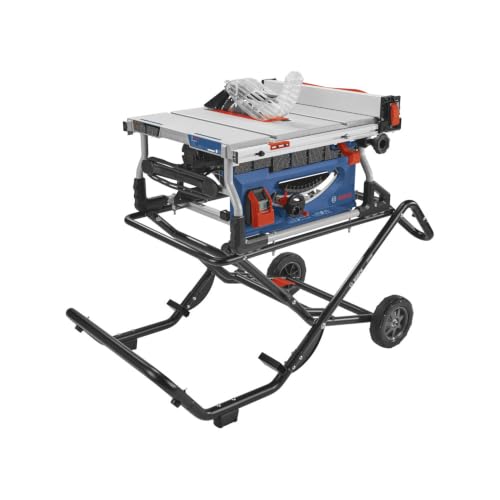
BOSCH GTS15-10 Table Saw
What We Like
- Gravity-Rise stand for single-action setup
- Soft-start circuitry prevents breaker trips
- Electronic speed control maintains power under load
- Quick blade brake stops in ~3 seconds
Trade-offs
- At 103 lb total, it's a substantial load for one person
- ClampZone areas are light-duty secondary surfaces only
- Open-frame design exposes more internals to jobsite dust
The integrated Gravity-Rise wheeled stand is what sets this saw apart. A single action raises the saw from a rolled position to a stable, locked work height, which means you’re cutting seconds after arriving on site. That, combined with a rack-and-pinion fence for precise adjustments, makes the GTS15-10 a system built for contractors who move constantly. Its 15-amp motor and electronically regulated speed handle hardwoods without bogging down, so you can keep working instead of waiting.
You pay for that convenience with bulk. The whole package weighs 103 pounds, which is manageable but not light. The open-frame roll bar design trades a fully enclosed base for durability and easier debris clearing, but it won’t contain sawdust like a closed cabinet. If ultimate portability is your goal, the SKIL TS6307-00 at roughly half the weight is worth a look, though you’ll sacrifice the Bosch’s exceptional stand and fence system.
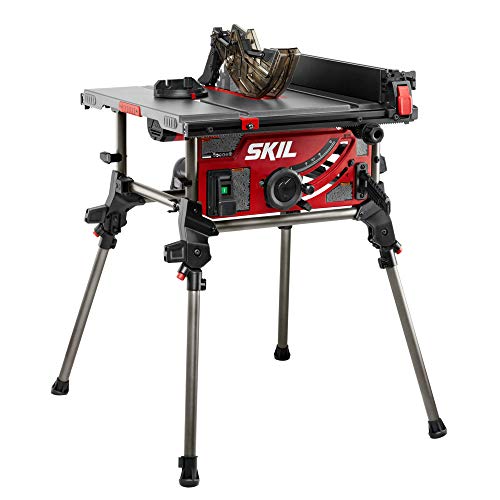
SKIL TS6307-00 Table Saw
What We Like
- Rack-and-pinion fence ensures parallel, accurate cuts
- Integrated folding stand for easy portability and storage
- Micro-adjustment aligns blade to fence and miter slot
- Dust port elbow helps contain the mess
Trade-offs
- Bevel stops only at 0° and 45°, lacks fine adjustments in between
- Smaller rip capacity than the DEWALT DWE7491RS's 32-1/2 inches
A 4×4 cutting capacity means this saw can handle the thickest common lumber, like pressure-treated posts, without a second pass. That’s serious work from a budget-friendly tool. For someone getting started in woodworking or needing a reliable, portable saw for job site duty, the SKIL delivers core functionality where it counts. The rack-and-pinion fence is a standout, providing the consistent accuracy that beginners need to build confidence and pros demand for repeatable results.
You feel the trade-offs in the details, like the basic bevel mechanism with its two positive stops. It gets the job done for most cuts, but it’s not built for fine-tuning complex angles. Compared to a saw like the DEWALT DWE7491RS, you’re giving up some rip capacity and a more refined feel. However, research and owner feedback confirm that for its role, the SKIL’s core mechanics are solid, offering a trustworthy foundation for learning or for a backup saw that won’t let you down.
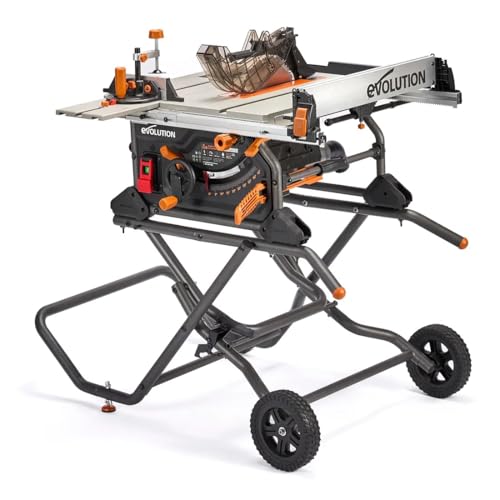
Evolution R10TBLX Table Saw
What We Like
- Includes zero-clearance throat and dado plates
- Rack & pinion fence for precise, repeatable cuts
- Collapsible wheeled stand for easy transport
- Cuts wood, mild steel, aluminum, and composites
Trade-offs
- 26-inch rip is less than some jobsite models
A 15A motor paired with a TCT blade lets this saw chew through metal and composites right alongside wood, which is a rare talent on a jobsite. That makes it the clear choice for contractors or serious DIYers who regularly need to switch materials without switching tools. The included zero-clearance throat plate and dado capability add a level of precision and versatility you usually have to pay extra for.
You trade some pure woodworking capacity for that metal-cutting ability. The 26-inch rip fence is perfectly serviceable, but it’s shorter than the DEWALT DWE7491RS, so you’ll feel the difference on wide sheet goods. The wheeled stand and onboard storage, however, mean you can easily roll this capability right to the material, making it a self-contained workstation for mixed-medium projects.
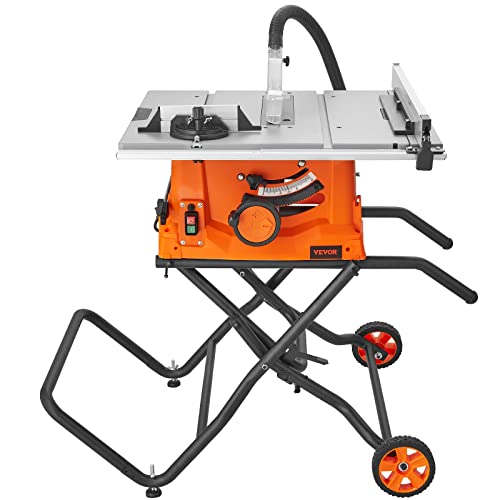
VEVOR 10-inch Table Saw
What We Like
- Exceptionally wide bevel range from -60 to 60 degrees
- Powerful 15-amp motor spins blade at 5000 RPM
- Compact, foldable design with integrated stand
- Includes dust port and overload protection
Trade-offs
- Heavier than many portable models at 59.4 pounds
A bevel range from -60° to 60° opens up compound joinery and angled cuts beyond the common 45-degree limit found on many jobsite saws. This angular flexibility supports projects with splayed legs or intricate trim work. The 15 Amp motor and a foldable stand with a dust port make it a portable setup for various woodworking tasks.
This is the clear trade-off: you gain unparalleled angular flexibility but will need to pre-cut full sheets of plywood before final sizing on the table. It’s a specialized tool for the angle-focused craftsman, not the primary saw for someone constantly ripping full panels.
Product photos
DEWALT DWE7485 Compact Table Saw

What We Like
- Compact size for easy transport and storage
- Rack & pinion fence for fast, accurate adjustments
- Metal roll cage base for jobsite durability
- On-board storage for accessories
Trade-offs
- No power cord wrap for tidier storage
- Smaller 8-1/4 in. blade limits cut depth versus 10 in. saws
A 24.5-inch rip capacity lets this saw handle full sheets of plywood or OSB, a key feature for a jobsite tool. Its rack and pinion telescoping fence makes adjustments fast and accurate for repeatable cuts. The compact size and metal roll cage base prioritize durability and easy transport over a wheeled stand.
Research mentions note the saw lacks a power cord wrap, a basic detail found on some competitors. At over 50 pounds, it must be lifted to move, though the whole unit fits in a car trunk. This design trade-off keeps the setup more compact for contractors who value that over wheels.
Product photos
BOSCH GTS18V-08N Cordless Table Saw

What We Like
- True cordless portability with single-hand carry design
- Powerful brushless motor matches corded saw performance
- Integrated storage for fence, gauge, and safety accessories
Trade-offs
- Tool-only listing: requires separate purchase of battery and charger
- Smaller 8-1/4-inch blade limits depth of cut versus 10-inch models
Delivering corded-like power at 5,500 rpm from a cordless platform, this saw untethers you from the generator or extension cord. It’s the clear choice for contractors and remodelers who need to move quickly between rooms or across a site without sacrificing the ability to rip a full sheet of plywood. The rack-and-pinion fence system ensures accurate cuts every time you set up, which is critical when you’re working solo and can’t afford misaligned trim.
The trade-off is the initial investment, as you need to already own or buy into the Bosch 18V battery system. Compared to a corded workhorse like the DEWALT DWE7491RS, you’re paying a premium for mobility over ultimate rip capacity and runtime. For a dedicated shop saw, you’d want a larger blade and a stand. For the pro who values a fast, clean cut anywhere on the job, this tool delivers professional capacity in a genuinely portable package.
Product photos
Hoteche 10-Inch Table Saw
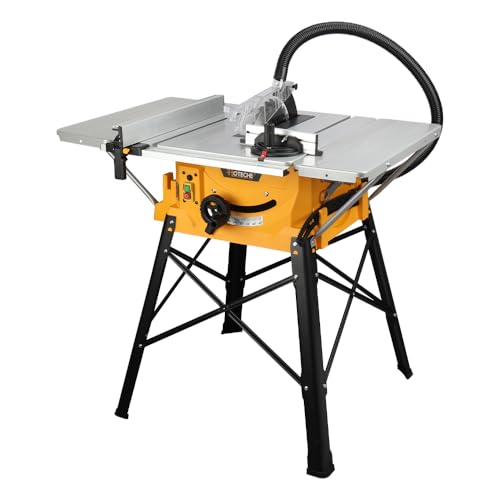
What We Like
- High 5000 RPM motor speed for fast cuts
- Large, expandable work surface for big materials
- Sturdy 15-amp motor built for heavy-duty use
- Handles bevel cuts up to 45 degrees
Trade-offs
- At 28 x 25 inches, it requires significant workshop space
A 5000 RPM motor speed is the standout feature here, translating directly to faster, cleaner cuts through dense hardwoods and sheet goods without bogging down. This Hoteche table saw is for the serious DIYer or contractor who needs consistent power for all-day ripping and crosscutting. Its solid 15-amp motor and large, expandable table support that kind of heavy, repetitive work, making it a tool built for throughput over portability.
Its 28-inch length and 25-inch width require a permanent workshop spot, unlike more portable jobsite saws. The Hoteche 10-Inch Table Saw’s design prioritizes a large, stable work surface over easy transport, making it better suited for a stationary setup than frequent movement between tasks.
Product photos
WEN TT0811 Benchtop Table Saw
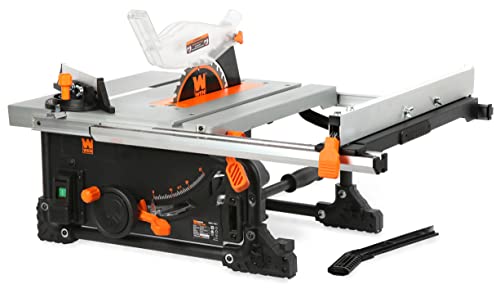
What We Like
- Extremely compact 37.6 lb design
- 25-inch rip for full sheet goods
- Tool-free blade guard and riving knife
- Includes push stick and dust port adapter
Trade-offs
- 8.25-inch blade limits depth vs. 10-inch saws
- 2-inch max depth at 45° restricts bevel cuts
- Compact table may feel cramped for large stock
An 11-amp motor driving an 8.25-inch blade at 4500 RPM gives this benchtop saw enough muscle for most job site tasks. Its 25-inch rip capacity also means it can handle full sheets of plywood. That combination of power and a useful work area is packed into a 37.6-pound frame with a carrying handle, making it a logical choice for anyone who needs to move their cutting capacity from the truck to the tailgate and back again. It’s built for the contractor or serious DIYer who values portability above all else.
The saw adjusts to cut material up to 2.75 inches thick at 90 degrees, enough for a doubled two-by-four, but bevel capacity drops to 2 inches at 45 degrees. This makes it suitable for crosscutting and ripping sheet goods in tight spaces. For cutting thicker stock at a steep angle, a saw with a larger blade would be required.
Product photos
How We Evaluated Table Saws
Our evaluation was research-based, analyzing manufacturer specifications, expert tool round-ups, and consistent patterns in owner feedback. We prioritized criteria crucial for both jobsite and workshop use: motor power and cutting capacity, the accuracy and ease of use of the fence system, overall portability and setup features, and included safety elements.
A rack-and-pinion fence emerged as a key differentiator for precision fence systems, while the trade-offs between weight and stability defined many portable picks. This research-led approach can identify standout features and reliability, but cannot replicate the hands-on feel of a saw’s operation or long-term durability over years of use.
What To Look For In Table Saws
Finding the right table saw means matching its core capabilities to your primary tasks, whether that’s breaking down sheet goods in a garage or making fine furniture in a dedicated shop. The main categories include compact benchtop models, portable jobsite saws on stands, and stationary cabinet saws, each with different power and space needs.
Look for a rack & pinion fence for accuracy, a rip capacity that fits your materials, a motor with enough power for your wood, and a stand or footprint that suits your space.
Fence System & Rip Capacity
A saw’s rip fence determines the accuracy and repeatability of your cuts. Many top picks use a rack-and-pinion mechanism, which moves the fence parallel to the blade in one smooth motion and locks it securely. The maximum rip capacity dictates how wide a board or sheet you can cut. Around 24 inches is common for portable saws, but 32 inches or more, like on the DEWALT DWE7491RS, is ideal for handling full plywood sheets. For shop-based work, consider models that often emphasize longer, more precise fences.
Motor Power & Cutting Depth
Motor strength, measured in amps, influences how well the saw handles thick hardwoods without bogging down. A 15-amp motor is standard for capable jobsite and contractor saws. The blade diameter, typically 10 inches or a compact 8-1/4 inches, sets the maximum depth of cut at 90 and 45 degrees. A 10-inch blade offers greater capacity for resawing or cutting thick stock, while smaller blades are a trade-off for extreme portability. Understanding how to use a table saw starts with having a motor and blade suited to your planned projects.
Portability & Workspace
For contractors and mobile DIYers, a saw’s total weight and how it transports are critical. Folding stands with wheels, like the BOSCH GTS15-10‘s Gravity-Rise stand, enable fast setup and breakdown. Benchtop models, like the WEN TT0811, are the most portable but often sacrifice table surface area. A stable, level work surface is non-negotiable for safety and precision, so even compact saws need a solid stand or bench. Compare this category closely with portable table saws designed for frequent transport.
Safety Features
Basic safety features include a riving knife to prevent kickback, a blade guard, and anti-kickback pawls. Some manufacturers, most notably SawStop, offer a patented active detection system that stops the blade upon contact with skin. For any saw, a reliable and easy-to-use power switch that you can quickly reach is essential. A good place to start learning is with a comprehensive table saw safety guide.
Table Saws Compared
To see how these key features compare across our top picks, the table below highlights motor power, rip capacity, weight, and key distinctions.
| Product | Motor | Max Rip Capacity | Weight |
|---|---|---|---|
| DEWALT DWE7491RS Table Saw | 15 Amp, 4800 RPM | 32-1/2 inches | 110.0 Pounds |
| SawStop CTS-120A60 Compact Table Saw | 15A, 120V, 60Hz | N/A | 79.0 Pounds |
| BOSCH GTS15-10 Table Saw | 15 Amp | N/A | 103.0 pounds |
| SKIL TS6307-00 Table Saw | 15 Amp | N/A | 51.1 Pounds |
| Evolution R10TBLX Table Saw | 15A with soft start | 26 inches | N/A |
| VEVOR 10-inch Table Saw | 15 Amp | 25 inches | 59.4 pounds |
| DEWALT DWE7485 Compact Table Saw | 15 Amp | 24.5 in. | 54.0 pounds |
| BOSCH GTS18V-08N Cordless Table Saw | N/A | 25 in. | 53.6 pounds |
| Hoteche 10-Inch Table Saw | 15 Amp, 5000 RPM | N/A | N/A |
| WEN TT0811 Benchtop Table Saw | 11-amp, 4500 RPM | Up to 25 inches | 37.6 Pounds |
Frequently Asked Questions
What brand makes the best table saws?
No single brand is best for everyone, as different manufacturers excel in different categories. DEWALT and Bosch are highly regarded for powerful, feature-rich portable jobsite saws with excellent fences. SawStop is the leader in integrated safety technology, while brands like SKIL offer exceptional value for first-time buyers. The “best” brand depends on whether you need professional-grade power, ultimate portability, or the most safety features.
What is the best table saw for value for money?
The SKIL TS6307-00 is our budget pick for delivering core features like a rack-and-pinion fence, a folding stand, and accurate cuts at a price well below premium brands. It’s a strong choice for a first table saw or for jobsite use where absolute top-tier performance isn’t required. Its value lies in providing reliable functionality without the cost of professional-level extras.
Is Dewalt or Milwaukee table saw better?
Both brands make excellent tools, but Milwaukee does not currently have a widely available table saw in this class, focusing instead on miter and circular saws. DEWALT has a strong lineup of portable table saws, like our best overall DWE7491RS and the compact DWE7485, known for their durable construction and accurate rack & pinion fences. For a direct cordless comparison, you might look at the BOSCH GTS18V-08N versus DEWALT’s cordless offerings.
What are the best table saws for 2026, according to reviews?
Our recommendations are based on current models, specifications, and expert consensus. While new models are released annually, the fundamental qualities of a great table saw, a precise fence, adequate power, and thoughtful portability, remain constant. The DEWALT DWE7491RS, SawStop CTS-120A60, and BOSCH GTS15-10 have maintained their strong reputations through multiple model years due to their proven designs and performance.
What is the best table saw for a home workshop?
The best choice depends on your space and projects. For a permanent garage shop with infrequent moving, a heavier contractor saw or even a cabinet saw offers maximum stability and power. If space is tight or you need to move the saw occasionally, a portable saw on a stand, like the DEWALT DWE7491RS or the SKIL TS6307-00, provides great versatility. Review our picks for home workshop table saws for more focused options.
The Bottom Line
For a do-it-all table saw that balances power, precision, and portability, the DEWALT DWE7491RS is our best overall, ideal for contractors and serious DIYers who need reliable performance on the go. If safety is your foremost concern, invest in the SawStop CTS-120A60, while the SKIL TS6307-00 makes a compelling first purchase for those on a budget. Ultimately, the most critical choice is matching the saw’s rip capacity and fence system to the materials you cut most often, as accuracy defines every project you build.
