
10 Best Track Saw Blades in 2026
This post contains affiliate links. As an Amazon Associate, we earn from qualifying purchases.
Our best overall track saw blade is the Diablo Track Circular Saw Blade, a 48-tooth general-purpose option known for efficient softwood cutting and maintaining its sharp edge. For a premium general-purpose blade, the Festool Universal Plunge Cut Blade delivers clean, glue-ready joints. For chip-free laminate work, the Diablo Track Blade for Laminate is our top choice.
Choosing the wrong blade leads to chipped veneers, burned edges, and frustrating, inaccurate cuts. The right blade makes your track saw a precision tool, turning sheet goods into clean, ready-to-assemble parts.
This guide is based on research into specifications, manufacturer data, and patterns in professional feedback. We’ve identified the ten best blades for specific tasks and saws to help you cut with confidence.
Top 10 Track Saw Blades in the Market
Certain content that appears on this site comes from Amazon. This content is provided "as is" and is subject to change or removal at any time.
The Best Track Saw Blades, Reviewed
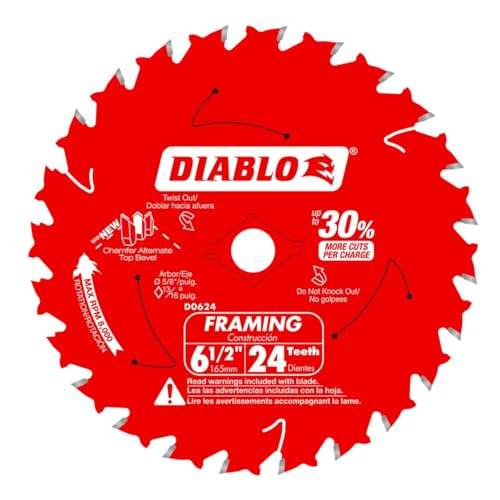
Diablo Track Circular Saw Blade
What We Like
- Efficiently handles softwoods with minimal effort
- Known for maintaining sharpness over time
Trade-offs
- At 48 teeth, it's a general-purpose blade, not specialized for fine finish cuts
A 48-tooth design balances cutting speed with finish quality for many track saw applications. Diablo blades in this size are known for maintaining sharpness over time, which can mean longer intervals between replacements. This general-purpose configuration offers a practical starting point for common workshop cuts.
The blade is noted to handle softwoods efficiently with minimal effort. For tasks demanding a pristine edge on materials like laminate, a specialized blade with a higher tooth count would be required. Its 48-tooth build positions it as a capable all-rounder rather than a niche tool.
Product photos
Festool Universal Plunge Cut Blade

What We Like
- Oversized 30mm arbor reduces vibration for precise cuts.
- Thin 2.4mm kerf cuts efficiently with less material waste.
- Laser-cut expansion slots enable faster, quieter operation.
- Delivers clean, glue-ready joints in wood and soft plastics.
Trade-offs
- The 36-tooth count is lower than many fine-finish blades.
- Primarily designed for Festool TS 75 saws, limiting compatibility.
An oversized 30mm arbor locks this blade down tight, which is the secret to the smooth, vibration-free cuts Festool is known for. That stability, combined with a thin 2.4mm kerf that meets less resistance, makes it a superb all-arounder for pros and serious woodworkers who need clean, precise results in both ripping and crosscutting tasks. It’s built for those who prioritize cutting accuracy and efficiency over saving a few dollars upfront.
Its 36-tooth configuration makes it a versatile general-purpose blade, cutting cleanly through wood and soft plastics for glue-ready joints. You won’t get the ultra-fine finish of a dedicated crosscut blade like the Festool Fine Tooth Cross-Cut Blade, but it handles a wide range of tasks well. The construction is solid, which contributes to its weight compared to thinner blades like the WEN Thin-Kerf model. For compatible saws, it’s designed to deliver professional-grade performance across many materials.
Diablo Track Blade for Laminate

What We Like
- Triple Chip Grind geometry for smooth cuts in laminates
- Thick 1.8mm kerf provides rigidity on track saws
- Universal fit with bushing for major track saw brands
- TiCo carbide and anti-stick coating extend blade life
Trade-offs
- At 52 teeth, it's optimized for laminates, not fast rough cuts
- The 1.8mm kerf is thicker than some dedicated thin-kerf blades
A 1.8mm thick laser-cut kerf provides the rigidity needed for perfectly straight cuts in a track saw, which is essential when trimming laminate or sheet goods where accuracy is critical. This design makes the blade ideal for cutting MDF, PVC, and composite decking, as its Triple Chip Grind tooth geometry ensures smooth cuts through these tough materials. Stabilizer vents further reduce vibration to help keep your track saw on course.
Built for precision rather than raw speed, its 52-tooth design and sturdy construction mean it isn’t intended for fast rip cuts through thick lumber. For crosscutting solid wood where a fine finish is the goal, other blades like the 48-tooth Milwaukee Fine Finish model are designed for that specific task. However, for cleanly processing sheets of man-made material, this Diablo’s combination of a stiff body and tooth geometry that resists dulling is well-suited.
Product photos
Makita Cordless Plunge Saw Blade

What We Like
- Fluorine coating reduces pitch buildup
- Laser cut slots for quieter operation
- High-grade carbide tips for durability
Trade-offs
- Specific to 6-1/2" plunge saws with 20mm arbor
- Primarily optimized for wood, MDF, and laminate
- Higher tooth count may require slower feed rates in dense material
Makita’s blade can deliver up to 140% more cuts per charge compared to their standard corded model, a significant efficiency gain for cordless tool users. This performance advantage means you can work longer on a single battery charge, which is crucial for job sites or workshops without easy access to power outlets. Designed for cutting wood, MDF, and laminate with Makita’s cordless 6-1/2″ plunge saw, it prioritizes extended runtime for its intended applications.
This blade is engineered specifically for Makita cordless plunge saws and the materials they commonly handle. While research mentions the 165mm size with a 20mm arbor fits other brands like Triton and DeWalt, its performance claims are tied to Makita’s cordless system. For tasks outside its specified use or for saws with different power characteristics, a different blade may be more suitable.
Product photos
Milwaukee Fine Finish Track Saw Blade

What We Like
- 48-tooth design for a burr-free finish
- Durable construction for tough applications
- Fine finish blade provides clean cutting
Trade-offs
- Weighs 0.6 pounds, heavier than some 0.5-pound competitors.
- Length is 9.5 inches, shorter than several other track saw blades.
Designed to provide clean cutting and a burr-free finish, this blade means less time sanding plywood or finish-grade lumber. The Milwaukee Fine Finish blade is a durable, high-performance option for cabinetmakers and trim carpenters who need a ready-to-finish cut directly from their track saw. Its design for the toughest applications suggests it can handle demanding job site conditions.
The blade’s performance is described as faster than conventional cutting methods, which can speed up project workflow. For users prioritizing maximum material efficiency, other listed models like the WEN are explicitly designated as thin-kerf. This Milwaukee blade serves as a dependable, all-around finishing blade.
WEN Thin-Kerf Track Saw Blade

What We Like
- PTFE coating prevents workpiece burns.
- ATAFR tooth geometry for smooth, fast cutting.
- Compatible with most 6.5-inch track saws.
Trade-offs
- Thin kerf may flex on dense hardwoods.
- Specific 20mm arbor limits use to track saws.
It means less material is turned to dust with each pass, which puts less strain on your saw’s motor and battery. That makes this blade a smart pick for anyone running a cordless track saw or looking for maximum efficiency from a corded one. It’s also got the right 20mm arbor for the job and a PTFE coating that keeps things cool, so you get clean lines in plywood and sheet goods without scorch marks. For the DIYer or contractor who needs a reliable, general-purpose blade that’s easy on the tool, this one hits the mark.
The ATAFR tooth design aims to provide smoother and faster cuts. A maximum speed rating of up to 9000 RPM matches the capability of many saws it’s designed to fit. At 0.5 pounds, its weight is comparable to several other track saw blades in its class.
Product photos
Oshlun FesPro Crosscut Saw Blade

What We Like
- Professional grade C-3 carbide teeth.
- 5-degree hook angle for controlled feeding.
- Fine-tooth crosscut design for clean cuts.
- Direct compatibility with major track saw brands.
Trade-offs
- A 2.2mm kerf creates more waste than thin-kerf blades.
- 48-tooth design is less aggressive than lower-tooth blades.
With its 48-tooth crosscut design, this blade is specified for fine cuts in hardwood, softwood, and melamine, which suits finish carpentry and cabinet work. The professional-grade C-3 carbide is a material choice aimed at maintaining sharpness. A 5-degree hook angle contributes to a controlled feed rate during operation.
Its 2.2mm kerf is wider than the thin-kerf design of the WEN blade, meaning each pass removes a bit more material. This blade fits Festool TS 55 EQ, DeWalt DWS520, and Makita SP6000K track saws directly, offering compatibility for users of those systems. Weighing half a pound, it is a lightweight accessory for these tools.
Product photos
Festool Fine Tooth Cross-Cut Blade

What We Like
- 48-tooth ATB design for smooth cross-cuts
- 2.2mm thin kerf reduces material waste
- Oversized 20mm arbor reduces vibration
- Laser-cut expansion slots for quieter operation
Trade-offs
- Specific 20mm arbor limits saw compatibility
- Designed for cross-cutting, not heavy ripping
A 2.2mm kerf and 48-tooth ATB grind are the keys here. That thin blade meets less resistance, so it glides through veneered plywood and melamine without chipping the delicate surface. The oversized 20mm arbor locks it down tight on compatible saws, which combines with laser-cut slots to dampen vibration. This results in the clean, splinter-free finish you need for visible edges on cabinets and furniture. It’s a purpose-built blade for the workshop that demands precision in sheet goods and fine woodworking.
Designed for cross-cutting, this blade excels at smooth cuts in veneered plywood, melamine, and other sheet goods. Its thin 2.2mm kerf meets less resistance during cuts, which produces less material waste and makes cutting more efficient. The trade-off is specialization; feeding it through thick, hard lumber for long rip cuts isn’t its forte, as the thin kerf can wander under that lateral pressure. You keep this one in the case for when the project calls for a flawless face.
Product photos
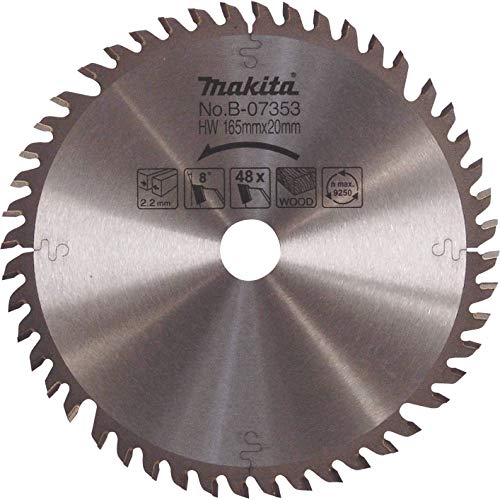
Makita Carbide-Tipped Plunge Saw Blade
What We Like
- High-grade carbide tips for longer blade life.
- Fully hardened steel plate for true, accurate cuts.
- Expertly hand-tensioned for smoother cutting performance.
- Designed specifically for Makita's SP6000J plunge saw.
Trade-offs
- 20mm arbor limits use to specific Makita saw models.
- No tooth count is specified for material-specific guidance.
Designed for use with the Makita SP6000J plunge saw, this blade’s 20mm arbor ensures it fits that specific tool. The fully hardened and hand-tensioned steel plate is engineered for smoother cutting, which helps produce true cuts. High-grade carbide tips contribute to longer durability, so the blade maintains its performance over time. For owners of that Makita saw, this is the compatible blade listed by the manufacturer.
The trade-off is that specificity. If you need a more versatile blade that fits multiple track saw brands, something like the Oshlun FesPro Crosscut Saw Blade, which also lists compatibility with the SP6000K, might be a better route. For pure Makita owners, however, this blade delivers exactly what the tool was designed for: reliable, smooth cuts with no compatibility concerns.
Product photos
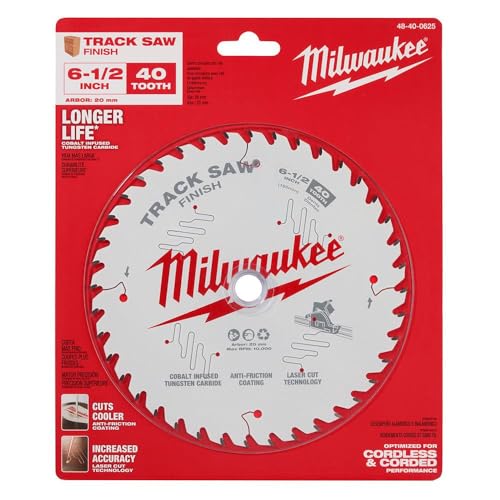
Milwaukee 40T Finish Track Blade
What We Like
- Designed for toughest applications for durability.
- Provides clean, burr-free finish on cuts.
- Faster cutting than conventional methods.
- Made from high-quality material.
Trade-offs
- Heavier than the 0.5 lb WEN and Oshlun blades.
- General-purpose 40T design, not specialized.
With 40 teeth designed for tough applications, this blade prioritizes durability and cutting speed over conventional methods. It’s built from high-quality materials to withstand demanding use, aiming to deliver clean cuts without burrs. For contractors or serious DIYers, that means a resilient option focused on performance in challenging conditions.
The trade-off for that toughness is a focus on general-purpose cutting. At 40 teeth, it won’t produce the glass-smooth surface of a dedicated fine-finish blade like the Milwaukee 48T. It’s also a bit heavier than some competitors, like the WEN thin-kerf blade, which could be a factor during all-day use. For specialized tasks like cutting laminate or requiring a pristine crosscut, you’d want to look at a blade with a higher, more focused tooth count.
How We Evaluated Track Saw Blades
This guide is based on specifications from manufacturers and expert round-ups, cross-referenced with consistent patterns in user feedback. For a broader look at the tools themselves, you can explore our guide to the best track saws.
We prioritized three key criteria. First was material specialization, as blades for laminates, plywood, and solid wood have distinct tooth geometries and coatings. Second was compatibility, focusing on arbor size and blade diameter to match specific track saw models. Third was performance characteristics like kerf width, tooth count, and construction quality that affect cut quality and saw efficiency.
A research-based evaluation has limits. We cannot verify long-term durability claims or quantify subtle differences in cut smoothness. Our goal is to give you a reliable, researched shortlist to match your specific saw and project needs. For a complete system, consider our reviews of the best track saw kits.
What To Look For In Track Saw Blades
The ideal blade balances clean cuts with efficiency for your specific material. Compatibility is non-negotiable, as a mismatched arbor size simply won’t fit your saw.
Focus on tooth count and grind for your material, confirm the arbor size matches your saw, and consider kerf width for battery life or material savings. A quality carbide-tipped blade is a worthwhile investment for clean, repeated cuts.
Material & Tooth Configuration
The blade must match your primary material. For clean cuts in plywood and veneered sheet goods, a high-tooth-count blade (48-52 teeth) with an Alternate Top Bevel (ATB) grind is standard. For ripping solid wood quickly, a lower tooth count (24-36 teeth) is more efficient. Laminates and composites often require a Triple Chip Grind (TCG) to prevent chipping. Specialized blades for non-ferrous metals exist but are less common.
Compatibility & Size
The two critical specs are arbor size and blade diameter. Most 6-1/2″ track saws use a 20mm arbor, but some larger models, like the Festool TS 75, use a 30mm arbor, check your saw’s manual. Blade diameter (commonly 165mm or 210mm) dictates your maximum cutting depth. Using the correct size ensures safe operation and proper alignment with the saw’s track system. Learning the fundamentals of how to use a track saw starts with a compatible blade.
Kerf & Construction Quality
Kerf is the width of the cut the blade makes. A thin kerf (around 2.2mm or less) removes less material, reduces strain on cordless saw motors, and wastes less expensive plywood. A thicker kerf provides more rigidity for dense hardwoods. Look for blades made with high-grade, micrograin carbide teeth and anti-stick coatings, which resist pitch buildup and stay sharp longer. For more on blade construction, our comprehensive saw blade guide offers deeper insights.
- Check your saw’s manual for the exact arbor size before buying.
- For fine finish work on plywood, start with a 48-tooth ATB blade.
- For cordless saws, a thin-kerf blade can significantly extend battery life.
- A TCG blade is essential for chip-free cuts in laminate countertops.
- Consider having a dedicated rip blade if you frequently cut thick hardwoods.
A good rule of thumb: invest in at least two blades, one for fine crosscuts in sheet goods and one for faster ripping, to handle most workshop tasks.
Track Saw Blades Compared
The following table compares key specifications to help you quickly identify the right blade for your saw and project.
| Product | Diameter | Tooth Count | Arbor Size |
|---|---|---|---|
| Diablo Track Circular Saw Blade | 6-1/2 inches | 48 teeth | N/A |
| Festool Universal Plunge Cut Blade | N/A | 36 teeth | 30mm |
| Diablo Track Blade for Laminate | 6-1/2 inches | 52 | 20mm and 5/8-inch |
| Makita Cordless Plunge Saw Blade | 6-1/2" | 56 teeth | 20mm |
| Milwaukee Fine Finish Track Saw Blade | 165 mm | 48 teeth | N/A |
| WEN Thin-Kerf Track Saw Blade | 6.5 inches | 56 teeth | 20 mm |
| Oshlun FesPro Crosscut Saw Blade | 160mm | 48 | 20mm |
| Festool Fine Tooth Cross-Cut Blade | N/A | 48 teeth | 20mm |
| Makita Carbide-Tipped Plunge Saw Blade | 165mm (6-1/2") | N/A | 20mm |
| Milwaukee 40T Finish Track Blade | 165 mm | 40 teeth | N/A |
Frequently Asked Questions
What is the best blade for a track saw?
The best blade depends on your material and saw. For a versatile, general-purpose blade that handles softwoods efficiently, the Diablo Track Circular Saw Blade is an excellent starting point. For professionals using Festool saws who need precise, clean cuts in wood and plastic, the Festool Universal Plunge Cut Blade is a premium choice.
Who makes the best quality saw blades?
Several brands are consistently noted for high-quality carbide-tipped blades. Diablo, Festool, and Makita produce blades praised for durability and clean cutting performance. The most suitable brand often depends on specific compatibility with your track saw model and the material you cut most often.
What blade should I use for plywood with a track saw?
For plywood and other sheet goods, use a blade with a higher tooth count (48 or more) and an Alternate Top Bevel (ATB) grind. This configuration produces smooth, splinter-free edges. Blades like the Festool Fine Tooth Cross-Cut Blade or the Oshlun FesPro Crosscut Saw Blade are designed specifically for this task.
How do I choose a track saw blade?
First, confirm compatibility by matching the blade’s arbor size and diameter to your specific track saw model. Next, select the tooth count and grind based on your primary material, higher teeth for clean crosscuts, fewer for fast ripping. Finally, consider kerf width; a thin kerf saves material and battery life, while a standard kerf offers more stability.
Can I use a regular circular saw blade on a track saw?
No, you should not. Track saw blades are designed with a specific arbor size (often 20mm or 30mm) that differs from standard circular saws. They also frequently have a kerf width engineered to align with the track’s splinter guard for a perfectly clean edge. Using an incompatible blade can be unsafe and will not yield precise results.
The Bottom Line
For most woodworkers needing a reliable, all-around blade, the Diablo Track Circular Saw Blade is the best overall choice. It efficiently cuts softwoods and maintains its edge, making it a dependable workhorse.
If you’re on a budget and need a thin-kerf blade for plywood, the WEN Thin-Kerf Track Saw Blade offers great value. For Makita SP6000J owners seeking a direct replacement, the Makita Carbide-Tipped Plunge Saw Blade is the clear OEM pick.
Ultimately, matching the blade’s tooth geometry and arbor size to your specific saw and project is the single most important step to achieving professional, clean cuts every time.
