
Can a Portable Tire Inflator Fill a Truck Tire?
This post contains affiliate links. As an Amazon Associate, we earn from qualifying purchases.
Yes, a portable tire inflator can fill a truck tire, if it has a maximum PSI rating higher than your truck’s required pressure and a motor designed for a longer-than-average duty cycle. Truck tire pressure requirements vary widely; ensure your inflator’s maximum PSI rating exceeds your specific vehicle’s required pressure. Where it fails is in cubic feet per minute (CFM) and heat: a flat truck tire has immense air volume, and small inflators overheat before they finish the job.
That gap between rating and reality is where owners get stuck. The tool can have the number stamped on the box but still leave you stranded on the shoulder after 15 minutes, its thermal cutoff tripped and the tire only half-full.
Here’s the landscape: inflators that work, the mechanical why behind their limits, and the step-by-step that keeps you moving.
Key Takeaways
- A maximum PSI rating that exceeds your truck’s required pressure is essential; some heavy-duty inflators offer 150 PSI.
- The duty cycle, not just max PSI, decides whether you’ll finish the job. A 10-minute run time won’t cut it for a completely flat tire.
- Cubic feet per minute (CFM) matters more for volume. A higher CFM gets air in faster, which reduces motor heat buildup on a large tire.
- For best results, always operate the inflator with your vehicle’s engine running to prevent battery drain and ensure full power.
- Never trust the inflator’s gauge alone. Carry a separate, high-quality tire pressure gauge to verify the final pressure.
The PSI and CFM Rules That Decide It
The answer to can a portable tire inflator fill a truck tire isn’t on the sidewall of your tire. It’s on the spec sheet of the inflator, and it’s a two-part test: pressure capability and air volume delivery.
Truck tire pressure requirements vary; always inflate to the vehicle manufacturer’s recommended pressure, which can be significantly higher when loaded. This immediately disqualifies a huge swath of entry-level inflators.
The Michelin High-Power inflator manual states it can inflate car tires up to 50 psi but is not for space-saver tires. For bicycle tires, the limit is 100 psi. This shows a clear, manufacturer-defined boundary: some tools are not designed for truck-scale pressures.
Look at the spread in the market:
- The Harbor Freight 63745 inflator tops out at 100 PSI. That’s borderline for a lightly loaded truck.
- The Harbor Freight 70680 and Sealey CTI140 both offer 120 PSI. Better, but still cutting it close if you’re near the max.
- Models like the Toysfortrucksofficial 92RS200 and Some heavy-duty inflators claim a maximum pressure of 150 PSI. That’s the safe zone for most truck owners.
But PSI is only half the battle when you ask can a portable tire inflator fill a truck tire. CFM, cubic feet per minute, is the flow rate. A flat truck tire holds a lot of air. A low-CFM inflator, like the Harbor Freight 63745 at 0.25 CFM, will run forever, and its motor will overheat long before the tire is full. The Sealey CTI140 offers 0.68 CFM, which is a significant step up. The difference feels like a trickle versus a steady stream. For a truck, aim for the highest CFM you can find.
| Specification | Harbor Freight 63745 | Sealey CTI140 | Toysfortrucks 92RS200 | Why It Matters for Trucks |
|---|---|---|---|---|
| Max PSI | 100 PSI | 120 PSI | 150 PSI | Must exceed your truck’s loaded pressure requirement. |
| CFM | 0.25 CFM | 0.68 CFM | Not Stated | Higher flow fills the large volume faster, reducing heat buildup. |
| Duty Cycle | Not Stated | 30 min continuous | 20 min on, 30 min off | Determines how long you can run it before a mandatory cool-down. |
| Truck Suitability | Marginal for light trucks | Good for standard pickups | Designed for trucks/SUVs/RVs | Look for explicit “for truck” claims in the manual. |
The takeaway is simple: match the PSI first, then prioritize CFM. A 150 PSI rating with a low CFM is better than a 120 PSI rating with a high CFM, but you really want both.
Why Duty Cycle Is Your Inflator’s Real Limiter
You’ve checked the PSI. The CFM looks decent. So why did your inflator shut off after ten minutes with the tire still soft? It hit its duty cycle limit, and this is the single most misunderstood spec in portable inflation.
Common mistake: Assuming an inflator can run until the job is done. The Harbor Freight 70680 manual is explicit: it should not run continuously for more than 10 minutes, followed by a 15-minute cool-down. An inflator with a short duty cycle, like the Harbor Freight 70680’s 10-minute limit, will likely require an interruption when filling a large, flat tire.
Here’s the conflict, straight from the source manuals:
- Ford Tire Sealant Kit: Do not allow the compressor to operate continuously for more than 15 minutes.
- Harbor Freight 70680: 10 minutes max.
- Sealey CTI140: Allow to cool after 30 minutes of continuous operation.
- Michelin High-Power Inflator: Never run for more than 10 minutes.
The physical why-layer is heat. A small, sealed motor compressing air builds up heat rapidly. Without a cooling fan or sufficient mass to absorb it, the internal temperature soars. Thermal fuses or cutoff switches then kill the power to prevent a meltdown. That’s the click you hear before the silence, it’s a safety feature, not a failure.
This is why the best portable tire inflators for trucks advertise extended run times. Some heavy-duty inflators are marketed with extended run times, but always check the specific manufacturer’s manual for the duty cycle. That’s a motor built for the long haul, not just a top-up.
Where this goes sideways: Buying an inflator rated for your truck’s PSI but with a 10-minute duty cycle. You’ll spend more time waiting for it to cool than you will inflating. Run times vary by model; for example, the Ford kit allows up to 15 minutes, the Sealey CTI140 allows 30 minutes, while many others limit continuous use to 10 minutes.
The Real-World Truck Inflation Procedure
Say you have a capable inflator. The process isn’t just plug and play. Doing it wrong can blow fuses, drain your battery, or give you a false reading.
First, the setup. Park on level ground, set the parking brake, and turn on your hazards. If you’re using a 12V plug-in model, start your truck’s engine. The Wilmar 60404 manual is adamant: “Your vehicle’s 12 Volt battery must be fully charged to get the best performance from your inflator. For best results, it is recommended that you operate your inflator with your vehicle’s engine running.” This prevents the inflator’s high draw from killing your battery mid-fill.
Now, connect the hose to the tire valve stem. Finger-tighten the brass connector, no wrenches. A common first-person observation: cross-threading that brass fitting is incredibly easy, and a damaged valve stem means a tow.
Here is the critical, truck-specific sequence:
- Set your target pressure. Use the inflator’s dial or button to set it 5 PSI over your goal. The hose itself holds pressure, and disconnecting will cause a slight drop.
- Start the inflator, THEN attach the hose. This “pre-start” method is recommended in manuals for high-pressure work. It prevents a huge initial current surge against a sealed system, which can blow the unit’s fuse.
- Listen and feel. A working inflator has a steady, labored hum. If the sound gets higher-pitched and strained, the motor is struggling against high pressure, that’s normal near the end. If it suddenly goes quiet and the casing is hot to the touch, the thermal cutoff has activated. Stop. Unplug. Wait the full cool-down period (20-25 minutes for the Wilmar, 15 for the Harbor Freight).
- Drive to distribute. This one’s specifically from the Ford kit procedure, but it’s good practice for any large tire: after inflation, drive the vehicle 4 miles to distribute the air evenly inside the tire casing. Then recheck the pressure.
After the job, let the inflator cool completely before coiling the hose. Forcing a hot, flexible hose into a tight loop can crack it internally. You won’t see the damage until next time, when it leaks.
Power Source: Corded, Cordless, or 12V Plug?
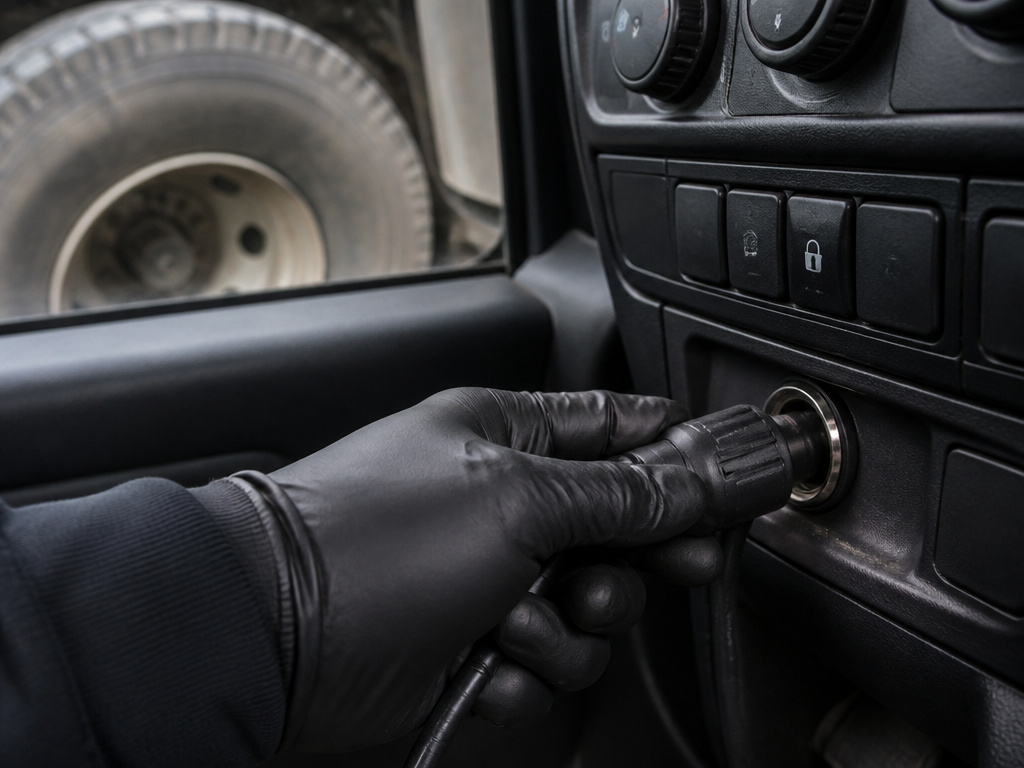
Your inflator’s plug decides where you can use it and how much power it can draw.
- 12V DC Plug (Cigarette Lighter): The most common. The major constraint here is your vehicle’s outlet rating. The Wilmar 60404 manual contains a crucial warning: “For use with any 12V DC power outlet rated 15-Amps or higher. Do NOT use with older 8-Amp cigarette lighter receptacles.” An underrated outlet will overheat, melt, and potentially cause a fire. Know your vehicle’s specs.
- Cordless (Rechargeable Battery): Convenience king. Models like the Sealey CTI140 and MAC13DR offer true portability. The trade-off is battery life and charge time. For example, the Sealey CTI140 requires a 5-hour initial charge and has a battery run time of 30 minutes. That’s fine for a top-up but could be tight for a full flat. The manual advises charging it fully every three months even if not used to maintain the battery.
- 120V AC Plug (Wall Outlet): The power house. If you have extension cord reach, this is the most reliable option. The motor can draw full power without worrying about a vehicle battery. Some dual-power models, like the Harbor Freight 70680, offer both 12V and 120V options, giving you flexibility.
For pure truck duty, a heavy-duty truck tire inflator that plugs into a 12V outlet is often the most reliable, assuming your outlet is rated for it. You trade cord management for guaranteed, engine-backed power.
Maintenance: The Difference Between Reliable and Paperweight
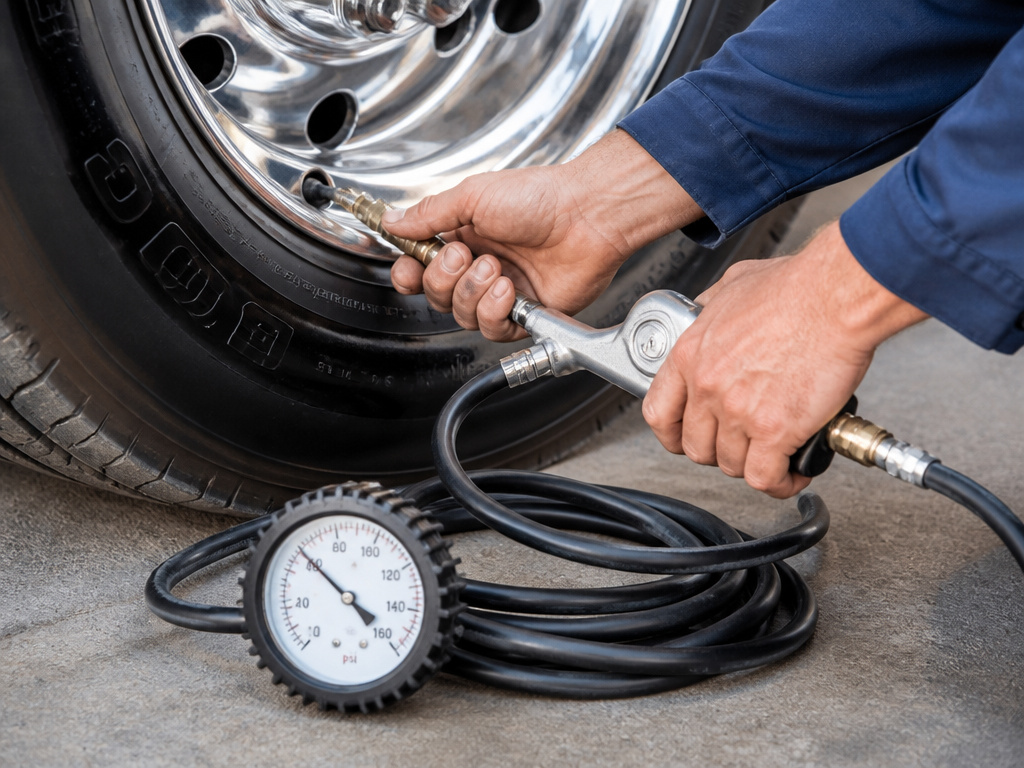
An inflator is a get-home tool. When you need it, it absolutely must work. That reliability is earned between emergencies.
First, storage. Keep it clean and dry. Manufacturers typically warn against operating inflators in wet or damp conditions to prevent damage and electrical hazards. Condensation inside the motor leads to corrosion, and the next time you hit the switch, you get nothing but a faint click.
Second, hose care. Don’t kink it. Don’t pull the inflator by the hose. That internal plastic tubing cracks, and you’ll get leaks that slow inflation to a crawl. An old trick: store the hose in loose coils, not tight wraps.
Third, battery care (for cordless models). This is essential. The Sealey manuals are clear: recharge the unit every 3 months to keep the battery at optimum levels. Letting a lithium-ion battery sit dead for a year usually kills it for good. I learned this the hard way with an early cordless model; a $50 tool became a brick because I forgot it in the trunk over winter.
Finally, verification. Every single manual, from Harbor Freight to Toysfortrucksofficial, advises using a second, standalone tire gauge to check the pressure. The gauges on portable inflators are small, exposed to vibration, and often drift out of calibration. A dedicated analog gauge is cheap insurance against over- or under-inflation.
Real-World User Experiences/Forum Recommendations
User discussions often highlight the importance of checking an inflator’s specifications against a truck’s real needs. Many caution against using compact or cordless models not designed for large truck tires, as they can overheat or fail to reach the required pressure. A common tip from forums is to always operate the inflator with your vehicle’s engine running to prevent draining the battery. Users also stress the value of a second, standalone tire pressure gauge to verify the reading from the inflator’s built-in gauge, ensuring accuracy before you hit the road.
Frequently Asked Questions
What PSI should a portable inflator have for a truck?
Look for a minimum of 150 PSI. This covers the higher pressures required by many three-quarter-ton and one-ton trucks (often 80 PSI) with a safe margin. A 120 PSI model might work for a lightly loaded half-ton, but it’s cutting it close.
How long does it take to fill a flat truck tire with a portable inflator?
It depends heavily on the inflator’s CFM and the tire size. A full-size truck tire holds a significantly larger air volume than a typical car tire. Inflation time depends on the inflator’s CFM and the tire’s volume; a higher CFM will fill the tire faster. This is why duty cycle is critical, a 10-minute inflator will need at least one long cool-down break.
Can I use my car’s tire inflator on my truck?
Maybe, but check two things. First, does its max PSI (check the label) exceed your truck’s required pressure by at least 10 PSI? Second, does its manual forbid use with large tires? For example, the Sealey CTI140 manual explicitly states, “It is not designed for use with large tyres like tractor or truck tyres.” If it passes both checks, it will be slow.
What’s the difference between a tire inflator and an air compressor for trucks?
Portable tire inflator is a single-purpose tool designed to inflate tires and similar items to a set pressure, often with an auto-stop function. An air compressor is a more general-purpose machine that delivers a continuous stream of compressed air for tools, inflation, and other tasks. For the specific job of filling truck tires, a portable air compressor for truck tires often has a higher CFM, longer duty cycle, and may include a small air tank for an initial burst of pressure.
Are cordless inflators powerful enough for truck tires?
The latest high-end models can be. Look for specs that rival their corded counterparts: 150+ PSI and a high CFM. The real limitation is battery capacity. Ensure the rated run time on a single charge (e.g., the Sealey CTI140’s 30 minutes) is sufficient to fill your size of tire without needing a recharge mid-job.
The Bottom Line
Can a portable tire inflator fill a truck tire? Absolutely, if you buy the right one and use it correctly. The rule is mechanical, not magical: match the PSI, respect the duty cycle, and feed it clean power.
For most truck owners, the answer is a dedicated heavy-duty truck tire inflator with a 150 PSI rating and an explicit “for trucks” claim in its manual. It’s a tool you buy once, stow under the seat, and hope you never need. But when you do, that single spec sheet decision is the difference between a 20-minute roadside reset and a $200 tow truck call.
The one step most people skip is the post-purchase test. Don’t wait for a flat. Take your new inflator out on a Saturday, plug it in, and time how long it takes to go from 20 PSI to your truck’s recommended pressure. That number, and whether the unit overheats, is the only review that matters.
