
Cobalt vs Titanium Drill Bits: Which Should You Buy?
This post contains affiliate links. As an Amazon Associate, we earn from qualifying purchases.
Cobalt drill bits are high-speed steel alloyed with 5–8% cobalt, making them heat-resistant for hard metals like stainless steel and cast iron. Titanium drill bits are high-speed steel with a thin titanium nitride coating that reduces friction, suited for aluminum, brass, and mild steel. Cobalt wins for durability and repeated sharpening; titanium is a cost-effective general-purpose option.
The difference isn’t about which one is better, but which one fits the metal in front of you. Getting this choice wrong doesn’t just waste a bit, it wastes your time, overheats your workpiece, and leaves you with a pile of broken shanks. The alloy-versus-coating split dictates everything from how long the bit lasts to whether you can bring it back from the dead with a grinder. Understanding the debate of cobalt vs titanium drill bits is key to making the right choice.
What follows is a direct comparison built on manufacturer specs and shop-floor reality. The comparison examines the alloy chemistry, actual heat limits, the specific metals each bit can handle, and the sharpening trade-offs that determine long-term value. You’ll know which bit to pull from the case before you even clamp the metal down.
Key Takeaways
- Cobalt is an alloy, titanium is a coating. Cobalt (M35/M42) is mixed throughout the steel for heat resistance; titanium is a thin TiN layer on HSS.
- Match the bit to the metal’s hardness. Use cobalt for stainless steel, hardened alloys, titanium, and cast iron. Use titanium-coated HSS for aluminum, brass, and mild steel.
- Cobalt retains its properties after sharpening; titanium does not. Sharpening a cobalt bit restores a usable alloy edge. Sharpening a titanium bit strips the coating from the cutting edge, leaving basic HSS.
- Always use cutting fluid for metal drilling. No coating or alloy compensates for dry drilling in steel; heat destroys edges faster than anything else.
- Geometry matters as much as material. A 135° split point is for metal; a 118° point is for wood. The right point angle prevents walking and reduces heat.
The Cobalt vs Titanium Difference: Coating vs. Alloy
This is the line that decides everything else. A cobalt bit is a different material. A titanium bit is a dressed-up version of a common one.
A cobalt drill bit is made from high-speed steel alloyed with cobalt, usually 5% for M35 or 8% for M42. A titanium drill bit is standard high-speed steel (HSS) with a thin surface coating of titanium nitride (TiN). The cobalt is mixed in; the titanium is painted on.
I learned this the hard way on a stainless steel exhaust bracket. I grabbed a gold-colored bit from a generic set, assuming “titanium” meant tough. The tip glowed orange within seconds, lost its edge, and I was left with a half-finished hole and a hardened spot that required a step-drill to fix. That gold color was a coating, not the core material. The job needed M35 cobalt, which I didn’t have on hand.
Cobalt HSS means the cobalt is alloyed into the steel melt. This isn’t a surface treatment; it’s part of the bit’s DNA from the flute to the point. The result is a substrate that retains its hardness at higher temperatures. M42, with its 8% cobalt, is the go-to for shops running hotter, longer operations, but for most of us, M35 is the sweet spot. When you’re choosing cobalt vs HSS, you’re choosing between a dedicated tool and a generalist.
Titanium-coated HSS starts life as ordinary high-speed steel. The TiN coating is applied afterward, typically only a few microns thick. It reduces friction and can improve wear resistance, while it lasts. This is why comparing titanium vs black oxide is about choosing a surface enhancement, not a different base material.
| Factor | Cobalt HSS Drill | Titanium-Coated HSS Drill |
|---|---|---|
| Core Material | Steel alloyed with 5–8% cobalt | Standard high-speed steel (HSS) |
| Performance Layer | Cobalt distributed throughout | Thin TiN coating on the surface |
| Primary Benefit | Heat resistance, retains hardness at temperature | Reduced friction, improved wear resistance (while coating lasts) |
| After Sharpening | Cobalt alloy remains at the new cutting edge | Coating is removed, exposing plain HSS |
That last row is the financial kicker. It changes the math on what you’re actually buying.
Heat Resistance: The 600°C Threshold
Drilling metal creates heat. How a bit handles that heat decides if it survives the job. The baseline here is standard high-speed steel (M2), which has a heat resistance of approximately 600°C. Both cobalt and titanium coatings aim to push that threshold.
Cobalt’s advantage is in the alloy. By adding cobalt to the steel, manufacturers create a material that can work at temperatures over 1000°F without significant loss of hardness. The heat resistance is built-in and uniform. This is why cobalt bits for metal are the default for stainless steel and cast iron, materials that generate intense, localized heat and can work-harden if the bit rubs instead of cuts.
Titanium nitride coating works differently. TiN itself has a high melting point, but its main job is to act as a thermal barrier and lubricant. It reduces the friction coefficient between the bit and the metal chips, which lowers the heat generated in the first place. However, that benefit is only as good as the coating’s adhesion and thickness. Once the coating wears or is ground off, you’re back to the base HSS and its 600°C limit.
Common mistake: Assuming a titanium-coated bit can handle prolonged drilling in hard metal because it “looks” high-tech. The coating cannot compensate for overheating or incorrect feed rates. Push it too hard, and you’ll burn through the TiN layer in one session.
The sound tells you first. A properly cutting bit in mild steel has a consistent, medium-pitch whine. When a titanium-coated bit starts to overheat in a hard metal, that whine gets higher and tighter, almost a screech, before it goes dull and silent. With cobalt, the failure is often a sudden, brittle snap, especially on smaller diameters, if you hit a void or apply side load.
Best Applications: Matching Bit to Metal
This isn’t a vague recommendation. The best material for metal is the one rated for the specific metal on your bench. Manufacturers specify these use cases for a reason.
Cobalt HSS (M35/M42) is for:
- Stainless steel (where heat and work-hardening are concerns)
- Hardened alloy steels
- Cast iron
- Titanium alloys
- Lower- to medium-volume production where regrinding is planned
Titanium-Coated HSS is for:
- Aluminum
- Brass
- Mild steel (routine holes)
- Thin sheet metal (with a point geometry to control burring)
- General-purpose drilling in common metals where heat is controlled
Look at the list. If your project involves the first group, you need cobalt drill bits. Reaching for a titanium bit there is like using a butter knife to cut wire; it might work once, poorly, before it’s ruined.
For a homeowner drilling a few holes in aluminum angle or putting a hole in a mild steel bracket, the cobalt vs titanium drill bits decision points to a titanium-coated set as the economical choice. It’s the cost-effective choice where drilling heat is controlled and holes are not excessively deep or demanding. But for any automotive, fabrication, or HVAC work involving stainless or hardened steel, cobalt is essential. Your guide to metal drill bits should start with this split.
Durability, Lifespan, and the Sharpening Divide
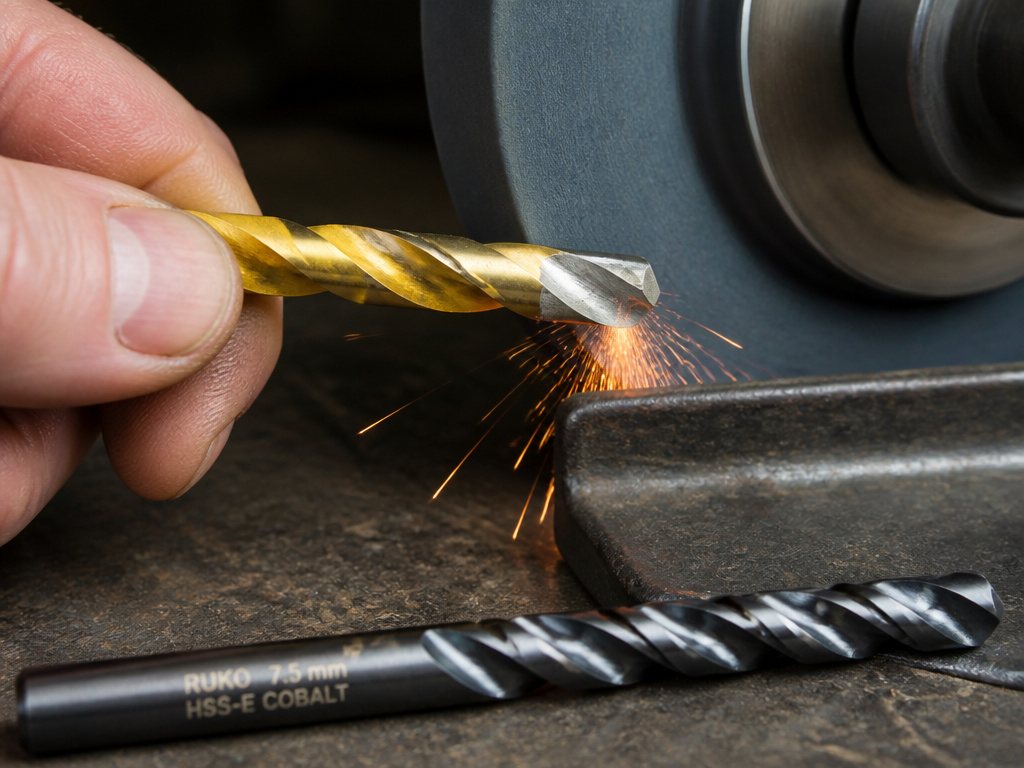
Durability is where the coating-versus-alloy conversation hits your wallet. A new titanium-coated bit can feel incredibly slick and sharp. But its lifespan is tied to the coating’s integrity.
Cobalt bits are more brittle. They can chip if dropped on concrete or used with severe runout. Yet, their wear is gradual. When the cutting edge wears down, you can regrind it. Because the cobalt is distributed throughout the material, the newly exposed edge at the point is still cobalt-alloyed steel. It retains its heat resistance. This makes cobalt ideal for situations where the tool must be reground repeatedly.
Titanium-coated bits present a sharpening paradox. Sources disagree on whether it’s even advisable.
- ZirooTools offers nuance: “A titanium-coated drill can be sharpened, but sharpening exposes the underlying HSS at the cutting edge. The drill may still be usable, but it no longer has the same coated cutting edge.”
Here’s my take, grounded in the shop: you can sharpen a titanium bit on a bench grinder. But the moment you touch the grinding wheel to the flank or lip, you grind through the gold-colored TiN layer. What’s left is bare, silver HSS. It will still cut, but it will lose its friction-reducing advantage and wear faster, especially in metal. For drilling wood or plastic afterward? It’s fine. For returning to metal work? You’ve demoted it.
| Scenario | Cobalt HSS Bit | Titanium-Coated HSS Bit |
|---|---|---|
| Out-of-the-box performance | Excellent on target metals | Excellent on target metals |
| After moderate wear | Can be reground to like-new performance | Coating wears at cutting edge; performance degrades |
| After first sharpening | Still a cobalt alloy bit | Now a standard HSS bit (coating removed at edge) |
| Long-term value | Higher initial cost, but multiple lifecycles via regrinding | Lower initial cost, but effectively disposable after coating is compromised |
If you have a drill sharpener and don’t mind the time, cobalt’s value proposition expands. If you treat bits as consumables and replace them often, titanium’s lower upfront cost might appeal. But for drilling metal, that calculus shifts quickly.
Drill Geometry and Technique: What the Material Can’t Fix
A perfect cobalt bit will fail if the geometry is wrong for the job. The alloy handles heat, but the shape handles the cut.
For metal, you want a 135° split point. This acute angle requires less thrust to start the cut, reduces “walking,” and is stronger under the pressures of hard material. For wood, the standard is a 118° point. Using a wood bit on metal will dull it instantly; using a metal bit on wood is fine, though it may be slower to start.
Brands like Milwaukee build in other features. These features matter. A well-designed HSS bit can sometimes outperform a poorly designed cobalt one.
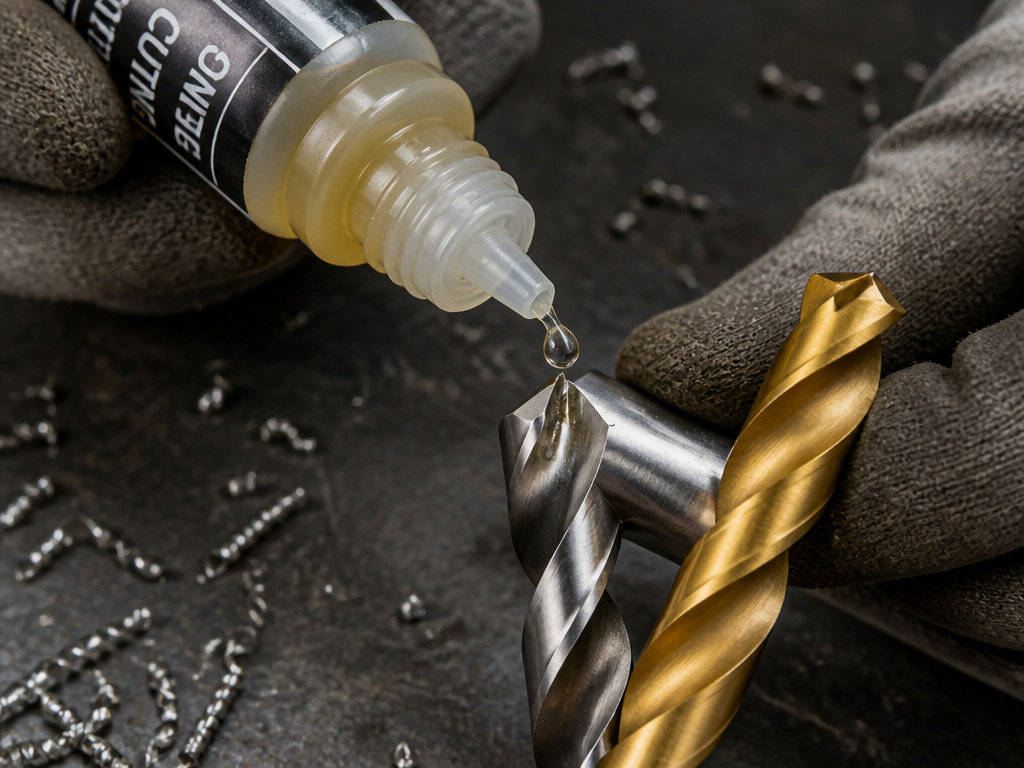
Before you start: Wear safety glasses. Metal chips are sharp and travel fast. Use cutting fluid or a lubricant specifically for metal drilling. Even the best bit will overheat and fail if run dry.
The single most important technique is using cutting fluid. It’s not optional. The fluid cools the bit and the workpiece, lubricates the cut, and helps flush chips. A quick squirt of tap magic or even a drop of cutting oil makes a dramatic difference in bit life and hole quality. No coating or alloy is a substitute for this basic practice.
Brand Spotlights and What to Buy
You need to know what you’re holding. A Milwaukee cobalt bit is a different animal than a generic hardware store cobalt bit.
Milwaukee is a benchmark for accessible quality. Their 19 Piece Cobalt Drill Bit Set (model 48-89-2530) is M35 cobalt. Their 19 Piece Titanium Drill Bit Set (model 48-89-4860) is TiN-coated HSS. Both come in excellent hard cases. The cobalt set is what I’d buy for any significant metalworking. The titanium set is a solid general-purpose kit for mixed materials.
For the DIYer who drills metal occasionally, a small set of name-brand cobalt bits (like the Milwaukee set above) is the right investment. Avoid no-name “cobalt” bits on questionable websites; the alloy content and heat treatment are often not as specified.
How to Tell Cobalt and Titanium Drill Bits Apart by Sight
You can often identify these bits by their color. Cobalt drill bits are made by mixing steel with cobalt, usually 5% to 8%. This gives them a distinct, dull silver-gray appearance. They look like a raw, uncoated metal. Titanium drill bits are high-speed steel with a thin layer of titanium nitride coating. This coating gives them a bright, reflective gold or bronze color. Remember, the gold color is just a surface coating. A bit with a worn cutting edge showing dull silver underneath is probably a used or sharpened titanium-coated bit, revealing the base steel.
Frequently Asked Questions
Which drill bits are better, cobalt or titanium?
For drilling hard metals like stainless steel, cast iron, or hardened alloys, cobalt bits are better. Their alloy construction provides inherent heat resistance that lasts even after sharpening. For general-purpose drilling in softer metals like aluminum, brass, and mild steel, titanium-coated bits offer a balance of performance and cost.
Can you sharpen titanium drill bits?
Yes, you can physically sharpen them on a grinder. However, sharpening removes the titanium nitride coating at the newly formed cutting edge, exposing the plain high-speed steel underneath. The bit will still cut but will lose the friction-reducing and wear-resistant benefits of the coating.
Is titanium the strongest drill bit?
No. Titanium nitride is a hard coating, but the underlying material is high-speed steel. Solid carbide bits are stronger and harder than both HSS and cobalt. Among common twist drill bits, cobalt alloy bits are stronger and more heat-resistant than titanium-coated bits.
What is the main disadvantage of cobalt drill bits?
The primary disadvantage is brittleness. Cobalt bits are more prone to chipping or snapping if dropped, used with excessive runout, or subjected to lateral impact. They also cost more upfront than titanium-coated bits.
When should I use cutting fluid?
Always use cutting fluid when drilling any metal, regardless of bit material. The fluid reduces heat, lubricates the cut, and extends bit life dramatically. Drilling metal dry is the fastest way to ruin any bit, cobalt or titanium.
The Bottom Line
Here’s the rule I follow: if the metal is harder than mild steel, or if the word “stainless,” “hardened,” or “alloy” is in the description, I reach for cobalt. For everything else, aluminum, brass, thin gauge mild steel, the titanium-coated bit is already in my drill.
Don’t get caught up in the gold color. See it for what it is: a thin, high-performance jacket on a standard HSS body. It’s good, but it’s not a core change. The silver-colored cobalt bit is the one that’s fundamentally different under the surface.
Invest in a small set of M35 cobalt bits for your metal projects. Pair it with a larger, general-purpose titanium-coated set for wood and soft metals. And never, ever drill metal dry. That one practice will save you more money in ruined bits than any choice between cobalt and titanium.
