
How to Maintain Cordless Power Tools: A Practical Guide
This post contains affiliate links. As an Amazon Associate, we earn from qualifying purchases.
Maintaining cordless power tools means committing to three things: keeping the tool clean, storing the battery within its temperature limits, and using only manufacturer-approved accessories. Skip any one, and you’ll watch a $200 tool lose half its power or brick itself within a season. The manuals are specific, from Bosch’s 0°C charging floor to Skil’s 40°C storage ceiling, and following them is the difference between a five-year workhorse and next year’s landfill.
That specificity is where most generic advice fails. Every tool and battery chemistry has its own rules, and the consequences aren’t theoretical. A battery stored in a summer garage can short-circuit; a motor clogged with sawdust overheats and cooks its windings. This guide on how to maintain cordless power tools pulls the actionable specs directly from Bosch, Skil, and Greenworks OEM manuals, the same pages that come with your tool, so your maintenance routine isn’t guesswork.
What follows is the short list of tasks that actually matter when you compare a how to maintain cordless power tools guide: the cleaning method that doesn’t void your warranty, the precise temperature bands your battery needs, and the two-minute visual inspection that spots trouble before it wrecks a weekend project.
Key Takeaways
- Clean with compressed air, not solvents. Blow out motor vents after every heavy use; avoid cleaners like gasoline or ammonia that damage plastic housings.
- Charge and store batteries within their specified temperature range. Bosch GOP18V-40 batteries charge between 0°C and 35°C, while Skil tools store best between 0°C and 40°C, stray outside these and you risk permanent damage or fire.
- Inspect accessories before every use. A cracked saw blade or dull drill bit increases strain on the motor and can shatter, a rule Bosch enforces in its safety warnings.
- Never disassemble the tool for cleaning. Bosch manuals state there are “no user serviceable parts inside,” and unauthorized tampering can misplace internal wires, creating a serious shock hazard.
The Three Non-Negotiables of Cordless Tool Care
You can skip a lot of fussy maintenance, but the question of how to maintain cordless power tools has three essential answers. Get these wrong, and the rest doesn’t matter.
First, the motor must breathe. Every cordless tool has ventilation slots, often near the trigger or around the battery port. Sawdust, drywall dust, and wood grit get sucked in during use. Let that layer build up, and the motor overheats. Overheating doesn’t just sap power; it permanently degrades the magnets and insulation on the motor windings. The fix is simple: a blast of compressed air across the vents after each project. Don’t use a vacuum; it often packs debris in tighter. Just hit it with the air.
Second, the battery has strict climate needs. This isn’t about “keeping it cool.” It’s about hard numbers from the spec sheet.
| Tool Model | Operating/Storage Temp | Charging Temp | Source |
|---|---|---|---|
| Bosch GOP18V-40 | -20°C to +50°C | 0°C to +35°C (+10°C to +35°C via USB) | Bosch GOP18V-40 Manual |
| Skil 20V Recip Saw | -10°C to +40°C (work) / 0°C to +40°C (store) | Not specified in manual | Skil RS5884 Manual |
| Greenworks 40V Blower | Not explicitly stated | 7°C to 40°C | Greenworks 40V Manual |
Where this goes sideways: Storing a battery in a car trunk in summer. The Bosch battery safety guide explicitly warns that high temperatures create a risk of explosion and short-circuiting. The cabin can hit 60°C (140°F) on a sunny day, well above the 50°C ceiling for storage. That kind of heat soak kills a battery cell in one season.
Third, stick to the brand’s accessories. It sounds like an upsell, but it’s a safety and performance spec. The Bosch GOP18V-40 manual states you must “use only Bosch or AMPShare BAT612 or the batteries listed.” A generic, physically compatible battery might fit the slot, but its voltage regulation or discharge curve can be wrong. The tool’s electronics expect a specific power profile. Mismatch it, and you can fry the motor controller or cause the battery to overheat. The same goes for blades, bits, and attachments not rated for your tool’s speed or torque.
My rule developed after a near-miss: always remove the battery before changing accessories. I developed it the hard way after reaching for a wrench to change a blade on a plugged-in corded saw years ago. The muscle memory stuck. For cordless, it’s the same principle, a battery seated is a live circuit. Pop it out. It takes two seconds and removes all risk of the tool kicking on.
A Cleaning Method That Actually Works
Forget the elaborate tear-downs you see online. The goal is to remove debris without introducing moisture or abrasives into the electronics. Here’s the sequence that balances effectiveness with safety.
Start with the exterior. Wipe down the housing with a dry, soft cloth. If there’s sticky grime, dampen the cloth slightly with water, not a spray. Immediately dry the surface. This is where you must avoid “helpful” chemicals. The Bosch GOP18V-40 manual warns against gasoline, carbon tetrachloride, and ammonia, stating they “may damage plastic parts.” They can also leave residues that attract more dust or make the grip slippery.
Next, attack the intake vents and cooling fins. This is a job for compressed air. Hold the can upright and use short bursts. Angle the nozzle to blow debris out, not deeper in. You’ll hear grit rattling inside the tool, that’s the sound of the problem leaving. Pay special attention to the area around the motor housing and any vents near the battery connection.
A clean tool has a specific sound. A well-maintained motor hums under load with a steady pitch. When vents are clogged, that hum tightens into a strained, higher-pitched whine as the motor works harder to push air through the blockage. You’ll feel the tool get hotter in your hand faster, too.
Finally, clean the battery contacts and tool terminals. Use a clean, dry cotton swab or a pencil eraser (the white kind) to gently scrub the metal contacts on both the battery and the tool. Don’t use metal abrasives or sandpaper. You’re removing oxidation, not reshaping the terminal. Corroded contacts cause voltage drop, making the tool feel weak even with a fresh battery.
After cleaning, let everything sit for a few minutes to ensure any stray moisture evaporates before you reassemble and use the tool. A simple log of when you last cleaned each tool beats trying to remember.
Battery Care Beyond “Don’t Drain It Fully”
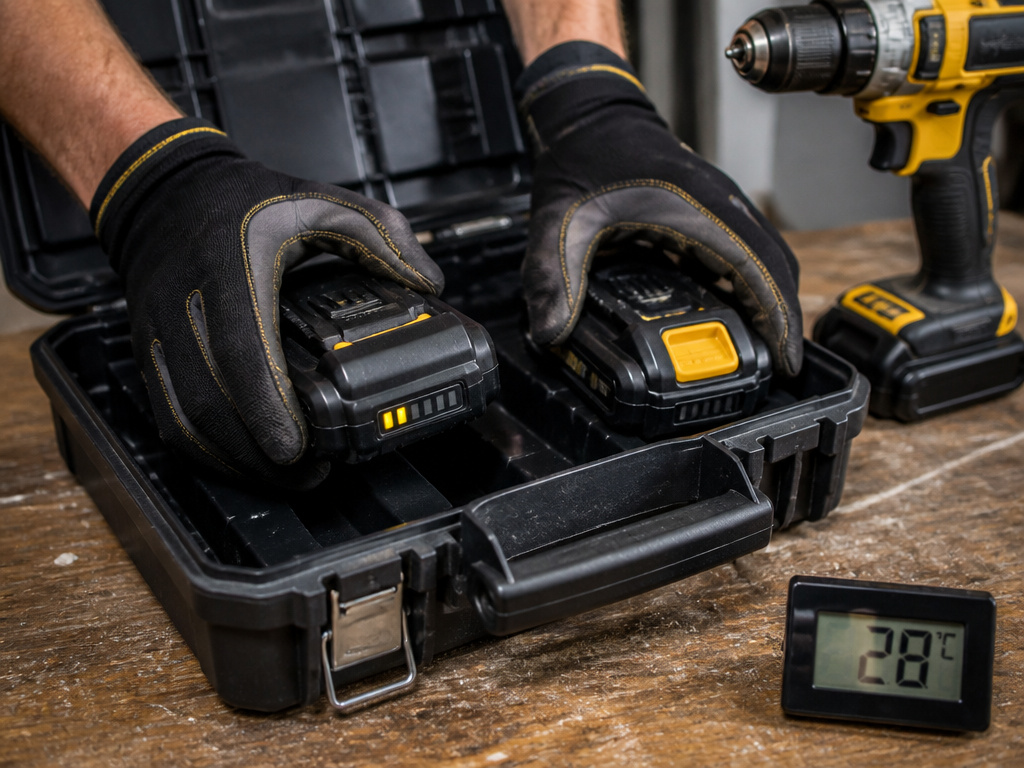
Battery care is more nuanced than the old “avoid full discharges” mantra. Modern lithium-ion cells in tools like the Bosch IXO or Skil 20V packs are managed by a built-in Battery Management System (BMS). Your job is to keep the BMS happy by managing temperature and charge state.
Charging temperature is the first lever.
- Bosch GOP18V-40: Charge between 0°C and 35°C (ambient).
- Bosch IXO: Recommended charging ambient is between 5°C and 35°C.
- Greenworks 40V: Recharge between 7°C and 40°C.
The common thread? Room temperature. Never charge a battery that’s just come in from the cold or is hot from use. Let it thermally stabilize first. Charging outside these ranges, as the Bosch battery safety guide notes, “can increase the risk of damage to the battery and pose a fire hazard.”
For storage, consult your tool’s manual; for example, the Skil manual recommends 0°C to 40°C, while the Bosch GOP18V-40 allows -20°C to +50°C. A garage that bakes in summer can be a battery killer, as temperatures can exceed storage limits. For long-term storage (over a month), store the battery at a partial charge, not fully charged or completely dead. This puts minimal stress on the cells. Storing a battery fully charged or completely dead accelerates its chemical aging.
The part nobody mentions: The BMS itself has a tiny constant power draw. If you store a battery for a year without topping it up, it can self-discharge so deeply that the BMS can’t wake up. You’ll have a brick that won’t take a charge. Check stored batteries periodically to ensure they have not self-discharged too deeply.
Recognizing end-of-life is crucial. The Bosch manuals are direct: “Decreased tool performance or significantly shorter running time between charges indicates a battery nearing its end of life.” It’s not a gradual thing, you’ll notice a full charge now lasts half as long on the same job. When that happens, recycle it properly. Don’t toss it in household trash; cover the terminals with heavy insulating tape and take it to a designated recycler.
Inspections and Preventive Maintenance You Can Do
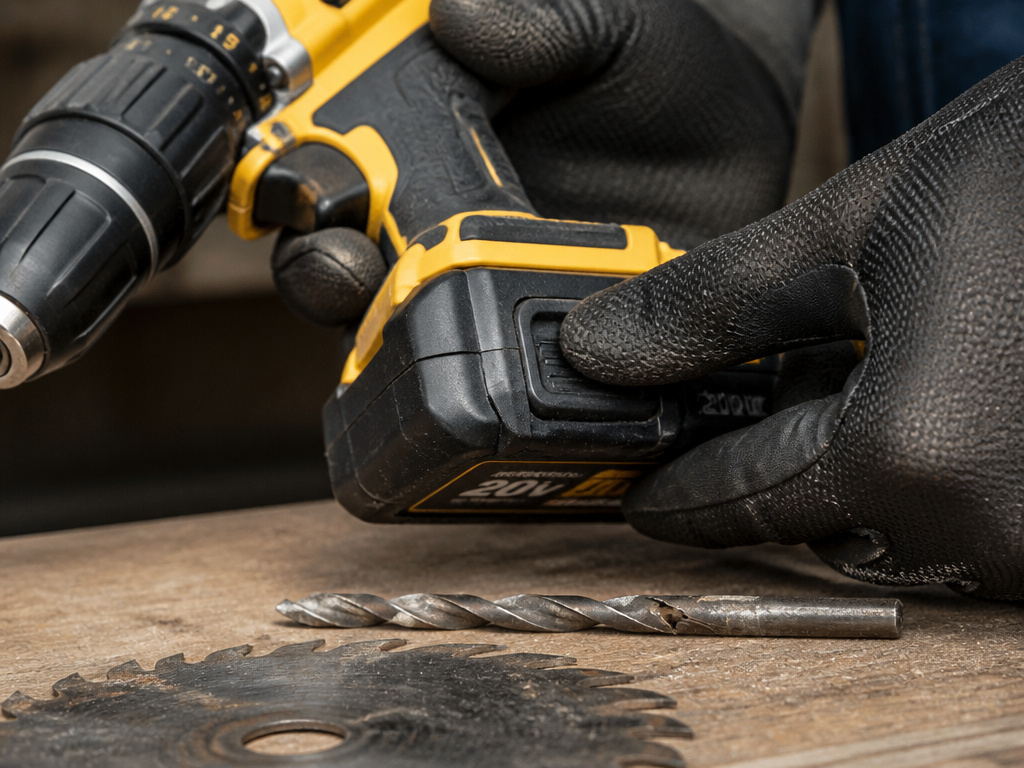
You don’t need to be a technician to spot trouble. A two-minute visual and functional check before each use catches 90% of problems.
Before each use:
- Inspect the accessory. Look for cracks in blades, dull or chipped drill bits, and worn sanding pads. A damaged accessory forces the motor to work harder, drawing more current and straining the battery. The Bosch GOP18V-40 manual states to “always inspect accessories for damage (breakage, cracks) before each use.”
- Check the body. Look for cracks in the housing, especially around stress points like the battery latch or where the head meets the handle. Feel for excessive play in moving parts when the tool is off.
- Test the switch and trigger. Does the tool start smoothly and stop immediately when you release? A sticky trigger or a delay in stopping points to debris in the switch or an electrical fault.
Weekly or after heavy use:
- Listen. Run the tool without a load. Any new grinding, clicking, or rattling sounds are a red flag.
- Feel the temperature. Run the tool under a normal load for 30 seconds, then stop and feel the motor housing (carefully, it will be warm). If it’s searing hot almost immediately, cooling is likely obstructed.
- Check runtime. Note if a known battery is dying much faster on a routine task. This is the primary sign of a fading battery or an overworking motor.
For lubricating tools with exposed gears or ratcheting mechanisms, use a light machine oil like 3-In-One. One drop on the moving part, then work it in by operating the mechanism by hand. Wipe away any excess. Over-lubrication attracts grit and creates a grinding paste, more grease is not better.
Developing a simple schedule beats reacting to failures. A calendar reminder for a quarterly deep-clean and battery check is all most home users need.
When Maintenance Isn’t Enough: Recognizing Major Failure
Some problems signal that your maintenance window has closed and professional service is needed.
Symptom: Sparks from the motor vents or battery compartment.
This is a hard stop. Unplug the battery immediately. This often indicates worn carbon brushes arcing, or a serious internal short. Continuing to use the tool risks electrical fire or permanent motor damage. This is a job for a service center.
Symptom: A pronounced drop in power, but the battery is known-good.
The tool bogs down under light loads it used to handle. This could be a failing motor, but first, rule out a mechanical bind. Remove any accessory and see if the motor spins freely. If it does, the motor windings or magnets are likely failing. This isn’t a user-fixable issue.
Symptom: The battery won’t charge, or the charger shows a fault light.
Try a different, known-good battery on the same charger, and try the suspect battery on a different, known-good charger. If the problem follows the battery, it’s dead. If it follows the charger, the charger is faulty. Don’t try to disassemble either. The Bosch manual warns: “Do not attempt to disassemble the battery or remove any components projecting from the battery terminals.”
NO USER SERVICEABLE PARTS INSIDE. That all-caps warning in the Bosch GOP18V-40 manual exists for a reason. Preventive maintenance performed by unauthorized personnel may misplace internal wires and create a serious shock hazard. Know your limits.
How to lubricate cordless power tools
Most modern cordless tools have sealed motors and gearboxes that do not require user lubrication. The fact sheet states there are no user serviceable parts inside, and attempting to service them can create serious hazards. Your focus should be on external moving parts like the chuck or any adjustment levers. Apply a single drop of a light machine oil to any metal pivot points you can see, then work the mechanism to distribute it. Wipe away any excess oil to prevent it from attracting dust and debris, which can create a grinding paste that accelerates wear. Always keep handles dry and free from oil and grease to maintain a safe grip.
What to use to clean power tools
Choosing the wrong cleaner can damage your tool’s plastic housing and internal components. The fact sheet specifically warns against using gasoline, carbon tetrachloride, and ammonia, as these agents can cause plastic to become brittle and crack. For general cleaning, use a soft cloth dampened with mild soap and water. Ensure the tool is unpowered and the battery is removed first. For degreasing, select a commercial degreaser that is labeled as safe for plastics and electronics. After cleaning, always dry the tool thoroughly, paying special attention to keeping handles dry and clean. Avoid spraying any liquid directly onto the tool; apply it to the cloth instead.
Power tool maintenance schedule
The fact sheet recommends developing a periodic maintenance schedule. A practical routine starts with a quick visual inspection before each use, checking for damage to the tool and its accessories. After every use, blow out dust from vents with compressed air and wipe the tool down. Weekly, perform a more thorough cleaning and check battery contacts for debris. Monthly, inspect the entire tool for loose screws, cracks, or unusual wear. Test the tool’s performance; a noticeable decrease in power or significantly shorter battery run time can indicate a battery is nearing its end of life. Store tools indoors in a dry place, within the recommended temperature range to preserve battery health.
Frequently Asked Questions
Can you use WD-40 to clean power tools?
Use WD-40 Specialist Dry Lube or a similar product designed for electrical displacement if you need to drive out moisture. Do not spray standard WD-40 into motor vents, switches, or electrical contacts. It leaves an oily film that attracts dust and conductive debris, which can lead to gummy switches and even short circuits over time. For general cleaning, compressed air and a dry cloth are superior.
Is it bad to leave batteries in power tools?
Yes, for long-term storage. It’s fine between uses during a project. For storage exceeding a week, remove the battery. This prevents slow discharge through the tool’s small standby circuits and eliminates any chance of terminal corrosion spreading between the battery and tool contacts. Store the battery separately in a cool, dry place.
How do you rejuvenate a power tool battery?
You cannot truly “rejuvenate” a lithium-ion battery that has reached its end of life due to age or deep cycle count. If a battery is deeply discharged but otherwise healthy, some chargers have a “recovery” mode that applies a very low, slow trickle charge to wake the Battery Management System. If your charger doesn’t have this, the battery is likely a loss. Avoid third-party “rejuvenator” devices; they are ineffective and can be unsafe.
What is the average lifespan of a cordless power tool?
The tool body itself, with proper care, can last 5-10 years. The battery lifespan is the limiting factor, typically rated for 500-1000 full charge cycles. Under normal DIY use (50 cycles a year), that’s 5-10 years. Heavy professional use can burn through that in 2-3 years. Factors like consistent over-heating, improper storage, and using off-brand chargers significantly shorten both tool and battery life.
When should I replace carbon brushes?
Listen and look. Audible sparking from the motor vents, visible sparking through those vents in dim light, and a noticeable drop in power are the classic signs of worn brushes. On some tools, the brushes are user-replaceable with an access cap; on many modern cordless tools, they are not. If you’re unsure, it’s a service-center job.
The Bottom Line
Maintenance isn’t about making tools last forever. It’s about getting the full tool lifespan you paid for and avoiding a failure in the middle of a critical job. The entire process boils down to respecting three boundaries: thermal (charge/storage temps), mechanical (clean vents, sharp accessories), and electrical (correct batteries, clean contacts).
If you do nothing else, make compressed air your best friend and never let a battery bake in a hot car. That alone will put you ahead of most users. For the rest, let the manual be your guide, not YouTube hacks. The engineers who built your Bosch, Skil, or Greenworks tool wrote those specs for a reason. Follow them, and your tools will return the favor.
