
Mallet vs Sledgehammer: Which Should You Buy?
This post contains affiliate links. As an Amazon Associate, we earn from qualifying purchases.
In the mallet vs sledgehammer choice, a mallet seats, taps and shapes work without marking it, while a sledgehammer breaks and drives with a heavy steel head. A paver mallet head weighs 24 to 32 oz; the sledgehammers in the 2023 recall ran 2 to 12 lb. Pick by what the surface can survive.
Surface tolerance sorts the two tools because of how each one delivers force. Engineerfix describes steel hammers and hard plastic mallets as point-loading: the blow lands on a small contact patch and builds stress zones that leave visible damage on a finished paver. A soft, elastic head minimizes that risk, per the same source.
What follows: a head-to-head table, a three-way look at rubber, rawhide and dead blow mallets, a job-by-job pick, and the recall record that should change how you inspect a sledgehammer before you swing it.
Key Takeaways
- A soft face protects the work, and a steel face breaks it. Weight overlaps between the two families, so face material is the real dividing line.
- For pavers, engineerfix recommends a rubber head of 24 to 32 oz in a white or lighter color. Sources disagree on whether black rubber marks, so test on a spare stone.
- The 2023 recall covered about 2.2 million fiberglass sledgehammers whose heads can loosen and detach. A 2010 recall hit hickory-handled ones for the same reason.
- Claims about handle vibration conflict. Fiskars says its IsoCore handle cuts shock to half that of wood, but Bob Vila’s hickory Kobalt felt gentler than the fiberglass models.
What Actually Separates a Mallet From a Sledgehammer?
Face material and swing size set the two apart. A sledgehammer carries a forged steel head on a long handle and swings with both hands. A mallet carries a softer face that gives on impact.
A sledgehammer is a long-handled hammer with a heavy steel head, built for breaking and driving. A mallet is a hammer with a soft or cushioned striking face, built to move or seat material without marking it. Sledgehammers in the 2023 recall weighed 2 to 12 lb, while a paver mallet head weighs 24 to 32 oz.
Overlap exists, which is why the names get muddy. The recalled sledgehammer family ran 14 to 36 in overall, and a 3 lb drilling hammer sits in that family. A Garland #3 rawhide mallet weighs 2.75 lb. Face material, not weight, decides which tool you’re holding.
Think of a cleaver and a wooden spoon. Both move food around, but only one forgives a bad aim. The Estwing CCD26 dead blow, at 26 oz and 12.75 in, is the wooden spoon end of the shelf. A 12 lb sledge is the cleaver.
Ever wonder why a steel hammer chews up a paver that a rubber one leaves alone? Point-loading explains it. Steel concentrates the whole blow into a small patch, and the stone has nowhere to spread that stress.
Mallet vs Sledgehammer, Head to Head: Who Wins Each Job
Picture a paver sitting proud of its neighbors in the sand bed. You need it down flush, not shattered. That one scene explains most of the choice.
| Trait | Mallet | Sledgehammer |
|---|---|---|
| Striking face | Rubber, rawhide, nylon or shot-filled body | Forged steel |
| Weight in the sources | 24 oz (Vaughan) to 2.75 lb (Garland) | 2 to 12 lb (2023 recall); up to 20 lb (2010 recall) |
| Overall length | 12 to 15.25 in (Vaughan, Estwing) | 14 to 36 in (2023 recall) |
| Force delivery | Spread over a soft face | Concentrated at a point |
| Effect on finished stone | Protects the surface | Chips and cracks it |
The winner depends on the work. For seating, shaping and tapping, the mallet wins every time. For breaking, driving and demolition, the sledgehammer wins. I’d rather see someone own a mallet and borrow a sledge than do it the other way round, because a sledge on a patio costs you stones.
One more spec trips buyers up. Hardness numbers on sledge faces vary by maker. Estwing lists 50 to 55 HRC (the Rockwell C steel hardness scale) for the induction-hardened ends on its 12 lb ESH-1236F. Wilton’s listings give 30 HRC, and its 2016 catalog gives 46 HRC. Don’t rank tools on one printed figure.
Rubber, Rawhide or Dead Blow: Which Soft Face Earns Its Spot?
The Estwing CCD45 weighs 45 oz and measures 14.37 in, with a steel canister and steel handle wrapped in polyurethane and filled with steel shot. Estwing’s own page says it’s made in Taiwan, though Acme Tools lists the USA. Go with the manufacturer. Its sibling sizes are the CCD26 at 26 oz and the CCD53 at 53 oz.
Shot fill does one job: it kills rebound. A loose mass of shot keeps moving after the head stops, so the energy goes into the shot instead of bouncing back. NASA’s 1991 JPL paper (NTRS 19910015292) found a sealed pocket 85% full of 0.75 mm stainless steel balls damped the rebound in a spacecraft mechanism, while elastomer dampers did not stop the bounce. A dead blow lands with a dull thud and stays put, where a steel hammer rings and jumps. The Wikipedia entry on dead-blow hammers adds that the design controls striking force with minimal rebound.
The Vaughan 585-12 takes a different route: a 24 oz aluminum head with nylon faces, 12 in overall, a 1-1/2 in face and a replaceable tip. The Garland #3 (31003) is the rawhide option, with 1-3/4 in faces in a split metal head. Its faces are replaceable. One retailer lists the weight as 2.75 lb in the text but 2.7L in the title, so confirm before you order.
Halder, a German tool maker, publishes ergonomics numbers for three shot-filled mallets against a 500 g locksmith’s hammer. Treat them as a manufacturer’s summary of a commissioned report.
| Halder mallet | Perceived volume | Handle vibration | Impact force |
|---|---|---|---|
| SUPERCRAFT | -41.4% | -48.7% | +13.7% |
| SECURAL | -60.8% | -57.2% | about the same |
| BLACKCRAFT | -63.4% | -58.7% | -4.9% |
Look at the last column. Wikipedia’s page describes controlled striking force, and a research summary reads that as less peak force. Halder’s SUPERCRAFT delivered 13.7% more force than the steel hammer. The two sources may be measuring different things, so I won’t pick a side. What the numbers do show is that the soft-face mallets were quieter and shook the hand less.
I’m not a fine woodworker, so I can’t speak for chisel work. Forum users on woodworking boards disagree about whether urethane drives a chisel as efficiently as a hardwood mallet. That’s anecdotal, and I’d treat it that way.
The Job-by-Job Pick: Pavers, Stakes and Concrete
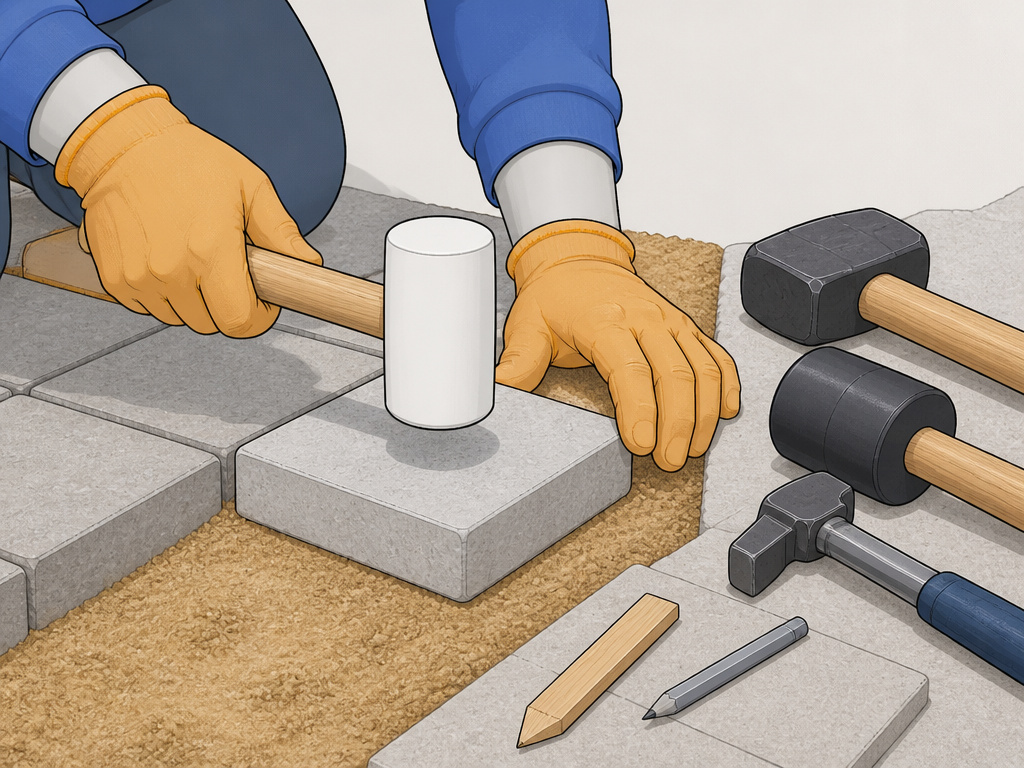
Four jobs cover most yard weekends, and each has a clear pick:
- Pavers and exposed stone: a rubber mallet at 24 to 32 oz.
- Retaining wall blocks and hidden stone faces: a dead blow.
- Stakes and spikes: a short drilling hammer.
- Concrete and demolition: an 8 lb sledge or heavier, depending on your aim.
Seating pavers
Engineerfix puts the paver range at 24 to 32 oz (1.5 to 2 lb) for DIY work. It recommends white or lighter heads because carbon black in dark rubber can leave streaks on light pavers. The smear looks like a gray pencil mark on pale concrete.
Where this goes sideways: Trusting the color label on a mallet. A retailer listing for a Vitrex mallet says black heads very rarely leave marks, while a buyer review says a white face smudged delicate work despite its non-marking claim. Tap a spare paver first, because a streak on a laid patio doesn’t wipe off easily.
The technique is short, firm taps using the mallet’s weight, not a wide swing. Aim at the center of the paver first, then work out to the edges. Stand on pavers you’ve already set so you don’t disturb the loose bedding sand.
Engineerfix also says dead blows suit retaining wall blocks and large-format stone where the face is less visible, because the harder plastic can scuff a paver. Wikipedia says dead blows also set slab marble, granite and pavers, but flags that line as needing a citation. For exposed pavers, I’d stay with rubber.
Driving stakes and spikes
Bob Vila’s hands-on test found the 3 lb drilling hammer best for driving spikes. A small head with a short handle gives you aim, and aim matters more than mass when the target is a stake top.
Breaking concrete and demolition
The 16 lb Fiskars delivered the most force but was hard to aim accurately. Once a job outgrows hand swinging, the question shifts to a powered demolition hammer and whether a rotary hammer can do the same work.
I won’t hand a 16 lb sledge to a first-time swinger. Bob Vila’s testers called the Fiskars hard to aim, and a missed swing at that weight is a bad day. Start at 8 lb and earn your way up.
CCOHS (Canada’s occupational safety agency) says not to strike stones or concrete with a hammer. That page is written for general hammers, not for sledges sold for breaking concrete. Read the label on your specific tool.
Is a Drilling Hammer the Middle Ground Between Them?
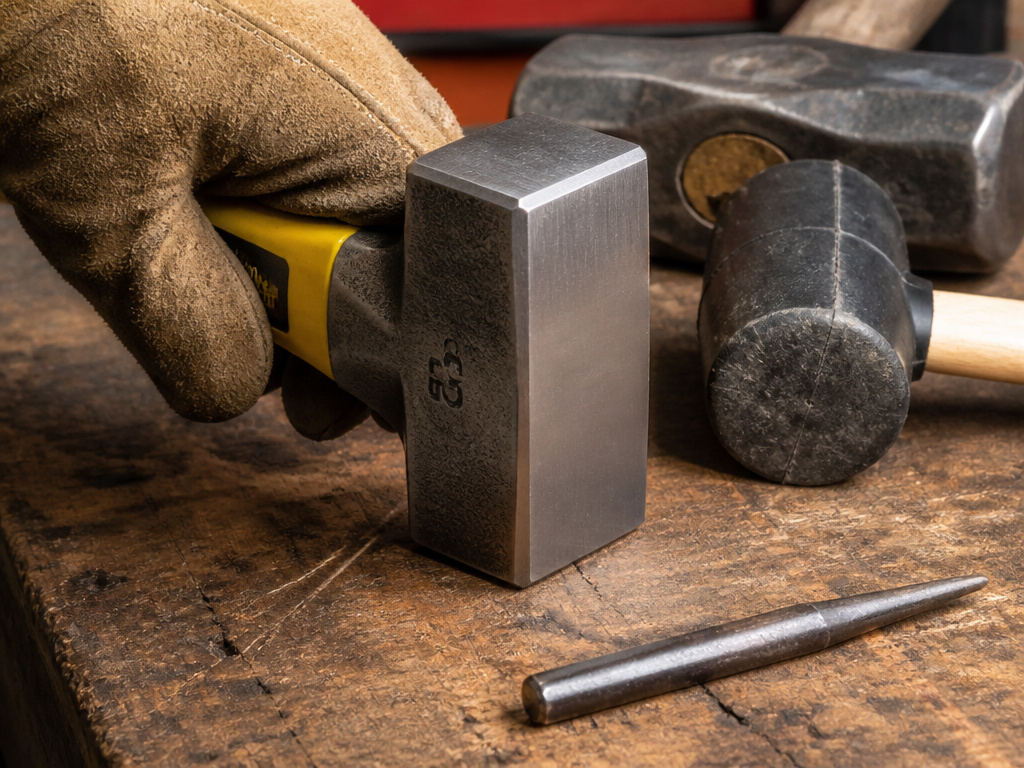
Take the recall table as a worked example. One brand’s line mixes drilling hammers, engineering hammers and sledges. They share fiberglass handles and a recall notice.
That is why forum threads mix up club, lump and drilling hammers. Names shift by country and by brand. I won’t claim a clean rule, because I don’t have a source for one.
What I can say comes from Bob Vila’s testing: the 3 lb drilling hammer won on spikes. It’s a steel face on a short handle, so it drives hard and stays in control. It isn’t a mallet, though, and it will chew a finished surface like any steel hammer.
Two Recalls, Two Handle Materials: What Loose Heads Teach
About 2.2 million fiberglass sledgehammers were recalled in April 2023. The Stanley Black & Decker sledgehammer recall covers DeWALT, Stanley FATMAX and Craftsman models that weigh 2 to 12 lb. The head can loosen prematurely and detach during use. The firm logged 192 reports of heads detaching, including two injuries to the face and head.
The notice lists 25 models: 12 DeWALT, 4 Craftsman and 9 Stanley FATMAX. DeWALT and Craftsman model numbers are marked on the hammer head. Stanley numbers are on a sticker on the handle. The remedy is to stop using the hammer and contact Stanley Black & Decker for a full refund. Sale dates differ by source: US coverage citing CPSC says November 2013, while Health Canada gives June 2013.
The CPSC hickory handle sledge hammer recall from August 2010 covered about 15,000 Brigade sledgehammers, 11 models from 2 to 20 lb. Same hazard, no incidents reported, refund or replacement offered. Between them, the two recalls hit a fiberglass line and a hickory line. Head attachment is the thing to check, whatever the handle.
So which handle is better? The sources split. Fiskars claims its IsoCore handle gives 2X less shock and vibration than wood. Bob Vila’s testers found the hickory Kobalt gave less hand vibration than the fiberglass models, though they didn’t compare it directly with the IsoCore.
Owner reports are mixed too. One TractorByNet user says overswinging fiberglass will eventually shatter it, while hickory can be re-handled. A Pavingexpert user never broke fiberglass but lost several wooden handles to rot and prying. These are anecdotes, not controlled tests.
The 5-Step Check Before Every Swing
Before you start: Three hazards matter. A loose head can detach mid-swing, which is the recalled failure, so check the head and the model number first. A chipped or mushroomed face can throw fragments, so wear safety glasses or goggles or a face shield. A glancing blow can skip off the target, so look behind and above you and keep clear of anyone nearby.
- Check the model number. Read it on the head for DeWALT and Craftsman, or the handle sticker for Stanley. Skip this and you could keep swinging a recalled head that has already burned 192 reports.
- Confirm the head is firmly attached. Replace loose, cracked or splintered handles, per CCOHS. A wobbling head is the exact failure the recalls describe.
- Inspect the face. Discard any hammer with a mushroomed or chipped face. A mushroomed face has a rolled, flared lip around the edge that catches a fingernail. Leave it and that lip can split off.
- Match face to target. Pick a hammer with a face about 12 mm (0.5 in) larger than the tool you’re striking, such as a chisel or wedge. A smaller face lands off-center and chips.
- Strike squarely, with eyes protected. Keep the face parallel to the surface and avoid glancing blows and over or under strikes. Estwing also tells users and bystanders to wear goggles with its dead blows.
Easy to miss: Re-dressing a mushroomed head. CCOHS says never to redress, grind, weld or reheat-treat a hammerhead. Hand Tool Institute guidance, as quoted in trade press, says always replace because grinding changes the steel’s hardness. A UNF shop manual says to dress the head down as soon as it begins to split and curl. I side with the safety agency here.
Standards back this up. ASME B107.400 sets performance and safety requirements for striking tools including hammers, sledges and mauls. It exists because these tools fail in ways that hurt people.
What are the other common hammer types and what are they for?
Beyond mallets and sledgehammers, four hammers cover most of what a home shop sees. A claw hammer drives nails and pulls them back out, so it suits framing, trim and general repairs. A ball peen hammer has a flat face on one side and a rounded peen on the other. It belongs in metalwork, where it handles shaping, riveting and striking punches and chisels. A tack hammer is small and light, made for upholstery tacks and fine brads where a heavier head would crush the work or your fingers. A dead-blow hammer is a specialized mallet that limits damage to the struck surface and controls striking force with minimal rebound. Many are filled with steel shot, which is what kills the bounce.
Whichever you pick, match the face to the job. Choose a face a little larger than the tool you are striking, and never hit one hammer with another. Discard any hammer with a mushroomed or chipped face, or with cracks in the claw or eye, and wear eye protection every time.
Frequently Asked Questions
What is the main difference between a sledgehammer and a mallet?
Sledgehammer has a heavy steel head and a long handle for breaking and driving. A mallet has a soft or cushioned face for moving material without marking it. Weight overlaps: a 3 lb drilling hammer and a 2.75 lb rawhide mallet are close, but only one has a steel face.
Why use a mallet instead of a hammer?
Steel hammer concentrates force at a point, which damages finished surfaces like pavers. A rubber mallet spreads the blow across an elastic face and protects the stone. Halder’s tests also show soft-face mallets cutting handle vibration by 48.7% to 58.7% versus a steel hammer.
What are the three types of hammers?
There is no single agreed list. ASME B107.400 covers hammers, hatchets, axes, sledges and mauls under one standard. For this comparison, think in three groups: soft-face mallets, mid-weight drilling and engineering hammers, and sledgehammers.
Can a dead blow replace a sledgehammer?
No. A dead blow like the Estwing CCD53 weighs 53 oz and is built to control rebound, not to break concrete. It suits seating blocks and freeing stuck parts. For demolition you need the mass of a sledge.
Should I fix a mushroomed sledgehammer head?
Sources disagree. CCOHS says discard it and never redress it. A UNF shop manual says to dress it down early. If you want one answer, replace the head.
The Bottom Line
Here is the practical split in the mallet vs sledgehammer debate. If the surface matters, use a mallet. If the job is breaking or driving, use a steel head.
If you can own only one for yard work, I’d pick an 8 lb sledge with a hickory or fiberglass handle, since it is far easier to aim than a 16 lb model. Add a 24 to 32 oz white-head rubber mallet the moment you lay your first paver.
Your first step this week: find the model number on every sledgehammer you own. Check the head for DeWALT and Craftsman, or the handle sticker for Stanley, against the CPSC list. If it matches, stop using it and claim your refund.
One limit on all this: the vibration and marking claims are contested, and the long-term data is thin. Treat the Fiskars 2X claim and the Halder figures as manufacturer statements, not settled fact. I’d still rather own a 3 lb drilling hammer than a 16 lb monster for a first purchase, and I know some readers will disagree.
