
Manual vs Electric Staple Gun: Which Should You Buy?
This post contains affiliate links. As an Amazon Associate, we earn from qualifying purchases.
Manual staple guns use your hand strength to drive staples and cost $10-$30, while electric models use a motor, cost $20-$100, and work up to three times faster. For most occasional DIYers working with lightweight materials, a manual gun is sufficient. For repetitive, large-scale jobs on tough materials like leather or plywood, an electric staple gun saves time and reduces hand strain.
That difference in physical effort isn’t just about comfort, it changes the scale of project you can realistically tackle in a single session. The choice between a manual vs electric staple gun is key here. A manual gun can leave your hand aching after a short session; an electric gun can fire many staples with a trigger pull that feels like clicking a pen.
What follows is a breakdown of where each type wins and loses, grounded in real-world specs and user experiences. We will examine power, cost, jamming, and the specific projects each one is built for.
Key Takeaways
- Electric staple guns drive staples up to three times faster than manual models, but this speed comes with a higher risk of jamming due to heat and mechanical complexity.
- Match the staple size to your material, using 1/2″ staples in a gun not rated for them carries a high jam risk, while 1/4″ staples for thin fabric are low-risk.
- Manual guns require low maintenance, while electric models need magazine cleaning after each project, inspection monthly, and lubrication every three months to avoid problems.
- For large-scale upholstery or projects involving plywood, an electric staple gun’s power and speed justify its higher initial cost and maintenance.
- Always unplug or remove the battery before attempting to clear a jam in an electric staple gun, and wear gloves to protect against sharp staples.
The Power & Speed Difference
Electric staple guns aren’t just a little faster, they can drive staples up to three times faster than a manual model. That’s the figure from the reviews. This speed comes from a motor doing the work, whether it’s a corded plug-in or a battery-powered unit.
That speed translates directly into covering more area. Think about stapling insulation in an attic or securing roofing felt. An electric gun turns a day-long slog into a morning’s work. The reduced physical effort means you can maintain a consistent pace without the fatigue-induced slowdown that hits you two hours into squeezing a manual lever.
An electric staple gun can penetrate plywood and sometimes even thin pieces of sheet metal, according to retailer tests. This isn’t a suggestion for heavy framing, but it shows the power available for tough materials like thick foam or leather.
The mechanism matters. Manual guns rely on a lever that multiplies your arm force. Electric guns use a high-speed spring or solenoid. That solenoid fires with the same force every time, which is where the consistency advantage comes in. Your hand strength varies throughout the day; a motor’s output does not, assuming it’s not overheated or undercharged.
The Effort & Fatigue Trade-Off
Here’s the physical reality no spec sheet mentions: after a number of staples with a manual gun, the base of your thumb starts to burn. After many staples, your grip weakens. This isn’t about being out of shape, it’s simple biomechanics. The repetitive squeezing motion strains the same small muscle groups.
Electric models eliminate that squeeze. You pull a trigger. For long sessions reupholstering a sofa or installing carpet padding, the difference is dramatic. You finish the job with energy left, not with a hand that cramps every time you pick up a coffee cup.
This makes electric the clear choice in the manual vs electric staple gun decision for anyone with arthritis or limited hand strength. A manual gun might be a non-starter for them. For a healthy user doing a small craft project, the manual effort is trivial. The trade-off is binary: manual demands muscle, electric demands a power source.
Cost Comparison: Upfront Price vs. Long-Term Value
Here are the numbers. A manual staple gun usually costs between $10 and $30. You can walk into any hardware store and find a basic, functional model at that price. Electric staple gun models can range from $20 to $100. The low end gets you a simple corded tool; the high end includes cordless models with better batteries and ergonomics.
The initial price is just the entry ticket. Long-term cost has more variables.
| Cost Factor | Manual Staple Gun | Electric Staple Gun |
|---|---|---|
| Upfront Price | Low ($10–$30) | Medium to High ($20–$100) |
| Staple Cost | Same for both types | Same for both types |
| Maintenance Cost | Very Low (occasional oil) | Medium (cleaning supplies, potential battery replacement) |
| “Hidden” Cost | Your time and effort on large jobs | Electricity/battery charging, more frequent jam fixes |
For the occasional user who stores the tool between projects, the manual gun’s low maintenance is a financial win. For the frequent user, the electric gun’s time savings on large jobs can quickly offset its higher price. If a project would take you significantly longer with a manual gun than with an electric, your time has a value. Assign that value, and the math can flip.
Best Use Cases & Project Fit
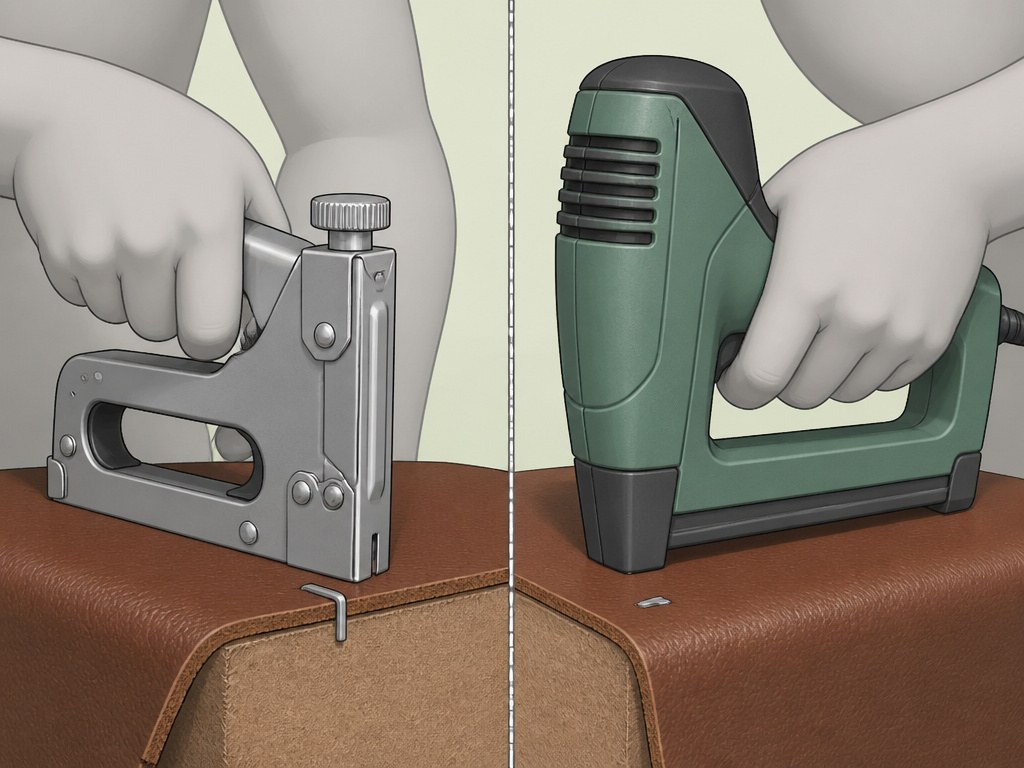
This is the decision engine. Don’t think about the tool first; think about your project.
Choose a manual staple gun for:
- Lightweight craft projects (fabric, paper, cardboard).
- Occasional small DIY upholstery (dining chair seats, footstools).
- Hanging holiday decorations or landscape fabric.
- Any job where you’ll fire less than 50 staples and precision placement is key.
Choose an electric staple gun for:
- Large-scale upholstery (sofas, headboards, large chairs).
- Installing insulation in a wall or attic.
- Securing roofing felt or carpet padding.
- Repetitive tasks like building pallet furniture or attaching wire mesh.
- Working with tougher materials: leather, vinyl, thick foam, or plywood.
In the manual vs electric staple gun debate, the material thickness is the gatekeeper. Manual guns struggle with tougher materials like leather or thick foam, as one DIY blog notes. Electric guns, with their consistent power, are better suited for thicker or tougher materials. If your material is thicker than a standard magazine, you’re likely in electric territory.
Where this goes sideways: Using a manual gun on thick foam or leather. The staples either won’t sink fully or will bend, leaving you with a weak hold and a frustrated afternoon.
Jamming & Reliability: Which Is More Problematic?
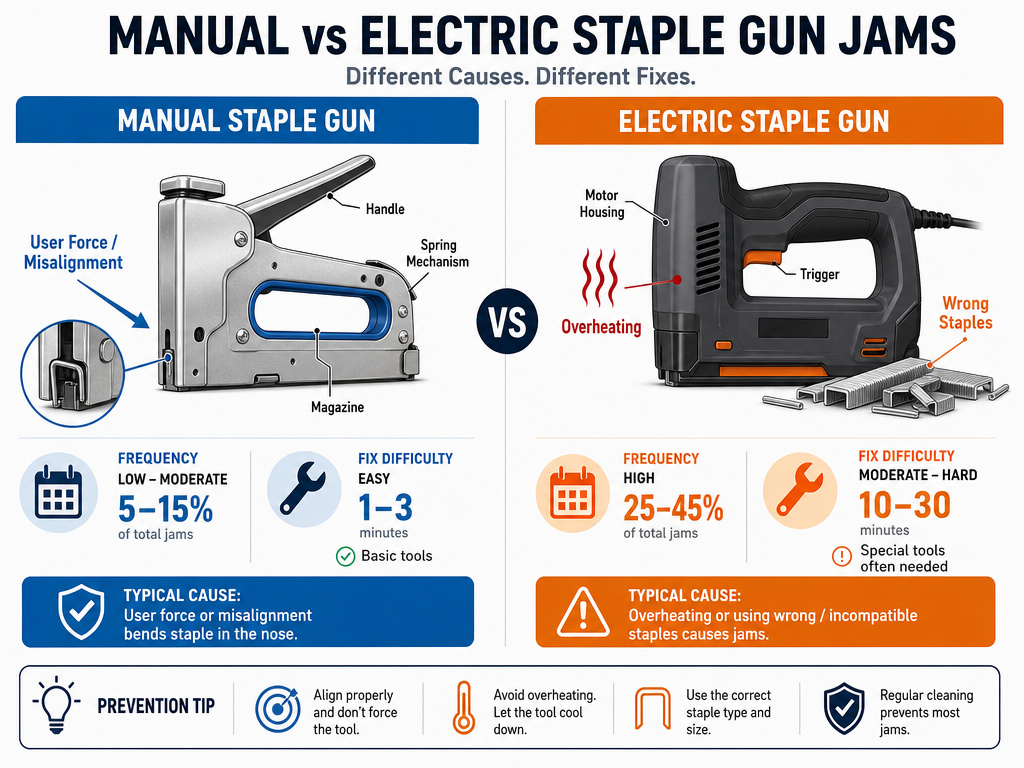
Jams are the great frustration.
| Jam Factor | Manual Staple Gun | Electric Staple Gun |
|---|---|---|
| Reported Frequency | Lower (with correct staples) | Higher (due to speed and heat) |
| Fix Difficulty | Usually easy | Sometimes more complex |
| Common Causes | User strength, staple misalignment | Wrong staple size, overheating, debris |
| User-Error Role | High | Medium |
One repair guide states electric jams are often due to overheating and staple incompatibility, while another source suggests manual guns may also jam frequently. The fast-cycling mechanism heats up, which can slightly warp staples in the magazine. Using off-brand or incorrect-size staples is a major culprit.
For manual guns, jams are usually simpler: a staple loaded crooked, or the user not providing enough consistent force, causing a half-driven, bent staple. Clearing a manual jam typically involves opening the magazine and pulling the staple out with pliers.
Before you start: Always unplug the electric staple gun or remove the battery before fixing a jam. Wear gloves to protect your hands from sharp edges, and let the tool cool down for a few minutes if you’ve been using it heavily.
Staple Size & Compatibility Is Critical
The wrong staple size doesn’t just give a weak hold, it causes jams. This is essential. Your gun’s manual lists approved staple sizes and often specific brands. The Stanley TR150HL manual gun, for example, uses Stanley Sharpshooter TRA700 series staples in 1/4″, 5/16″, 3/8″, 1/2″, and 9/16″ lengths.
Here’s how staple size affects performance and jam risk:
| Staple Size | Typical Uses | Jam Risk |
|---|---|---|
| 1/4″ (6mm) | Thin fabrics, paper, cardboard | Low |
| 3/8″ (10mm) | Upholstery, light wood, insulation | Medium |
| 1/2″ (12mm) | Carpentry, thick materials, heavy fabric | High |
The risk column is key. Putting a 1/2″ staple into a gun rated only for up to 3/8″ is asking for a jam. The staple leg is too long for the driving channel, and it will likely bend or get stuck. This is why understanding staple gun staple sizes is a fundamental part of using a staple gun correctly. The process starts with loading a staple gun with the right ammunition.
Maintenance & Upkeep Demands
This is where the long-term ownership experience diverges sharply. A manual staple gun needs a drop of light oil on its moving parts to keep them smooth. You wipe it down and put it away.
An electric staple gun demands a schedule.
- Clean the magazine after each project. Dust and debris from materials like insulation are the primary cause of future jams.
- Inspect for loose parts monthly. Vibrations from the motor can slowly loosen screws.
- Lubricate moving parts every 3 months. A small drop of light machine oil on the magazine rails and pusher spring keeps things smooth.
- Check staple compatibility every reload. Don’t just grab whatever box is open. Match the brand and size to your manual.
Skipping this care on an electric gun doesn’t just mean a jam, it can lead to worn drive blades or a failed solenoid, which are complex repairs. A manual gun might just get stiff.
Making Your Choice: A Side-by-Side Verdict
Here is a final comparison of all the points. This isn’t about which is universally better, but which is better for you.
| Decision Factor | Manual Staple Gun Wins If… | Electric Staple Gun Wins If… |
|---|---|---|
| Budget | You’re spending under $30 and want a tool that just works. | You can invest $50+ for a significant speed and effort advantage. |
| Project Scale | Small, occasional crafts or quick fixes. | Large, repetitive jobs like upholstery or insulation. |
| Material Toughness | Working with fabric, cardboard, thin wood. | Tackling leather, vinyl, plywood, or thick foam. |
| Workshop Setting | You need total portability, no outlet access. | You have reliable power (or good batteries) and a dedicated workspace. |
| Patience for Maintenance | You want a “use and forget” tool. | You don’t mind a 5-minute clean-up after a big project. |
For the vast majority of home DIYers who tackle a project occasionally, a solid manual gun like the Stanley TR150HL is a good pick. It’s affordable, reliable, and sits ready in a drawer for a decade.
If you’re reupholstering a set of dining chairs, building a headboard, or insulating a garage, the electric model is worth the step up. The time and strain you save are real. Look at corded models from reliable brands for mid-price options. Remember, this is a different category from the more powerful electric vs pneumatic staple gun used in professional shops.
The bottom line: Buy for the project you have now, not the one you might imagine someday. A manual gun can handle surprising amounts of work. But when your hand starts cramping and the job’s only half done, you’ll understand exactly what the electric motor is for.
What about pneumatic staple guns?
When comparing manual and electric tools, pneumatic staple guns represent a third, more powerful category. They are typically used in professional settings for the highest volume work. While electric models are noted for being cheaper and much quieter than pneumatic ones, the air-powered versions deliver consistent, heavy-duty power for continuous fastening. They are the standard for production upholstery or construction tasks where speed and driving force are paramount. However, they require a separate air compressor and hose, which adds to the initial cost and reduces portability compared to a cordless electric model.
Frequently Asked Questions
Is an electric staple gun better than a manual?
It’s better for specific tasks: large projects, tough materials, and reducing hand fatigue. For small, occasional jobs on soft materials, a manual gun is simpler, cheaper, and just as effective. “Better” depends entirely on your use case.
Are electric staple guns worth it?
Yes, if you fall into their use case. The upfront cost is justified if you’re facing a big upholstery job, installing insulation, or doing repetitive crafting. The time savings and reduced physical strain provide clear value. For a one-time picture-hanging project, they are overkill.
What type of staple gun is best for upholstery?
For small, occasional upholstery (chair seats, footstools), a heavy-duty manual staple gun is sufficient. For large-scale projects (sofas, headboards) or thicker materials like leather or vinyl, an electric staple gun is the best choice due to its power and speed, saving significant time and effort.
Which staple gun is the easiest to use?
An electric staple gun is physically easier to use, just pull a trigger. However, a manual staple gun is conceptually easier: no cords, batteries, or complex maintenance. For a true beginner with light duties, the manual’s simplicity wins. For ease on the body during long tasks, electric wins.
Sources disagree. According to one detailed repair guide, electric staple guns have a higher jam frequency due to heat and speed. Another source suggests manual staple guns may also jam more frequently. However, using the correct, high-quality staples and performing regular cleaning (wiping the magazine after each project) minimizes this risk significantly.
Can I use any staples in my staple gun?
No. Always use the staple size and brand recommended in your tool’s manual. Off-brand or slightly incorrect-sized staples are a leading cause of jams, especially in electric models. The investment in proper staples is far cheaper than the frustration and time lost clearing jams or repairing a damaged gun.
