
Power Tool Combo Kit vs Buying Tools Individually
This post contains affiliate links. As an Amazon Associate, we earn from qualifying purchases.
Choosing between a power tool combo kit and buying tools individually comes down to three numbers: the upfront discount on the kit, the quality of the tools inside it, and how many of those tools you will actually use. For most first-time buyers, a 2- or 3-tool kit saves 20 to 35 percent versus buying the pieces separately. If you already own batteries, a bare tool is almost always cheaper and can sometimes be a higher-spec model.
That bundle discount isn’t free. It often comes with lower-spec components, like stamped steel baseplates on circular saws instead of cast magnesium, and smaller batteries that drain faster on demanding jobs. The real question isn’t which is cheaper today, but which path gets you the right tools for your next five years of projects without wasteful duplicates. Consider the power tool combo kit vs buying tools individually.
What follows: a breakdown of the sourced math behind kit savings, the hidden compromises in combo tools, and a clear decision framework based on whether you’re starting from zero or building on an existing battery platform.
Key Takeaways
- A typical 2-tool combo kit offers a significant upfront discount versus buying the same items individually, according to Consumer Reports and industry analyses.
- Kit tools sometimes use lower-spec components, like stamped steel baseplates or glass-filled nylon housings, compared to standalone “pro” versions.
- Buy bare tools if you already own 3+ compatible batteries; the kit discount disappears when you don’t need the extra batteries or charger.
- A kit locks you into a battery platform. Choose the brand with the full ecosystem of tools you’ll need next, not just the cheapest bundle.
- Charge batteries at room temperature and let a hot pack cool for ten minutes after heavy work to maximize lifespan.
The Hard Math: Kit Discounts vs. Retail Price Comparison
To clarify,. When manufacturers or retailers advertise a kit’s value, they’re comparing the bundled price against the sum of each item’s individual “list” price. This isn’t a scam, but the savings can be less dramatic than they appear once you factor in what you actually need.
Consumer Reports found that when considering a power tool combo kit vs buying tools individually, bundling a drill and impact driver typically costs 20 to 35% less than buying each bare tool plus batteries and a charger. Other analyses put the upfront savings of a combo kit as high as $200. A site like Charged Tools breaks it down further: a kit is essentially a bundle discount on tools + batteries + charger worth about $40-50 versus buying each piece.
Here’s a real-world price comparison, using sourced manufacturer specs and typical market pricing. This table shows what you’re really comparing.
| Item | In a DeWalt DCK2101QQ2 Kit | If Purchased Separately (Bare Tool + Extras) |
|---|---|---|
| Hammer Drill (DCD1007) | Included | ~$189 (bare tool) |
| Impact Driver (DCF845) | Included | ~$179 (bare tool) |
| Two 4Ah Batteries (DCB2104) | Included | ~$198 ($99 each) |
| Charger | Included | ~$49 |
| Total Approximate Value | Kit Price: ~$399 | Separate Purchase: ~$615 |
| Upfront Savings | ~$216 | — |
That’s a significant discount. But it hinges on a critical assumption: you need every single item in that right-hand column. If you already own a stack of DeWalt 20V batteries and a charger, buying the DCD1007B and DCF845B as bare tools costs you roughly $368, actually less than the kit. The kit’s value evaporates when you don’t need its bundled accessories.
The “value if purchased separately” figure is a useful benchmark, not a personal savings guarantee. Your decision starts with an honest inventory of your toolbox.
What You’re Really Getting: Kit Tools vs. Standalone “Pro” Models
This is the part most kit buyers miss. To hit that attractive bundle price, manufacturers sometimes make subtle compromises on the tools themselves. These aren’t necessarily defects, but they are specification differences that affect long-term durability and performance.
A common trade-off involves materials. Research indicates that standalone circular saws often feature cast magnesium baseplates, while combo kit versions may use stamped steel. Cast magnesium is typically 15 to 25 percent lighter and more rigid, reducing flex during a cut. Similarly, combo kit tools might use glass-filled nylon housings where standalone models use reinforced polymer or magnesium alloys for greater impact resistance.
The performance specs can be identical on paper.
The more telling differences are in the supporting features. The kit version might lack the extra LED lights, the rubber over-mold grip pattern, or the advanced electronic controls found on the top-tier standalone model. You’re getting the capable engine, not the luxury trim package.
I learned this the hard way with a “prosumer” orbital sander kit. It matched the standalone model’s speed and dust port. After six months of weekly use, the housing developed a hairline crack near the front guard. The equivalent bare-tool version I bought as a replacement had a thicker, fiber-reinforced shell in the same spot. The kit tool worked, but it wasn’t built for the same longevity.
When Buying Individually Wins: The Bare-Tool Strategy
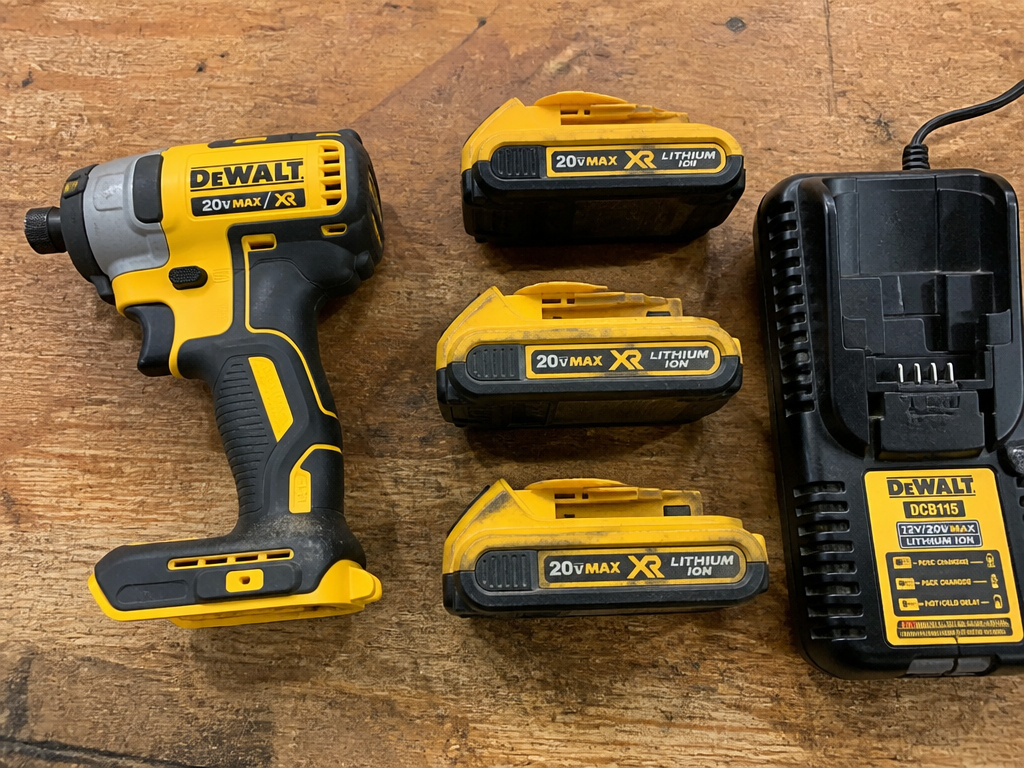
If you’re past the starting line, the game changes for the power tool combo kit vs buying tools individually. Buying bare tools, the tool only, without battery or charger, is the most cost-effective way to expand a system you already own. This is where the kit’s main advantage becomes your liability.
The rule is simple: buy bare tools when you already own three or more compatible, healthy batteries and a charger. At that point, you have a rotation. One battery can be in use, one on the charger, and one ready to go. Adding another tool doesn’t create a bottleneck; it makes the whole system more efficient. You save the entire cost of the redundant batteries and charger bundled into every new kit.
The naming conventions help you spot them. Milwaukee’s bare tool numbers end with “-20” (e.g., 2853-20). DeWalt’s bare tools end with a “B” (e.g., DCF887B). Makita’s kit codes, like “DLX2180TJ“, specify the included tools (a DHP484 drill and DTD153 impact driver). Always match the exact model numbers.
Common mistake: Buying a kit for one new tool when you have plenty of batteries. You end up with another charger you don’t need and a small battery that just clutters your shelf. That “savings” is actually a waste.
Your existing battery health matters. A tired 5.0Ah battery that only holds 30% of its original charge won’t properly power a new high-torque drill. If your packs are aging, factor in the cost of a new battery into your bare-tool math. Sometimes, a kit with fresh batteries becomes the smarter upgrade path.
When the Kit is the Right Tool for the Job
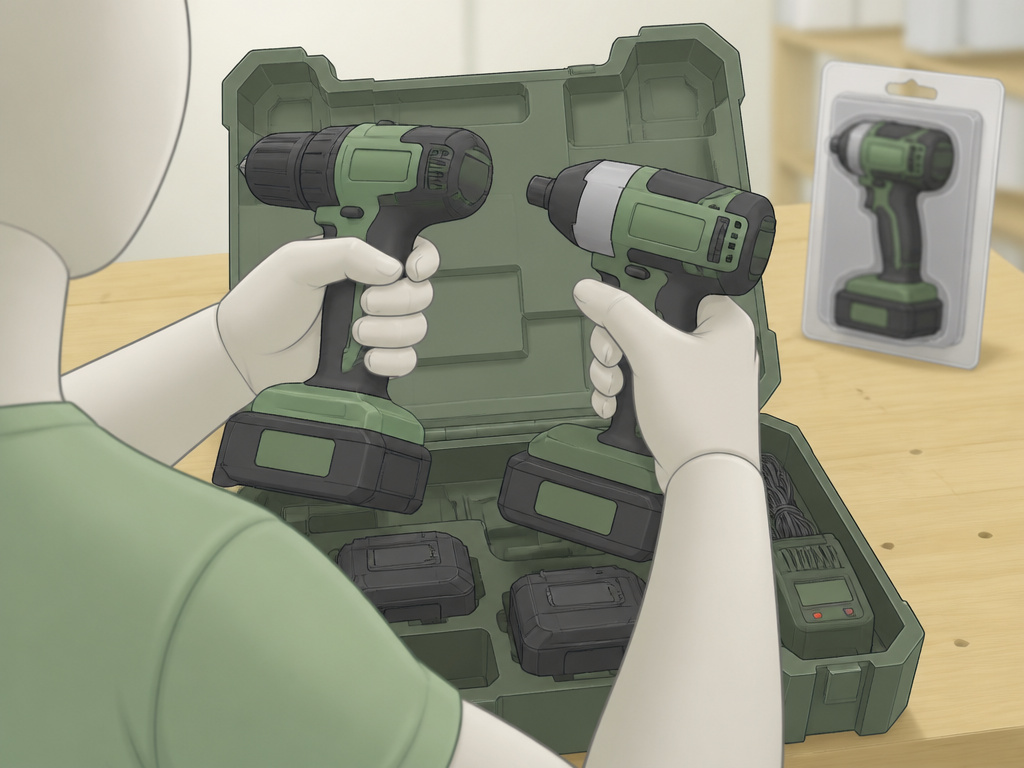
For the beginner, the combo kit isn’t just a discount, it’s a complete, ready-to-work system. If you own zero cordless tools, or if you’re abandoning a weak battery platform, the kit is your logical entry point. The convenience is real: one box, one purchase, one battery system to learn.
The kit also forces a valuable discipline: platform commitment. Choosing between a Milwaukee M18 FUEL kit and a DeWalt 20V MAX XR kit isn’t just about the drill. You’re choosing an ecosystem. Milwaukee’s M18 system is compatible with a vast array of tools. DeWalt’s 20V platform is similarly vast. This lock-in is a feature, not a bug, if you pick the brand whose other tools you’ll need next.
Consider your next three projects. Need to build a deck? A drill/driver kit is perfect. Planning to finish a basement? A kit that adds a reciprocating saw might be worth the step up. Avoid the massive 12-tool mega-kits unless you genuinely see yourself using a brad nailer, an angle grinder, and a jig saw in the next year. Unused tools are dead weight, not savings.
Let me be blunt. If you’re a DIYer who only needs one specific tool for a single job, buy the single tool. A kit’s “value” is worthless if you only use 20% of its contents. The math only works if you need most of what’s in the box.
Battery Platform: The Long-Term Decision You’re Making
This choice outlasts any single tool. Your battery platform is a ten-year relationship. The upfront savings of a kit are dwarfed by the long-term cost of being stuck in the wrong ecosystem.
Look beyond the drill. Does the brand have a capable cordless circular saw you’d want? What about a leaf blower, a job-site radio, or a shop vacuum? Milwaukee, DeWalt, Makita, and Ryobi each have strengths. Ryobi’s ONE+ system is legendary for its breadth of tools for homeowners, from glue guns to pressure washers. Milwaukee’s M12 line is unmatched for compact, powerful tools for tradespeople.
I see this mistake often: someone chooses a brand for its hammer drill, then later needs a high-torque impact wrench and finds their chosen platform is weak in that category. They’re forced to either buy an underpowered tool or start a second, expensive battery system.
Battery care is part of this long-term value. Store lithium packs indoors. Charge them at room temperature, and let a hot pack cool for ten minutes after heavy work before placing it on the charger. Wipe the contacts occasionally with a dry cloth; sawdust and grit in the rails cause intermittent connections that frustrate you and strain the tool. A well-maintained battery platform is an asset. A neglected one is an anchor.
How to Smartly Expand From a Starter Kit
You bought a solid 2-tool starter kit. Now what? The smart expansion follows a simple priority list: first a battery, then a bare tool, then another battery.
Your starter kit likely came with two middle-weight batteries. Your first addition should be a higher-capacity battery for longer runtime or a more compact battery for lighter weight when overhead work makes it a factor. This extends your runtime and flexibility without adding another charger.
Your second purchase should be a bare tool that fills a gap in your workflow. Need to cut plywood? Add a bare circular saw. Need to sand? A bare random orbital sander. You’re making use of your existing investment in batteries and charging.
Only after you have enough batteries to support your new, hungrier tools should you consider another charger. One capable charger can often keep up with a rotation of several batteries for a solo user.
This disciplined approach prevents the clutter of duplicate chargers and under-sized batteries. It’s how you build a system, not just a collection.
How to evaluate ‘value if purchased separately’ claims
Retailers calculate a kit’s ‘value’ by adding up the full list prices of each included tool, battery, and charger. This creates a large comparison number that makes the bundled kit price look like a huge discount. While the savings are real, the comparison is against a scenario where you’d buy every single item at its peak, non-sale price. In practice, individual tools and batteries often go on sale. The upfront savings can be significant, but the advertised ‘value’ is a best-case, maximum figure.
Frequently Asked Questions
Are DeWalt combo kits worth it?
Yes, if you need the included tools and batteries. The DeWalt DCK2101QQ2 kit, for example, bundles a high-torque hammer drill and a robust impact driver with good batteries. The value is clear versus buying separately. Just verify the specific tools in the kit match the standalone models you’d want, as there can be subtle differences in components like housing materials.
What is the best power tool combo kit for the money?
The “best” kit depends entirely on your starting point and needs. For a new DIYer, a 2-tool brushless drill and driver kit from Milwaukee, DeWalt, or Makita offers the best balance of quality and entry cost. For a homeowner wanting a wide range of light-duty tools, Ryobi’s ONE+ kits offer incredible ecosystem value. There is no single best; there’s only the best for your next twelve months of projects.
Why choose a Milwaukee tool combo kit?
Choose a Milwaukee M18 FUEL kit if you value a deep ecosystem of professional-grade tools and plan to expand into heavy-duty saws, trades-focused tools, or the M12 compact line. Their REDLINK PLUS intelligence and POWERSTATE brushless motors are proven performers. The initial cost is higher, but the platform is built for long-term, demanding use.
Should I wait for a sale to buy a kit or bare tools?
Yes, timing matters. Major holidays (Black Friday, Father’s Day) and brand-specific promotions (DeWalt’s fall rebates) see the deepest discounts on kits. Bare tools go on sale less frequently, but when they do, the savings can be significant. If you’re not in a rush, setting a price alert for your desired model is a smart move.
The Bottom Line
The reality is this. A power tool combo kit is a discounted entry ticket into a battery ecosystem. If you’re standing at the gate with nothing, buy the ticket.
If you’re already inside the park, you have a stable of healthy batteries and a charger, skip the ticket line. Walk straight to the bare-tool counter and buy only the ride you want. You’ll spend less, and you’ll often get a sturdier ride.
One final, specific rule: if your primary use for a tool is overhead work, installing drywall, running wiring, mounting ceiling fixtures, buy a bare tool and pair it with the smallest, lightest battery your platform offers. The fatigue savings after an hour are more valuable than any kit discount. That’s not a spec you’ll find on the box. It’s the kind of detail you only learn after your forearms are burning and you’re staring at a shelf full of batteries you never should have bought.
