
Presta vs Schrader Valve Explained: Key Differences
This post contains affiliate links. As an Amazon Associate, we earn from qualifying purchases.
Presta valves are narrow, require you to unscrew a tip before inflating, and are standard on high-pressure road bikes. Schrader valves are wider, use a spring-loaded pin you depress, and are common on mountain bikes, cars, and anywhere you’d use a gas station pump. For most cyclists, the choice is made by their wheel rims, but knowing the difference saves a flat-tire panic.
That distinction isn’t just about looks. It decides what pump you need, how fast you can add air, and what happens when a valve starts to weep air slowly over a week. The rim hole drilled for one type won’t fit the other without an adapter or a permanent modification. This is the core of presta vs schrader valve explained.
What follows: the exact specs that define each valve, a head-to-head comparison of their pros and cons, a foolproof guide to inflation and maintenance, and the one real-world test that shows why dedicated bike pumps beat garage compressors for this job when you compare a presta vs schrader valve explained.
Key Takeaways
- Schrader valves have a standard 8mm diameter stem and a removable core, while Presta valves are slimmer (~6mm) and the core is often integrated.
- You cannot force a Presta tube into a Schrader rim hole; the larger hole will crush the valve stem and cause an instant flat. An adapter allows you to use a Schrader pump on a Presta valve.
- Valve core failure is a common cause of slow leaks. A standard valve core tool can replace a Schrader core in seconds.
- For high-pressure road tires (100+ PSI), a Presta valve’s design is more reliable and allows for finer pressure adjustment.
- Gas station air chucks are built for Schrader valves. Using one on a Presta valve without an adapter will damage the valve.
The Anatomy of a Schrader Valve
Be honest. You know this valve. It’s on your car, your lawnmower, and probably your kid’s bike. The Schrader valve is the workhorse, defined by brute-force simplicity.
Technical Snapshot: The standard Schrader valve core (Schrader part number 670) has a thread size of 0.209-36, meaning a 5.3mm diameter with 36 threads per inch, and an overall length of 19.5mm. The valve stem itself has an outer diameter of 8mm (0.315 inches). It uses a spring-loaded pin sealed by a rubber seat; depressing the pin opens the air passage.
Its size is its greatest strength and its main limitation. That 8mm stem is why it’s durable and almost impossible to bend under normal use. It’s also why the hole in your wheel rim has to be larger, which slightly weakens the rim structure compared to a Presta’s smaller hole. The core is the serviceable heart of the system. When a tire slowly goes flat over a week, the culprit is often a contaminated or worn valve core, a bit of dirt on the rubber seal or a tired spring.
You can fix it with a standard valve core tool, a tiny wrench that costs a few dollars. Unscrew the old core, screw in a new one, and you’re back in business. Sources like REI Co-op and BikeRadar state Schrader valve cores are easily replaceable, while others note some specific applications or older tubes might feature non-removable cores. It’s the definition of field-serviceable design.
The Anatomy of a Presta Valve
Now look at a road bike wheel. The valve is slim, almost delicate-looking. That’s a Presta, also called a French valve. It’s a different solution to the same problem.
The stem is significantly narrower than a Schrader valve. This allows for a smaller hole in the rim, which is a genuine engineering benefit on a lightweight, high-pressure wheel. There’s no spring-loaded pin. Instead, a small brass nut seals the valve shut. You must unscrew this nut a few turns before you can inflate the tire; tightening it back down seals it. The core is often integrated, unlike the standard removable Schrader core, though some aftermarket Presta models do allow replacement.
The lack of an internal spring means there’s less inherent resistance to airflow, which is one reason they can handle higher pressures more efficiently. But that slender design is its Achilles’ heel. It’s famously easy to bend if you’re rough with the pump head or if you try to use a pump chuck not designed for it.
Common mistake: Trying to inflate a Presta valve without first unscrewing the tip. The pump head will just depress the entire valve assembly into the tire, and you’ll get zero air in. Always open the valve first.
Side-by-Side: Presta vs Schrader Specs Compared
This isn’t about which is better in a vacuum. It’s about which is right for the job, which is the essence of presta vs schrader valve explained. The table below lays out the cold, hard differences that dictate your experience at the pump.
| Feature | Schrader Valve | Presta Valve |
|---|---|---|
| Stem Diameter | 8mm (0.315 in) | ~6mm (varies) |
| Core | Removable (standard core tool) | Usually integrated |
| Inflation Method | Depress spring-loaded pin | Unscrew tip, then depress |
| Max Pressure Suitability | Lower-pressure, high-volume (cars, MTBs) | High-pressure (road, gravel bikes) |
| Durability | Highly durable, bend-resistant | More prone to bending if mishandled |
| Pump Compatibility | Gas stations, general compressors | Bike-specific pumps; needs adapter for Schrader pumps |
| Rim Hole Size | Larger (weakens rim slightly) | Smaller (stronger rim) |
| Common Applications | Cars, motorcycles, many mountain bikes, furniture | Road bikes, gravel bikes, cyclocross, high-performance wheels |
Where Each Valve Belongs (And Why)
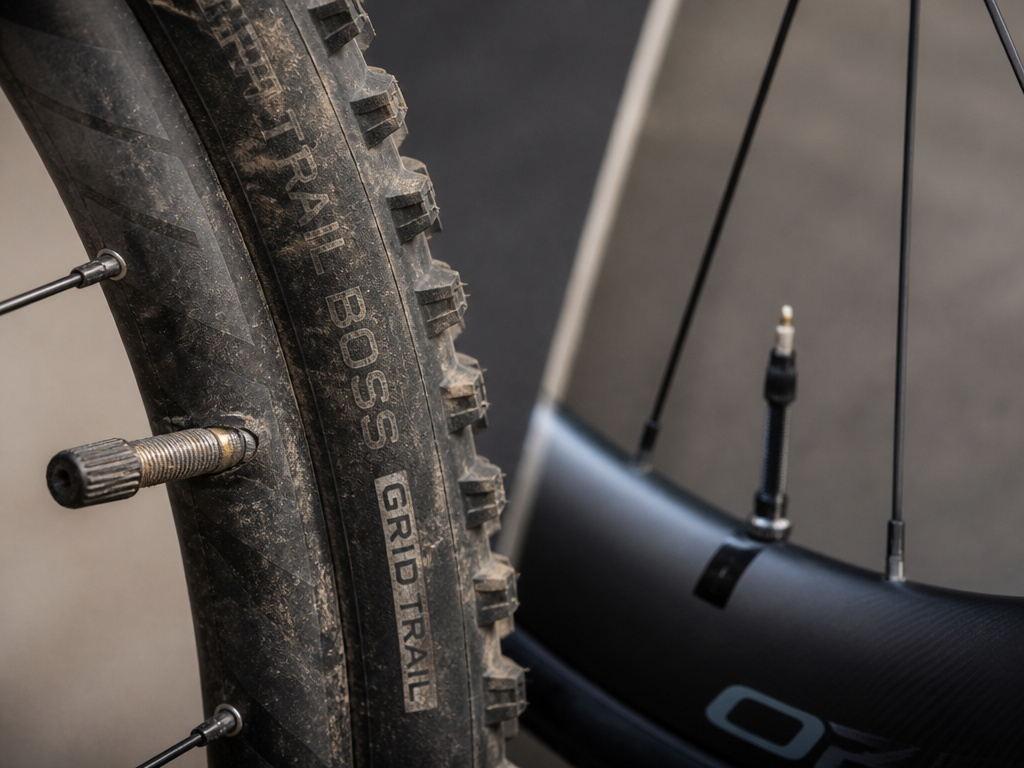
The specs tell you what each valve can do. Real-world use tells you where they actually live.
Schrader valves own the rugged, accessible world. Their compatibility with any gas station air pump is a huge win for the casual rider or commuter. Mountain bikers running lower pressures appreciate the durability when bashing over roots and rocks. That’s why they’re the default on those bikes. According to cycling publications, they are well-suited for these high-volume, lower-pressure applications.
Presta valves are the choice for performance. Road, gravel, and triathlon bikes demand high pressures. The Presta’s design handles this more efficiently. The smaller rim hole is a real advantage when shaving grams and maintaining wheel integrity. Deep-section aerodynamic wheels almost exclusively use Presta valves, though they often require valve extenders so the tip protrudes enough for a pump to latch onto.
Where this goes sideways: Assuming a “tubeless-ready” rim and tire automatically work with any valve. Tubeless compatibility is a system check of the rim, tire, tape, valve, and sealant. A Presta valve for tubeless is a specific part, not just a standard tube valve.
The Adapter Question: Can You Make Them Work Together?
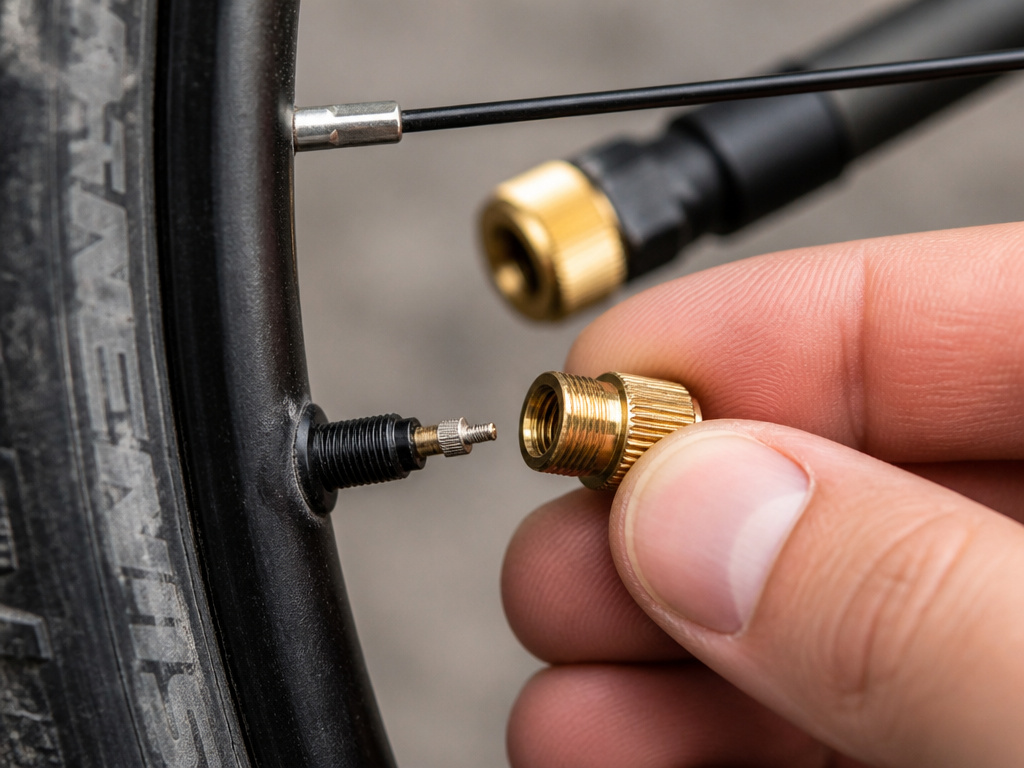
You have a bike with Presta valves and the only pump around is a big garage compressor with a Schrader chuck. Can you make it work? Yes, with a Presta-to-Schrader adapter. It’s a small brass coupler that threads onto the Presta valve, giving it the outer diameter and shape of a Schrader valve.
Here’s the correct, foolproof way to use one:
- Unscrew the Presta valve tip a couple of turns.
- Screw the adapter onto the Presta valve threads firmly by hand.
- Attach your Schrader-compatible pump or compressor chuck.
- Inflate to your desired pressure.
- Remove the pump, then unscrew and store the adapter. Do not leave it on the valve as a permanent cap. It’s not designed to hold pressure on its own and can leak or get snapped off.
The reverse, trying to use a Presta pump on a Schrader valve, doesn’t work. The Schrader stem is too wide to fit into the pump head. For that, you need a dual-head pump or a dedicated Schrader pump.
Step-by-Step: How to Inflate Each Valve Type
Getting air in should be simple. These steps make sure it is.
Inflating a Schrader Valve
- Remove the valve cap. This is a dust cap, not a pressure seal.
- Press the pump head directly onto the valve. The chuck has a pin inside that must depress the valve’s central pin. You’ll hear a brief hiss as the seal seats.
- Flip the pump lever to lock the head in place. Inflate to your desired pressure.
- Release the lever and pull the head straight off. A quick, sharp pull prevents the head from unscrewing the valve core.
Skip the lever lock, and the pump head will spray air everywhere instead of putting it in your tire.
Inflating a Presta Valve
- Remove the valve cap and unscrew the brass tip at the very end two full turns. You should be able to press the tip down with your finger and hear air escape.
- Open the pump head’s locking lever (if it has one). Place it onto the valve.
- Flip the lever to lock the head. The pump head grips the narrow stem. Inflate.
- Open the lever, remove the pump, and tighten the brass tip back down snugly. Don’t overtighten.
Maintenance, Leaks, and Fixes
Valves fail. Knowing how is half the battle.
Schrader Valve Leaks: The usual suspect is the valve core. Dirt, dried sealant, or a worn rubber seal inside the core cause a slow leak. Fix: use a valve core tool. Gently tighten the core first (righty-tighty). If the leak persists, replace it. Unscrew the old core and screw a new one in. It is a quick fix.
Presta Valve Leaks: Check if the tip is fully tightened. If air is hissing from the valve stem itself (where it meets the rim), the valve may be damaged or improperly installed. On tubeless setups, sealant can clog the valve. You can try cleaning it with a thin wire, but often the whole valve needs replacement.
Worth knowing before you start: When installing a new inner tube, always ensure the valve is straight in the rim hole before fully inflating. A crooked valve stem can tear at the base.
Choosing a Pump: Why Dedicated Bike Pumps Win
You can use that big shop compressor. But should you? Consider a real-world test.
The Cycplus A8 is a pocket-sized electric inflator designed for Presta valves. In a technical performance test on Inflator.org, it filled a 700x25c road tire from flat to 100 PSI in 1 minute 10 seconds, with a gauge accuracy of ±1.0 PSI. Its head screws directly onto the valve, no fumbling with adapters or levers.
Compare that to a garage compressor. First, you need a Presta adapter. Second, many compressor gauges are not precise enough for high-pressure bicycle tires. Hitting a precise 95 PSI on a road tire is guesswork. Third, a compressor is often less portable and convenient for bicycle tires.
The data makes the case: for bicycle tires, a portable tire inflator like the Cycplus A8 or a floor pump is the right tool. It’s fast, accurate, and portable. A compressor is overkill and imprecise for this task. You’ll find the control is worth the investment.
Valve Lengths, Rim Depth, and Extenders
This trips up riders moving to deeper, more aerodynamic wheels. Your valve must be long enough to protrude through the rim so the pump head can latch on.
A 50mm deep rim needs a ~60mm valve; a 65mm rim needs ~80mm. If your valve is too short, you need a valve extender. These thread onto Presta valves (some Schrader versions exist) and effectively add length. Install them before adding sealant to a tubeless tire, or you’ll make a mess.
The part nobody mentions: There is no single margin that guarantees every pump head or extender will fit. Some pump heads are bulky. Test your setup before you’re stranded with a flat.
The Bottom Line
The reality is this. You don’t usually choose between Presta and Schrader. Your bike’s wheels choose for you. Your job is to understand the language they’re speaking.
If you’re buying a replacement inner tube, the valve type is the first spec to match. Trying to cram a Presta tube into a Schrader rim hole is a guaranteed, instant flat. If you’re upgrading wheels or building a bike, the valve decision ties directly to your intended use: robust and convenient (Schrader) or high-pressure and performance-oriented (Presta).
Don’t overthink pump compatibility. Get a good floor pump with a dual head that handles both valve types natively. For roadside fixes, a mini-pump or a portable tire inflator specific to your valve type is worth its weight. And always keep a valve core tool in your kit, it solves the majority of slow leaks before they ruin your ride.
Frequently Asked Questions
Is a Presta valve better than a Schrader valve?
It’s not better, it’s different. Presta valves are better for high-pressure road and performance biking due to their design and smaller rim hole. Schrader valves are better for durability, convenience (gas station compatibility), and lower-pressure applications like mountain biking. “Better” depends entirely on your bike and riding style.
Can I inflate a Presta valve with a Schrader pump?
Yes, but only with a Presta-to-Schrader adapter. You screw the adapter onto the open Presta valve, which then allows a standard Schrader pump chuck to attach and depress the valve. Do not leave the adapter on the valve as a permanent cap.
Why are Presta valves so difficult?
They feel difficult because they have an extra step (unscrewing the tip) and are more fragile. The difficulty usually comes from using the wrong pump head or not opening the valve first. With the correct pump and technique, they are no harder to use than Schraders.
Can I put a Presta tube in a Schrader rim?
No. The Schrader rim hole is 8mm, while the Presta valve stem is only about 6mm. The Presta valve will be loose in the oversized hole, allowing the tube to bulge out and burst upon inflation. You would need to install a rim reducer grommet to take up the extra space, which is a niche fix. It’s almost always better to use the correct tube.
