
10 vs 12 Inch Miter Saw: Which Should You Buy?
This post contains affiliate links. As an Amazon Associate, we earn from qualifying purchases.
In the 10 vs 12 inch miter saw debate, a 10-inch saw is a lighter, more affordable tool perfect for trim and common lumber, while a 12-inch saw delivers more power and capacity for thick hardwoods and professional work. The 10-inch DEWALT DWS713 weighs 31 lbs and has a 14-inch crosscut, while the 12-inch DEWALT DWS716XPS weighs 48 lbs and cuts 16-5/8 inches wide. For most DIYers building shelves or installing baseboards, the 10-inch is the right tool for the job.
That capacity difference is the hinge the whole 10 vs 12 inch miter saw choice swings on. It dictates not just what you can cut today, but what projects you can even attempt tomorrow without hitting a wall.
What follows is a breakdown of the three specs that actually matter, a side-by-side look at where each size wins, and a simple checklist to match the saw to your shop and your workload.
Key Takeaways
- Choose a 10-inch miter saw for trim, baseboards, and projects with stock under 6 inches thick. Its lighter weight and lower blade cost make it the default for DIY.
- Opt for a 12-inch miter saw if you regularly cut hardwoods, 4×4 posts, or wide crown molding. Its 15-amp motor and 8-inch depth of cut handle material a 10-inch saw can’t touch.
- You can use a 10-inch blade on a 12-inch saw, but never the reverse. This gives the 12-inch model flexibility, but 10-inch blades are more common and cheaper.
- For baseboard installation, a 10-inch compound miter saw is specifically called the best tool for the job, as most trim doesn’t require a 12-inch blade’s capacity.
- If your annual projects exceed 50 board feet of thick stock, the investment in a 12-inch saw can pay for itself in efficiency within six months.
Motor Power and Cutting Capacity: The Core Differences
The numbers in the 10 vs 12 inch miter saw debate tell the story, but you have to read them right. Sources disagree on some specifics, a reminder that model choice matters as much as blade size.
The 10-inch DEWALT DWS713 runs a 15-amp motor, weighs 31 pounds, and offers a 14-inch crosscut capacity at 90 degrees with a maximum depth of cut of 6-1/8 inches. A 12-inch model like the DEWALT DWS716XPS also uses a 15-amp motor but weighs 48 pounds, with a 16-5/8-inch crosscut and an 8-inch depth of cut.
The cutting capacity of a miter saw is determined by its blade diameter and design. A 10-inch single bevel saw can typically cut a 2×6 at 90 degrees and a 2×4 at 45 degrees. A 12-inch dual bevel sliding saw can cut a 2×16 at 90 degrees and a 2×12 at 45 degrees. Maximum depth of cut is the critical spec for vertical capacity.
Where the confusion starts is with general statements. Sources disagree: one states most 10-inch saws have 10-amp motors, while specific models like the DEWALT DWS713 and BOSCH CM10GD have 15-amp motors. The takeaway? Check the spec sheet of the model you’re looking at, not just the blade size. The BOSCH CM10GD proves a 10-inch saw can still pack a dual-bevel feature and a pro-grade motor.
Here’s how the capacities break down for common tasks:
| Material & Cut | 10-Inch Miter Saw | 12-Inch Miter Saw |
|---|---|---|
| 2×4 at 90° | Easy (within 6-1/8″ depth) | Easy |
| 2×6 at 90° | Possible (maxes out depth) | Easy |
| 4×4 at 90° | Cannot cut in one pass | Can cut in one pass (8″ depth) |
| Crown Molding (Lying Flat) | Fits most common sizes | Fits large, decorative pieces |
| Baseboard Trim | Best tool for the job | Overkill for most profiles |
The 12-inch saw’s advantage isn’t just width; it’s that 8-inch depth of cut. This allows it to cut through a 4×4 post in one pass. A 10-inch saw simply can’t reach the middle.
Portability, Price, and Blade Economics
This is where the 10-inch saw makes its strongest case for the home workshop. The DEWALT DWS713 at 31 pounds is a tool you can lift with one hand and move from the garage to the driveway without a second thought. The 12-inch DEWALT DWS716XPS at 48 pounds demands a dedicated stand or a permanent spot on the bench.
Common mistake: Buying a 12-inch saw for a future “maybe” project. The extra weight and footprint become daily penalties for a capability you use once a year.
That physical difference translates to workspace reality. A 12-inch sliding compound miter saw needs a serious footprint behind it for the rail to extend. In a small garage, that can mean a significant difference in space. One source states 12-inch saws are “ideal for indoor use only” due to their bulk, while another notes the rise of cordless 12-inch models for mobile professionals.
Blade cost and availability are the hidden, ongoing expenses. Ten-inch blades are ubiquitous. You can find a 60-tooth finish blade or a 24-tooth framing blade at any big-box store for reasonable money. The selection for 12-inch blades is smaller, and the price is higher.
The flexibility tip everyone mentions is true: you can mount a 10-inch blade on a 12-inch miter saw using a reducer ring. This reduces blade costs for common cuts. The reverse is impossible; a 12-inch blade won’t fit a 10-inch saw’s arbor or clear the guard.
Where They Excel: Project Matchmaking
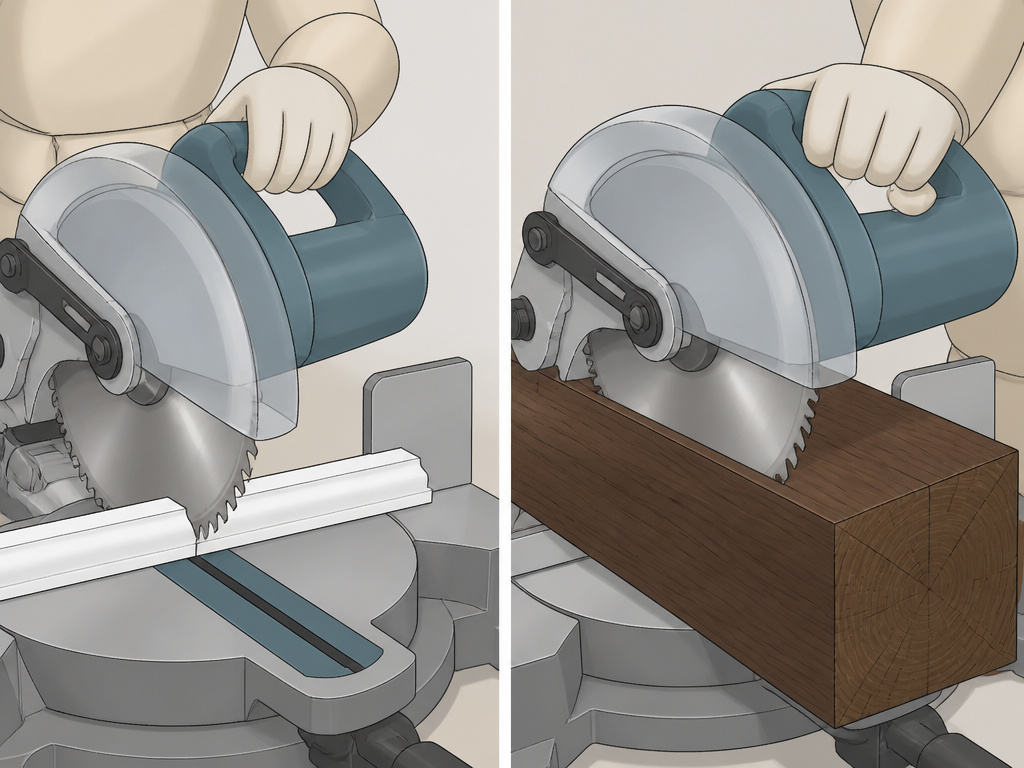
Match the tool to the task. This isn’t about brands; it’s about material thickness and cut frequency.
The 10-inch miter saw is your finish carpenter. It’s the recommended tool for cutting baseboards because, as one source notes, “most baseboards are not so thick as to where you will need a 12-inch blade.” It’s built for trim, molding, picture frames, and building small furniture from pine or plywood. If your project list is mostly DIY home improvement, shelves, simple decks, window casings, this is your saw. It balances portability and power for what one analysis calls “90% of DIY woodworking projects.”
The 12-inch miter saw is your framer and cabinetmaker. It’s designed for “professional heavy-duty use” and cutting hardwoods. Think thick oak stair railings, 6×6 deck posts, or wide, elaborate crown molding that needs to be cut lying flat. If you’re building furniture from maple or ash, or a pergola from cedar timbers, the 12-inch saw’s capacity keeps you from constantly flipping stock or making multiple cuts.
Here’s a quick decision list:
- Start with a 10-inch saw if:
- You primarily work with dimensional lumber (2x4s, 2x6s).
- Your workshop is a garage or shed with limited space.
- You need to move the saw to the job site (like for deck building).
- Your budget is under a few hundred dollars for the tool itself.
- Step up to a 12-inch saw if:
- You regularly work with hardwoods or 4×4 lumber.
- You install large crown molding or build exterior structures.
- The saw will live on a stationary stand in a dedicated shop.
- You process enough material that time savings justify the cost.
Accuracy, Maintenance, and the Long Game
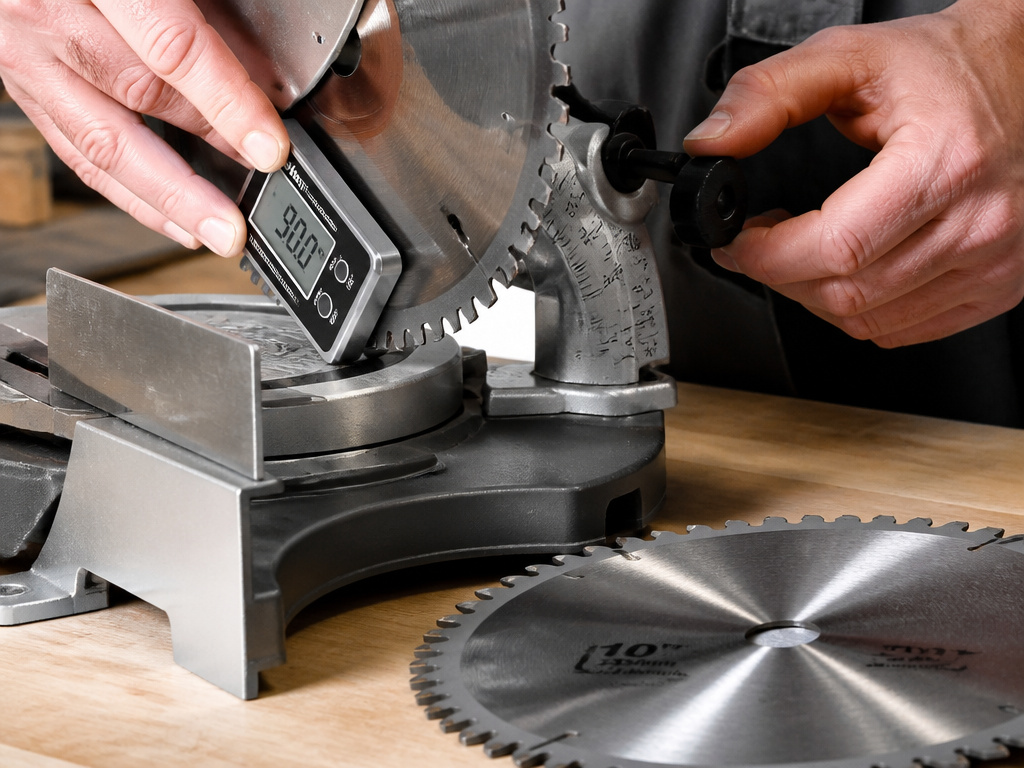
A point about precision needs clarification. One source contradicts itself, saying 12-inch saws make “less precise cuts” but are also “best for simple, consistent cuts.” The reality on the bench is different. Accuracy comes from the saw’s build quality and your setup, not its blade diameter.
A heavier 12-inch saw can be more stable and vibrate less, leading to consistent repeat cuts. But a well-tuned 10-inch saw with a sharp, high-tooth-count blade can produce a finish-ready edge. The alleged wobble of a larger blade is mostly a myth with today’s balanced, stiff designs.
Where this goes sideways: Neglecting blade sharpening. A dull blade on either saw will burn wood, cut slowly, and wander. Sharpening every 50 hours of use can double a blade’s life.
Maintenance is similar for both, but the stakes are higher with the 12-inch model. You’re investing more upfront, so protecting that investment matters. Using a zero-clearance insert (which reduces tear-out by supporting the wood fibers right up to the blade) is a cheap upgrade that makes a dramatic difference in cut quality on both sizes.
Consider the return on investment. An anecdotal note from a shop review suggests that if your projects exceed 50 board feet of thick material per year, the productivity gain from a 12-inch saw can pay for the tool in six months. For a hobbyist building one bookshelf a year, that math never works. For someone building a deck, a shed, and some furniture annually, it might.
The Sliding Saw Wild Card
This discussion assumes a standard compound miter saw. But sliding models change the equation entirely. A 10-inch sliding miter saw can drastically increase crosscut capacity. The trade-off is length, as the sliding rails add significant space behind the saw.
So, your real choice might be between a 10-inch slider and a 12-inch standard saw. The 10-inch slider gains capacity but loses the portability advantage. The 12-inch standard saw keeps a smaller footprint but has inherent capacity limits. It’s a classic tools dilemma: one tool that does more, or a more specialized tool that does it bigger.
Frequently Asked Questions
Is a 10 or 12-inch miter saw better?
Better depends on your work. For trim, DIY projects, and portability, the 10-inch is better. For thick hardwoods, large molding, and all-day professional use, the 12-inch is better. Most homeowners and DIYers are better served by a 10-inch model.
Do I really need a 12-inch miter saw?
You need a 12-inch miter saw if you frequently cut material thicker than 6 inches, like 4×4 posts or stacked crown molding. For cutting standard 2x lumber and common trim, you do not need one. A quality 10-inch saw has plenty of capacity.
Will a 10-inch miter saw cut a 2×4?
Yes, easily. A 10-inch miter saw has a depth of cut over 6 inches, so a 2×4 (which is actually 1.5 x 3.5 inches) is well within its capability, even at a 45-degree angle.
Is a 10-inch miter saw big enough for baseboards?
Yes, it’s specifically recommended as the best tool for cutting baseboards. Most baseboard profiles are designed to be cut on a 10-inch blade, and the compound function is perfect for creating clean inside and outside corners.
The Bottom Line
Your first miter saw should almost always be a 10-inch model. The DEWALT DWS713 or a BOSCH CM10GD will handle baseboard installation, building shelves, and framing a small deck without straining your budget, your space, or your back. The capability covers the vast middle of the home project bell curve.
Only step up to a 12-inch saw when your project list consistently includes items on the right side of the capacity chart, the hardwoods, the thick timbers, the wide moldings. That’s when the investment in a tool like the DEWALT DWS716XPS starts paying dividends in saved time and frustration. For everyone else, the smaller, nimbler, more affordable tool is not a compromise. It’s the right tool for the job.
