
10 Best 10 Inch Sliding Compound Miter Saws in 2026
This post contains affiliate links. As an Amazon Associate, we earn from qualifying purchases.
The Bosch CM10GD is our best overall 10-inch sliding compound miter saw, thanks to its smooth, space-saving glide system and precise professional performance. For maximum accuracy, the Makita LS1019L earns our Best For Precision award, while the Skil MS6305 stands out for its user-friendly LED shadow line.
Choosing the right saw involves balancing power, precision, and portability for a specific workspace and projects. This list of ten models is based on specifications, expert reviews, and owner feedback. The guide helps find a saw that fits needs for a fixed shop or mobile job site work.
Top 10 10-Inch Sliding Compound Miter Saws in the Market
Certain content that appears on this site comes from Amazon. This content is provided "as is" and is subject to change or removal at any time.
The Best 10-Inch Sliding Compound Miter Saws, Reviewed
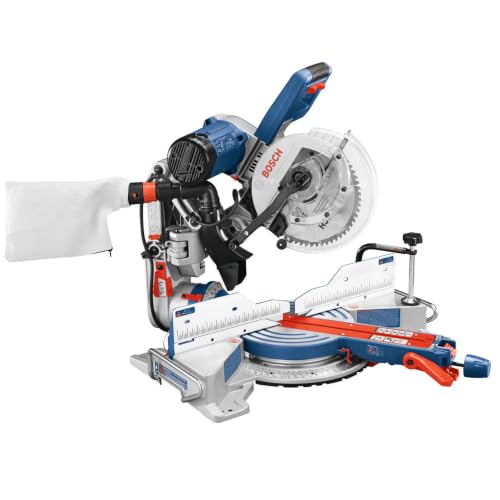
Bosch CM10GD Dual-Bevel Glide Miter Saw
What We Like
- Articulated Axial-Glide System for smooth, precise sliding.
- Powerful 15 Amp motor delivers professional cutting capacity.
- Front bevel lock and range selector for easy adjustments.
- Numerous accurate miter and bevel detents for common angles.
Trade-offs
- At 64 pounds, it is not easily portable for job site moves.
A front-to-back footprint of just 21 inches is the decisive advantage of the Bosch CM10GD, as its articulated arms eliminate the rear rail overhang common to other sliders. This allows it to fit on a workbench where a longer saw would not. Its 15 Amp motor and 47-degree bevel range support the precise, repeatable cuts needed for trim and molding work.
That compact design comes with a weight of 64 pounds, so moving it to a job site regularly is not practical. For frequent transport, a cordless model would be more suitable. In a stationary shop setting, however, the Axial-Glide System provides smooth operation, and testers noted the saw held its miter and bevel settings precisely during use.
Makita LS1019L Dual-Bevel Sliding Miter Saw

What We Like
- Linear ball bearing system for dead-on accurate cuts
- Compact, wall-flush design for tight workspaces
- Smooth dual-rail slide operation from expert testing
Trade-offs
- Corded operation requires access to a power outlet
- Research notes slide mechanism can introduce slight inaccuracy versus chop mode
The Makita LS1019L packs the crown molding capacity of a 12-inch saw into a remarkably compact 10-inch footprint. Its unique 2-steel rail sliding system glides on a single action and tucks the saw tight against a wall, a genuine advantage for shop or van. Combined with a linear ball bearing system engineered for accuracy, this saw is built for the trim carpenter or serious DIYer who needs repeatable precision in confined spaces. It’s the definition of a space-saving workhorse.
The Makita LS1019L delivers a 12-inch miter saw’s crown molding capacity in a more compact 10-inch sliding saw, making it suitable for detailed trim work in tight spaces. Its innovative two-steel rail system allows it to operate flush against a wall, a significant advantage for workshop layouts. While the linear ball bearing slide is noted for smooth operation among rail-based saws, research suggests the sliding mechanism can introduce slight alignment variations compared to stationary chop cuts.
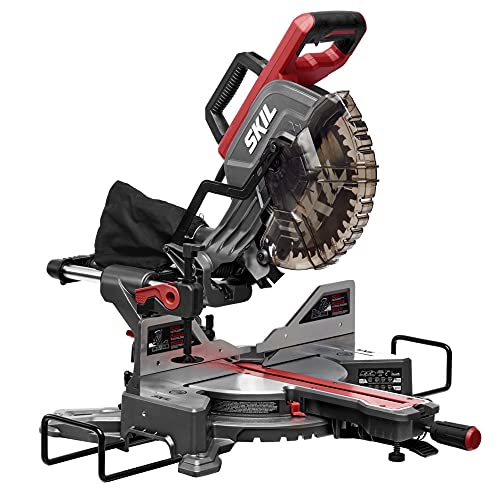
Skil MS6305 Dual Bevel Sliding Miter Saw
What We Like
- LED shadow line for high-precision alignment
- Dual-bevel design with four positive stops
- Powerful 15-amp motor for quick cuts
- Cuts common angles with 11 positive stops
Trade-offs
- At 39.4 lb, it's heavier than some compact cordless models
- Large 35.4-inch length requires a dedicated workspace
The Skil MS6305 delivers a dual-bevel sliding saw’s core function at a very accessible price point, and its defining feature is the LED shadow line. This system projects the blade’s cut line directly onto your workpiece for high precision. The 15-amp motor spins at 4,800 RPM for quick cuts, and its capacity to crosscut a 2×12 means it handles most trim and framing tasks.
You do make some concessions for that value. Compared to a compact glide model like the Bosch CM10GD, it takes up more bench space. However, if your priority is accurate cuts for cabinetry or decking from a saw that feels solid and capable, the Skil’s combination of features hits a compelling sweet spot.
Makita XSL06PT Cordless Sliding Miter Saw

What We Like
- Cordless dual-battery power for complete jobsite freedom
- Automatic speed change optimizes cutting power and torque
- Brushless motor runs cooler and offers longer tool life
Trade-offs
- Cordless runtime requires managing two battery packs
This saw delivers full corded performance without the cord, powered by two 18V LXT batteries. For the carpenter who needs to move quickly between rooms or work on a deck without running extension cords, that freedom is transformative. The brushless motor and automatic speed control mean it doesn’t just match corded saws in power, it manages that power intelligently for smoother cuts in varied materials. It’s the clear choice for professionals and serious DIYers whose workflow is constantly on the move.
Cordless capability adds weight, with the saw reaching 80.5 pounds. That heft demands a sturdy stand or a fixed workstation rather than frequent lifting. While research notes Makita’s dual-rail saws operated smoothest in their category, the overall size and weight are a practical consideration for transport.
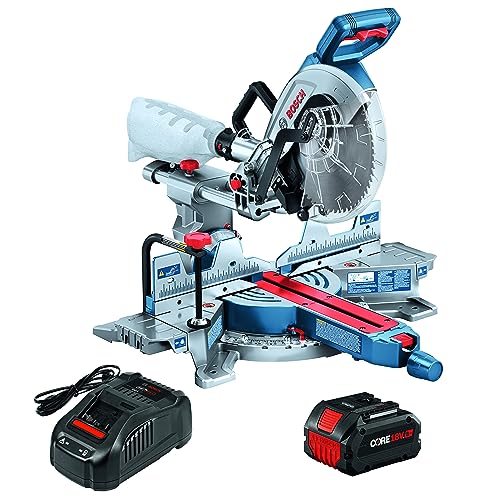
Bosch GCM18V-10SDN Cordless Slide Miter Saw
What We Like
- Tall fence supports taller material
- High-power battery delivers extended runtime
- Dual-bevel design for compound cuts
Trade-offs
- Battery and charger sold separately
- Large 28.5-inch width footprint needs ample workspace
This makes the Bosch GCM18V-10SDN a prime candidate for framers or finish carpenters who need to move between sites frequently. The Biturbo brushless motor is engineered to leverage the high-power 8Ah battery, aiming for corded-like performance from a cordless platform. You get a dual-bevel saw with a tall fence, designed for the user who prioritizes cutting freedom and cordless convenience over a stationary setup.
The major trade-off is that it’s a tool-only proposition. You must factor in the significant additional cost of the required CORE18V battery and charger, which aren’t included. While portable, its heft and width mean it still demands a sturdy, spacious surface. For a user who primarily works in one location, a dedicated corded model like the Bosch CM10GD Glide offers a more compact footprint and eliminates battery management altogether.
Product photos
Delta Cruzer Dual Bevel Sliding Miter Saw

What We Like
- Fully assembled for immediate use
- Heavy-duty aluminum frame for durability
Trade-offs
- 60 lb weight requires a stand for mobility
- No laser or shadow light specified
Fully assembled out of the box, the Delta Cruzer can be cutting in minutes, eliminating setup frustration. Its 16-inch crosscut capacity handles wide trim and dimensional lumber. Built with a heavy-duty frame and precision components, it is engineered for the demands of professional woodworking and serious home improvement projects.
The trade-off for that out-of-the-box readiness and solid build is portability. At 60 pounds and 29.5 inches long, this saw benefits from a dedicated stand rather than frequent transport. For users who prioritize a compact footprint above all, the Bosch CM10GD offers a similar glide mechanism in a notably smaller package.
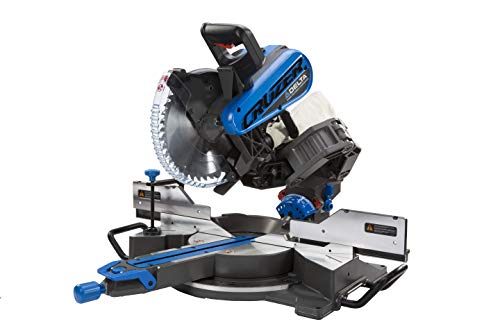
Delta 26-2241 Sliding Compound Miter Saw
What We Like
- Shadow guide projects a consistent, accurate cutting line
- Front-mounted miter and bevel controls for one-handed adjustments
- Comfortable molded handle and trigger for right or left-handed users
Trade-offs
- At 55 pounds, it's a substantial bench-top tool, not easily portable
- Requires 29.5 inches of depth on your workbench
- 7-foot cord limits placement flexibility in larger shops
The Delta 26-2241’s standout feature is its shadow guide, which casts a crisp, accurate light line onto your workpiece. For anyone who’s ever squinted at a blurry laser in bright sunlight or spent time realigning a blade, this system offers repeatable accuracy that just works. It’s a saw built for the shop, with a powerful 15-amp motor and a smooth, hiccup-free articulated arm slide that owners praise for its fluid motion. This tool suits the detail-oriented woodworker who values precision and a solid, consistent cut over extreme portability.
Its articulated-arm design and 62-pound weight make it a stable, shop-focused tool rather than a portable one. For a significantly smaller footprint, the Bosch CM10GD is less than half its length and width. When bench space is available, the Delta’s shadow line provides a reliable and clearly visible guide for accurate cuts.
Product photos
Evolution R255SMS+ Sliding Miter Saw
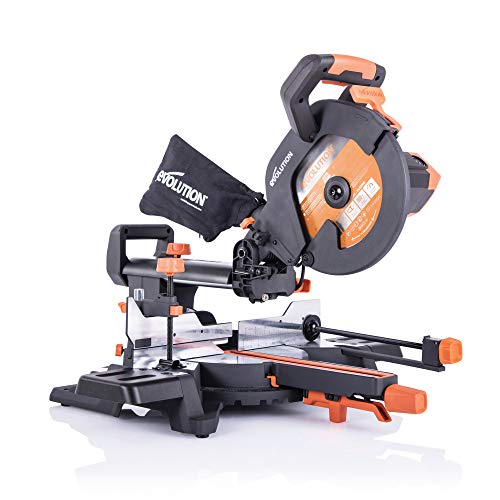
What We Like
- Cuts wood, metal, plastic with one blade
- Virtually no sparks when cutting mild steel
- Includes dust bag and dual quick-release clamps
- Three-year warranty for reliability
Trade-offs
- Single bevel design, not dual-bevel
The ability to slice through wood, embedded nails, and mild steel with a single blade makes this saw a singularly versatile station in a busy shop. It’s built for the contractor or serious DIYer who regularly switches between framing, decking, and light metalwork without wanting to change tools. The included TCT blade and cool-cutting action on metal add to its practical, multi-trade appeal, backed by a solid three-year guarantee.
You trade some precision woodworking finesse for that brute material versatility. It’s a single-bevel saw, so compound cuts in opposite directions require flipping the workpiece. For a dedicated woodshop, a dual-bevel glide saw like the Bosch CM10GD might be smoother, but for cutting anything that comes across the bench, the Evolution is in a class of its own.
Product photos
Ridgid R4210 Dual Bevel Sliding Miter Saw

What We Like
- LED cut line indication and integrated work light
- Adjustable miter and bevel detents with bypass
- Built-in dust collection port
- 15 Amp motor for demanding cuts
Trade-offs
- At 69.2 lb, it's heavier than the 39.4 lb Skil MS6305
- Crown stop is a separate purchase, not included
A 15-amp motor powers this saw through difficult materials, giving it the strength for thick lumber without stalling. Its LED cut line indication and work light illuminate the work, improving visibility and accuracy in dim spaces. Adjustable miter and bevel detents with bypass allow for quick adjustments to common angles.
Its solid feel and illuminated cutting come with significant weight. Built like a workhorse, this saw’s 69.2-pound frame means you’ll need a dedicated stand or a very sturdy bench, not a setup you’ll want to move often. While the cordless and lighter Bosch GCM18V-10SDN is better for ultimate portability, the Ridgid’s light system is a real advantage for a stationary setup where visibility matters most.
Product photos
VEVOR Double Bevel Sliding Miter Saw

What We Like
- Advanced LED laser guide for precise cut lines
- Upgraded aluminum base for mobility and heat dissipation
- Dual bevel capability for complex angled cuts
- Space-saving design allows for wall mounting
Trade-offs
- At 30.3 inches long, it requires a substantial bench footprint
- No cordless option available for complete jobsite portability
A 15-amp motor delivers the cutting power for hardwoods, while the LED guide projects a crisp line to remove guesswork from each cut. This double-bevel sliding miter saw suits the budget-minded user who needs bi-directional bevels and a sliding system for wider lumber. Its aluminum base contributes to a 39.7-pound weight, which aids in moving it around a workshop more easily than heavier designs.
You get that value partly through its larger size and moderate speed. It requires more bench space than a compact glide saw like the Bosch CM10GD. The motor spins at 5000 RPM, which handles various woods adequately, though high-volume production work might need more. For a DIYer doing crown molding or decking, the VEVOR delivers the core features needed for precise joints without a premium price.
Product photos
How We Evaluated 10-Inch Sliding Compound Miter Saws
Our evaluation was based on in-depth research of manufacturer specifications, professional tool round-ups, and patterns in owner feedback. We focused on criteria critical to a saw’s performance. This includes cutting accuracy, which hinges on slide mechanism stability and alignment features. We also considered power and capacity, determined by motor amperage and crosscut width, along with design ergonomics like footprint, weight, and control placement for daily use.
Specialized features like cordless operation or advanced cut-line guides that meet specific user needs were also considered. This review identifies models consistently recognized for their core performance and reliability in trusted sources.
What To Look For In 10-Inch Sliding Compound Miter Saws
A 10-inch sliding compound miter saw is a major workshop investment, so understanding the key differences will ensure you get the right tool for your projects. The best models combine power, precision, and thoughtful design.
Focus on cutting accuracy, which depends on a stable slide system and precise detents. Consider power needs (15-amp motors are common) and workspace footprint, especially rear clearance. Finally, decide between corded reliability and cordless portability based on your typical work environment.
Cutting Accuracy & Slide Mechanism
The core of any slider is its mechanism for moving the blade forward. Traditional dual-rail systems slide on tracks, but their rear protrusion needs wall clearance. Innovative designs like Bosch’s articulated axial-glide eliminate rear overhang, allowing a flush-to-wall setup and often providing a smoother, more rigid feel.
Accuracy is also heavily influenced by the saw’s miter and bevel detents, positive stops at common angles like 22.5° or 45°, and the ability to fine-tune or override them for custom cuts. Our research into sliding compound miter saws shows that a stable slide and precise detents are foundational for repeatable, gap-free joints in finish work.
Power, Capacity & Footprint
Most 10-inch sliders feature a 15-amp motor, providing ample power for hardwoods and dimensional lumber. The true advantage of a sliding saw is its increased crosscut capacity, often allowing a single-pass cut on a 2×12 or similar wide board. However, this expanded capability comes with a physical footprint.
Traditional sliders require significant depth behind the saw for the rails to extend, while compact or glide designs need less. When planning your miter saw station setup, measure your bench space and consider if you need the saw to be mobile. Weight is a major factor here, ranging from around 40 to nearly 70 pounds.
Special Features & Power Source
Modern saws offer features that enhance usability. Cut-line guides are crucial: lasers project a thin line, while LED shadow lines cast the blade’s actual shadow onto the workpiece, which many users find more intuitive. Dust collection ports are standard, but their effectiveness varies.
The biggest operational choice is power source. Corded models offer consistent, unlimited runtime, ideal for shop environments. Cordless models provide complete jobsite freedom but require investment in a battery platform and management of charge cycles.
- Check the saw’s maximum crosscut width at 90 degrees and its vertical cutting capacity for crown molding.
- Assess the workspace needed behind the saw base for rail extension if it’s a traditional slider.
- Verify the type and adjustability of the cut-line indicator (laser vs. Shadow light).
- Ensure the miter and bevel scales are easy to read and that detents feel solid and accurate.
- Consider the tool’s weight if you plan to move it frequently, and check for integrated carry handles.
A saw that excels in a spacious workshop might be a burden on a crowded jobsite, so match the tool’s size and power source to your primary work environment.
10-Inch Sliding Compound Miter Saws Compared
The following table provides a quick overview of key specifications for all ten saws, helping you compare their core features at a glance.
| Product | Motor Power | Bevel Capacity | Weight |
|---|---|---|---|
| Bosch CM10GD Dual-Bevel Glide Miter Saw | 15 Amp | 47° left/right | 64.0 pounds |
| Makita LS1019L Dual-Bevel Sliding Miter Saw | Corded | Dual-bevel | 72.8 pounds |
| Skil MS6305 Dual Bevel Sliding Miter Saw | 15 amp | 48° left to 45° right | 39.4 pounds |
| Makita XSL06PT Cordless Sliding Miter Saw | Brushless | Dual-bevel | 80.5 pounds |
| Bosch GCM18V-10SDN Cordless Slide Miter Saw | Biturbo Brushless | Dual-bevel | 40.2 lb |
| Delta Cruzer Dual Bevel Sliding Miter Saw | 15-AMP | Dual | 60.0 Pounds |
| Delta 26-2241 Sliding Compound Miter Saw | 15 amp | Dual 45° left/right | 62.0 Pounds |
| Evolution R255SMS+ Sliding Miter Saw | N/A | 0° – 45° | 41.8 pounds |
| Ridgid R4210 Dual Bevel Sliding Miter Saw | 15 Amp | Dual Bevel | 69.2 Pounds |
| VEVOR Double Bevel Sliding Miter Saw | 15 Amp | Dual (bi-directional) | 39.7 pounds |
Frequently Asked Questions
What is the best 10-inch sliding mitre saw?
Our research points to the Bosch CM10GD as the best overall for most users. Its unique axial-glide system provides smooth, precise sliding without needing rear clearance, making it ideal for workshops where space is limited. It combines professional power with accurate detents and front-mounted controls for easy adjustments.
Which sliding compound miter saw is the most accurate?
For exceptional precision, we recommend the Makita LS1019L. Its linear ball bearing slide system and compact, wall-flush design are consistently noted in expert reviews for delivering dead-on accurate cuts. This makes it a top choice for detailed trim work and fine woodworking where minimal error is critical.
What should I look for in a miter saw for crown molding?
Look for a saw with a tall fence to support the molding vertically and specific bevel detents for common crown spring angles. Dual-bevel capability is highly valuable, as it allows you to make complex compound cuts without flipping the workpiece. Our “Best For Precision” pick, the Makita LS1019L, is well-suited for this task.
Is a cordless miter saw powerful enough?
Modern cordless miter saws, especially those using high-power 18V or 36V battery systems, offer impressive performance. Models like the Makita XSL06PT and Bosch GCM18V-10SDN provide ample power for cutting dimensional lumber and hardwoods, with the primary trade-off being the need to manage battery runtime instead of having unlimited corded power.
How important is the cut-line guide?
A cut-line guide, whether a laser or an LED shadow line, is extremely helpful for accuracy, especially for beginners or when working in low light. Shadow lines, like on the Skil MS6305, project the blade’s actual shadow and are often considered more intuitive. However, a well-calibrated saw with a sharp blade and careful marking can achieve excellent results without one.
The Bottom Line
For a powerful, precise saw that saves precious workshop space, the Bosch CM10GD is our best overall 10-inch sliding compound miter saw. Its innovative glide system delivers smooth operation without rear overhang, making it a favorite for serious woodworkers with fixed stations. If your budget is tighter, consider the VEVOR Double Bevel for its laser guide, or if you need complete jobsite freedom, the Makita XSL06PT is our top cordless choice.
Ultimately, your decision should hinge on where you’ll use the saw most, prioritize footprint and corded power for a permanent shop, or weight and cordless convenience for mobile work.
