
10 Best Nailers For Fencing in 2026
This post contains affiliate links. As an Amazon Associate, we earn from qualifying purchases.
We recommend the Metabo HPT NR90AES1 Framing Nailer as the best overall for its professional-grade, lightweight pneumatic power. For the freedom of no compressor, the Best Bare-Tool Option is the DEWALT 20V, while the Best High-Capacity Coil Nailer is the VEVOR CN65 for long runs.
A fence is a big project that needs a tool tough enough to drive long, ring-shanked nails all day without wearing you out. Your choice hinges on power, capacity, and whether you can run an air compressor on site. We researched specifications, manufacturer features, expert recommendations, and patterns in user feedback to bring you this focused list of ten quality tools.
Top 10 Nailers For Fencing in the Market
Certain content that appears on this site comes from Amazon. This content is provided "as is" and is subject to change or removal at any time.
The Best Nailers For Fencing, Reviewed
Metabo HPT NR90AES1 Framing Nailer

What We Like
- Lightweight and well-balanced for reduced fatigue
- Tool-less depth adjustment for flush or countersunk nails
- Selective actuation switch for versatile nailing modes
- Proven reliability with a long professional warranty
Trade-offs
- Requires a capable air compressor and hose
- Plastic-collated nails may not be allowed on all job sites
Weighing just 7.5 pounds, this nailer is light enough to handle all day on a fence line without wearing you out. That’s a critical factor for a tool you’ll be hoisting hundreds of times. It drives the full range of nails needed for fence framing and posts, from 2-inch to 3-1/2-inch. Its selective actuation lets you switch between careful precision nailing and rapid-fire work with a flick of a switch. That balance of power, control, and user comfort, backed by a 5-year warranty, is exactly why it’s a top pick for demanding, repetitive projects.
As a pneumatic tool, it requires an air hose and compressor, which can limit mobility compared to cordless models. For instance, the DEWALT 20V cordless framing nailer offers portability but weighs 10.1 pounds, while the Freeman cordless version is 8.8 pounds. Research indicates Metabo HPT nailers are trusted by professionals for their reliable performance with air compressors.
VEVOR CN65 Coil Siding Nailer

What We Like
- Tool-free depth adjustment wheel
- Accepts both wire and plastic-collated nails
- High-capacity side-loading magazine
- Bump-fire mode for rapid nailing
Trade-offs
- Requires a 15+ gallon air compressor
- Pneumatic hose limits mobility compared to cordless models
A magazine that holds 250 nails means you can cover a lot of fence line before stopping to reload, which is a major efficiency boost on large projects. This pneumatic nailer is compatible with both wire-collated and plastic-collated coil nails. The tool-free depth adjustment wheel allows you to change the driving depth for various projects and materials.
The trade-off is the air hose. You need a 15+ gallon air compressor on site, which adds setup and limits your range compared to a cordless tool like the DEWALT 20V. For pure driving speed and capacity on a budget, however, this VEVOR stands out against other pneumatics in its class.
DEWALT 20V Cordless Framing Nailer

What We Like
- Cordless design for full jobsite freedom
- Known for reliable, high-quality performance
- Battery power eliminates air hoses and compressors
Trade-offs
- Heavier than pneumatic rivals like the 7.5 lb Metabo HPT
- Bare-tool listing means no battery or charger included
- At 10.1 lb, it's a workout for overhead work
Cordless operation from a 20V battery provides exceptional freedom of movement, allowing you to work anywhere on a property without dragging a compressor or air hose. This framing nailer is a logical choice for anyone already using the DEWALT 20V battery platform who needs serious driving power. The brand is synonymous with high-quality power tools, and their cordless models are known for ease of use and reliability designed for all-day work.
The trade-off for cordless convenience is weight and an upfront commitment. At 10.1 pounds, it is heavier than pneumatic models like the 4.2-pound Paslode F325R, and as a bare tool, it requires a separate battery and charger. For a professional valuing speed and mobility on a sprawling fence line, that is a fair swap. If you already run an air compressor and prioritize a lighter tool, a pneumatic model will save your arms and your wallet.
Freeman G2CN90 Coil Framing Nailer

What We Like
- Magnesium body and steel drive blade for durability
- Transparent bucket for quick nail level checks
- Optimized air flow for power with less consumption
- Ideal for fencing, framing, and sheathing applications
Trade-offs
- Pneumatic hose limits mobility compared to cordless models
This nailer drives 3-1/2″ framing nails, which is the muscle you need for building fence posts and heavy structural connections. The dual-mode trigger lets you switch between careful placement and rapid-fire nailing, a real asset when you’re facing a long run of pickets or rails. Its magnesium construction and hardened steel internals are built to handle jobsite abuse, making it a logical choice for contractors or serious DIYers who need a tool that won’t quit on a big fencing project.
Operating the Freeman G2CN90 requires an air hose and compressor, as it is a pneumatic tool. This setup limits mobility on sprawling job sites compared to a cordless model. Its weight of 7.5 pounds is also substantial for a pneumatic nailer, which could lead to fatigue during extended overhead tasks like installing roof decking. For stationary or ground-level projects where air power is available, its rugged magnesium construction and coil nail capacity provide reliable driving force.
Product photos
Paslode F325R Pneumatic Framing Nailer
What We Like
- Fits easily between 16-inch on-center studs
- Quick two-step reloading system
- Fewer jams when using Paslode 30-degree nails
Trade-offs
- Requires a compatible 30-degree nail collation
- Needs an air compressor and hose to operate
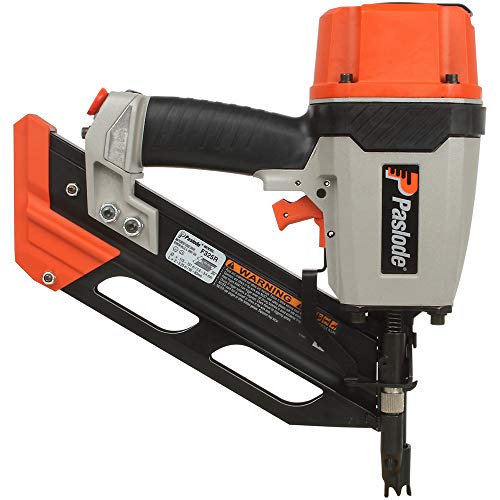
Paslode’s F325R is specifically noted as the lightest framing nailer ever, which translates directly to less arm fatigue and better control during overhead work or in confined spaces. Its compact size allows it to fit between standard 16-inch on-center studs, a key advantage for remodelers handling sheathing, blocking, and interior walls. Owners of Paslode nailers report that the brand’s designs, which include a built-in magazine and safety lock, contribute to reliable performance with fewer jams when using the recommended 30-degree nails.
This nailer’s need for a constant connection to an air compressor can restrict mobility on long projects like fence lines. Compared to other framing nailers, such as the Metabo HPT NR90AES1 that handles nails up to 3.5 inches, the Paslode drives nails up to 3-1/4 inches in length. For users who already have a compressor on site, however, its lightweight design offers a significant ergonomic benefit for precision tasks throughout the workday.
Freeman 20V Cordless Framing Nailer
What We Like
- 750 shots per charge for extended runtime
- Tool-free depth adjustment wheel
- Textured rubber grip for comfort and control
- Select fire button for precision or speed
Trade-offs
- Battery and charger status unspecified in listing
- 90-minute recharge requires planning for continuous work
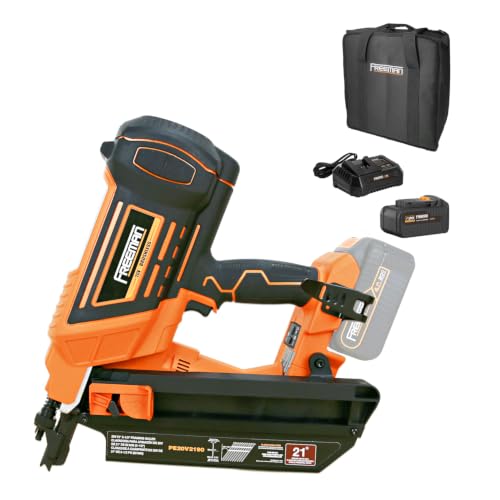
Up to 750 fasteners per charge means you can install a long run of decking or fencing without stopping to recharge, a major advantage over corded or pneumatic tools that need a power source. This cordless design pairs with a hand-turned depth adjustment wheel for quick changes on-site and a textured rubber grip for better control during long sessions. It’s a practical choice for someone assembling wood fencing or pallets who wants to skip the air compressor entirely.
The 90-minute battery recharge is a solid spec, but it does mean you’ll want a spare battery on hand for all-day projects. Compared to the premium FLEX 24V kit, this Freeman operates on a more accessible 20V platform, focusing on core functionality over maximum speed or zero ramp-up time.
Product photos
RYOBI ONE+ HP Cordless Framing Nailer

What We Like
- Cordless AirStrike needs no compressor or hoses
- Brushless motor sinks nails into dense framing lumber
- Tool-free depth adjustment for flush results
- Integrated rafter hook and on-board air fill valve
Trade-offs
- Tool-only format requires a separate ONE+ battery purchase
- At 11.5 pounds, it's heavier than the 7.5-pound Metabo HPT
Its AirStrike technology means you can drive up to 750 nails on a single charge without ever dragging out a compressor or tripping over an air hose, a genuine liberation for remote fence lines. This cordless framing nailer sinks 3-1/2-inch clipped-head nails with a brushless motor, so it handles pressure-treated posts and rails without hesitation. For anyone already invested in Ryobi’s ONE+ battery platform, this tool slots right into your existing ecosystem, turning a collection of tools into a complete, compressor-free jobsite.
This cordless nailer’s heft is its main drawback. At 11.5 pounds, it demands more arm strength over a long day compared to lighter pneumatic options like the Paslode F325R. You also need to factor in the cost of a high-capacity battery if you don’t own one, as it’s sold separately. It’s a powerful, convenient solution for ONE+ users. If you prioritize absolute minimum weight or already run a different battery platform, a dedicated pneumatic nailer or a cordless model from that other system might make more sense.
Product photos
meite CN70B Pneumatic Coil Nailer

What We Like
- 300-nail capacity drastically cuts reload stops
- Bump-fire trigger enables rapid, repetitive nailing
- Aluminum alloy housing provides durable construction
- Wire-weld collation minimizes jamming
Trade-offs
- Requires a capable air compressor on-site
- 15-degree magazine creates a bulkier nose profile
A 300-nail magazine is the defining feature here, letting a fencing crew work for long stretches without breaking rhythm to reload. That high capacity, combined with a bump-fire trigger, makes the meite CN70B a tool built for pure output. It’s designed for the contractor or production crew whose profit hinges on speed and who needs one gun to handle fencing, pallets, and crating without switching tools. The aluminum housing and dual-action safety are practical touches for a tool that will see hard daily use.
You get that stamina in exchange for some weight and bulk. At 8.5 pounds, it demands more arm strength over a full day than lighter options like the Paslode F325R. You’re also tethered to an air compressor. For a high-volume fencing operation where a compressor is already on the truck, that’s a non-issue. If your work involves frequent, scattered repairs or you prioritize ultimate portability, a battery-powered framing nailer might save you more time in setup than this gun saves you in reloading.
KingOu Lightweight Framing Nailer
What We Like
- Lightweight 7.8-pound magnesium alloy body
- Ergonomic non-slip rubber grip for control
- Reinforced claw tips prevent nose wear
- Interchangeable magazine clips for fast or single shot
Trade-offs
- Pneumatic design needs an air compressor and hose
- At 7.8 pounds, it's heavier than some dedicated pneumatic models like the 4.2-pound Paslode
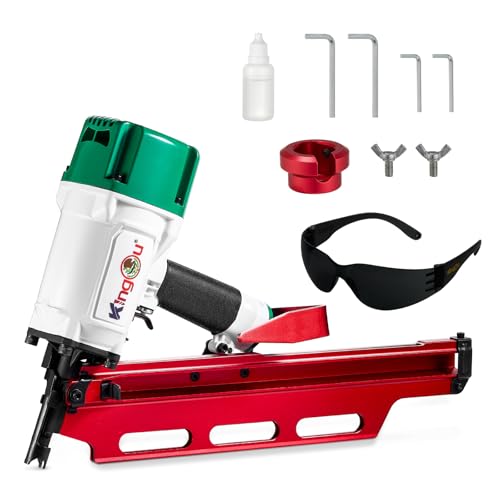
A 7.8-pound magnesium body makes this nailer feel noticeably lighter in the hand than many framing tools. This is a serious advantage when you’re swinging it up to nail a fence rail or working overhead on a long project. The ergonomic rubber grip and reinforced claw tips translate directly to better control and less slippage when driving nails at tricky angles, a common task in fence construction. This combination of reduced weight and thoughtful design details makes it a strong fit for contractors or dedicated DIYers. They need a reliable, well-balanced pneumatic nailer for extended use without the arm fatigue a heavier gun can cause.
This tool’s main limitations come from its pneumatic nature and specific nail collation. You’ll need a capable air compressor and hose on-site, which adds to your setup. The 21-degree magazine is common, but it’s not as low-profile as a 15- or 30-degree nailer, which can be a minor hindrance in tight corners. For pure, lightweight pneumatic driving, it’s a compelling option. If you prioritize maximum portability and don’t mind a slight weight penalty, a battery-powered framing nailer offers compressor-free convenience.
Product photos
FLEX 24V Cordless Framing Nailer
What We Like
- Zero ramp-up time for instant power
- Extremely fast 160W charging system
- Pivoting rafter hook for convenient storage
- Dry fire lockout prevents blank firing
Trade-offs
- At 14.2 inches long, it's bulkier than some pneumatic options
- Requires managing battery charge for all-day projects
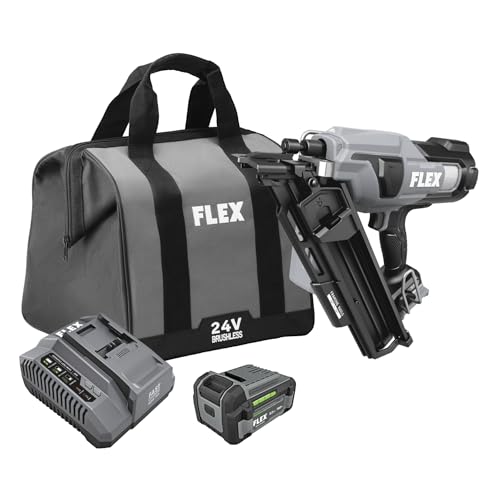
Driving up to 1,100 nails on a single charge means you can build a long section of fence without stopping to swap batteries. That runtime, combined with a 160W charger that gets you back to work fast, is the core appeal for anyone tired of air hoses or gas cartridges. This nailer suits a pro or serious DIYer who values cordless convenience for fencing and needs to minimize downtime, especially when working on remote sections of a property where power isn’t handy.
Its main compromises are heft and balance. While cordless, it carries more weight in your hand compared to a stripped-down pneumatic tool like the Paslode F325R. That bulk can be noticeable over a full day of overhead nailing on fence rails. For a crew with a compressor already on-site, a lighter pneumatic gun might be faster. If your priority is untethered mobility and you can handle the weight, the FLEX system’s speed and endurance are compelling.
Product photos
How We Evaluated Nailers For Fencing
Our research focused on specifications and design features from manufacturers, combined with professional round-ups and consistent reports from owners. We looked for tools powerful enough to handle the long nails used in fencing and durable enough for large projects. Key criteria included magazine capacity to minimize reloading stops, tool weight and ergonomics to combat fatigue over hundreds of nails, and compatibility with the collation and nail lengths common in fence construction. Because this is a research-based comparison, we cannot comment on long-term durability or performance under every jobsite condition.
What To Look For In Nailers For Fencing
Choosing the right tool depends on your project scope, available power, and physical demands.
A good fencing nailer must drive long, ring-shanked nails into dense wood without jamming, and feel comfortable for hours of work. Cordless models offer freedom but add weight, while pneumatic tools are lighter but require an air compressor on site.
Power Source and Portability
Pneumatic nailers, like the Metabo HPT or VEVOR CN65, are generally lighter and deliver consistent power but tie you to an air compressor and hose. They are ideal for sites with power access. Cordless nailers, such as the DEWALT 20V or Freeman 20V, eliminate the hose for total mobility but are heavier and require battery management. For projects far from power or those needing quick repositioning, a cordless model is often worth the trade-off. Your decision on best nailers often starts here.
Nail Magazine and Capacity
Fencing involves hundreds of fasteners. A standard stick magazine holds a modest number of nails, while a high-capacity coil magazine, like on the VEVOR CN65 or meite CN70B, can hold three hundred or more. This drastically reduces reloading stops on long runs of pickets. Also, check the nail collation type, plastic strip, paper tape, or wire-weld coil, to ensure it’s accepted on your jobsite and by the tool.
Weight, Balance, and Adjustment
You’ll hold this tool overhead and at awkward angles for hours. A lighter weight, like the Metabo HPT’s 7.5 pounds or the Paslode’s 4.2 pounds, directly reduces arm and shoulder fatigue. A well-balanced design helps maintain control. Tool-less depth adjustment is a major convenience for setting nail heads flush or slightly countersunk in varying wood densities, a common feature on our top picks. Understanding how to build a fence with a nail gun will show you why these features matter in practice.
Key Practical Checks
- Verify the nail length range fits your fence materials, from shorter picket nails to longer structural framing nails.
- Ensure the tool accepts the specific collation (plastic, wire-weld, paper) of the nails you plan to use.
- Confirm your air compressor’s CFM rating meets the tool’s requirement if buying pneumatic.
- Check for a selective actuation switch (sequential, contact trip, or bump-fire) for safety and speed control.
- Look for user-reported reliability and warranty length as indicators of build quality.
For high-volume professional work, a coil nailer and compressor are hard to beat; for a DIYer tackling a single fence, a capable cordless framer may be the smarter investment.
Nailers For Fencing Compared
The following table compares key specifications of our top picks at a glance to help you narrow your search.
| Product | Weight | Nail Collation Angle | Power Source / Actuation |
|---|---|---|---|
| Metabo HPT NR90AES1 Framing Nailer | 7.5 pounds | 21-degree | Sequential and contact |
| VEVOR CN65 Coil Siding Nailer | 6.7 pounds | 15-degree | Pneumatic |
| DEWALT 20V Cordless Framing Nailer | 10.1 pounds | 21 Degree | 20V Cordless |
| Freeman G2CN90 Coil Framing Nailer | 7.5 pounds | 15° | Pneumatic |
| Paslode F325R Pneumatic Framing Nailer | 4.2 pounds | 30 degrees | Pneumatic |
| Freeman 20V Cordless Framing Nailer | 8.8 pounds | 21° | 20V Cordless |
| RYOBI ONE+ HP Cordless Framing Nailer | 11.5 pounds | 30° | 18V Cordless |
| meite CN70B Pneumatic Coil Nailer | 8.5 Pounds | 15 Degree | Pneumatic |
| KingOu Lightweight Framing Nailer | 7.8 lb | 21 Degree | N/A |
| FLEX 24V Cordless Framing Nailer | N/A | 30° | 24V Cordless |
Frequently Asked Questions
What type of nailer is best for fencing?
A framing nailer is generally best for fencing because it has the power to drive the long, ring-shanked nails required for structural posts, rails, and pickets. For long runs of pickets, a high-capacity coil siding nailer can be more efficient. The right nail guns for fencing balance power, magazine capacity, and comfortable weight.
Which type of nail gun is best for fencing?
For most wood fences, a pneumatic framing nailer or coil nailer offers the best combination of power and lightweight handling for long workdays. If you value portability over a power hose, a cordless framing nailer is a strong alternative, though they are heavier. The choice depends on your access to an air compressor and the scale of your project.
What are the best nails to use for fencing?
Hot-dipped galvanized ring-shank nails are the best for wood fencing. The galvanized coating resists rust, and the ringed shank provides exceptional holding power against wind and wood movement. Choosing the right nails for fence pickets is as important as selecting the tool itself.
Can you use a nail gun for a fence?
Absolutely. A nail gun is the professional tool of choice for building a fence, as it drastically speeds up installation versus hammering and provides more consistent, secure drives. For wire fencing, you would typically use a cordless fence stapler instead.
Should I choose pneumatic or cordless for fencing?
Choose pneumatic if you have a capable air compressor on site and prioritize a lighter tool for reduced fatigue. Choose cordless if your job site lacks easy power access or you want to move freely without managing a hose. Both pneumatic nailers and cordless models have excellent options for fencing.
The Bottom Line
For most builders and serious DIYers tackling a full fence, the Metabo HPT NR90AES1 Framing Nailer is our top recommendation due to its proven lightweight design and reliable pneumatic power. If you’re on a budget but want cordless convenience, look at the Freeman 20V Cordless Framing Nailer, while professionals running large crews should consider the high-capacity VEVOR CN65 Coil Siding Nailer. Your most important decision is balancing the need for portable power against the physical demand of a long day’s work, as a comfortable, capable tool makes the entire project smoother.
