
10 Best Roofing Nailers in 2026
This post contains affiliate links. As an Amazon Associate, we earn from qualifying purchases.
Our research points to the Milwaukee M18 Fuel Cordless Coil Roofing Nailer Kit as the best overall, winning for its high-capacity cordless power that eliminates the air hose. For pure pneumatic performance, the Metabo HPT NV45AB2 is our professional pick, while the Pierce Heavy Duty Coil Roofing Nailer offers capable budget performance.
Choosing the right roofing nailer is about matching power source, magazine capacity, and durability to your specific roofing tasks, whether it’s a full re-roof or repair work. We built this guide by analyzing manufacturer specifications, expert tool reviews, and patterns in professional feedback to identify the ten most reliable models available.
Top 10 Roofing Nailers in the Market
Certain content that appears on this site comes from Amazon. This content is provided "as is" and is subject to change or removal at any time.
The Best Roofing Nailers, Reviewed
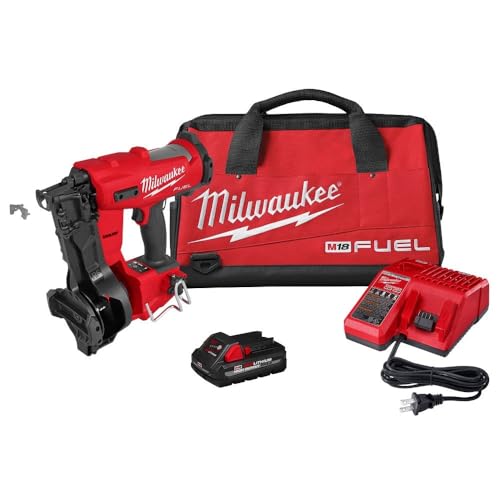
Milwaukee M18 Fuel Cordless Coil Roofing Nailer Kit
What We Like
- High-capacity cordless operation
- Rapid-fire speed for large jobs
- Includes vinyl siding attachment
Trade-offs
- Battery life finite versus pneumatic air supply
- Battery and charger required, not a bare tool
With a firing rate of up to six nails per second, this cordless roofing nailer can tackle large jobs quickly, eliminating the need for a compressor and hose. Its listed weight of 1.0 pounds makes it easy to maneuver overhead all day without fatigue. A single charge of the included CP3.0 battery can drive approximately 1,100 nails, which covers a substantial area before needing a battery change.
The trade-off is the finite power source. When the battery is spent, you stop, whereas a pneumatic nailer like the Metabo HPT NV45AB2 runs as long as your air supply holds. For a crew with a reliable compressor already on site, that pneumatic option remains a simpler, endless-workhorse alternative. The Milwaukee, however, liberates you from that tether entirely, which for many is a premium advantage worth the cordless system’s logistics.
Metabo HPT NV45AB2 Pneumatic Roofing Nailer

What We Like
- Tool-less depth adjustment for flush driving
- Side-loading magazine for quick reloads
- Drives up to 10 nails per second for speed
Trade-offs
- Requires a compressor and hose, limiting mobility
- Accepts only 16-degree coil nails, not strip
Driving up to 10 nails per second with a 120-nail capacity means you can cover large roof sections without constant stops to reload. That speed, combined with the consistent power from a 70-120 PSI air line, is built for professional crews who need to move fast and finish jobs on schedule. The tool-less depth adjustment lets you dial in the perfect set for different shingle thicknesses on the fly, and the 5.5-pound weight is manageable for a full day’s work. This nailer is for the pro who values relentless, pneumatic-powered pace and has a reliable air supply on site.
This pneumatic nailer requires a compressor and hose. That tether can be a hassle on complex roofs or remote jobsites. If mobility is a dealbreaker, cordless models like the Metabo HPT NV1845DA offer a different kind of freedom. For sheer driving speed and the proven reliability of a pneumatic system, though, this nailer delivers the performance that keeps professional teams productive.
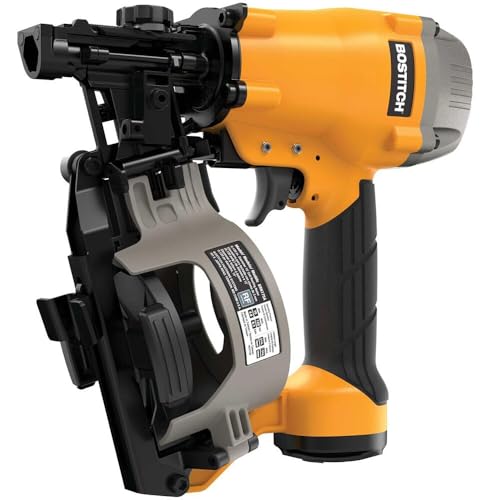
Bostitch BRN175A Pneumatic Coil Roofing Nailer
What We Like
- Dual-door magazine with multiple closing methods.
- Upgraded engine and feed system for durability.
- Redesigned grip handle for better control.
- Carbide nose inserts resist wear.
Trade-offs
- Pneumatic design requires a compressor and hose.
The dual-door magazine is the standout feature here, offering multiple ways to close it for secure loading and reliable feeding on the roof. This design focuses on reducing jams and frustration when you’re up a ladder. Combined with the upgraded engine and feed system, it’s built for consistent drive quality over the long haul. For a roofer who needs a pneumatic nailer that just works shift after shift, this Bostitch prioritizes dependable performance where it counts.
This nailer measures over a foot long, making it bulkier than more compact options like the Metabo HPT NV45AB2. Its larger footprint is noticeable when maneuvering in tight spaces or carrying it on a belt all day. As a pure pneumatic tool, you’ll also be tethered to a compressor. If ultimate portability is the goal, a cordless model is a different conversation. For pure pneumatic punch and a clever magazine, however, this one has its priorities straight.
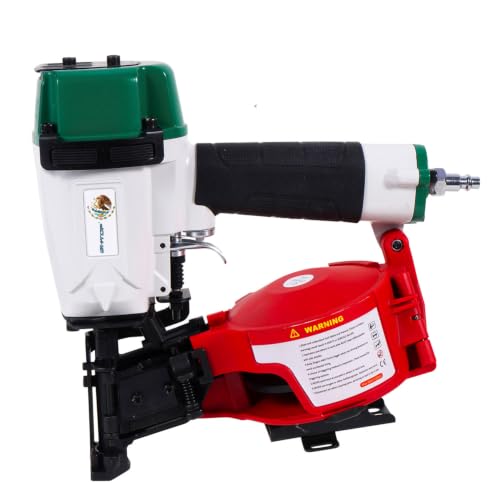
BHTOP CN45N Pneumatic Roofing Nailer
What We Like
- High-capacity 120-nail magazine for extended work
- Magnetic nail holder reduces jams during loading
- Tool-less depth adjustment for precise flush driving
- Soft grip and low-recoil design for user comfort
Trade-offs
- Pneumatic design requires a separate air compressor
- No cordless battery option for complete jobsite freedom
Its 120-nail magazine can fasten a full bundle of shingles without reloading, a major time-saver on large projects. The design includes a magnetic nail holder to align nails for jam-free firing and a moving cylinder engine for low recoil. A soft grip and tool-less depth adjustment add control for tasks from asphalt shingles to sheathing.
As a pneumatic tool, it requires an air compressor hose, limiting mobility compared to cordless models like the DeWalt DCN45RND1. The large magazine capacity and anti-jam magnetic guide support continuous use where air is available. Its compatibility with 15-degree nails from 3/4 to 1-3/4 inches covers common roofing and sheathing applications.
DeWalt DCN45RND1 Cordless Coil Roofing Nailer Kit

What We Like
- 20V cordless design eliminates hose and compressor
- 15-degree coil holds a high nail capacity
Trade-offs
- Battery runtime depends on your existing 20V collection
- Cordless system adds weight compared to pneumatic tools
Operating on a 20V battery, the DeWalt DCN45RND1 allows you to work on a roof without managing a hose and air compressor. This cordless design provides mobility for jobs away from a power source. The tool uses 15-degree coil collation, which holds many nails to reduce the frequency of reloads during a shingling run.
Cordless operation depends on battery runtime, so planning for charged spares is necessary for large roofing projects. When a compressor and hose are readily available, a pneumatic nailer can be a simpler alternative that doesn’t require battery management.
Metabo HPT NV1845DA Cordless Coil Roofing Nailer

What We Like
- Eliminates need for compressor, hose, or gas cartridges
- Includes vinyl siding adapter for precise installation
- Side-loading magazine allows quick nail replenishment
Trade-offs
- At 8.6 lb, it's heavier than the 5.5 lb Metabo HPT NV45AB2 pneumatic
- 500-nail battery life may require planning for large roofs
Metabo HPT’s cordless roofing nailer uses an air spring to deliver similar performance to a pneumatic tool without a hose or compressor. This design makes it a viable option for roofers seeking the ease of cordless operation. It drives nails up to 1-3/4 inches long for standard shingles and underlayment, while the side-loading magazine allows for quick nail replenishment. An included vinyl siding adapter also adds versatility for different tasks on the job site.
The trade-off for going hose-free is weight and runtime. At 8.6 pounds, it is heavier than some pneumatic models, which may be felt after long use. It can drive up to 500 nails per charge with the mentioned compact battery, a figure based on ideal conditions. For users who already have a compressor, the Metabo HPT NV45AB2 pneumatic nailer is listed at 5.5 pounds, making it a lighter alternative.
Product photos
KingOu NVH45 Pneumatic Roofing Nailer

What We Like
- Heat-treated alloy nose for improved wear resistance
- Impact-resistant tool steel piston driver for reliability
- Polymer bumper for long-term durability
- Developed for North American and European roofing standards
Trade-offs
- Requires a 112 PSI air compressor to operate
- Pneumatic design needs a hose, limiting mobility
A piston driver made from USA-ASTM standard impact-resistant tool steel is the core of this nailer’s promise. That specific material choice, paired with a heat-treated alloy nose, signals a build meant to handle the daily abrasion of asphalt shingles and the constant impact of driving nails. For a roofer who needs a pneumatic tool that won’t quit when the sun is high and the bundles are stacking up, this focus on hardened internal components is the main attraction. It’s built for the repetitive, punishing rhythm of a production roof.
This roofing nailer requires a hose and a compressor set to 112 PSI, which makes it a shop or jobsite fixture rather than a grab-and-go tool. Unlike cordless options, it needs an air supply, so you trade portability for a direct connection to your compressor. That setup is ideal for sustained work from a central location but limits quick movement across a roof or between scaffolds.
Product photos
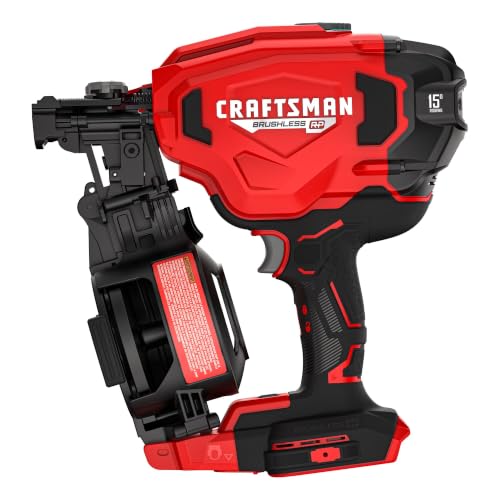
CRAFTSMAN V20 Brushless Cordless Roofing Nailer
What We Like
- Brushless motor for extended runtime
- Tool-free jam clearing lever
- LED indicators for nail jam and battery
- Includes vinyl siding adapter
Trade-offs
- Tool only: battery and charger sold separately
- Requires V20 battery system commitment
The CRAFTSMAN V20 roofing nailer can drive just over 450 nails, which means a user could potentially complete a small roofing repair or vinyl siding job without reloading. Its brushless motor is linked to installing just over 400 square feet of shingles, suggesting a capacity for substantial coverage. Tool-free depth adjustment and the choice between bump or sequential firing modes allow the user to tailor nailing for different materials and work speeds.
This nailer weighs 8.1 pounds, which demands more arm stamina over a long day compared to a pneumatic nailer like the 5.5-pound Metabo HPT NV45AB2. It’s a cordless tool built for endurance rather than the lightest feel. For quick repairs or maximum portability, a lighter pneumatic or different cordless system might be a better fit. For V20 users needing cordless freedom on bigger projects, however, the runtime speaks for itself.
Product photos
3PLUS HCN45SP Pneumatic Coil Roofing Nailer

What We Like
- Integrated side skid pads prevent sliding on roof slopes
- High-capacity 120-nail magazine reduces reloading
- Tool-free adjustable depth and exhaust for user control
- Adjustable shingle guide aids in consistent spacing
Trade-offs
- Requires careful technique to avoid double-fire in bump mode
- Recoil management is critical for safe operation
- Manufacturer advises unskilled users to use single-shot trigger
The integrated side skid pads are this nailer’s standout feature, providing a genuine safety and convenience advantage on a steep roof. You can set the tool down on its side without it sliding away, which is a simple but brilliant design for keeping your workspace organized and secure. For contractors who value stability and efficiency, the 120-nail capacity and adjustable shingle guide make it a strong contender for high-volume shingle work. This is a pneumatic workhorse built for speed, but it demands a user who respects its power and understands its operation.
The 3PLUS HCN45SP includes a critical warning about double-fire in bump mode, which dictates its real-world use. You gain rapid-fire capability, but only by maintaining a specific technique that allows for full recoil and avoids pushing too hard. This makes the tool better suited for skilled operators who can leverage the speed while managing the recoil, rather than for casual or infrequent users.
Product photos
Pierce Heavy Duty Coil Roofing Nailer

What We Like
- 15° coil magazine holds a high nail capacity.
- Heavy-duty classification.
Trade-offs
- Weighs 7.3 lb, which is substantial for overhead work.
The Pierce PRC-RFHD is a 15-degree coil roofing nailer. Its 7.3-pound weight provides stability during operation, though it adds mass for all-day overhead use. This tool falls into the power roofing nailers category, designed for driving nails from a coil magazine.
This pneumatic nailer weighs 7.3 pounds, which adds heft for all-day overhead use, and you are tethered to a compressor. For comparison, the cordless Milwaukee M18 Fuel offers complete freedom of movement at a premium price. This model is a workhorse for those who prioritize proven pneumatic power and value a simpler tool purchase.
Product photos
How We Evaluated Roofing Nailers
Our evaluation was research-based, focusing on manufacturer specifications, professional tool round-ups, and consistent themes in contractor feedback. We prioritized criteria critical for roofing work: power source, magazine capacity and design, and durability features like nose construction. A research-led approach can identify well-engineered tools with strong owner satisfaction. However, it cannot replicate the feel of extended daily use on a steep pitch or the long-term wear on internal components over thousands of cycles.
What To Look For In Roofing Nailers
The right roofing nailer balances power, capacity, and control to make fast, secure installations efficient. Your choice hinges on whether you value the unlimited runtime of a pneumatic system or the complete jobsite freedom of a battery-powered tool.
Prioritize cordless models for mobility on complex roofs, pneumatic for high-volume work with a compressor. Look for a high-capacity magazine to minimize reloads and tool-less depth adjustment for precise, flush nail driving on different materials.
Power Source: Cordless vs. Pneumatic
Cordless roofing nailers, like our best overall Milwaukee, run on battery platforms and free you from a compressor and hose, ideal for remote jobs or intricate work. Pneumatic models, such as our professional pick from Metabo HPT, require an air compressor but offer lighter weight and theoretically unlimited runtime, making them a staple for high-volume shingle installations. Your decision often comes down to whether you value ultimate mobility or maximum sustained power and speed.
Magazine Capacity & Design
A nailer’s magazine holds the coil of nails, and its capacity directly impacts how often you stop to reload. Higher-capacity models, like the BHTOP CN45N with its 120-nail coil, let you cover more roof area uninterrupted. The design also matters; side-loading magazines and tool-free jam-clearing levers, seen on several picks, significantly speed up workflow and reduce frustration during long days.
Durability & Control Features
Roofing nailers endure harsh conditions, so durability is non-negotiable. Look for features like carbide nose inserts or heat-treated alloy noses, as found on the Bostitch and KingOu models, which resist wear from abrasion. For control, tool-less depth adjustment is essential for setting nail heads flush without damaging shingles, while ergonomic grips and anti-skid foot designs, like on the 3PLUS model, improve stability and comfort on sloped surfaces.
- Check for a tool-free exhaust port to direct air away from your face.
- Ensure the trigger offers both sequential and bump-fire modes for different paces.
- Verify compatibility with the nail collation angle (typically 15 or 16 degrees) you plan to use.
- Look for included attachments, like a vinyl siding guide, for added versatility.
- Confirm the tool’s weight feels manageable for overhead work.
A reliable roofing nailer should feel like an extension of your arm, driving nails consistently without jamming or failing under pressure.
Roofing Nailers Compared
The comparison table below summarizes the key specifications of our top picks to help you see the differences at a glance.
| Product | Power Source | Nail Length Range | Depth Adjustment |
|---|---|---|---|
| Milwaukee M18 Fuel Cordless Coil Roofing Nailer Kit | Cordless | N/A | Tool-free |
| Metabo HPT NV45AB2 Pneumatic Roofing Nailer | Pneumatic | 7/8" to 1-3/4" | Tool-less |
| Bostitch BRN175A Pneumatic Coil Roofing Nailer | Pneumatic | N/A | Tool-Free |
| BHTOP CN45N Pneumatic Roofing Nailer | Pneumatic | 3/4" to 1-3/4" | Tool-less |
| DeWalt DCN45RND1 Cordless Coil Roofing Nailer Kit | 20V Cordless | N/A | N/A |
| Metabo HPT NV1845DA Cordless Coil Roofing Nailer | Cordless | 7/8" to 1-3/4" | N/A |
| KingOu NVH45 Pneumatic Roofing Nailer | Pneumatic | 1.77" length | N/A |
| CRAFTSMAN V20 Brushless Cordless Roofing Nailer | Cordless | N/A | Tool-free |
| 3PLUS HCN45SP Pneumatic Coil Roofing Nailer | Pneumatic | 3/4" to 1-3/4" | Tool free |
| Pierce Heavy Duty Coil Roofing Nailer | N/A | N/A | N/A |
Frequently Asked Questions
What is the best roof nailer for roofing?
For most users, the best overall roof nailer is a cordless model like the Milwaukee M18 Fuel, which offers excellent balance of power and portability. For contractors with dedicated air systems, a professional pneumatic nailer like the Metabo HPT NV45AB2 provides reliable, high-speed performance. The “best” tool ultimately depends on your specific needs for mobility, runtime, and existing tool ecosystem.
What nail gun do roofers use?
Professional roofers commonly use pneumatic coil roofing nailers for their light weight, speed, and reliability, with brands like Bostitch and Metabo HPT being frequent choices. Increasingly, roofers are adopting cordless models from Milwaukee, DeWalt, and Metabo HPT for jobs where dragging an air hose is impractical, valuing the trade-off in battery weight for complete jobsite freedom.
Which roofing nailer is better, Milwaukee or DeWalt?
Both Milwaukee and DeWalt offer cordless roofing nailers, and the better choice depends on your existing battery platform. The Milwaukee M18 Fuel is noted for its speed and capacity, while the DeWalt DCN45RND1 provides twenty-volt performance. If you already use one brand’s battery system, sticking with it is often the most cost-effective and convenient option.
Which roofing nails are best?
For asphalt shingles, galvanized coil nails are the industry standard, as they resist rust and provide a secure hold. Always match the nail collation angle and shank type to your specific nailer’s manufacturer specifications to ensure proper feeding and prevent jams.
How important is a nailer’s weight for roofing work?
A nailer’s weight is crucial for roofing, as you’ll be holding it overhead for hours. Pneumatic models are typically lighter, around 5.5 to 7 pounds, reducing fatigue. Cordless models add battery weight, often bringing them to 8-9 pounds; this trade-off for mobility is worth it for many, but it’s a key factor to consider for shoulder strain over long projects.
The Bottom Line
The Milwaukee M18 Fuel Cordless Coil Roofing Nailer Kit stands as our best overall for its powerful, hose-free operation. This makes it the top choice for roofers and serious DIYers who tackle varied jobs. If your budget is tight, the Pierce Heavy Duty Coil Roofing Nailer delivers capable pneumatic performance. Specialized needs are met by picks like the Bostitch for its jam-resistant magazine or the CRAFTSMAN for extended cordless runtime. Regardless of your final choice, ensuring your nailer’s power source and magazine capacity align with your project’s scale is the most important step for a successful, efficient roofing job.
