
4 Best Cordless Roofing Nailers in 2026
This post contains affiliate links. As an Amazon Associate, we earn from qualifying purchases.
Our best overall cordless roofing nailer is the Metabo HPT NV1845DA 18V for its pneumatic-like performance without a compressor or hoses. The DeWalt DCN45RND1 is ideal for pros already using its battery platform, while the Milwaukee M18 Fuel offers unmatched speed for high-volume work. For small repair jobs, the CRAFTSMAN V20 provides solid value.
Choosing the wrong tool can lead to frustrating jams, inconsistent nail depth, and arm fatigue from hauling a heavy compressor up a ladder. A good cordless nailer should drive nails consistently and last long enough to finish the job without constant battery swaps. We built this guide by comparing manufacturer specifications, studying expert round-ups, and analyzing patterns in owner feedback across dozens of sources.
Our goal is to help you find a reliable tool that fits your specific roofing needs.
Top 4 Cordless Roofing Nailers in the Market
Certain content that appears on this site comes from Amazon. This content is provided "as is" and is subject to change or removal at any time.
The Best Cordless Roofing Nailers, Reviewed
Metabo HPT NV1845DA 18V Cordless Roofing Nailer

What We Like
- No compressor, hose, or gas required
- Side-loading magazine for quick reloads
- Includes vinyl siding adapter
- Pro Tool Innovation Award winner
Trade-offs
- Heavier than the Milwaukee model at 8.6 pounds
Metabo HPT’s cordless roofing nailer delivers similar performance to a pneumatic tool, thanks to its air-spring drive, but you skip the compressor and hose. It can drive up to 500 nails per charge under ideal conditions with a compact 2.0Ah battery, which translates to a full morning of work without a battery swap. Based on decades of the brand’s pneumatic nailer pedigree, this tool is built for contractors who need reliable, all-day pacing free from an air hose.
The trade-off for that durability and battery life is heft; at 8.6 pounds, it’s a solid piece of kit. For lighter framing or detailed work, the Milwaukee might be easier on the wrist over a long day. But if your priority is a cordless nailer that just works like a pneumatic one, this Metabo HPT delivers about 80% of the top-tier performance for notably less investment than the DeWalt. It’s the straightforward, no-nonsense choice that gets the job done without fuss.
DeWalt DCN45RND1 20V Cordless Roofing Nailer Kit

What We Like
- Consistent pneumatic-like driving power
- Lightweight design for all-day use
- Roughly 1,000 nails per 4Ah battery
- Excellent trigger response and feel
Trade-offs
- Performance tied to owning DeWalt 20V batteries
Driving nails with the consistency of a pneumatic tool makes this cordless nailer a serious contender for professional roofing work. That performance, combined with a weight lighter than key competitors and enough runtime for a full square of shingles on one charge, means you can work all day without dragging a compressor. It’s the logical choice for any roofer whose truck is already stocked with DeWalt 20V tools, offering a direct fit into an existing, reliable ecosystem.
The trigger feel is the closest you’ll get to a pneumatic gun in the cordless category, and features like tool-free depth control and a side-load magazine keep the workflow smooth. While it delivers outstanding performance, the value proposition shifts if you don’t already own the batteries. For those starting fresh, the Metabo HPT NV1845DM delivers 80% of the DeWalt’s performance at a lower cost.
Milwaukee M18 Fuel Cordless Roofing Nailer Kit
What We Like
- Exceptionally fast 6-nails-per-second rapid-fire speed
- High 1,100-nail capacity per battery charge
- Versatile with included vinyl siding tip
- Tool-free depth adjustment for precision
Trade-offs
- Weighs 1.0 pound
- Up to 1,100 nails per charge under ideal conditions
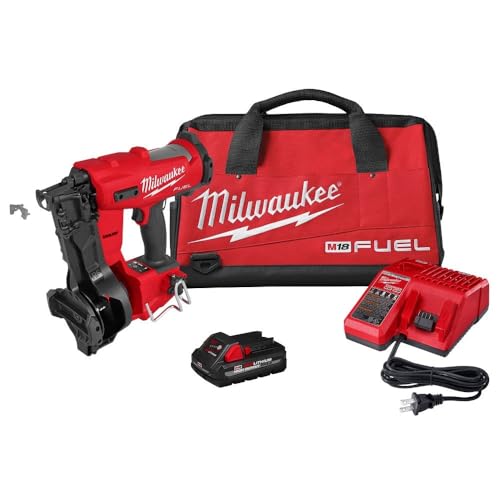
Firing up to 6 nails per second, the Milwaukee M18 Fuel is built for speed. That rapid-fire performance lets you cover large roofs quickly, making it a strong fit for pros or serious DIYers tackling big projects. The 1,100 nails you can drive on a single charge with the included battery means fewer interruptions. It’s a tool designed for high-output work where finishing a square quickly matters more than absolute minimal weight.
Milwaukee’s M18 Fuel Cordless Roofing Nailer drives up to six nails per second, letting a roofer cover ground quickly. It can fire about 1,100 nails on one charge with the included CP3.0 battery, which means fewer interruptions to swap packs. The kit comes with a vinyl siding tip and tool-free depth adjustment, expanding its use beyond shingles. For teams already using M18 tools, this adds a fast, high-capacity option to their setup.
CRAFTSMAN V20 Brushless Cordless Roofing Nailer
What We Like
- Tool-free depth and jam release
- Bright LED jam and battery alerts
- Includes vinyl siding adapter
- Brushless motor for runtime
Trade-offs
- Battery and charger sold separately
- 8.1 pounds is hefty for overhead work
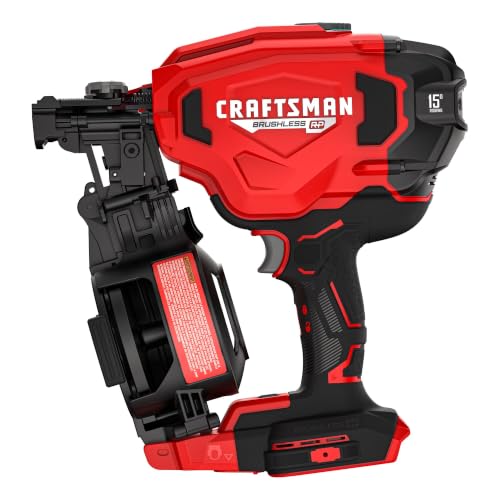
Driving just over 450 nails per charge provides enough runtime for a weekend project like a small repair or a section of vinyl siding. The tool-free depth adjustment and jam release lever simplify operation, and the included vinyl siding adapter helps with alignment for those specific jobs. This cordless nailer can install just over 400 square feet of roofing shingles, which equates to just over 110 shingles under ideal conditions.
Weighing 8.1 pounds, this tool requires consideration for overhead work where its mass can lead to user fatigue. The Metabo HPT NV1845DA 18V Cordless Roofing Nailer is listed at 8.6 pounds, suggesting a comparable heft for similar cordless models. Bright LED indicators provide warnings for nail jams or a low battery, which must be purchased separately.
Product photos
How We Evaluated Cordless Roofing Nailers
This guide is based on manufacturer specifications, expert tool round-ups, and consistent patterns in user reviews. The information synthesizes data from multiple sources to identify which models reliably meet professional and DIY demands.
The key criteria were driving power consistency, battery efficiency (nails per charge), weight for overhead work, and overall platform value. We prioritized tools that could drive nails as reliably as a pneumatic model, as inconsistent depth is a common flaw in weaker cordless nailers. We also looked for features like tool-free adjustments and side-loading magazines that improve job-site efficiency.
This evaluation is based on reported specifications and aggregated user experiences. For direct comparisons between different tool types, you can explore our guide on the difference between roofing and framing nailers.
What To Look For In Cordless Roofing Nailers
Choosing a cordless roofing nailer means balancing power, runtime, and convenience. The right tool should feel like a natural extension of your arm, not a heavy compromise.
Look for consistent driving power that matches pneumatic performance, a battery system you already own, and a weight you can comfortably hold overhead. High-capacity magazines and tool-free depth adjustments are essential for professional workflow.
Power and Consistency
The primary job is to sink a roofing nail to the correct depth, every time, without marring the shingle. Research indicates the best cordless models achieve this through brushless motors and refined drive mechanisms that mimic pneumatic force. Inconsistent power leads to nails sitting proud or being driven too deep, which can compromise the roof’s integrity and waterproofing. Our roofing nailer reviews highlight models praised for their reliable depth control.
Battery Platform and Runtime
Your choice is heavily influenced by the battery ecosystem you already own, as buying into a new platform adds significant cost. Runtime, measured in nails per charge, is critical; a professional tool should deliver at least 800-1,000 nails per battery to complete a meaningful section of work without interruption. Consider whether you need multiple high-capacity batteries for all-day use or if a single battery suits smaller projects. For those still considering pneumatic options, understanding the required air compressors for roofing is a useful comparison.
Weight and Ergonomics
Cordless nailers add the weight of a motor and battery, making ergonomics crucial for overhead work. A heavier tool can cause fatigue quickly, so look for a balanced design and features like a rubberized grip. While you can’t judge comfort from specs alone, owner feedback often highlights which models feel best during extended use. Some models also include versatility features, like a vinyl siding tip, which adds value if you work on different projects. For other specialized applications, our guide on siding nailers can be a helpful resource.
Versatility and Features
- Check for a tool-free depth adjustment dial to quickly adapt to different shingle thicknesses.
- A side-loading magazine allows for faster reloads compared to top-loading designs.
- Look for a tool-free jam release mechanism to clear misfires quickly on the roof.
- An LED indicator for low battery or jam alerts can prevent mid-strip frustration.
Before buying, confirm the nailer uses standard coil-style roofing nails compatible with your preferred brand and length.
Cordless Roofing Nailers Compared
The comparison table below summarizes the key specifications and strengths of our top picks to help you see the differences at a glance.
| Product | Drive Mechanism | Nail Collation | Weight |
|---|---|---|---|
| Metabo HPT NV1845DA 18V Cordless Roofing Nailer | Air spring coil | 16º wire coil | 8.6 pounds |
| DeWalt DCN45RND1 20V Cordless Roofing Nailer Kit | 20V Lithium-Ion Cordless | 15 Degrees Coil | N/A |
| Milwaukee M18 Fuel Cordless Roofing Nailer Kit | N/A | N/A | 1.0 Pounds |
| CRAFTSMAN V20 Brushless Cordless Roofing Nailer | N/A | 15 Degrees | 8.1 pounds |
Frequently Asked Questions
Who makes the best cordless roofing nailer?
Based on our research, Metabo HPT, DeWalt, and Milwaukee are the leading brands, each excelling in different areas. The “best” depends on your needs: Metabo HPT offers great value and performance, DeWalt provides excellent consistency for its platform users, and Milwaukee leads in speed for high-volume professionals. It’s less about a single winner and more about which tool’s strengths align with your specific roofing tasks.
What nail gun is best for roofing?
For roofing, you need a dedicated roofing nailer, which fires coil-style nails from a round magazine. These are distinct from framing or finish nailers. A cordless roofing nailer is best for most residential jobs and repairs, eliminating the hose and compressor. For large-scale, high-volume production work, a pneumatic roofing nailer paired with a capable roofing air compressor may still be the most efficient choice.
What are people saying about the Metabo cordless roofing nailer?
Owner feedback consistently praises the Metabo HPT NV1845DA for its power and reliability, often comparing its performance favorably to pneumatic tools. Users appreciate not needing a compressor or gas cartridges. Some note its weight can be taxing during long overhead sessions, but many consider it a worthwhile trade-off for the convenience and consistent driving power it delivers.
Which roofing nailer is better, Milwaukee or Dewalt?
The Milwaukee M18 Fuel is better for sheer speed and high-capacity work, firing up to six nails per second. The DeWalt DCN45RND1 is often cited as having a more consistent, pneumatic-like driving feel and excellent trigger response. The “better” choice hinges on your priority: maximum productivity and battery platform (Milwaukee) or refined driving precision and feel (DeWalt).
Are cordless nailers worth it for roofing?
Yes, for most residential roofing jobs, repairs, and remodels, cordless nailers are absolutely worth it. They eliminate the setup, trip hazards, and weight of a compressor and hose, significantly improving mobility and setup time. While premium models are an investment, the time saved and convenience gained make them valuable for professionals and serious DIYers alike. For a broader look at the category, see our overview of best cordless nailers.
The Bottom Line
For most users seeking a powerful, reliable cordless roofing nailer without the hassle of a compressor, the Metabo HPT NV1845DA 18V is our best overall pick. It delivers pneumatic-like performance at a mid-range price.
If you are heavily invested in a specific battery platform, prioritize those models: choose the DeWalt DCN45RND1 for its excellent feel or the Milwaukee M18 Fuel for its rapid-fire speed. For occasional repairs and small projects, the CRAFTSMAN V20 offers capable performance.
Ultimately, the most important factor is choosing a nailer with consistent driving power that matches your shingle material and work pace, ensuring a secure, professional-looking roof that lasts.
